Let’s celebate World’s Idli Day – this 30th March 2021, which also coincides with this season of the festival of colours, Holi.
Yes, these colourful idlis will always enhance the spirit of your family.
Idlis are nutritious and healthy. And of course there is nothing like a plate of hot idlis – white, fresh and soft – any day, any time !
“A slight change in colours – will it matter … ? ” thought Dalonthetable, and continued a small experiment. Amazing, every colour- brown, green and yellow, pink and black all turned out so well, that, it is worth sharing. Idlis with just dal and pulses and their natural colours. Witness the softness of each colour by making them, you will never regret.
We are back with Channa dal/ Bengal gram plants again, because we want to show you the beautiful pods which we missed last time.
Summarizing, the earlier post on Channa dal showed, how the seeds underwent hypogeal germination to beautiful plants with compound leaves and lilac coloured flowers
The channa plant starts with a single stem with alternate array of compound leaves. Soon it branches out making the plant spread out and look bushy. These pictures are from the new sets of experiments.
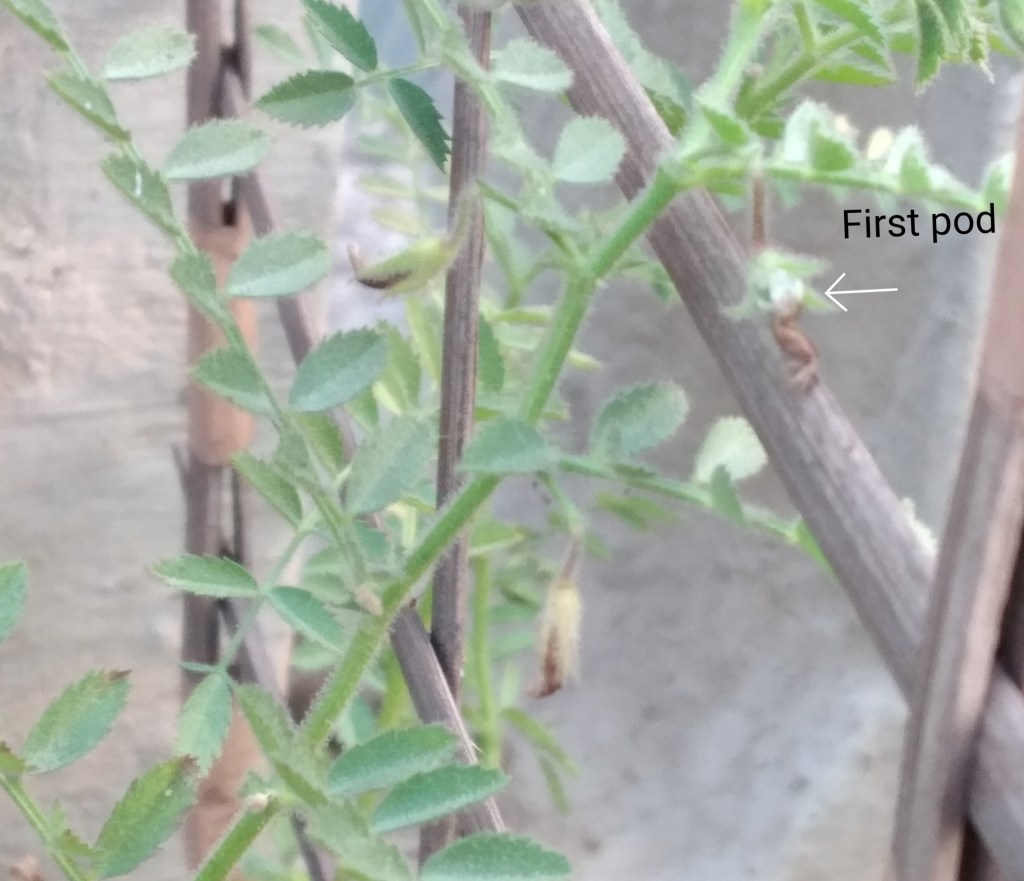
When the plants were about 40 days old, the first bud was noticed. The bud is shown with an arrow head.
Soon more buds appeared. Each bud opened up to a beautiful lilac colour flower.
The first few flowers bloomed and withered. But new buds and new flowers continued to blossom, keeping our hopes alive.
When the plant was about 55 days old, one little withered flower showed up a tiny pod at its base. That was our first pod. It is shown with an arrowhead.
Three days later, the tiny pod grew bigger and the second pod came up. Shown with an arrow head.
Seven days later both the pods became prominent.
Slowly more pods appeared on the main stem.
After 35 days the first and the second pods matured and began to turn brown.
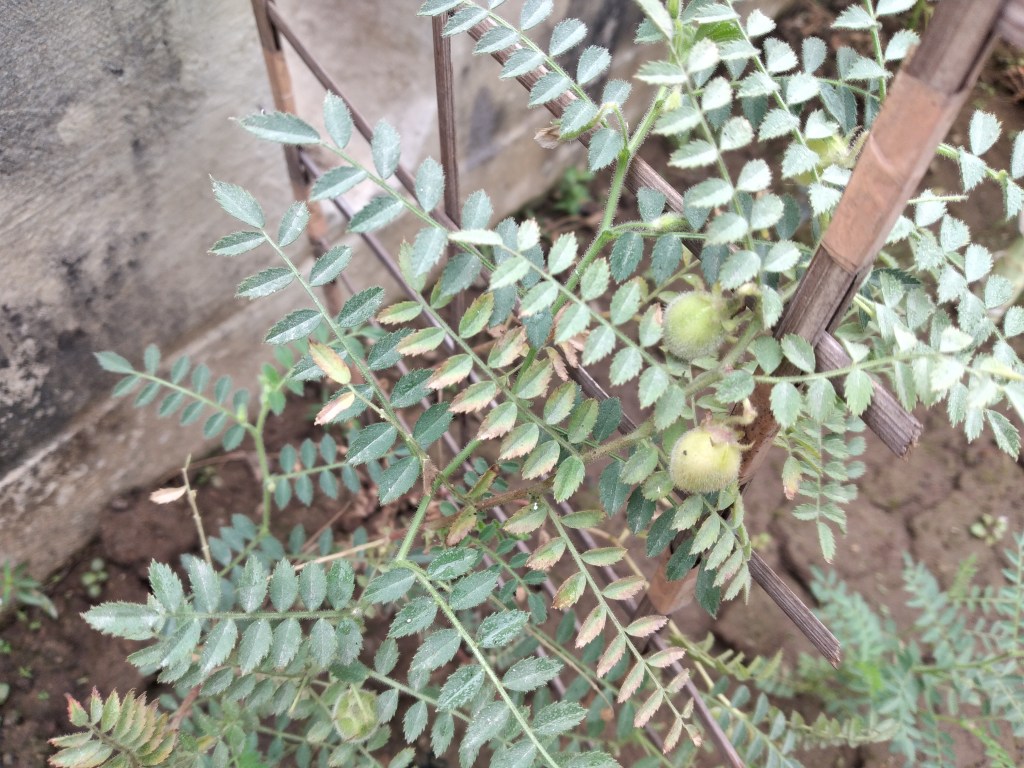
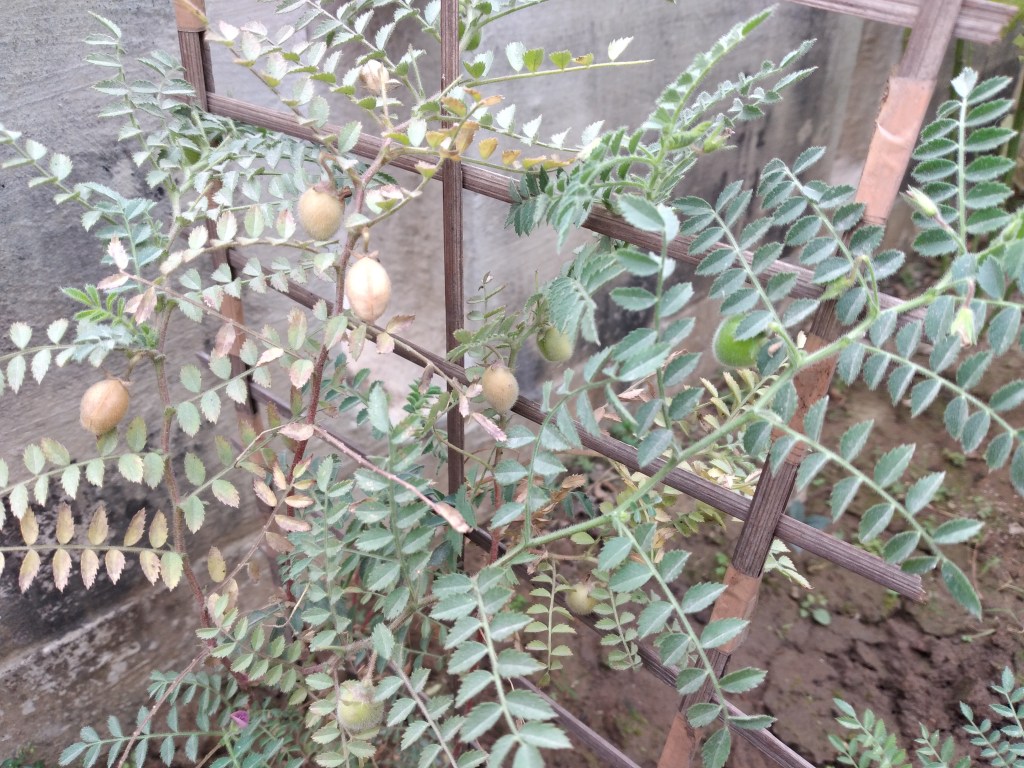
The first four pods were left on the plant for about 45 days to mature. The green pods turned to light brown. The leaves of the plant also turned brown. There are still some green pods.
More flowers and pods were still on the plant.
It took about 100-110 days from sowing the seeds to harvesting.
Our first harvest of the first 4 pods of channa dal. Each pod had one seed inside.
Dolma is a dish from Middle East, Egypt and Southern region of Europe – grape leaves stuffed with meat and rice.
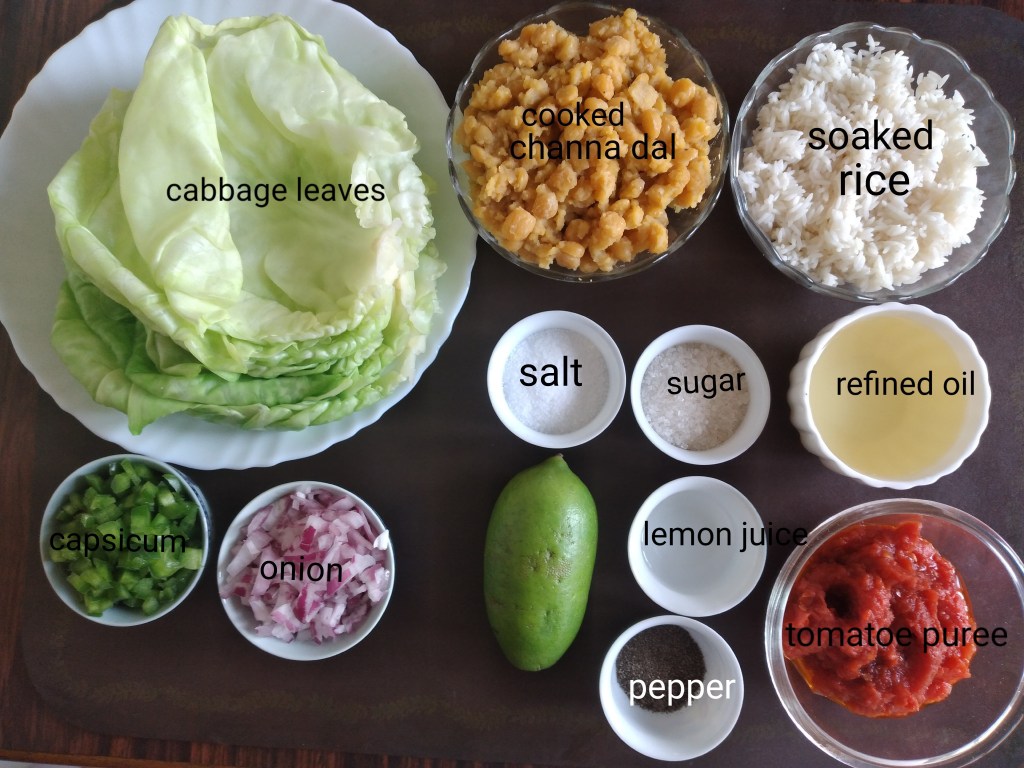
You need:
Cabbage leaves
120 gm channa dal
120 gm rice
1 Tbsp finely chopped onion
1 Tbsp finely chopped capsicum
1 Tbsp tomato puree
3 Tbsp refined oil/olive oil
1 Tbsp lemon juice
Salt, sugar and pepper to taste
Method:
For the Rice:
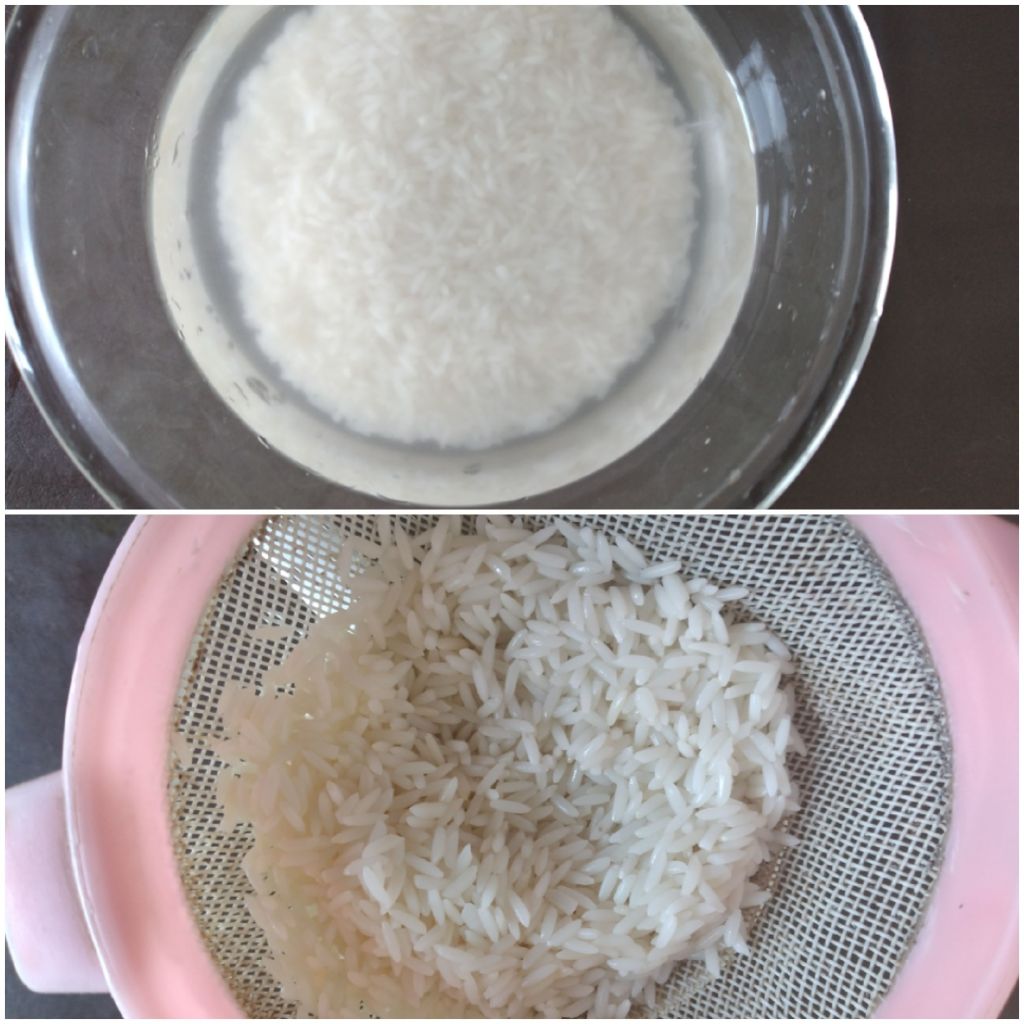
Wash and soak the rice for about 2 hours, then drain it.
For the Dal:
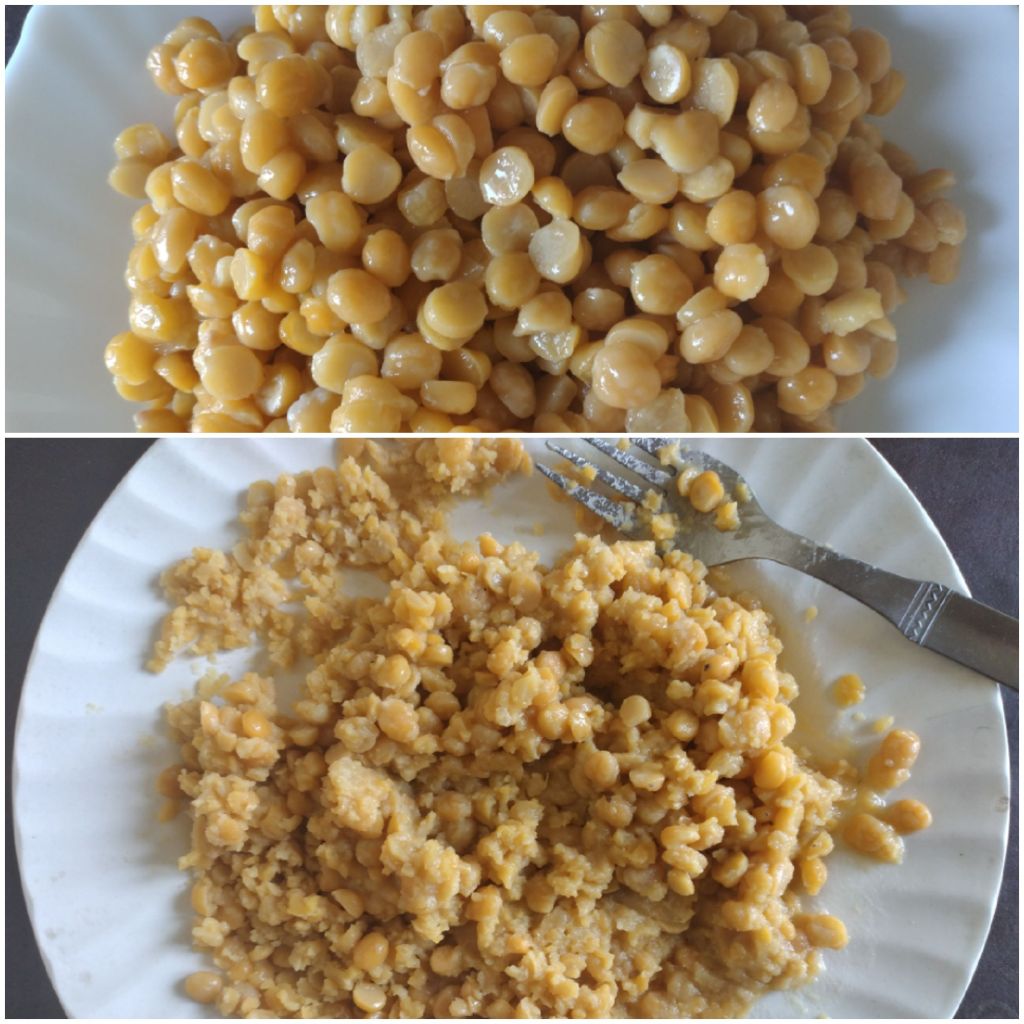
Wash and cook the channa dal in pressure cooker with ½ cup of water and ½ tsp of salt. After the lst whistle, reduce the heat and cook for 3 minutes. Take the dal on a plate and crush ¾ of the dal with a fork.
For tomato puree:
Wash and cut 2 or 3 tomatoes, remove seeds if any and grind finely. Heat a heavy pan with 1 tsp refined oil and cook the pulp with ½ tsp of salt until it become little thick.
For the cabbage leaves:
Take a medium size cabbage and cut the stem from the head of the cabbage deep enough. This will help the separation of the outer leaves from the core. Dip the cabbage in boiling water. Remove the first loosened leaf. Dip again and continue to remove the leaves one by one.
Prepare the stuffing material:
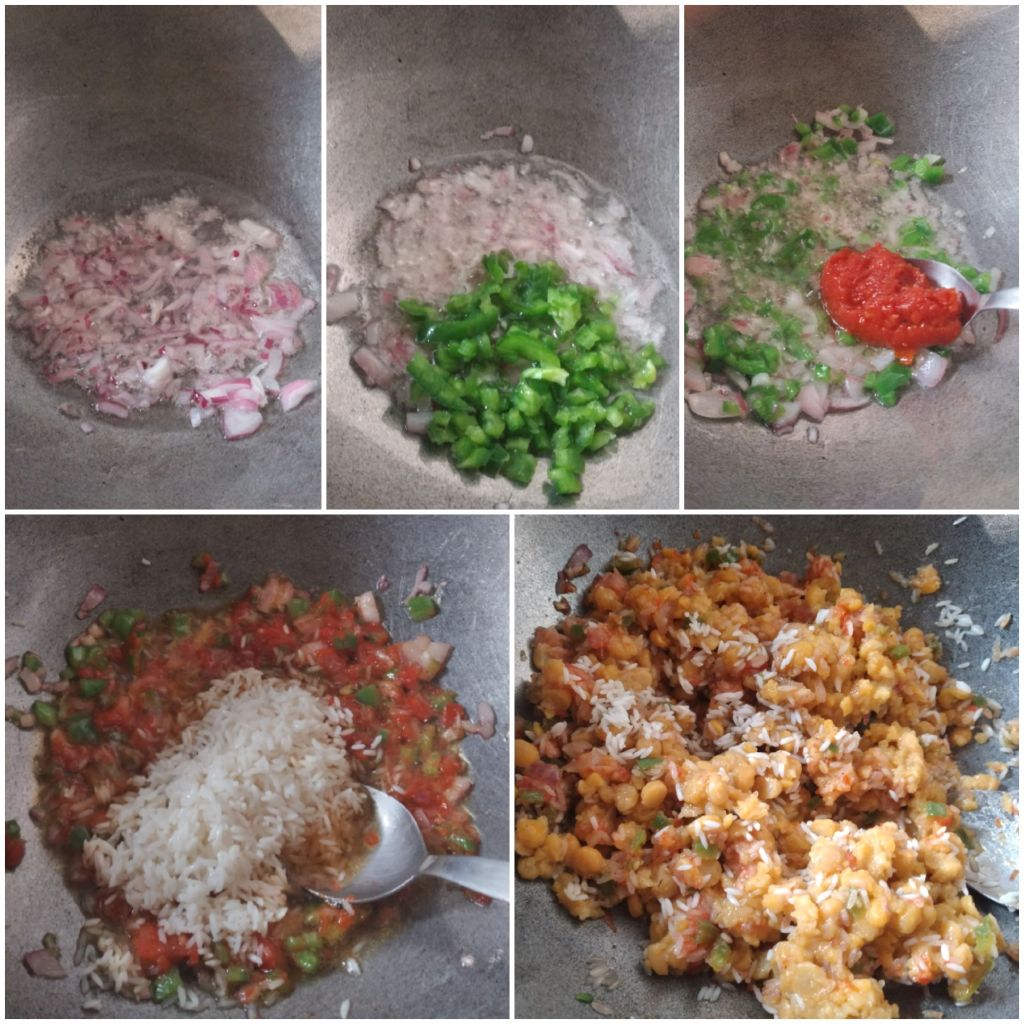
In a heave pan heat 2 Tbsp of refined oil. Add the onion and sauté it for few seconds. Add the capsicum and 1/4 tsp of pepper powder and fry a little. Add the tomato puree and stir well. Add rice and mix well. Next carefully fold in the channa dal into the fried mixture. Switch off the heat.
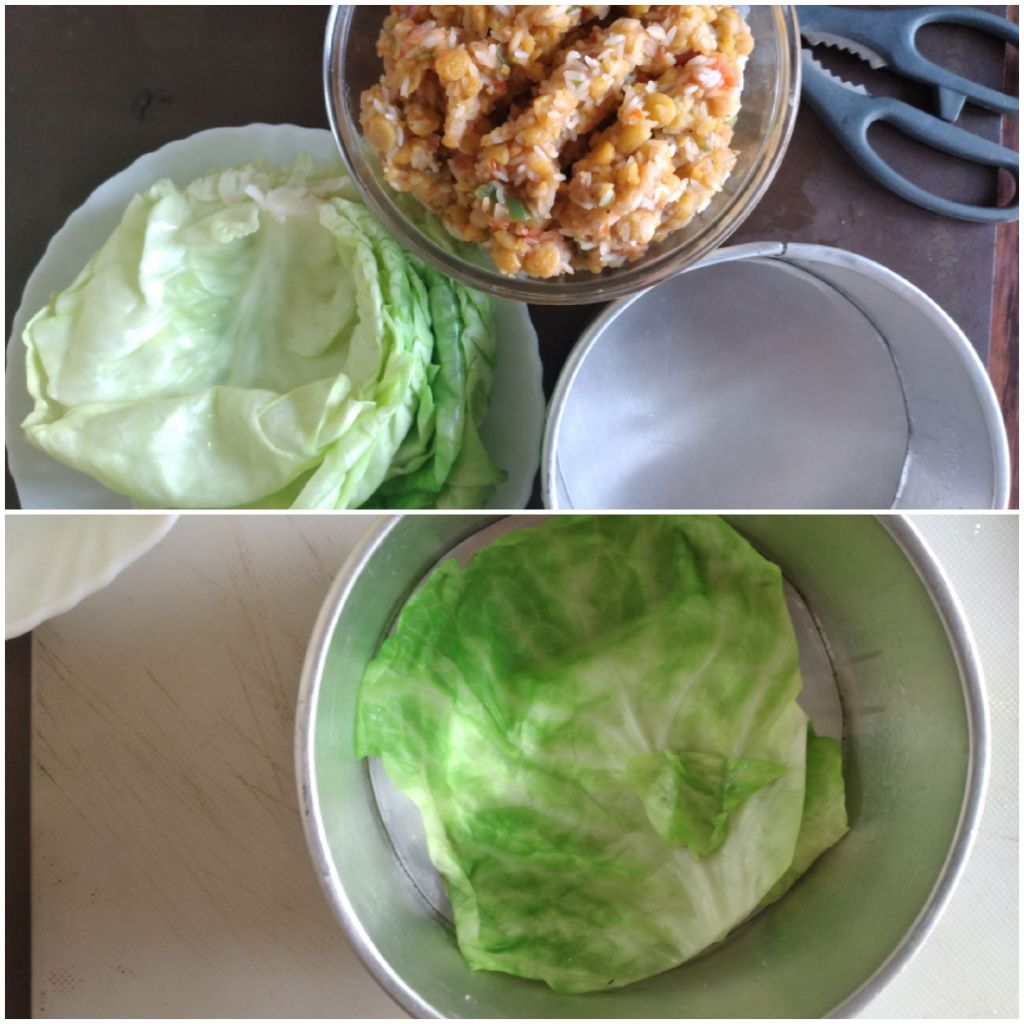
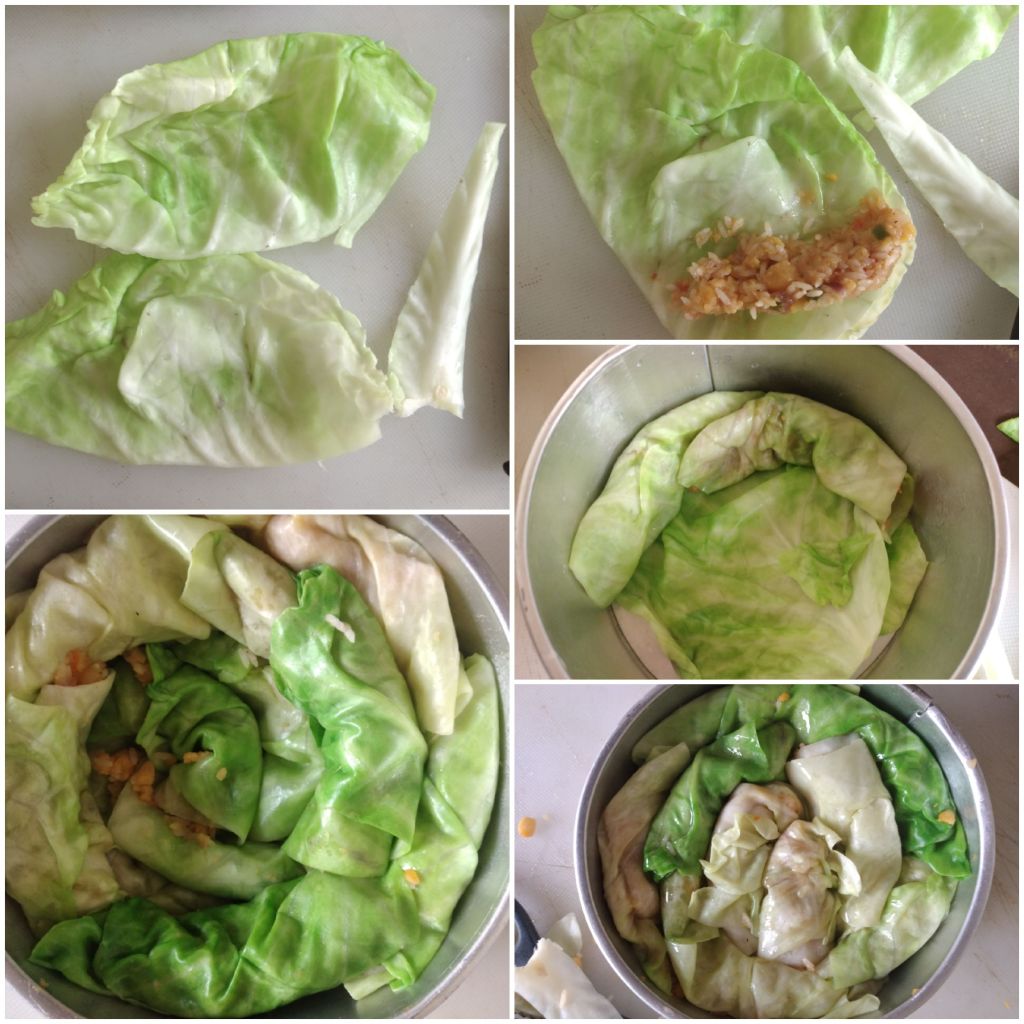
Grease a round baking pan and cover its base with a cabbage leaf as shown in the picture.
Prepare the dolma:
Cut off the thick central part of the cabbage leaf, making it into two parts.
2. Take a spoonful of the prepared mixture and place it on the thicker side of the leaf and roll it up loosely, keeping space for the rice to expand.
3. Place the seam side of the roll downward onto the pan. Make another roll the same way and place it next to the first with one end overlapping it as shown in the picture.
4. Repeat these two steps until the base of the pan is fully covered. Make a second layer on top of the first.
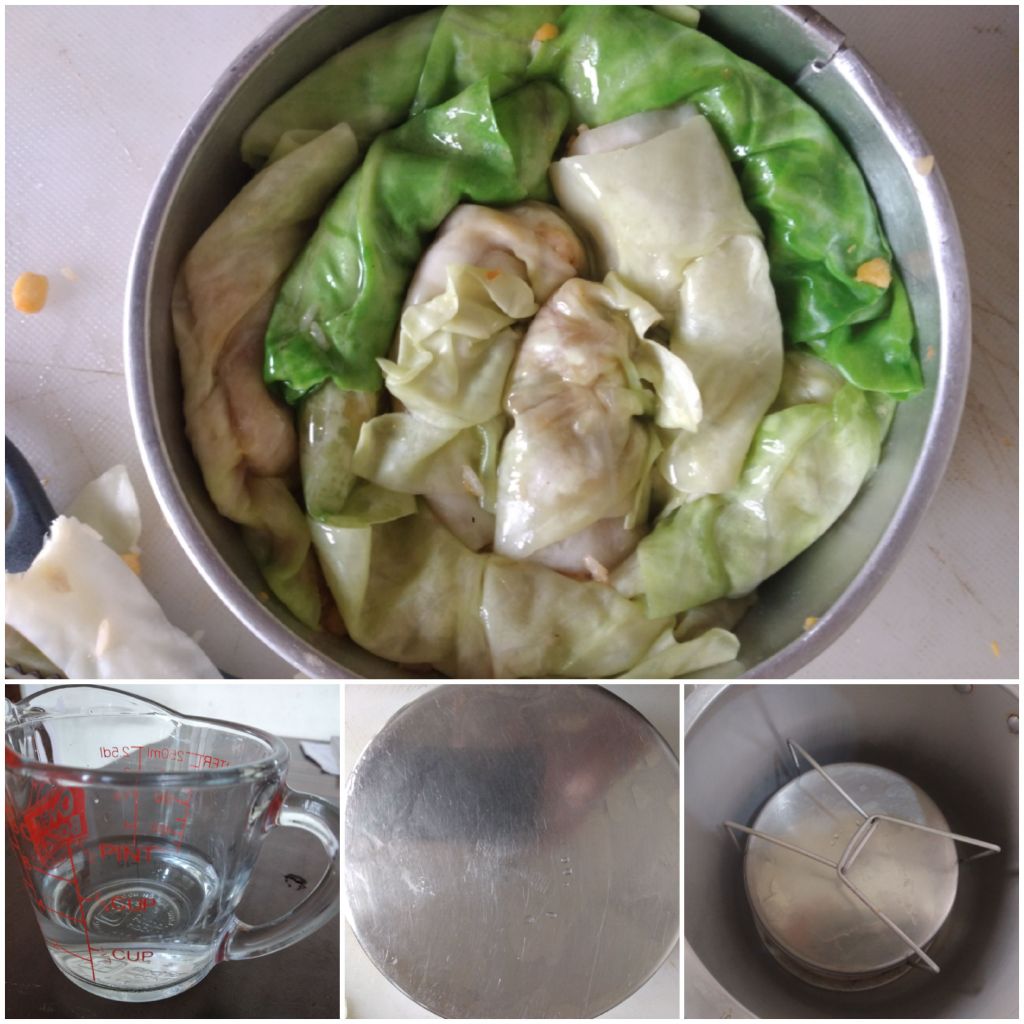
5. Take about 100 ml of water, add 1 Tbsp of lemon juice, sugar and salt to taste and mix well.
6. Add 1 Tbsp oil to this mix and pour over the rolls.
7. Cover the pan with a plate.
8. Steam in a pressure cooker. After the first whistle of the pressure cooker, reduce the heat to minimum and cook for 20 minutes. Switch off the heat
9. When the cooker cools, remove the pan with the rolls and keep it outside for some time before turning the shape onto a plate.
10. Or separate the dolmas.
11. Serve hot with brown onion sauce or as you like.
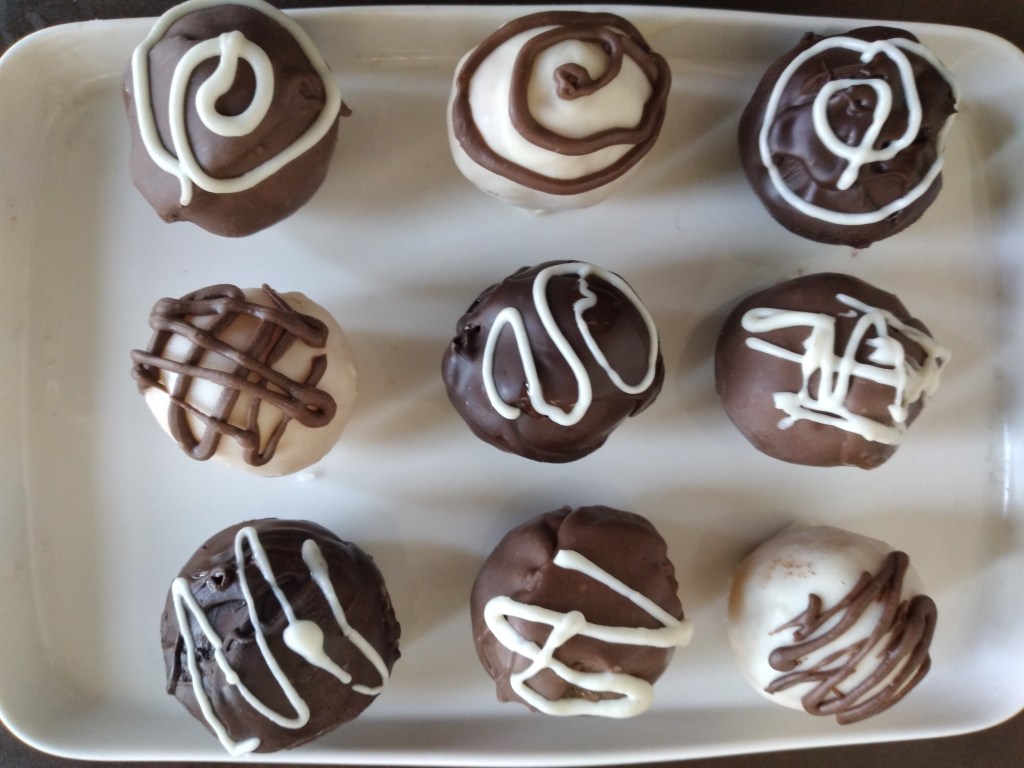
Moonglates are moong balls coated with chocolate. They are delicious and easy to make. Just try it out, something new and interesting !
You need:
For the moong balls
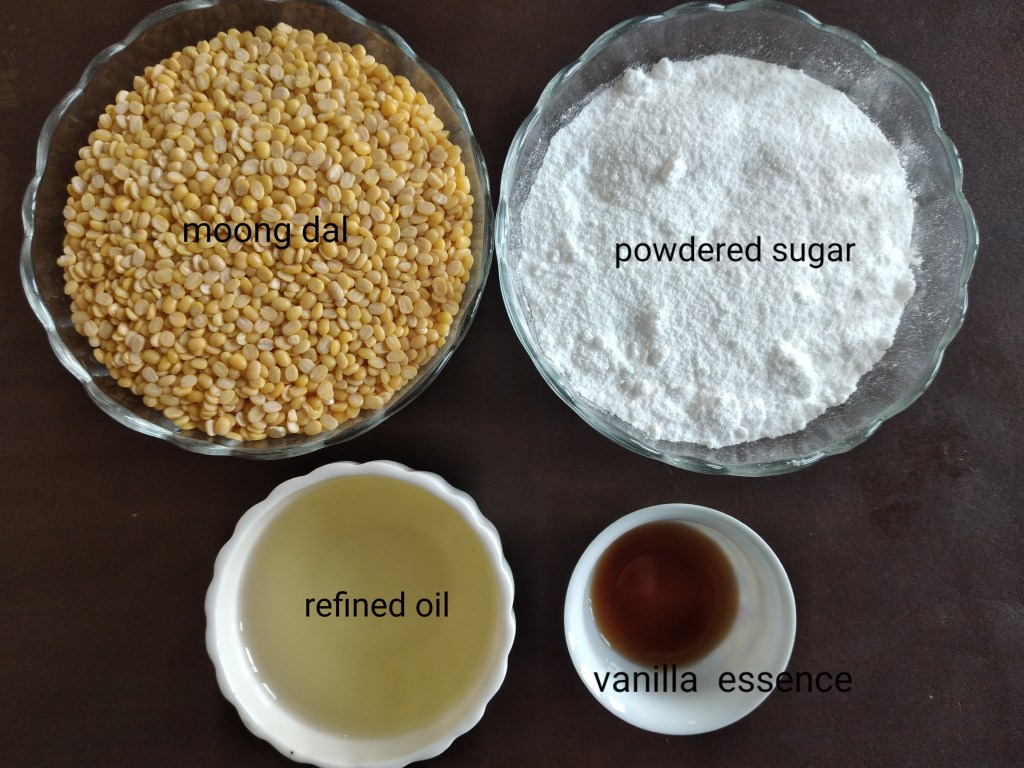
75 gm moong dal/yellow lentil
50 gm powdered sugar
1 tsp vanilla
5 Tbsp refined oil
Method:
Wash and soak the dal for about 4 hours. Drain and grind finely with as minimum water as possible.
2. Heat the oil in a heavy pan. Pour the dal mixture into the oil. Keep stirring till the roasting aroma of dal is released and oil starts to ooze out. Switch off the heat. Add sugar and vanilla essence into the fried dal and mix well.
3. While the mixture is still warm, take teaspoonfuls and make a small balls. Cover the balls with a thin film and keep it in the fridge for about 10 – 15 minutes.
For the coating:
75 gm dark chocolate
75 gm milk chocolate
75 gm white chocolate
Oven proof bowls
Buttered paper
If you are using compound chocolate, chop the chocolate finely. You may use chocolate chips also. Cover a tray with butter paper.
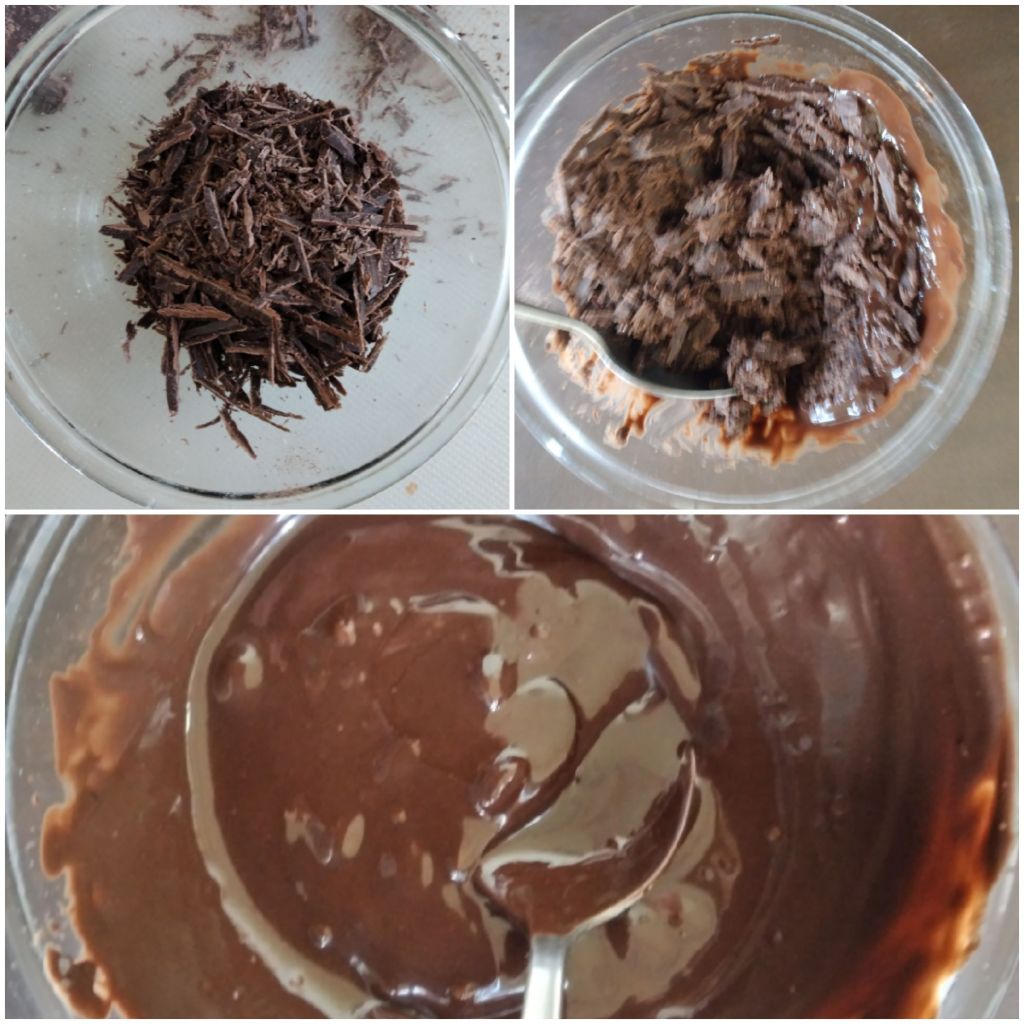
Chop dark chocolate finely and place it in an ovenproof bowl. Microwave the chocolate for 30 seconds at a time. After each 30 second stir the chocolate. As soon as chocolate begins to melt, take out bowl from the oven and stir continuously until all the chocolate melts completely and becomes shinny
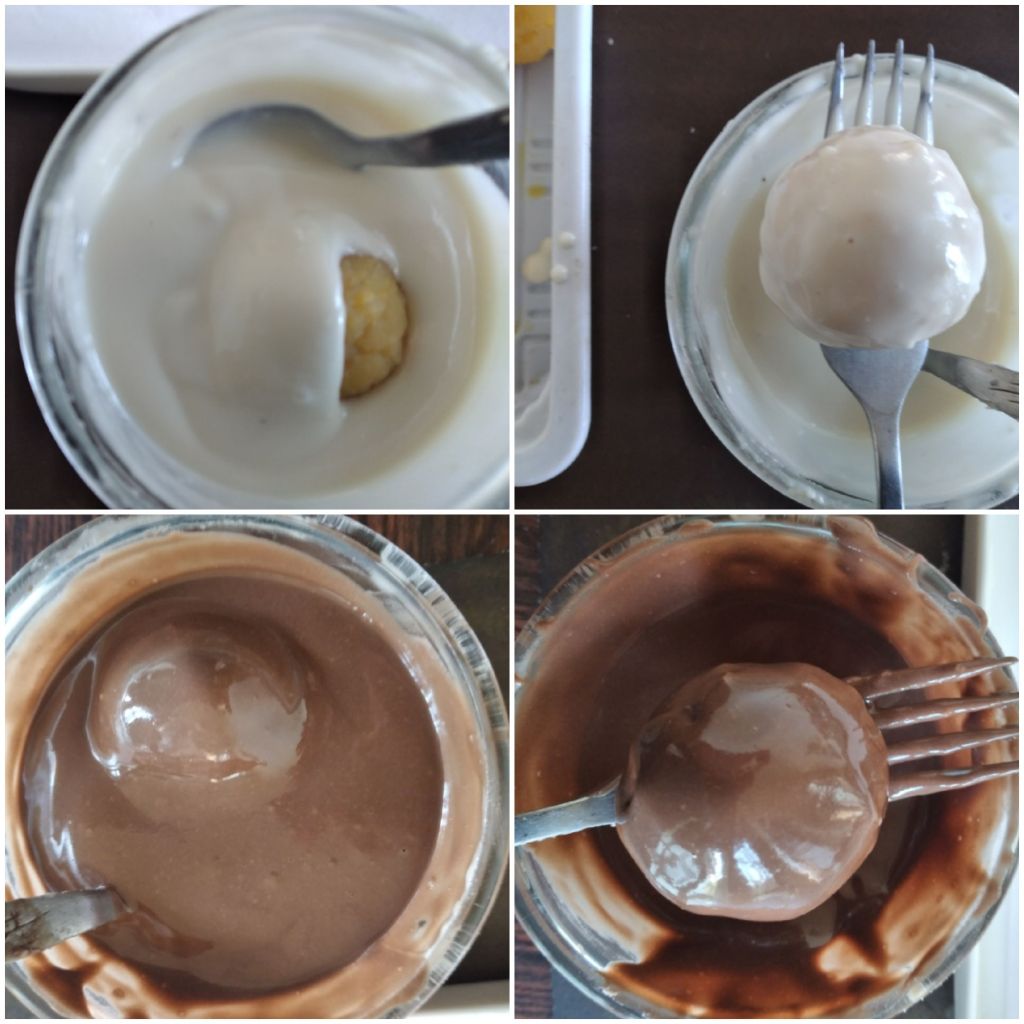
2. Dip the moong balls one at a time. Lift the balls gently with a fork. Tap the fork on the edge of the bowl to remove excess chocolate and place them on the butter paper. Let them stand until firm.
3. Repeat the same procedure with milk chocolate and white chocolate. First melt and then dip the balls.
Channa dal makes excellent chutney as raw or cooked both. It has a nutty flavour and contains protein, iron and fibre. It is sufficiently low in calories and has no fat.
You need:
100 gm channa dal
½ tea cup of curry leaves/coriander leaves chopped
14-15 clove of garlic
5-6 green chillies (optional)
5-6 Tbsp of Olive/refined oil
2 Tbsp of Vinegar, Salt and sugar to taste
Method:
Wash and soak the dal for about 4-6 hours. Wash it again and drain out the water completely.
2. Wash the curry leaves. Wash and crush the garlic a little. And chop the green chillies.
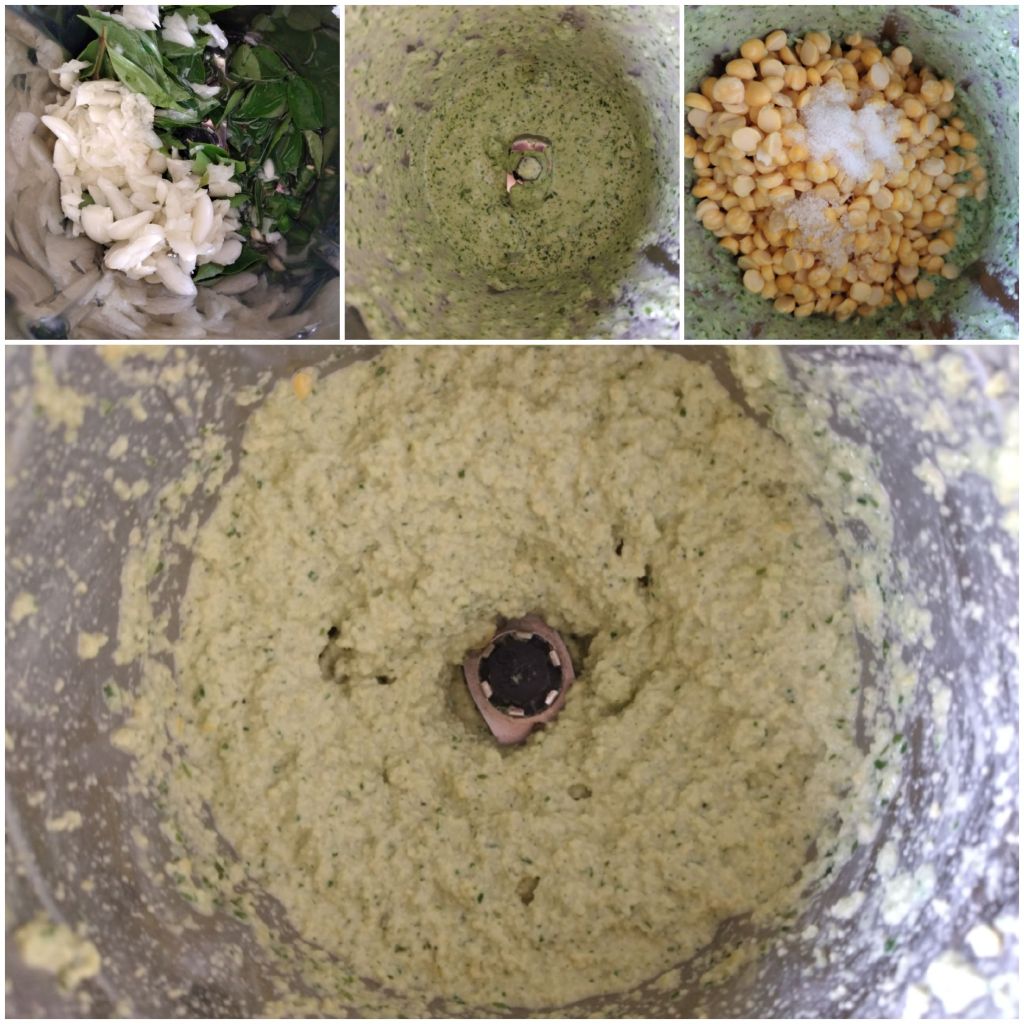
3. Place curry leaves, garlic and chopped chillies into the grinder.
4. Add 2 tablespoon vinegar, 5 Tbsp of oil and grind as finely as possible.
5. Add the dal, salt and sugar to taste and continue grinding to a fine paste.
6. Add extra oil if needed to make the mixture smooth. Adjust the seasoning.
It is an excellent relish or dip for savoury finger food.
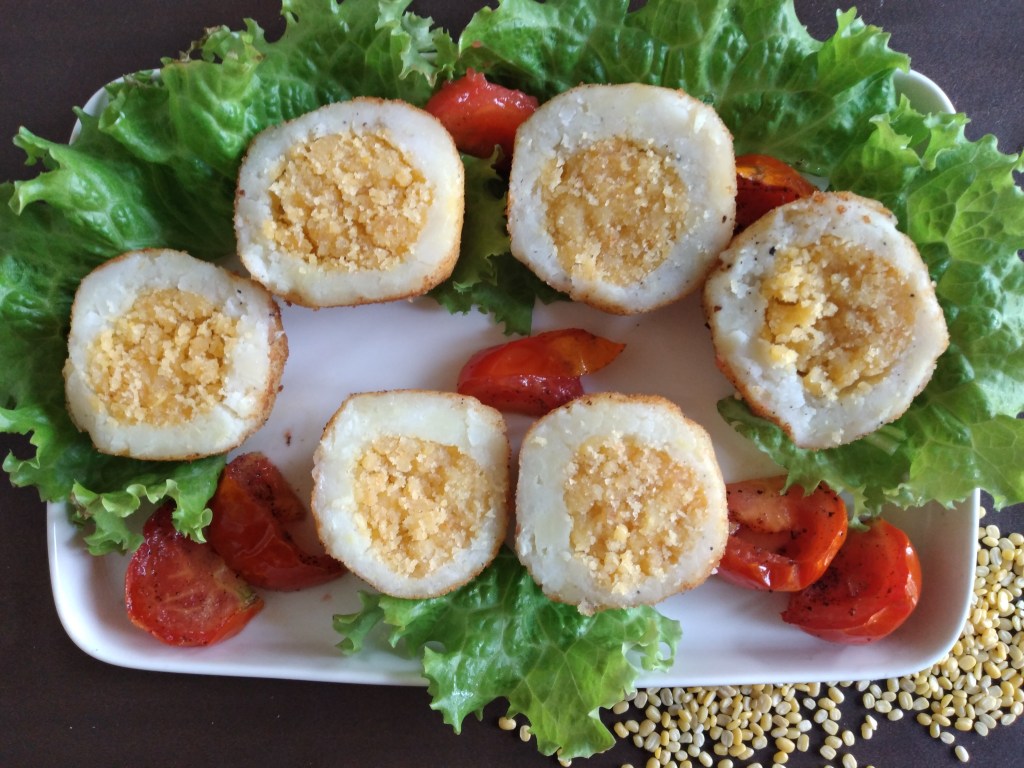
These delicately fried eggs are soft with buttery egg white and cheese moong yolk. Try one. I’m sure you will be back soon for the other half.
You need:
For the egg white:
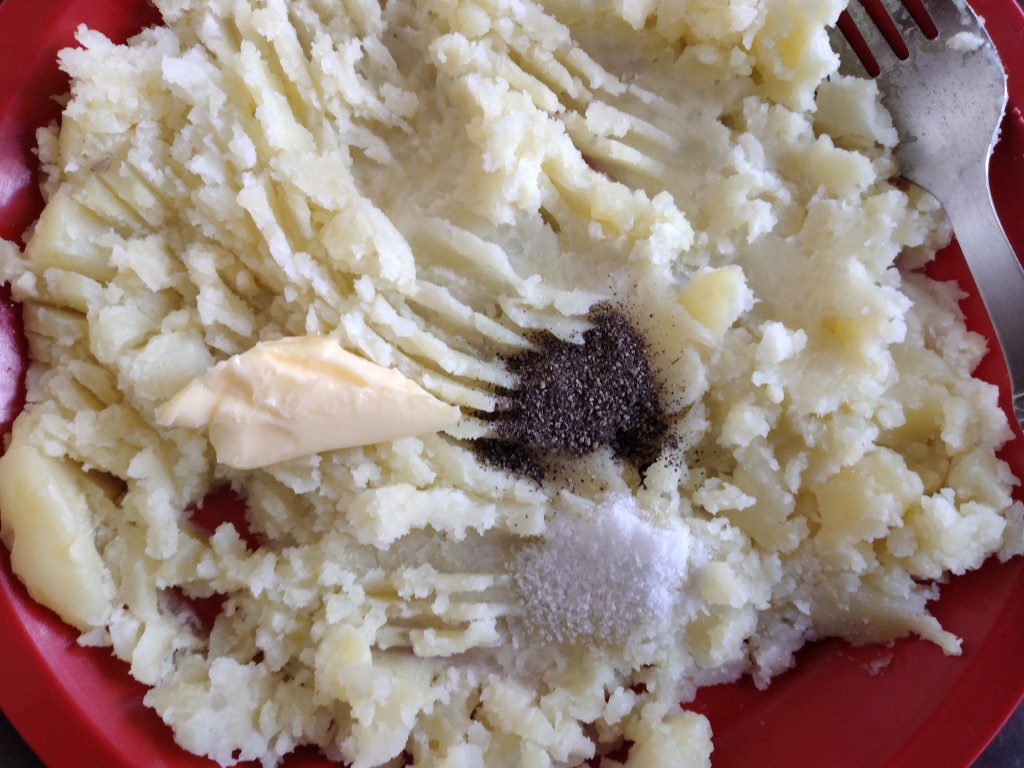
2 medium size cooked potatoes finely mashed,
1 tsp butter, salt and pepper to taste.
Mix all the ingredients well and keep aside.
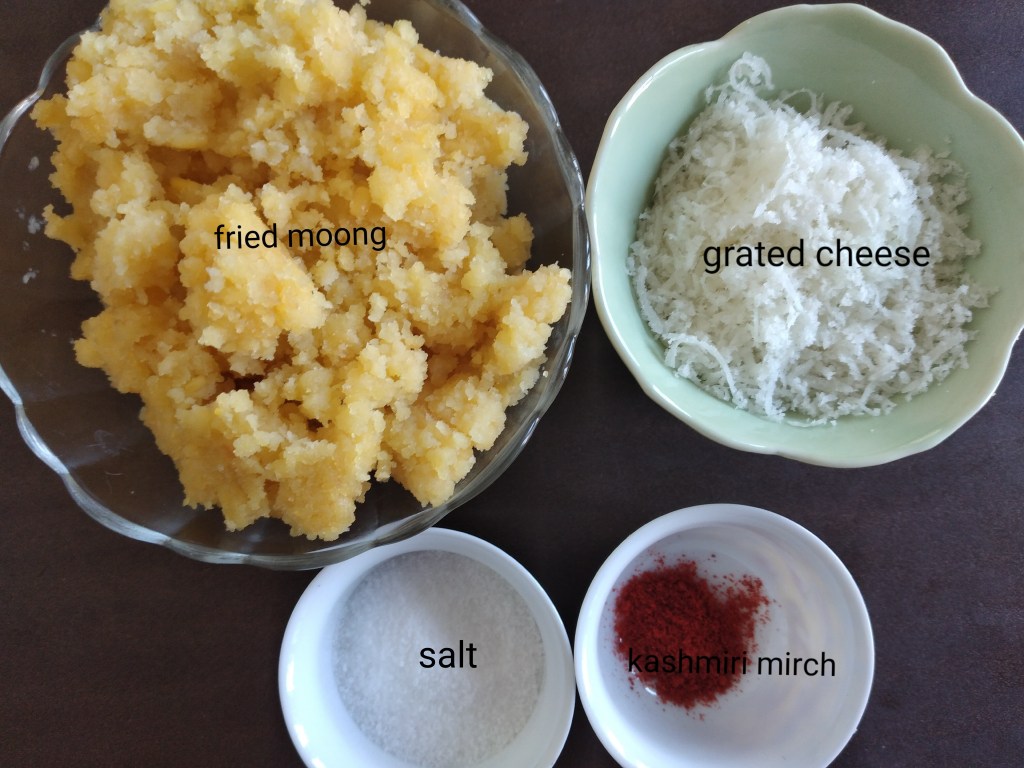
For the yolk:
Fried moong mixture*,
1 Tbsp grated cheese,
Salt to taste
A pinch of kashmiri mirch/red paprika powder to deepen the colour (optional)
The recipe for moong is at the bottom of the page.
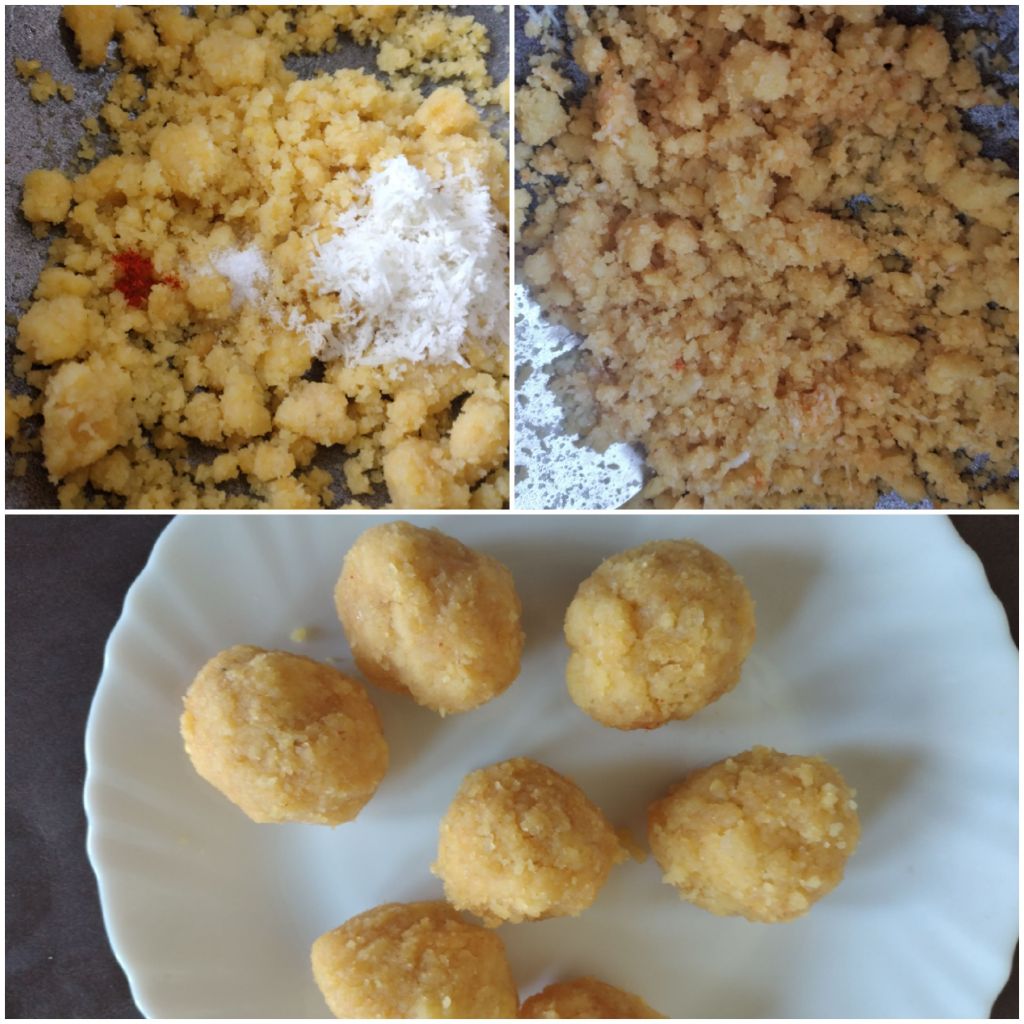
Add the grated cheese, a pinch of kashmiri mirch and salt to taste to the cooked moong and mix them well. Make small balls as big as an egg yolk.
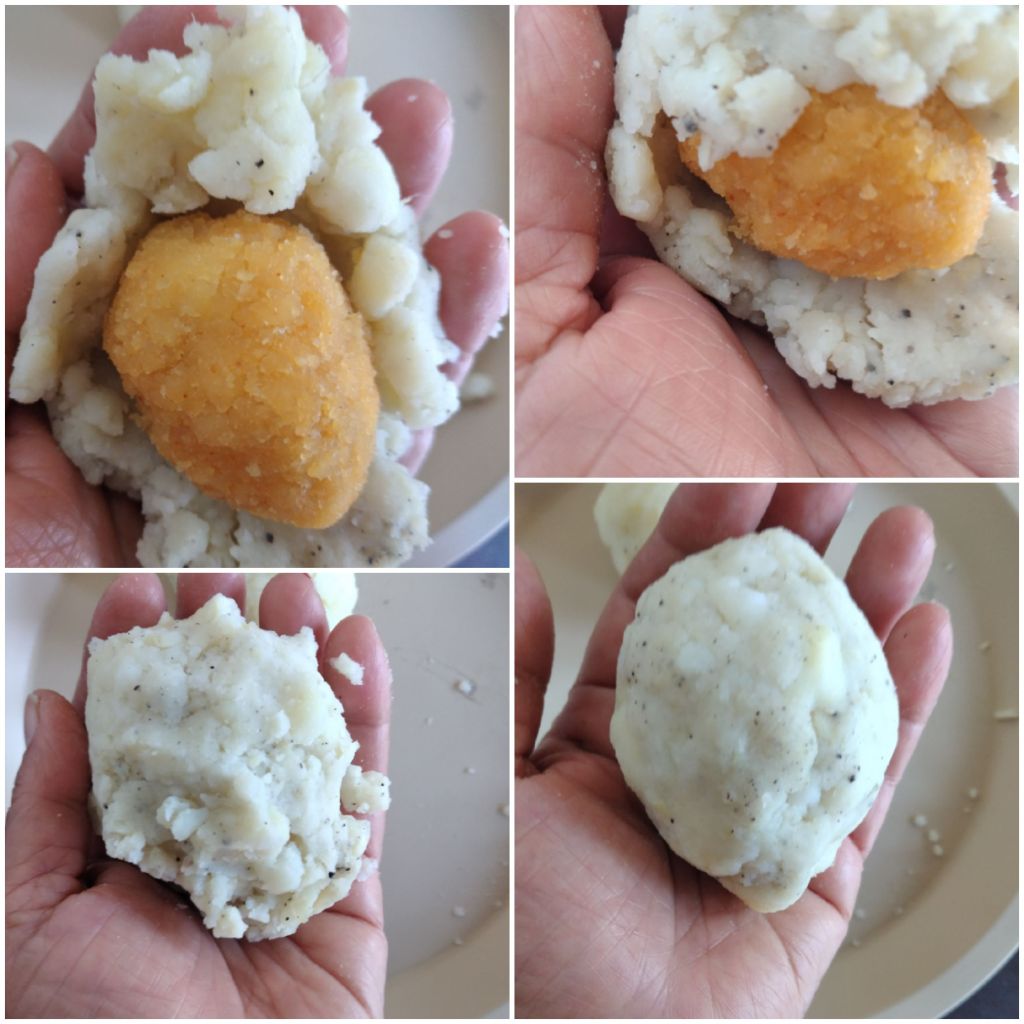
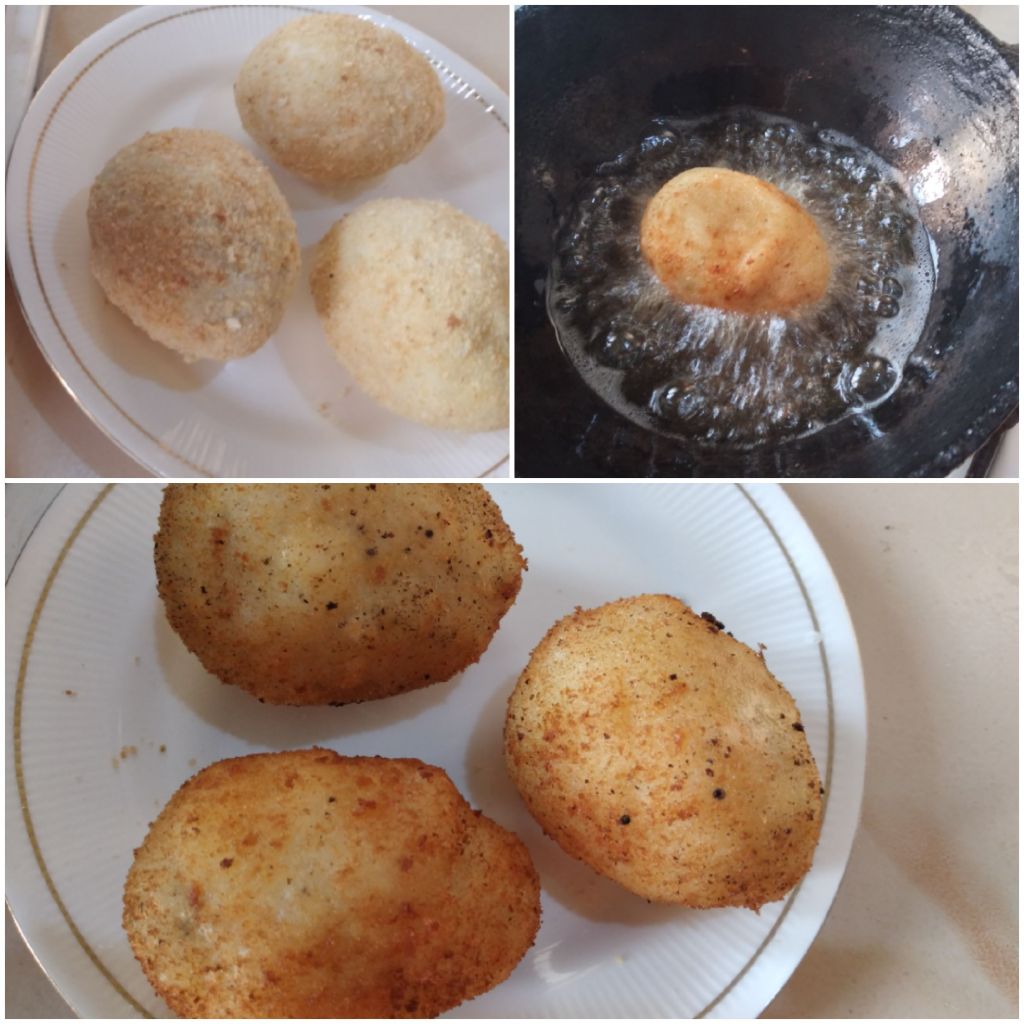
Take a small amount of mash potato on the palm of your hand and flatten it. Place a moong ball and cover it completely with potato as shown in the picture. Smooth out the surface as much as possible.
Make a thin batter with 1 Tbsp of corn flour. Dip the potato balls into it. Coat the same with bread crumbs as shown in the pictures.
Deep fry the eggs. Allow them to cool. Slice the eggs into halves and serve warm.
*How to make the fried moong:
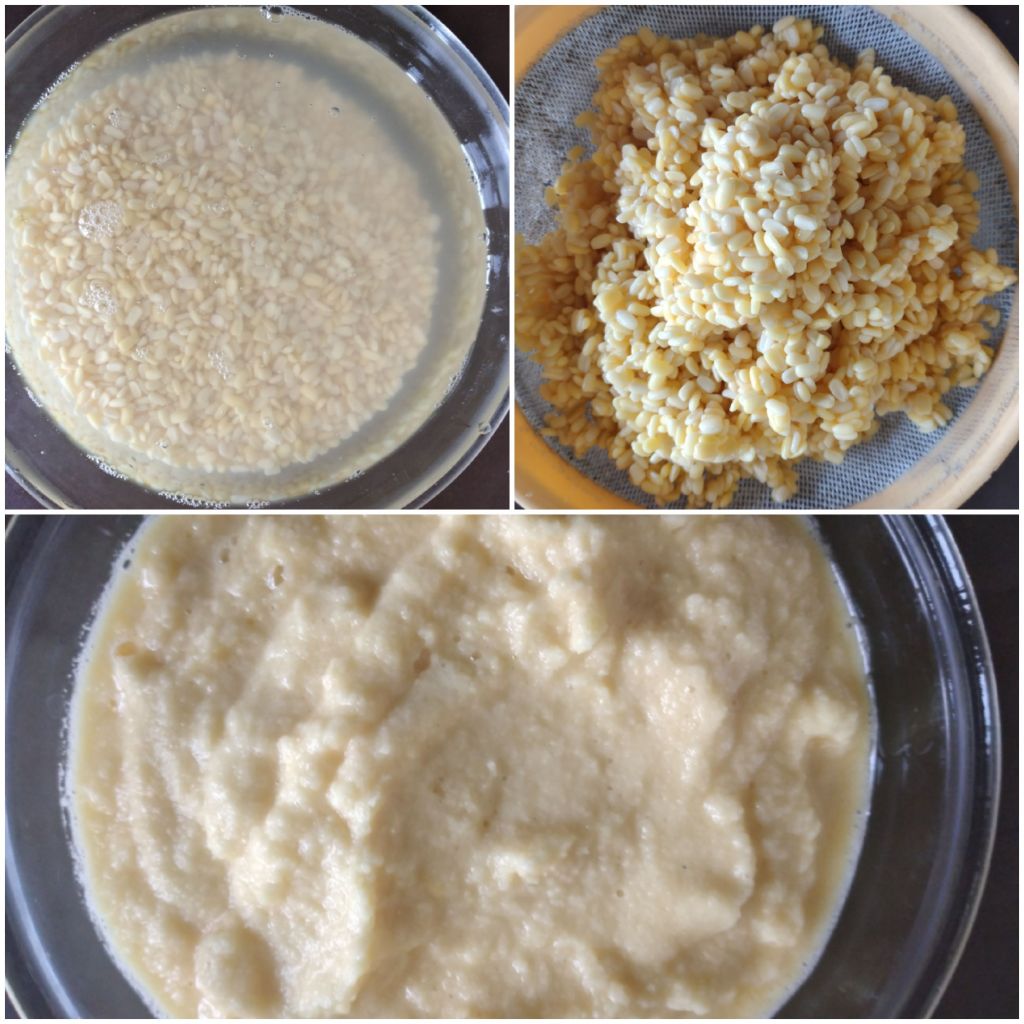
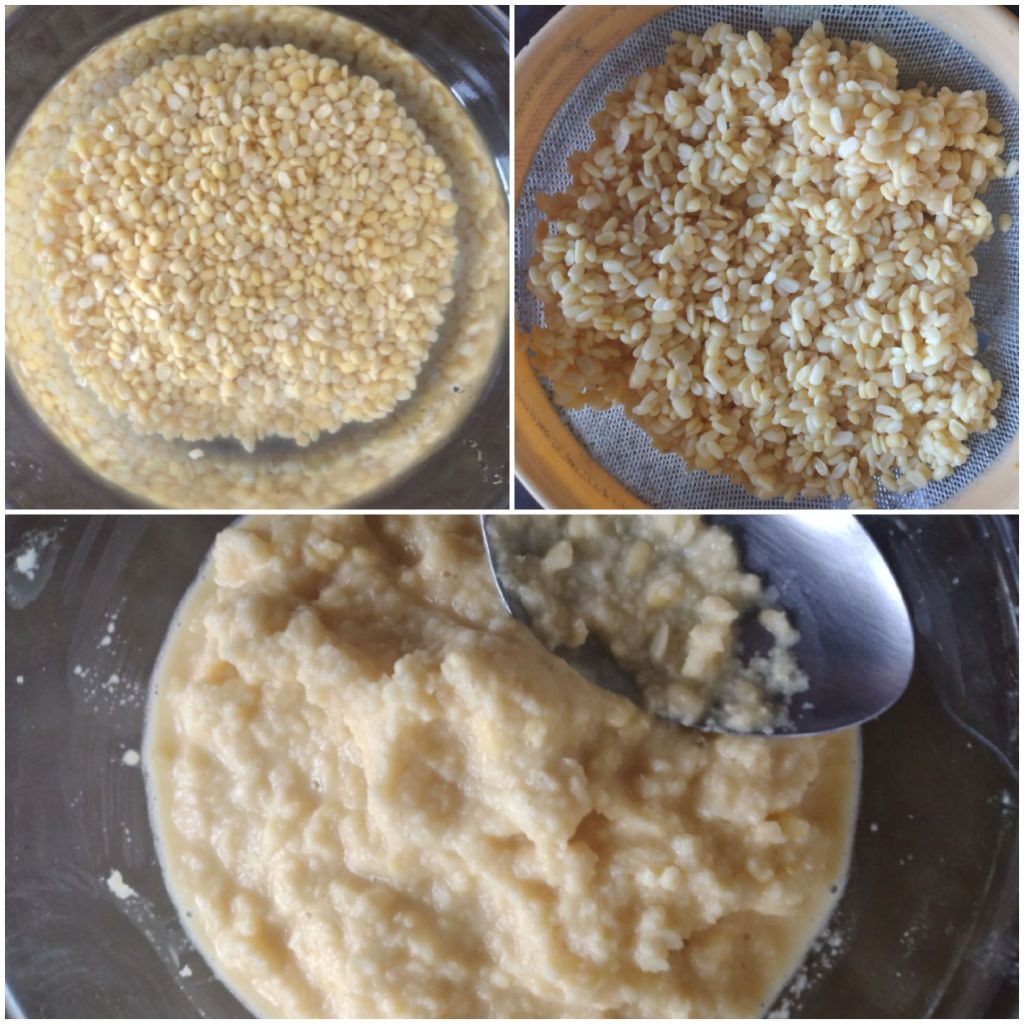
Wash and soak 50 gm of moong dal for about 4 hours. Grind it with minimum water as possible.
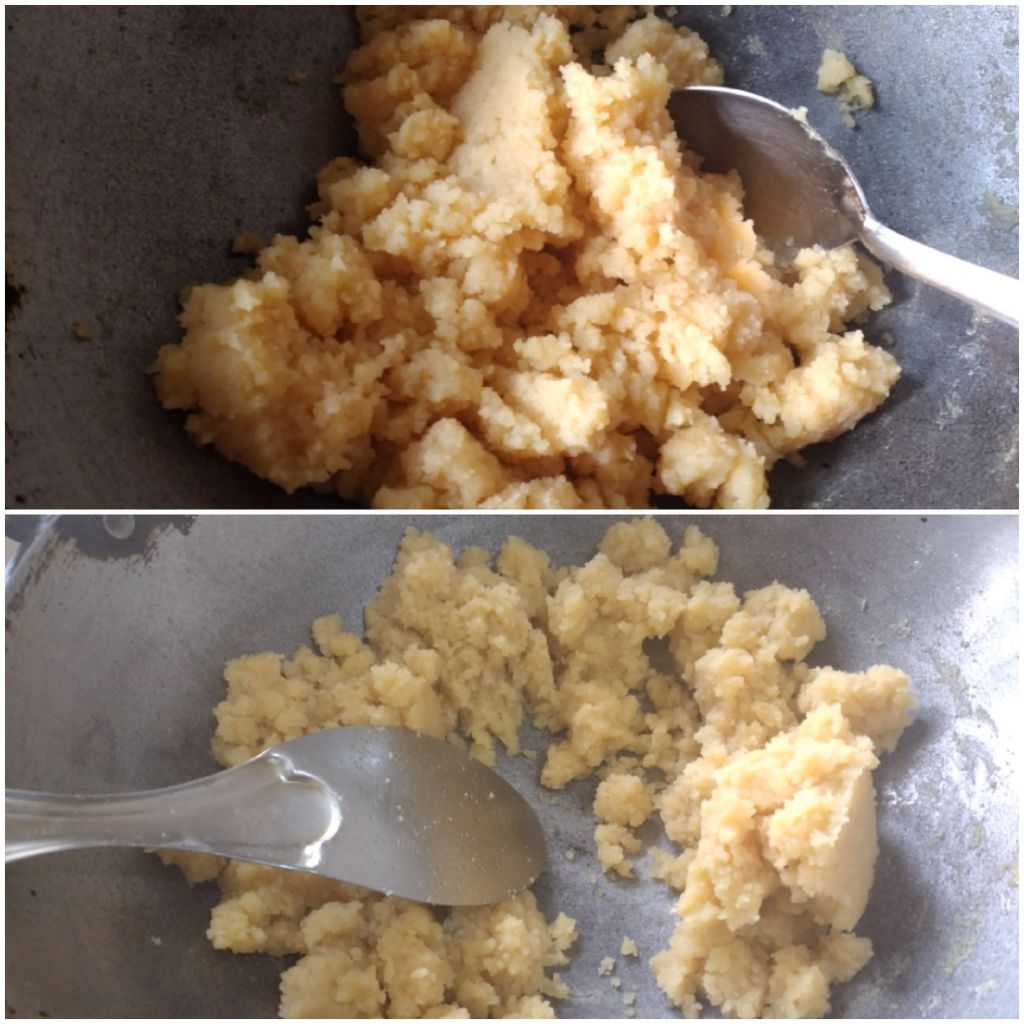
Heat a heavy pan with 50 ml of refined oil. Pour the moong into the oil. Keep stirring the mixture until you get the roasted smell and oil begins to come out. Switch off the heat. Take out the moong carefully from the pan leaving the oil behind.
The tiny little yellow moong /yellow lentil with sweet and nutty flavour is used in many sweet recipes.
You need:
100 gm Moong dal
50 gm Sugar
100 ml ghee/refined oil
Few pistachios
Patty cases
Method:
Wash and soak dal for about 4 hours. Drain it well and grind it coarsely with as minimum water as possible.
2. Remove the shells of the pistachios and chop them finely. Spread out on a plate and keep it aside.
3. Grind the cardamoms in the grinder and then add the sugar.
4. Grind sugar and the cardamom powder together and sieve the mixture through a fine sieve and keep it aside
5. Heat a heavy pan and add the ghee/refined oil. When the oil is medium hot pour the moong batter and stir well. The mixture will have a tendency to stick to the pan. So you must keep stirring until the oil starts oozing out from the mixture. The base of the pan will look oily and you will get the smell of roasted moong. Switch off the heat and add the powdered sugar and mix well.
6. When it cools, make small balls to fit the patty case. Slightly touch pistachios on the plate with one side of the ball and place the same side facing downward into the patty case. Press it firmly and then remove carefully from the mould.
On completion of more than 5 months of experimental cooking with dal, I decided to have a few friends over for lunch— for a Dal Day ! – kept fingers crossed that it shouldn’t be a ‘dull’ one.
Sunday 7thJanuary 2021 dawned and my guests arrived by 1.30pm, each yelling out –
“We are famished!”
“Can’t wait any longer!”
“I skipped breakfast and here I am to attack your dalonthetable!”.
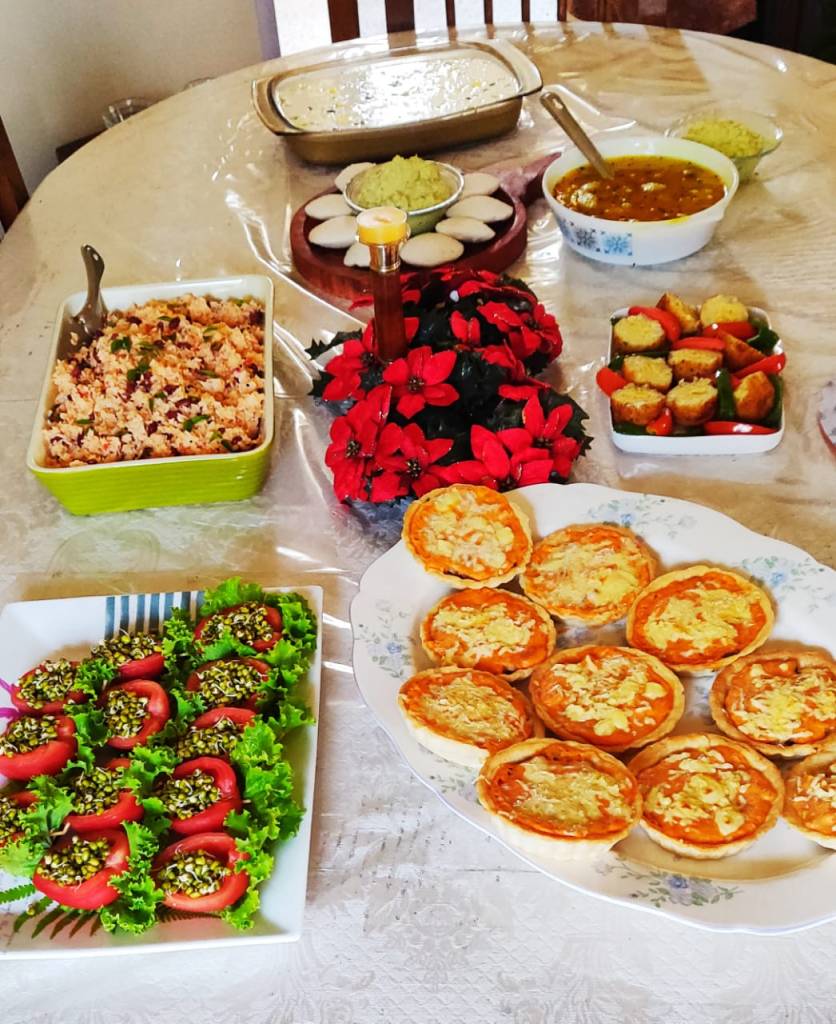
The menu is in the picture above, clockwise – Idli, Channa chutney, Sambar Dal, Fried Moong Eggs, Black-eyed Flan, Sprouted Moong Salad, Rajma Rice and Moong Pudding.
Individual pictures of the menu:
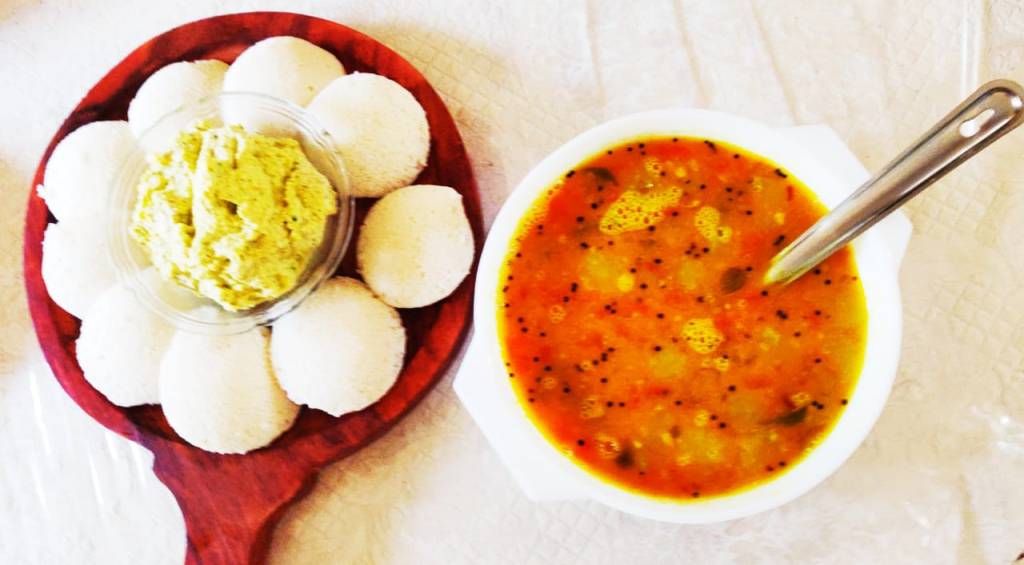
Idli, channaChutney, Sambar.
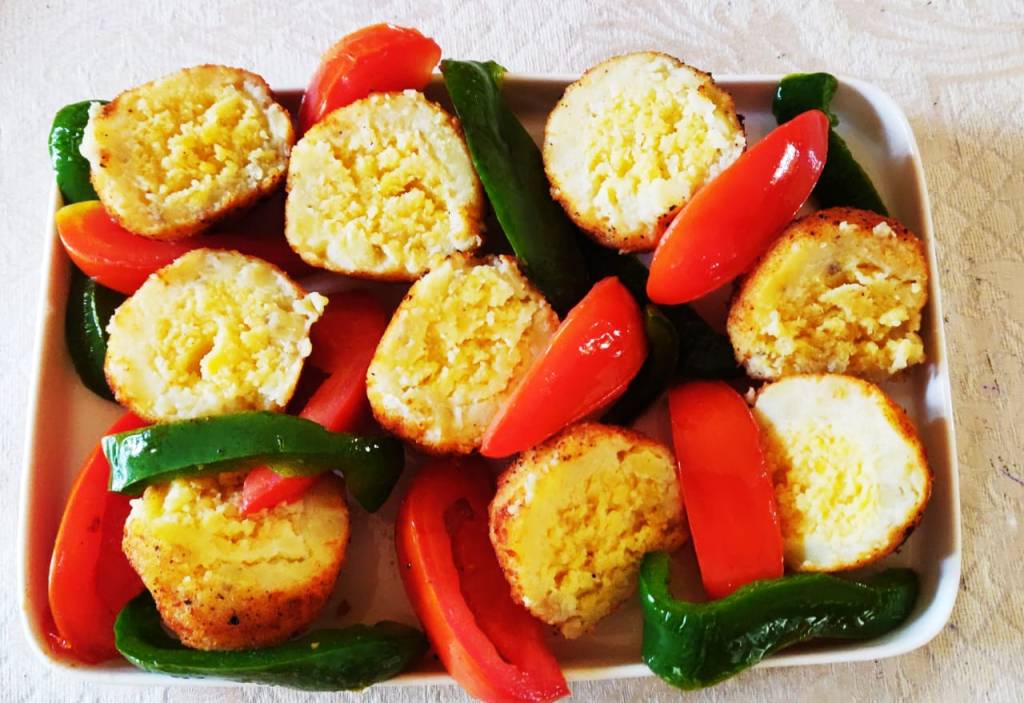
Fried Moong Eggs
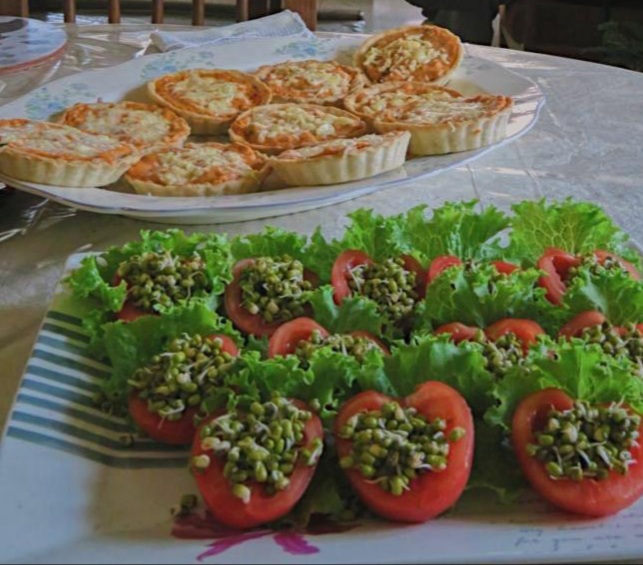
Black-eyed Flan and Sprouted Moong Salad
Rajma Rice
Lastly for the Sweet Tooth
Moong Pudding
Some of the comments from the guests at WhatsApp:
“Dalicious!” my granddaughter Rheana, who is undertaking classes on Culinary Art , exclaimed.
“ All dal items, all dalicious and exciting and never dull”.
“ Showed my friend the pictures. He took them to show his wife ! Very impressed.”
“ Fantastic it was !!! And creativity at its height !“
“That was a delicious lunch ..thank you sooooooo much.”
“Exotic Daal lunch today”.
“Complete vegetarian.. ..simply spellbound !! Can’t find a word to define ……..you are unbelievable” remarked someone who makes exotic vegetarian meals.
And very soon the serving dishes were wiped clean…It made my day ! My Dal Day !
The proof of the pudding is in the eating— they say! And the comments of the guests are inspiring enough to explore and indulge in more creativity.
Before I sign off – I would like to thank Rheana and my brother for the beautiful photographs.
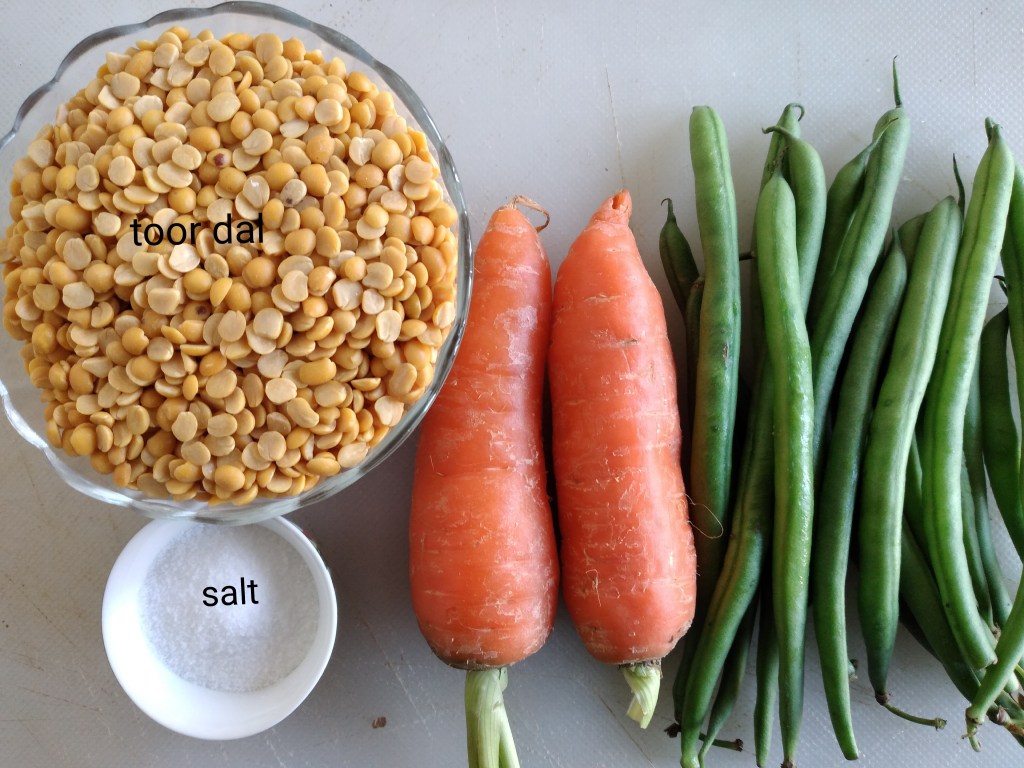
Sambar is a popular dal from South India. The uniqueness of this dal comes from the tamarind and the aroma of sambar powder. It is served with Idli, dosa, vara or plain rice.
Toor dal is known as pigeon pea or red gram in English. It has a distinctive nutty flavour. It is not only tasty but also rich in Protein, carbohydrate and fibre.
How to make sambar powder and tamarind puree is given at the end of the recipe.
Ingredients:
For the dal :
100 gm Toor dal
50 gm Carrot
50 gm bean
1 tsp salt
Method:
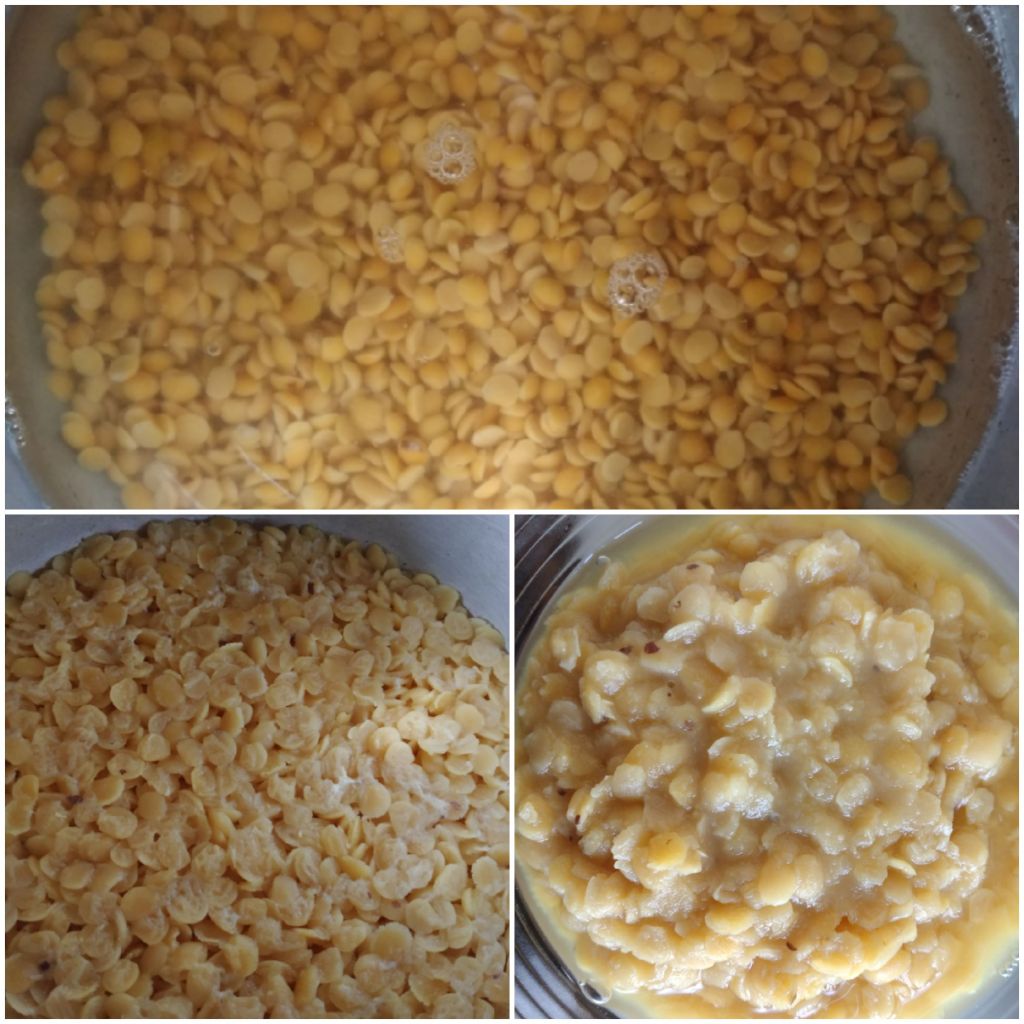
Cook the dal: Wash and pressure cook the dal with ½ tsp of salt and enough water to immerse the dal.
After the first whistle, lower the heat and let it simmer for 2 minutes and then switch off the cooker. Allow it to cool and then add little water to the dal and take it out from the cooker.
Cook the vegetables:
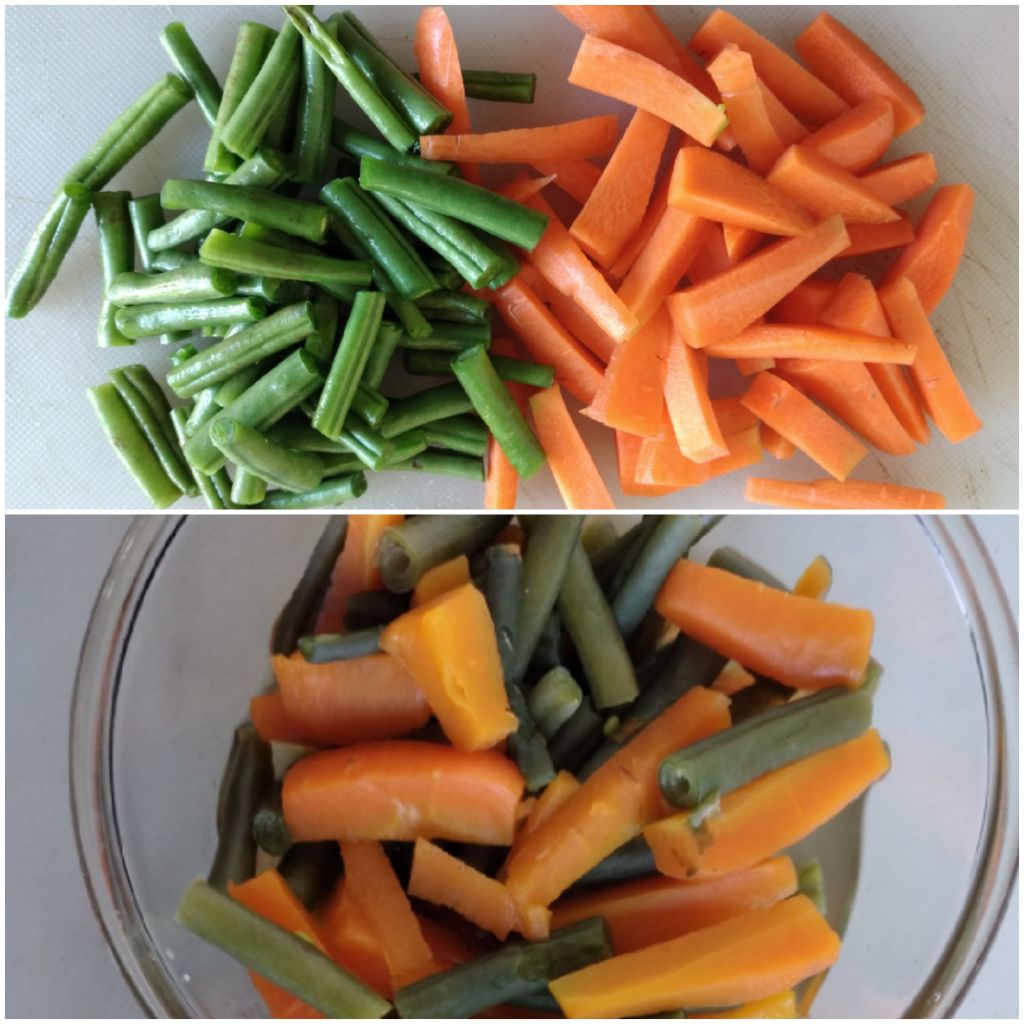
Wash and remove strings, if any, from the beans. Wash and peel the carrots. Cut both the vegetables to the same size. Cook them together in the pressure cooker with ¼ tsp of salt and very little water. Switch off the cooker at the 1st whistle. Remove the vegetables from the cooker carefully and keep them aside.
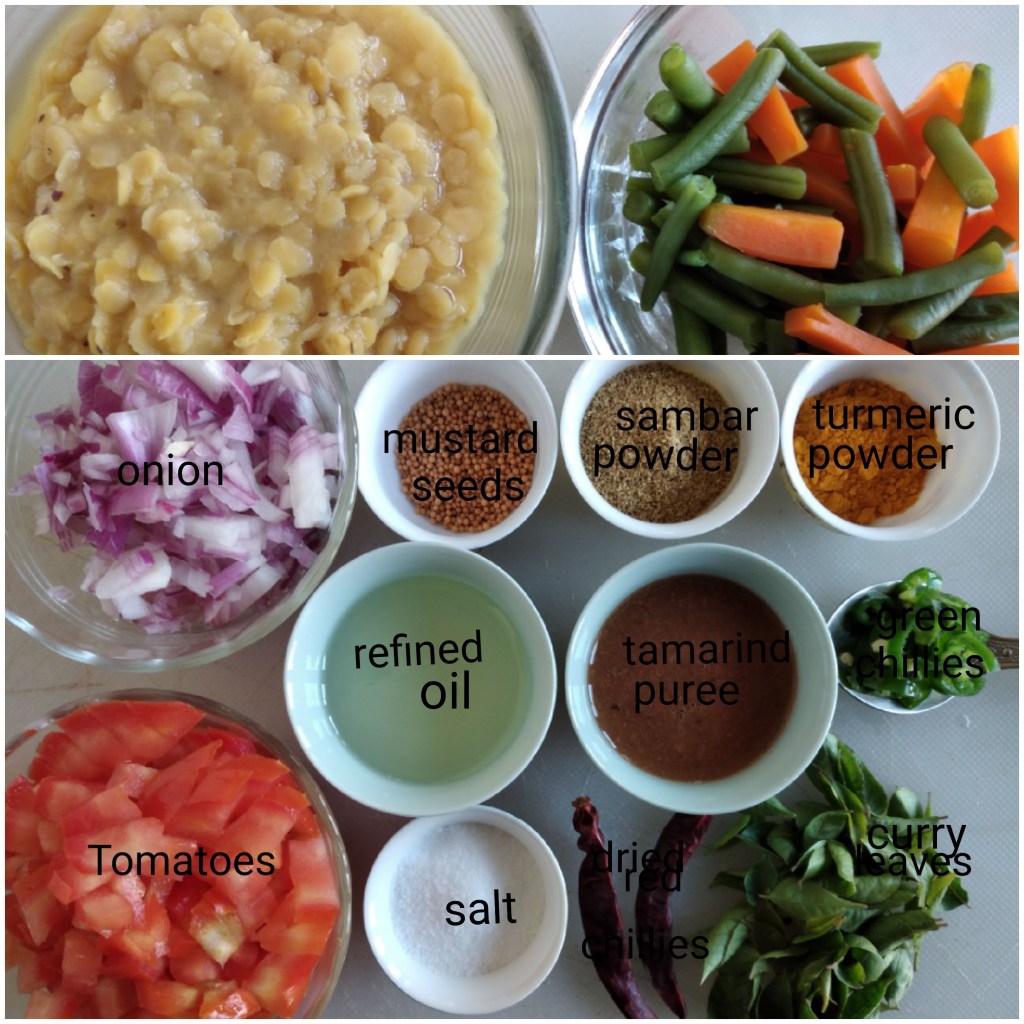
For tempering:
3 Tbsp refined oil
1 tsp mustard seeds
2 red dried chilli
1 Medium size onion finely chopped ( 60 gm)
1 Medium size tomato finely chopped (75 gm)
1 tsp finely chopped green chillies
1 handful of curry leaves
1 tsp turmeric powder
2 Tbsp tamarind puree**
1 Tbsp of sambar powder*
Salt to taste
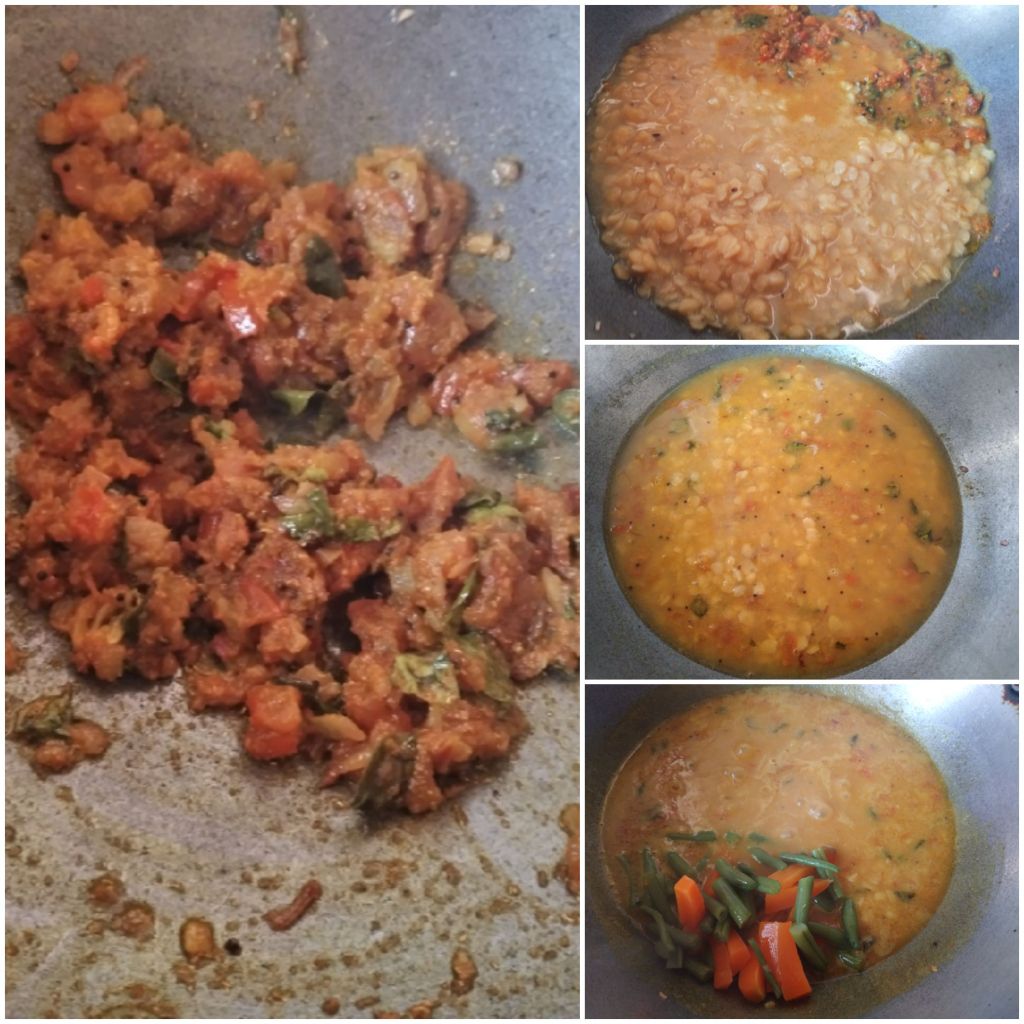
Heat the oil in a big pan. Reduce the heat and add mustard seeds and allow it to crackle.
Add the dry red chillies and fry a little.
Add onion and sauté till transparent, add curry leaves and fry for few more seconds.
4. Add the chopped tomatoes and ½ tsp of salt and fry for about 30 seconds.
5. The salt will help the tomato to get soft quickly. Add the chopped green chilli if you like hot sambar.
6. When the tomatoes get little pulpy add 1 tsp of turmeric and 1Tbsp of sambar powder.
7. Fry all the spices until the aroma of the sambar powder is released.
8. Pour the cooked dal over the fried spices.
9. Add warm water to adjust the consistency of the dal. As dal begins to boil add the cooked vegetable.
10. Add 1 Tbsp of the tamarind puree. Adjust the salt.
Boil the sambar well for 2-3 minutes more. Serve hot with idli, dosa or white rice.
*How to makeSambar powder:
Sambar powder is available in the market. You can make your own sambar powder at home if you wish. In absence of sambar powder, you may use double amount coriander powder.
For this you need:
1 tsp chana dal
1 tsp urad dal
2 Tsp coriander seeds
1 tsp cumin seeds
1/2 teaspoon mustard seeds
Few fenugreek seeds/methi
2-3 Black peppercorn
1 dry red chillies
Few curry leaves
1 pinch of Asafoetida/hing optional
Roast all the above ingredients in a heavy pan over a low heat to bring out the aroma from all the ingredients.
Allow it to cool and then grind to fine powder. This is the sambar powder. Store this in an airtight container and use as needed.
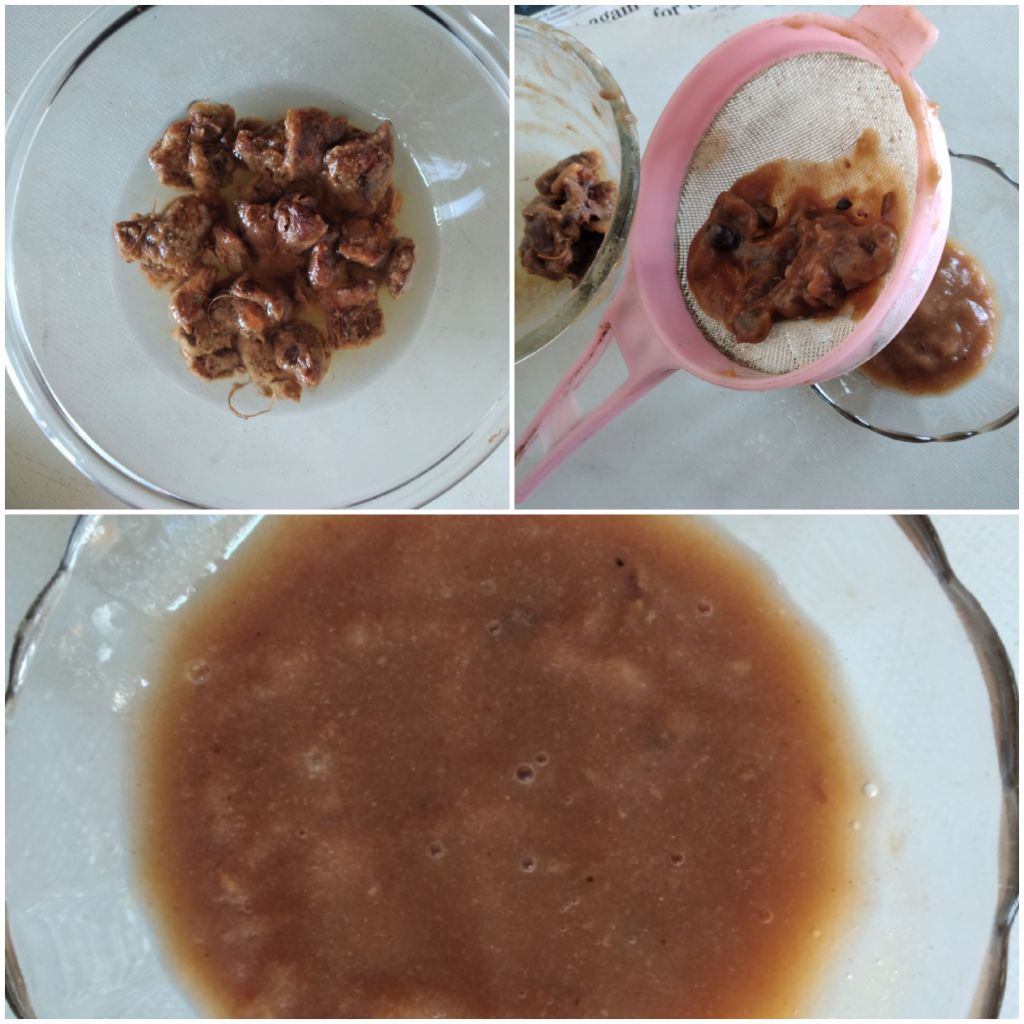
**How to make tamarind puree:
Tamarind puree is available in the market. You may also make your own tamarind puree at home.
Soak a few fresh/dried tamarind in little hot water for about 10 minutes. Crush them with your finger and strain the liquid through a sieve.
Tempering is a process by which the flavour and taste of the cooked dal is enhanced by pouring the hot oil/ghee along with the fried spices into it. When the heated oil comes in contact with the liquid dal a big sizzling sound is created.
It is a believed, louder the sizzling sound better the taste will be.
Tempering can either be done before cooking the dal or as the final stage of making dal.
Tempering is also know as tadka, baghar,chaunk, thaalippu, vaghaar, phodni, sambhar, telmora and so on.
How to temper dal
Heat little oil or ghee and add dried or fresh spices as in the recipe. Fry it for a while until the aroma is release from the spices without burning. Next pour the hot spice mixture over the cooked dal.
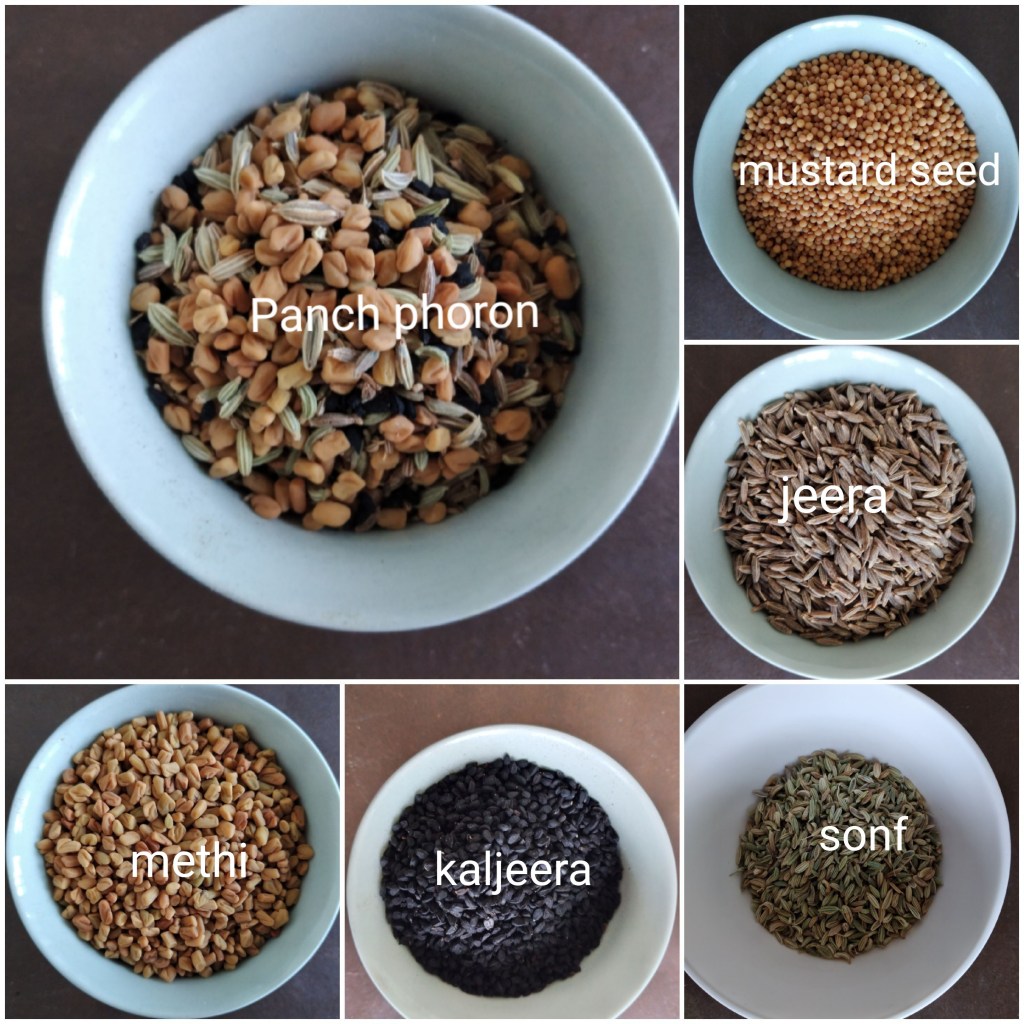
In the picture tempering is done with red dried chilly and panch phoron.( 5 different spices)
Some commonly used spices for tempering :
Mustard seeds, jeera / cumin, sonf/fennel, Kaljeera/ Black cumin and methi/fenugreek.
Sometimes all the above five spices are mixed together and used for tempering. The mixture of these 5 spices are known as Panch Phoron. It gives an unique aroma.
Haldhi/ turmeric powder is another spice used for tempering. Beside being used for colouring (yellow) it has its own medicinal properties.
Fresh garlic, ginger, onion and green chillies.
Dried ones are tez patta/bay leaves and dried red chillies.
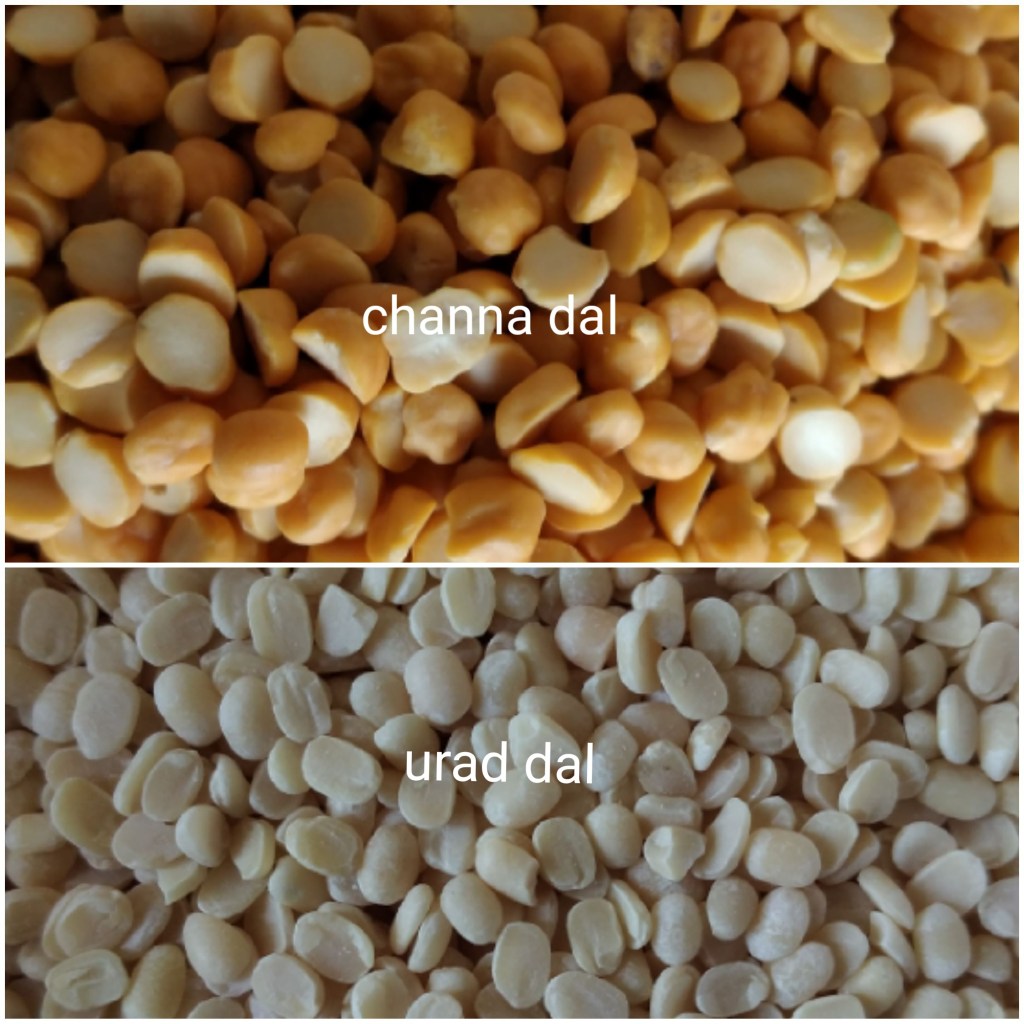
Channa dal and urad dal are used in tempering in some South Indian savoury dishes.
Curiya patta/ curry leaves are also used during tempering. It hasa beautiful flavour. It is used almost in all the South Indian savoury dishes. The plant grows as tall as an apple tree.
All spices and herbs used for tempering have many medicinal and nutritional values, beside adding taste and colour to the dal.