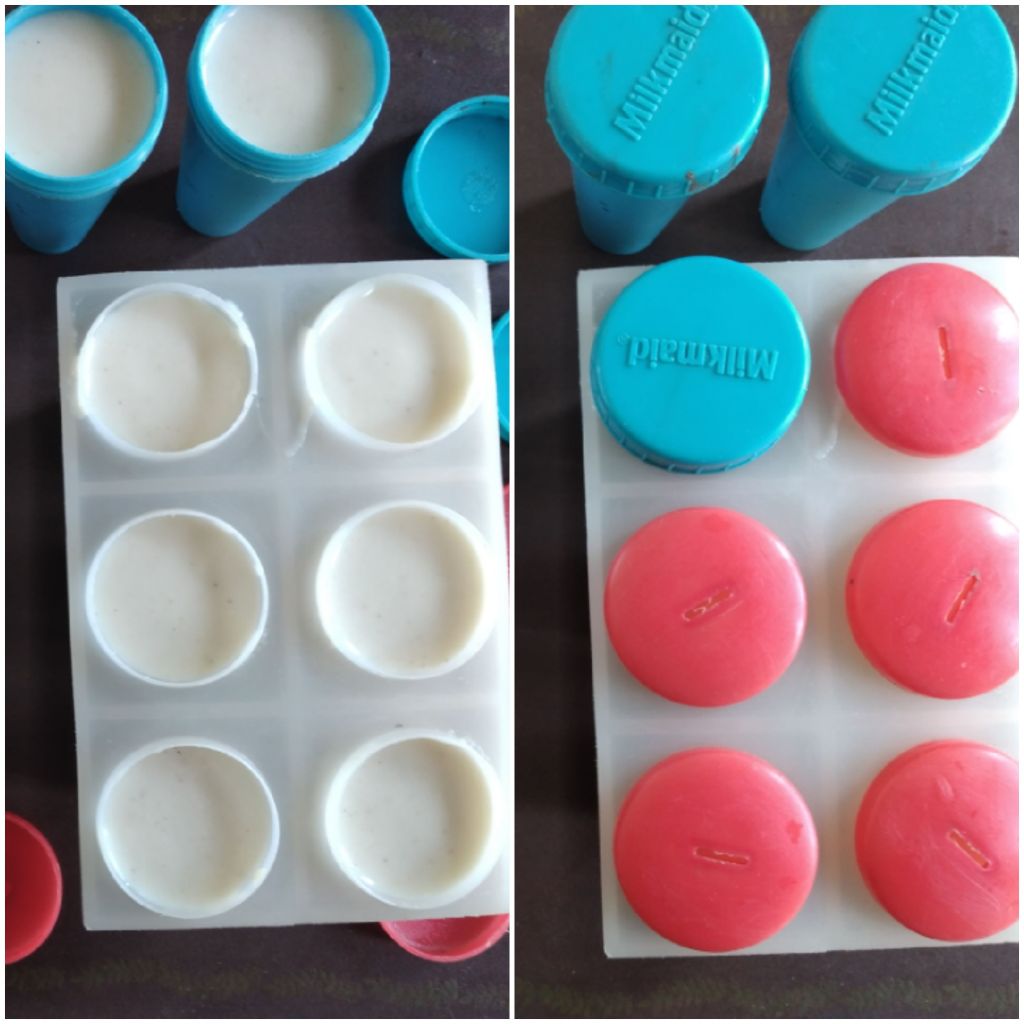
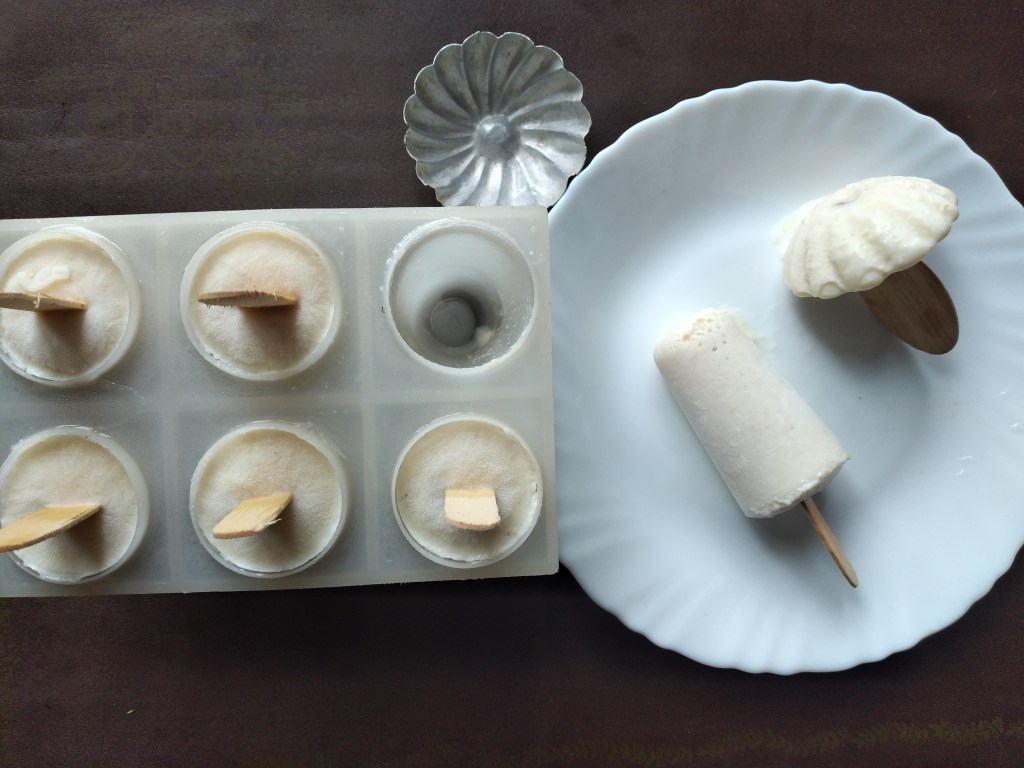
Kulfi is an Indian Ice cream. It is condensed milk frozen in conical shaped container and served on stick as dessert. It is believed to have originated during Mogul Empire in India in 16th Century.
You need:
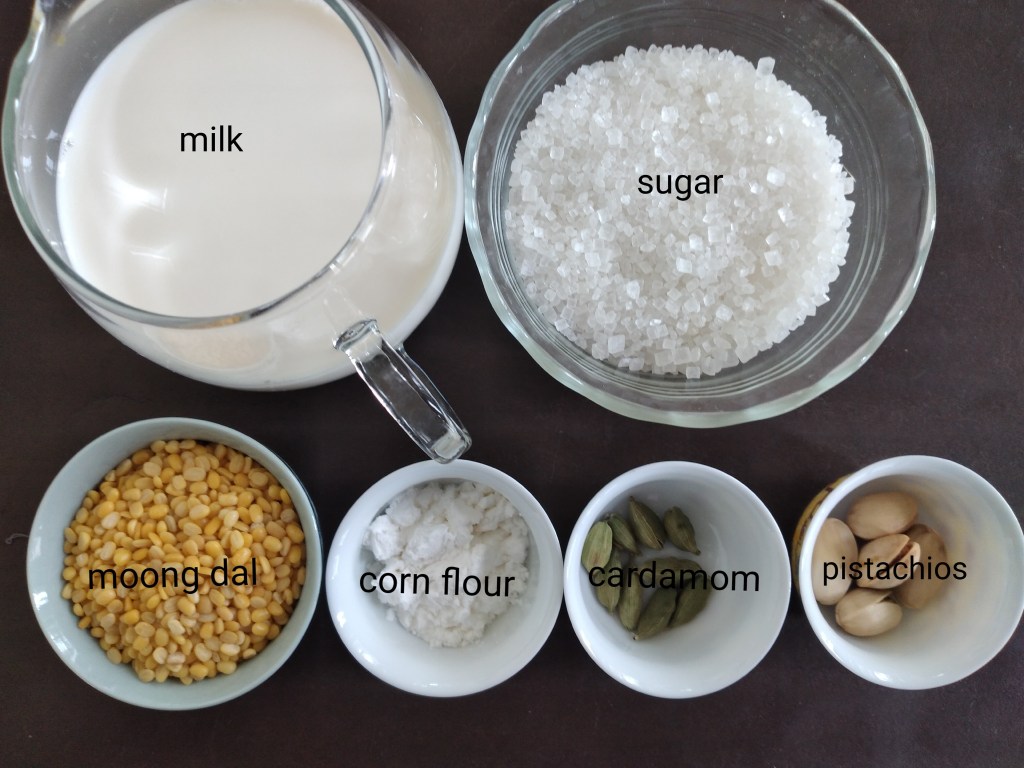
1 litre milk
30 gm moong dal
5 gm corn flour
100 gm Sugar
8 green cardamom
Few pistachio for garnishing (optional).
Method:
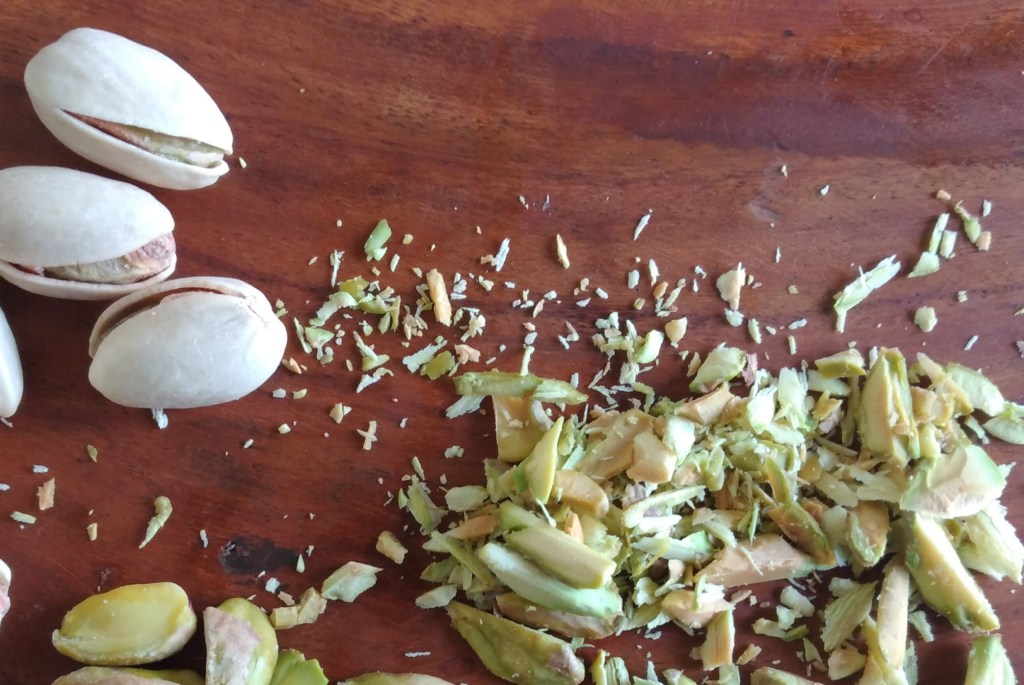
Remove the shells of the pistachios and chop them finely. Set them aside for garnishing.
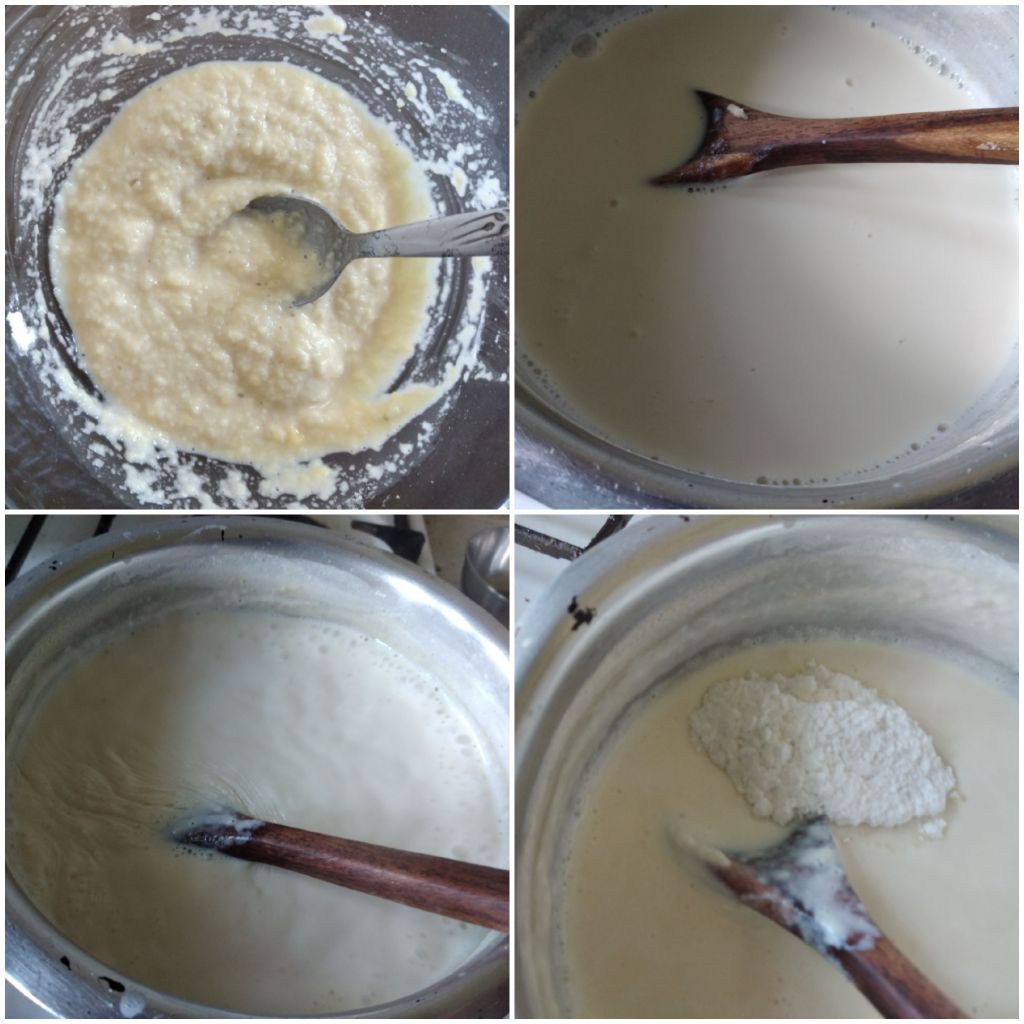
2. Wash and soak moong dal for about 2 hours. Grind to a fine paste.
3. Add the corn flour and mix well.
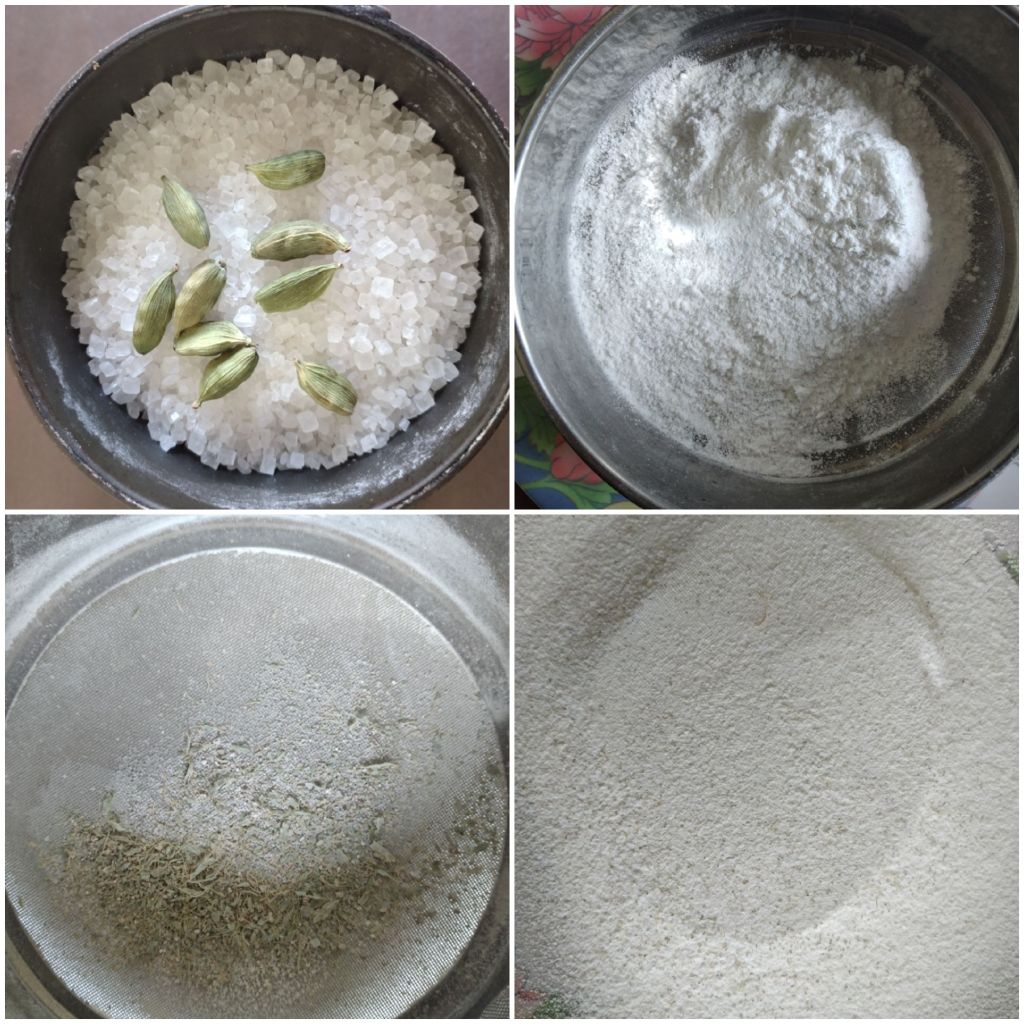
4. Grind sugar and cardamom together.
5. Sieve the mixture and discard the skins of the cardamom if any. Set aside
6. Bring milk to boil in a heavy pan.
7. Lower the heat and let it simmer until milk reduces to half.
8. Switch off the heat.
9. Add the moong paste and mix well.
10. Switch on the heat again to medium and continue cooking until the mixture begins to thicken.
11. Add the sugar. Keep cooking and stirring until the mixture is thick enough to cover the backside of the spoon.
12. Remove the pan from the heat. Strain and cool the mixture.
13. Fill the kulfi moulds with the mixture and then cover them.
14. Refrigerate for about 2 hours till the kulfis are partially set.
15. Take the kulfi tray out of the freezer.
16. Insert sticks at the centre of each kulfi. Partially set kulfi will hold the sticks vertical.
17. Cover it with foil and refrigerate again for 6-8 hours to set completely. Overnight is always best.
18. To remove the kulfis – dip a kitchen cloth in hot water. Wring and wrap around the moulds.
19. Hold the stick and give a slight twist. The kulfi will come out easily.
20. Do the same for the others. Sprinkle few chopped pistachios and serve chilled.
Tips:
The recipe calls for 30 gm of moong dal which is too small a quantity for wet grinding, so I took 60 gm.
After washing, soaking and grinding into fine paste the moong measured 141 gm.
Divide the same into 2 parts of 70 gm each.
Used one part and kept the other half in the refrigerator for future use.
Georgia is a small country in the Caucasus region. Bordering Russia, Turkey, Armenia, and Azerbaijan, it has stunning mountains, ancient culture, and a mix of Soviet history and modern vibe. Tbilisi is its charming capital.
A Few Wonders of Georgia
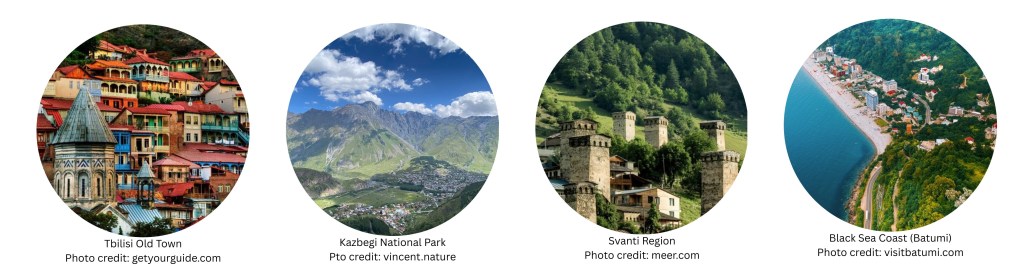
1. Tbilisi Old Town: Tbilisi’s Old Town is a charming maze of cobblestone streets. Explore historic buildings, sulfur baths, and vibrant markets like the Dry Bridge Flea Market. This area captures Georgia’s rich culture and history.
2. Kazbegi National Park: Kazbegi National Park is a nature lover’s dream. Hike to the stunning Gergeti Trinity Church perched on a hill, and take in views of Mount Kazbek. The park’s landscapes are breathtaking.
3. Svaneti Region: Svaneti is a remote, mountainous region with medieval charm. Explore ancient towers, hike to glacier lakes, and experience traditional Svan culture. This UNESCO site is off the beaten path.
4. Black Sea Coast (Batumi): Batumi, on the Black Sea, is a lively coastal city. Stroll along the promenade, visit the Batumi Botanical Garden, and enjoy the city’s mix of modern and historic charm.
People of Georgia
Georgians are known for their warmth and hospitality. They’re proud of their culture, traditions, and history. Family and community ties are strong, and you’ll often experience their legendary generosity and love for feasts (supra) with wine and food. The country’s diverse landscapes have shaped unique regional identities, like the Svaneti highlanders.
Traditional Dress of Georgia
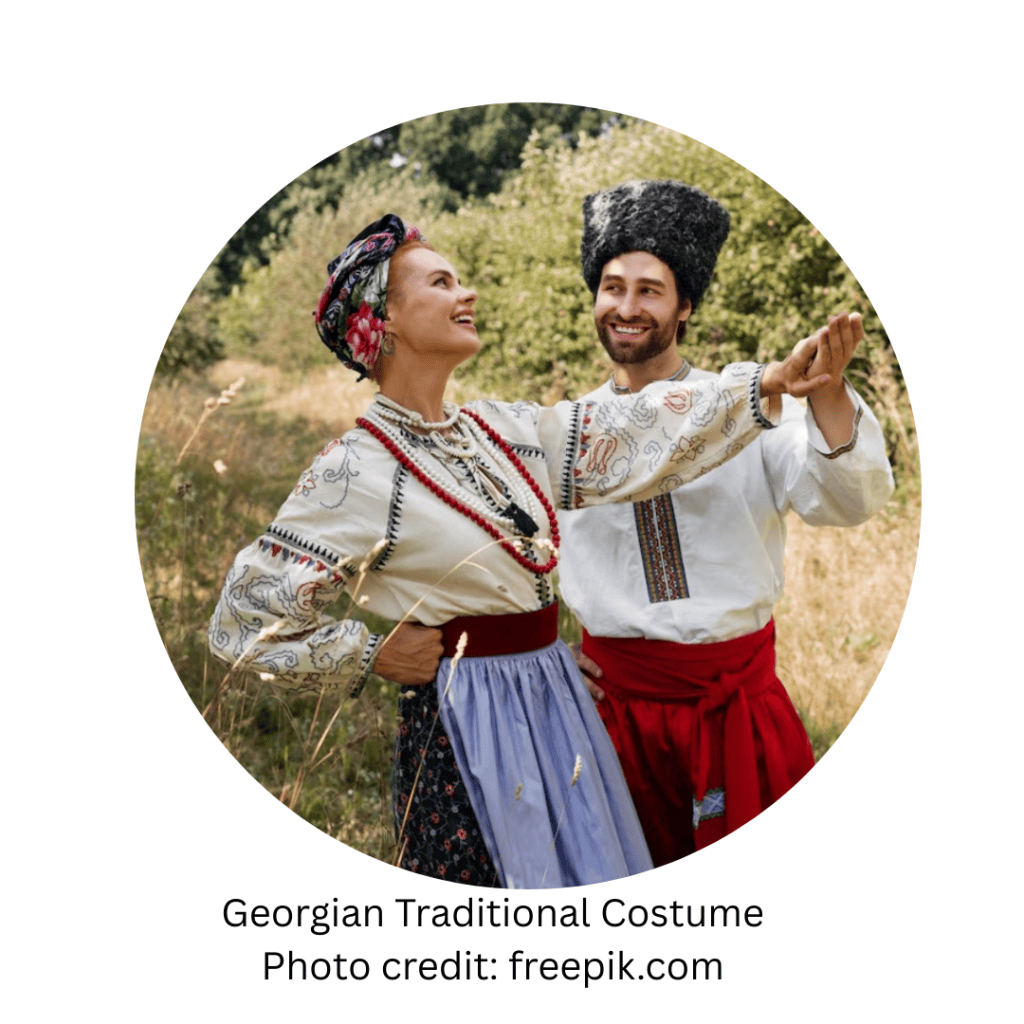
Traditional Georgian dress is vibrant and ornate. Men wear the “kakhian lekhi” (tunic) and “chokha” (wooded coat with cartridge holders), often with a “khimshia” belt. Women wear intricately embroidered “kartuli kaba” dresses with headscarves. These outfits highlight Georgia’s rich cultural heritage and regional diversity.
Pulses and Recipes
In Georgia, pulses like beans and lentils are cultivated, particularly in the country’s fertile valleys. They’re used in traditional dishes like lobio (bean stew). While not a major crop, pulses contribute to Georgia’s sustainable agriculture and local food traditions.
In Georgia, “lobio” usually refers to a dish made with kidney beans. The traditional Georgian stew is often made with red kidney beans, onions, garlic, and spices.
We’re cooking Lobio Nigozit today, Georgia’s national dish! It’s a hearty, thick soup packed with beans, onions, walnuts, and blue fenugreek.
Blue fenugreek, also known as “utskho suneli” in Georgian, is a spice made from the dried flowers of a specific type of fenugreek plant. It’s got a unique flavor and aroma, nutty and earthy. Used a lot in Georgian cuisine!
Substitutions:
If you can’t find blue fenugreek, you can substitute it with Kasuri methi mixed with a little ground coriander or cumin. For red wine vinegar, you can use lemon juice, as I have done here. It won’t be exactly the same, but it will give a similar depth of flavour.
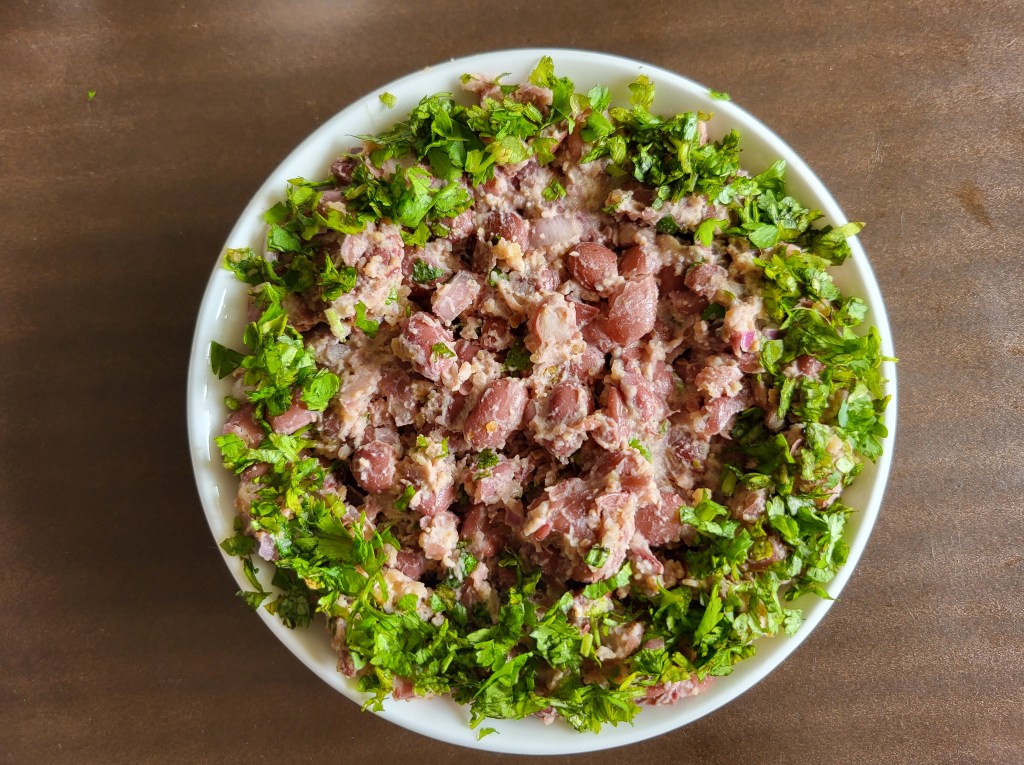
Today we will cook Lobio with nut. It is very easy: cook the beans and mash it up like mash potato but the bean texture should be there.
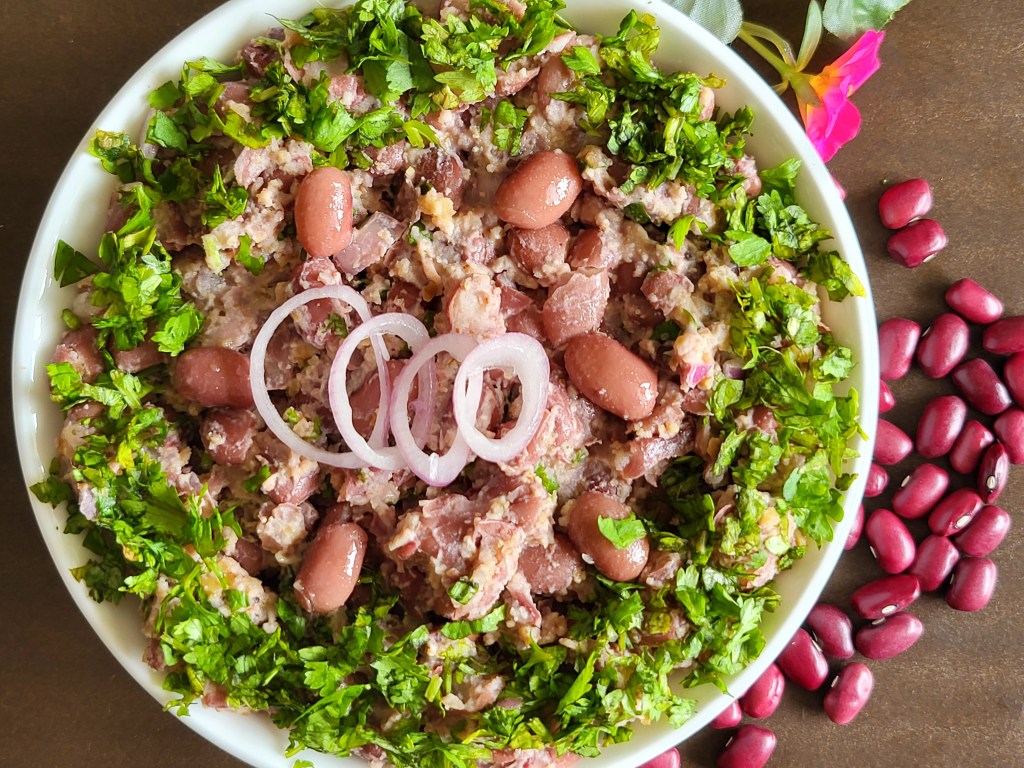
Lobio with nuts(Red kidney beans with walnut)
Lobio with walnuts, garnished with fresh coriander and onion rings. Rustic, hearty, and delicious. Served warm or cold.
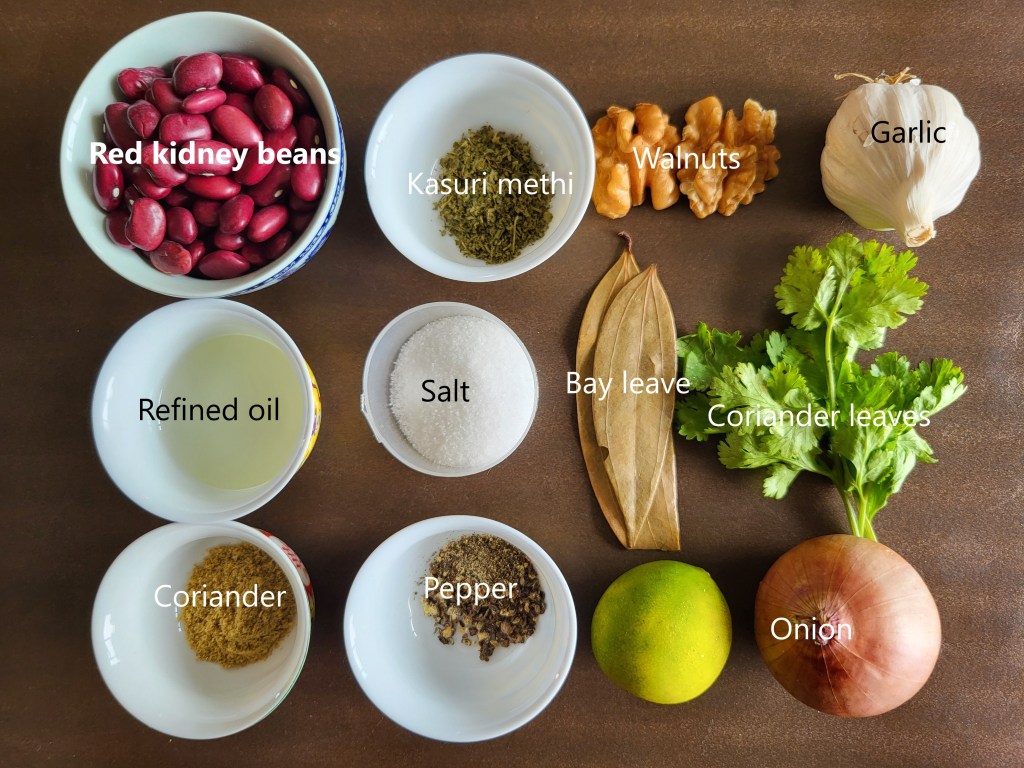
You need:
200 gm dried red kidney beans
1 medium onion,
1 tsp grated garlic,
1/2 cup walnuts,
¼ tsp Kasuri methi (substitute for blue fenugreek)
2 tbsp of finely chopped coriander
Salt and pepper to taste
1 tbsp lemon juice (substituted for red wine vinegar)
1 tbsp oil
Method:
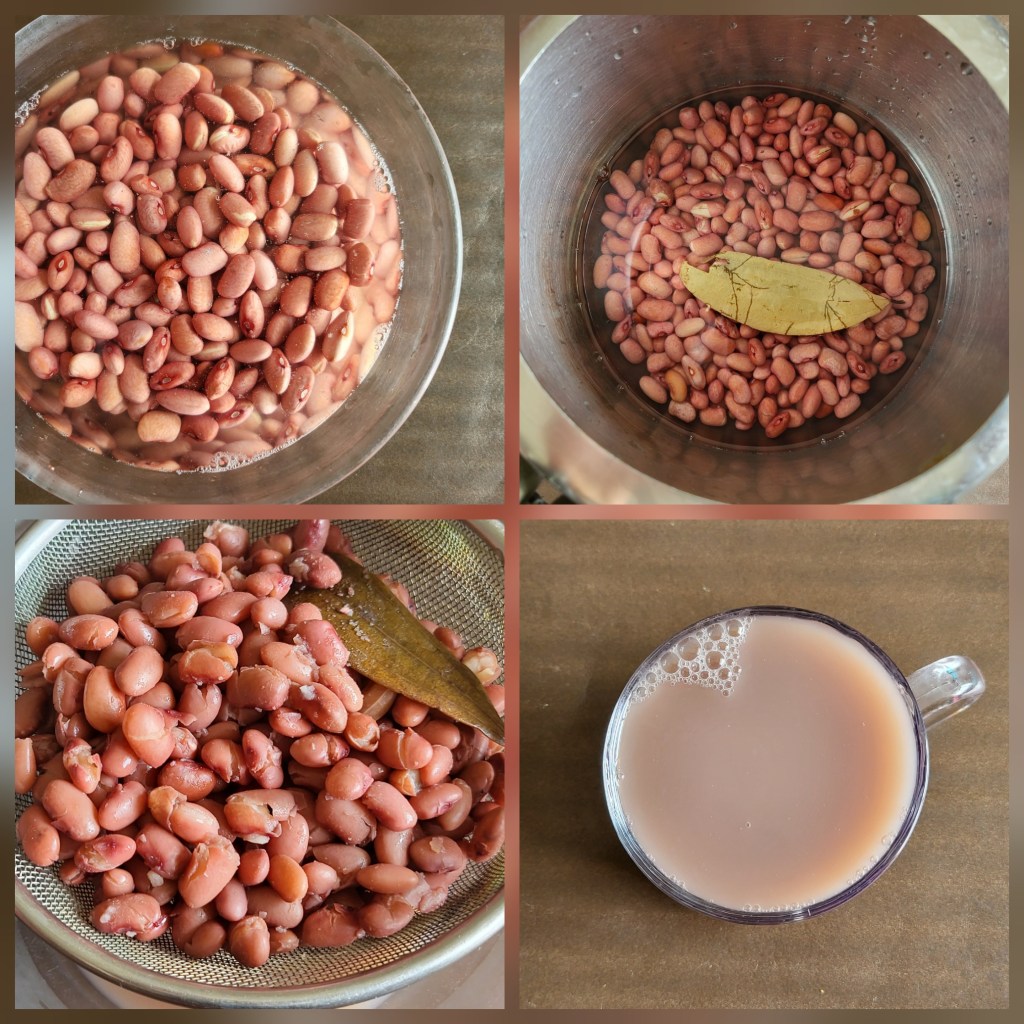
Wash and soak the red kidney beans for about 12 hours.
Rinse and cook them with bay leaves, ½ tsp salt, and just enough water to cover the beans.
If using a pressure cooker, after the first whistle, lower the heat to the minimum and simmer for 3 minutes. Switch off the heat and let it cool down on its own.
Strain the beans, save the cooking liquid, and discard the bay leaves.
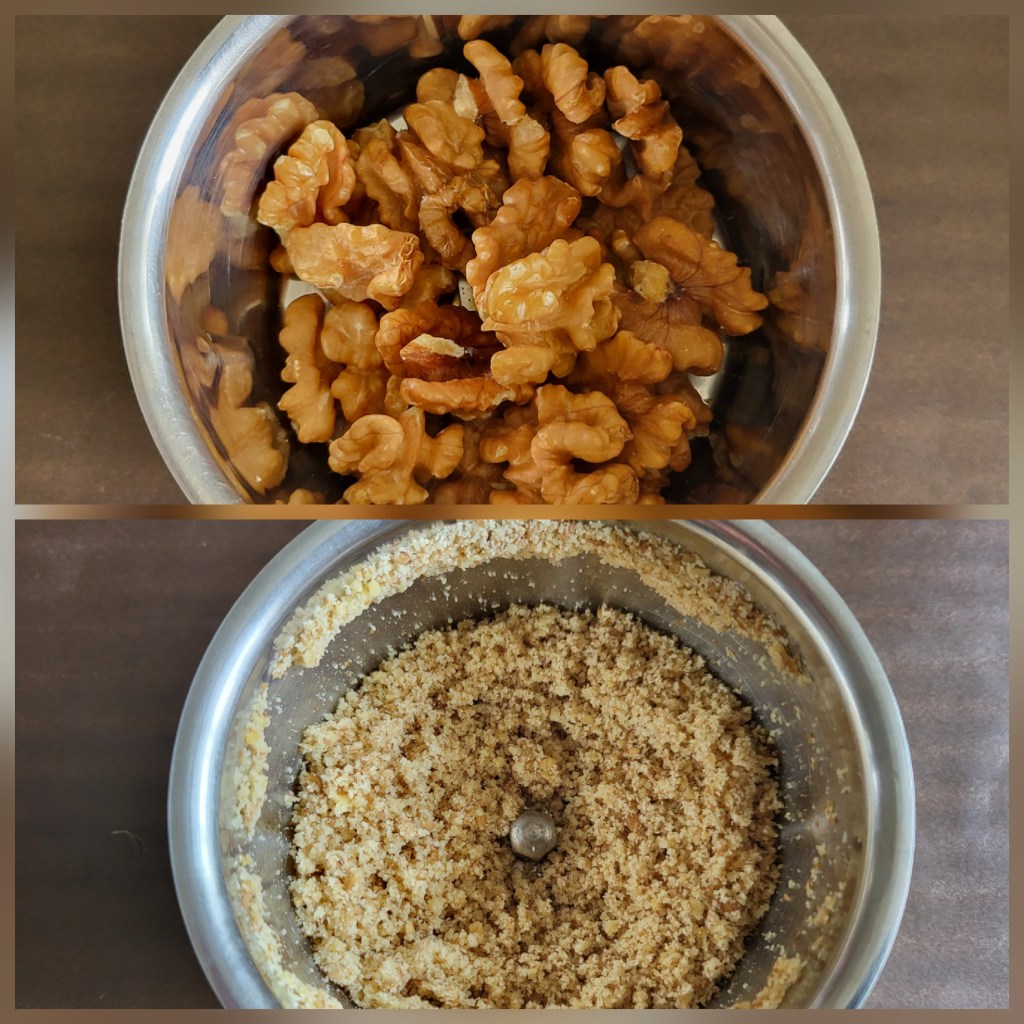
5. In the meantime, grind the walnuts.
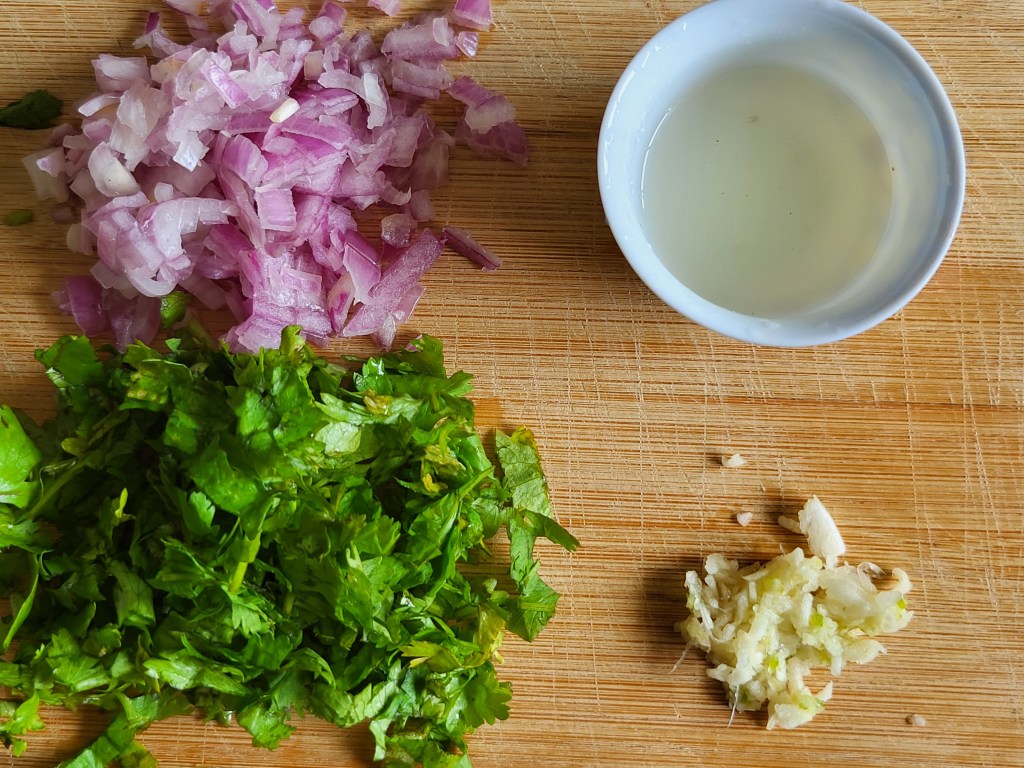
6. Finely chop the onion and coriander leaves.
7. Grate the garlic and squeeze the juice from the lemon.
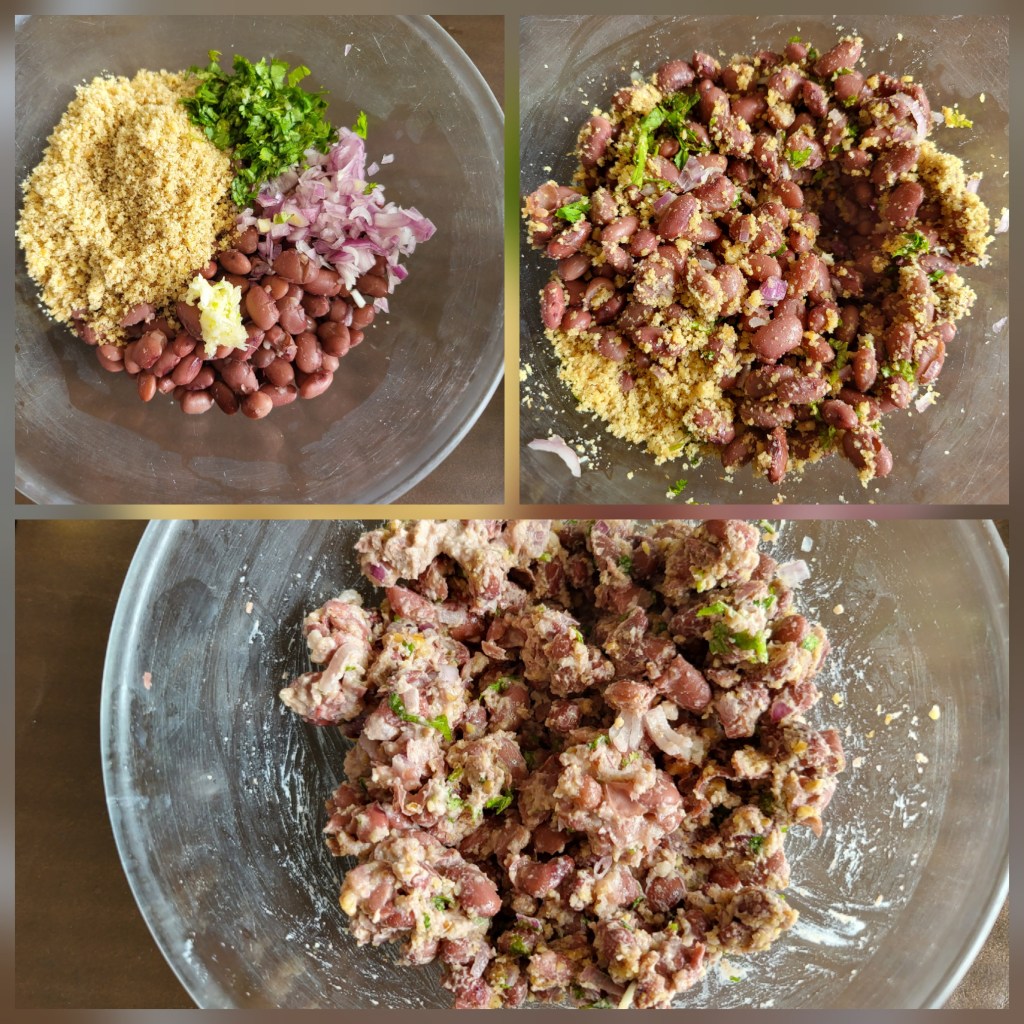
8. In a large bowl, add the cooked beans, ground walnuts, onion, garlic, half of the chopped coriander, pepper, kasuri methi powder, coriander powder, lemon juice, 1 tablespoon of oil, and 1 tablespoon of the reserved bean cooking liquid.
9.Mix well. You may crush a few beans, but not all – some texture should remain, much like rustic mashed potatoes. You may use more liquid if required.
10. Adjust the salt to taste.
11. Garnish with the remaining coriander leaves. It can be eaten cold or warm. It is traditionally served with bread, and a local cornbread called Mchadi.
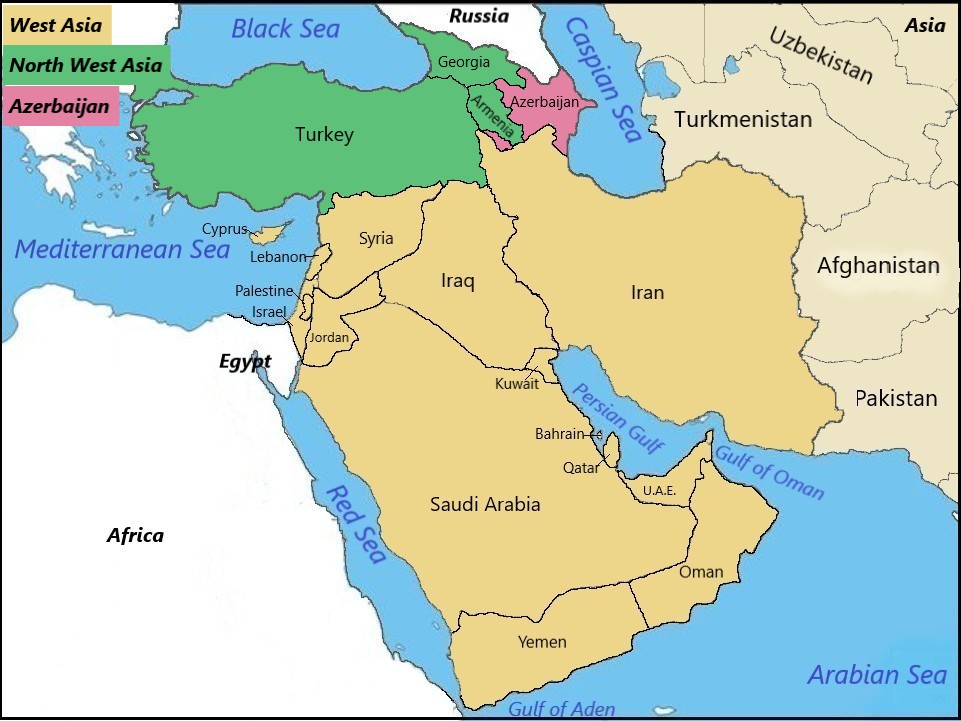
Azerbaijan is located in the Caucasus region, bordered by Georgia and Russia to the north, the Caspian Sea to the east, Iran to the south, and Armenia to the west.
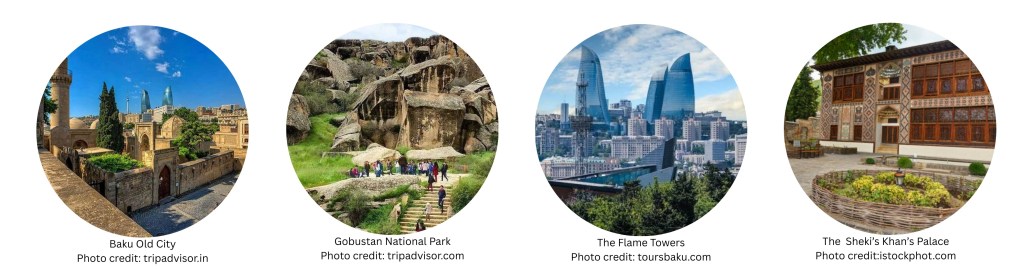
A Few Wonders of Azerbaijan
1. Baku’s Old City: “Baku’s Old City” or “Icherisheher” is a maze of narrow streets and historic buildings. This UNESCO World Heritage site features the iconic Maiden Tower (Qiz Qalasi), ancient mosques, and the Palace of the Shirvanshahs.
2. Gobustan National Park: Gobustan National Park is home to ancient rock carvings and mud volcanoes. The park boasts over 6,000 petroglyphs, some dating back 12,000 years, showcasing the region’s rich cultural heritage.
3. The Flame Towers: The Flame Towers are a striking modern landmark. These three towers, shaped like flames, light up Baku’s skyline at night. They’re a symbol of Azerbaijan’s oil wealth and modern architecture.
4. Sheki’s Khan’s Palace: Sheki’s Khan’s Palace is a stunning example of Azerbaijani architecture. This 18th-century palace features intricate woodwork, colorful glass, and beautiful murals, showcasing the region’s rich cultural traditions.
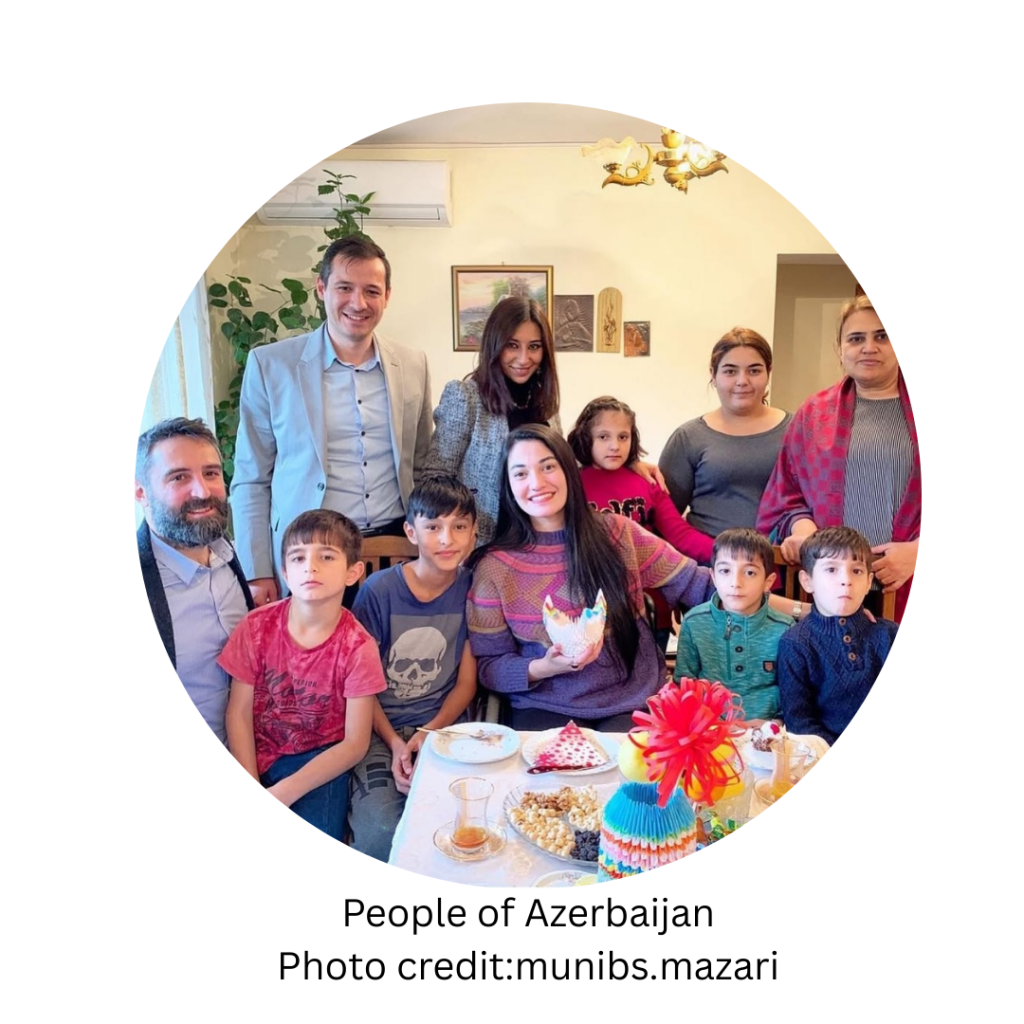
People of Azerbaijan
The people of Azerbaijan are known for their hospitality and warmth. Azerbaijanis are proud of their cultural heritage, blending Turkish, Persian, and Islamic influences. Family and traditions play a big role in their lives, with gatherings often centered around food, music, and poetry.
Traditional Dress of Azerbaijan
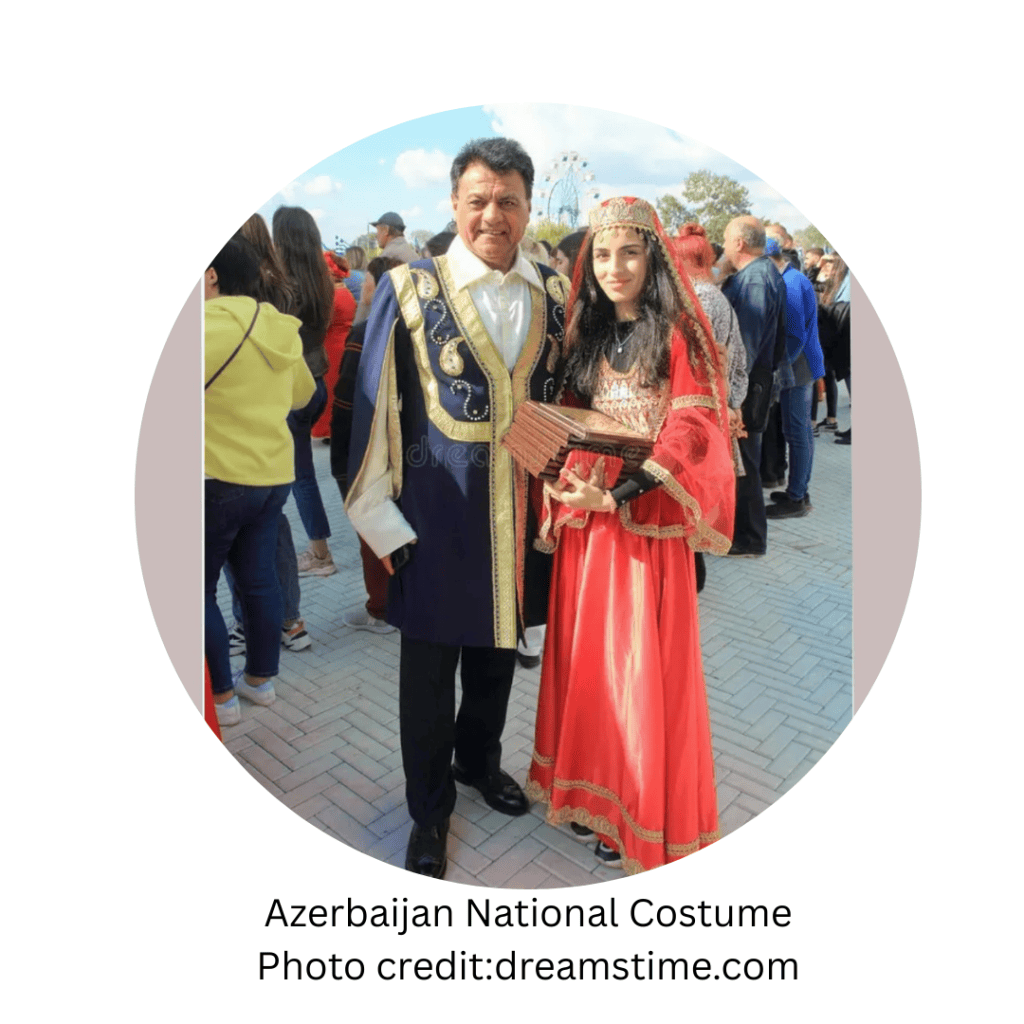
Azerbaijani traditional dress is a vibrant blend of colors and patterns. Women wear beautiful silk dresses with intricate embroidery, often adorned with gold and silver threads. The attire includes a headscarf, often paired with a fitted jacket and long skirts. Men’s traditional dress includes a papakhi hat, a cherkeska coat, and leather boots, showcasing the country’s rich cultural heritage.
(Cherkeskas are traditional long woolen coats with a high collar and ornamental cartridge cases on the chest. They’re part of the traditional attire in the Caucasus region, often worn by men)
Pulses and Recipes
Azerbaijan does cultivate pulses, mainly for domestic consumption. Pulses like chickpeas, lentils, and beans are grown in the country’s fertile regions. The Absheron Peninsula and the Kuba-Khachmaz region are notable for pulse cultivation. Production has been increasing, focusing on improving crop yields and quality to meet local demand and reduce import reliance.
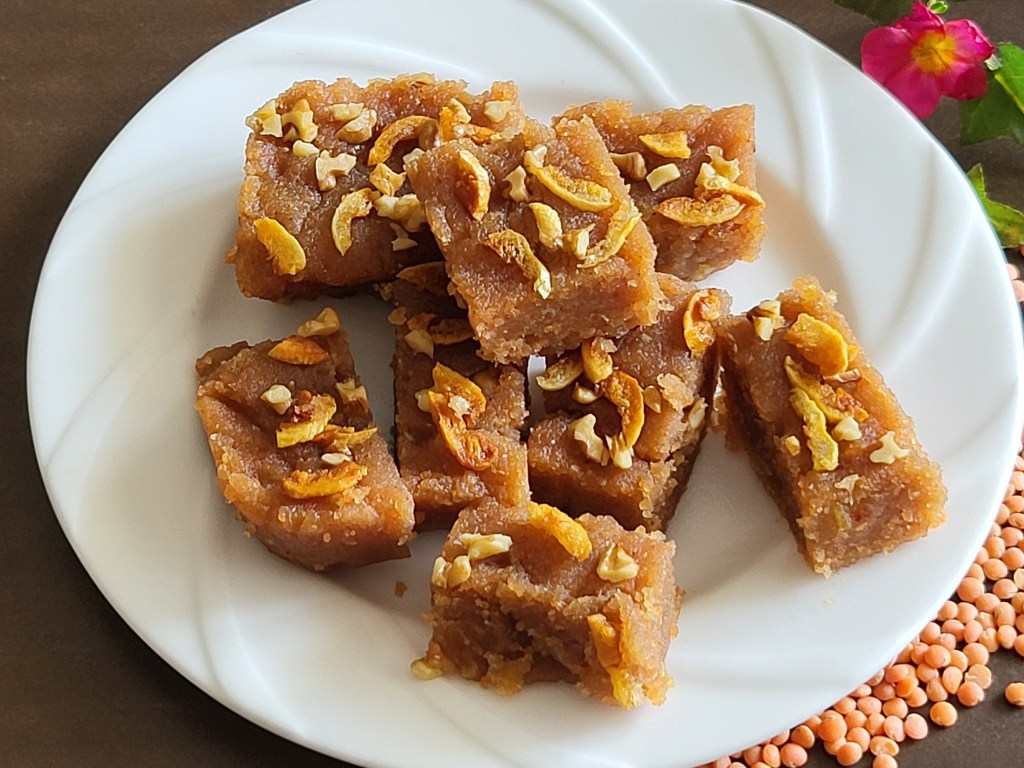
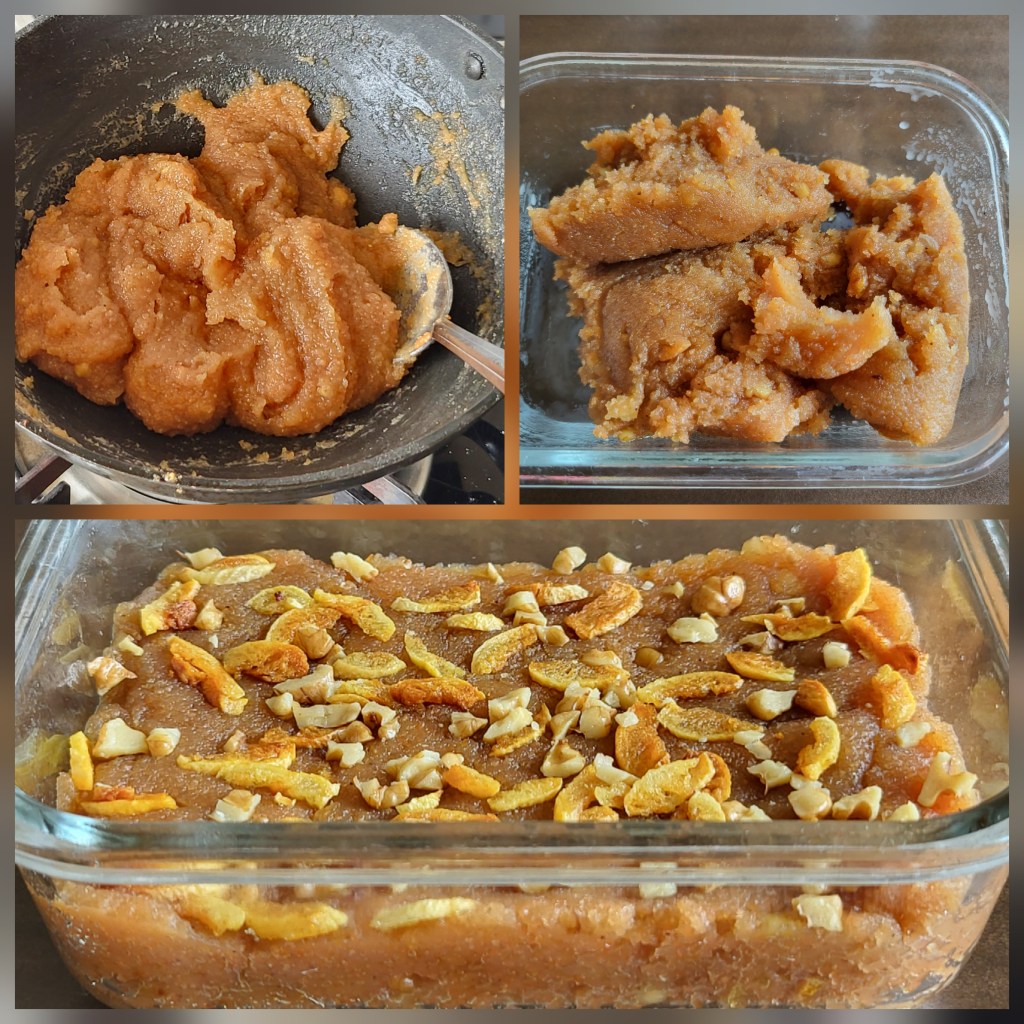
Today we are making Mərci Halvası, a beautiful Nowruz sweet from Azerbaijan. It’s a fasting-friendly halva made not from flour, but from red lentils!
Slowly toasted red lentils turn nutty and golden, then simmered into a soft, caramelly halva with sugar, cardamom, chopped dried apricots for that sweet-sour lift, and lots of crunchy walnuts.
It’s vegan if you use oil, protein-rich, and sets perfectly into squares.
Mərci Halvası (Sweet Red Lentil & Walnut Halva)
Mərci Halvası is a rare, festive sweet from Azerbaijan where humble red lentils are transformed into a buttery, cardamom-scented halva studded with apricots and walnuts.
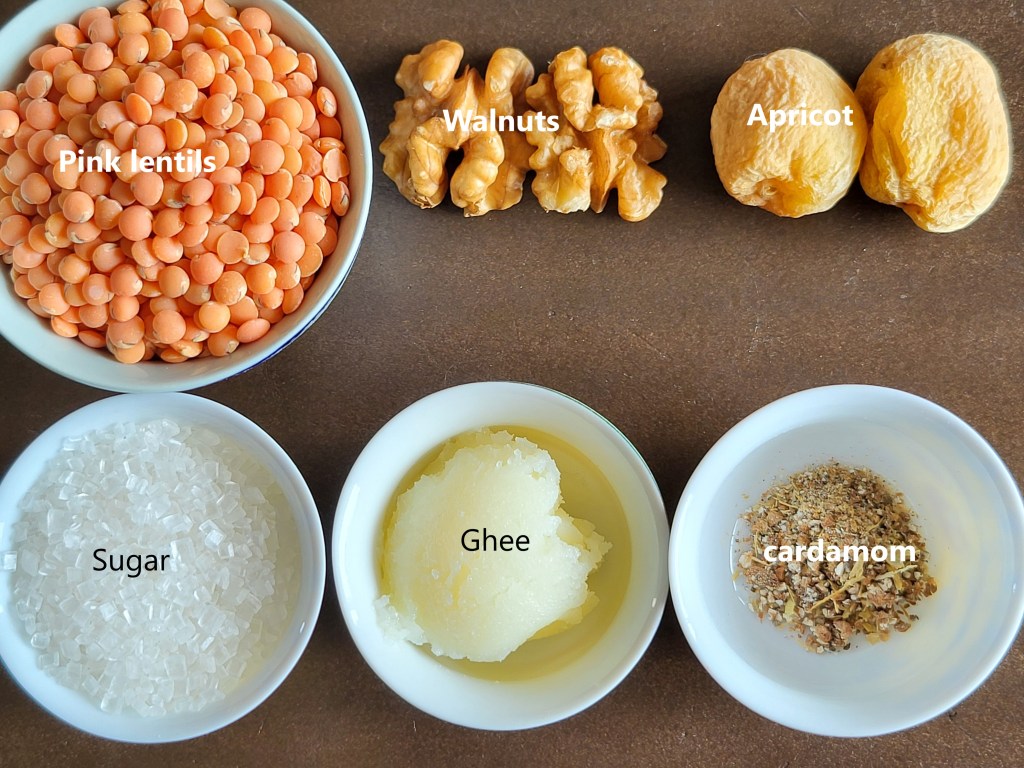
You need :
100 gm red lentils (masoor dal), washed and dried completely
2 tbsp oil or butter
60 gm sugar + 1 cup water
1/4 tsp cardamom powder
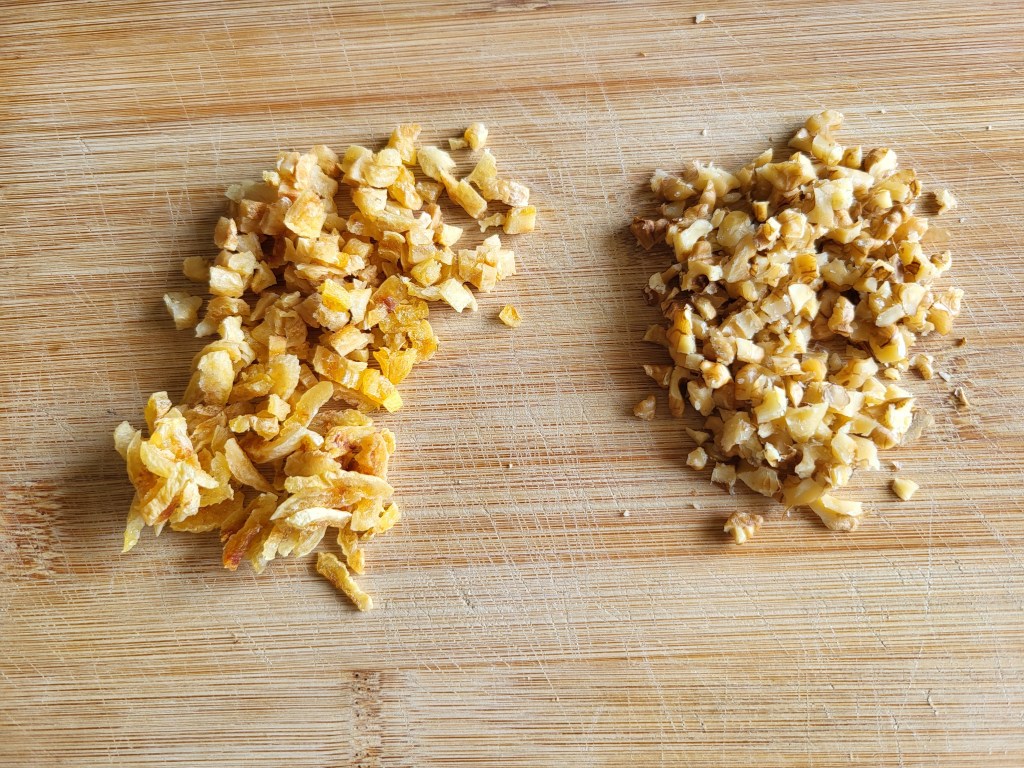
5-6 dried apricots, finely chopped
2 tbsp walnuts, chopped
Method:
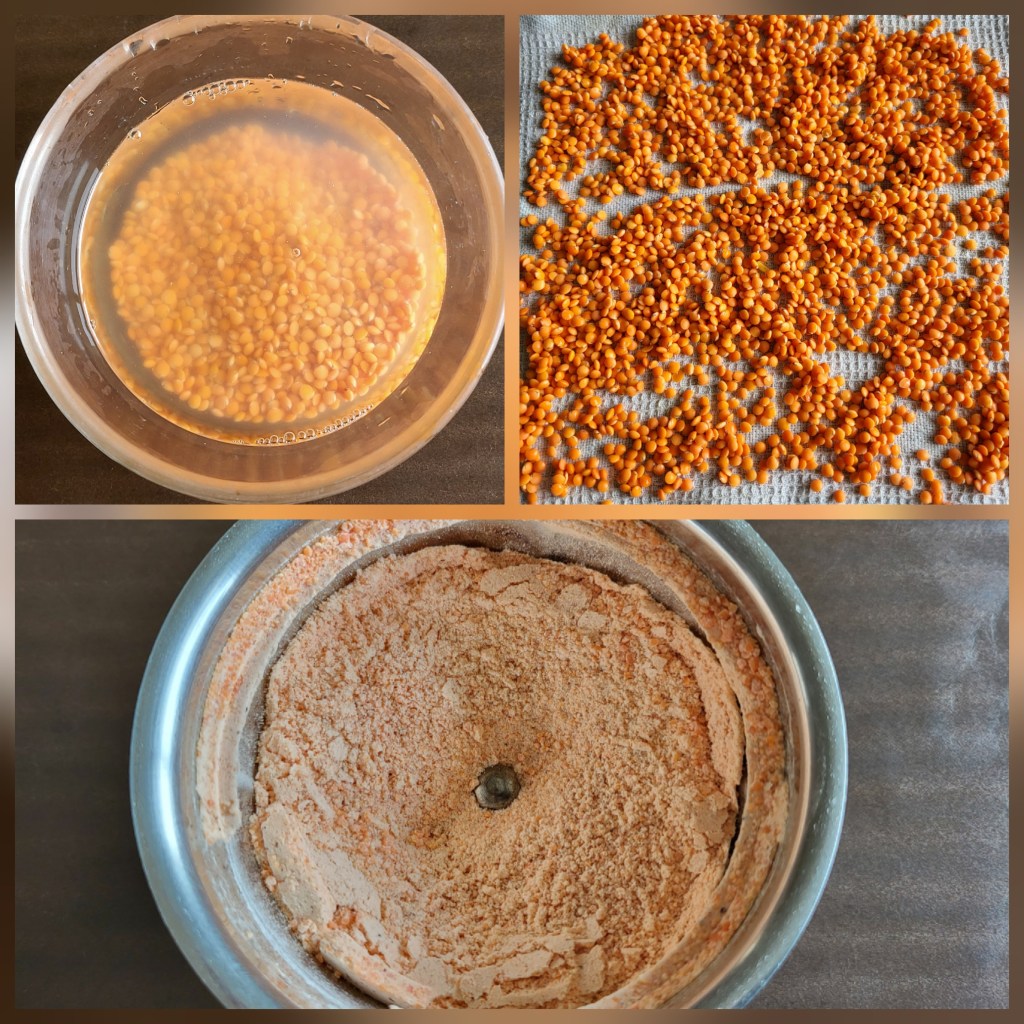
Wash the pink lentils thoroughly in cold water until the water runs clear.
Spread them on a clean cloth and let them dry completely.
Once fully dry, grind them into a fine, smooth powder
4. Finely chop the dried apricots and walnuts.
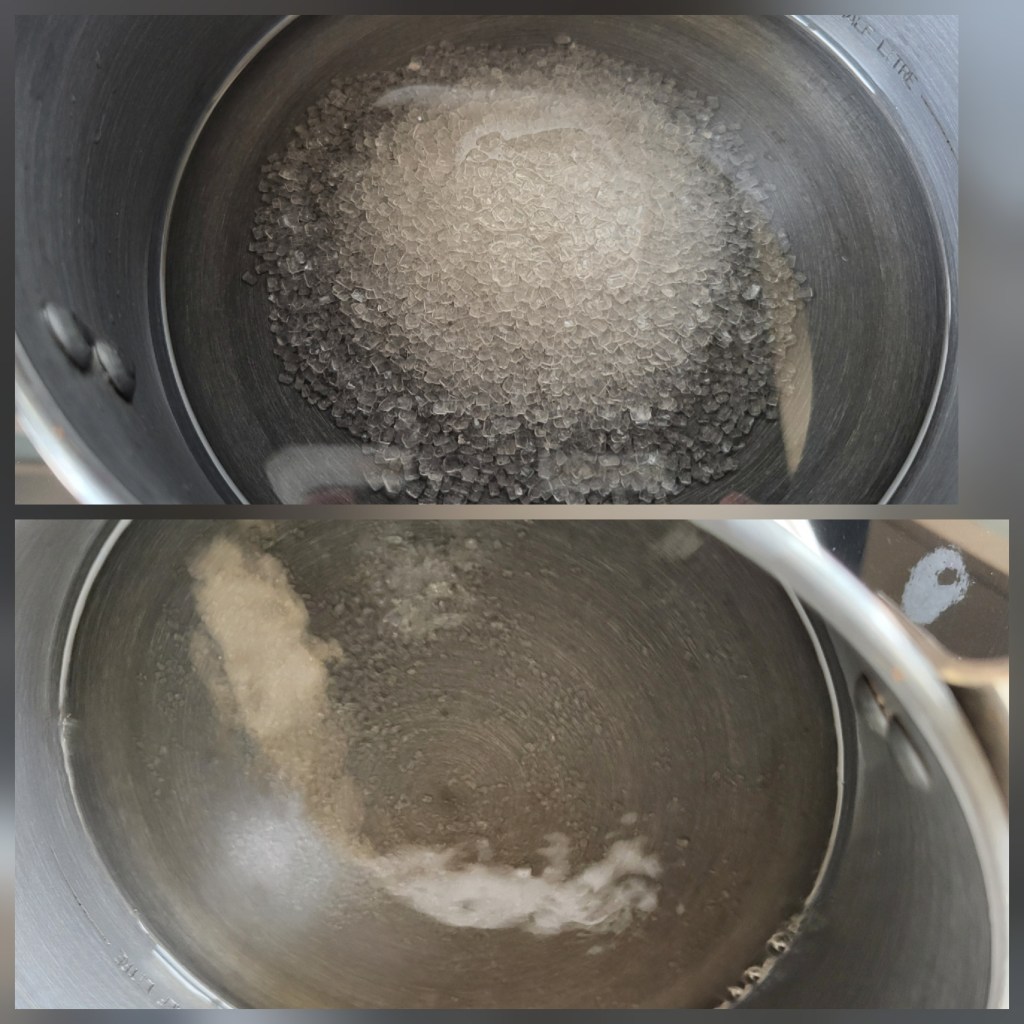
5. Make a Light Syrup: In a small saucepan, combine 1 cup of water and sugar.
6. Warm it gently over low heat, stirring just until the sugar completely dissolves.
7. Turn the heat off and keep it warm.
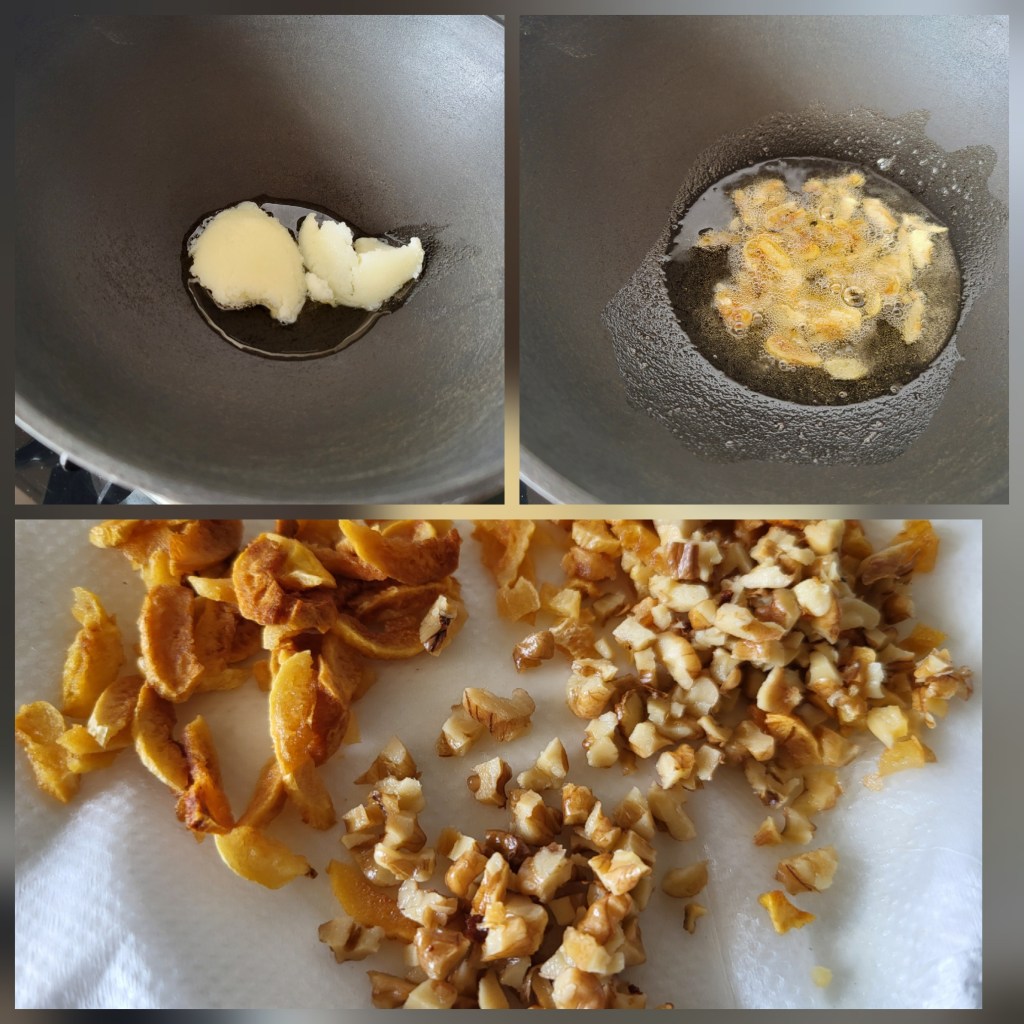
8. In a heavy-bottomed pan, melt the clarified butter (ghee) on very low heat.
9. Saute the finely chopped apricots and walnuts separately for a just few seconds and then let them rest on a tissue napkin to drain.
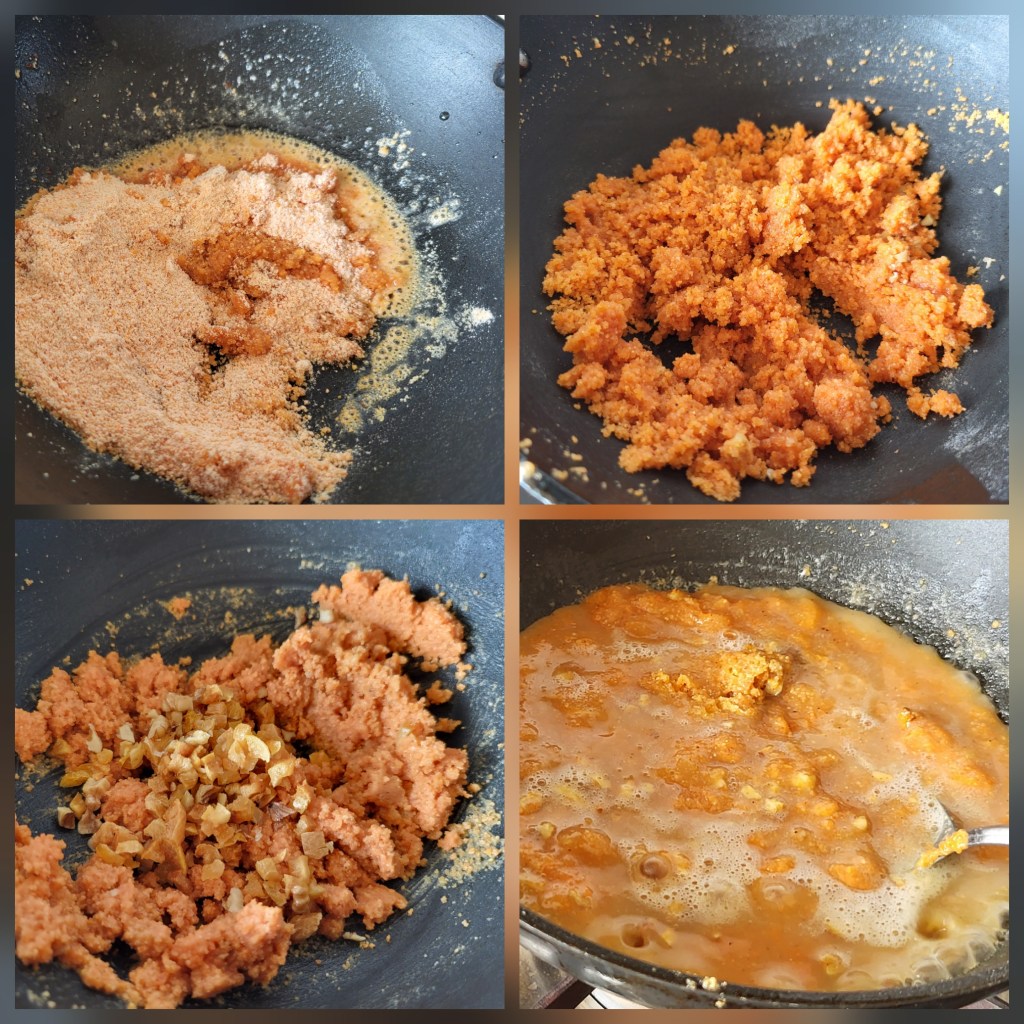
10. In the same ghee-filled pan with low heat, add the powdered lentils.
11. Roast, stirring non-stop with a wooden spoon, till the flour turns nutty and toasty.
12. Turn the flame off. Add the cardamom powder and the sautéed apricots and walnuts, keeping 1/3 of them aside for garnishing.
13. Slowly pour in the warm sugar water while stirring continuously.
14. Continue cooking on the lowest heat, stirring gently, until all the water is absorbed and the halva starts to pull away and leave the sides of the pan.
15. Turn this hot, fragrant mixture into a small dish.
16. Sprinkle the remaining 1/3 of the apricots and walnuts on top and press it down firmly with the back of a spoon so it takes the beautiful shape of the dish.
Allow it to cool down to set. Your Mərci Halvası is done! Unmould it, cut into cubes or diamonds, any size you like. Serve warm. It is delicious!
Armenia is located in the Caucasus region, bordered by Georgia to the north, Azerbaijan to the east and southwest, Iran to the south, and Turkey to the west.
A Few Wonders of Armenia
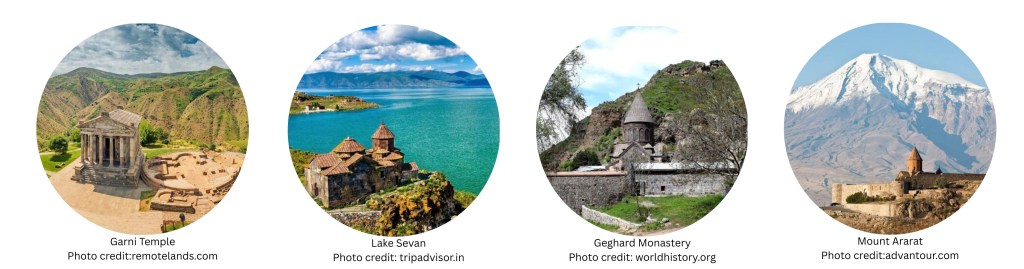
1. Garni Temple: Garni Temple is a stunning ancient structure. This pagan temple, built in the 1st century AD, sits atop a hill overlooking the Azat River. It’s a unique blend of Greek and Armenian architecture.
2. Lake Sevan: Lake Sevan is a breathtaking high-altitude lake. Surrounded by mountains, it’s a popular spot for hiking, fishing, and relaxation. The lake’s beauty and tranquility will leave you mesmerized.
3. Geghard Monastery: Geghard Monastery is a UNESCO World Heritage site. Carved into the mountainside, this 13th-century monastery is famous for its stunning rock-cut architecture and beautiful khachkars (cross-stones).
4. Mount Ararat: Mount Ararat is an iconic symbol of Armenia. This majestic mountain, though located in Turkey, is a beloved landmark and cultural icon in Armenia. Its snow-capped peak is a sight to behold.
People of Armenia
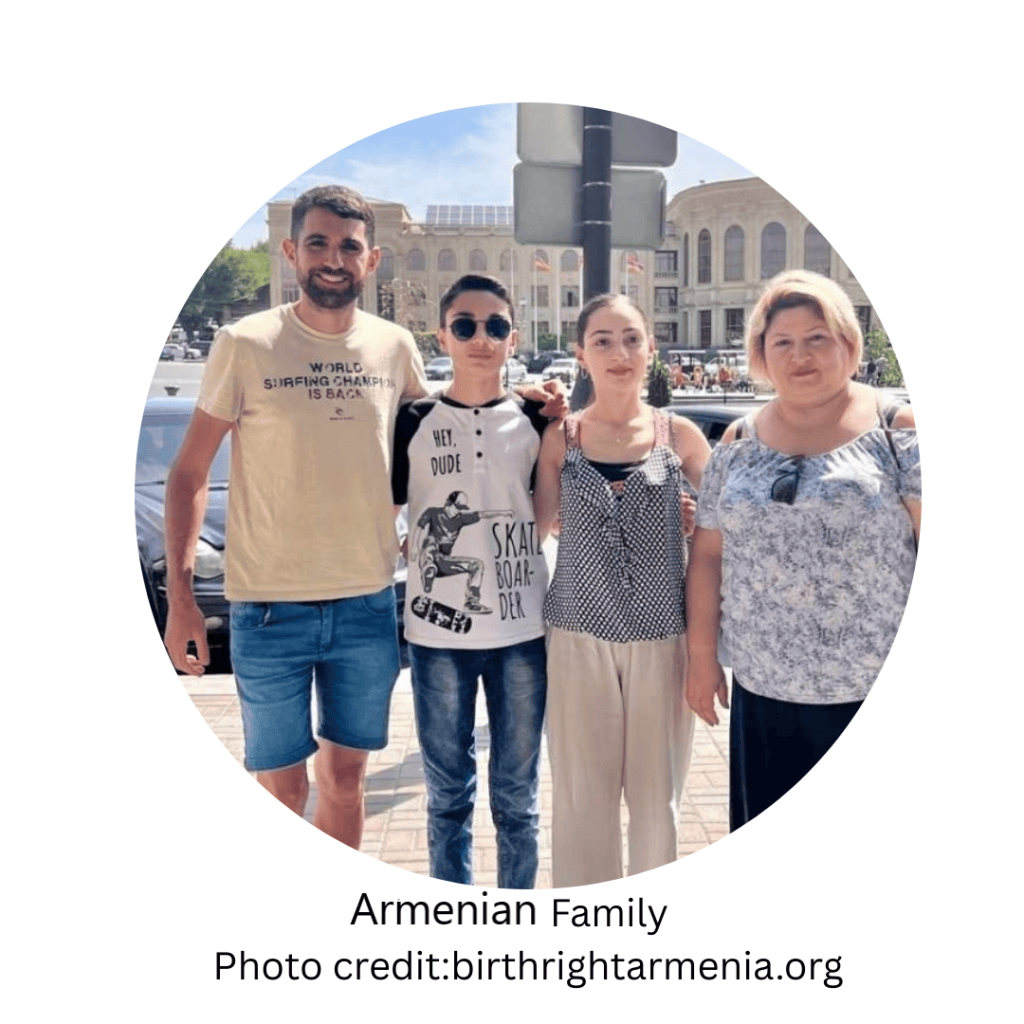
The people of Armenia are known for their warmth and hospitality. Armenians are proud of their rich history, culture, and traditions. You’ll find a strong sense of community and family ties, with gatherings often centered around delicious food, music, and storytelling.
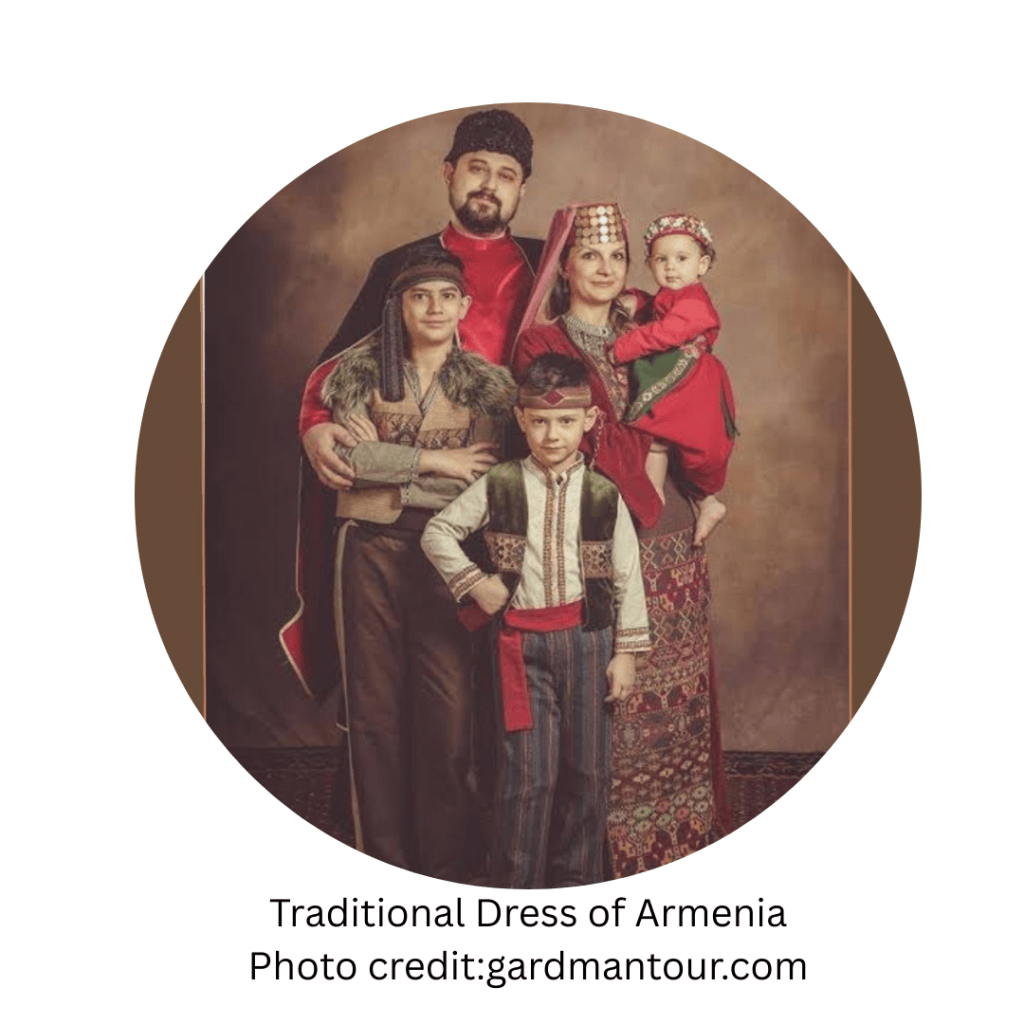
Traditional Dress of Armenia
Traditional Armenian dress is a vibrant reflection of the country’s culture. The iconic attire includes intricately embroidered dresses, shirts, and aprons, often adorned with cross-stitch patterns and symbolic motifs. Women wear beautiful Taraz (traditional dresses) with headscarves, while men don distinctive shirts and coats with ornate belts.
Pulses and Recipes
Armenia does cultivate pulses, and they’re a significant part of the country’s agriculture. Pulses like lentils, beans, and chickpeas are staple foods in Armenia, providing essential protein sources for the population. The government supports pulse cultivation through policies promoting sustainable farming practices and improving yield.
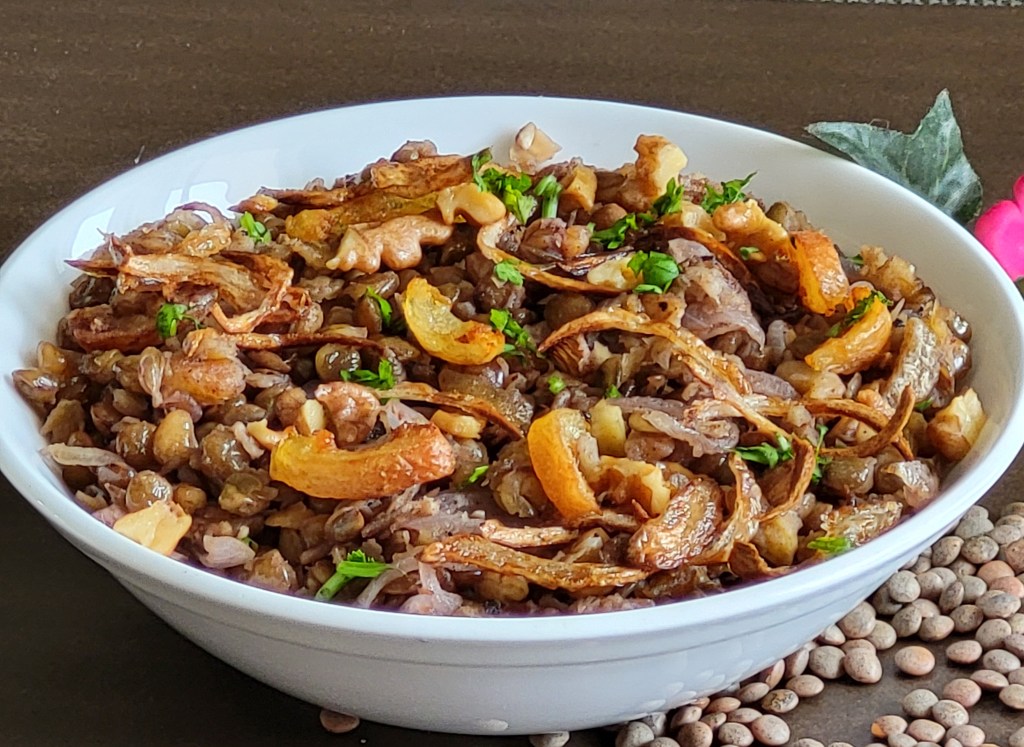
Today we are making Mshosh, one of the oldest dishes from Western Armenia’s Van region. Also known as Vana Mshosh, its name comes from mshmosh, meaning wild apricot. The sweet-savory-nutty combo is so classic Armenian – apricots, walnuts and lentils all grow abundantly in the Ararat Valley.
Mshosh (Armenian Lentil, Apricot & Walnut)
It’s a beautiful, hearty Lenten dish – for fasting days in Armenia. Soft-cooked lentils are simmered with sweet sautéed onions, crunchy walnuts, and chewy dried apricots, seasoned simply with salt, black pepper, a pinch of cinnamon powder and fresh coriander.
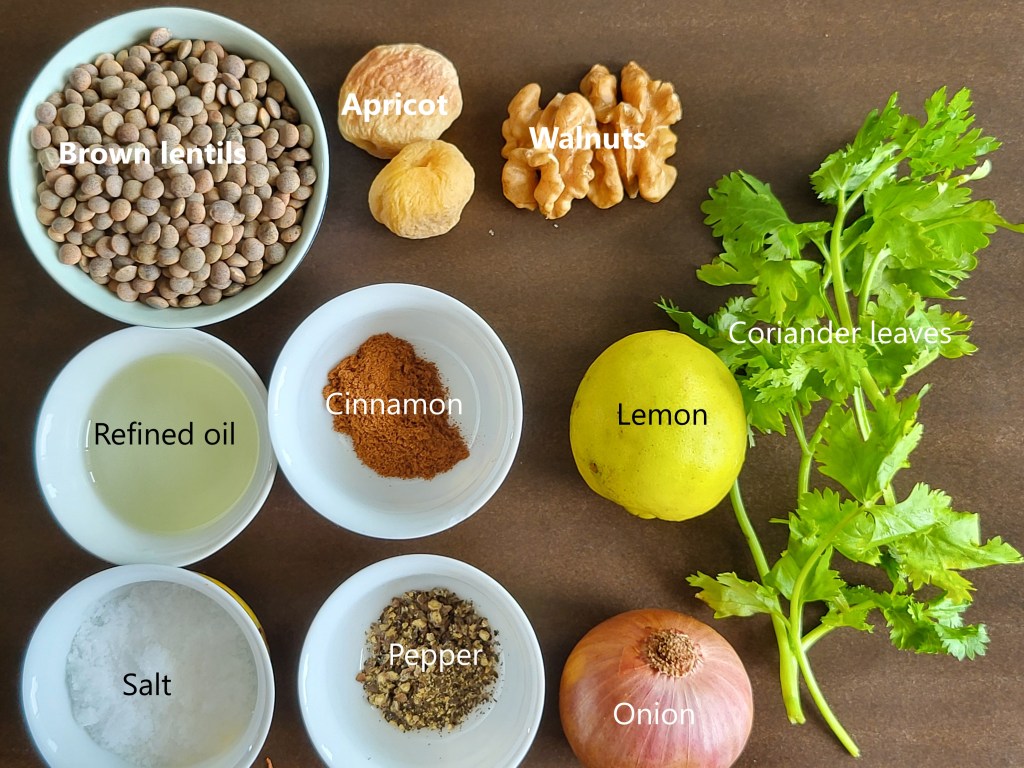
You need:
100 gm brown lentils (whole brown masoor)
1 onion, sliced
1 tbsp oil
¼ cup walnuts, coarsely crushed (akhrot)
3-4 dried apricots, chopped small
2 tbsp lemon juice (according to taste)
Salt, black pepper, to taste
¼ tsp cinnamon
Parsley or coriander to finish
Method:
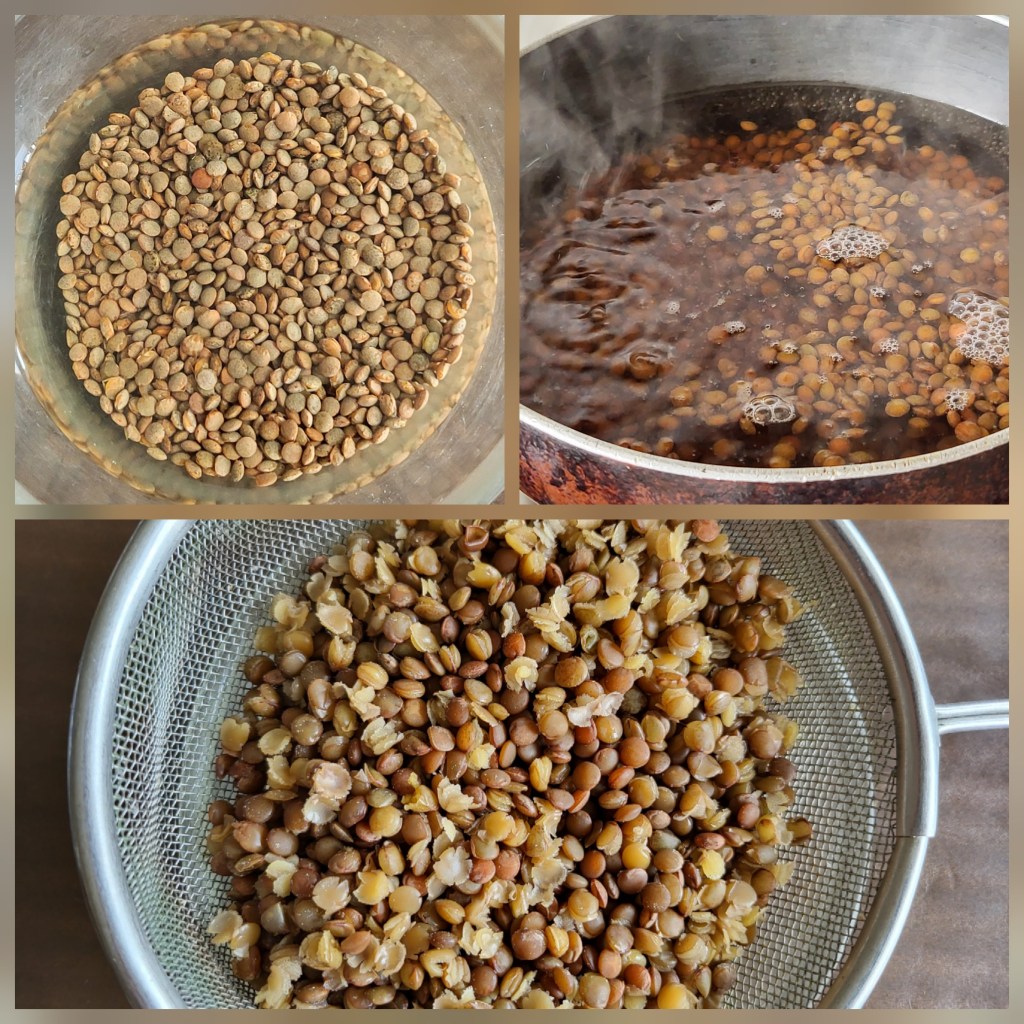
Cook the lentils:
Wash the brown lentils and soak for 5 minutes. Boil them in 2 cups of salted water until soft but not mushy – they should still hold their shape, about 10 minutes.
Then drain and set aside.
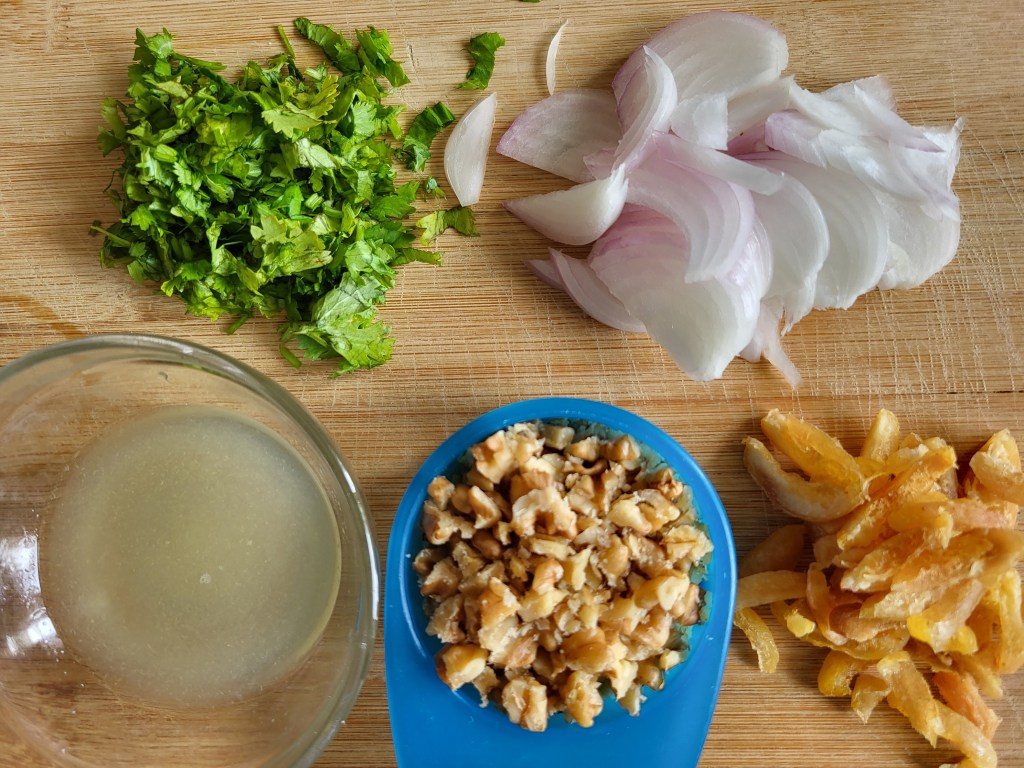
3. Prep everything: Thinly slice the onion, chop the dried apricots into small pieces, coarsely crush the walnuts, finely chop the coriander leaves, and squeeze fresh lemon juice.
4. Keep everything aside, we are ready to go.
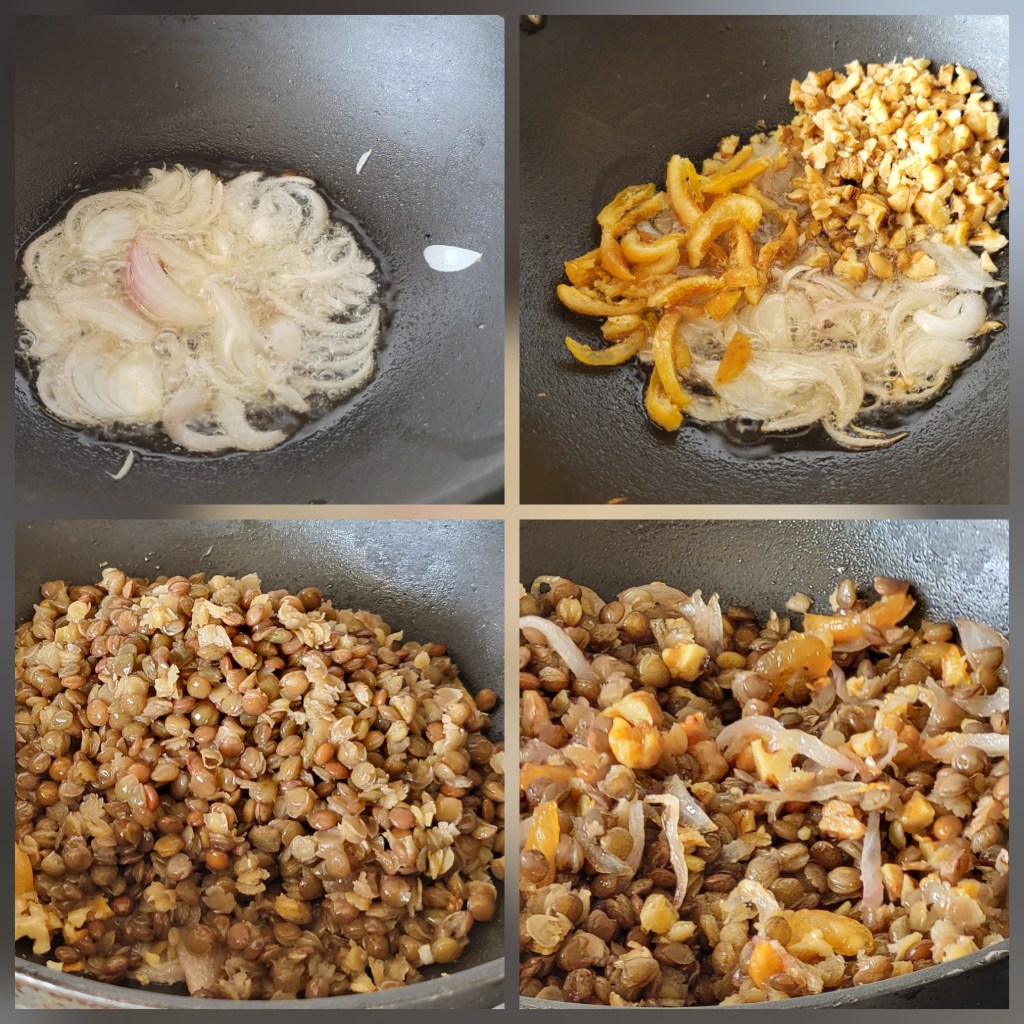
5. In a pan, heat oil and fry the sliced onions till lightly golden brown.
6. Add the chopped apricots, walnuts, a pinch of cinnamon and black pepper, and toss for a minute until fragrant.
7. Then add the cooked dal and gently mix everything together. Stir for 2-3 minutes more so the flavours blend.
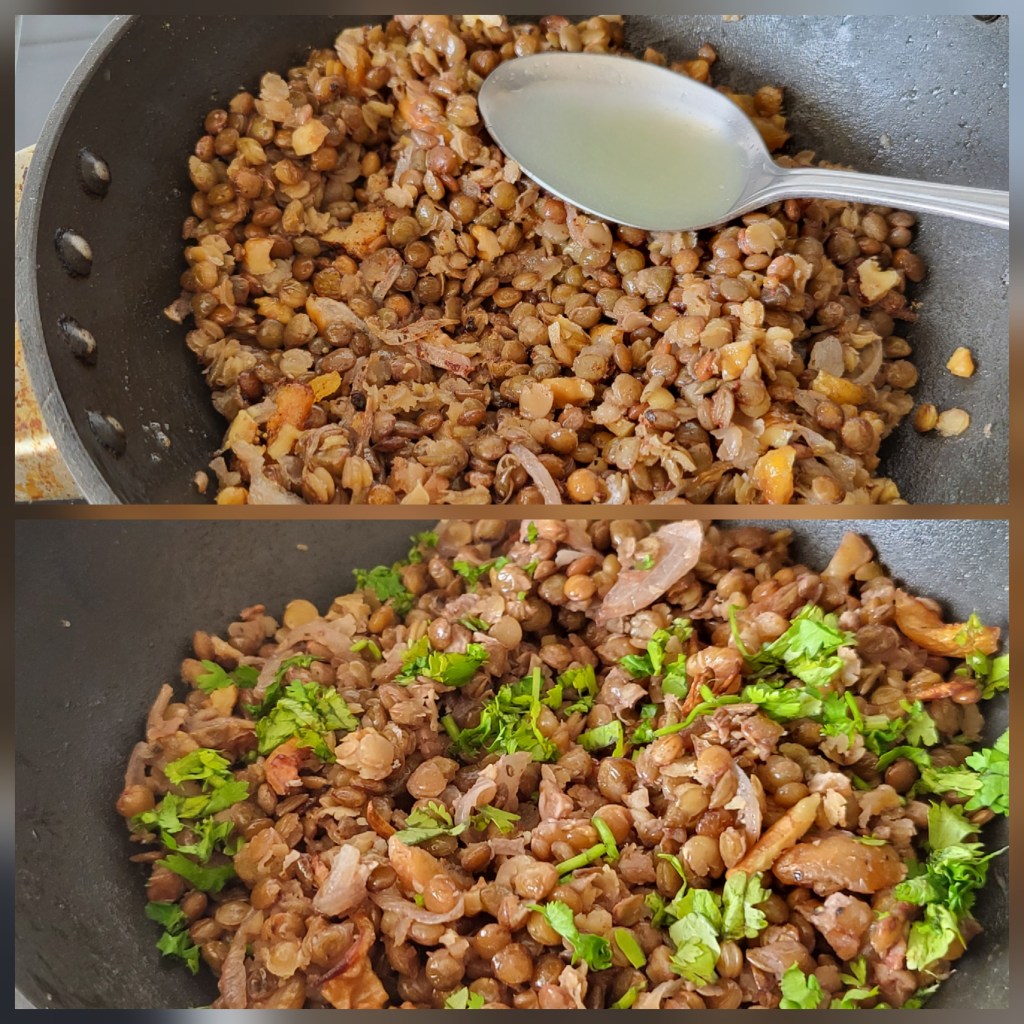
8. Take it off the heat, add the lemon juice and adjust the seasoning. Mshosh should taste perfectly sour-sweet-nutty – add a little more lemon if you like it tangier.
9. Top generously with fresh chopped coriander leaves and serve warm or cold with lavash.
Your Mshosh is ready!
To serve: Enjoy it hot or cold – as a main, a side, or spread warm on lavash as an appetizer.
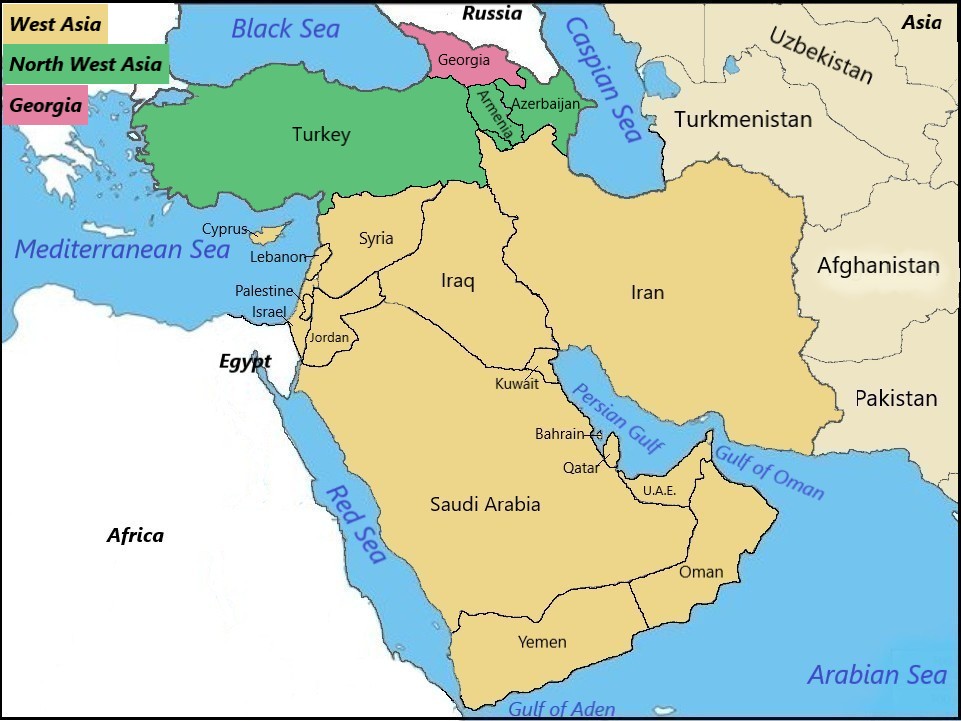
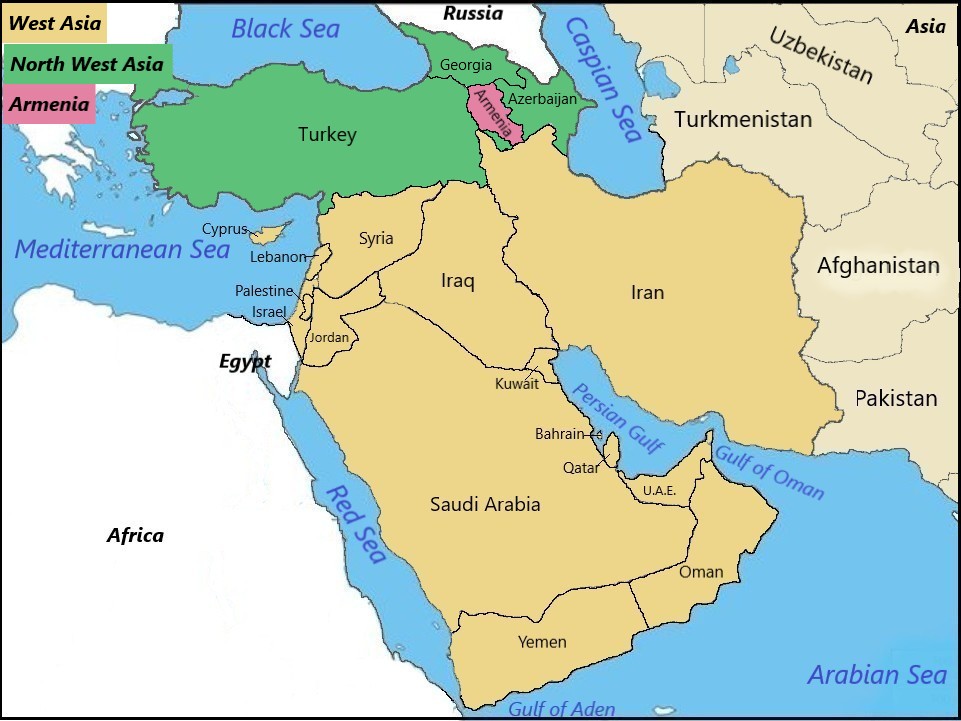
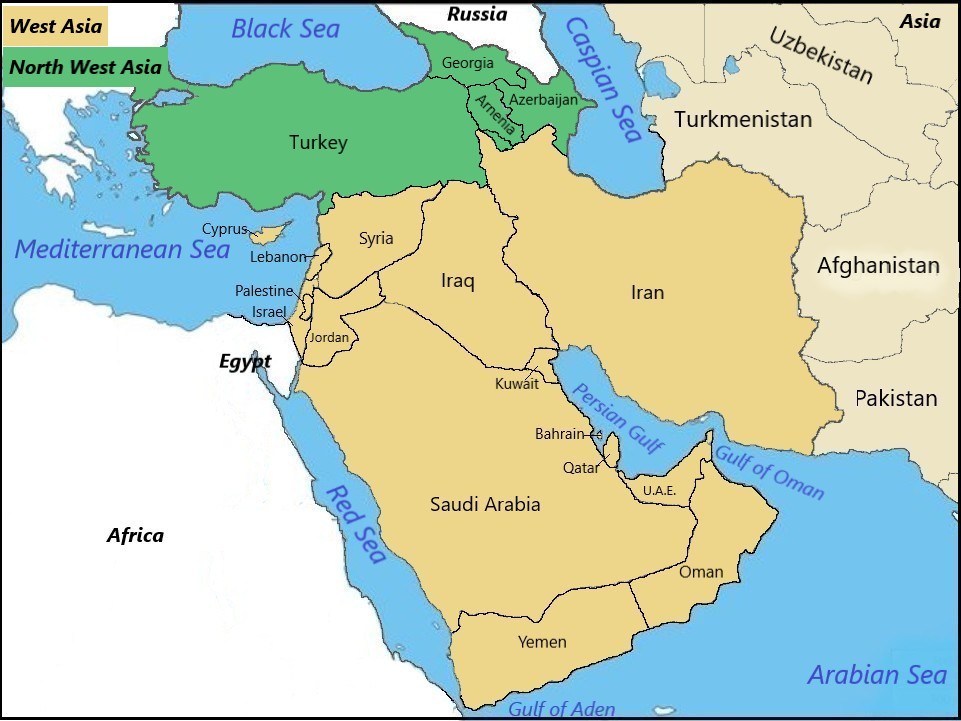
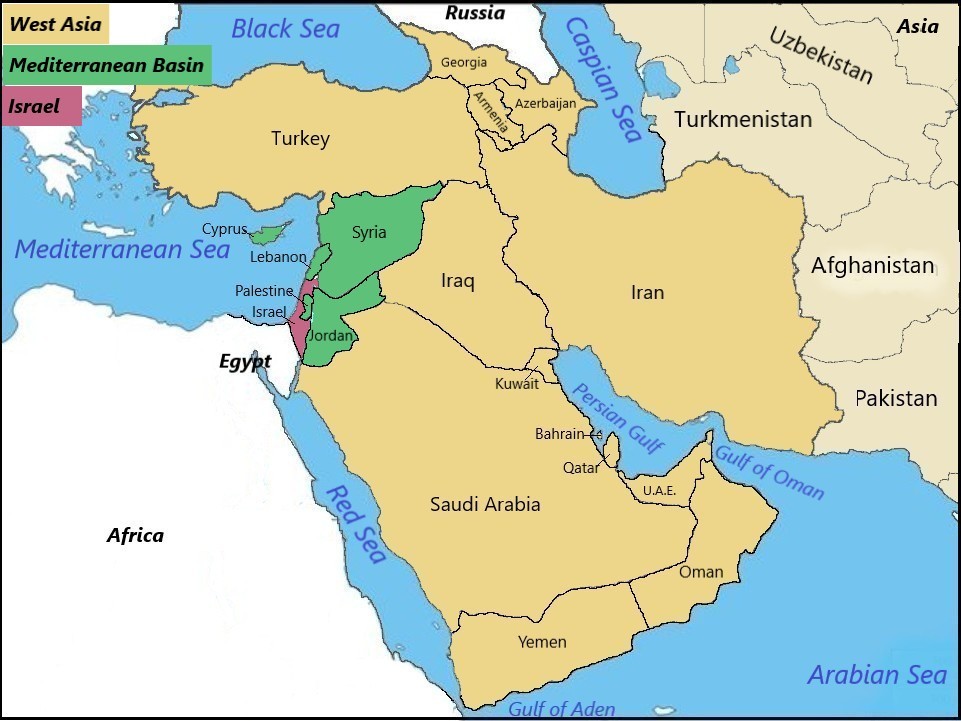
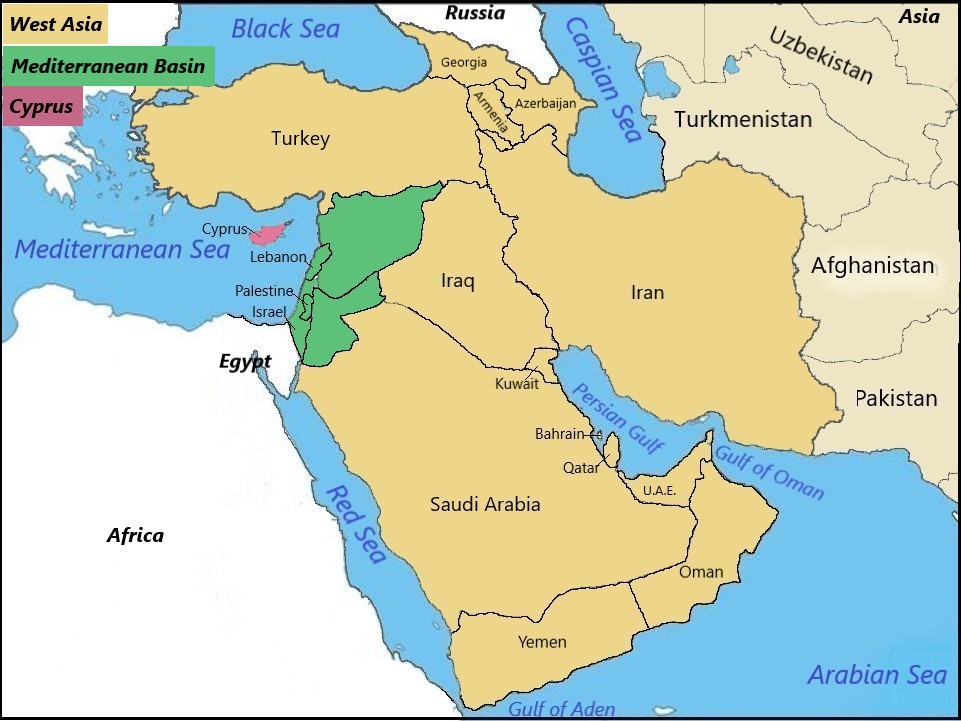
North West Asia, also known as the Caucasus region, is situated between the Black Sea and the Caspian Sea. The term “Caucasus” originates from the Greek word “Kaukasos”, referring to the mountainous area.
This region comprises Turkey, Georgia, Armenia, and Azerbaijan, bordered by Russia to the north, the Caspian Sea to the east, Iran, Iraq, Syria and Mediterranean Sea to the south, and the Black Sea to the north and north-west.
These countries have stunning mountain landscapes, rich history, and unique cultures. From Georgia’s wine traditions to Armenia’s ancient monasteries and Azerbaijan’s modern Baku, each offers a distinct experience waiting to be explored!
Pulse cultivation
Pulse cultivation is a significant aspect of agriculture in these four countries. In Armenia, pulses like lentils, beans, and chickpeas are staple foods. Turkey is a top exporter of both chickpeas and lentils.
The government supports pulse cultivation through subsidies and training programs. Azerbaijan produces pulses like chickpeas and beans. In Georgia, while pulses aren’t a major crop, legumes like clover and alfalfa are grown for forage and soil health, contributing to the country’s sustainable agriculture practices.
Pulses and beans are a big part of the cuisine in these countries. In Armenia, lentil soup (apur) and bean stews are popular. Azerbaijan’s dovga is a yogurt-based stew with herbs and sometimes beans. Georgia uses beans in dishes like lobio (bean stew with herbs and spices). These countries incorporate pulses in tasty ways, often with fresh herbs and spices!
Let’s explore each country alphabetically – Armenia, Azerbaijan, Georgia and Turkey. We’ll highlight how pulses feature in their cuisine.
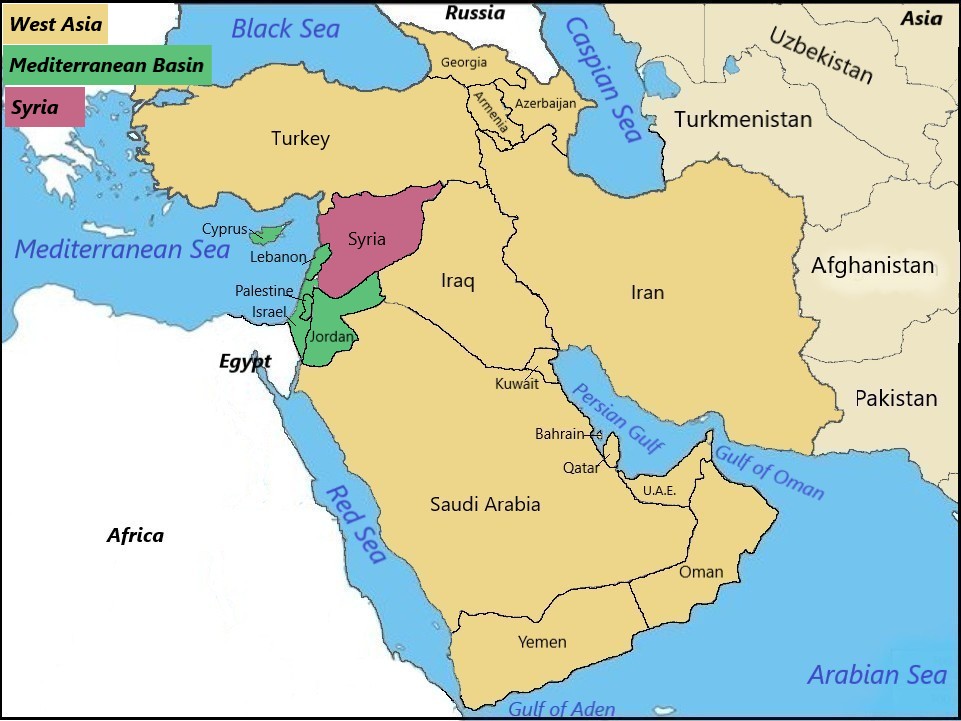
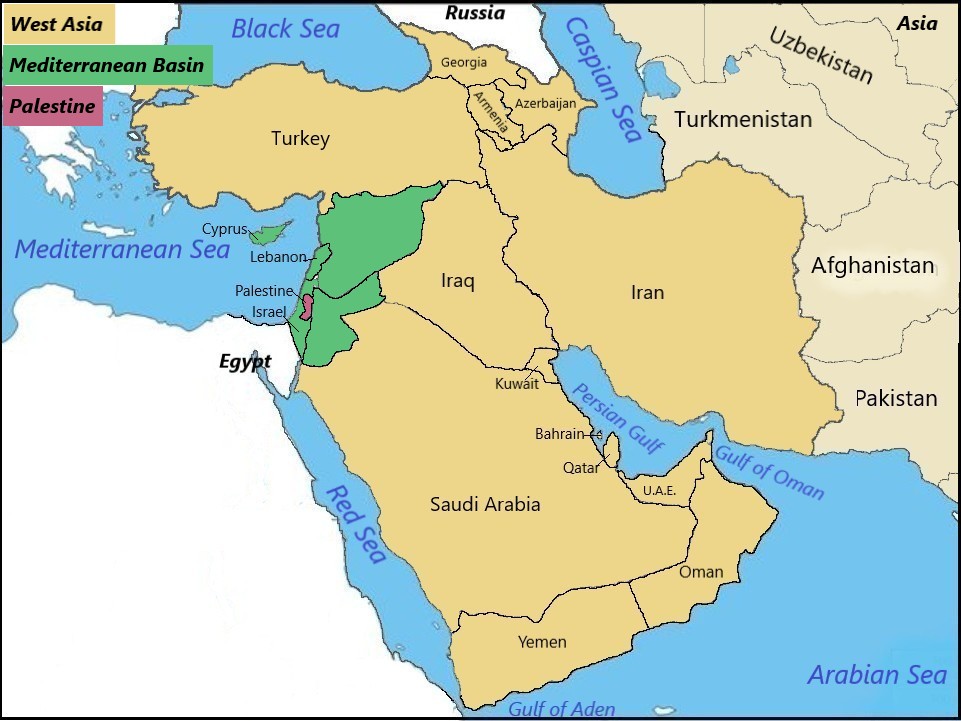
Syria is a country in West Asia, on the eastern coast of the Mediterranean Sea. Its capital is Damascus.
It is bordered by Turkey to the north, Iraq to the east, Jordan to the south, Israel and Lebanon to the southwest, and the Mediterranean Sea to the west.
A Few Wonders of Syria
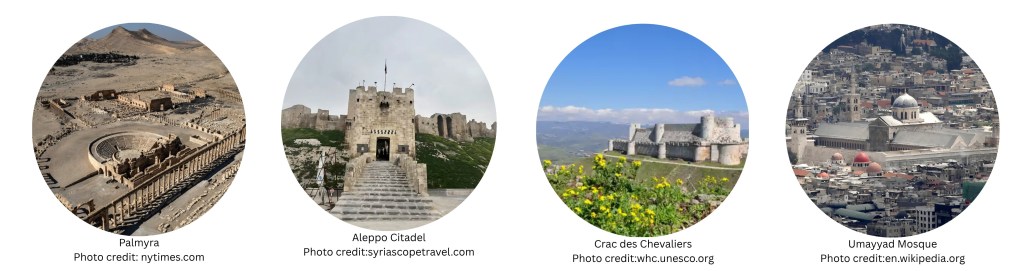
1. Palmyra: Palmyra, an ancient oasis city, is a treasure trove of Roman history. Its stunning ruins, like the Temple of Bel and Arch of Triumph, whisper tales of trade and culture along the Silk Road. You’ll feel the grandeur of ancient civilizations walking through its colonnaded streets.
2. Aleppo Citadel: Aleppo Citadel, perched atop a hill, dominates the city’s skyline. This medieval fortress, over 4,000 years old, has seen empires rise and fall. Explore its thick walls, mosques, and museums – it’s a journey through Syria’s layered past.
3. Krak des Chevaliers: Krak des Chevaliers, a Crusader castle in Homs, is one of the world’s best-preserved medieval forts. Its imposingwalls and strategic location tell tales of knights and battles. You’ll love the mix of history and architecture here.
4. Umayyad Mosque: The Umayyad Mosque in Damascus is a spiritual marvel. Built in 715 AD, this mosque blends Roman, Byzantine, and Islamic styles. Its courtyard, shrines, and mosaics make it a must-visit – feel the soul of Syria’s ancient capital.
People of Syria
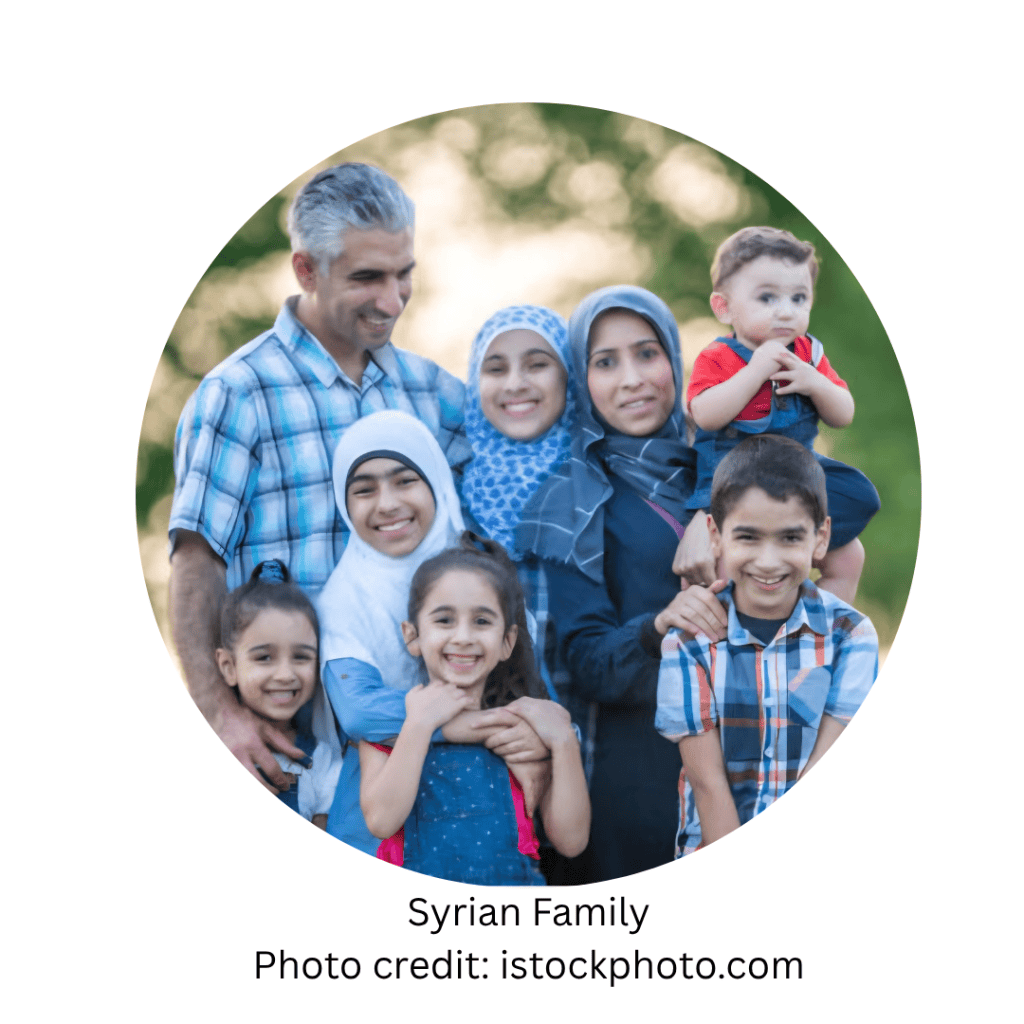
The people of Syria are known for their warmth, hospitality, and strong sense of community. Syria has a rich mix of cultures, religions, and traditions that have existed together for thousands of years. Most Syrians speak Arabic, and family, food, and storytelling play a big role in daily life. Despite many challenges, Syrians are proud of their history, their cities like Damascus and Aleppo, and their traditions of art, music, and cuisine.
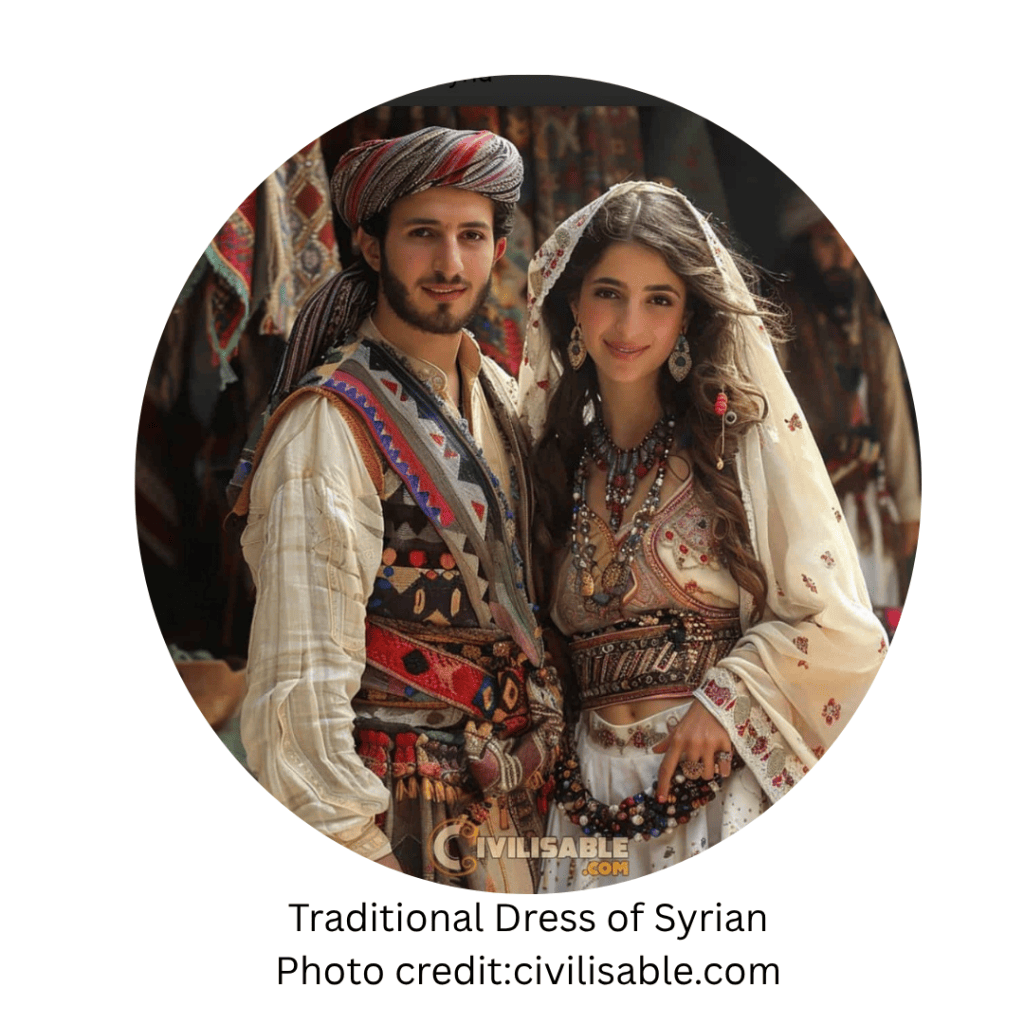
Traditional Dress of Syria
Syrian traditional clothing is elegant, colorful, and reflects the country’s long history and different regions.
For Women: Thobe: A long, loose dress with beautiful hand embroidery on the chest, sleeves, and hem. A colorful or embroidered scarf to cover the hair.
For Men: Dishdasha/Qamis: A long white or light-colored robe. A short vest over the robe, with a cloth sash tied at the waist. A keffiyeh checkered scarf or a turban, often held with a black cord called an agal.
Today people mostly wear modern clothes, but these traditional outfits are still worn proudly during weddings, cultural events, and national celebrations.
Pulses and Recipes
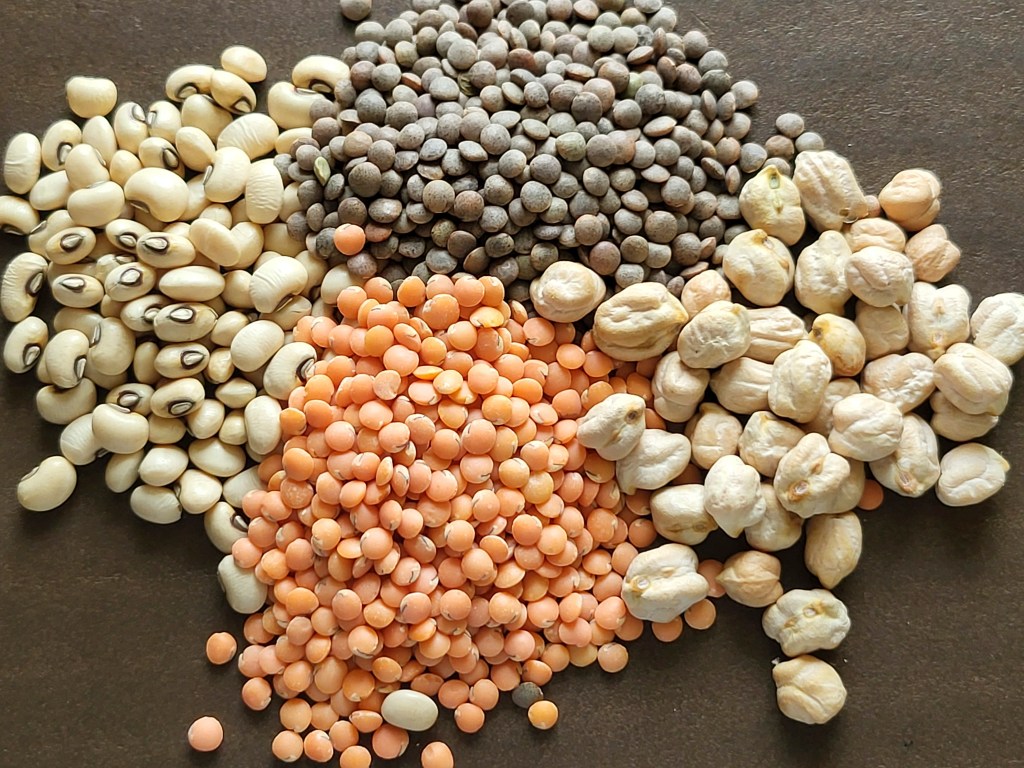
Pulses are an important part of Syrian food and farming. Lentils, chickpeas, fava beans, and peas are grown in many parts of the country and are used in everyday cooking. Dishes like mujadara with lentils, hummus with chickpeas, and foul with fava beans are popular and full of protein. Pulses are also affordable, nutritious, and have been a staple in Syrian cuisine for centuries, reflecting the country’s agricultural heritage and Mediterranean diet.
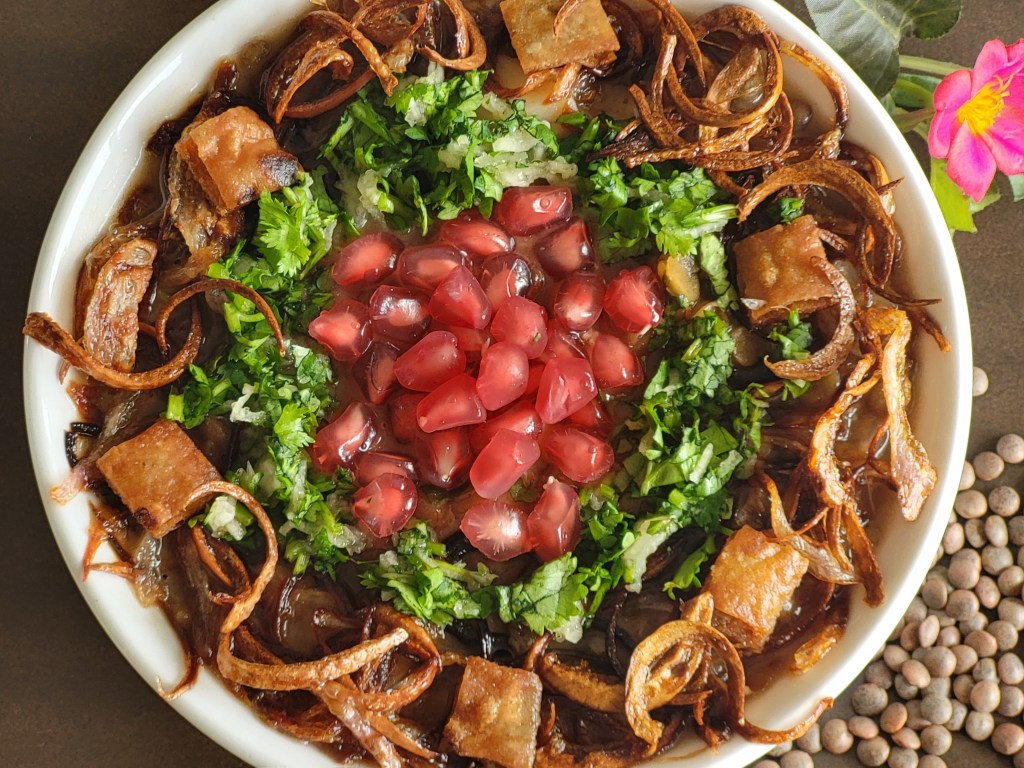
Today we are trying out Harak Osbao, a beloved traditional Syrian lentil and pasta stew. Harak Osbao literally translates to “he burned his finger”. As the story goes, it’s called that because the dish is so delicious and aromatic that people can’t resist eating it straight from the pot, even when it’s piping hot.
Harak Osbao – Tamarind Version Stew
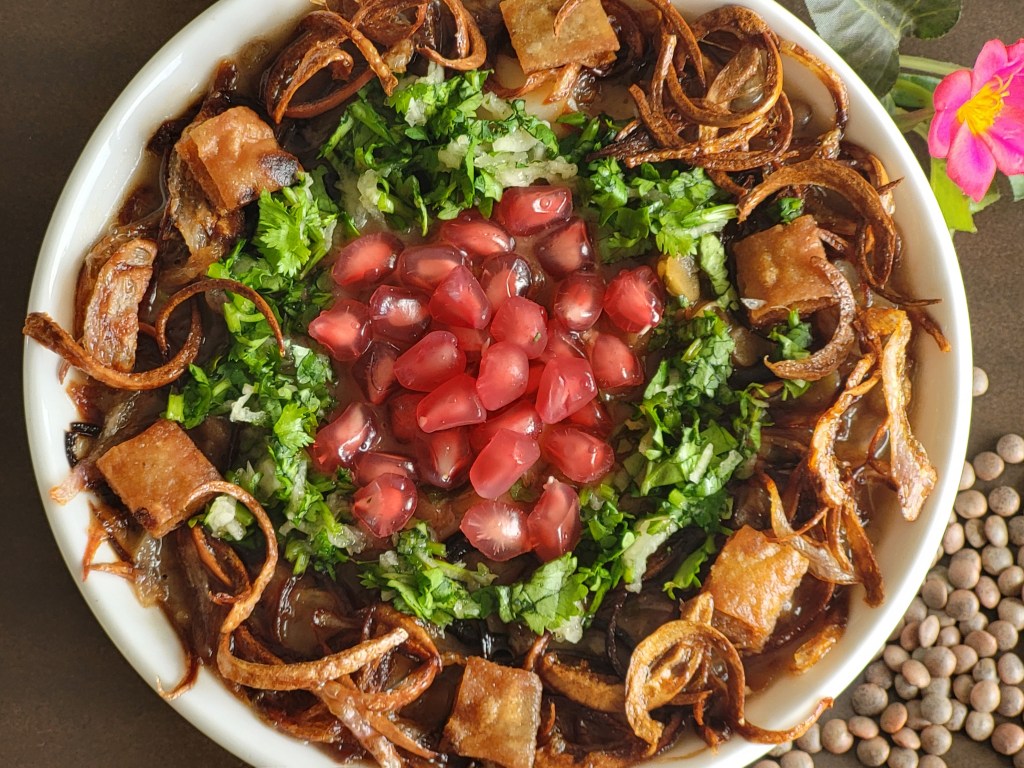
This is Harak Osbao – a comforting Syrian lentil and pasta stew that is pure magic in a bowl. Tangy from tamarind, earthy from lentils, and layered with crispy roti croutons, sweet caramelised onions, fresh garlic and coriander, and a burst of juicy pomegranate seeds in the centre. Every spoonful is sour, savoury, crunchy and fresh all at once – utterly delicious!
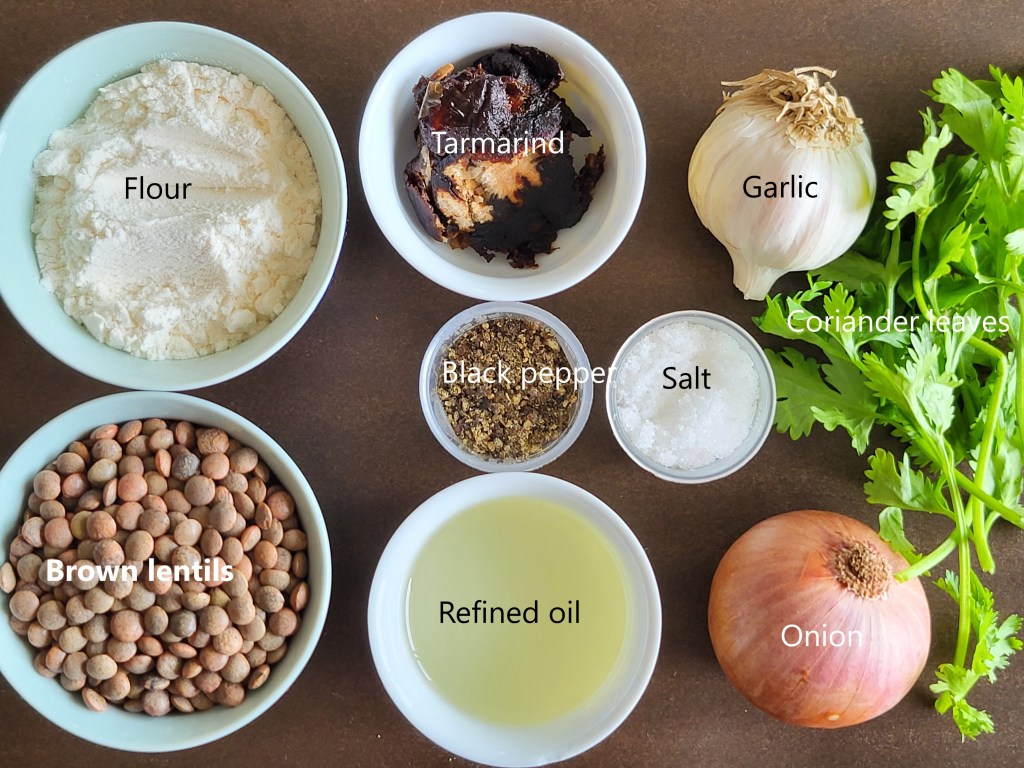
You need:
100 gm Brown lentils
75 gm flour for pasta (Traditional uses homemade dough squares)
50 gm dried tamarind
1 large onion
2 tsp grated garlic
½ cup finely chopped fresh coriander/cilantro
3-4 tbsp refined / olive oil
Salt and pepper to taste
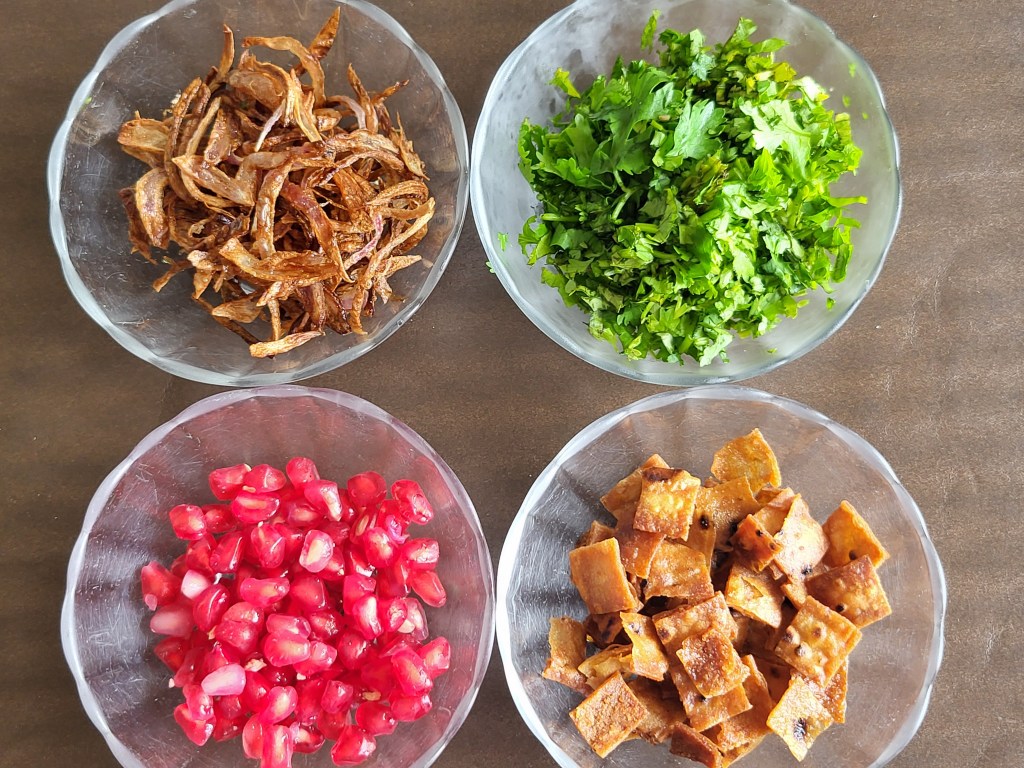
For the topping:
Pita bread / roti croutons: cut into small squares and fried until crispy
Fried onions: from the sliced onions above
Coriander and garlic mix / cilantro: from above
Pomegranate seeds
Method:
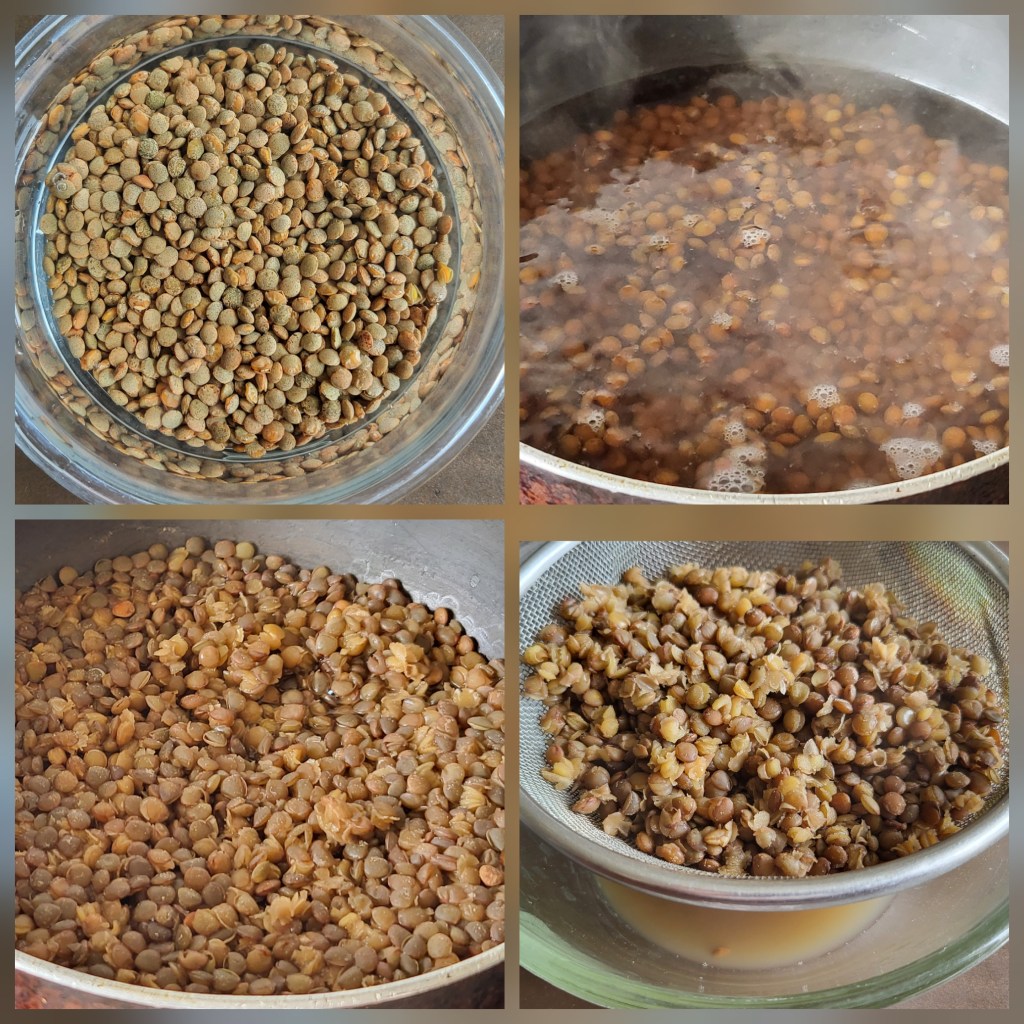
Wash the lentils and soak for 5 minutes.
Drain. a pot, add the lentils with ½ tsp salt and enough water to just cover them. Bring to a boil, then reduce the heat and simmer for about 15 minutes until tender but not mushy.
Drain the lentils and reserve the cooking liquid for later use. Set the lentils aside.
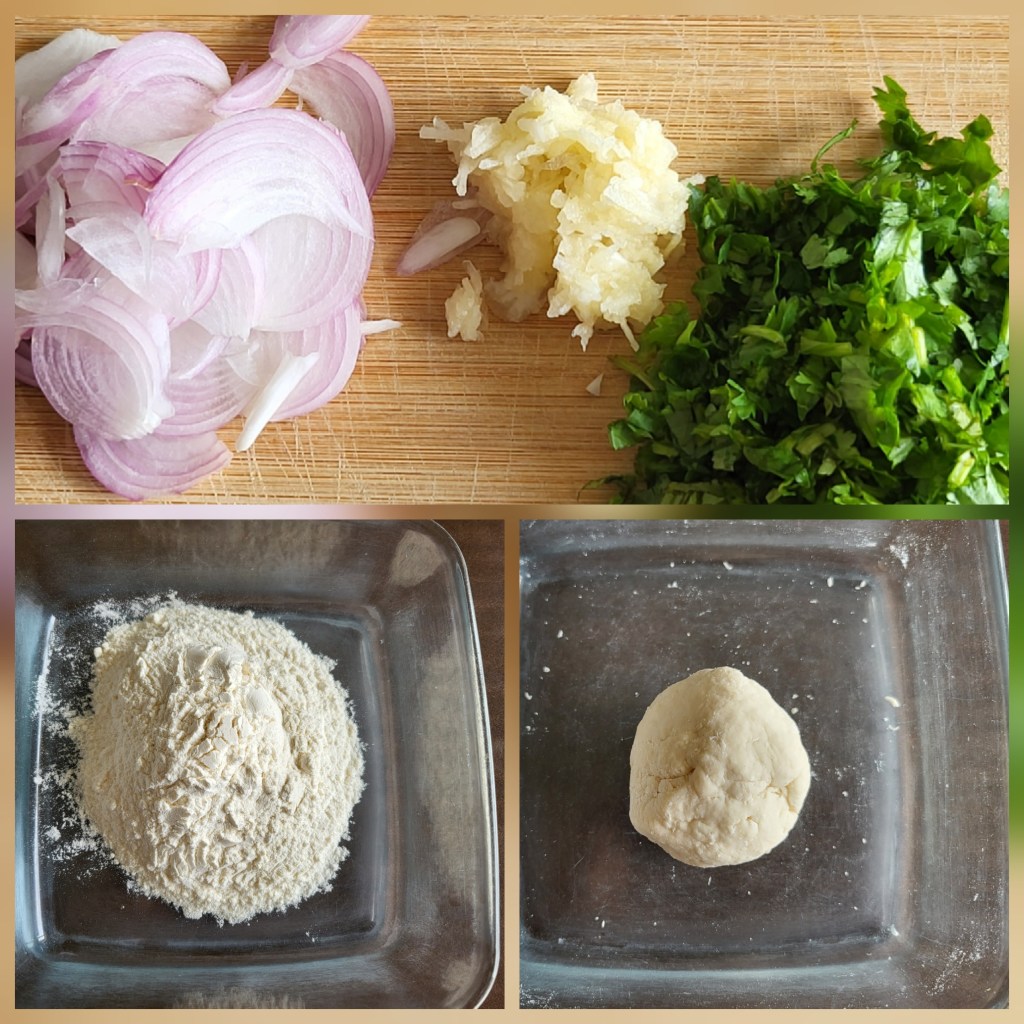
4. Peel and slice the onions.
5. Grate the garlic. Finely chop the coriander leaves.
6. Mix the coriander and garlic together and keep it aside.
7. In a bowl, combine the flour with a pinch of salt and add cold water little by little to make a firm dough.
8. Cover and set aside to rest.
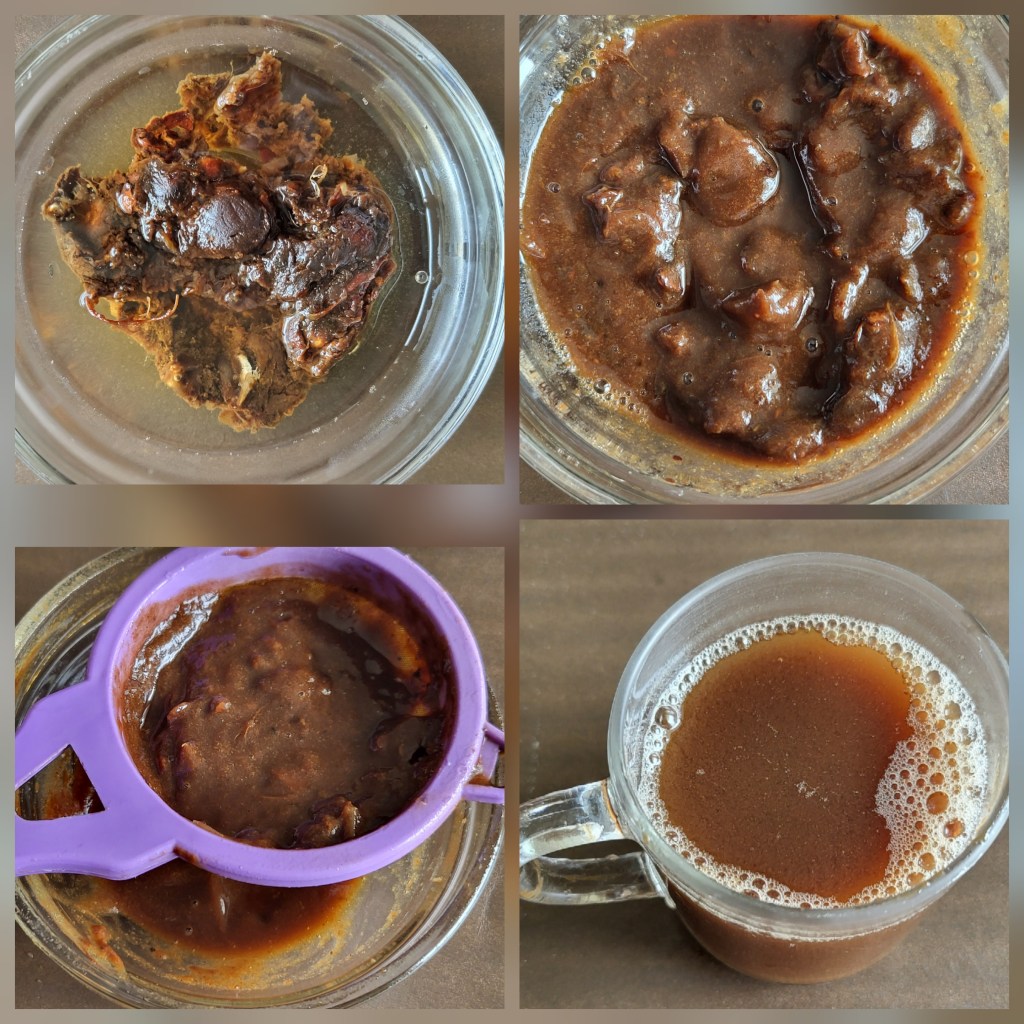
9. Soak the tamarind in hot water for a few minutes.
10. Gently crush it with your fingers to extract the pulp, then strain the pulp through a fine strainer.
11. Add water to the pulp to make the sauce. If the tamarind is very sour, use less of the tamarind water. You can save any leftover tamarind water for later use.
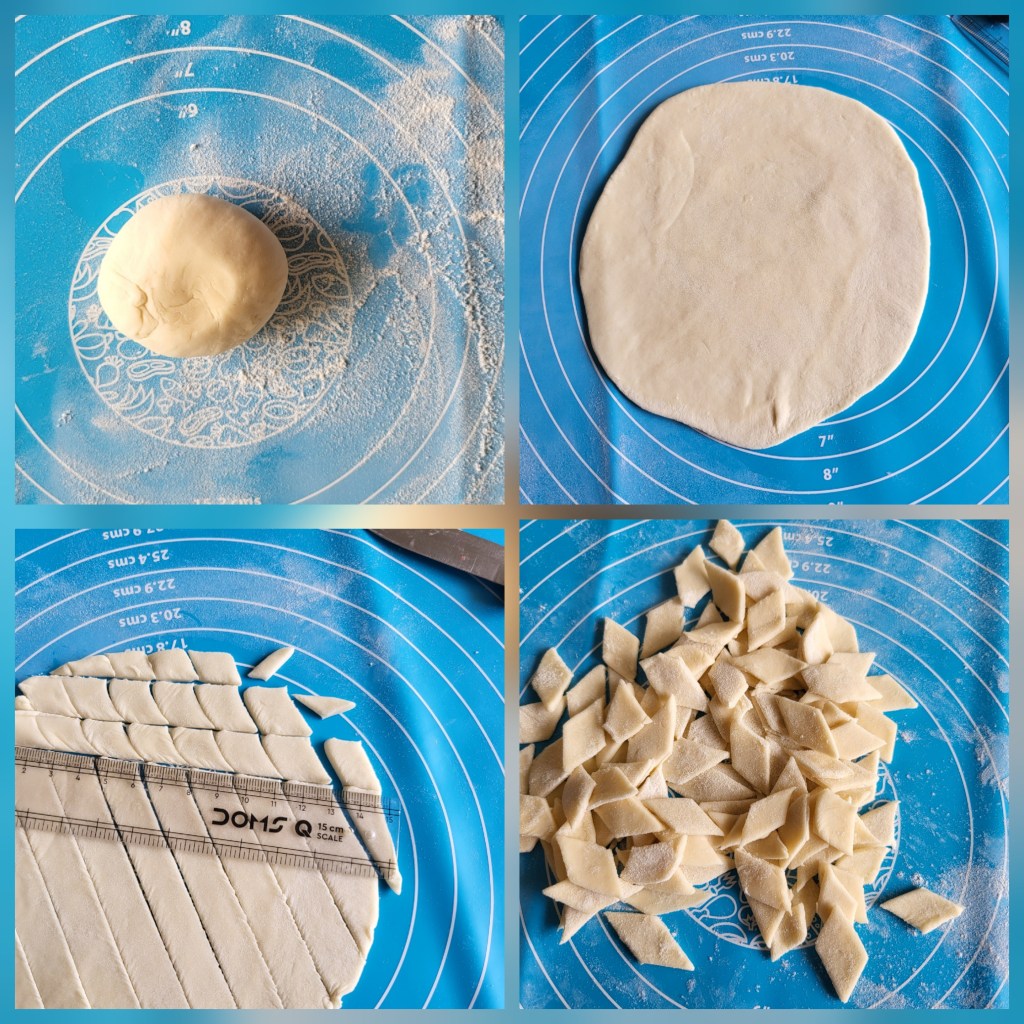
12. After resting for 10-15 minutes, knead the dough again and roll it out thinly.
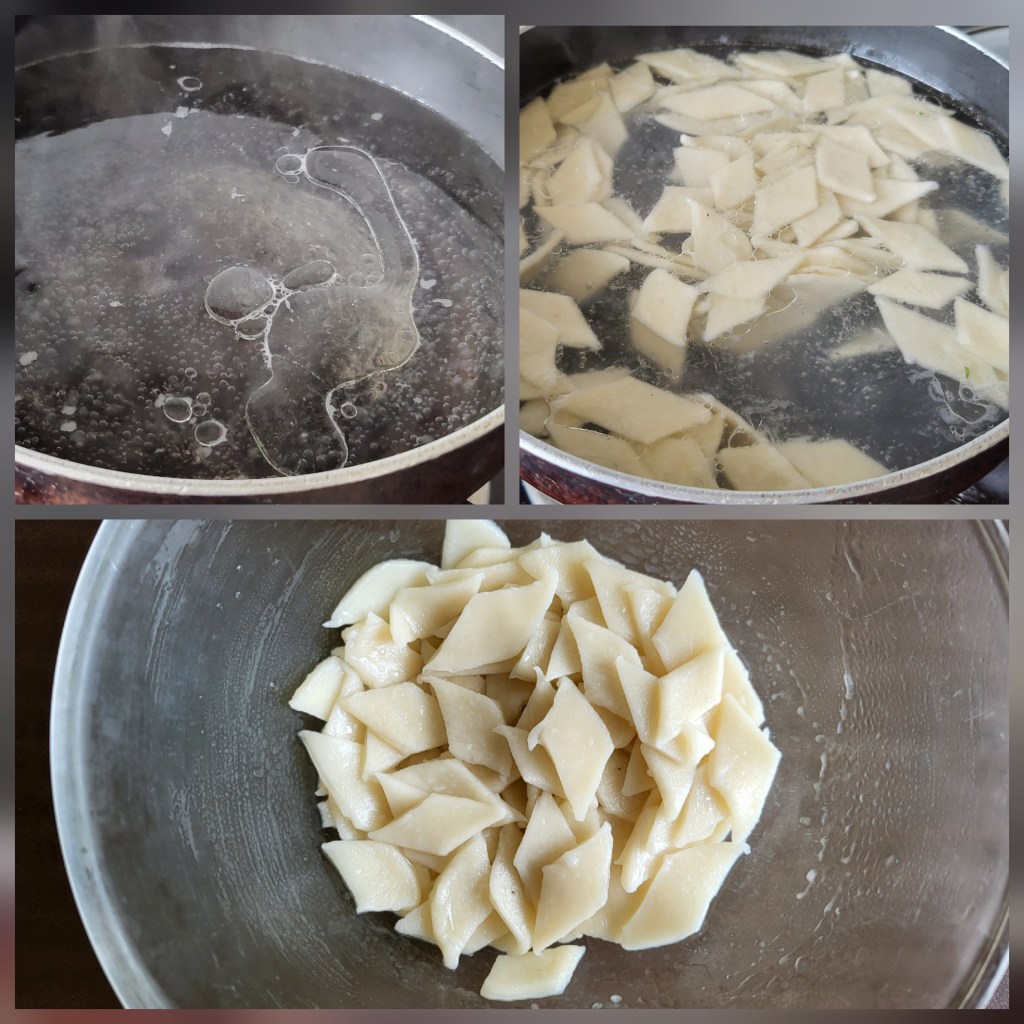
13. Cut into small diamond shapes, as shown in the picture.
14. In a large pot, bring water to a boil with ½ tsp salt and 1 tsp oil.
15. Add the cut pasta. Lower the heat slightly. The pasta is cooked as soon as it floats to the surface.
16. Drain using a colander and set aside.
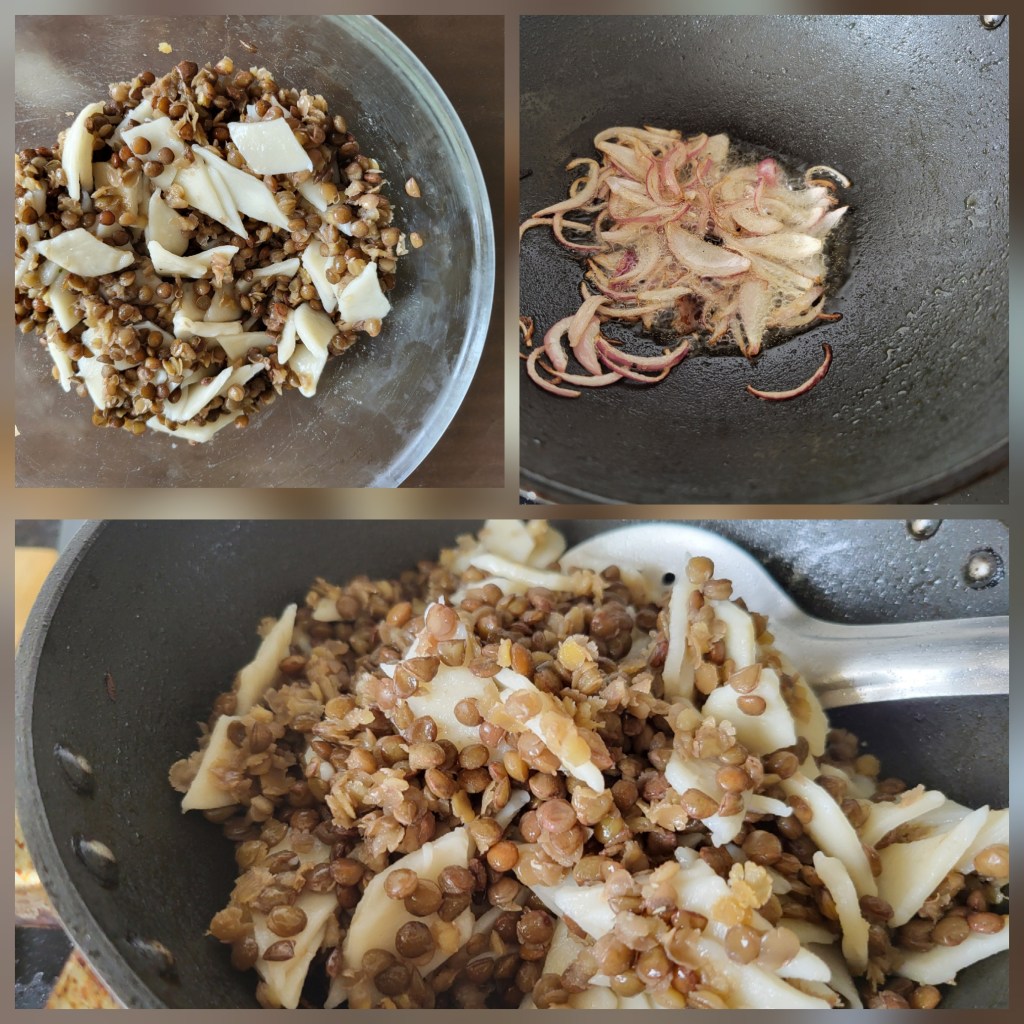
17. Mix the cooked pasta and cooked lentils together well.
18. Heat 1 tbsp oil in a pan and fry ¼ of the sliced onions for a few seconds until lightly golden.
19. Add the lentil and pasta mixture, gently toss everything together, and then remove from the heat.
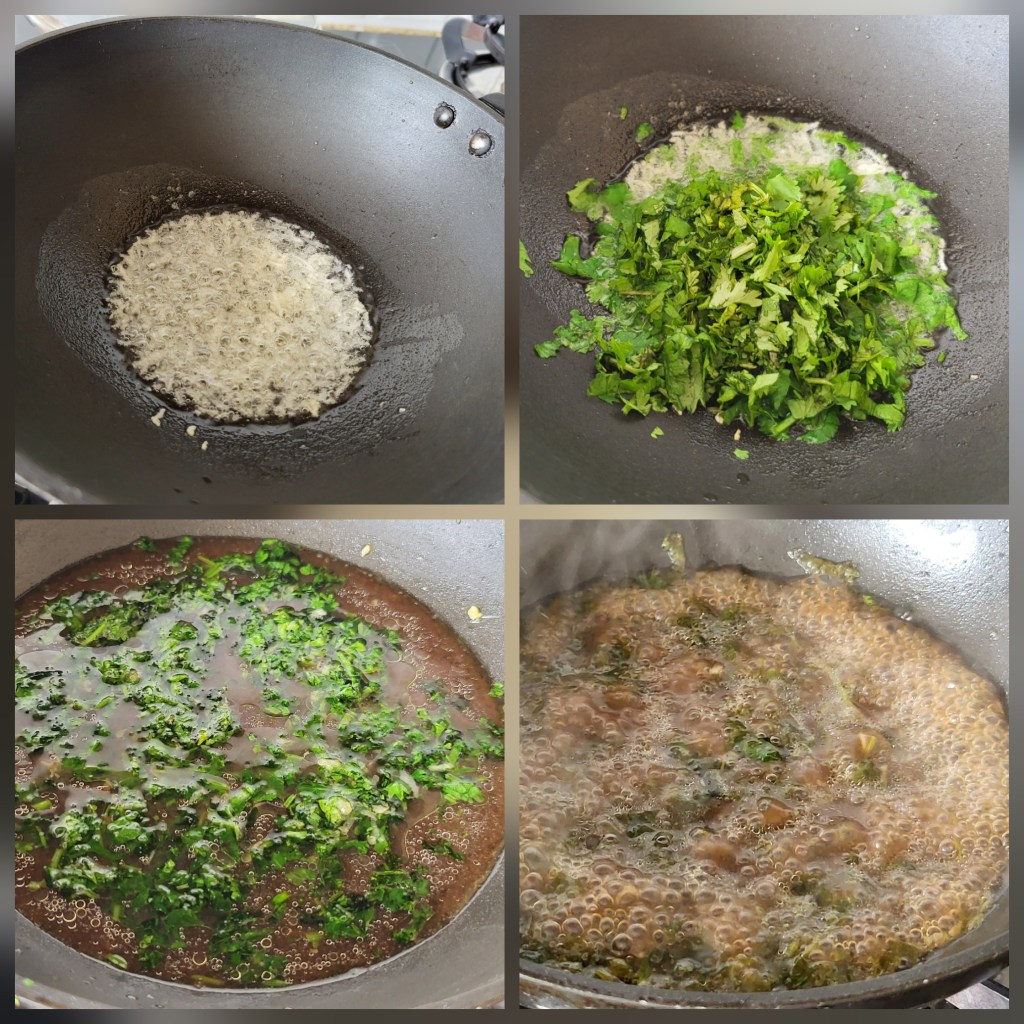
20. In a separate pan, heat 1 tbsp refined oil.
21. Add 1 tsp grated garlic and sauté for a few seconds.
22. Add half of the chopped coriander and sauté for 1 minute.
23. Pour in the strained tamarind juice and the reserved lentil cooking liquid.
24. Season with salt and pepper. Bring to a boil, then simmer for about 3 minutes.
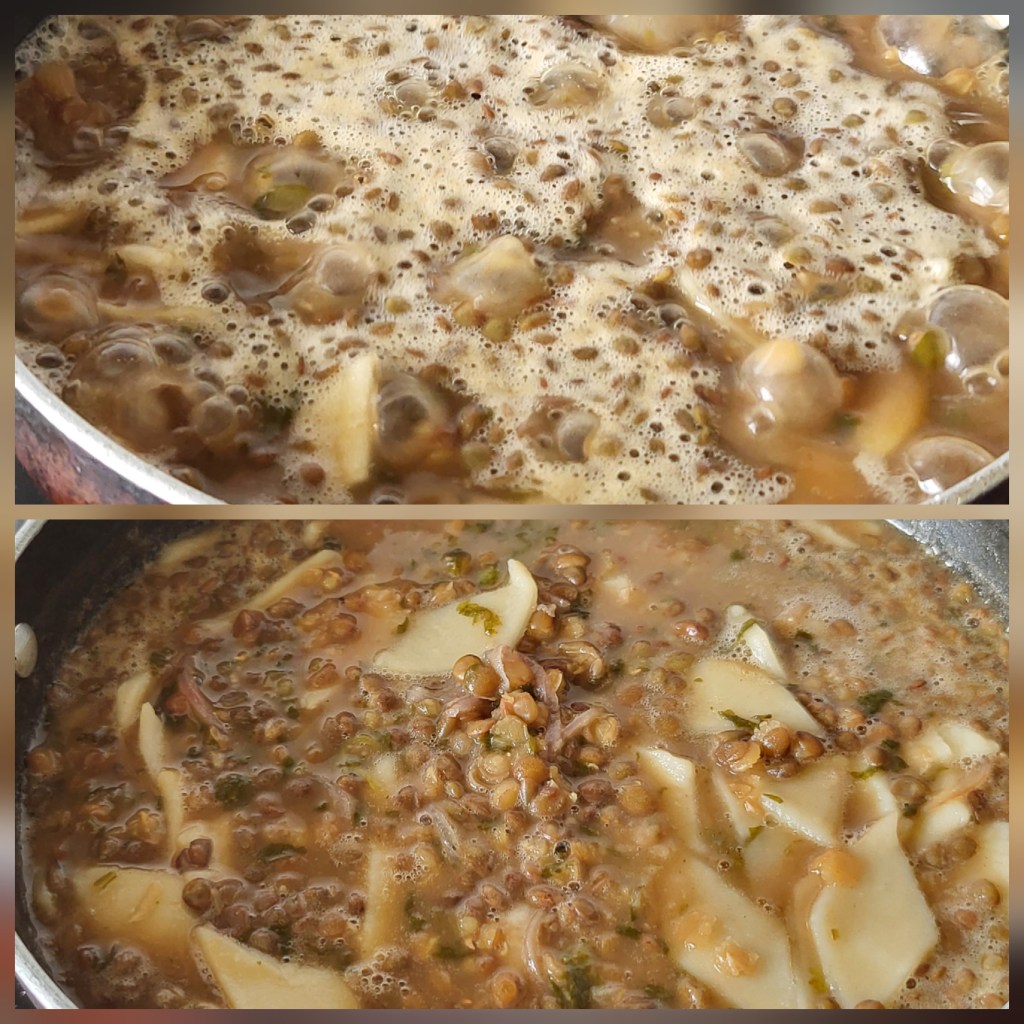
25. Add the pasta and lentil mixture to the simmering tamarind sauce.
26. Lower the heat and let it sit for a few seconds to allow the flavours to meld together.
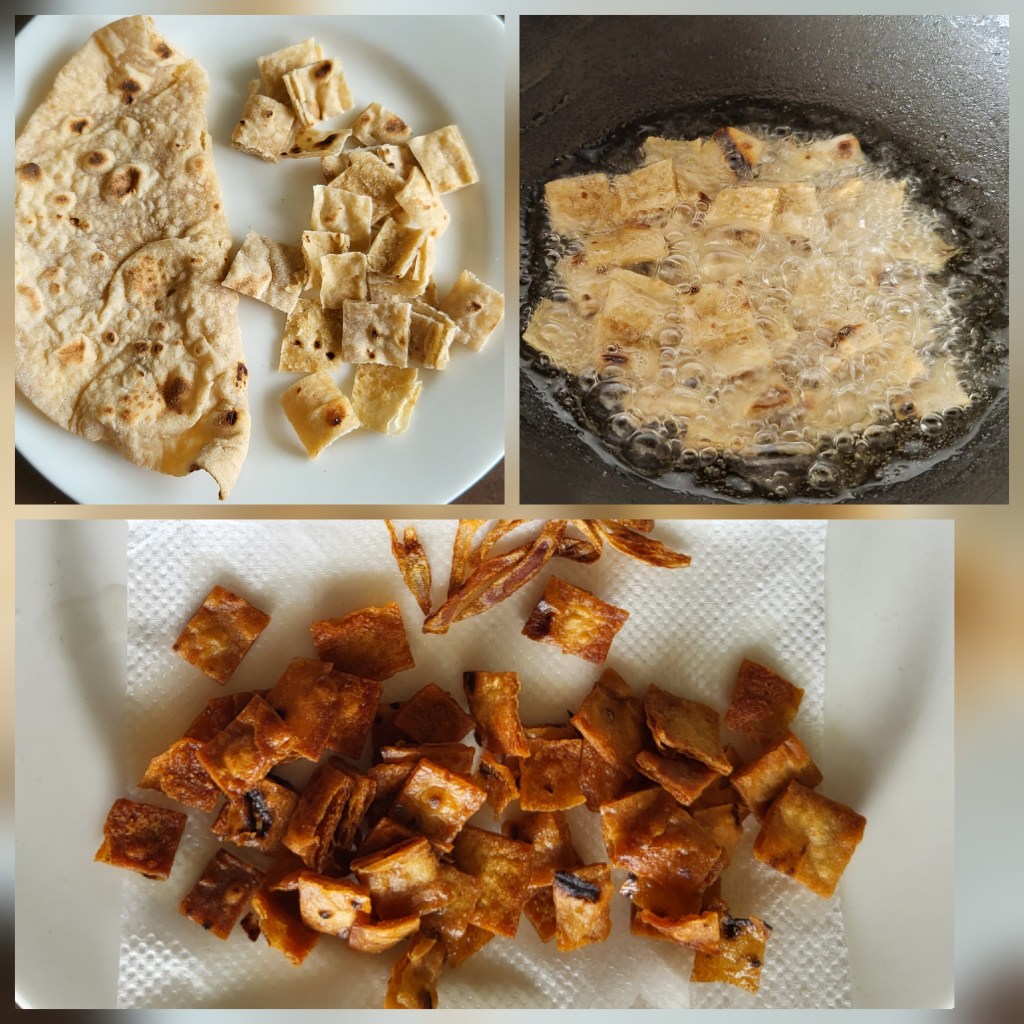
27. For the Topping: Since I didn’t have pita bread, I used Indian roti (chapati) and cut it into small squares with scissors, as shown in the picture.
28. Heat 2 tbsp oil in a pan and fry the croutons until crispy and golden brown.
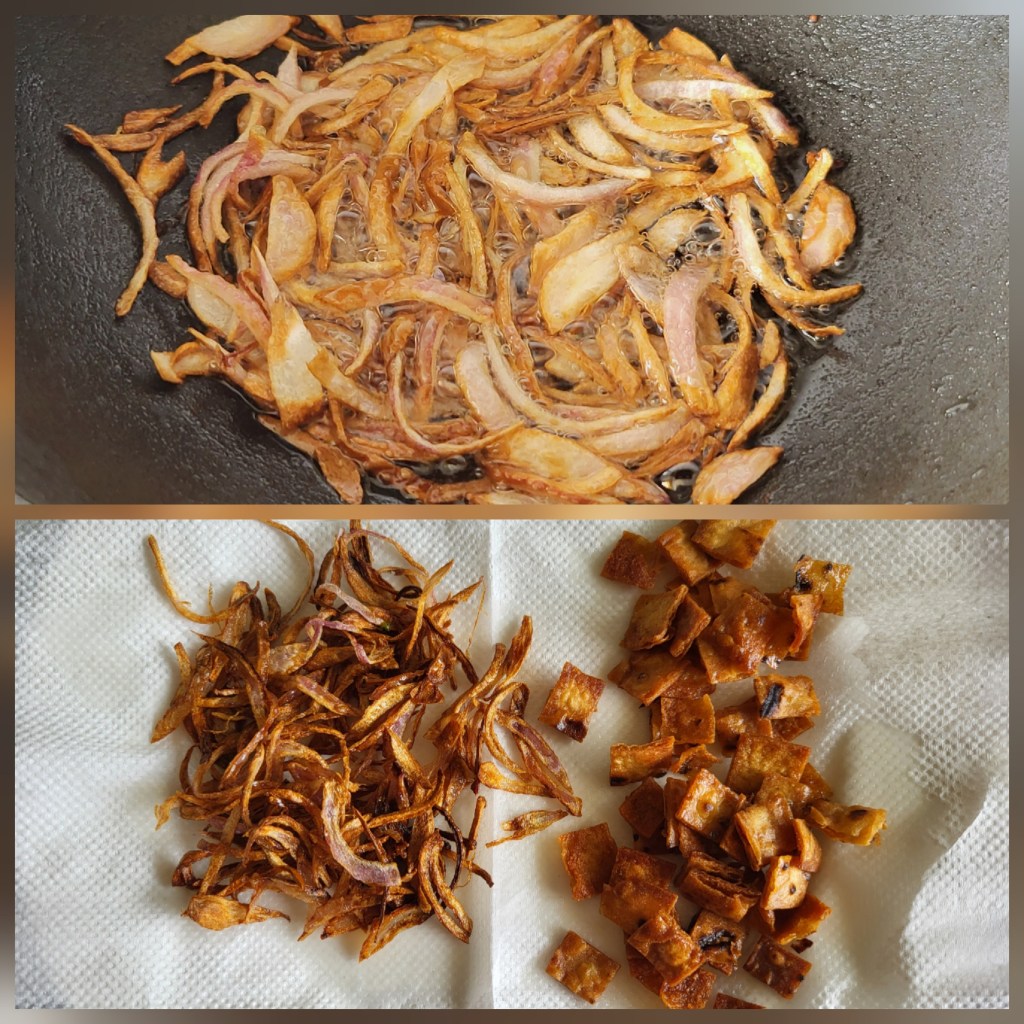
29. In the same pan, using the remaining oil, fry the rest of the sliced onions until deeply caramelised.
30. To serve: Spoon the hot stew into a serving dish. Top with the caramelised onions, garlic-coriander mix, crispy roti croutons, and pomegranate seeds. It’s delicious — it’s Harak Osbao!
Palestine is in West Asia in the Mediterranean Basin, and shares borders with Israel, Syria, and the Dead Sea
A Few Wonders of Palestine
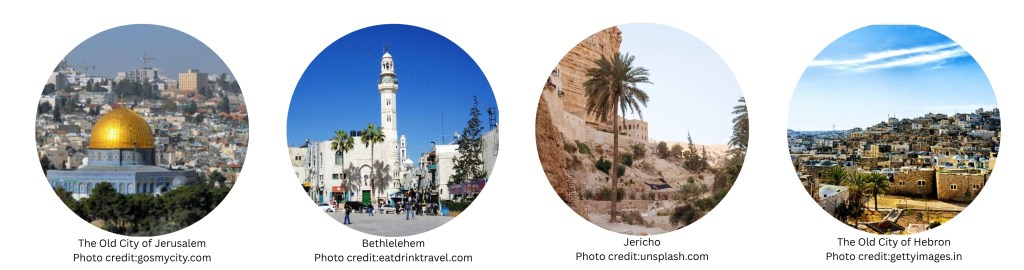
1. Old City of Jerusalem: The Old City of Jerusalem is a spiritual hub. Wander through its narrow streets, exploring sites like the Western Wall, Church of the Holy Sepulchre, and Al-Aqsa Mosque. This UNESCO site is a must-visit for history and faith.
2. Bethlehem: Bethlehem, the birthplace of Jesus, is a city of faith. Visit the Church of Nativity, Manger Square, and Shepherds’ Fields for a glimpse into biblical history. Experience the town’s warm hospitality and rich culture.
3. Jericho: Jericho, one of the world’s oldest cities, boasts stunning landscapes. Explore ancient ruins like Tel es-Sultan, float in the Dead Sea, and visit the Mount of Temptation. This oasis city is a hidden gem.
4. Hebron: Hebron’s Old City is a living tapestry of history. Visit the Ibrahimi Mosque/Craig of the Patriarchs, a sacred site for Jews and Muslims. Explore the bustling markets and soak in the city’s rich cultural heritage.
People of Palestine
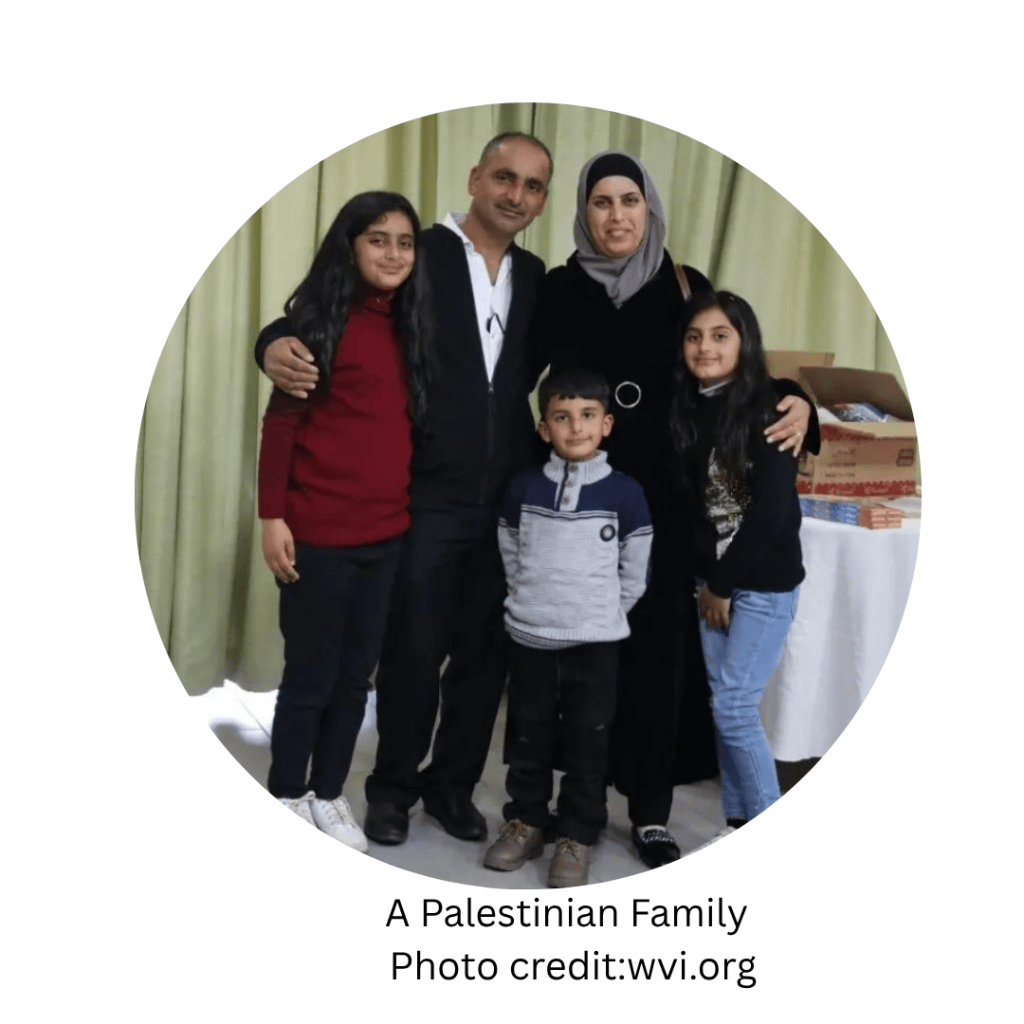
The Palestinian people have deep roots in the lands of the Levant and the Mediterranean Basin. Known for strong community ties and hospitality, family and home-cooked meals are central to daily life. Agriculture has long shaped their culture, with olives, wheat, and pulses like lentils and chickpeas forming the base of traditional cuisine. Palestinian identity is closely connected to the land, heritage, and the passing down of recipes and customs through generations.
Traditional Dress of Palestine
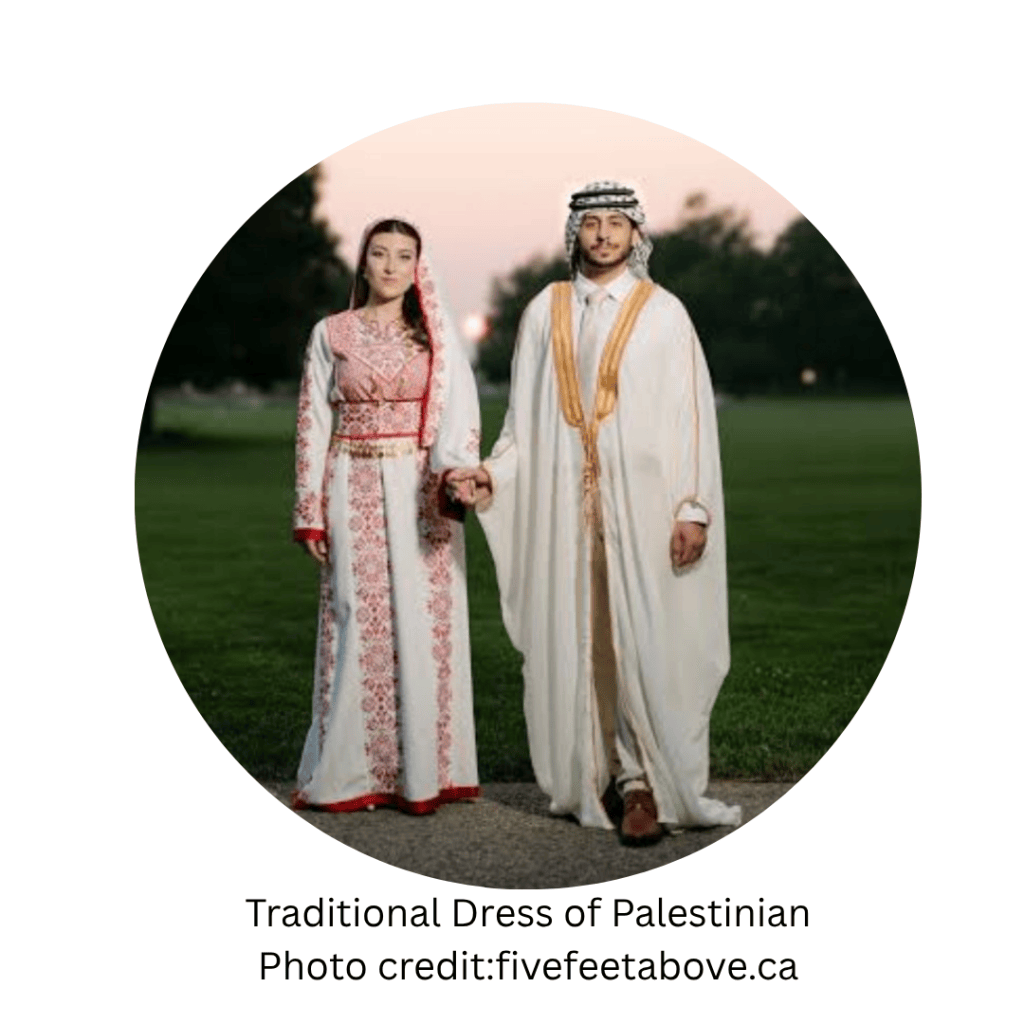
The traditional dress in Palestine is known for its embroidery, called tatreez. Women’s dresses, or thobes, are usually long, loose gowns made of cotton or linen and decorated with colorful cross-stitch patterns. The designs and colors often reflect the wearer’s village, region, and heritage, with motifs inspired by nature like flowers, trees, and cypress. Men traditionally wear a loose shirt and trousers, often with a keffiyeh — the black and white checkered headscarf — which has become a symbol of Palestinian culture.
Pulses and Recipes
Pulse cultivation has long been an important part of agriculture in Palestine. Lentils, chickpeas, and fava beans are the most commonly grown pulses, thriving in the region’s Mediterranean climate with cool, wet winters and dry summers. These crops are well-suited to the hilly terrain and require less water than many other crops, making them a traditional staple for local farmers. Pulses are valued both for their nutrition and for their role in classic Palestinian dishes like mujadara, hummus, and falafel.
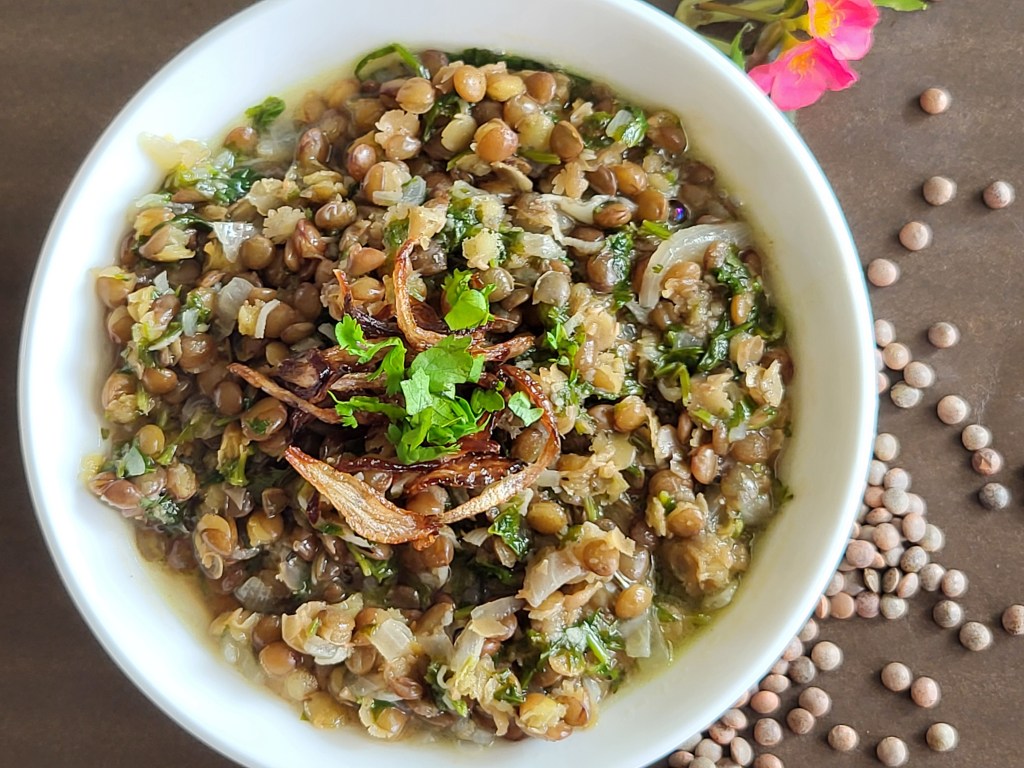
Today I am cooking Adas bi Hamod, a tangy lentil dish from Palestine.
Adas bi Hamod (Lentil Stew)
Adas bi Hamod is a beloved traditional Palestinian lentil stew. Its name literally translates to “lentils with lemon”. Sour, garlicky and deeply comforting, it is usually served with rice or warm bread – proof that the simplest ingredients can taste just like home.
You need:
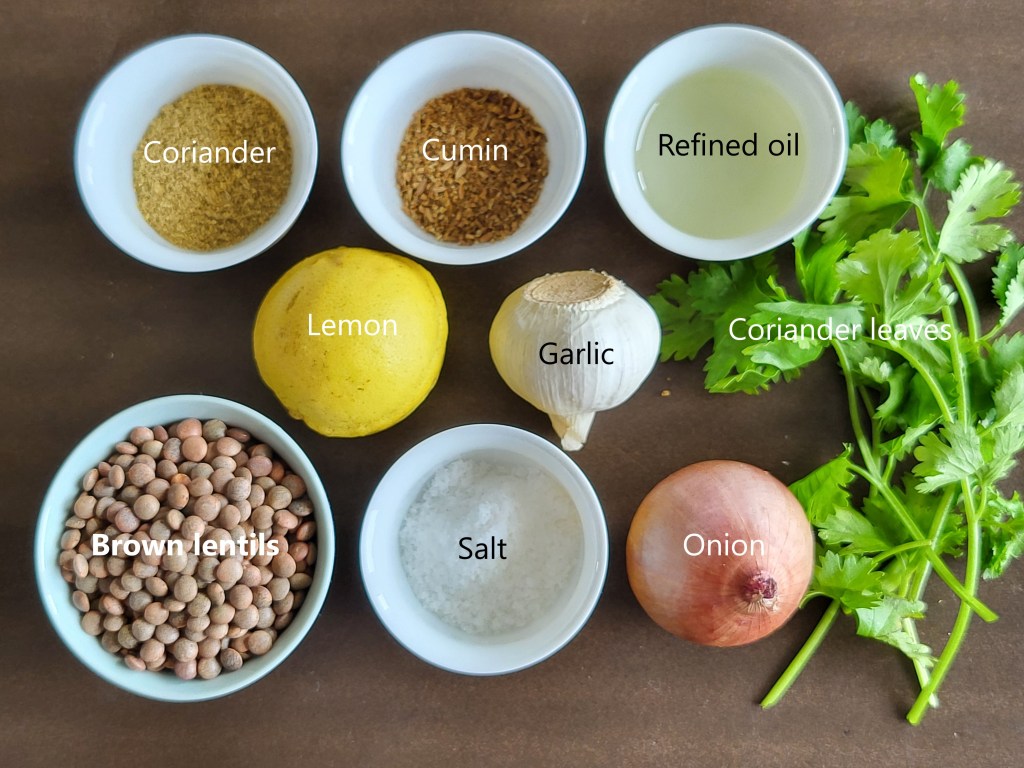
100 gm brown lentils:
1 small onion
1 tbsp grated garlic
½ cup of finely chopped cilantro/coriander
1-2 tbsp of lemon juice (according to taste – this is the key!)
2 tbsp refined/Olive oil
1tsp cumin powder
1 tsp coriander powder
Salt to taste
Method:
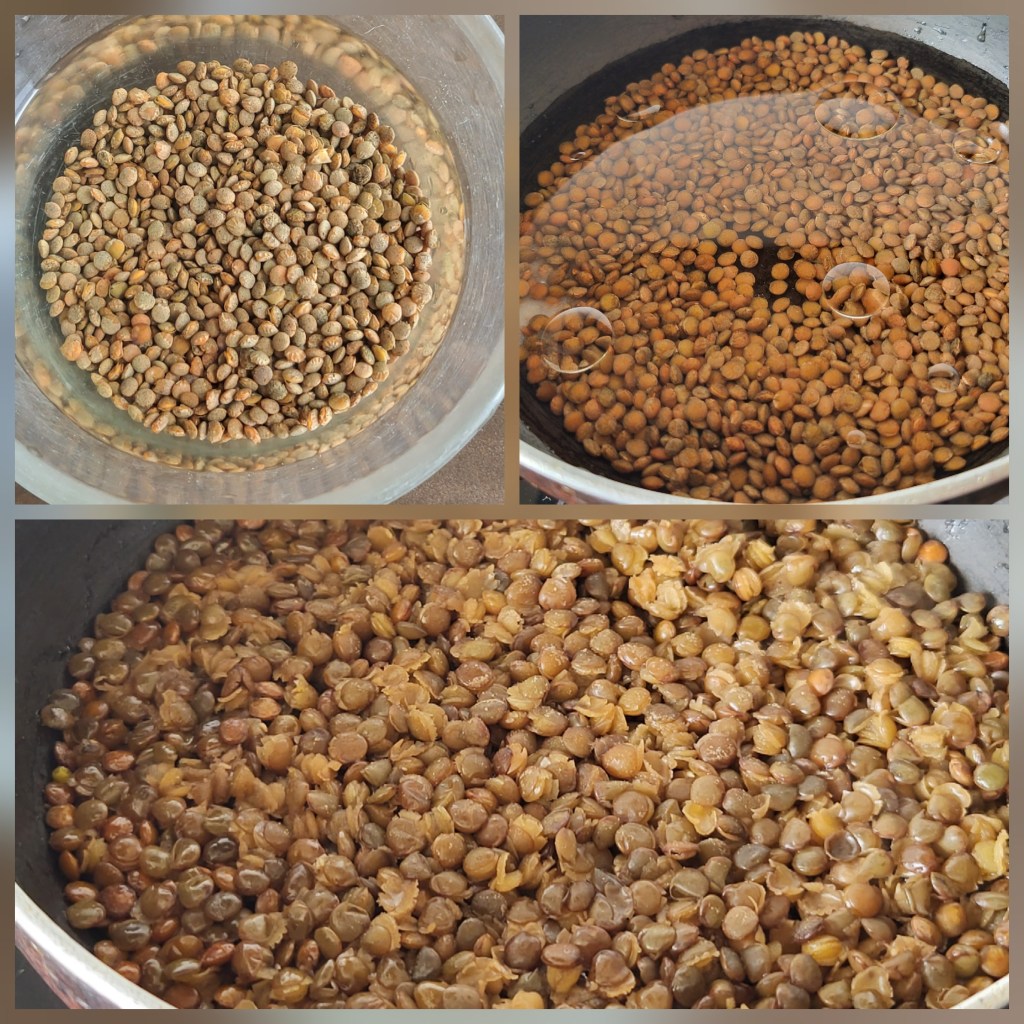
Wash the lentils and soak for about 5 minutes.
In a large pot, add the lentils, water, 1 tbsp refine oil and 1 tsp salt.
Bring to a boil, then reduce the heat and let it simmer for about 15 minutes, until the lentils are tender but not falling apart.
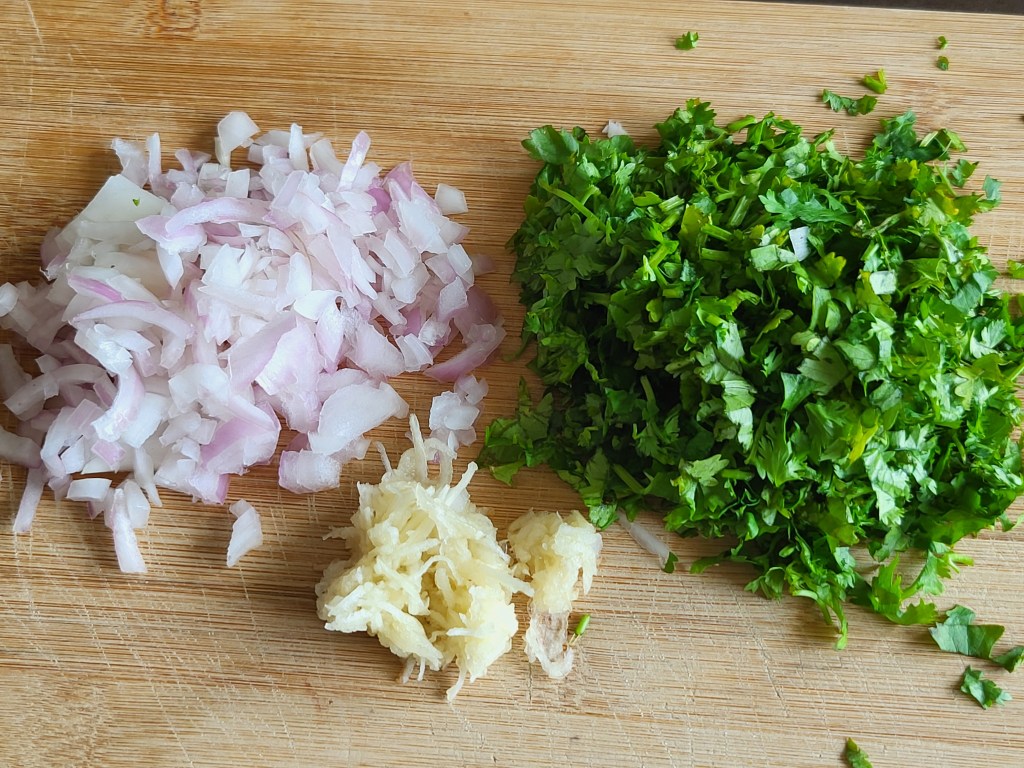
4. In the meantime, finely chop the onion and coriander leaves and grate the garlic.
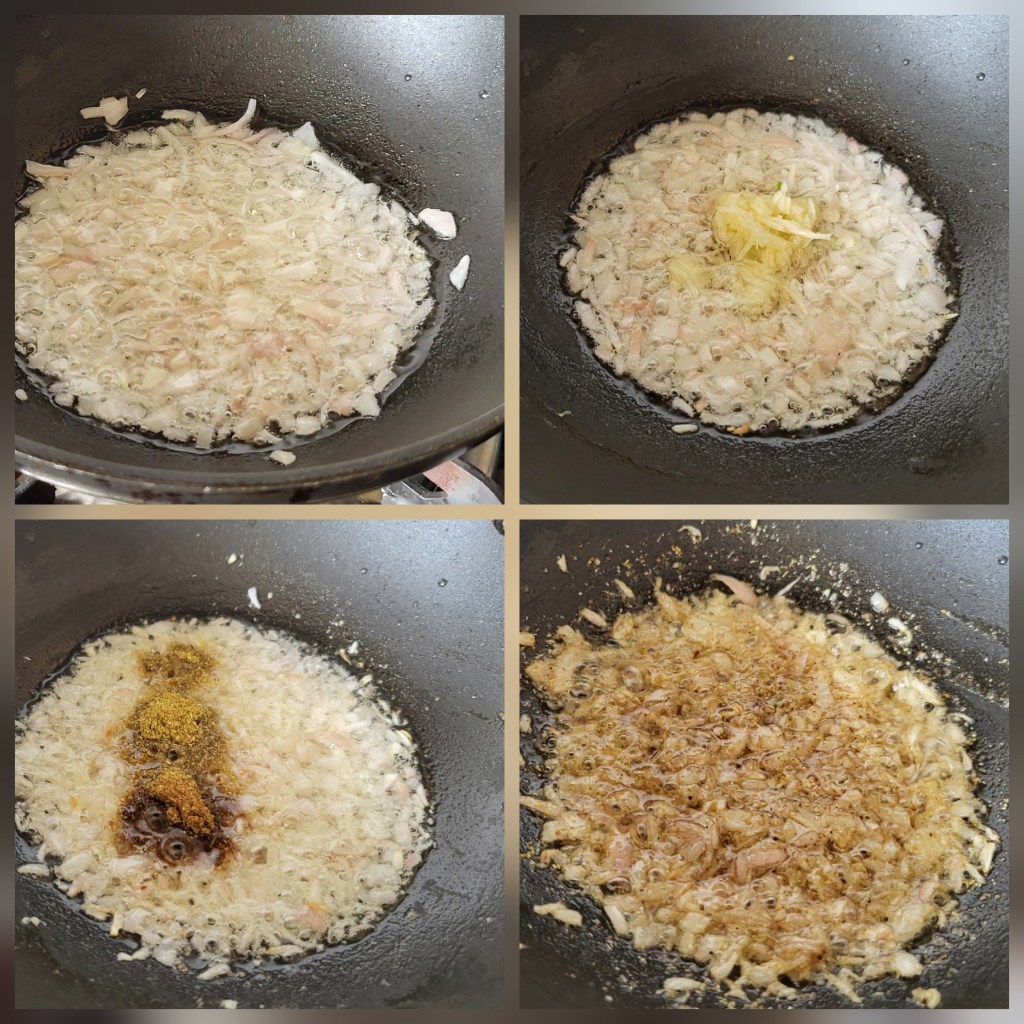
5. In a separate pan, heat 2 tbsp oil. Sauté the onion for about 5 minutes, until soft and translucent.
6. Add the garlic and sauté for a few more seconds.
7. Add cumin and coriander powder until fragrant. Be careful not to let it burn.
8. Add half the chopped coriander leaves and cook for 30 seconds.
9. Add the onion-garlic mixture to the pot of lentils.
10. Stir and let it all simmer together for 5 more minutes so the flavours can blend.
11. Finish with lemon: Turn off the heat and stir in the fresh lemon juice.
12. Taste and adjust the salt and lemon to your liking, then cover for a minute or two. The stew should be distinctly tangy.
13. Add the remaining fresh coriander to the stew and stir gently.
14. Serve in individual bowl, a drizzle of olive oil on top and a lemon slice.
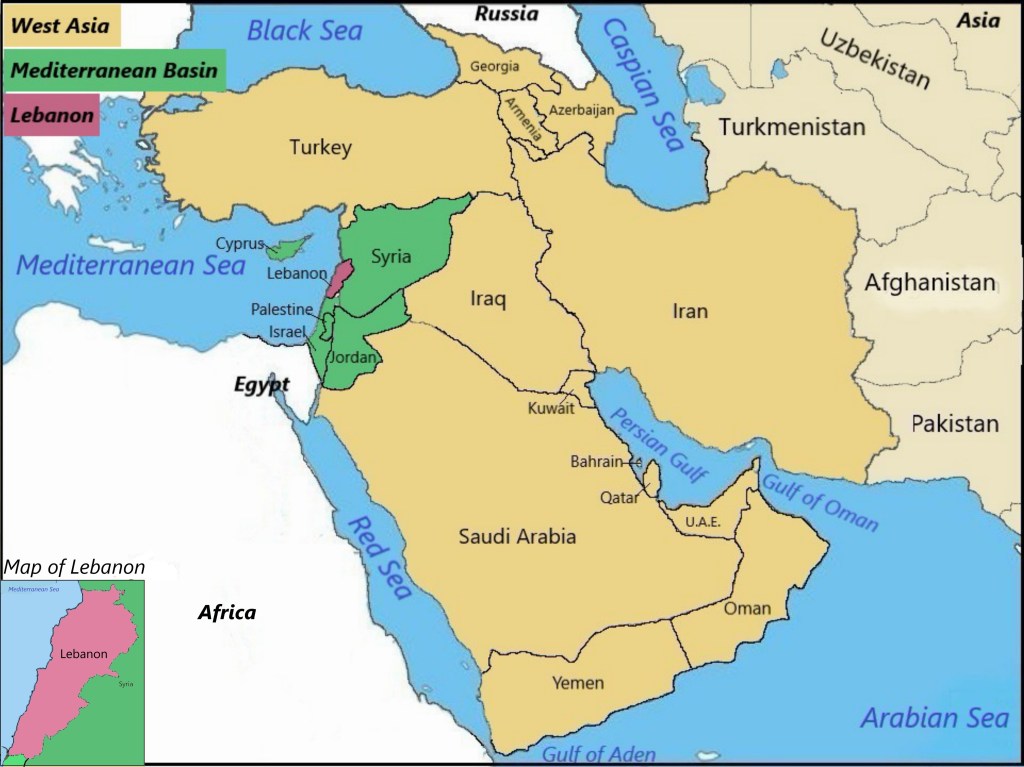
Lebanon is a country in West Asia, located in the Mediterranean Basin. Its capital is Beirut.
It has a long coastline along the Mediterranean Sea to the west, and shares borders with Syria to the north and east, and Israel to the south.
A Few Wonders of Lebanon
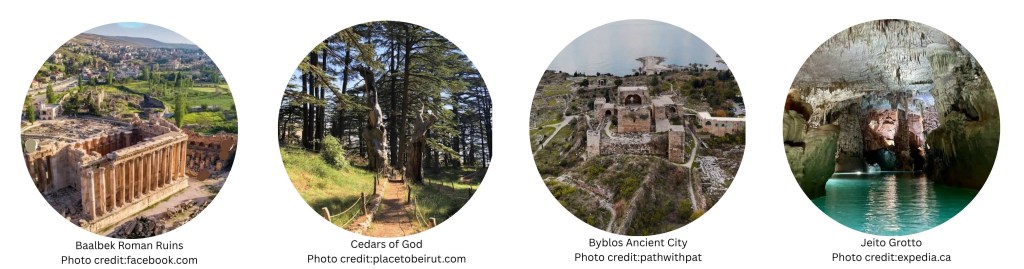
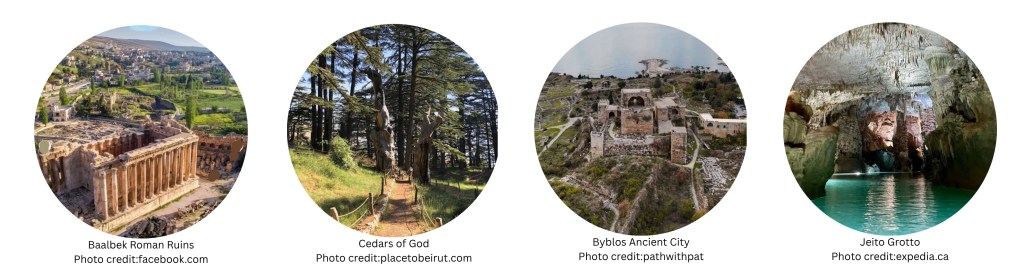
1. Baalbek Roman Ruins: Baalbek’s ancient Roman temples are some of the best-preserved in the world, with massive stone columns and intricate carvings. A testament to Lebanon’s rich history.
2. Cedars of God: The ancient cedar forests in Bcharre are a symbol of Lebanon’s natural beauty and resilience. Explore the majestic trees and stunning mountain views.
3. Byblos Ancient City: Byblos is one of the oldest continuously inhabited cities in the world, with ruins dating back 7,000 years. Explore the ancient harbor, castle, and narrow streets.
4. Jeita Grotto: Jeita Grotto’s stunning limestone caves feature breathtaking rock formations and an underground river. The lower cave is explored by boat, while the upper cave reveals cathedral-like chambers. A natural wonder of Lebanon.
People of Lebanon
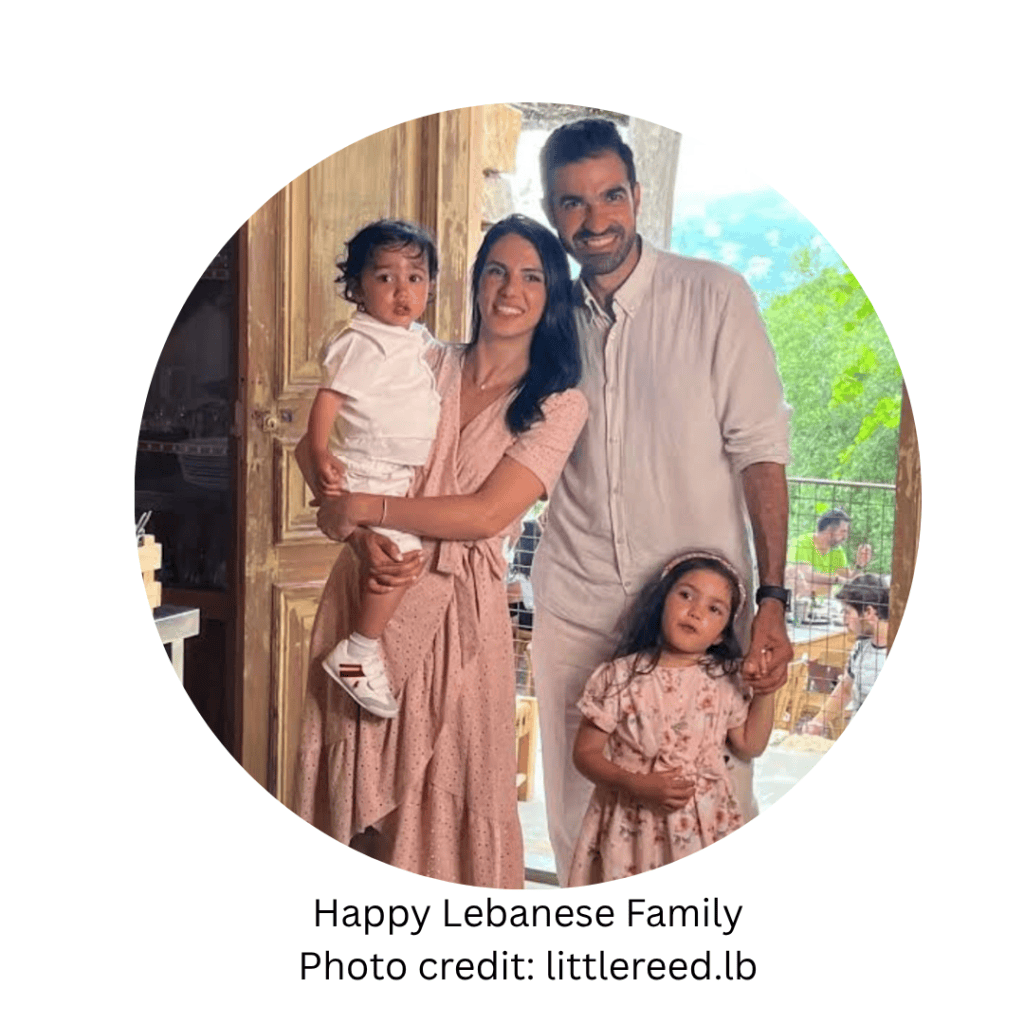
The people of Lebanon are known for their warmth and hospitality, reflecting the country’s rich cultural heritage and history. With a mix of Arabic, French, and Mediterranean influences, Lebanese people are proud of their traditions, food, and vibrant culture.
Traditional Dress of Lebanon
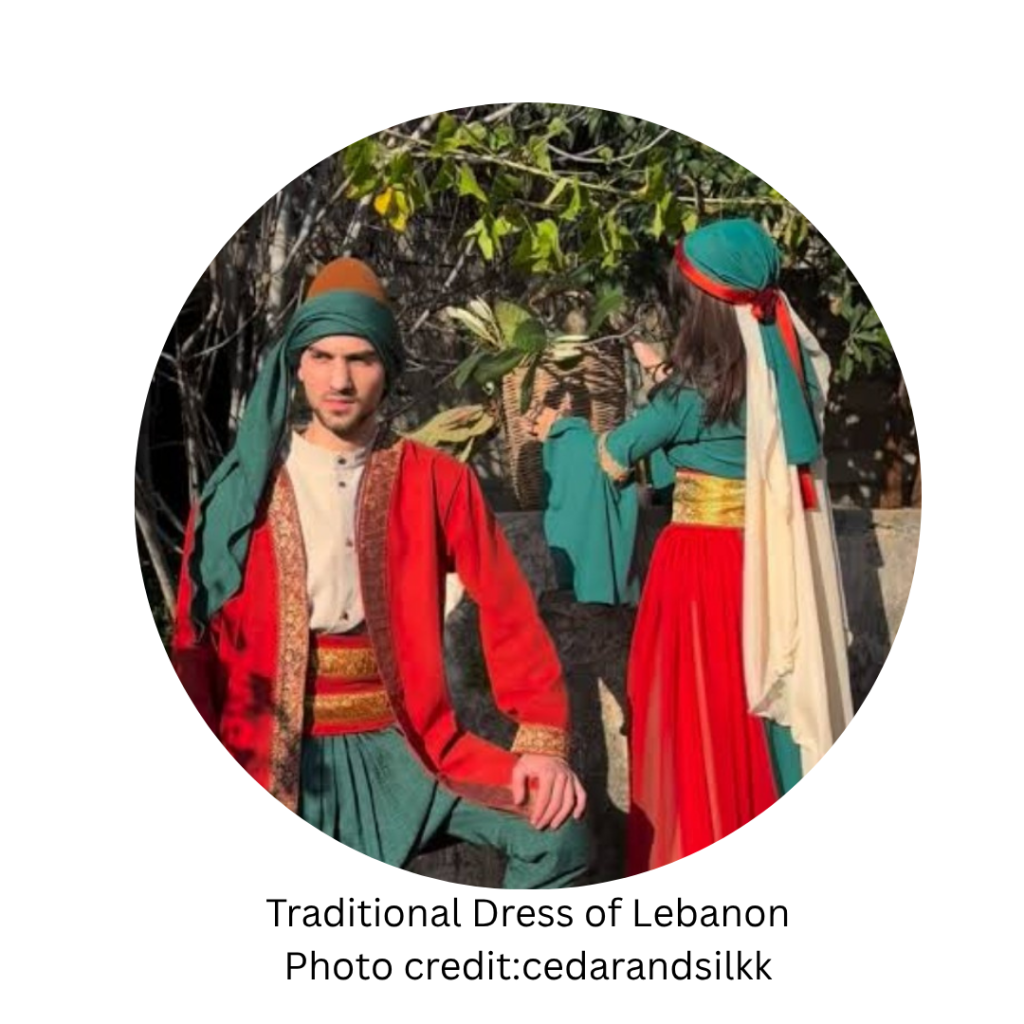
Lebanon’s traditional dress is a beautiful blend of Mediterranean and Arabic styles. Women wear the “Thawb” (long, embroidered dress) often with intricate patterns, while men wear the “Kaftan” or “Dashdasha” (long robe). These outfits are often seen during festivals and celebrations, showcasing Lebanon’s rich cultural heritage
Pulses and Recipes
Lebanon cultivates pulses like chickpeas, lentils, and fava beans, mainly in the Bekaa Valley. Production focuses on local consumption, with farmers using traditional and modern techniques. Pulses are a key protein source in Lebanese cuisine.
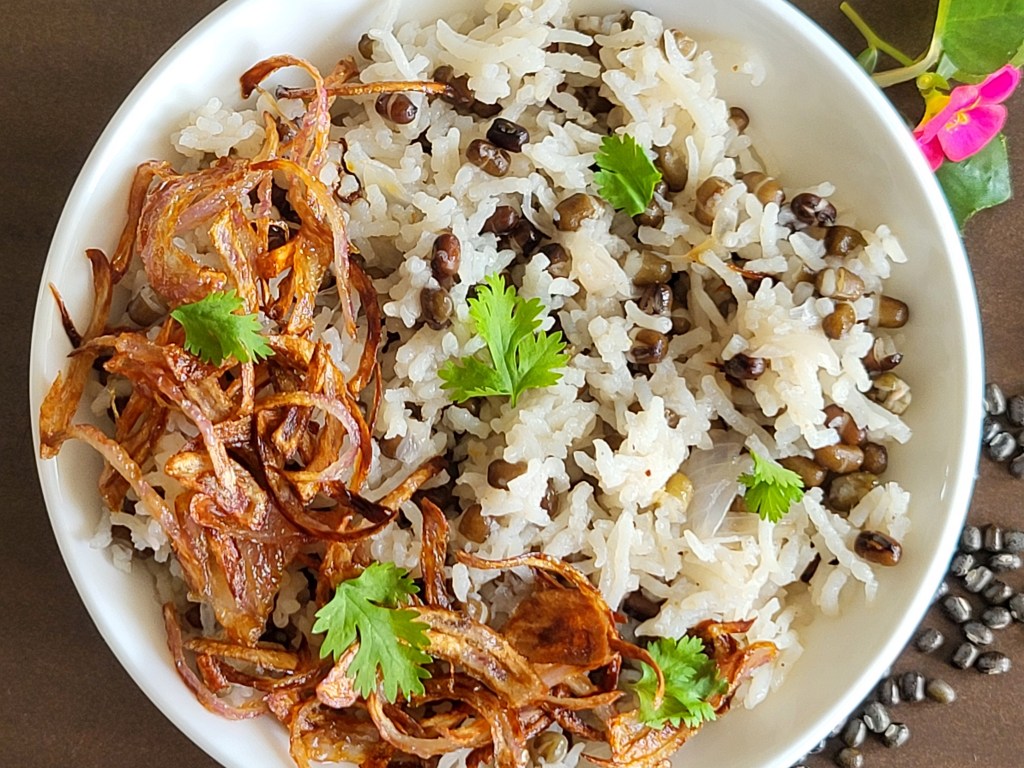
Moujadara is a classic Lebanese comfort dish of lentils and rice, topped with piles of caramelized onions.
Traditionally it’s made with brown or green lentils, this version uses black lentils for extra beauty, I used our Indian whole black urad dal, similar to the gourmet black beluga lentils, for that striking dotted effect. We call this variation “Moujadara with black lentils”. The name moujadara comes from the Arabic word for “pockmarked,” referring to how the dark lentils dot the rice. In Lebanese homes, it’s a humble, filling meal made from just a few pantry staples.
Let’s cook Moujadara, Lebanese rice and lentil dish with black lentil today.
Moujadara (Black lentils) Lebanese Lentils & Rice
Moujadara is a humble yet deeply comforting Lebanese dish made with black lentils, rice, and warm Baharat spice. What makes it truly special is the crown of slow-caramelized onions on top…. sweet, crisp, and golden. Moujadara is often served with cool curd and a fresh salad.
You need:
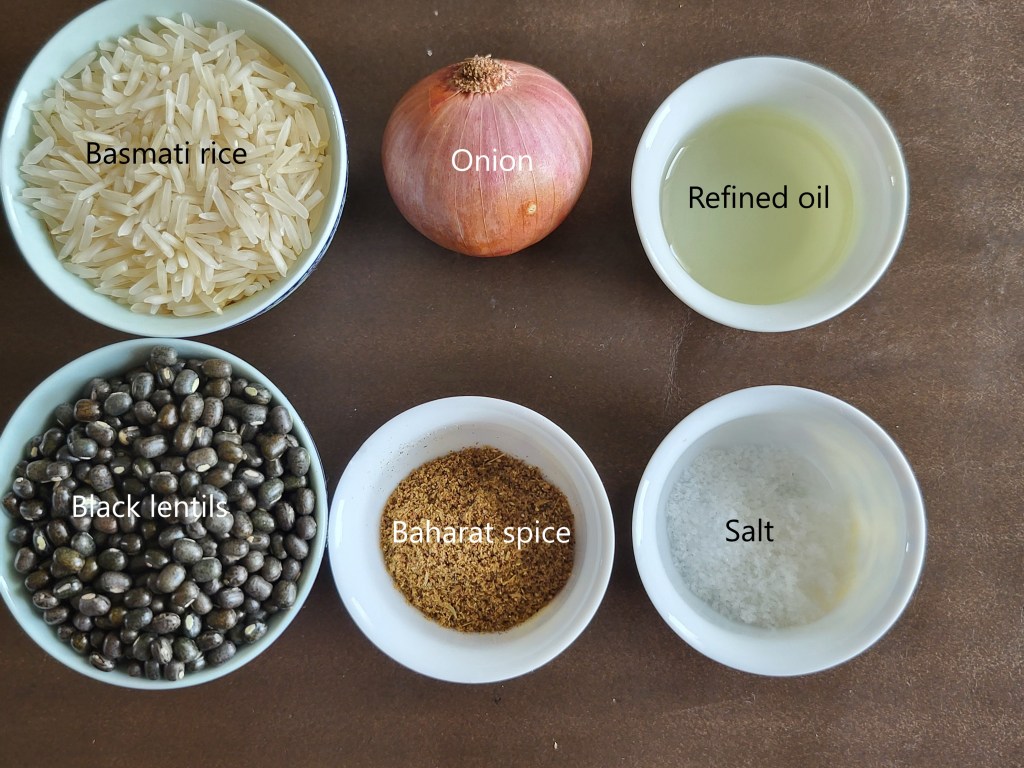
100 gm black lentil (Black urad)
100 gm basmati rice
2 onions
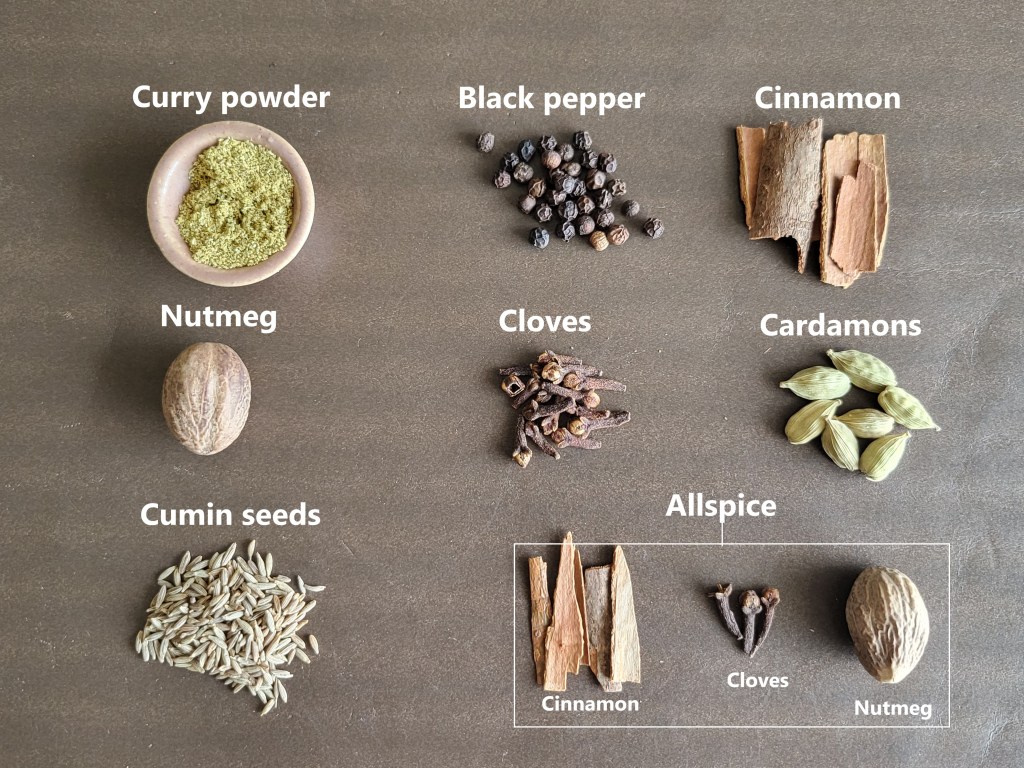
1 tsp Baharat spice*
Salt to taste
2 tbsp olive/refined oil
Method:
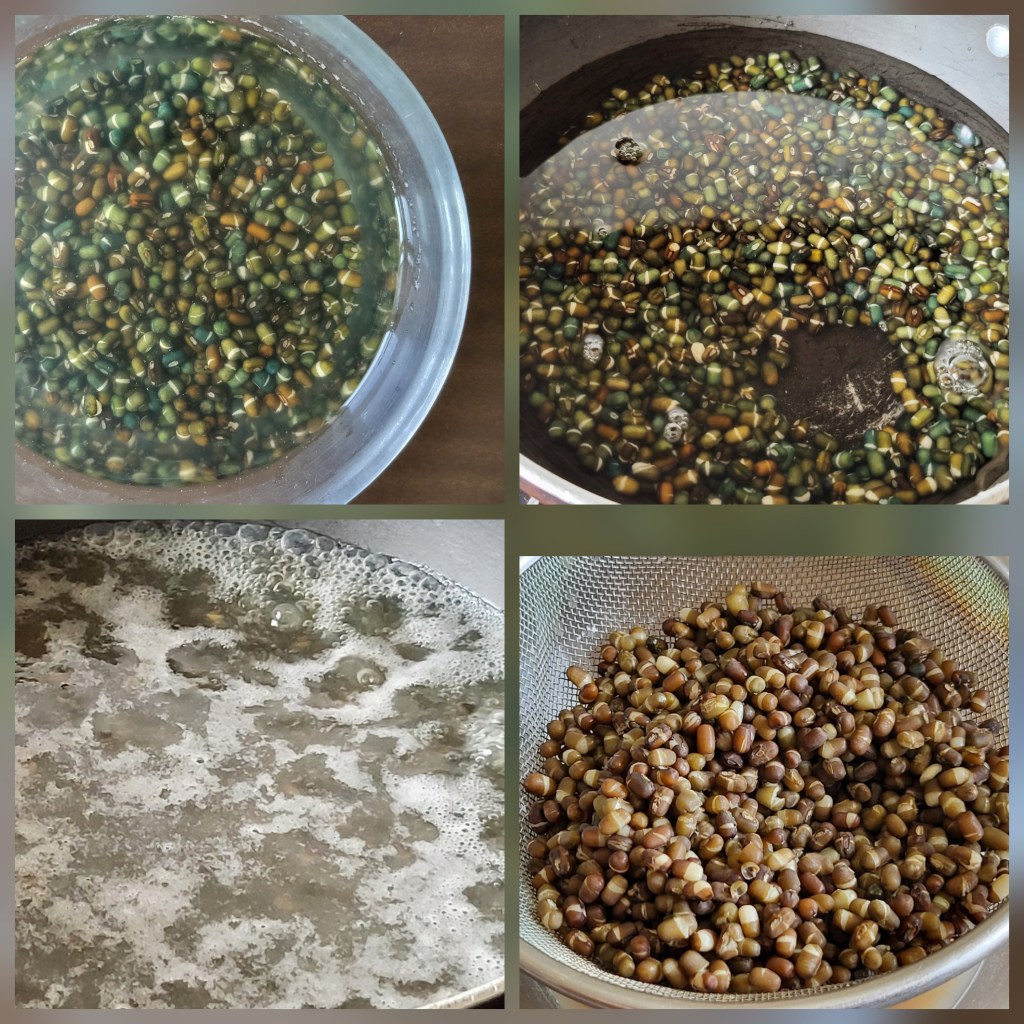
Wash the black lentils well and soak them overnight.
Drain and rinse the soaked lentils.
Add them to a pot with 2 cups of fresh water and ¼ tsp salt. Simmer until they’re just tender.
Drain any excess water and set the lentils aside.
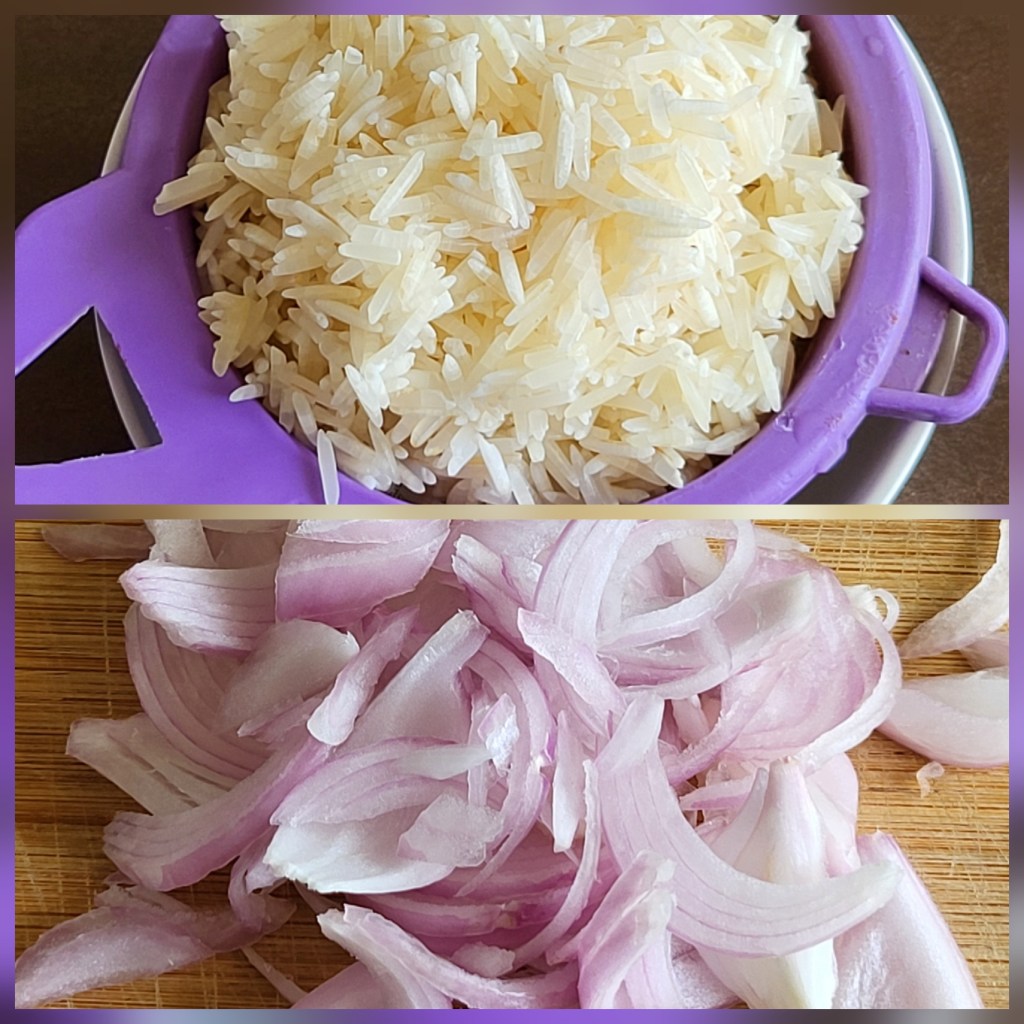
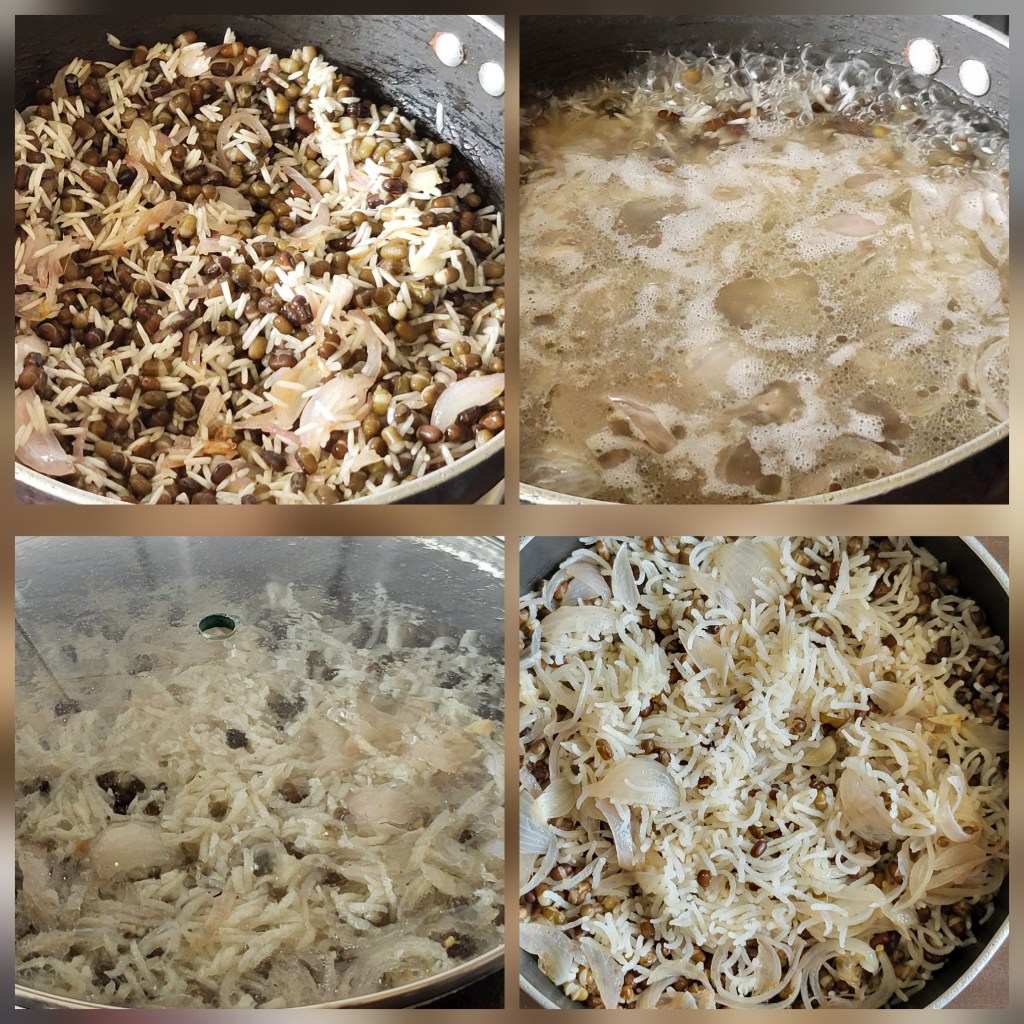
5. While the lentils are cooking, wash the rice well and drain it. Set aside.
6. Finely slice the onions and keep them aside.
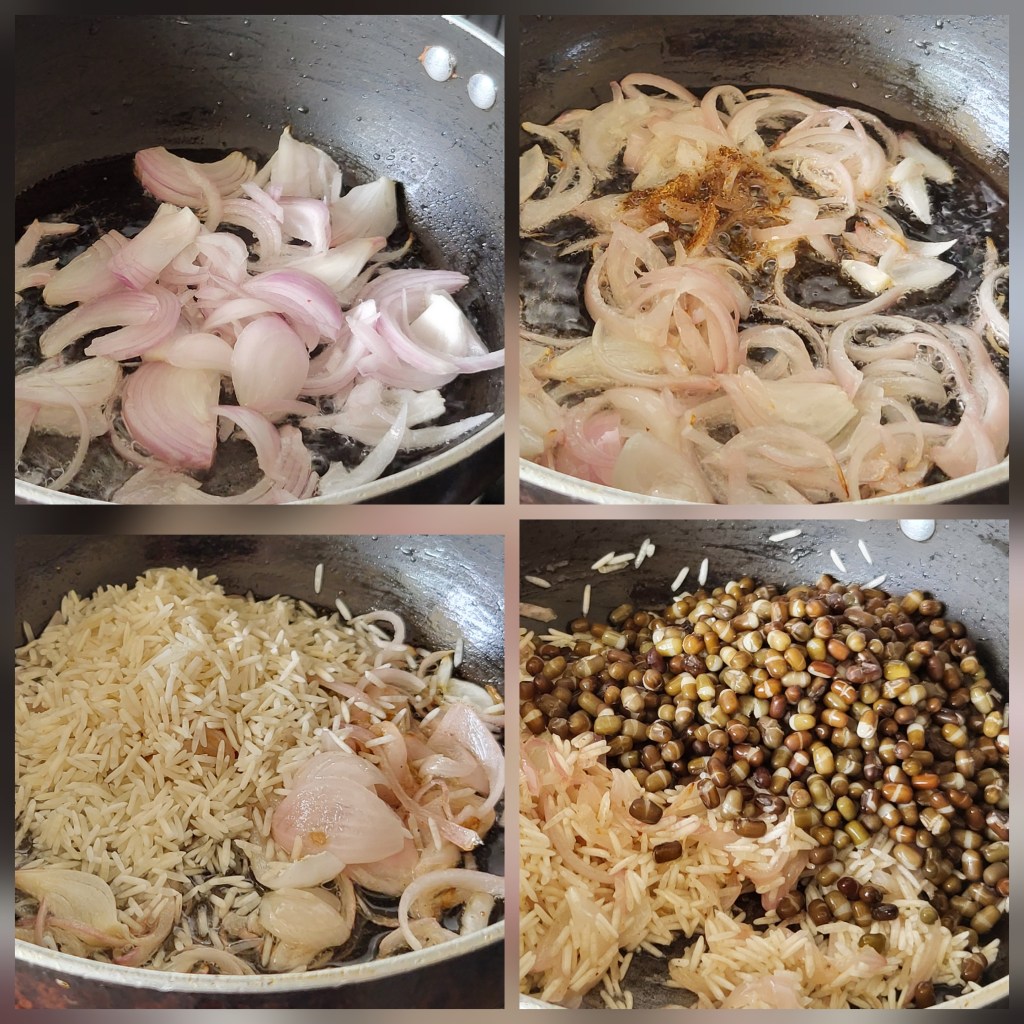
7. In a pan, heat 1 tbsp of oil over medium heat.
8. Add 1/3 of the sliced onions and sauté until they turn translucent.
9. Stir in 1 tsp Baharat spice (the 7 to 10spice blend) and fry for a few seconds until fragrant.
10. Add the washed rice and sauté for about a minute.
11. Then add the cooked lentils and mix everything well so the flavours coat the rice.
12. Pour in 1½ cups of warm water to the fried rice-lentil mixture.
13. Adjust salt to taste and bring it to a boil. Once boiling, reduce the heat to the lowest setting.
14. Cover and simmer for about 20 minutes. Check if the rice is cooked.
15. If it needs more time, splash in a little hot water and cook a bit longer. Once done, gently fluff the mixture with a spoon to keep the grains and lentils separate.
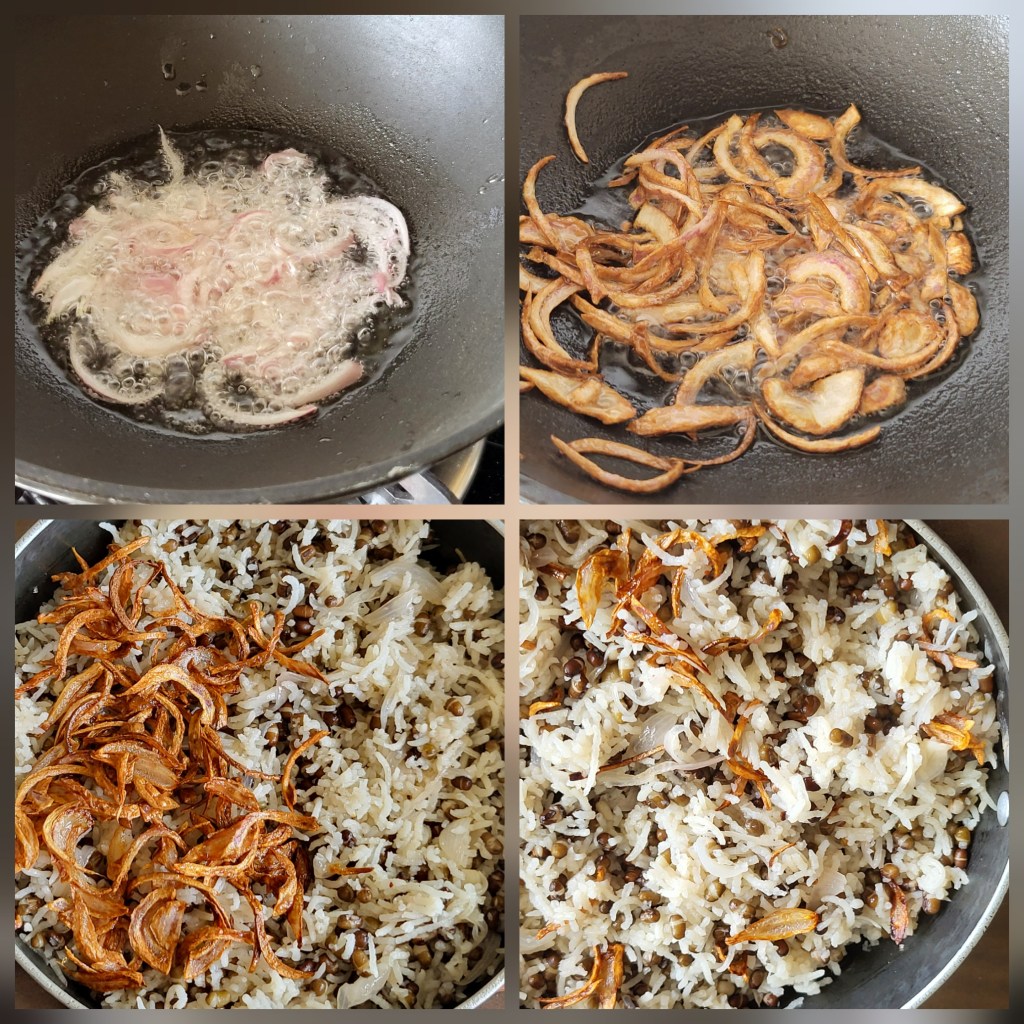
16. Heat 1 tbsp of refined oil in another pan over medium-low heat.
17. Add the remaining sliced onions and cook slowly, stirring often, until they’re deep golden and caramelized.
18. Pour the caramelized onions over the cooked rice-lentil mixture and gently mix to combine.
Moujadara is ready to serve! It goes beautifully with cool curd and a fresh salad on the side.
*Baharat spice: I used Baharat in mine — it’s a Lebanese 7 to 10 spice blend that adds so much warmth. But don’t worry if you don’t have it. Cumin, coriander, and a pinch of allspice work beautifully too. Use what you have in your kitchen.
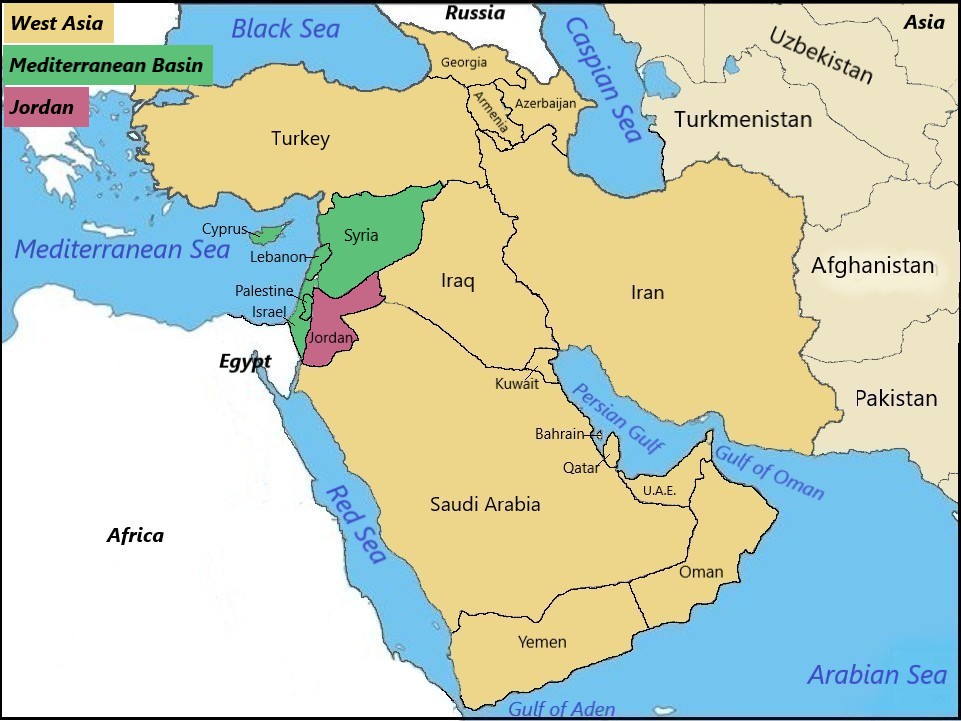
Officially known as the Hashemite Kingdom of Jordan, this Arab country sits in West Asia.
It’s part of the Southern Levant in the Mediterranean Basin, and is bordered by Saudi Arabia, Iraq, Syria, Israel, and Palestine.
A Few Wonders of Jordan
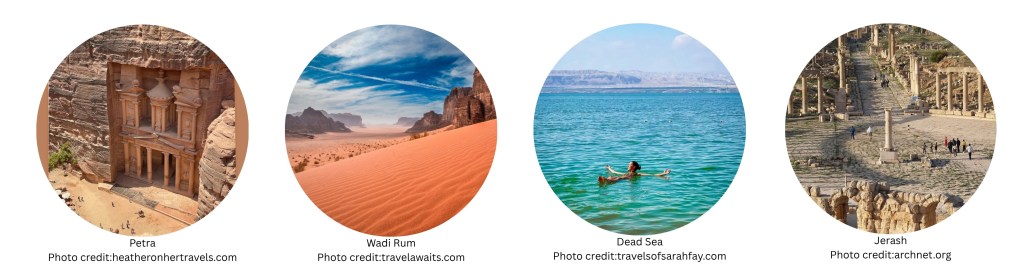
1. Petra: Petra, Jordan’s rose-red wonder, is an ancient Nabataean city carved into sandstone cliffs. Walk through the Siq, and you’ll be awestruck by Al-Khazneh’s grandeur. This UNESCO site is a must-visit – its history and beauty will leave you mesmerized.
2. Wadi Rum: Wadi Rum’s desert landscapes are straight out of a movie. Explore this protected area’s stunning rock formations, sand dunes, and ancient petroglyphs on a jeep tour or camel ride. You’ll feel like Lawrence of Arabia!
3. Dead Sea: The Dead Sea, Earth’s lowest point, is a natural wonder. Float effortlessly on its salty waters and cover yourself in mineral-rich mud. Don’t forget to gaze at the stunning views of the surrounding mountains – it’s a rejuvenating experience!
4. Jerash: Jerash, an ancient Roman city, boasts remarkably preserved ruins. Its colonnaded streets, theaters, and temples transport you back in time. Visit at sunrise for a magical experience – imagine life in this bustling Greco-Roman hub.
People of Jordan
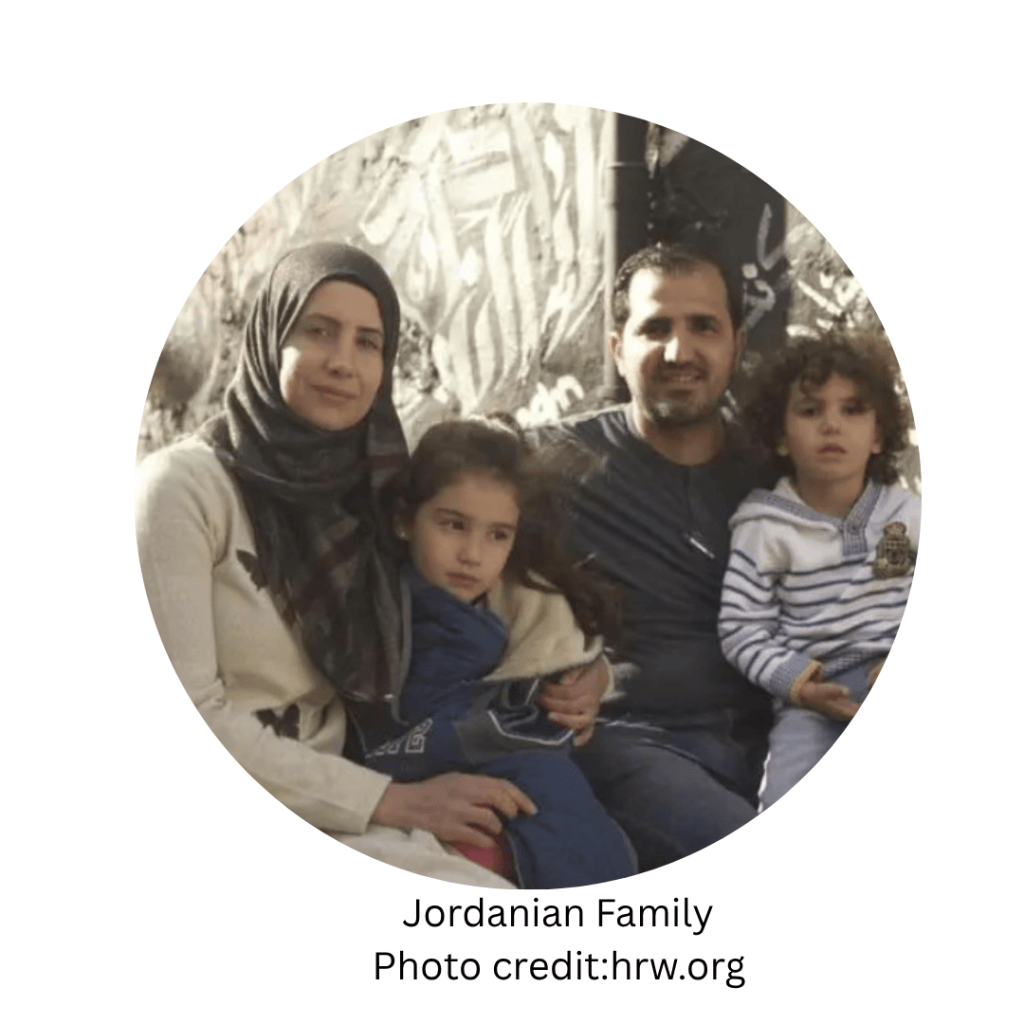
Jordanians are known for their warm hospitality and strong family ties. Their culture blends Bedouin heritage with modern Arab life, so respect for guests and tradition runs deep. Arabic is the main language, though many younger Jordanians speak English. Visitors often remember their generosity — an invitation for tea or a meal is never far away.
Traditional Dress of Jordan
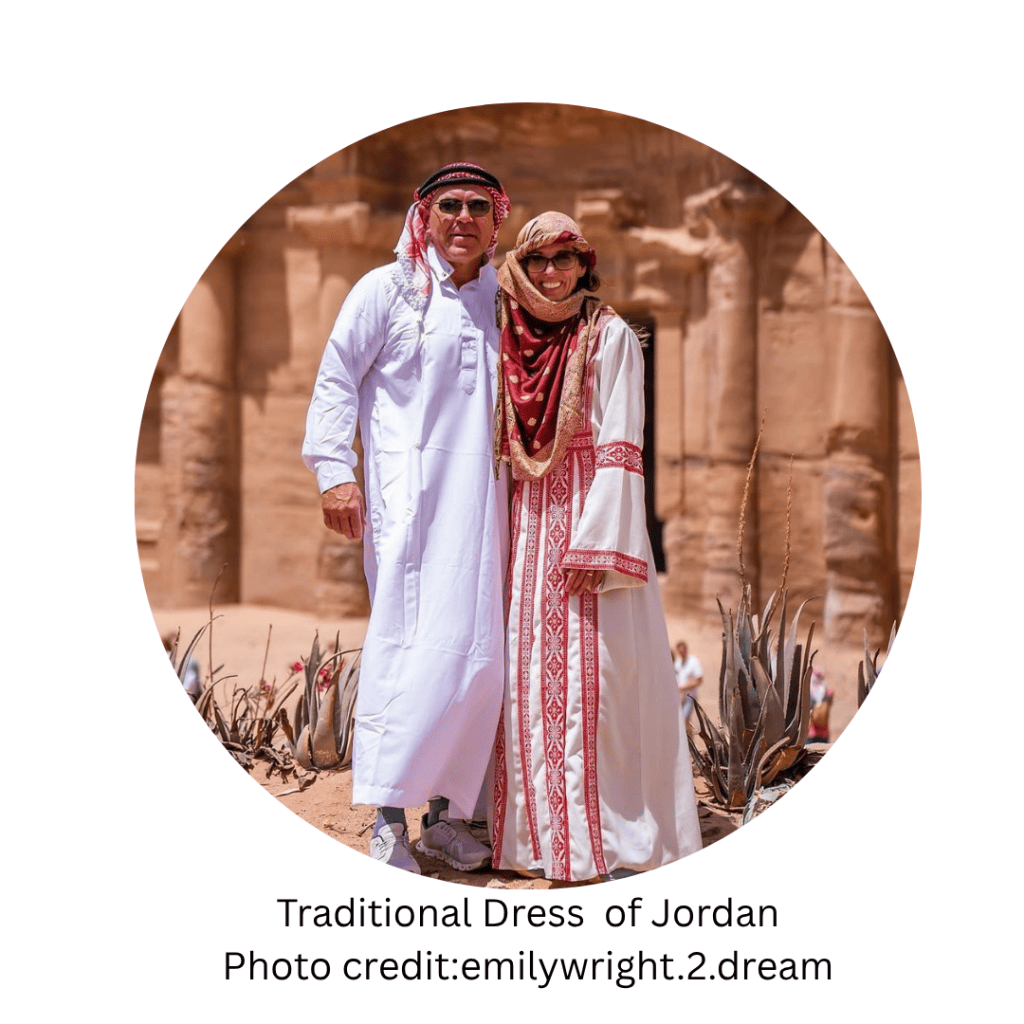
Traditional dress in Jordan reflects Bedouin heritage and regional identity. For men, the thobe — a long, ankle-length robe — is often worn with a red-and-white or black-and-white keffiyeh held by an agal cord. Women traditionally wear an embroidered thobe or madraga, with intricate hand-stitched patterns that show village or family origins. Colors and motifs vary by region, and the embroidery itself is a proud craft passed down generations.
While Western clothing is common in cities today, traditional dress is still worn for weddings, festivals, and national celebrations.
Pulses and Recipes
Pulses have long been part of traditional farming in Jordan, especially in rain-fed areas of the northern highlands and Jordan Valley. Lentils, chickpeas, and fava beans are the most common, grown as winter crops that rely on seasonal rainfall. They’re valued for fixing nitrogen in the soil and for being a staple protein in Jordanian diets. While production is small-scale compared to cereals, pulses remain important for crop rotation and rural food security. In recent years, water scarcity and urbanization have reduced cultivated area, but government programs still promote drought-tolerant varieties to support local farmers.
Jordanian cuisine features a variety of pulse-based dishes, frequently utilizing lentils, chickpeas, and fava beans as staple ingredients in soups, stews, and main course.
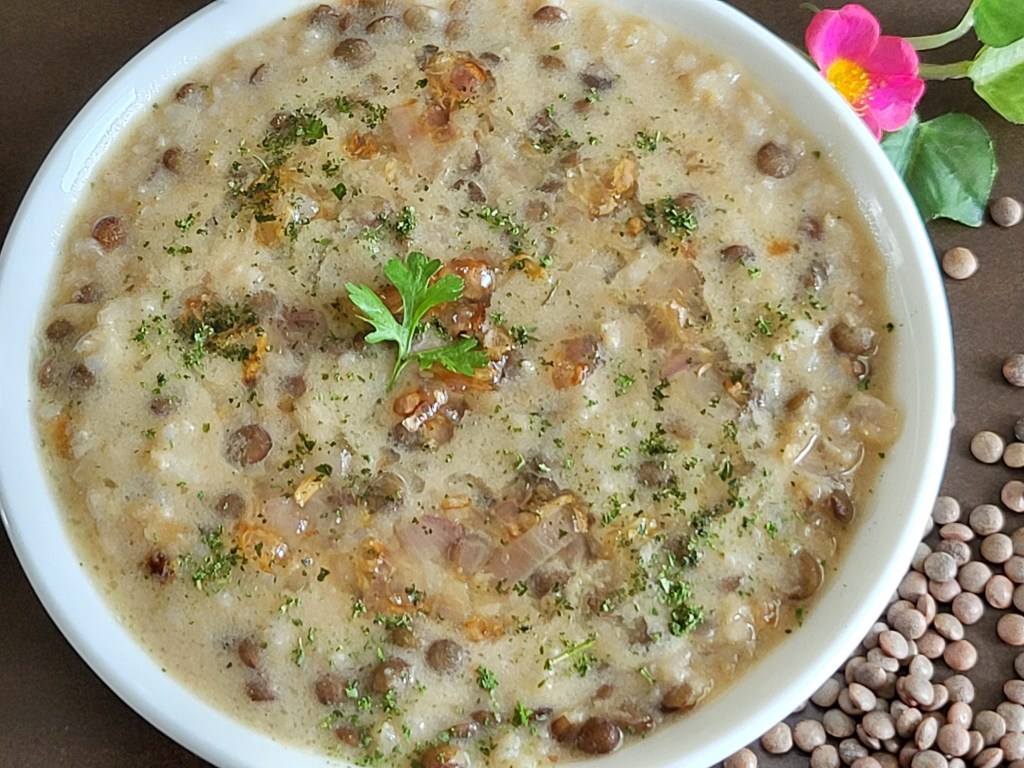
Rashoof is a beautiful, traditional Jordanian dish. In Jordan, Rashoof is winter and Ramadan food. It’s sour yogurt, lentils, and bulgur simmered low until it turns into something that warms you from the inside — humble pulses made rich with tang and lemon.
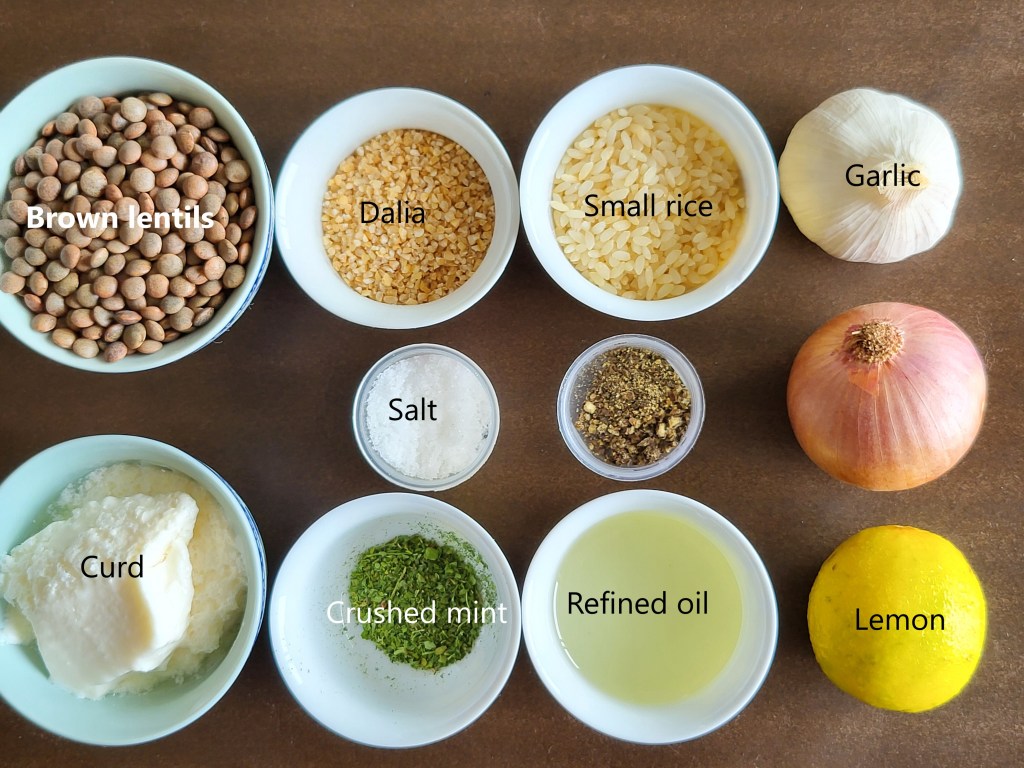
This is Rashoof, a traditional Jordanian yogurt and lentil stew. In Jordan it’s made with jameed and bulgur. In our kitchen we used curd and dalia because that’s what I have, but we cooked it with the same spirit – sour, simple, and meant to be shared.
Traditionally it’s made with jameed – dried yogurt balls. But in most home kitchens, people use plain curd and a squeeze of lemon, and it tastes just as soulful.
In some families it’s served in one big pot, everyone eats from it. Very much about sharing. It’s not about fancy ingredients. It’s about gathering around the same bowl and letting the sour, earthy broth feed both body and heart.
Today let’s cook a simple curd Rashoof the way it’s made in Jordanian homes.
Jordanian Rashoof with Curd
A hearty, creamy stew of brown lentils, rice, and dalia, finished with tangy yogurt and a golden mint-garlic tarka. Simple ingredients, big comfort. That minty, garlicky topping is what gives Rashoof its signature flavour.
1 cup plain curd/yogurt/ jameed – dried yogurt balls
1 medium onion
1 tsp grated garlic,
1 tsp dried mint
2 tbsp Olive oil/refined oil
Salt and black pepper to taste
1 tbsp lemon juice (optional)
Method:
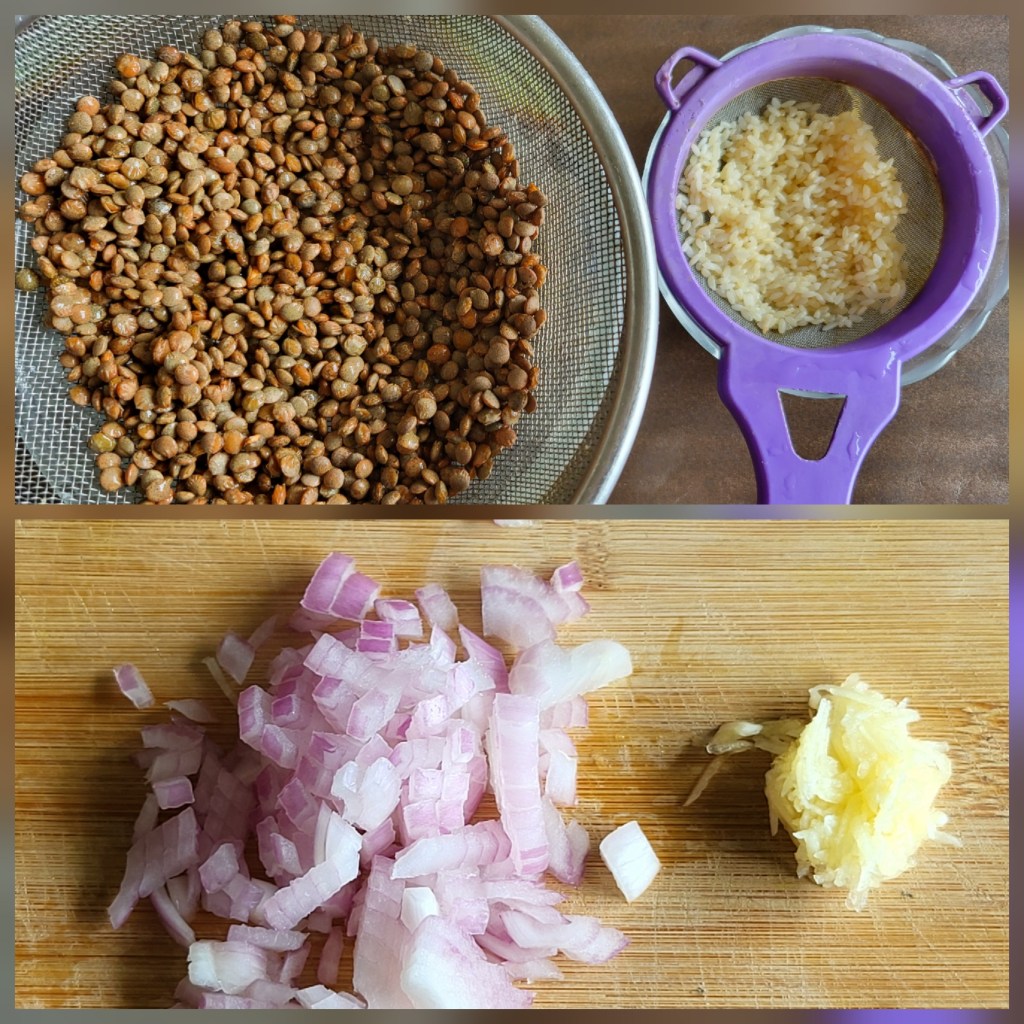
Rinse the brown lentils and the rice separately under cold water, then drain well.
Finely chop the onion. Grate the garlic.
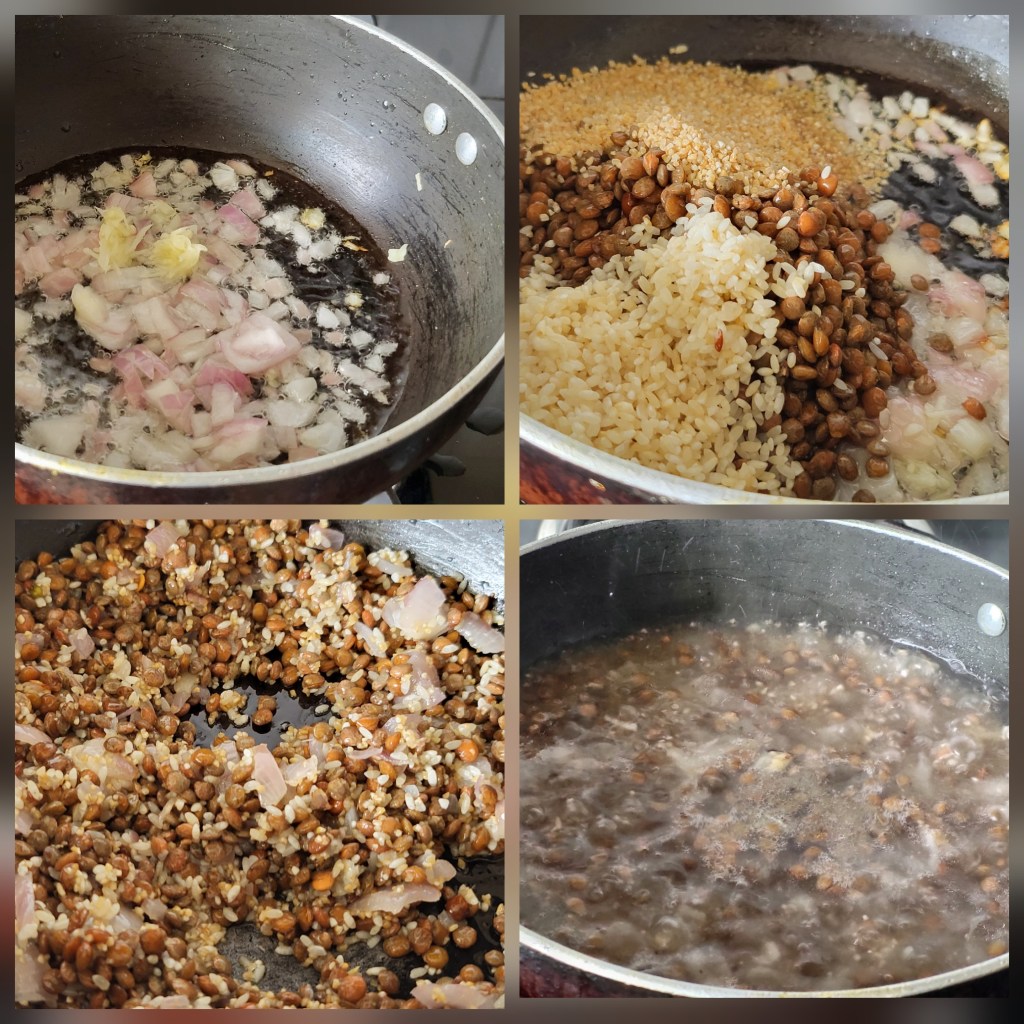
3. Heat 1 tbsp of oil in a pot over medium heat.
4. Add half of the chopped onion and grated garlic and sauté for 3-4 minutes until soft and fragrant.
5. Add the drained lentils, rice, and dalia to the pot. Stir and fry together for 2-3 minutes.
6. Season with salt and pepper. Pour in 2 cups of hot water and bring to a boil.
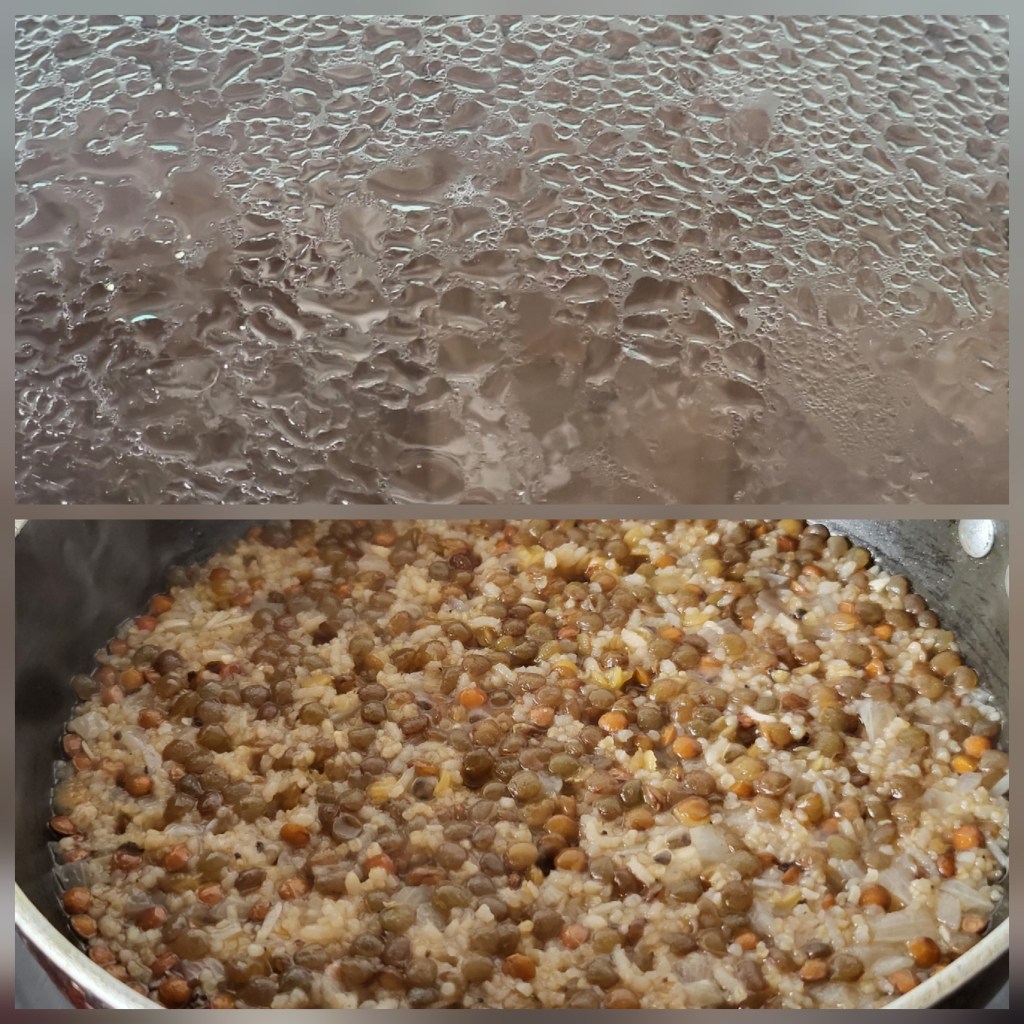
7. Reduce the heat, cover, and let it simmer until the lentils, rice, and dalia are tender.
8. Lower the heat to the lowest setting.
9. Cover the pot with a tight-fitting lid and cook for 30-35 minutes.
10. Remove the lid and check if the lentils, rice, and dalia are tender. If they need more time, add a splash of hot water, cover again, and cook for a few more minutes until everything is soft and cooked through.
11. Take the curd/yogurt out of the fridge and let it come to room temperature.
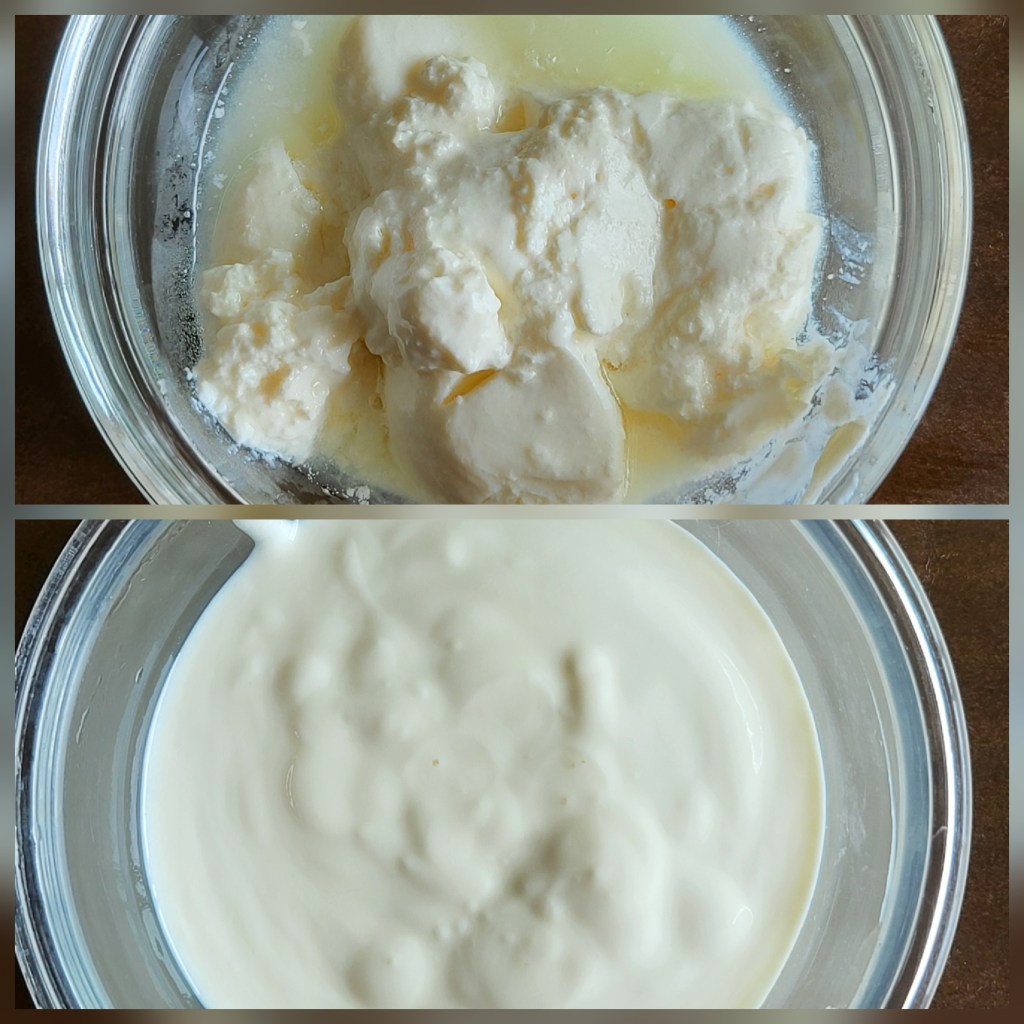
12. Whisk it well until smooth with no lumps. Stir in ½ cup of room temperature water.
Optional: For an extra silky texture, strain the beaten yogurt through a fine sieve.
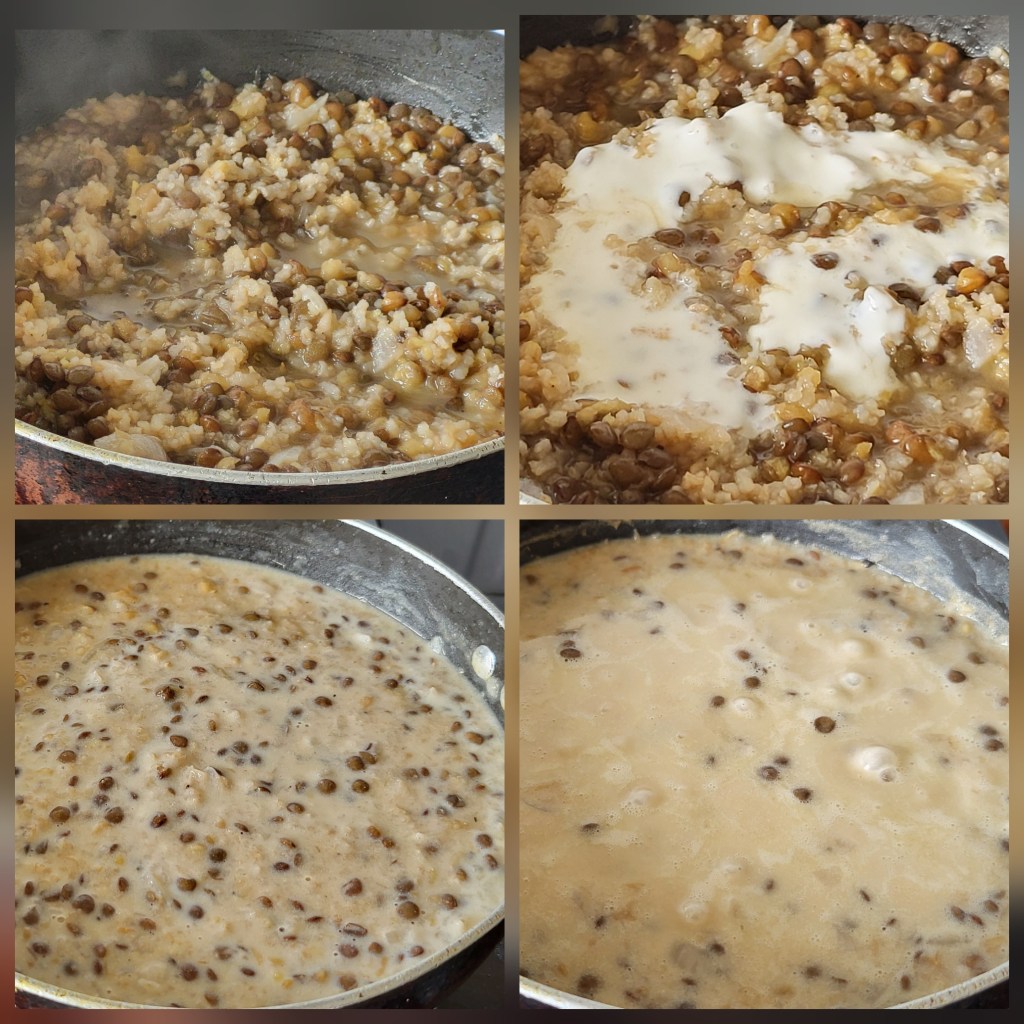
13. Stir the cooked lentil, rice, and dalia mixture gently.
14. Pour in the prepared curd and stir gently over low heat. Keep stirring continuously.
15. Let the mixture come to a gentle simmer. Allow it to simmer for a few more minutes so the flavours blend. Taste and adjust the salt as needed.
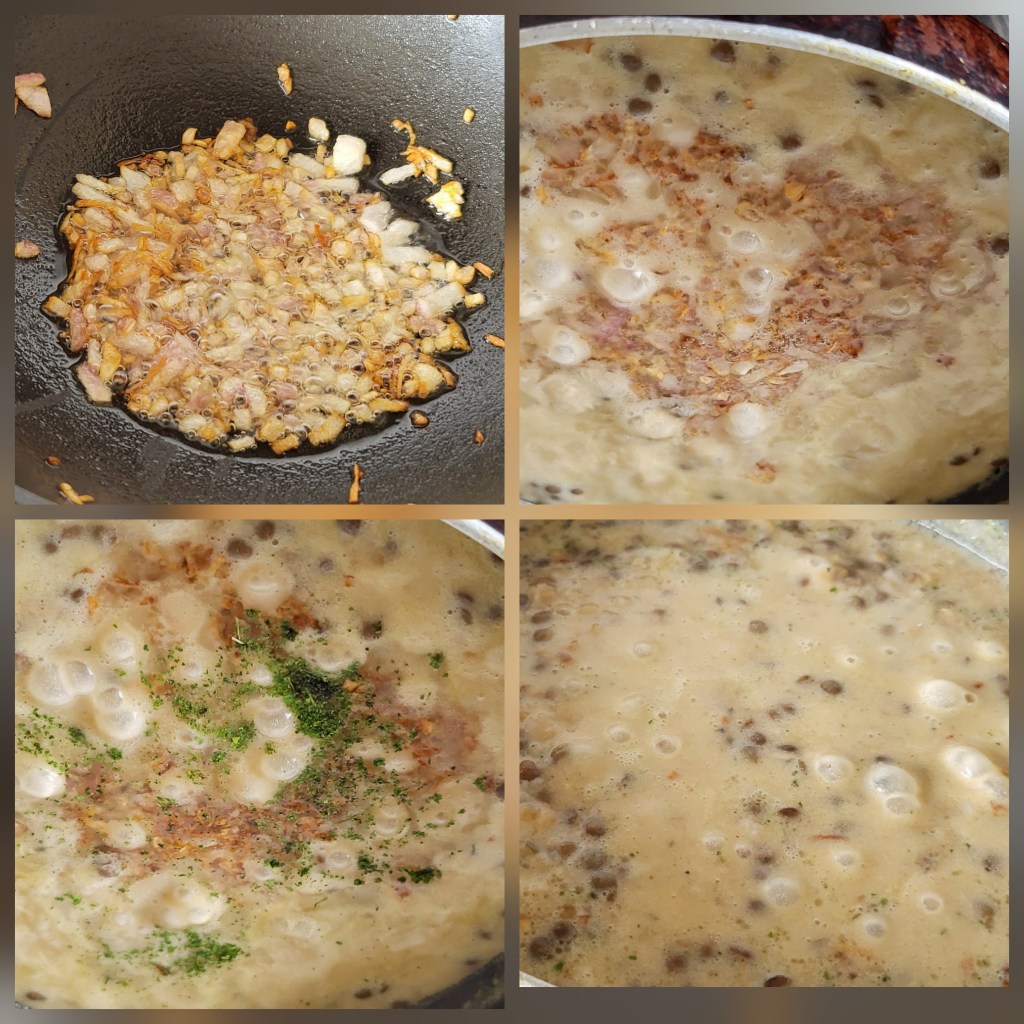
16. In another small pan, heat 1 tbsp of oil over medium heat.
17. Add the remaining onion and garlic and fry until golden brown and crisp.
18. Pour this golden onion-garlic mixture into the simmering stew.
19. Add 1 tsp of dried mint and mix well.
20. Cover the pot and let it sit for a few minutes so the spices blend into the stew.
That minty, garlicky topping is what gives Rashoof its signature flavour.
Our curd was tangy enough, so we didn’t need extra lemon.
Serve Rashoof hot with fresh bread on the side. Delicious and so comforting!
*Dalia is sometimes referred to as bulgur wheat. But bulgur is normally pre-cooked or parboiled rice. Whereas Indian dalia is made from raw whole wheat crushed into coarse pieces.
Israel is a country in the Southern Mediterranean Basin of West Asia, with Jerusalem as its capital.
It’s bordered by Lebanon to the north, Syria to the northeast, Jordan and Palestine to the east, and Egypt to the southwest, with the Mediterranean Sea to the west. Its southern tip reaches the Red Sea.
A Few Wonders of Israel
1. Masada National Park: Perched atop a rugged plateau, Masada’s ancient fortress is a symbol of Jewish resilience. Explore the ruins, walk the ramparts, and take in the stunning Dead Sea views.
2. Dead Sea: The Dead Sea’s super salty waters make you float effortlessly, surrounded by mineral-rich mud and breathtaking desert landscapes. A unique natural wonder.
3. Old City of Jerusalem: Jerusalem’s Old City is a treasure trove of history and faith, with the Western Wall, Church of the Holy Sepulchre, and Al-Aqsa Mosque. Walk the ancient streets and soak up the atmosphere.
4. Baha’i Gardens: Haifa’s Baha’i Gardens are a stunning blend of Persian and Mediterranean architecture, with terraced gardens and beautiful views of the Mediterranean. A peaceful oasis.
People of Israel
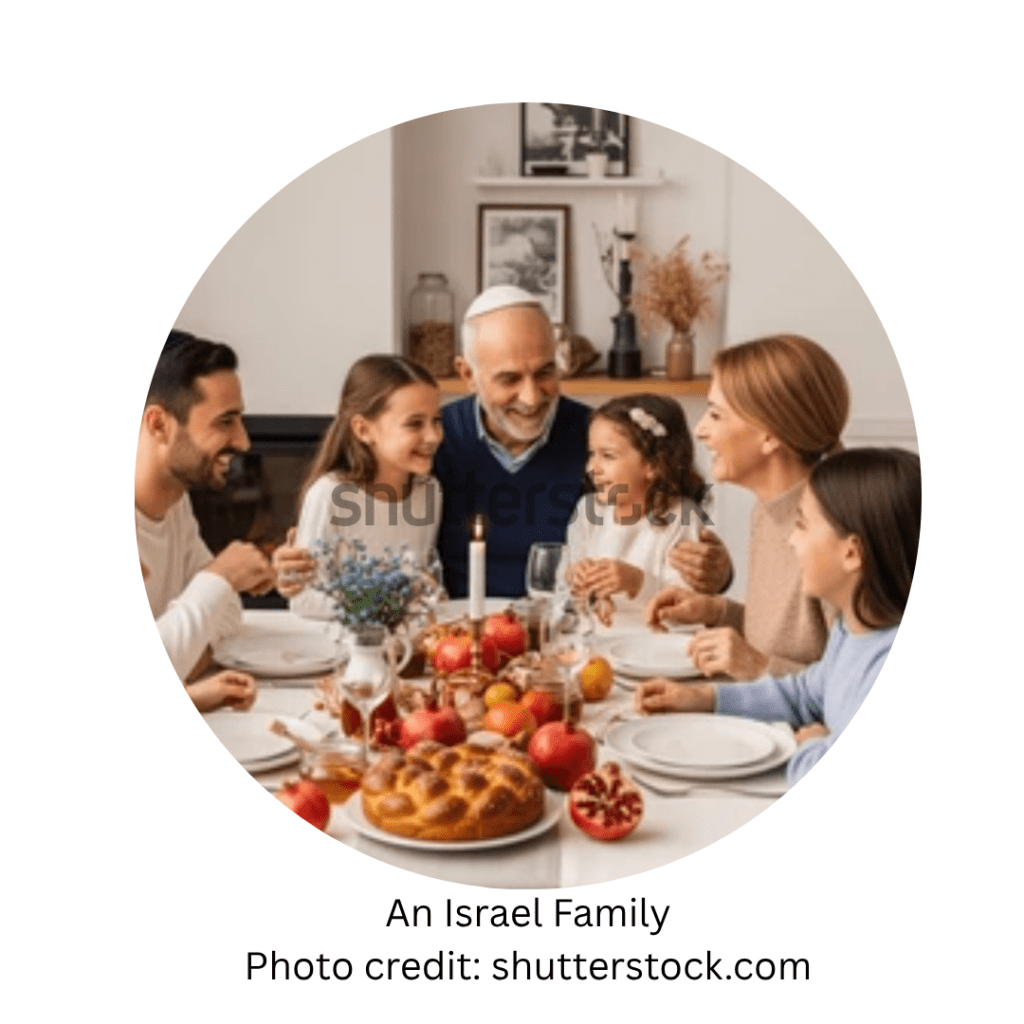
The people of Israel are a diverse and vibrant mix, reflecting the country’s melting pot of cultures and backgrounds. From Tel Aviv’s cosmopolitan vibe to Jerusalem’s historic charm, Israelis are known for their warmth, resilience, and strong sense of community.
Traditional Dress of Israel
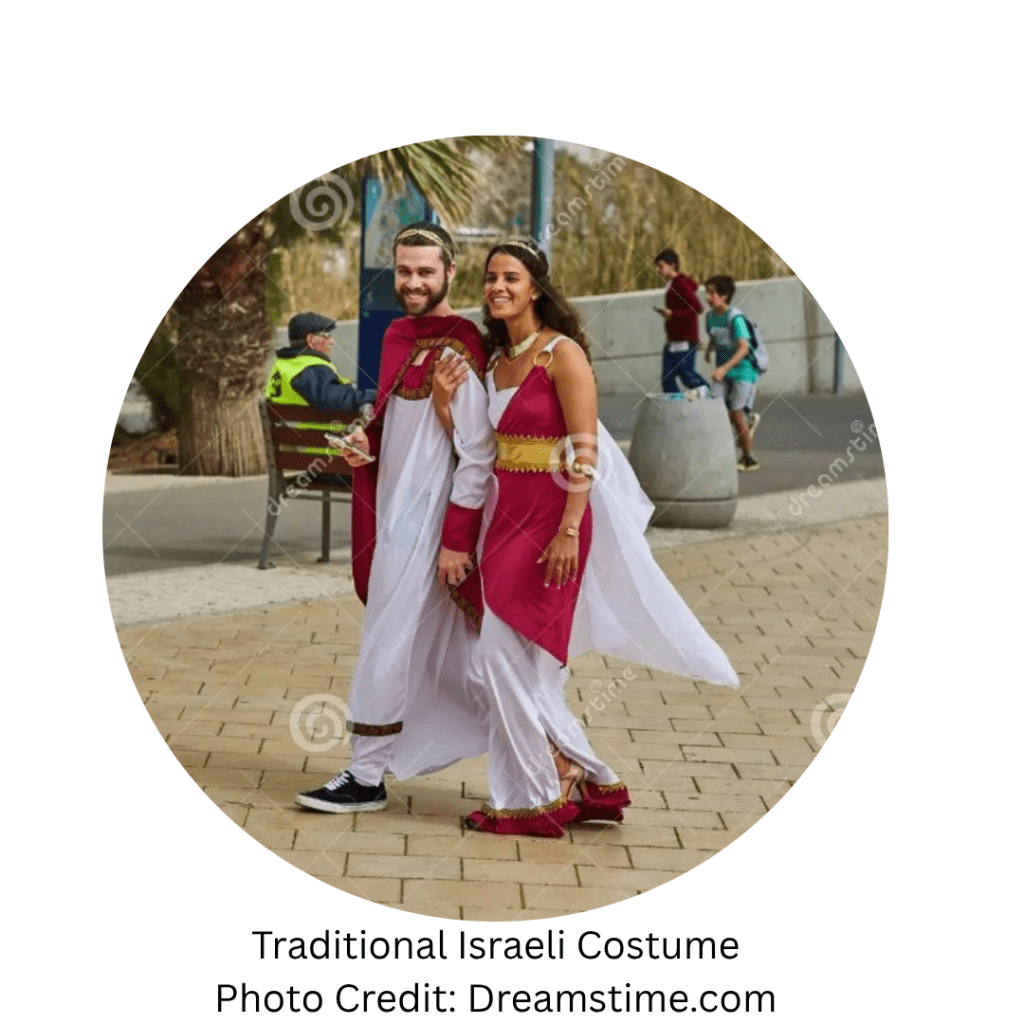
Israel doesn’t have just one traditional outfit for a couple, because the country is made up of many cultures. For religious occasions, a man may wear a white shirt, dark pants, and a kippah on his head, while a woman may wear a long modest dress and a headscarf. In families with Middle Eastern roots, traditional clothes can include embroidered vests, colorful dresses, and decorative headpieces. Today, most Israelis wear modern clothing in daily life, and these traditional outfits are saved for holidays, weddings, and cultural celebrations.
We looked for the traditional dress of Israel and found this picture of a couple. It was taken in Tel Aviv on 20 February 2017. The people are wearing costumes for a festival in Israel. It looks like Roman dress in red and white.
Photo: Editorial use only. Purim festival, Tel Aviv, 20 February 2017.
Pulses and Recipes
Israel cultivates pulses like chickpeas, lentils, and beans, focusing on sustainable and efficient farming practices. Despite water scarcity, advanced irrigation tech helps boost yields. Local farmers grow pulses for both domestic use and export, often using crop rotation to improve soil health.
Pulses are a staple in Israeli cuisine! You’ll find them in dishes like “Hummus” (chickpea spread), “Falafel” (fried chickpea patties), and “Adina” (Israeli eggplant and chickpea stew). Pulses are often combined with fresh veggies, herbs, and spices, adding protein and flavor to traditional Israeli meals.
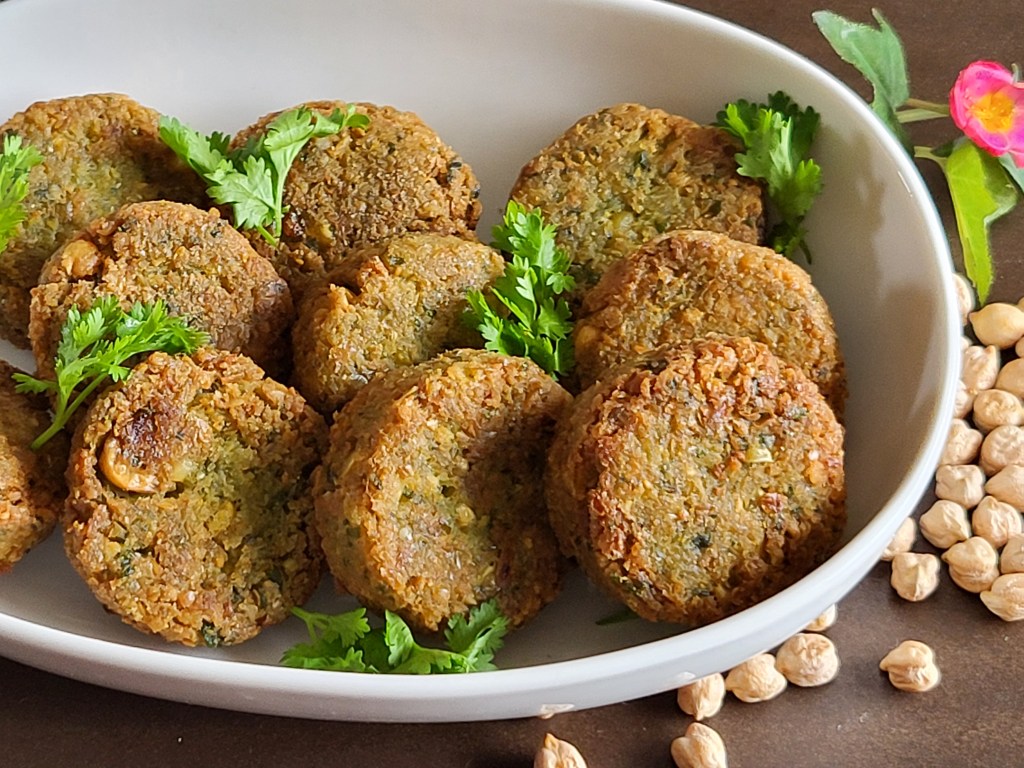
We will try out Falafel (fried chickpea patties)
Falafel (Chickpeas patties)
Falafel is a little patty made from chickpeas. Crispy on the outside and soft on the inside. Today, people all over the world eat falafel as a snack with dip, or with bread, salad and creamy sauce as a full meal. It has become a popular street food!
And today, we made our very own!
You need:
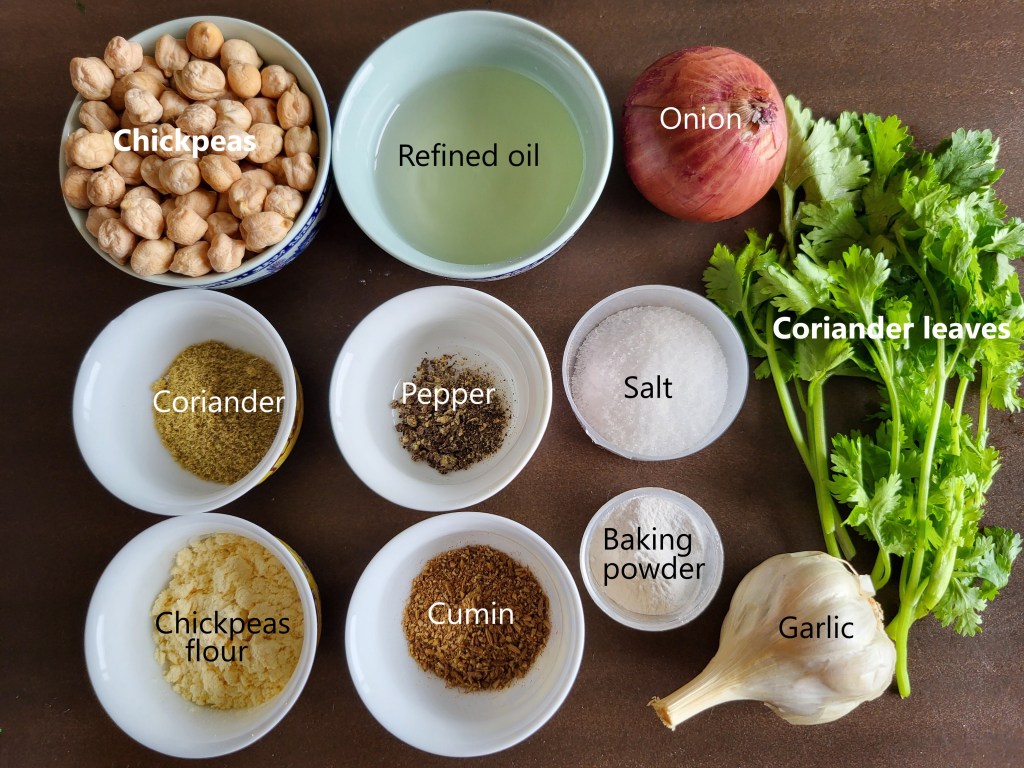
200 gm chickpeas
1 medium size onion
1 tsp of chopped garlic
½ cup of chopped coriander leaves
½ tsp cumin ground
1 tsp coriander powder
½ tsp of baking powder
Salt and pepper to taste
1 tbsp chickpea flour (only if needed)
Oil to fry
Method:
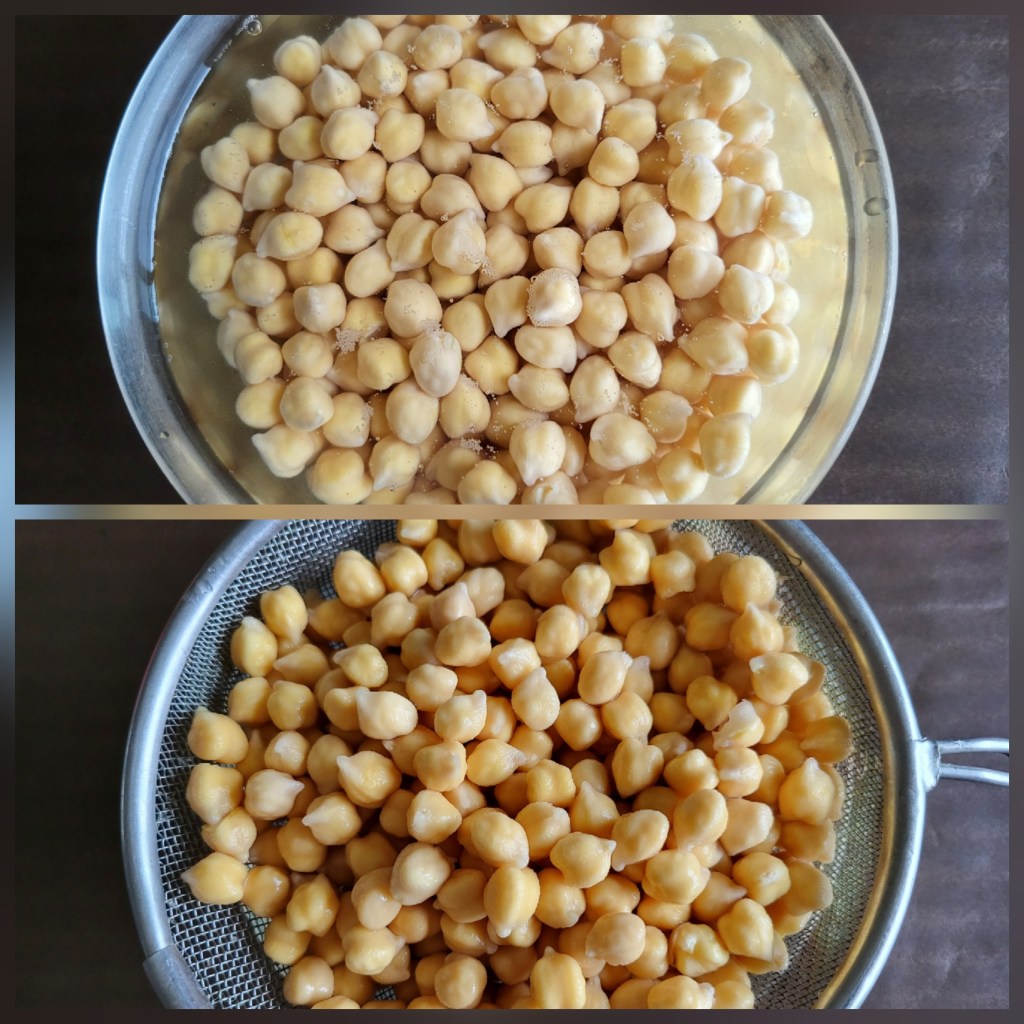
Wash and soak the chickpeas overnight.
Rinse and drain the soaked chickpeas. (Do not use canned chickpeas, they are too soft.)
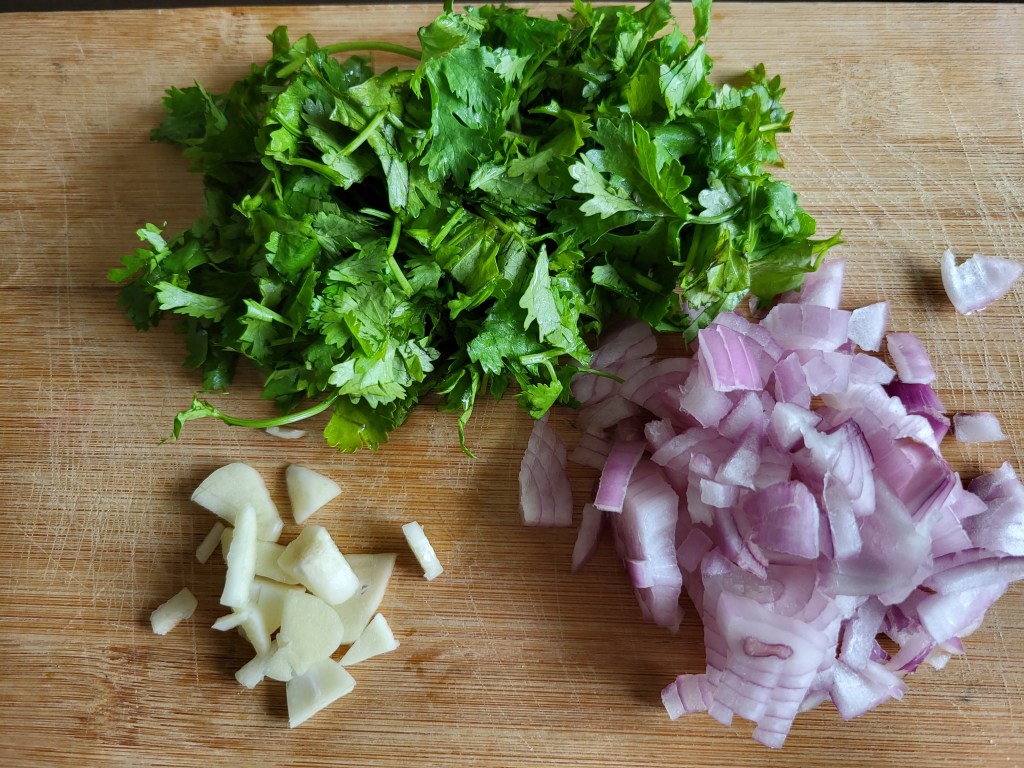
3. Chop the onion, garlic, and fresh coriander leaves roughly.
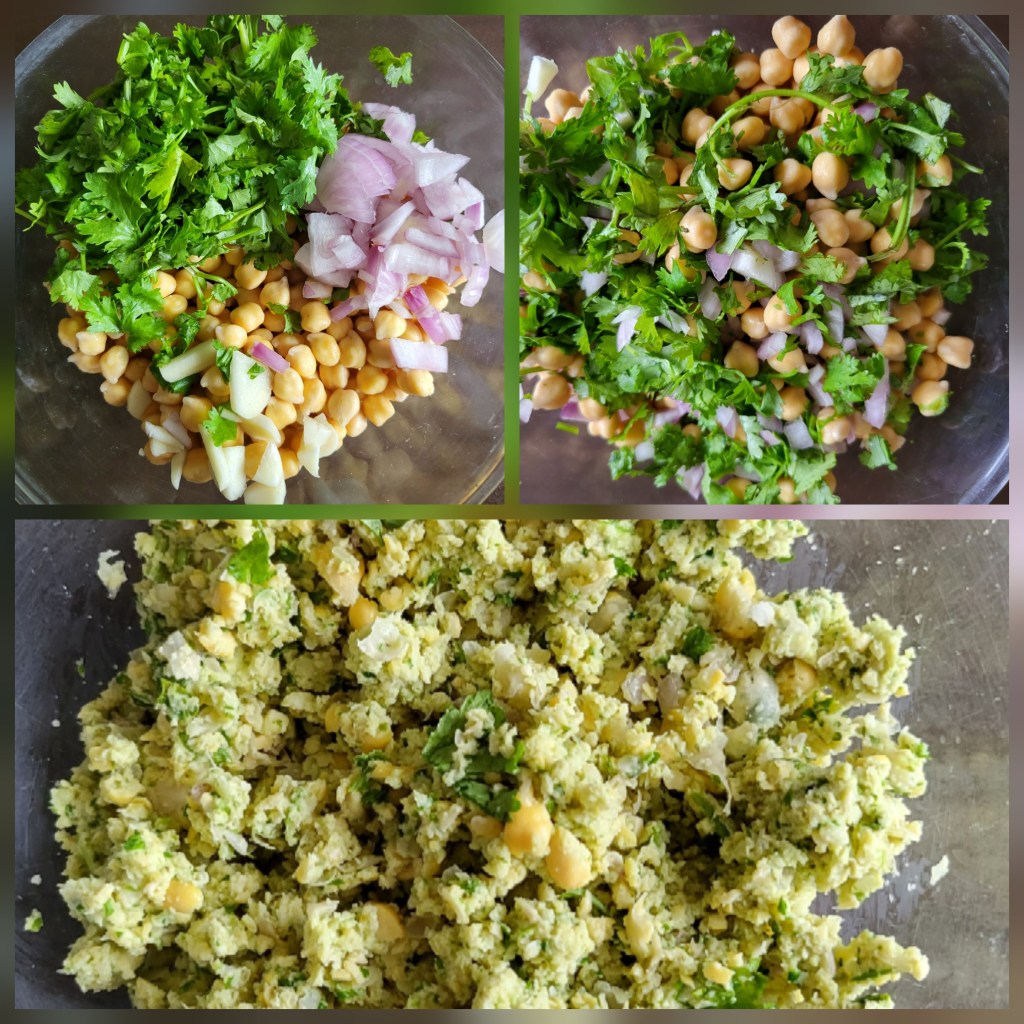
4. Add the chickpeas, onion, garlic, and coriander leaves.
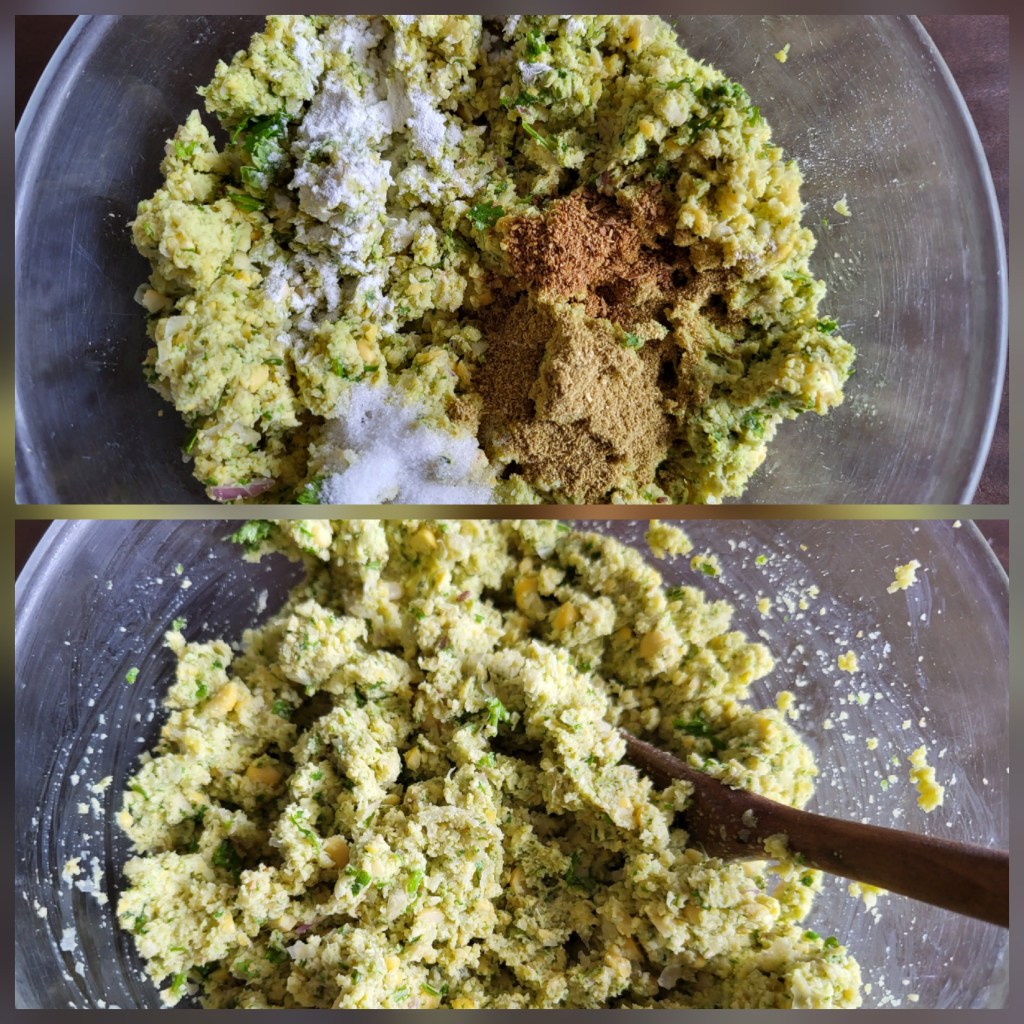
5. Pulse in small batches in a blender until the mixture looks like coarse crumbs. Do not make it into a paste.
6. Add the ground coriander, cumin, pepper, salt, and baking powder.
7. Mix well.
8. Cover and refrigerate the mixture for about 30 minutes. This helps the spices blend and makes it easier to shape into patties.
9. If the mixture is too soft to hold its shape, add a little chickpea flour. For us, the mixture was perfect.
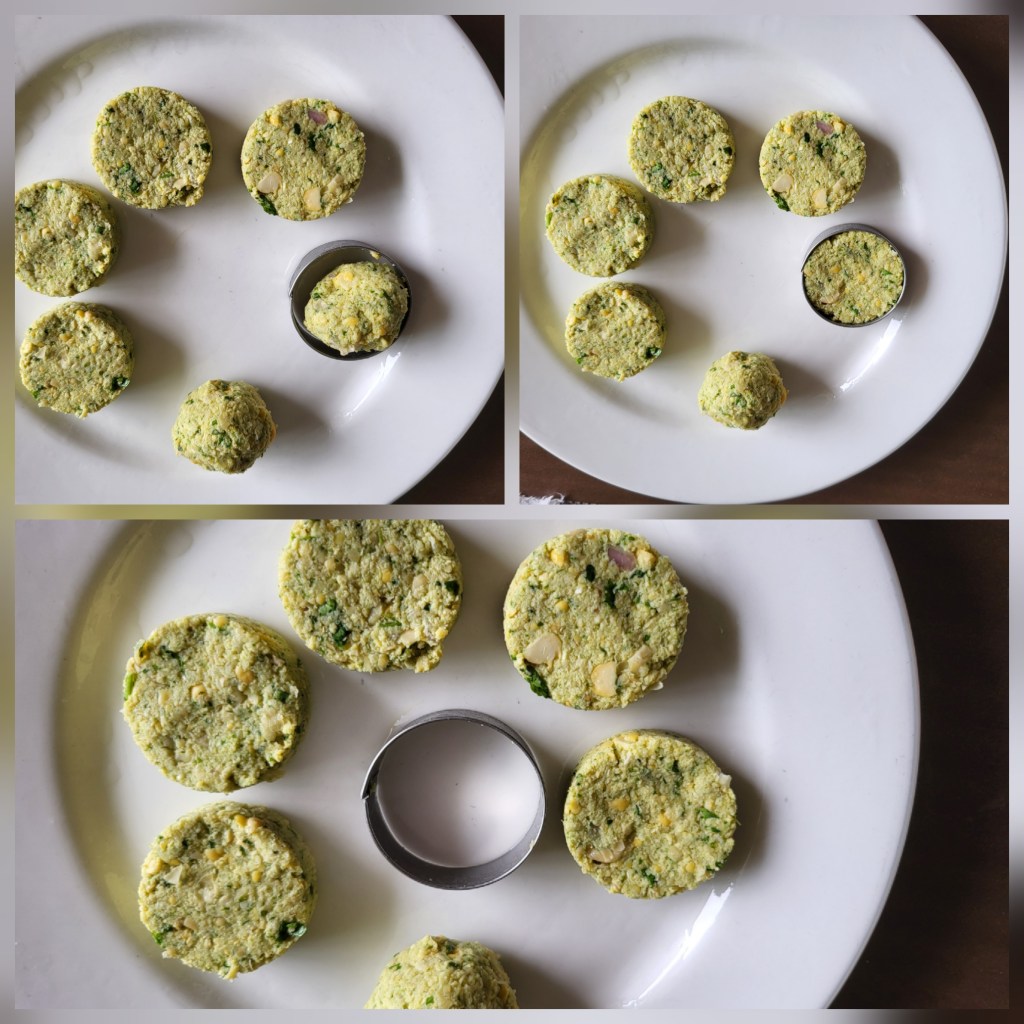
10. Roll small balls with your hands and flatten them into patties. We used a round cookie cutter. We placed each ball inside the cutter and pressed it flat. This helped us make patties that were all the same size and shape.
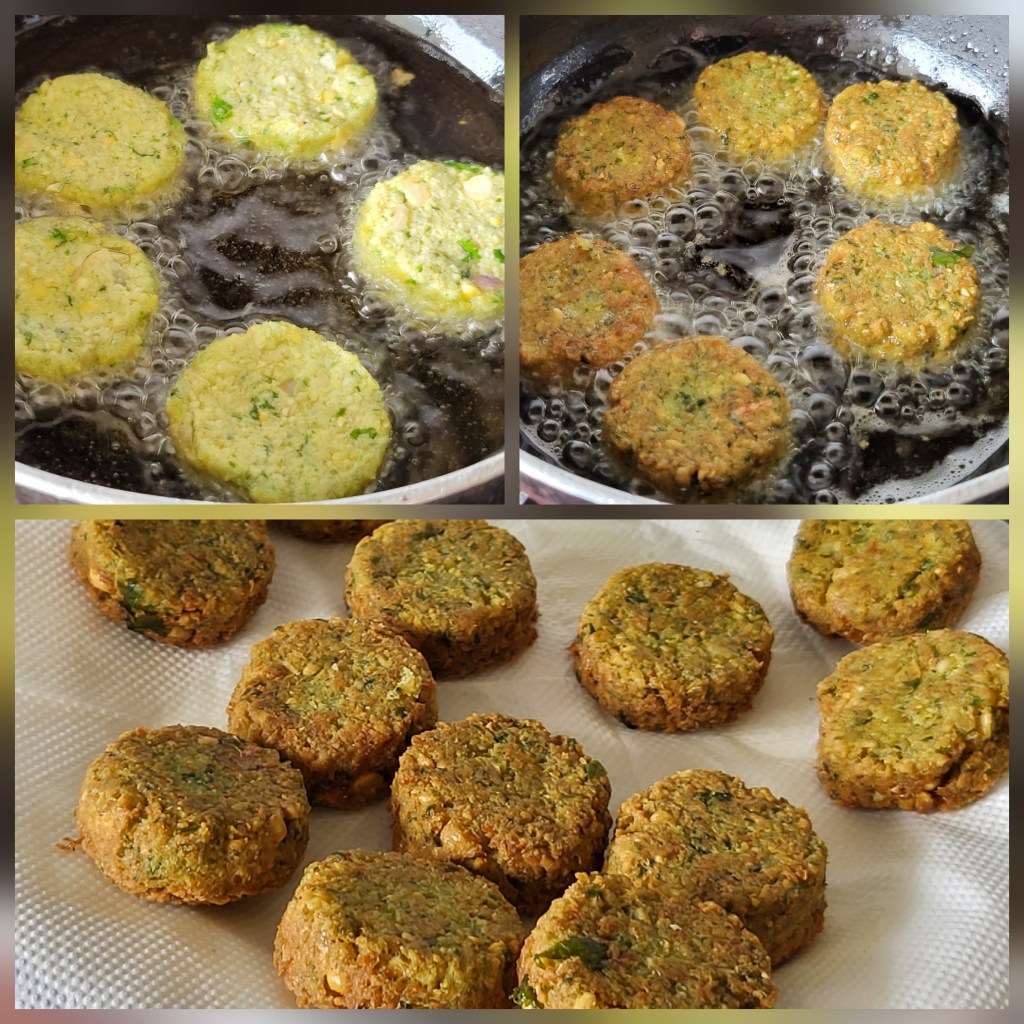
11. Heat oil in a deep pan over medium heat. Carefully place the patties in the hot oil.
12. Fry for 3-4 minutes, turning them gently, until golden brown and crispy on both sides. Remove and drain on paper towels.
Serve the falafel hot and crispy. Tuck them into warm pita bread with fresh salad, tomatoes, and a drizzle of creamy tahini sauce or yogurt dip. You can also enjoy them just as they are, with a little dip on the side. However you eat them, they taste best fresh!
Cyprus is an Island nation in Eastern Mediterranean Sea, South of Turkey, west of Syria. Its capital is Nicosia.
The Island is famous for its ancient history, including connections to Cleopatra.
A Few Wonders of Cyprus
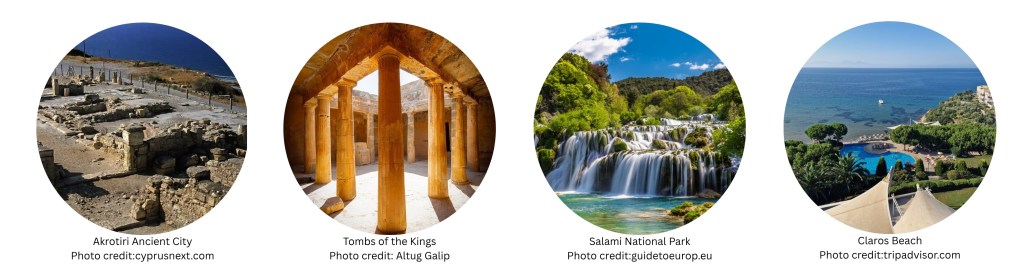
1. Akrotiri Ancient City: Akrotiri is a UNESCO World Heritage site, showcasing Bronze Age life around 1600 BC. The city’s ruins are remarkably preserved under volcanic ash.
2. Tombs of the Kings: The Tombs of the Kings in Paphos date back to the 4th century BC, featuring intricate underground chambers and frescoes. It’s a testament to Cyprus’ rich history.
3. Salami National Park: Cyprus’ only national park offers hiking trails, pine forests, and stunning mountain views. Spot local wildlife and enjoy nature’s beauty.
4. Claros Beach: Relax on this secluded beach’s crystal-clear waters and picturesque surroundings. Perfect spot to unwind and soak up the sun.
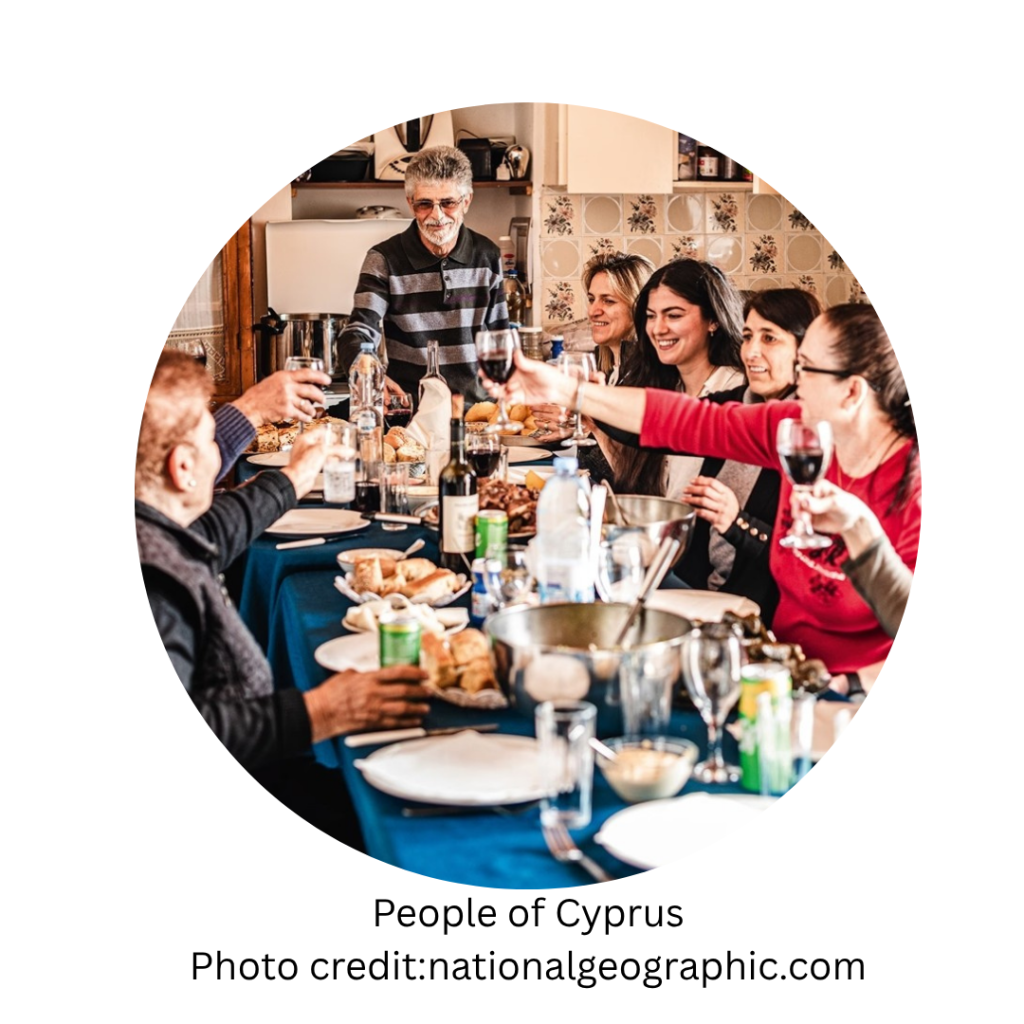
People of Cyprus
The people of Cyprus are a vibrant mix of cultures, reflecting the island’s rich history and strategic location. You’ll find warm hospitality, delicious food, and a blend of Greek and Turkish influences. From lively festivals to stunning beaches, Cypriots are proud of their heritage.
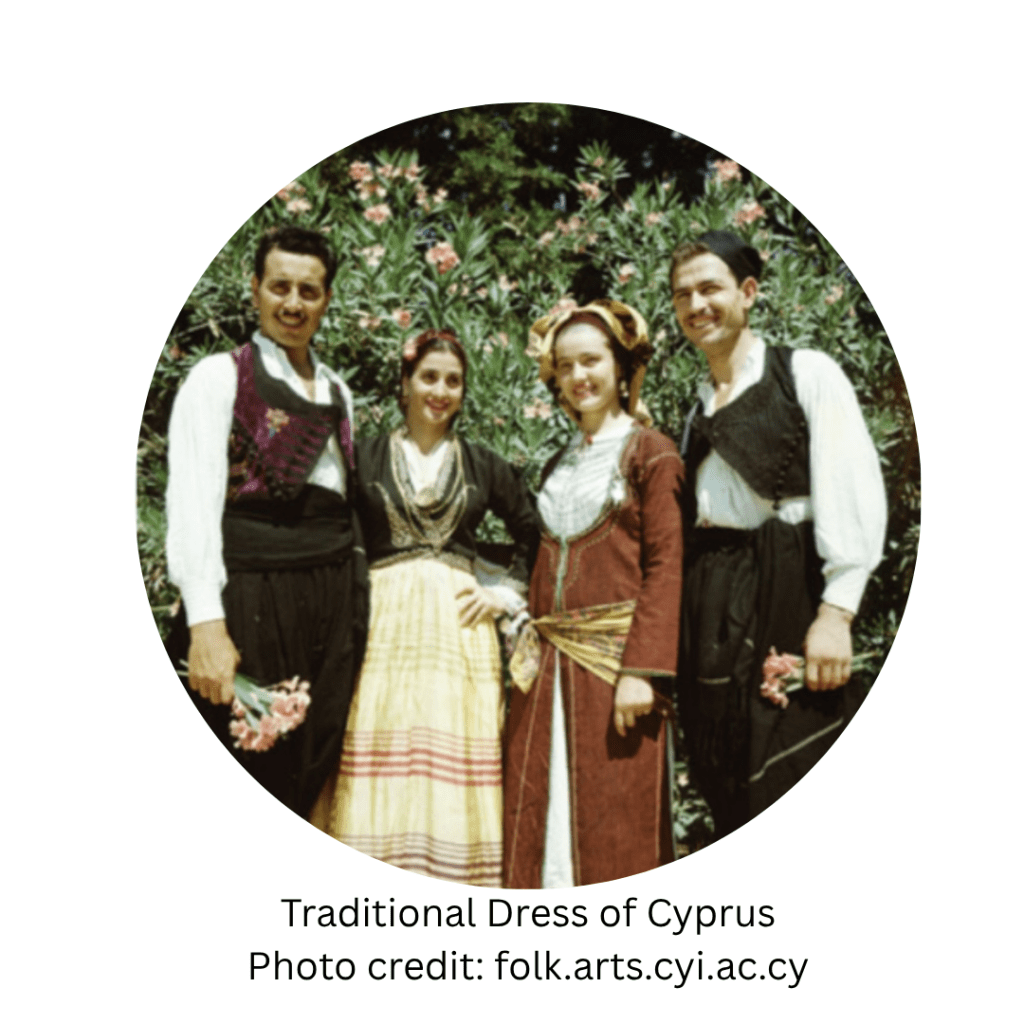
Traditional Dress of Cyprus
The traditional dress of Cyprus reflects its rich cultural heritage, blending Greek and Turkish influences. Men wear the “Vraka” (baggy trousers) with a shirt, while women wear the elegant “Savouri” (long dress with embroidery). These outfits are often seen during festivals and celebrations, showcasing Cyprus’s unique traditions.
Pulses and Recipes
Cyprus cultivates pulses like chickpeas, lentils, and beans, with around 280 metric tons produced in 2023. The government supports farmers through EU’s CAP, promoting sustainability and organic farming.
Pulses are a staple in Cypriot cuisine! They’re used in dishes like “Fasoulia” (bean stew), “Revithia” (chickpea soup), and “Kala Mato Mena” (black-eyed pea salad). Pulses add protein and flavor to traditional Cypriot meals, often paired with veggies, herbs, and olive oil.
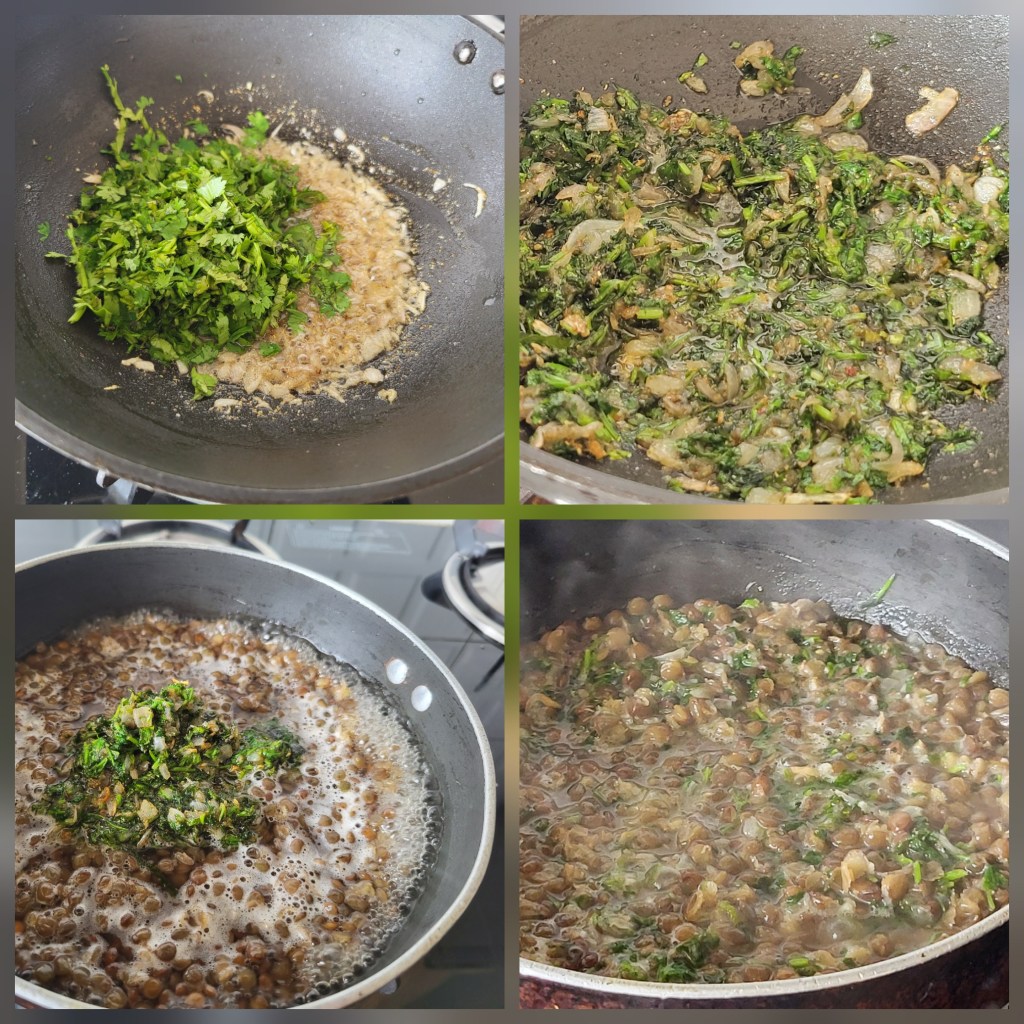
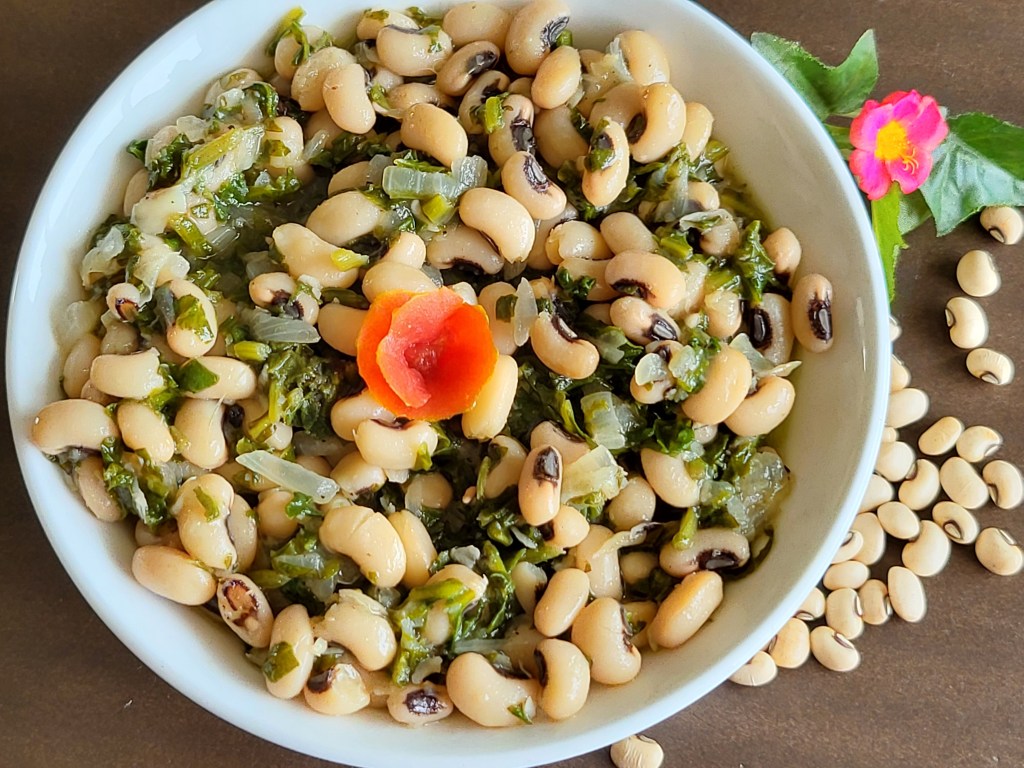
Today, let’s cook Louvi me ta Lahana, a traditional Cypriot comfort food. In Cyprus, they make it with chard and black-eyed peas, slow-cooked in olive oil, tomato, and finished with lemon. I didn’t have chard, so I used what my kitchen gave me – lobiya and palak. A little bit of Cyprus, made with an Indian heart.
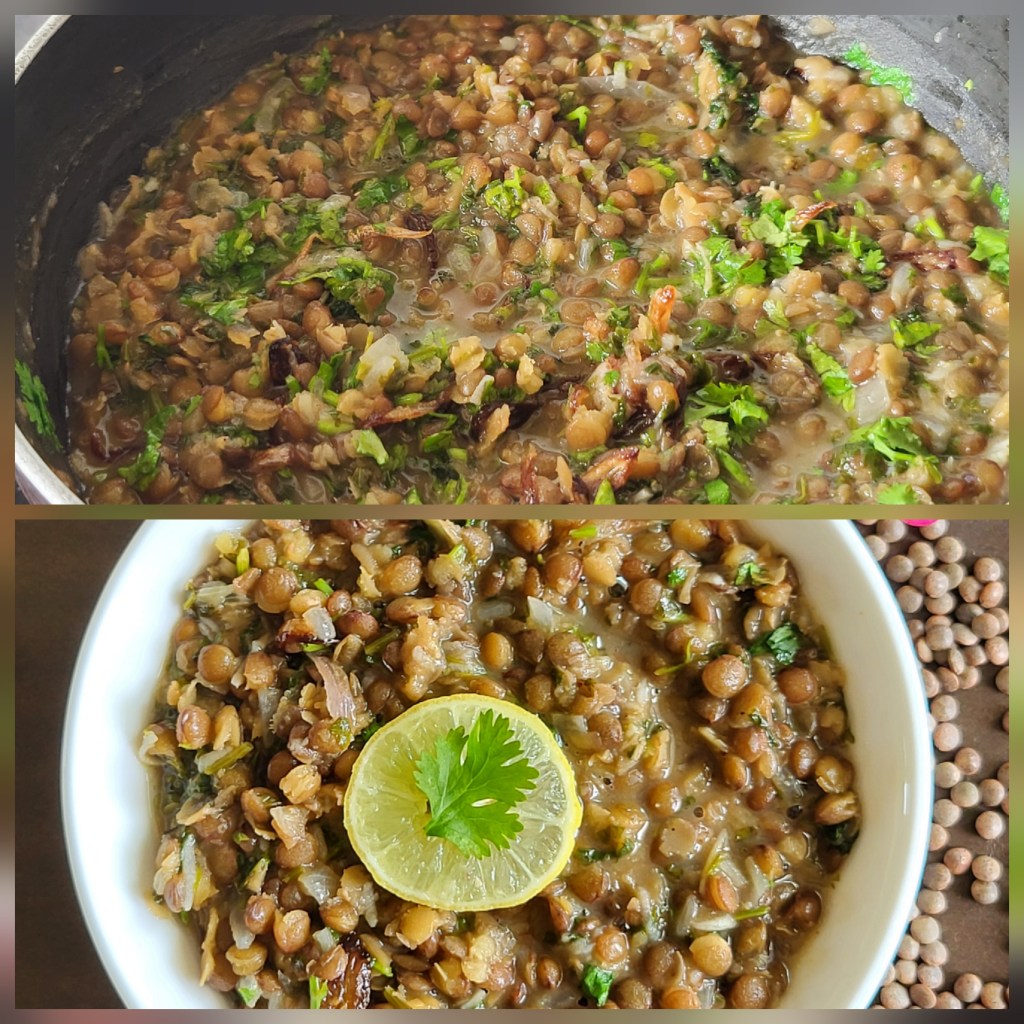
Louvi me Palak(Black-Eyed Beans with Spinach).
Louvi me Palak tastes like sunshine on a plate. It’s simple, earthy, and perfect with crusty bread. The olive oil is generous, the lemon is bright, and the black-eyed beans make it so nourishing.
In Cyprus it’s usually served with an extra drizzle of olive oil and lemon, and always alongside fresh bread.
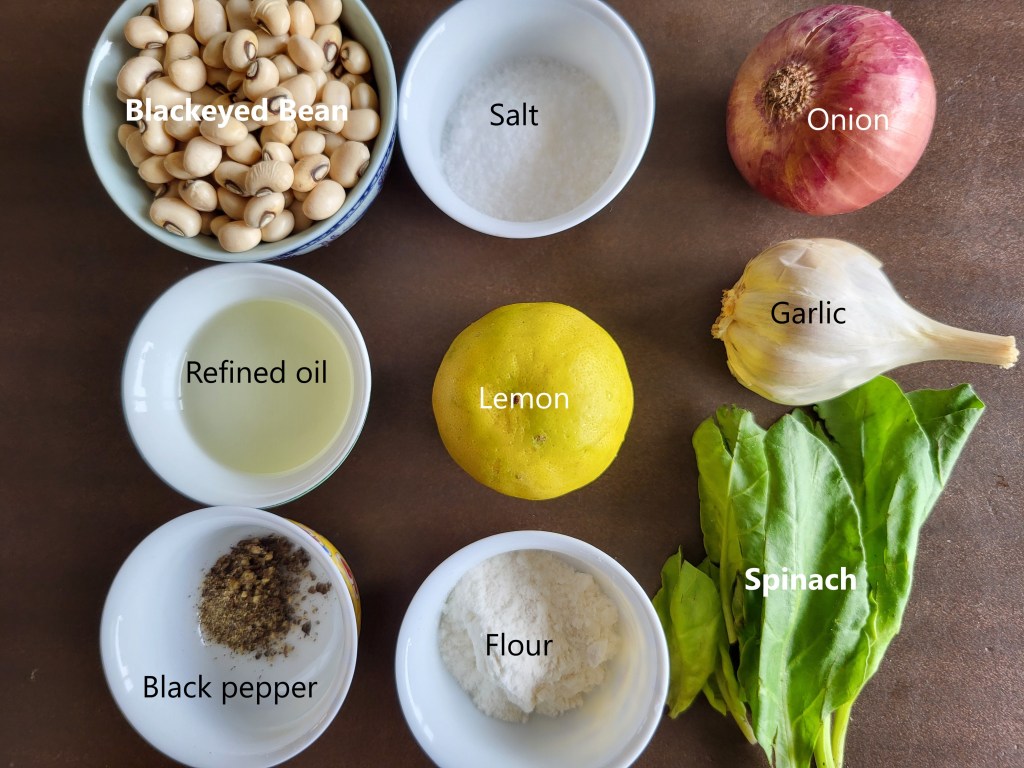
You need:
100 gm dried black-eyed beans.
1 cup chopped spinach (Palak)
1 medium size large onion
1 clove of garlic
½ tsp flour
1 tbsp lemon juice
2 tbsp extra-virgin olive oil/ refined oil (Olive oil is the key in Cyprus! Salt and black pepper to taste.
Method:
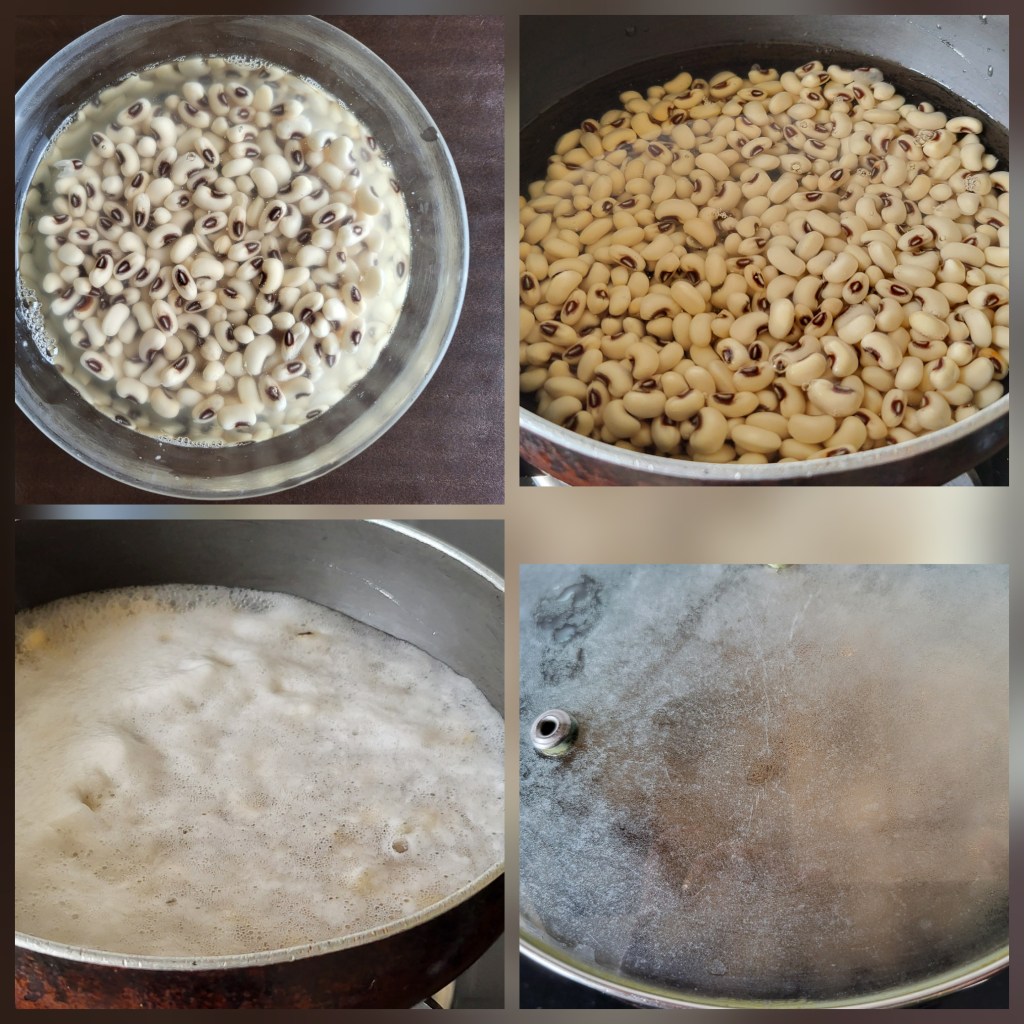
Rinse the black-eyed beans and soak in water overnight. Drain and rinse again.
Place in a pot and add fresh water to cover. Bring to a boil, then reduce to a simmer.
Remove any scum from the surface 2-3 times. Cover and cook for 15-20 minutes until just tender.
Drain, and reserve some of the cooking liquid.
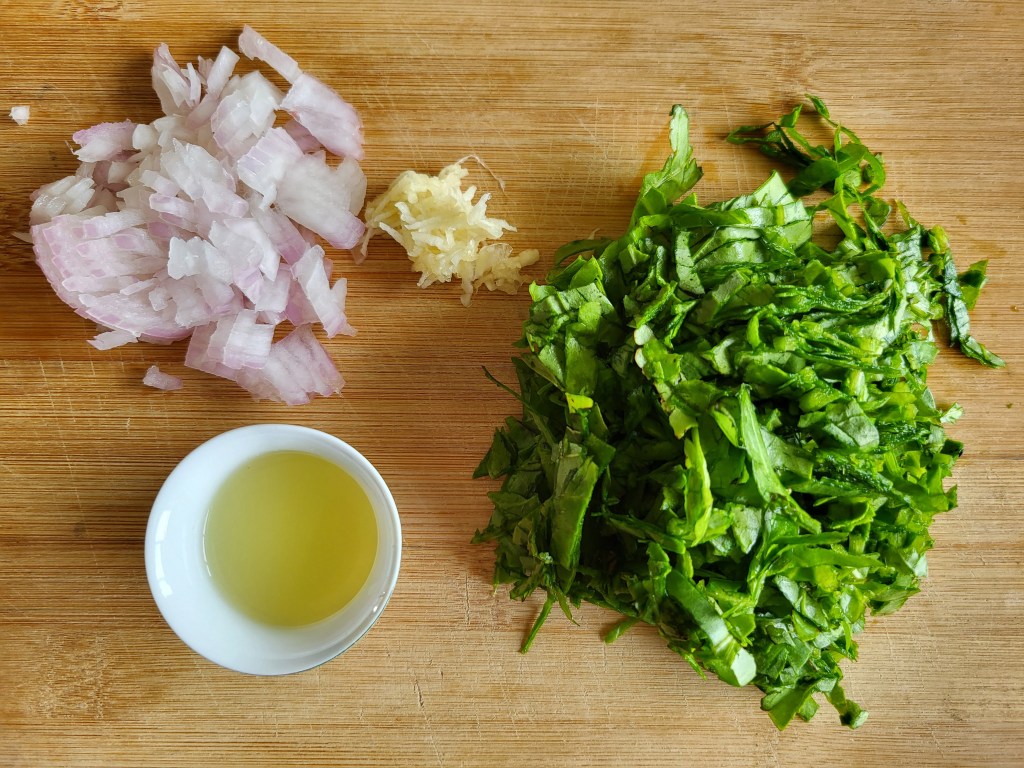
5. While the beans cook, wash and roughly chop the spinach into smaller pieces.
6. Finely chop the onion.
7. Grate or mince the garlic.
8. Squeeze 1 tbsp of fresh lemon juice and set aside.
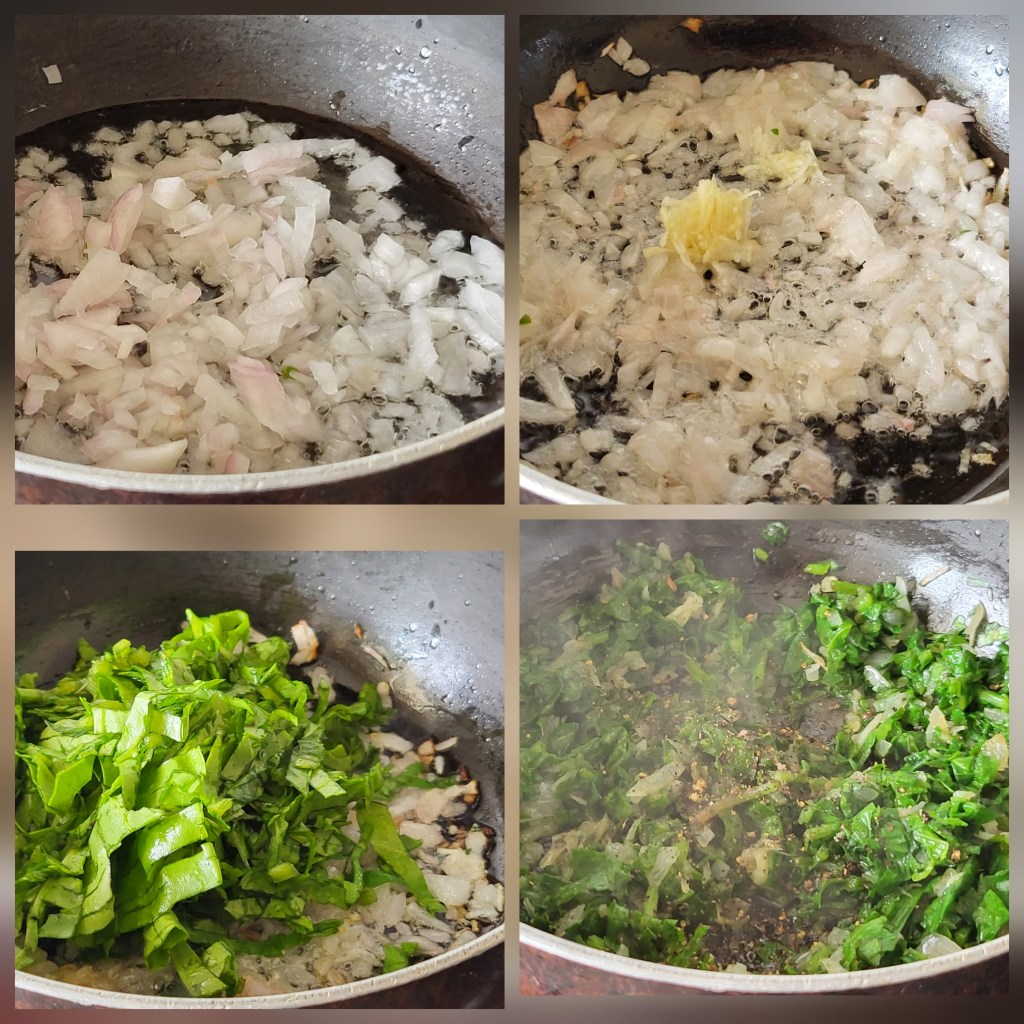
9. Heat olive oil in a pan over medium heat.
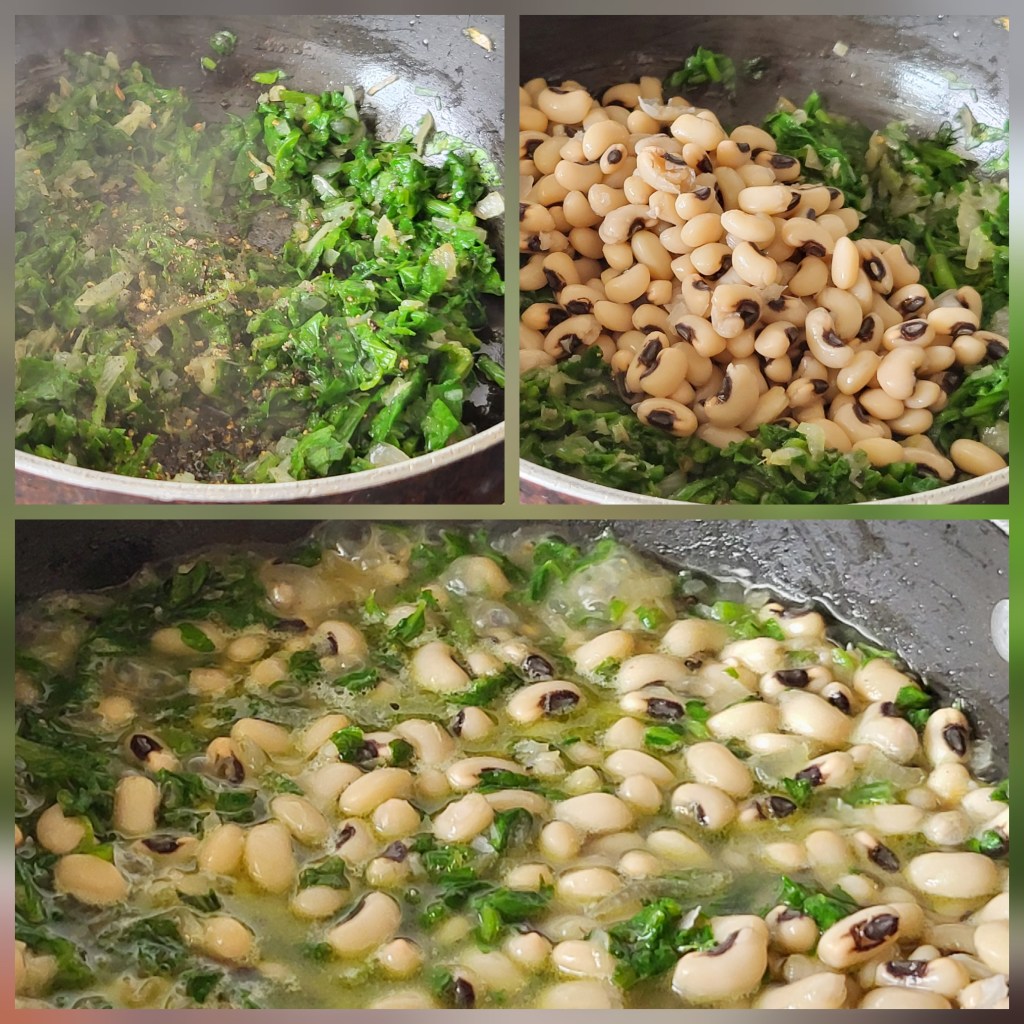
10. Add the chopped onion and grated garlic. Sauté until soft and lightly golden.
11. Add the chopped spinach and stir for 1 minute until it wilts.
12. Season with salt and black pepper to taste. Sauté for another 30 seconds.
13. Add the cooked black-eyed beans to the pan and mix well.
14. Pour in 2 cups of hot water and bring to a boil.
15. Reduce the heat and simmer for 3-4 minutes, until there’s just a little broth left.
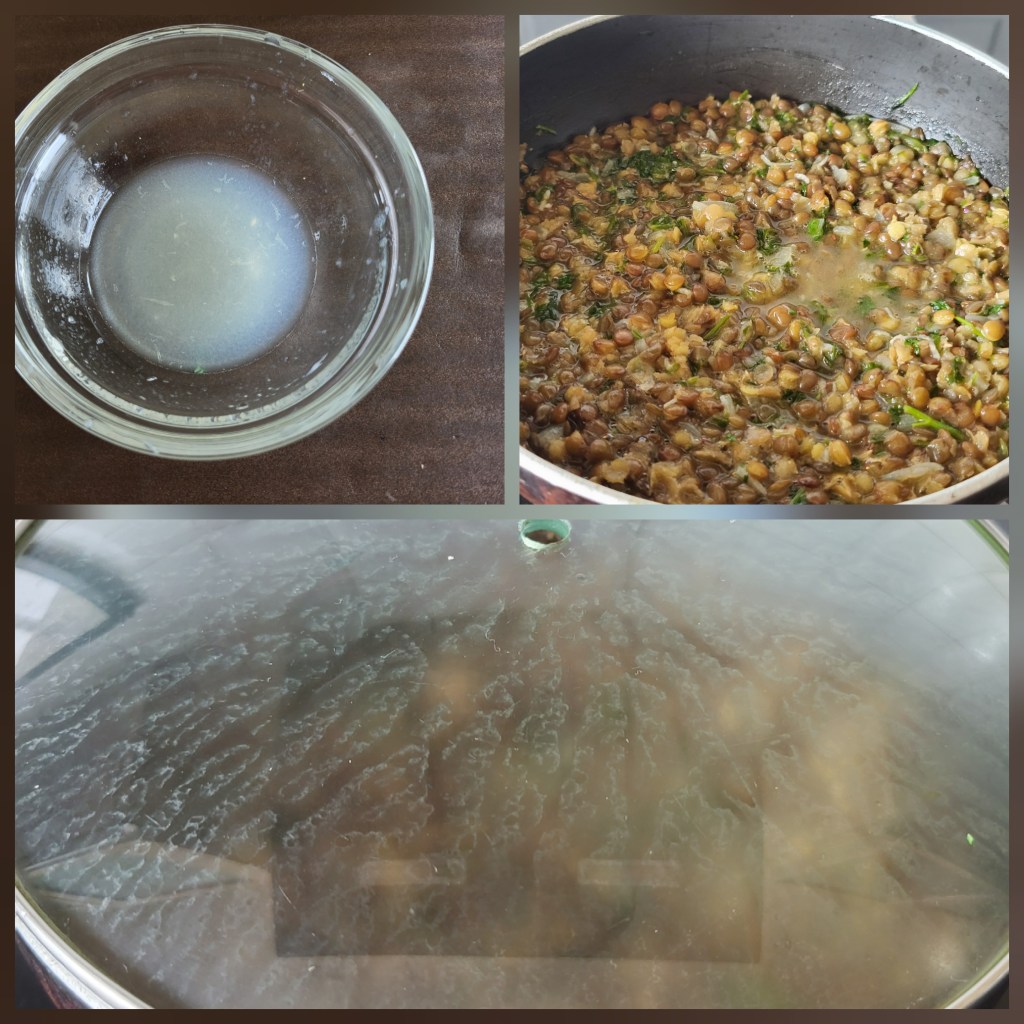
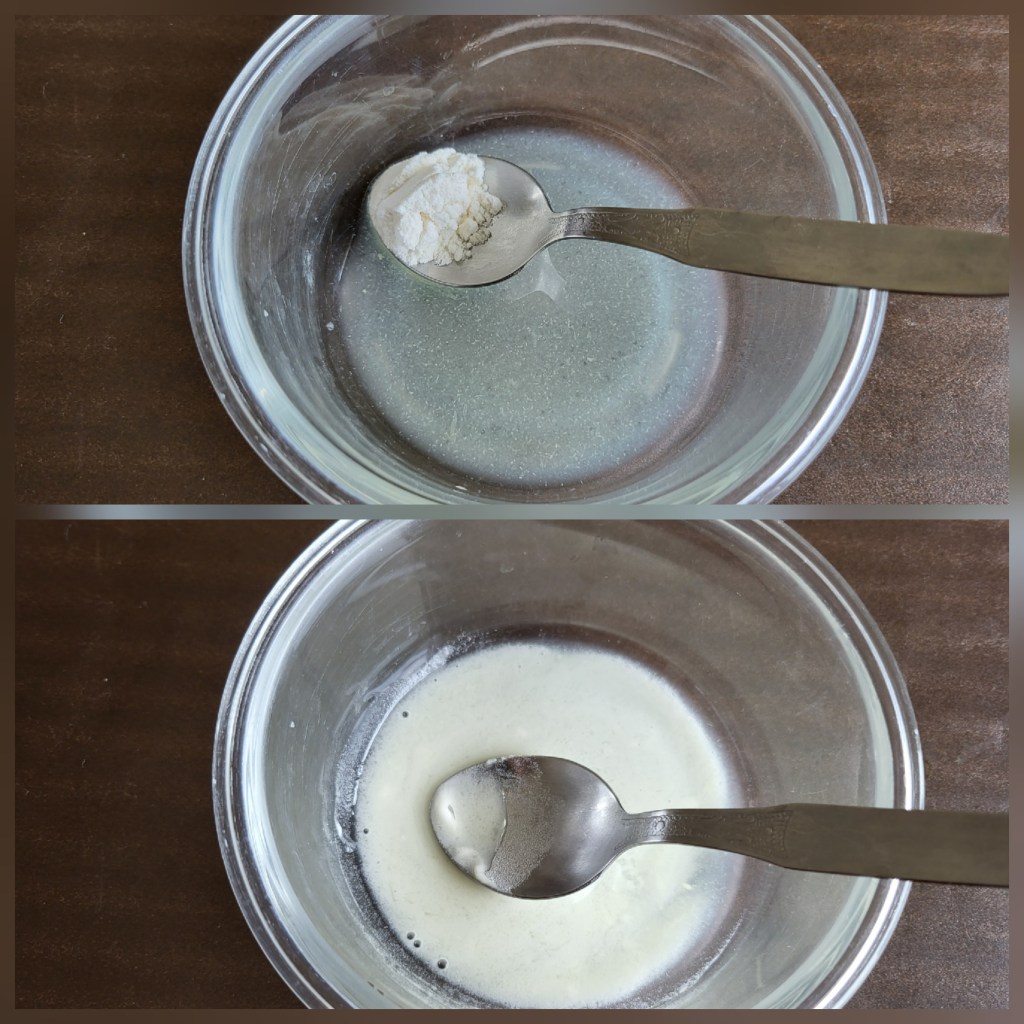
16. In a small bowl, mix ½ tsp flour with the 1 tbsp lemon juice until smooth.
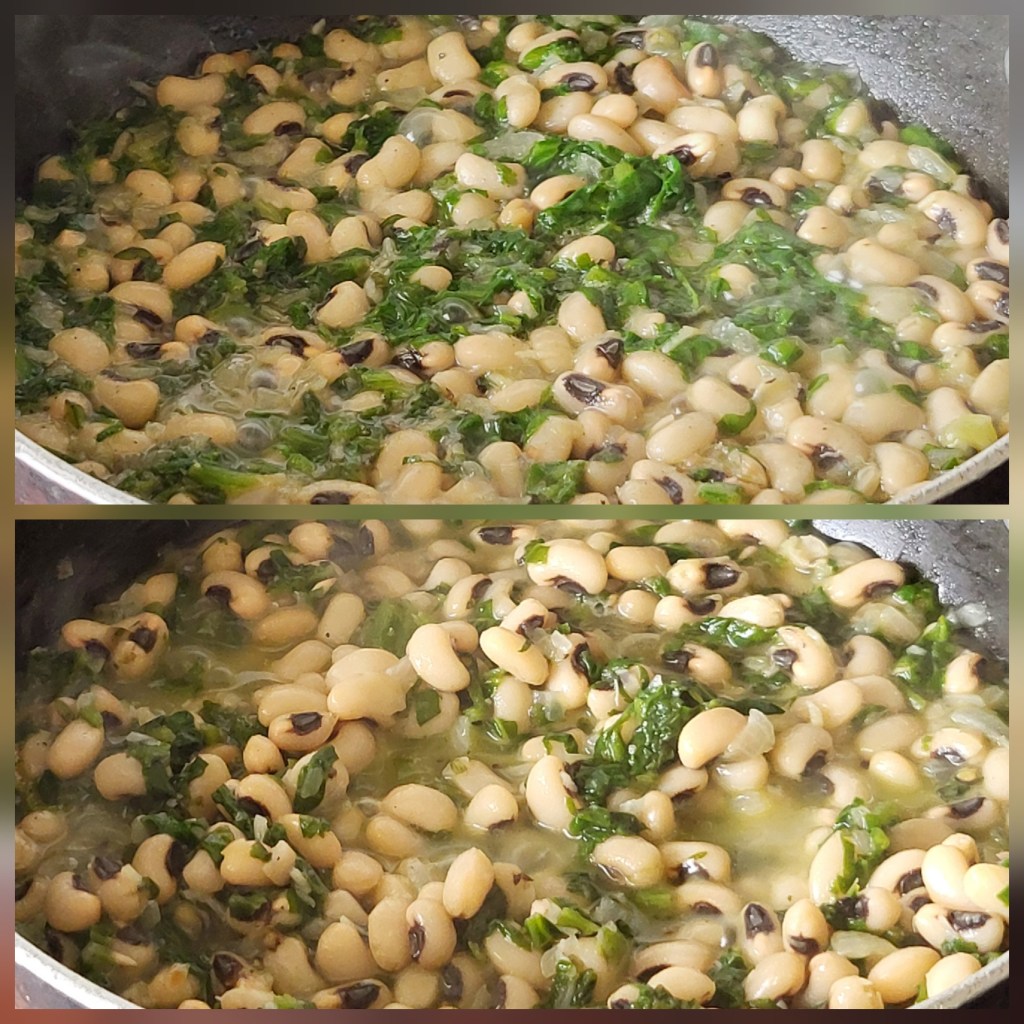
17. Stir the lemon-flour mixture into the stew and mix well.
18. Taste and adjust salt and black pepper if needed.
19. Simmer for another 2-3 minutes. Turn off the heat. Your Louvi me Palak is ready.
20. Serve warm with a drizzle of olive oil and crusty bread on the side.