
Iran: Location and People
Iran, historically known as Persia, is a vast country in West Asia and home to one of the world’s oldest continuous civilizations.
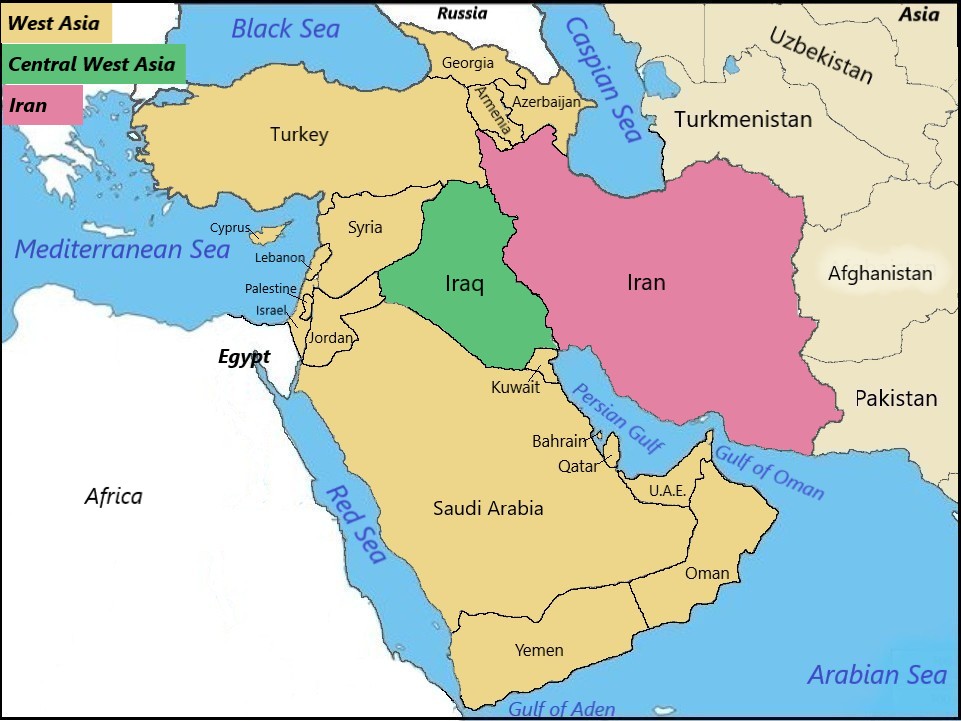
Iran borders Iraq to the west; Turkey, Azerbaijan, and Armenia to the northwest; the Caspian Sea to the north; Turkmenistan to the northeast; Afghanistan to the east; Pakistan to the southeast; and the Gulf of Oman and Persian Gulf to the south.
A Few Wonders of Iran
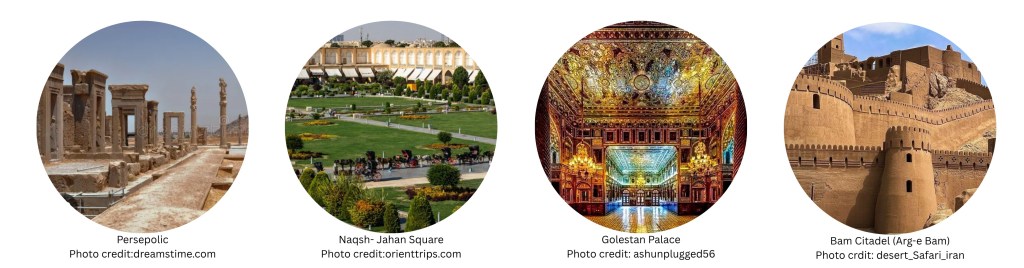
1. Persepolis: Persepolis, the ancient capital of the Achaemenid Empire, is a must-visit in Iran. This UNESCO World Heritage site displays stunning architecture and intricate carvings that whisper tales of old kings and empires. As you walk through the Gate of All Nations, you’ll feel the weight of history beneath your feet.
2. Naqsh-e Jahan Square: Naqsh-e Jahan Square in Isfahan is one of the world’s largest city squares, buzzing with life and colour. Flanked by historic buildings like the Imam Mosque and Sheikh Lofollah Mosque, this square is a perfect blend of architecture and Iranian culture. Grab a tea and soak in the atmosphere!
3. Golestan Palace: Golestan Palace in Tehran is a royal gem with stunning architecture and a glimpse into Iran’s Qajar past. This palace complex, a UNESCO site, houses opulent rooms, gardens, and museums. You’ll love the intricate tile work and ornate mirrors reflecting Iran’s rich heritage.
4. Bam Citadel (Arg-e Bam): The Bam Citadel, or Arg-e Bam, is an ancient adobe city in Kerman. This 2000-year-old wonder, ravaged by an earthquake in 2003, is being restored to its former glory. Walk through its ancient streets and imagine life in this once-thrusting trade hub on the Silk Road.
People of Iran
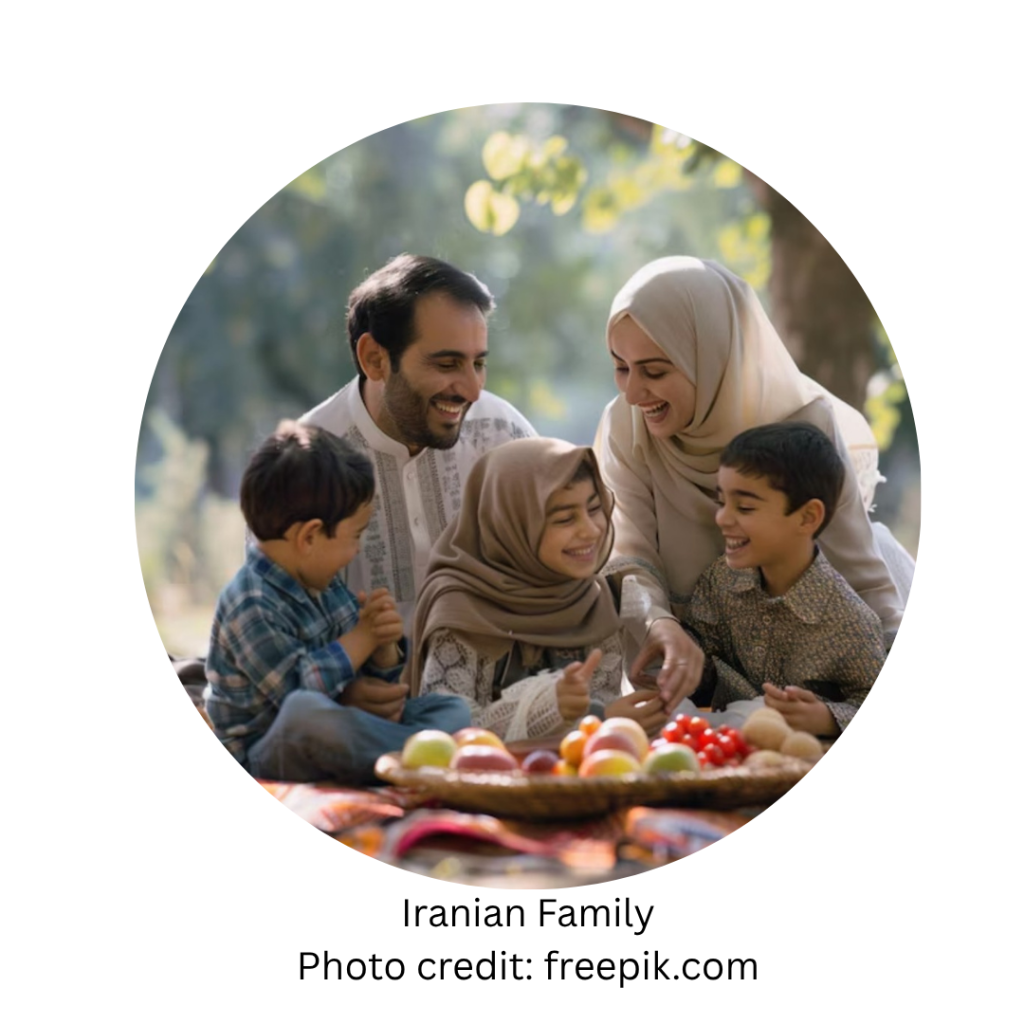
The people of Iran, also known as Iranians or Persians, are a diverse and vibrant community with a rich cultural heritage. With a blend of ethnic groups, including Persians, Azeris, Kurds, and Lora, they’re known for their warm hospitality and strong family ties.
Iranian culture is steeped in history, from ancient empires to modern-day traditions, and their cuisine, art, and literature reflect this depth. Generally, Iranians are proud of their heritage and value education, poetry, and community.
Traditional Dress of Iran
The traditional dress of Iran is a beautiful blend of modesty and elegance.
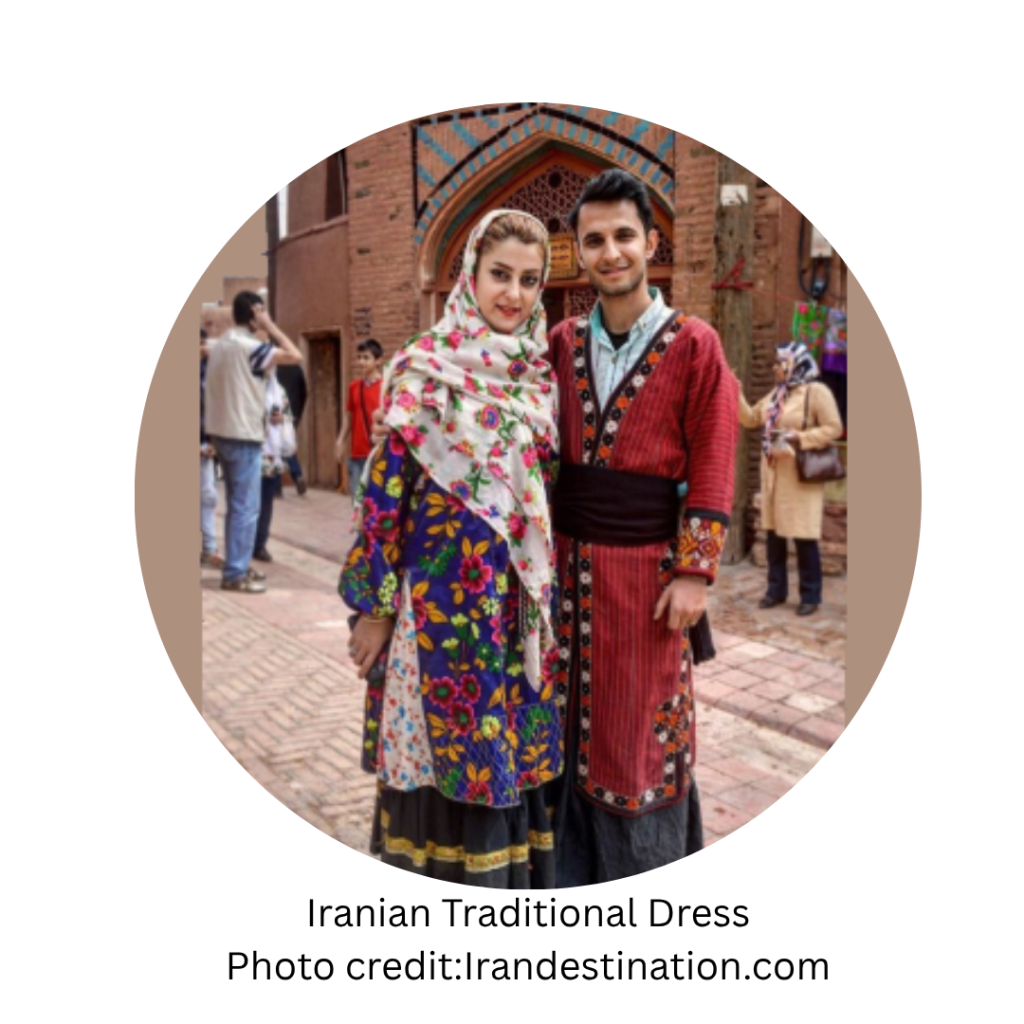
For women, it’s typically a colourful, patterned ensemble featuring a long robe called a “chador” or a “manteau” with a headscarf, reflecting their cultural and regional diversity. Men’s traditional attire includes loose-fitting pants and a long shirt, often with a jacket or a “kabat” – simple yet dignified. These outfits showcase the rich textiles and craftsmanship of Iran’s heritage.
Pulses and Recipes
The country produces a variety of pulses, including chickpeas, lentils, and beans, mainly in the western and northwestern regions. Pulses are a staple in Iranian cuisine, featuring in dishes like “ghormeh sabzi” and “adasi” (a lentil soup). With its diverse climate, Iran’s able to grow a range of pulse varieties, making them a key part of the country’s agriculture and diet. Iran is a significant consumer and importer of Asian pulses, particularly from South Asia.
Today we are planning to cook abgoosht with chickpeas.
In Iran, abgoosht means “meat broth” – slow-cooked comfort in a pot. This version swaps meat with chickpeas, but keeps the soul.
It’s really two dishes in one. Sip the golden broth first. Then mash the chickpeas, potatoes, and tomatoes into goosht koobideh – “mashed meat” without meat.
Traditionally, the head of the family does the mashing with a goosht-koob. It’s not about about muscle. It’s about love. Pounding everything into one shared story.
Vegetarian Abgoosht – Iranian Chickpea Stew
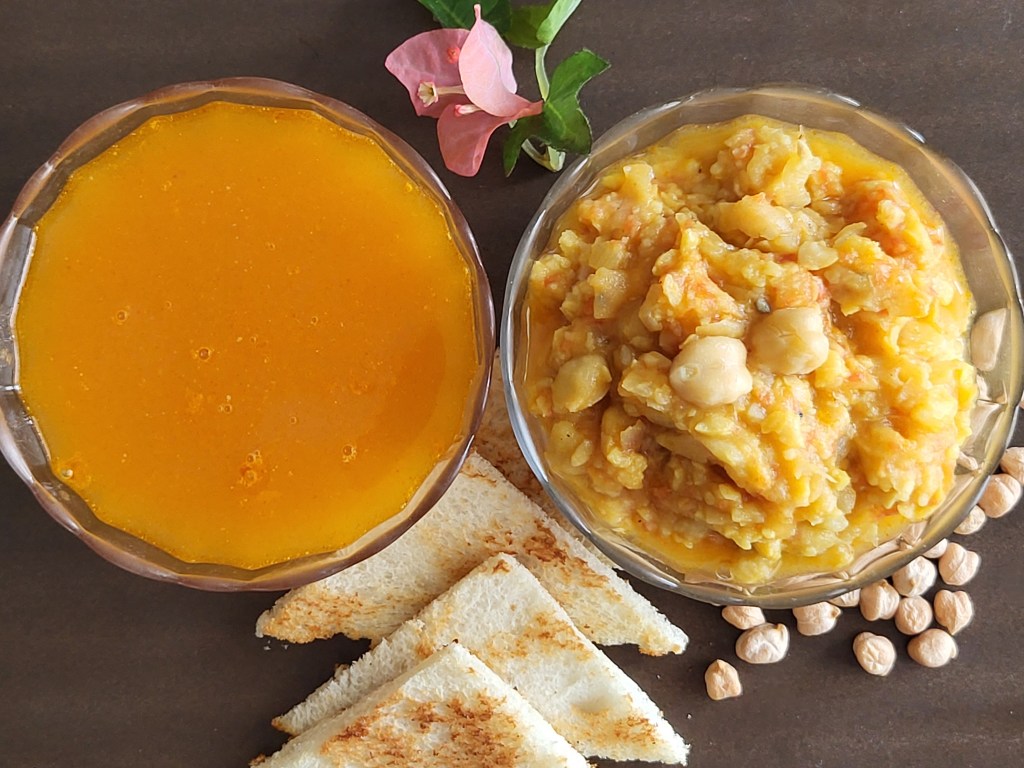
Deep and savoury from the long simmer. The dried lime gives it a smoky, sour note that makes chickpeas taste luxurious. The mashed part is creamy and filling, perfect with roti or bread. It goes very well with raw onion and vegetables.
You need:
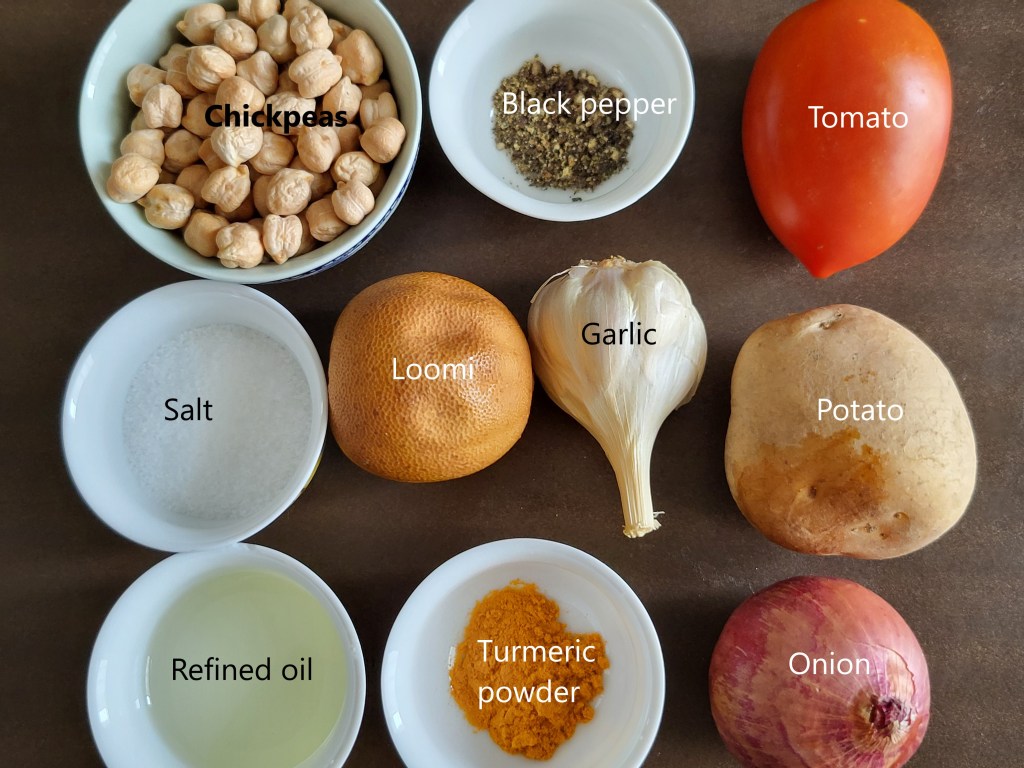
100 gm chickpeas
1 medium size onion
1 medium size potato
½ cup grated tomato
1 Limoo Amani (Loomi-dried lime)
¼ tsp turmeric
1 tsp grated garlic
½ tsp ground black pepper
1 tbsp olive oil/refined oil
Salt to taste
Method:
- Prep the chickpeas: Wash the chickpeas well, then soak them in water overnight.
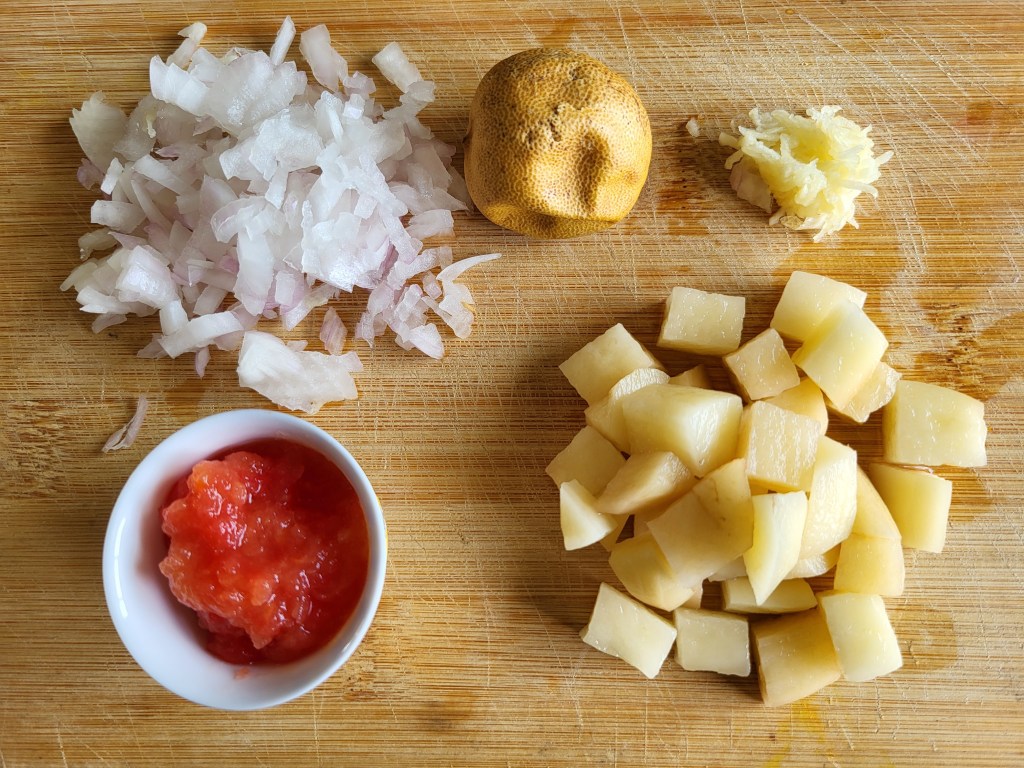
2. Peel and dice the potato.
3. Peel and chop the onion.
4. Grate the garlic.
5. Grate the tomato and discard the skin.
6. Pierce the dried lime.
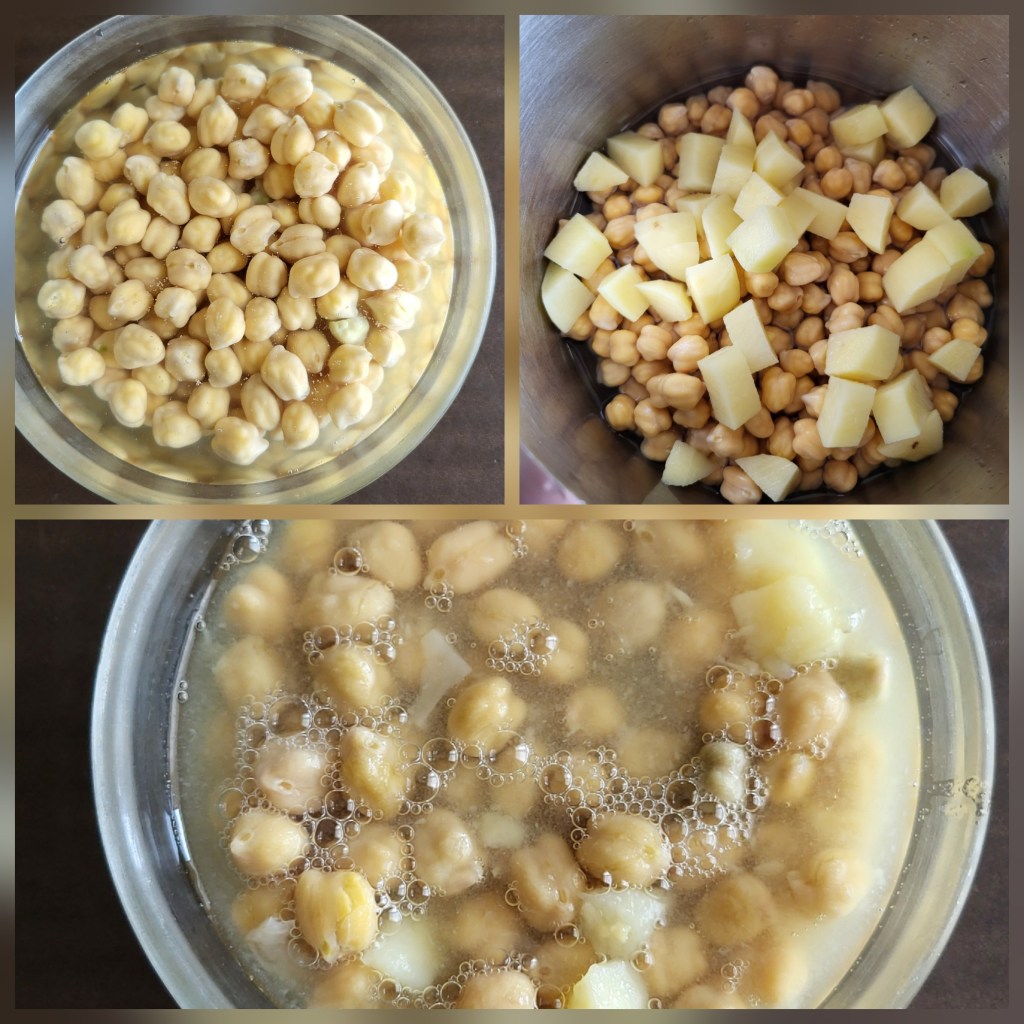
7. Rinse and drain the chickpeas.
8. Place the chickpeas it in the pressure cooker along with the diced potato, ½ tsp of salt and 2 cups of water and cook till tender.
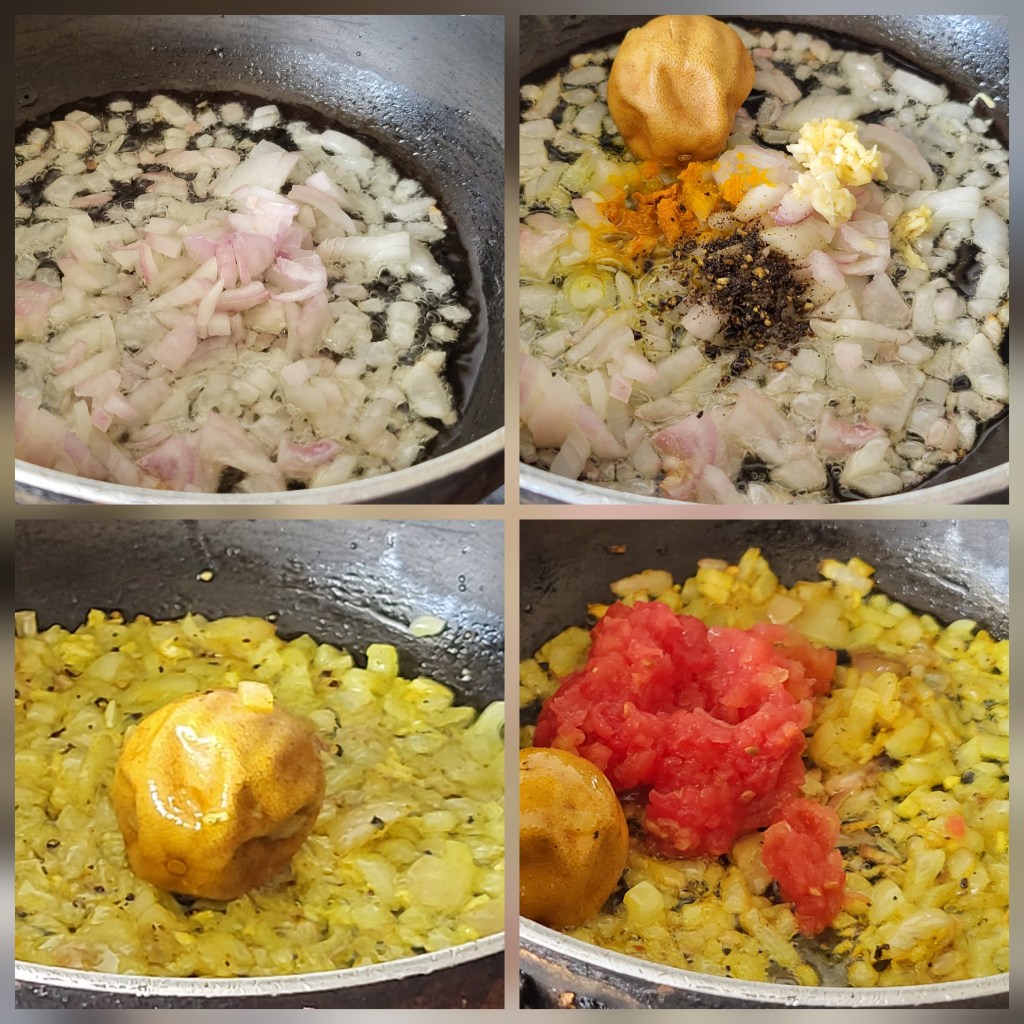
9. Heat the oil in a pan over medium heat.
10. Add the chopped onion and fry for about 1 minute.
11. Add the turmeric, grated garlic, black pepper, and dried lime. Cook for 2–3 minutes until it smells nice.
12. Add the grated tomato and cook, stirring, until it turns into a thick sauce.
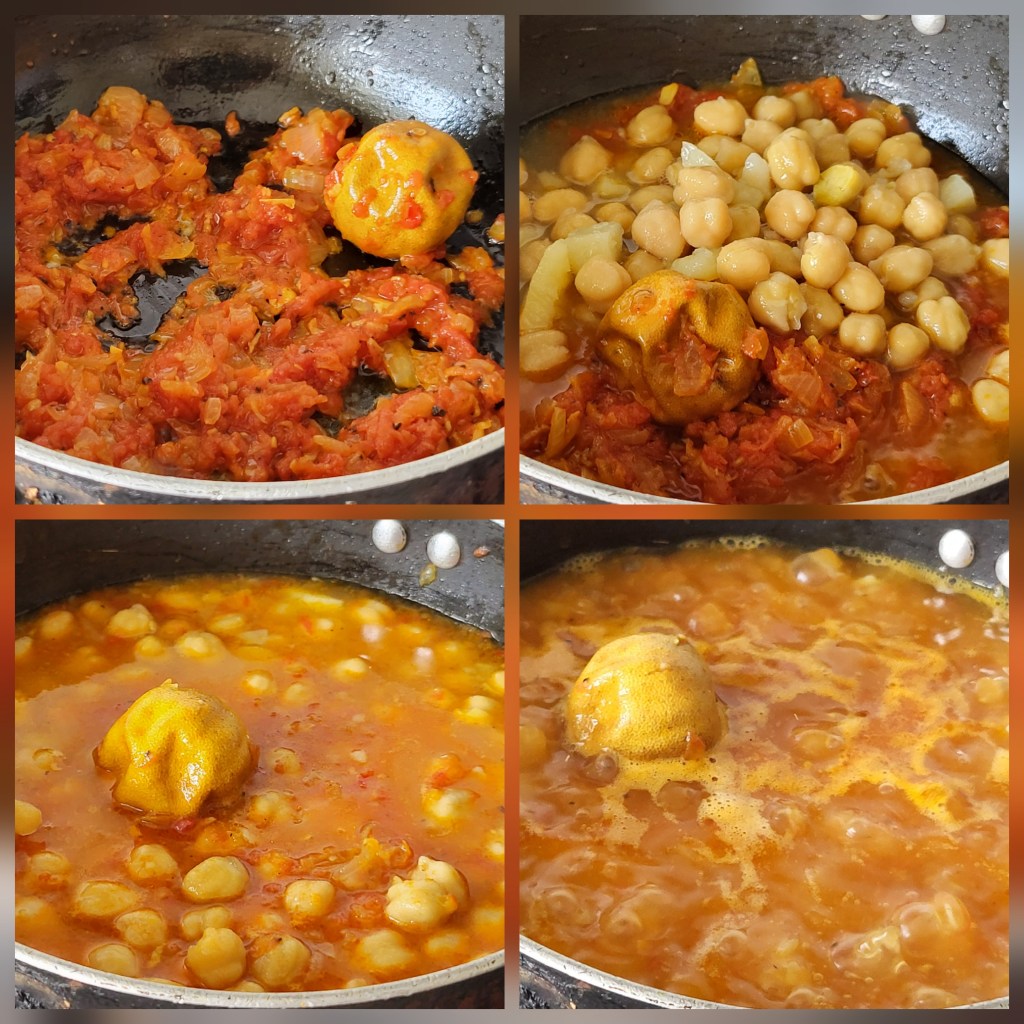
13. When the tomato sauce starts to separate from the oil, add the cooked chickpeas along with their cooking water.
14. Pour in 1 cup of hot water and bring everything to a boil. Add salt to taste. Turn the heat to low and let it simmer gently for about 2 minutes.
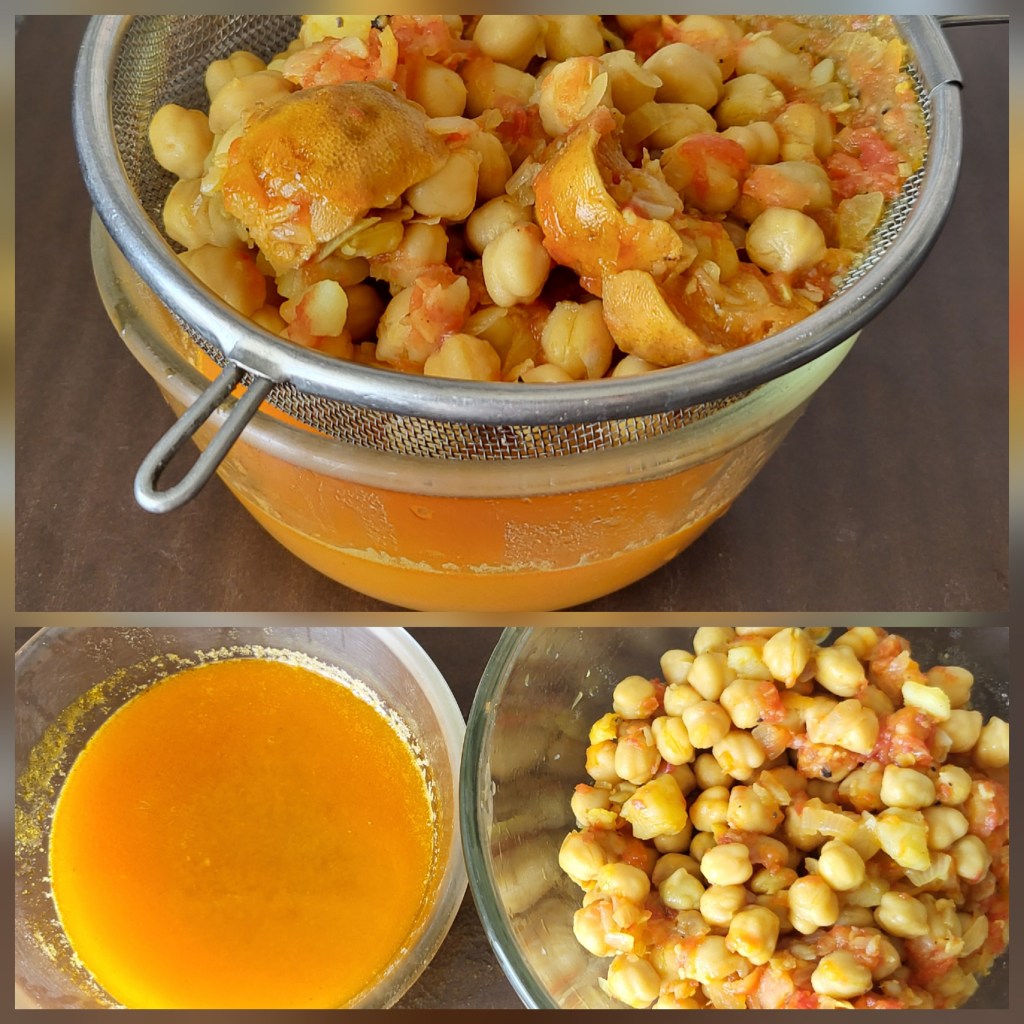
15. Separate the broth: Use a strainer to pour out all the rich, flavorful liquid from the stew. Save it — this is your soup.
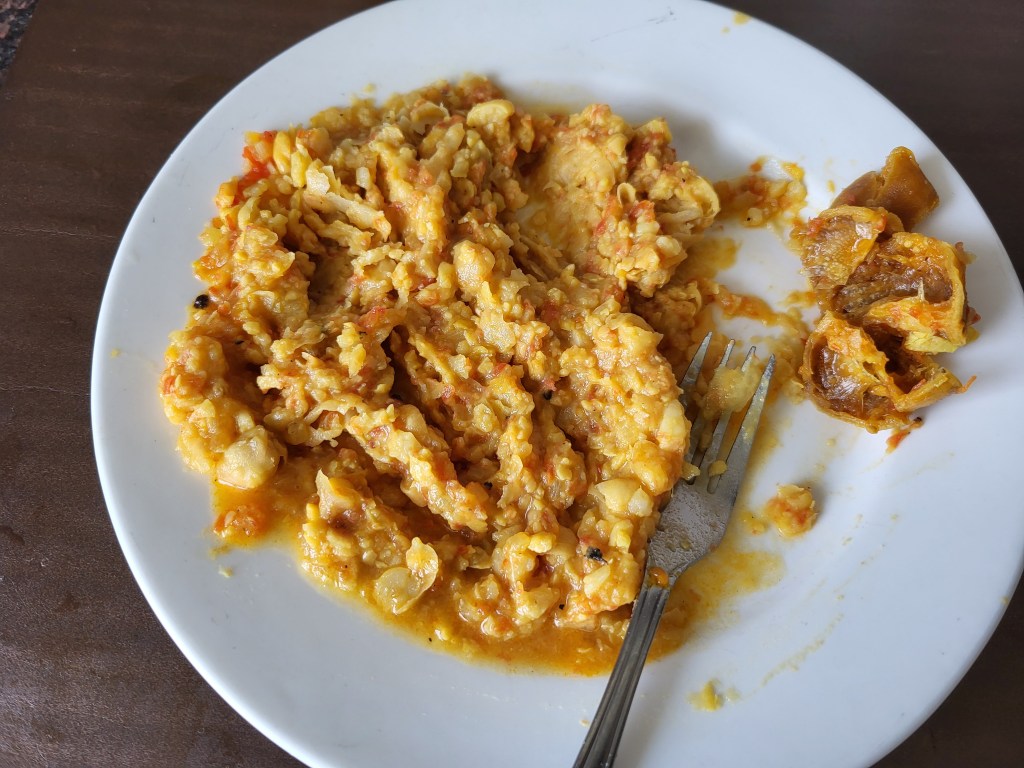
16. Make Goosht Kobideh: Put the cooked chickpeas and potato into a large bowl. Squeeze any leftover sour juice from the dried lime into the bowl, then throw the lime away.
17. Mash it smooth: Use a potato masher to mash everything into a thick, smooth, creamy paste. This second course is called Goosht Kobideh.
How to Serve Abgoosht
First course — the broth: Ladle the broth into individual bowls. Each person does tilit — tear pieces the bread or roti into the hot broth, when soften, then eat it with a spoon like a rich, hearty soup.
Second course — the solids: Scoop the mashed goosht koobideh onto individual plates. Eat it with pieces of bread or roti, using the bread to scoop. Serve with raw onion, and pickles on the side.
Enjoy your Abgoosht!
Happy Reading and Healthy Cooking!
Coming up next… Pulses in Iraqi Cuisine
*****


Is Loomi available in Delhi market? Or you did that too?
LikeLike
May be available in some places. But I made my own Loomi.
LikeLike
wonderful recipe!😋
LikeLike
Thank you Rini.
LikeLike
Such a rich and comforting stew! I love learning about traditional Iranian cuisine, and this vegetarian version with chickpeas is absolutely delightful.
LikeLike
Thank you so much,,Protima! Iranian stews have so much heart in them. I’m so glad you loved the vegetarian version with chickpeas — comfort food that feeds both body and soul.
LikeLike
So interesting! I have some close Iranian friends who fed me a lot of yummy food in the past. Your article took me back to those wonderful tastes and experiences!
LikeLike
Thank you so much, Tanvi! That means a lot. Food has such a beautiful way of bringing back people and memories, doesn’t it? I’m so glad the article brought back those wonderful tastes your friends shared with you. That’s exactly why I love writing about Iranian food.
LikeLike
Looks delicious
LikeLike
Thank you!
LikeLiked by 1 person