
Kuwait: Location and People
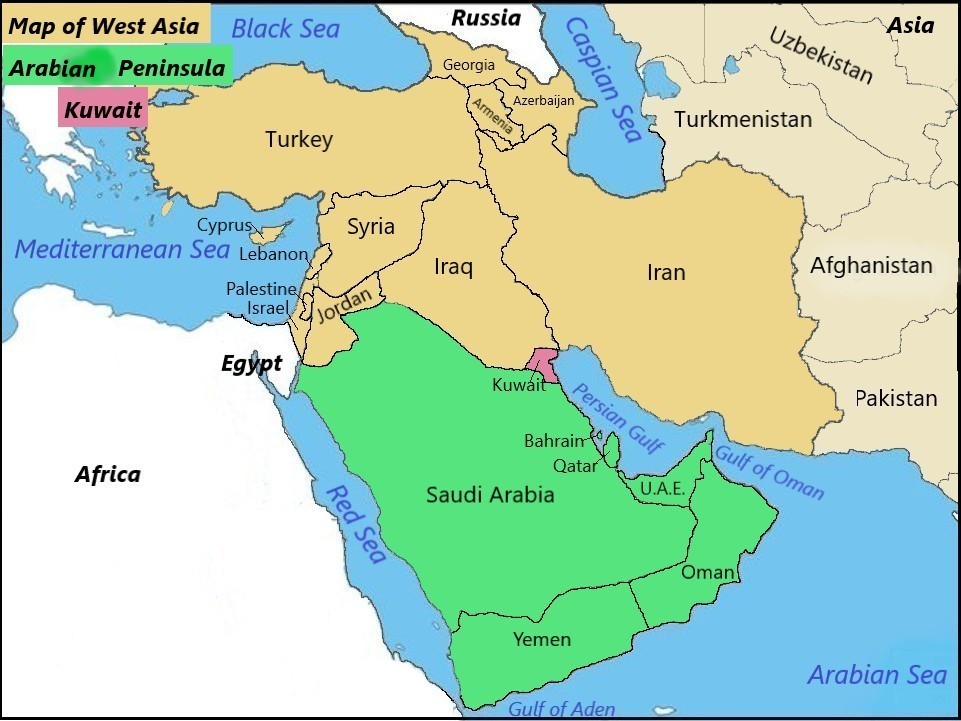
Kuwait is a sovereign emirate in West Asia, located on the Persian Gulf between Iraq and Saudi Arabia. Its capital is Kuwait City. The country blends modern infrastructure with traditional Arab culture, and its economy is dominated by the oil industry.
A Few Wonders of Kuwait
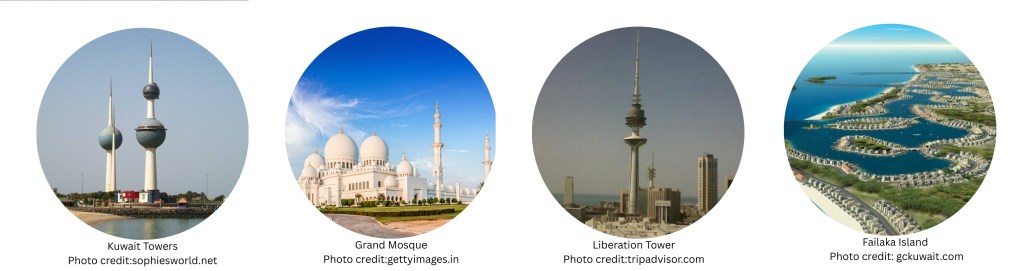
1. Kuwait Towers: The Kuwait Towers are iconic symbols of Kuwait. These three slender towers, standing tall in the Arabian Gulf, offer breathtaking views of the city and sea. The main tower’s rotating restaurant is a must-visit for a unique dining experience.
2. Grand Mosque: The Grand Mosque in Kuwait is a stunning example of Islamic architecture. With its vast prayer halls, intricate designs, and beautiful gardens, it’s a must-visit for anyone interested in culture and spirituality. The mosque is open to non-Muslims for guided tours.
3. Liberation Tower: The Liberation Tower is a 372-meter-tall skyscraper in Kuwait City. It’s one of the tallest buildings in the country and offers panoramic views of the city. The tower’s design is inspired by traditional Kuwaiti architecture, making it a unique landmark.
4. Failaka Island: The Failaka Island, is located off Kuwait’s coast, is steeped in history. With ancient ruins, beautiful beaches, and a relaxed vibe, it’s a great spot for a day trip or picnic. Explore the island’s archaeological sites and enjoy the serene atmosphere.
People of Kuwait

Kuwaitis are known for their hospitality and strong cultural roots. The population is a mix of locals and expats, with Kuwaitis being proud of their heritage and traditions. You’ll find them valuing family ties, traditional coffee (gahwa), and customs like diwaniya gatherings.
Traditional Dress of Kuwait
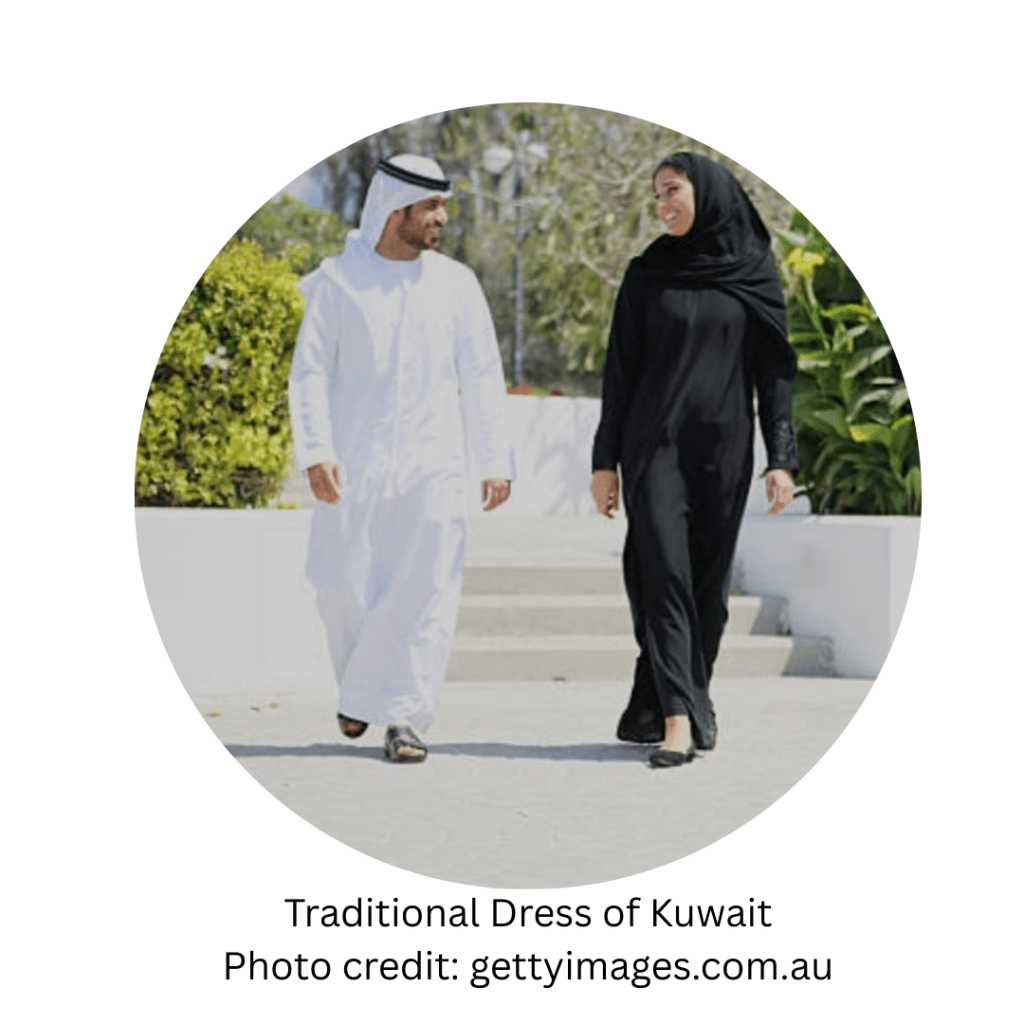
The traditional dress for Kuwaiti men is a “dishdasha” (or thobe), usually white. Women wear a “abaya” with a “hijab” or “shayla” (headscarf). These outfits reflect Kuwait’s cultural heritage and are often worn on formal occasions, blending tradition with elegance.
Pulses and Recipes
Kuwait’s pulse cultivation is limited due to its arid climate and water scarcity. However, the country has been promoting sustainable agriculture and food security initiatives, including vertical farming and protected agriculture.
They import pulses like chickpeas and lentils in spite of localdespite to local cultivation.
Kuwaiti cuisine loves pulses like lentils, chickpeas, and fava beans, starring in dishes like rice, soups, stews, and salads. Mumawwash is a favourite – a comforting one-pot wonder with rice and green mung beans. It’s a Kuwaiti home-cooking staple, all about aromatic spices and that special dried black lime flavour.
We are cooking Mumawwash today. Mung bean and rice.
Mumawwash (Kuwaity Mung Bean Rice)
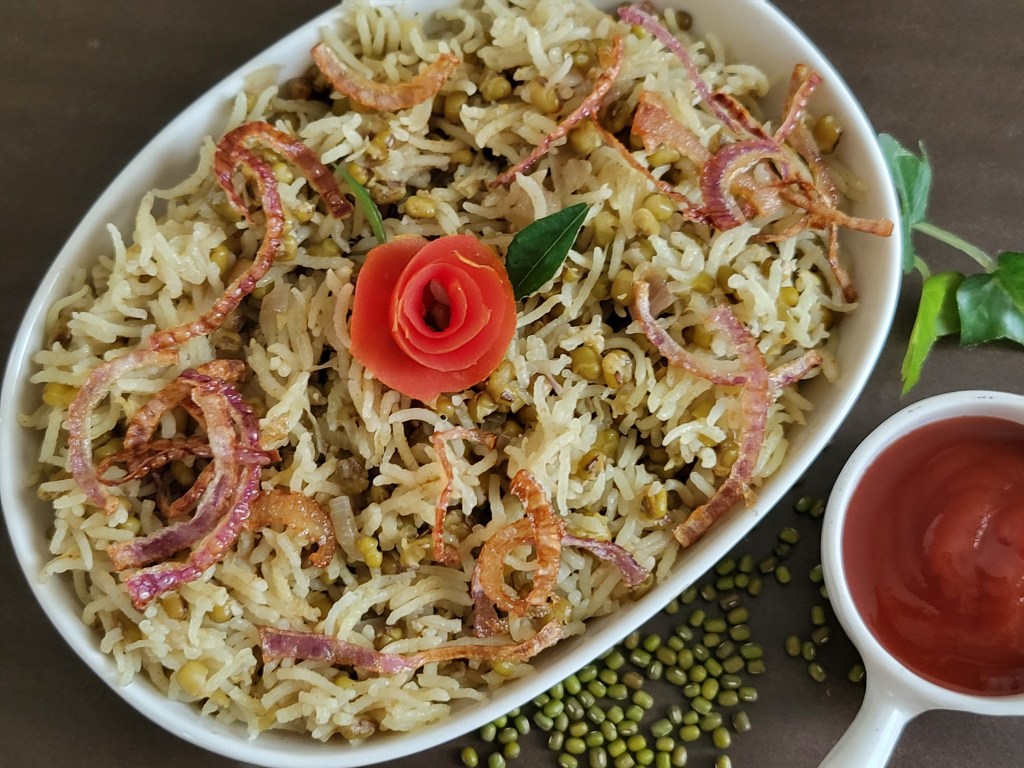
Mumawwash is a flavorful Kuwaiti dish made with mung beans and rice, cooked with aromatic spices like turmeric, cumin, Looni and Baharat spice, and a tangy tomato sauce. The combination of tender mung beans and fluffy rice is a wonderful match.
You need:
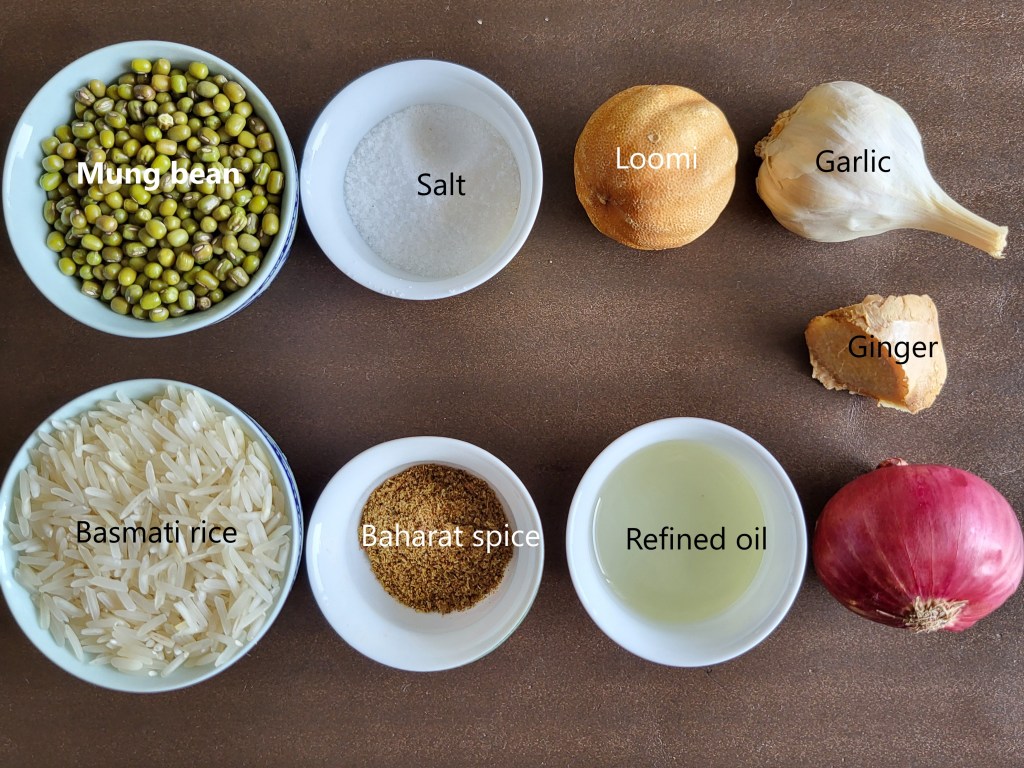
50 gm mung bean
100 gm basmati rice
1 medium size onion
1 tsp grated garlic
1 tsp grated ginger
1 Loomi
2 tsp of Baharat spice
1 tbsp refined oil
Salt to taste
Method:
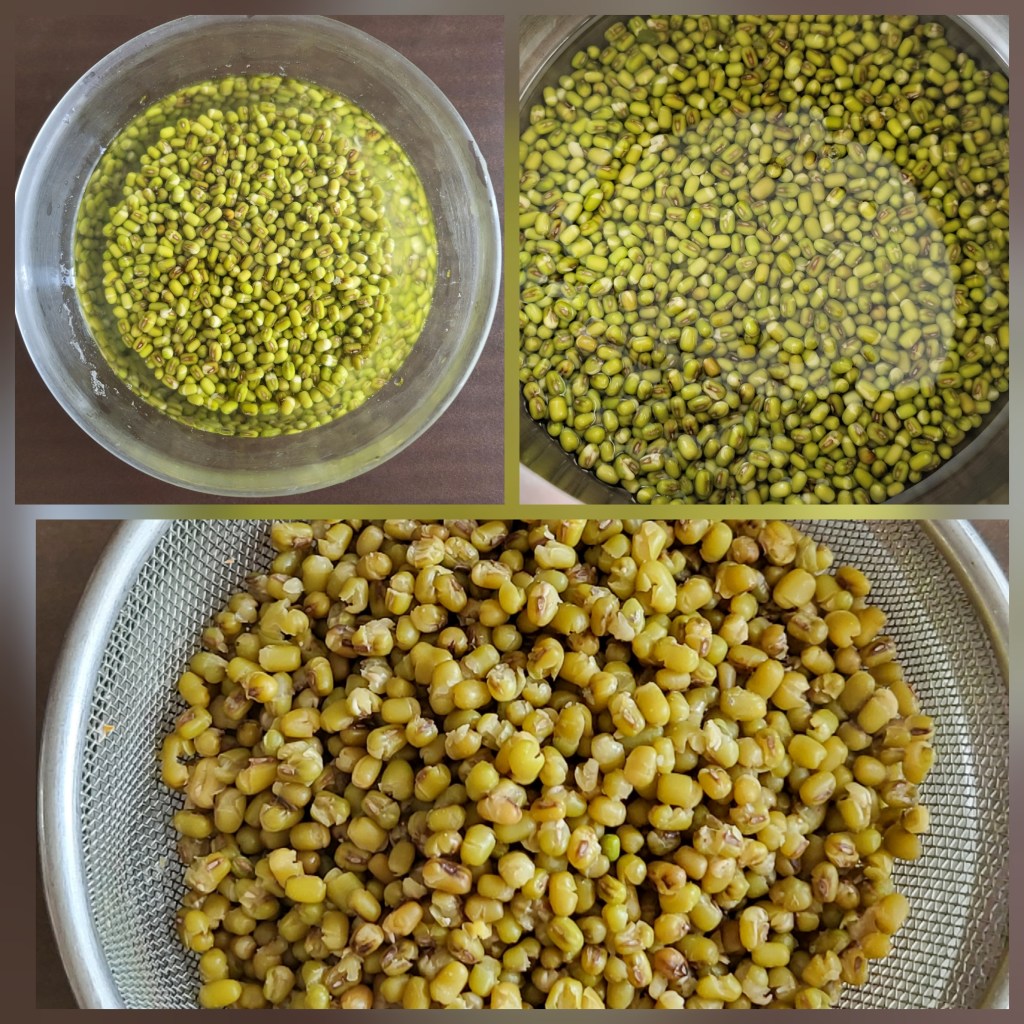
- Prep the mung bean by soaking it overnight, then rinse and drain.
- Pressure cook the soaked beans with just enough water to cover the bean, add ¼ tsp salt, and switch off the heat at the first whistle.
- Let the cooker cool down naturally, then drain and set the mung bean aside.
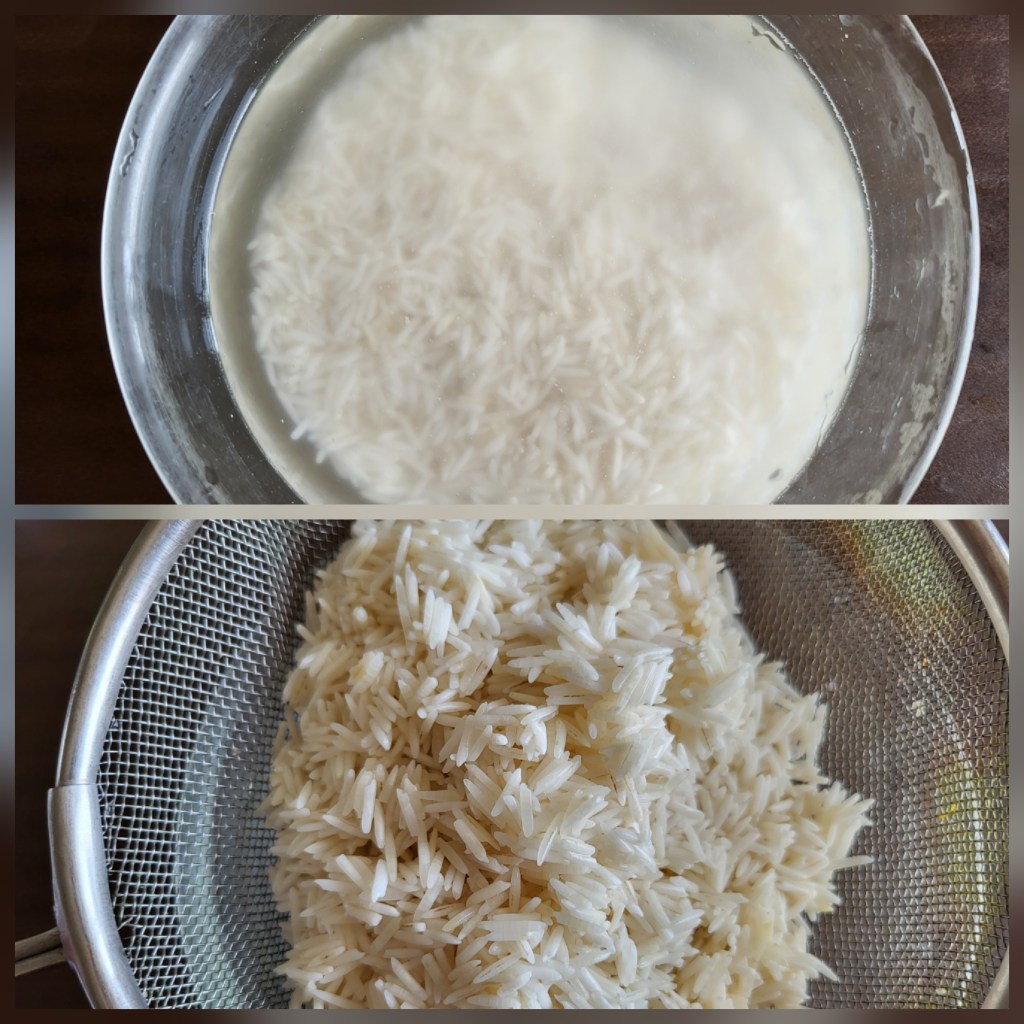
4. Rinse the rice, soak it for 30 minutes, drain it and set aside.
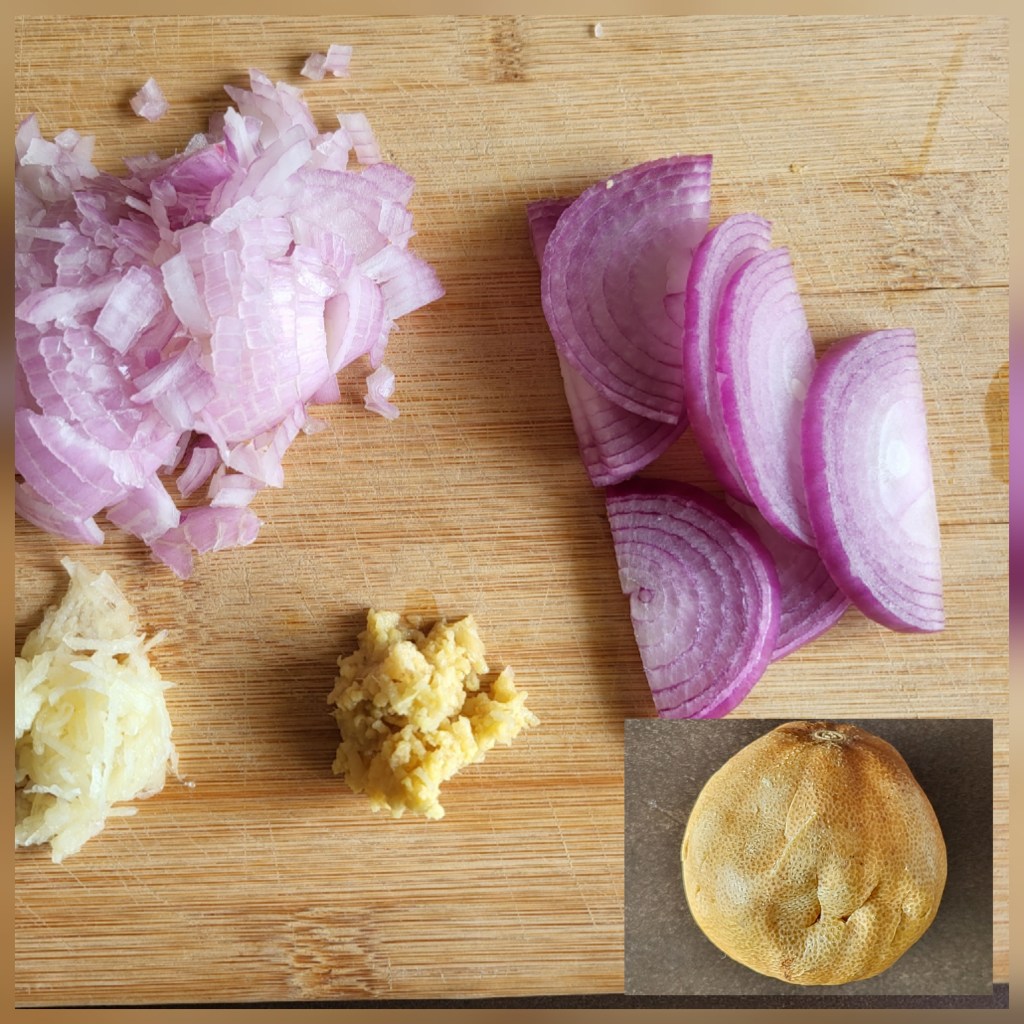
5. Finely chop one onion and slice the other for garnish.
6. Grate garlic and ginger separately, keeping them ready.
7. Prep the Loomi: Pierce the dried lime (loomi) all over with a fork. This helps release its smoky, citrusy flavour as it cooks.
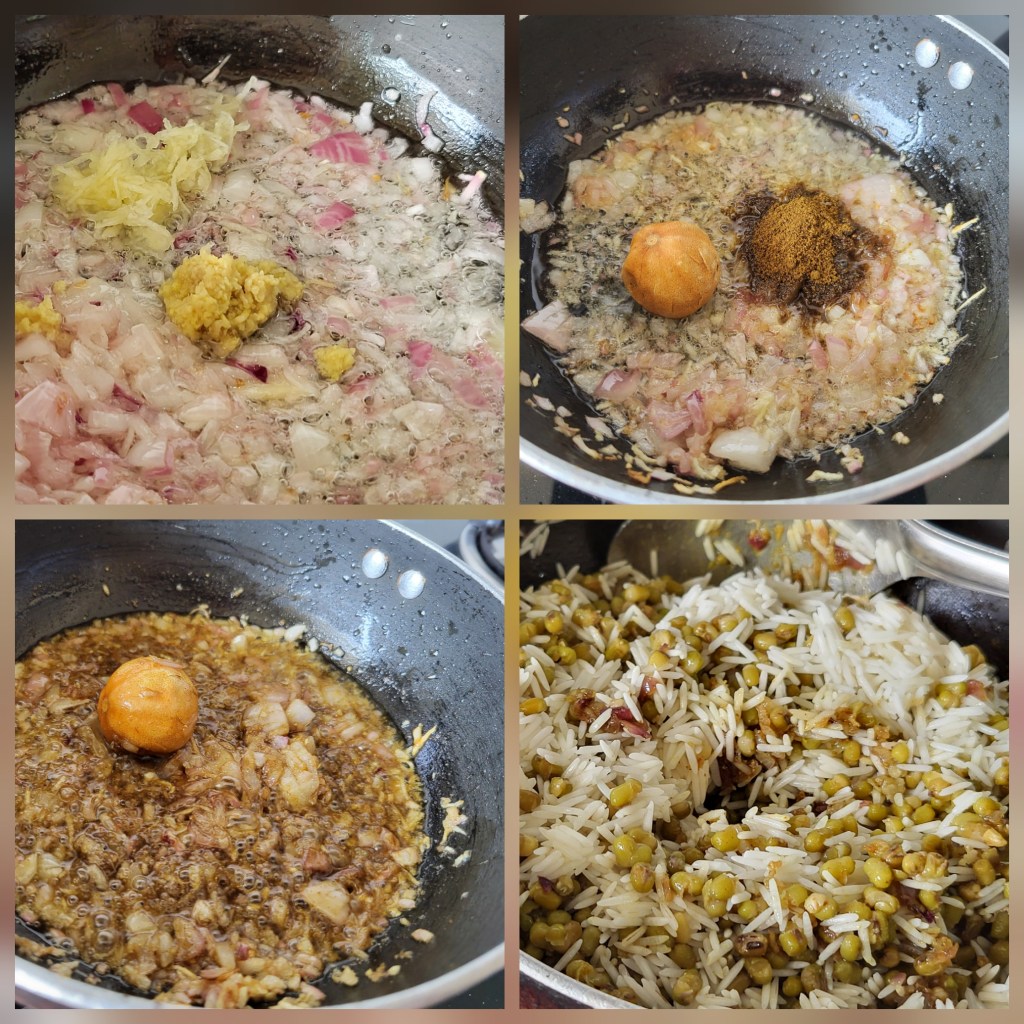
8. Heat oil in a heavy-bottomed pot over medium heat.
9. Add the chopped onions and sauté until brown and soft.
10. Stir in the grated garlic and ginger and cook until fragrant.
11. Add the Baharat spice and pierced loomi.
12. Toast the spices for 1 minute, stirring constantly, until warm and aromatic. This blooms the flavors.
13. Add the drained rice and cooked mung beans to the pot.
14. Gently fold everything together and sauté for 1–2 minutes, just until the grains are well coated in the spiced oil.
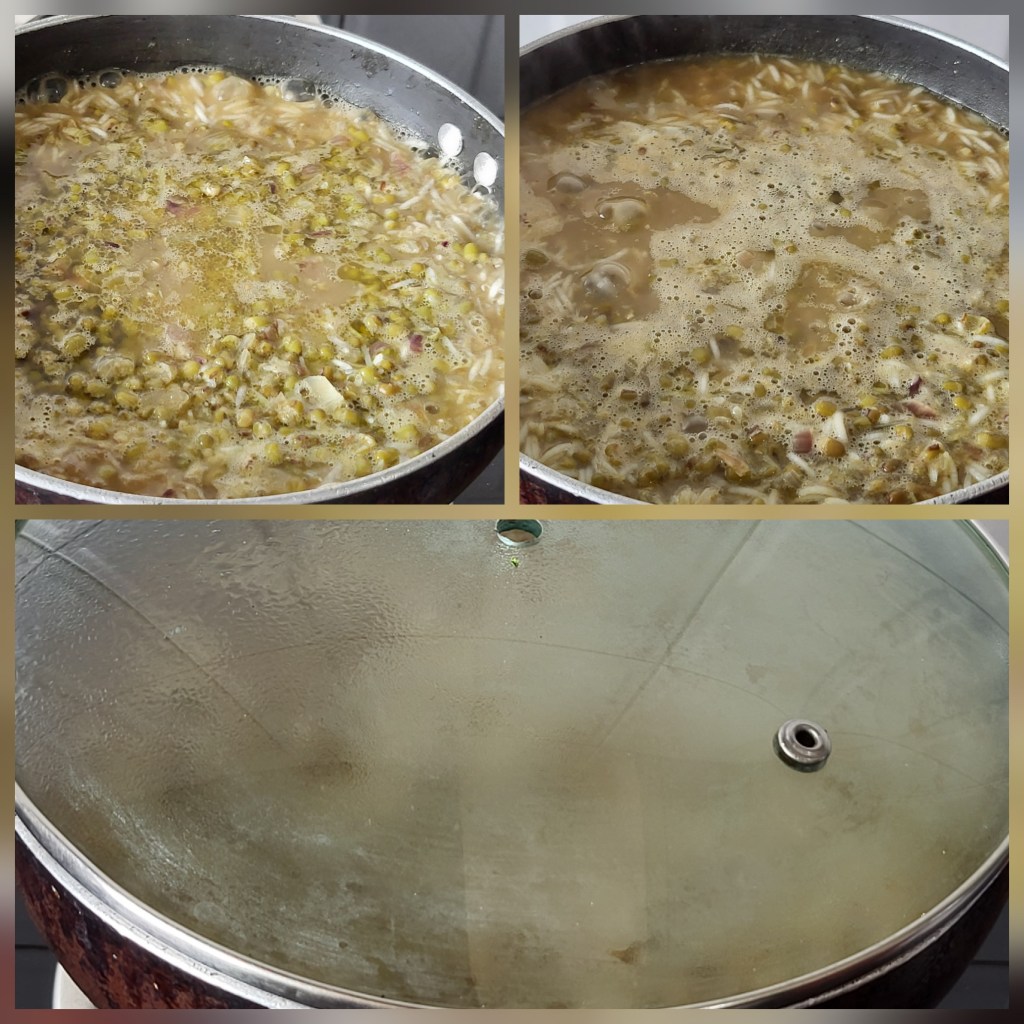
15. Add hot water to cover the rice-dal mix, adjust the salt and bring it to a boil.
16. Cover with a tight lid to trap the steam.
17. Cook on low heat for 20-25 minutes.
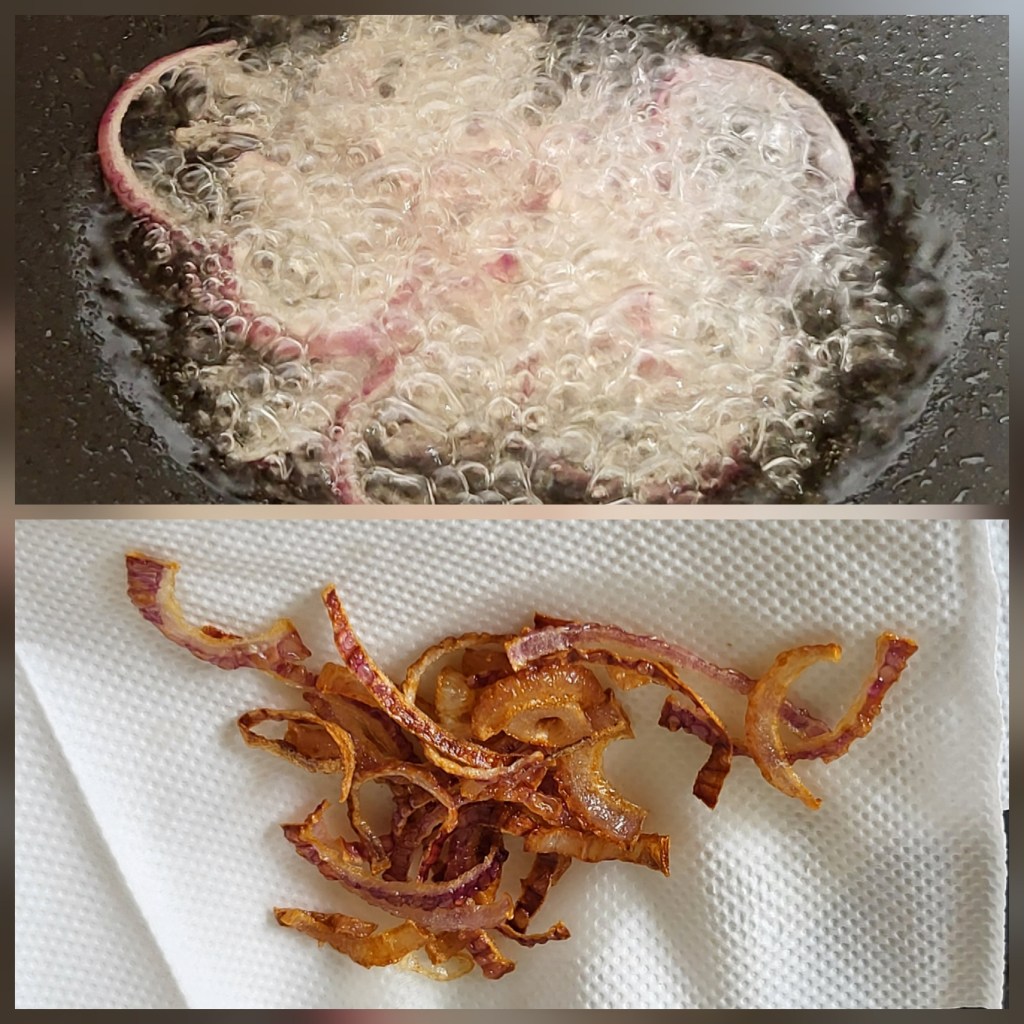
18. Fry the sliced onion till golden brown and set it aside for garnish
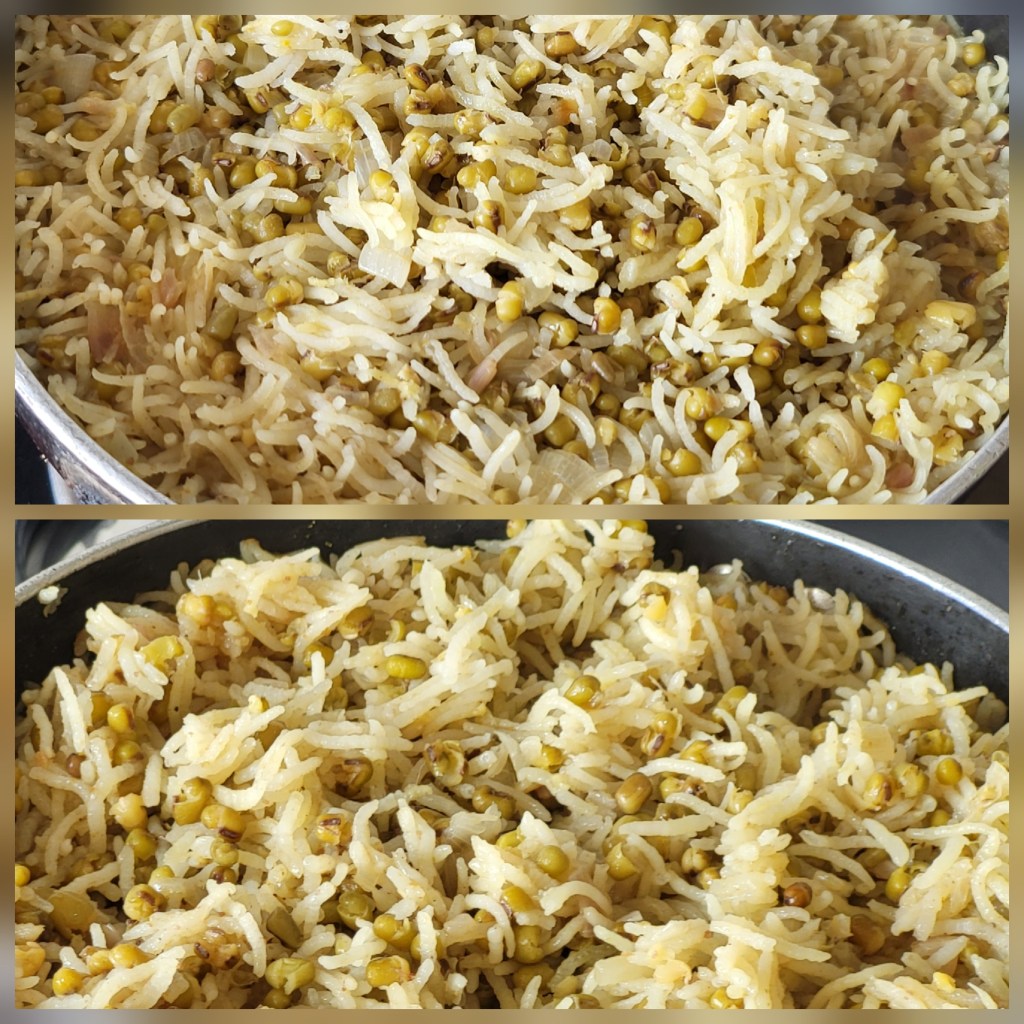
19. Once the rice is cooked, remove the lid and check. If it needs a bit more time, add a splash of water and cook for another 5 minutes.
20. Switch off the heat, let it sit covered for a while, then fluff the rice gently with a fork.
Your Mumawwash is ready! Serve hot with Dagoos, the traditional Kuwaiti tomato sauce.
Happy reading, healthy cooking!
Coming up next… Pulses from Oman Cuisine
*****.


Writing this blog must have got you nostalgic! 😊
LikeLiked by 1 person
You’re absolutely right, Meeta. Four years there, and every line brought back a memory – the sea breeze, the call to prayer at sunset, the smell of spices in Salmiya. Writing it felt like going home for a bit. So glad it came through. Thank you for reading!
LikeLiked by 1 person
Yeah this must be very nostalgic! For us Kuwait meant gifts from Missy Jethai. The food looks interesting too. 😍😍👌🏻👌🏻
LikeLiked by 1 person
We lived there 4 years, so I finally learned to make one dish! Hope you try it, Kumi.Thank you for the love!
LikeLiked by 1 person
Such a lovely blog! Enjoyed it & I am definitely trying it😍
LikeLike
Thank you Trina! Hope you love making it as much as I loved sharing it. Tag me if you try – I’d love to see!
LikeLiked by 1 person
This was a fascinating read! The blend of flavors and the simplicity of Mumawwash make it a dish worth trying.
LikeLike
Thank you Protima! Always so encouraging to hear from you. Try it out. It is great!
LikeLike