
Georgia: Location and People
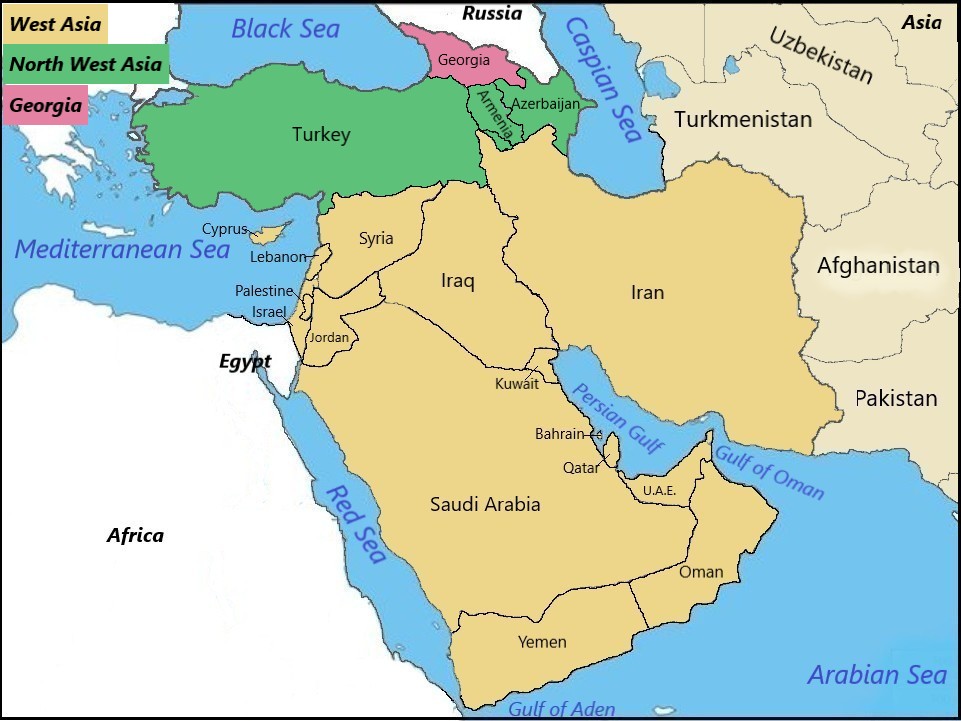
Georgia is a small country in the Caucasus region. Bordering Russia, Turkey, Armenia, and Azerbaijan, it has stunning mountains, ancient culture, and a mix of Soviet history and modern vibe. Tbilisi is its charming capital.
A Few Wonders of Georgia
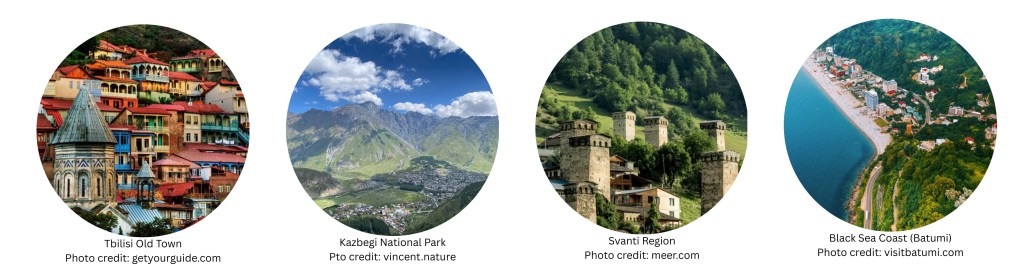
1. Tbilisi Old Town: Tbilisi’s Old Town is a charming maze of cobblestone streets. Explore historic buildings, sulfur baths, and vibrant markets like the Dry Bridge Flea Market. This area captures Georgia’s rich culture and history.
2. Kazbegi National Park: Kazbegi National Park is a nature lover’s dream. Hike to the stunning Gergeti Trinity Church perched on a hill, and take in views of Mount Kazbek. The park’s landscapes are breathtaking.
3. Svaneti Region: Svaneti is a remote, mountainous region with medieval charm. Explore ancient towers, hike to glacier lakes, and experience traditional Svan culture. This UNESCO site is off the beaten path.
4. Black Sea Coast (Batumi): Batumi, on the Black Sea, is a lively coastal city. Stroll along the promenade, visit the Batumi Botanical Garden, and enjoy the city’s mix of modern and historic charm.
People of Georgia
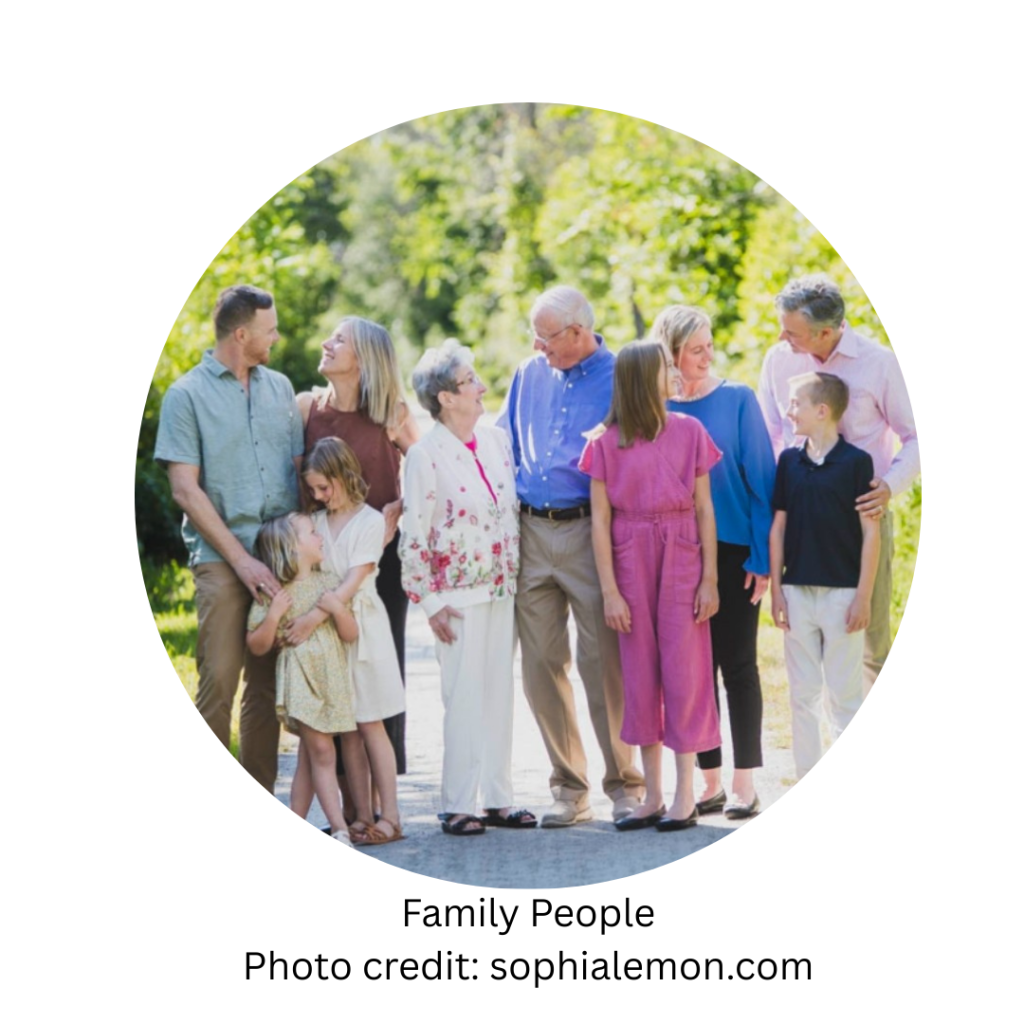
Georgians are known for their warmth and hospitality. They’re proud of their culture, traditions, and history. Family and community ties are strong, and you’ll often experience their legendary generosity and love for feasts (supra) with wine and food. The country’s diverse landscapes have shaped unique regional identities, like the Svaneti highlanders.
Traditional Dress of Georgia
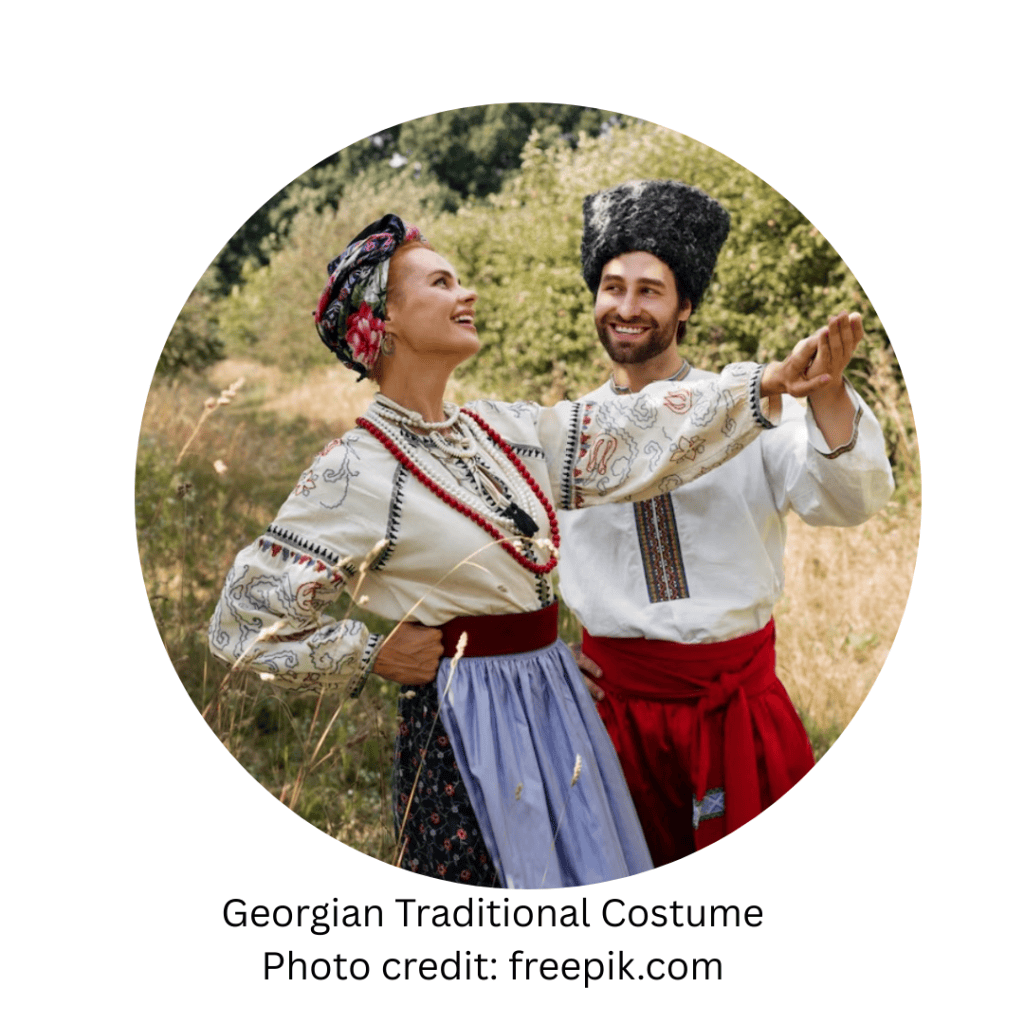
Traditional Georgian dress is vibrant and ornate. Men wear the “kakhian lekhi” (tunic) and “chokha” (wooded coat with cartridge holders), often with a “khimshia” belt. Women wear intricately embroidered “kartuli kaba” dresses with headscarves. These outfits highlight Georgia’s rich cultural heritage and regional diversity.
Pulses and Recipes
In Georgia, pulses like beans and lentils are cultivated, particularly in the country’s fertile valleys. They’re used in traditional dishes like lobio (bean stew). While not a major crop, pulses contribute to Georgia’s sustainable agriculture and local food traditions.
In Georgia, “lobio” usually refers to a dish made with kidney beans. The traditional Georgian stew is often made with red kidney beans, onions, garlic, and spices.
We’re cooking Lobio Nigozit today, Georgia’s national dish! It’s a hearty, thick soup packed with beans, onions, walnuts, and blue fenugreek.
Blue fenugreek, also known as “utskho suneli” in Georgian, is a spice made from the dried flowers of a specific type of fenugreek plant. It’s got a unique flavor and aroma, nutty and earthy. Used a lot in Georgian cuisine!
Substitutions:
If you can’t find blue fenugreek, you can substitute it with Kasuri methi mixed with a little ground coriander or cumin. For red wine vinegar, you can use lemon juice, as I have done here. It won’t be exactly the same, but it will give a similar depth of flavour.
Today we will cook Lobio with nut. It is very easy cook the beans and mash it up like mash potato but the bean texture should be there.
Lobio with nuts (Red kidney beans with walnut)
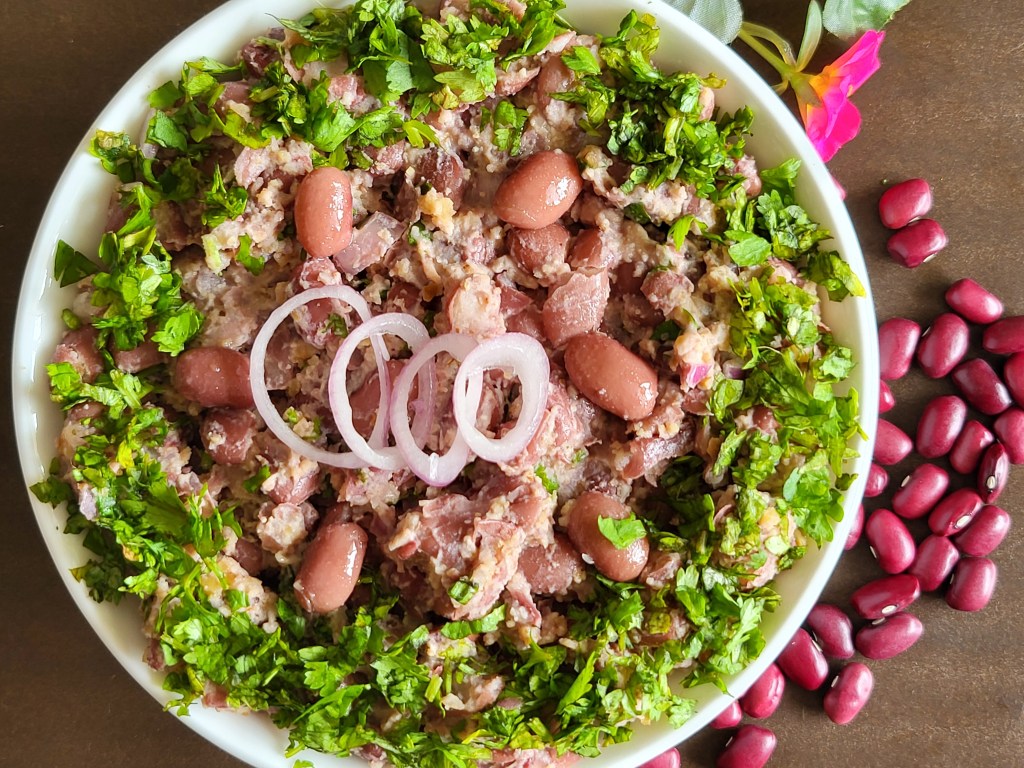
Lobio with walnuts, garnished with fresh coriander and onion rings. Rustic, hearty, and delicious. Served warm or cold.
You need:
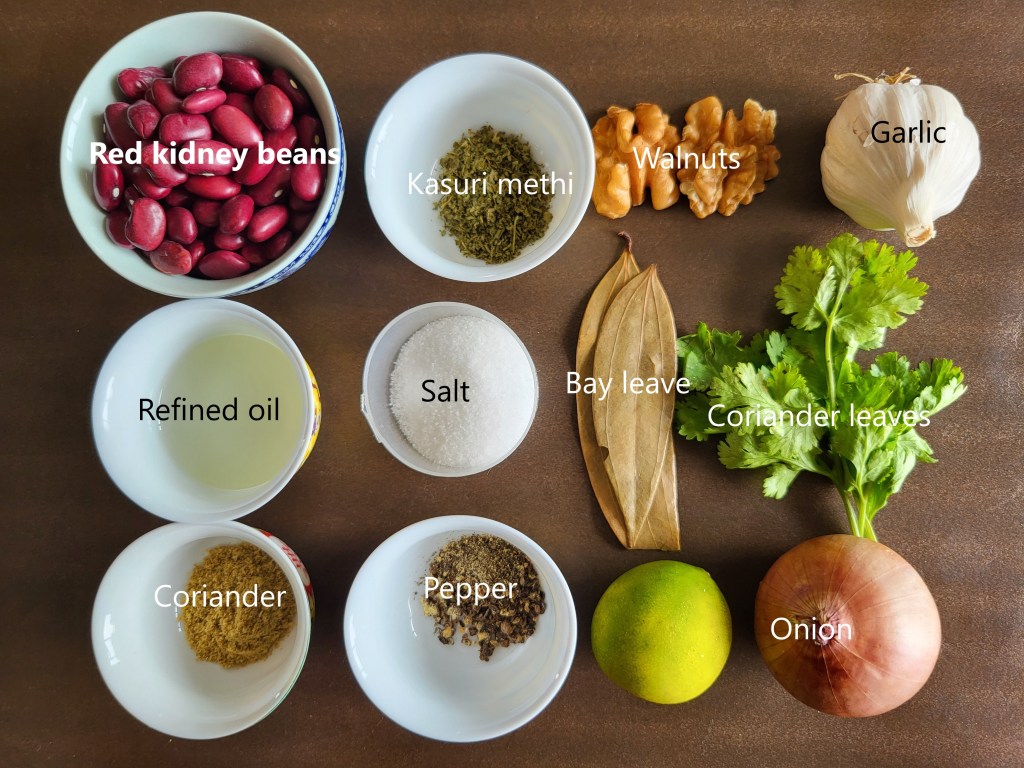
200 gm dried red kidney beans
1 medium onion,
1 tsp grated garlic,
1/2 cup walnuts,
¼ tsp Kasuri methi (substitute for blue fenugreek)
2 tbsp of finely chopped coriander
Salt and pepper to taste
1 tbsp lemon juice (substituted for red wine vinegar)
1 tbsp oil
Method:
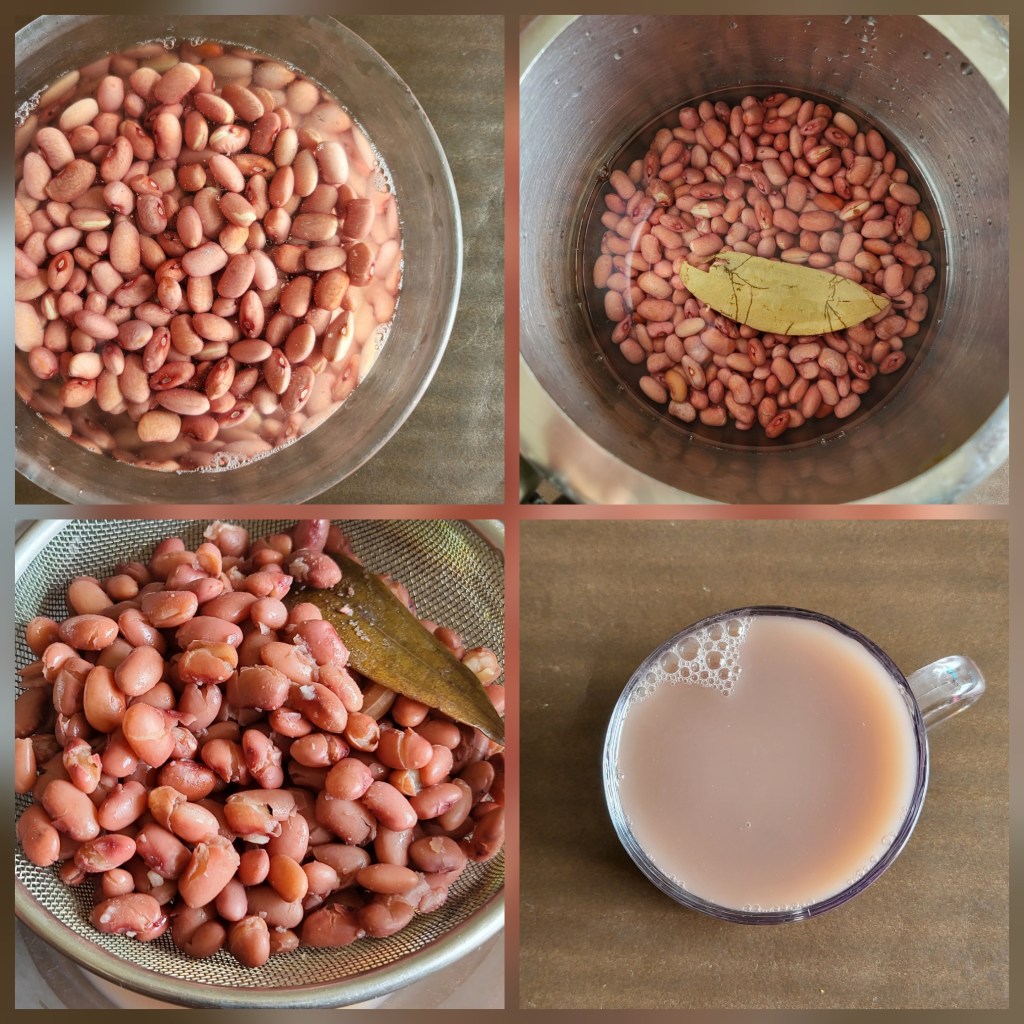
- Wash and soak the red kidney beans for about 12 hours.
- Rinse and cook them with bay leaves, ½ tsp salt, and just enough water to cover the beans.
- If using a pressure cooker, after the first whistle, lower the heat to the minimum and simmer for 3 minutes. Switch off the heat and let it cool down on its own.
- Strain the beans, save the cooking liquid, and discard the bay leaves.
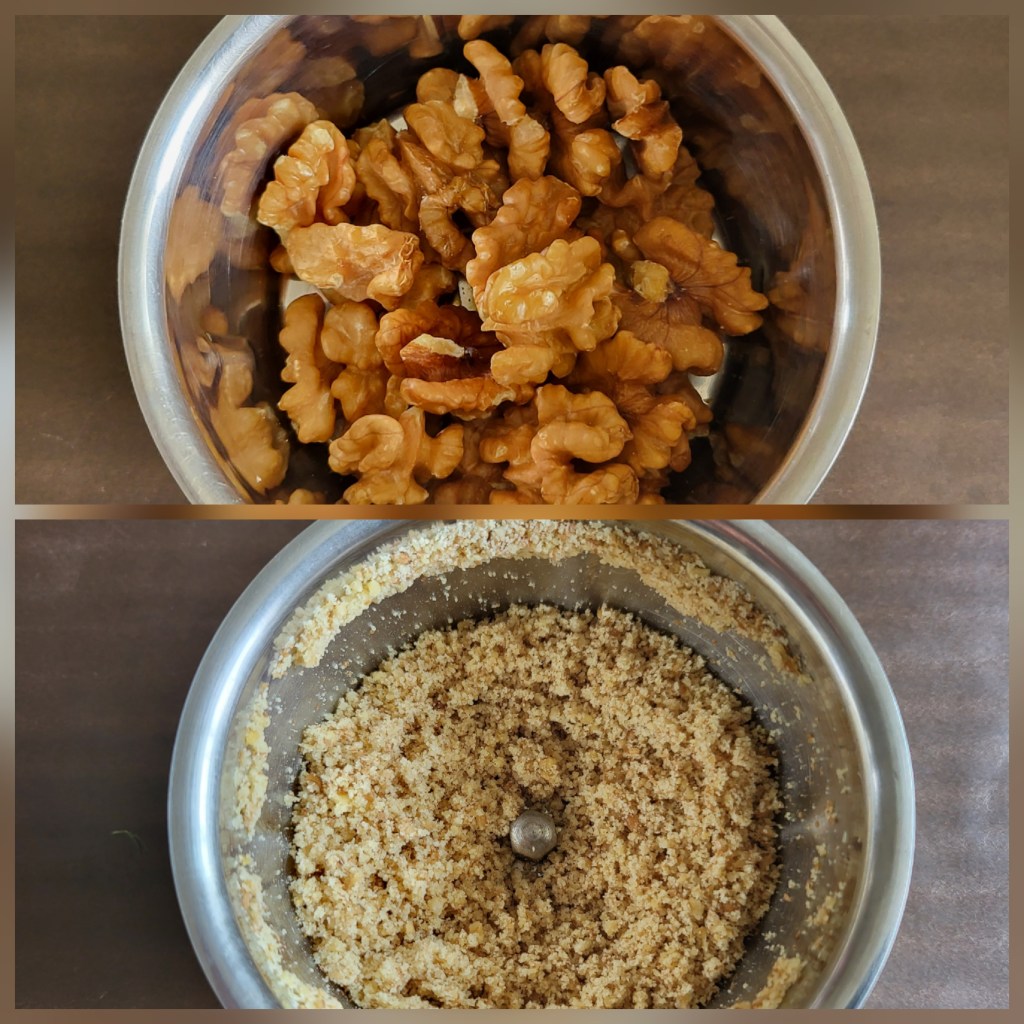
5. In the meantime, grind the walnuts.
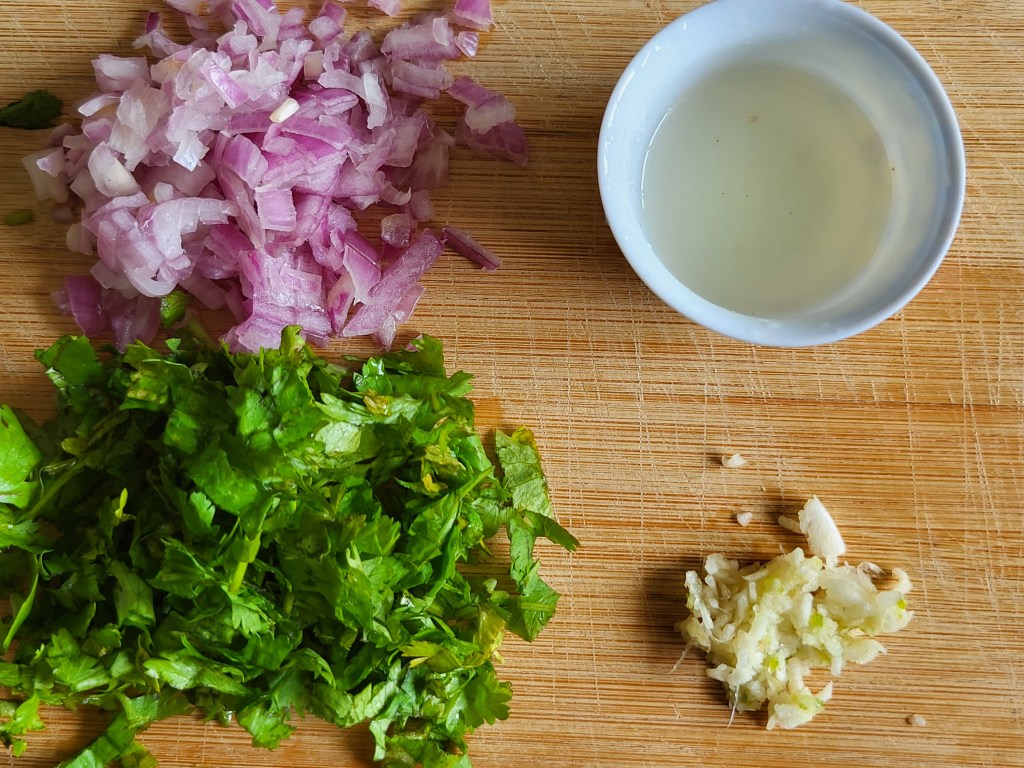
6. Finely chop the onion and coriander leaves.
7. Grate the garlic and squeeze the juice from the lemon.
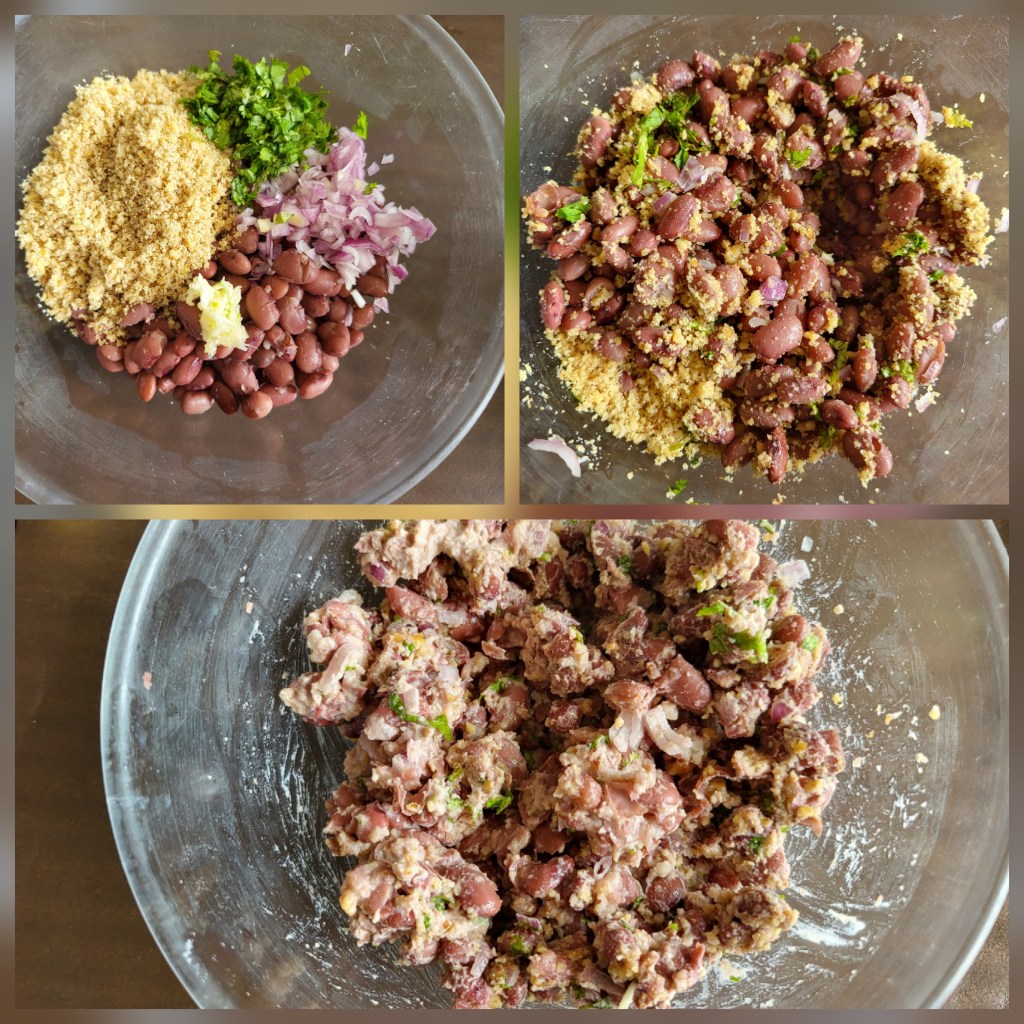
8. In a large bowl, add the cooked beans, ground walnuts, onion, garlic, half of the chopped coriander, pepper, kasuri methi powder, coriander powder, lemon juice, 1 tablespoon of oil, and 1 tablespoon of the reserved bean cooking liquid.
9.Mix well. You may crush a few beans, but not all – some texture should remain, much like rustic mashed potatoes. You may use more liquid if required.
10. Adjust the salt to taste.
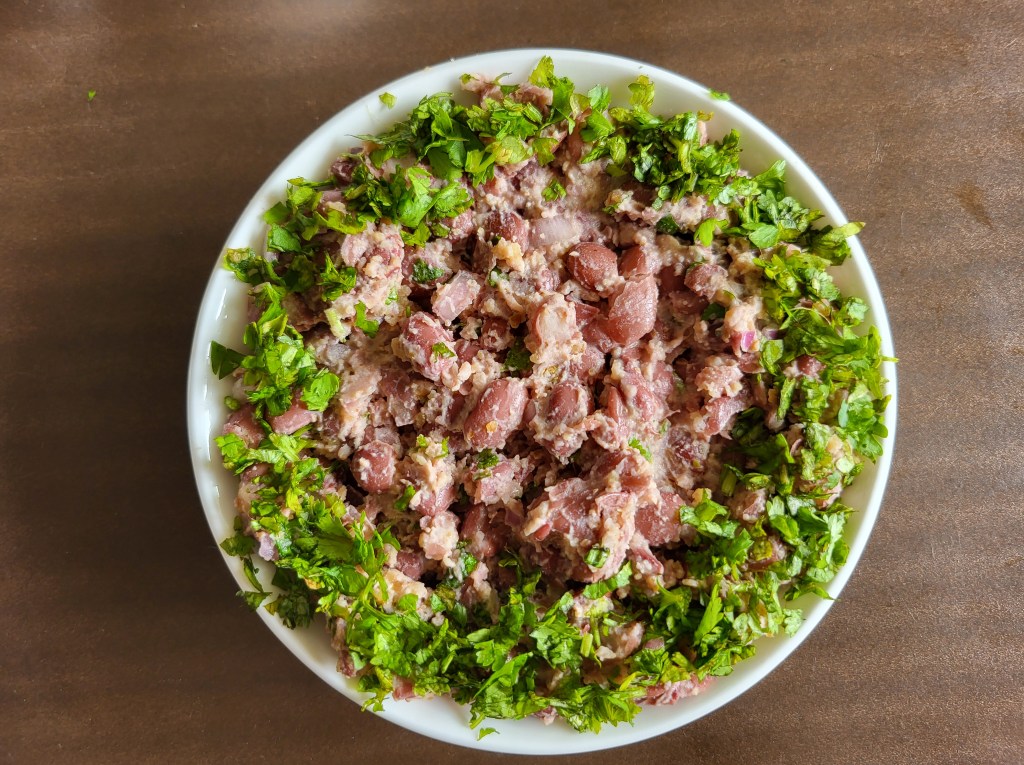
11. Garnish with the remaining coriander leaves. It can be eaten cold or warm. It is traditionally served with bread, and a local cornbread called Mchadi.
Happy reading, Healthy cooking!
Coming up next…. pulses in Turkish Cuisine.
******


Nice.
LikeLike