
Jordan: Location and People
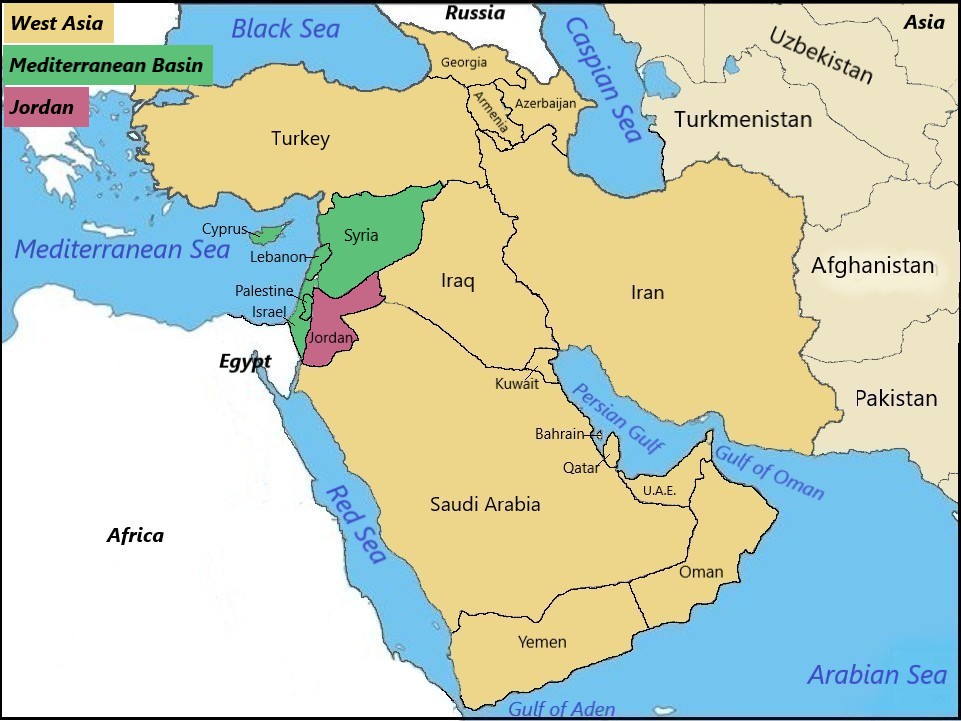
Officially known as the Hashemite Kingdom of Jordan, this Arab country sits in West Asia.
It’s part of the Southern Levant in the Mediterranean Basin, and is bordered by Saudi Arabia, Iraq, Syria, Israel, and Palestine.
A Few Wonders of Jordan
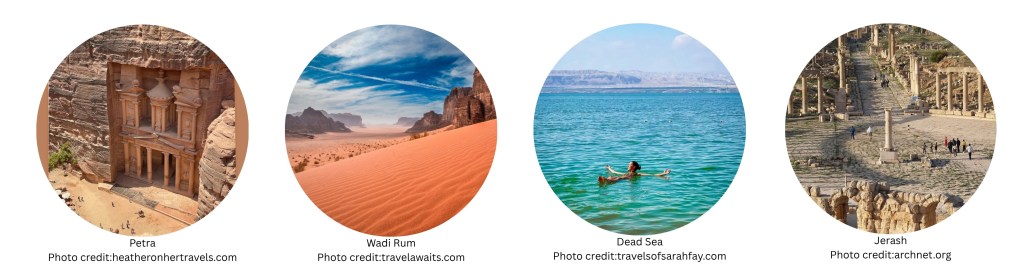
1. Petra: Petra, Jordan’s rose-red wonder, is an ancient Nabataean city carved into sandstone cliffs. Walk through the Siq, and you’ll be awestruck by Al-Khazneh’s grandeur. This UNESCO site is a must-visit – its history and beauty will leave you mesmerized.
2. Wadi Rum: Wadi Rum’s desert landscapes are straight out of a movie. Explore this protected area’s stunning rock formations, sand dunes, and ancient petroglyphs on a jeep tour or camel ride. You’ll feel like Lawrence of Arabia!
3. Dead Sea: The Dead Sea, Earth’s lowest point, is a natural wonder. Float effortlessly on its salty waters and cover yourself in mineral-rich mud. Don’t forget to gaze at the stunning views of the surrounding mountains – it’s a rejuvenating experience!
4. Jerash: Jerash, an ancient Roman city, boasts remarkably preserved ruins. Its colonnaded streets, theaters, and temples transport you back in time. Visit at sunrise for a magical experience – imagine life in this bustling Greco-Roman hub.
People of Jordan
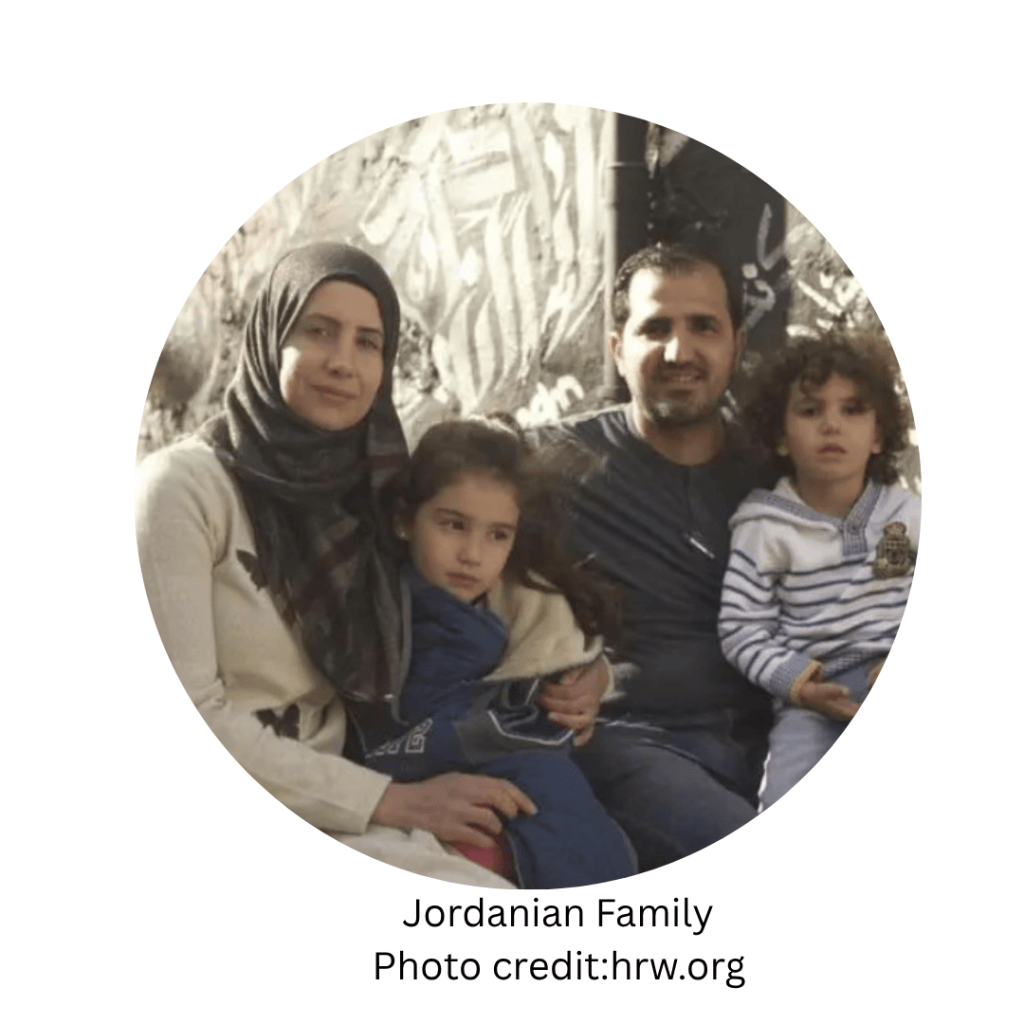
Jordanians are known for their warm hospitality and strong family ties. Their culture blends Bedouin heritage with modern Arab life, so respect for guests and tradition runs deep. Arabic is the main language, though many younger Jordanians speak English. Visitors often remember their generosity — an invitation for tea or a meal is never far away.
Traditional Dress of Jordan
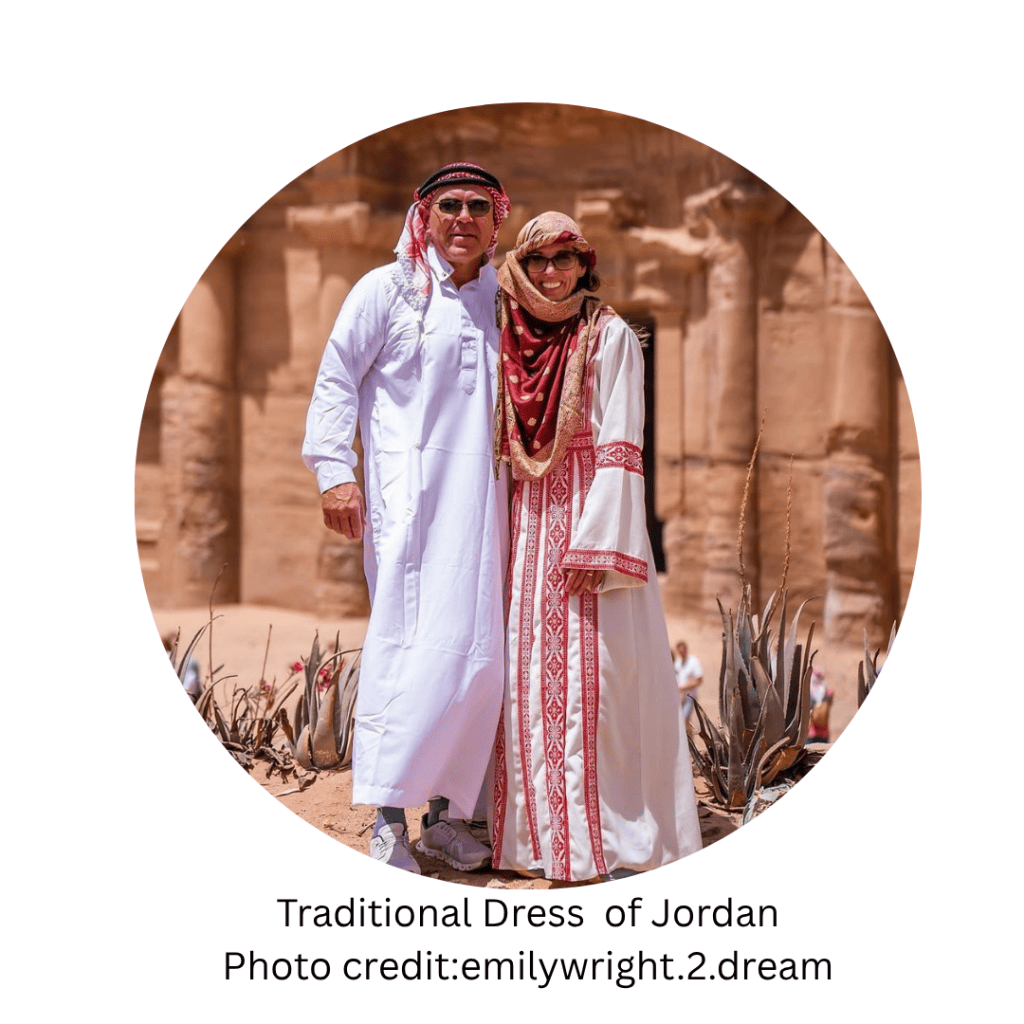
Traditional dress in Jordan reflects Bedouin heritage and regional identity. For men, the thobe — a long, ankle-length robe — is often worn with a red-and-white or black-and-white keffiyeh held by an agal cord. Women traditionally wear an embroidered thobe or madraga, with intricate hand-stitched patterns that show village or family origins. Colors and motifs vary by region, and the embroidery itself is a proud craft passed down generations.
While Western clothing is common in cities today, traditional dress is still worn for weddings, festivals, and national celebrations.
Pulses and Recipes
Pulses have long been part of traditional farming in Jordan, especially in rain-fed areas of the northern highlands and Jordan Valley. Lentils, chickpeas, and fava beans are the most common, grown as winter crops that rely on seasonal rainfall. They’re valued for fixing nitrogen in the soil and for being a staple protein in Jordanian diets. While production is small-scale compared to cereals, pulses remain important for crop rotation and rural food security. In recent years, water scarcity and urbanization have reduced cultivated area, but government programs still promote drought-tolerant varieties to support local farmers.
Jordanian cuisine features a variety of pulse-based dishes, frequently utilizing lentils, chickpeas, and fava beans as staple ingredients in soups, stews, and main course.
Rashoof is a beautiful, traditional Jordanian dish. In Jordan, Rashoof is winter and Ramadan food. It’s sour yogurt, lentils, and bulgur simmered low until it turns into something that warms you from the inside — humble pulses made rich with tang and lemon.
This is Rashoof, a traditional Jordanian yogurt and lentil stew. In Jordan it’s made with jameed and bulgur. In our kitchen we used curd and dalia because that’s what I have, but we cooked it with the same spirit – sour, simple, and meant to be shared.
Traditionally it’s made with jameed – dried yogurt balls. But in most home kitchens, people use plain curd and a squeeze of lemon, and it tastes just as soulful.
In some families it’s served in one big pot, everyone eats from it. Very much about sharing. It’s not about fancy ingredients. It’s about gathering around the same bowl and letting the sour, earthy broth feed both body and heart.
Today let’s cook a simple curd Rashoof the way it’s made in Jordanian homes.
Jordanian Rashoof with Curd
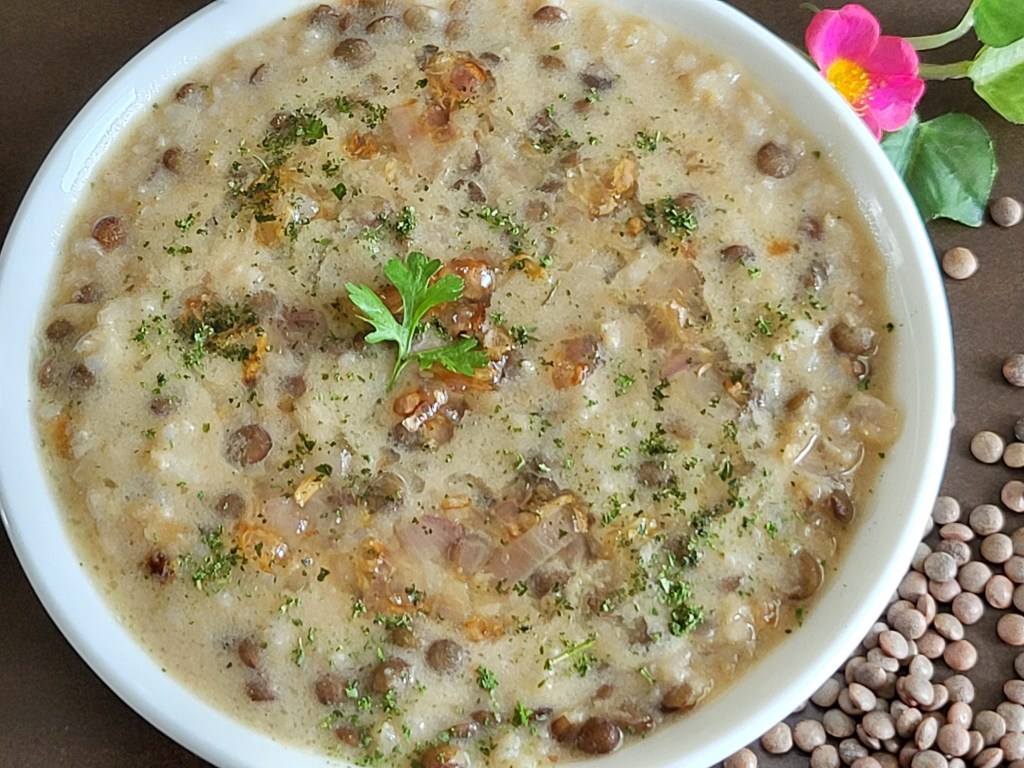
A hearty, creamy stew of brown lentils, rice, and dalia, finished with tangy yogurt and a golden mint-garlic tarka. Simple ingredients, big comfort. That minty, garlicky topping is what gives Rashoof its signature flavour.
You need:
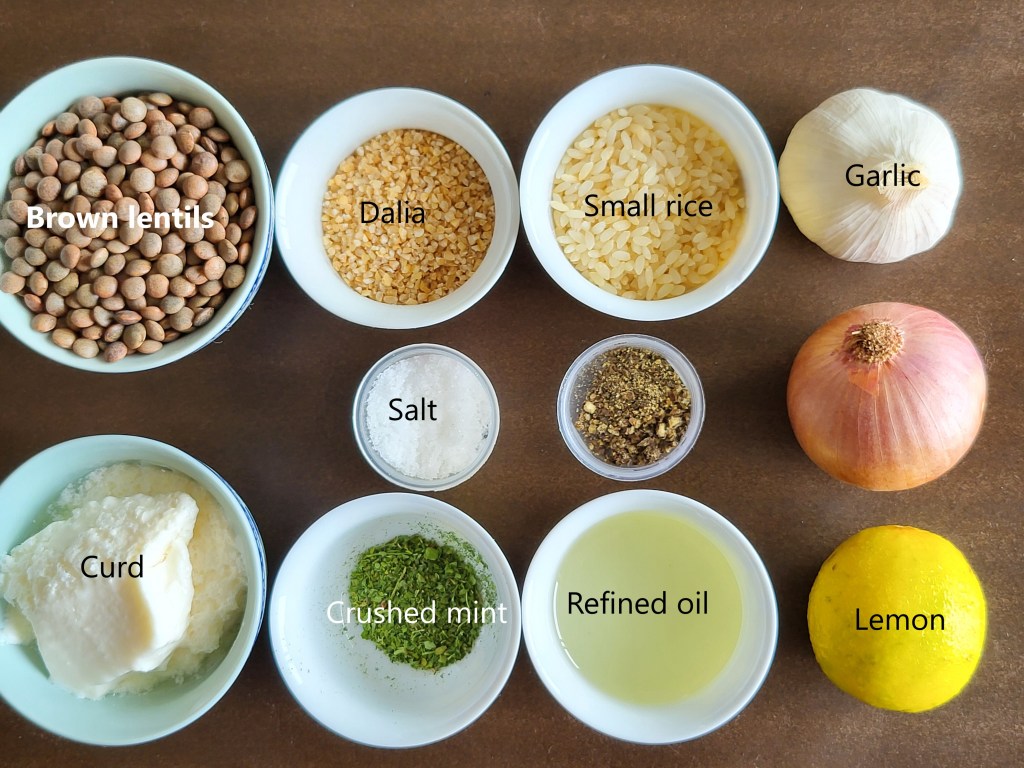
100 gm brown lentils
50 gm Coarse bulgur*/ (25 gm small rice + 25 gm dalia)
1 cup plain curd/yogurt/ jameed – dried yogurt balls
1 medium onion
1 tsp grated garlic,
1 tsp dried mint
2 tbsp Olive oil/refined oil
Salt and black pepper to taste
1 tbsp lemon juice (optional)
Method:
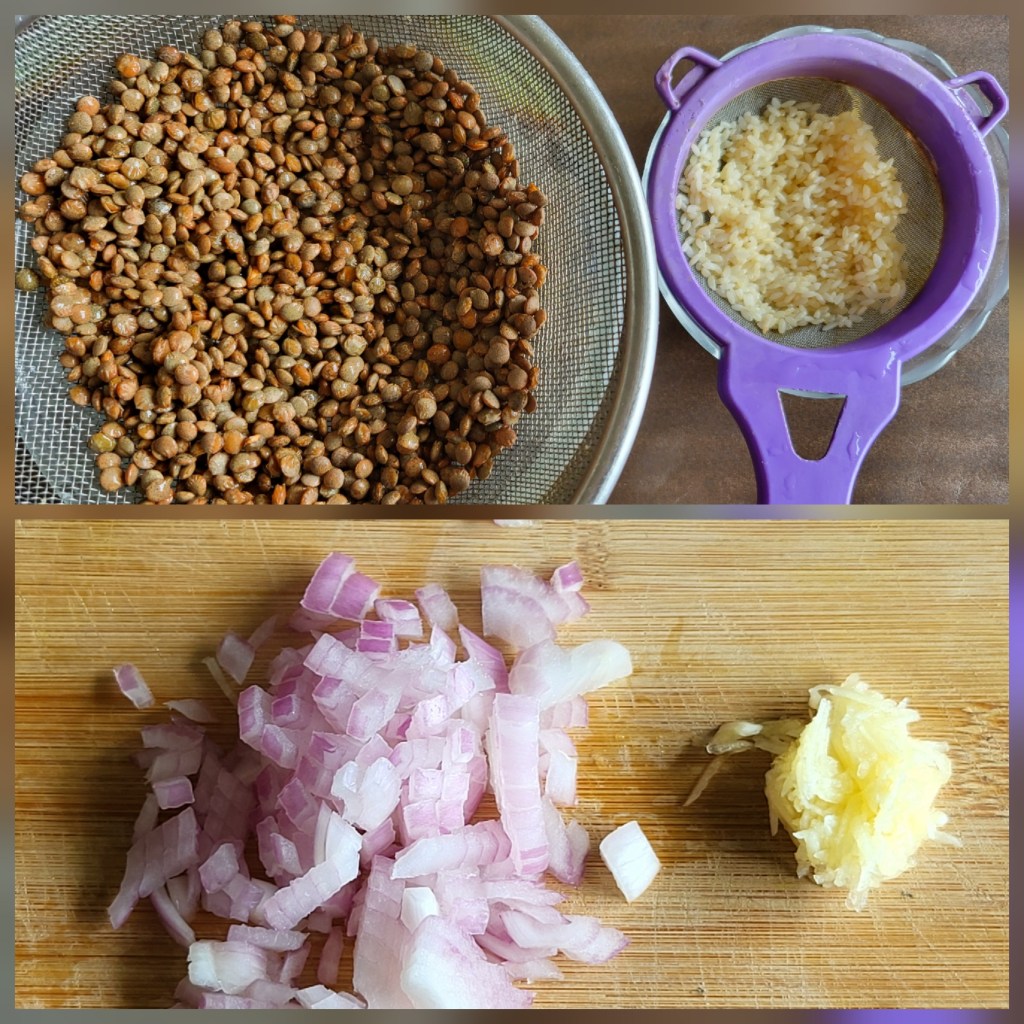
- Rinse the brown lentils and the rice separately under cold water, then drain well.
- Finely chop the onion. Grate the garlic.
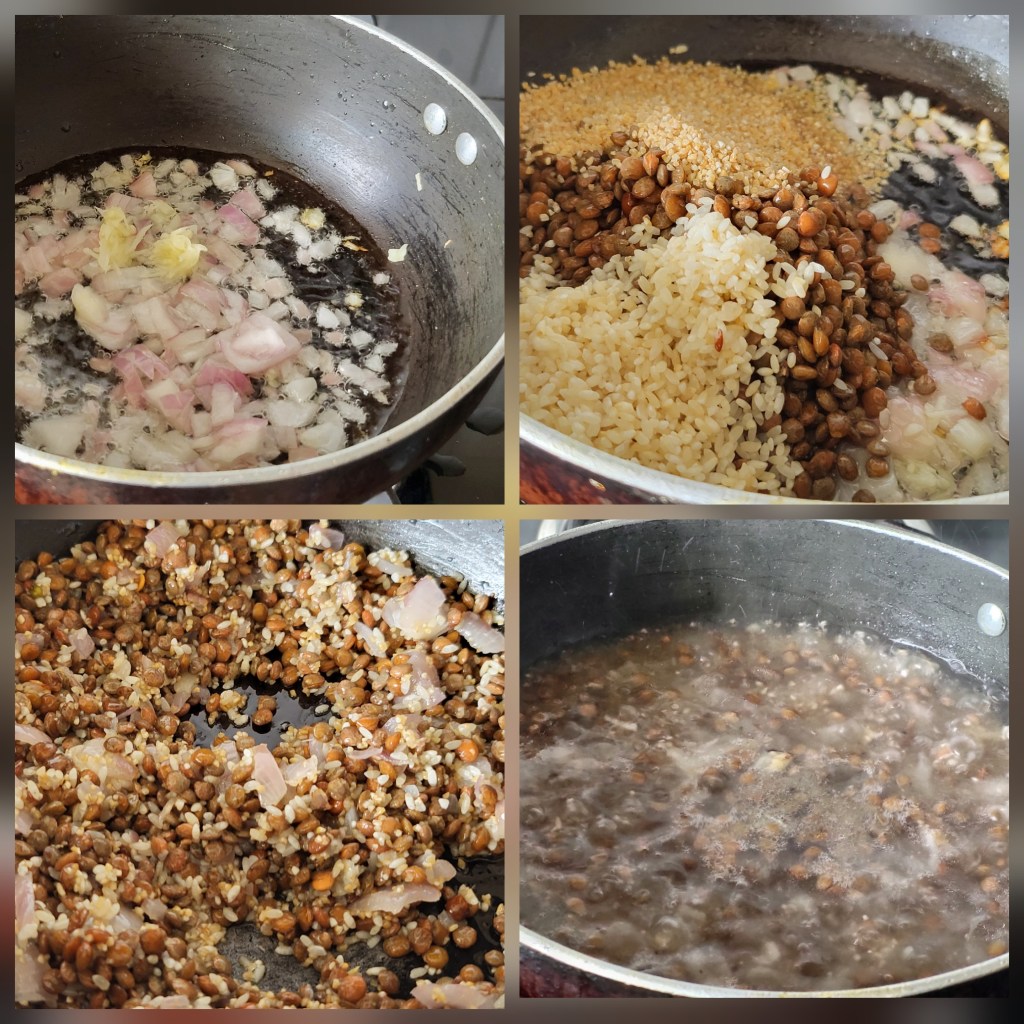
3. Heat 1 tbsp of oil in a pot over medium heat.
4. Add half of the chopped onion and grated garlic and sauté for 3-4 minutes until soft and fragrant.
5. Add the drained lentils, rice, and dalia to the pot. Stir and fry together for 2-3 minutes.
6. Season with salt and pepper. Pour in 2 cups of hot water and bring to a boil.
7. Reduce the heat, cover, and let it simmer until the lentils, rice, and dalia are tender.
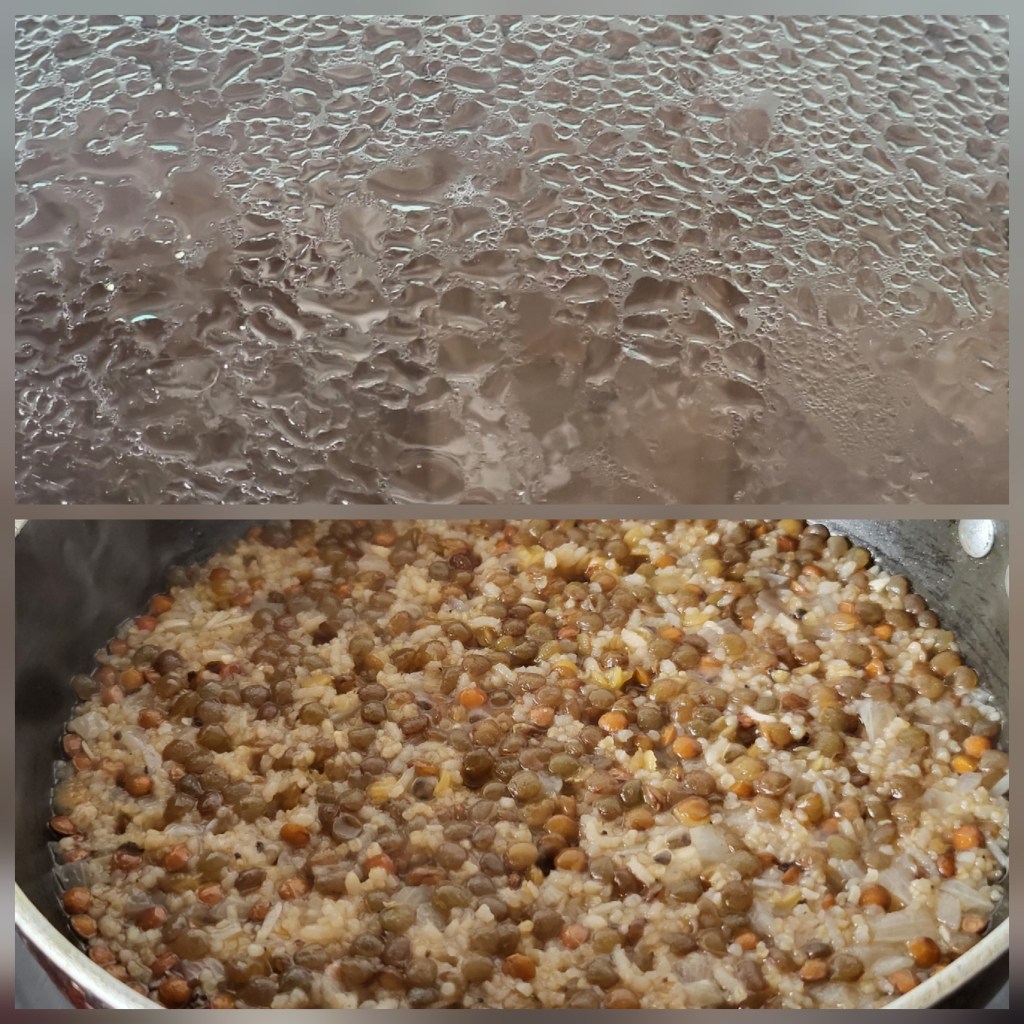
8. Lower the heat to the lowest setting.
9. Cover the pot with a tight-fitting lid and cook for 30-35 minutes.
10. Remove the lid and check if the lentils, rice, and dalia are tender. If they need more time, add a splash of hot water, cover again, and cook for a few more minutes until everything is soft and cooked through.
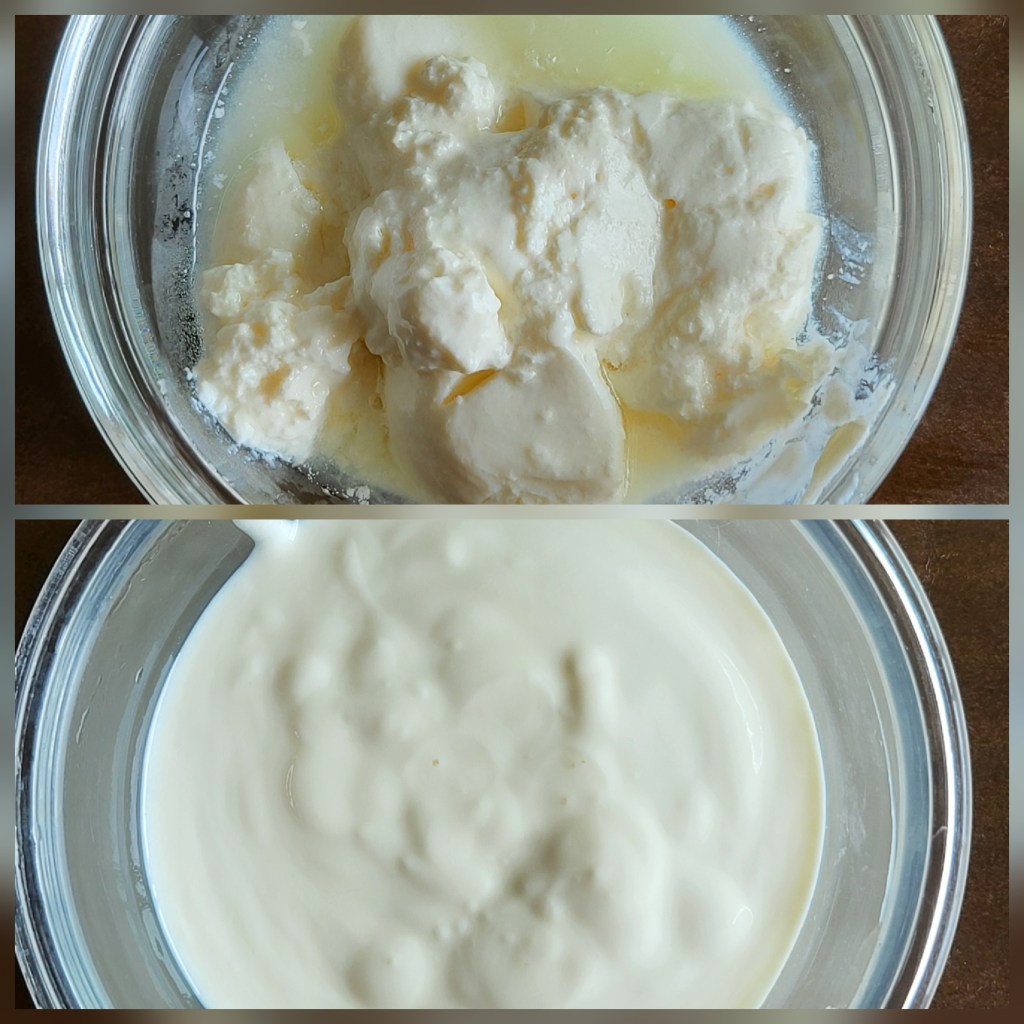
11. Take the curd/yogurt out of the fridge and let it come to room temperature.
12. Whisk it well until smooth with no lumps. Stir in ½ cup of room temperature water.
Optional: For an extra silky texture, strain the beaten yogurt through a fine sieve.
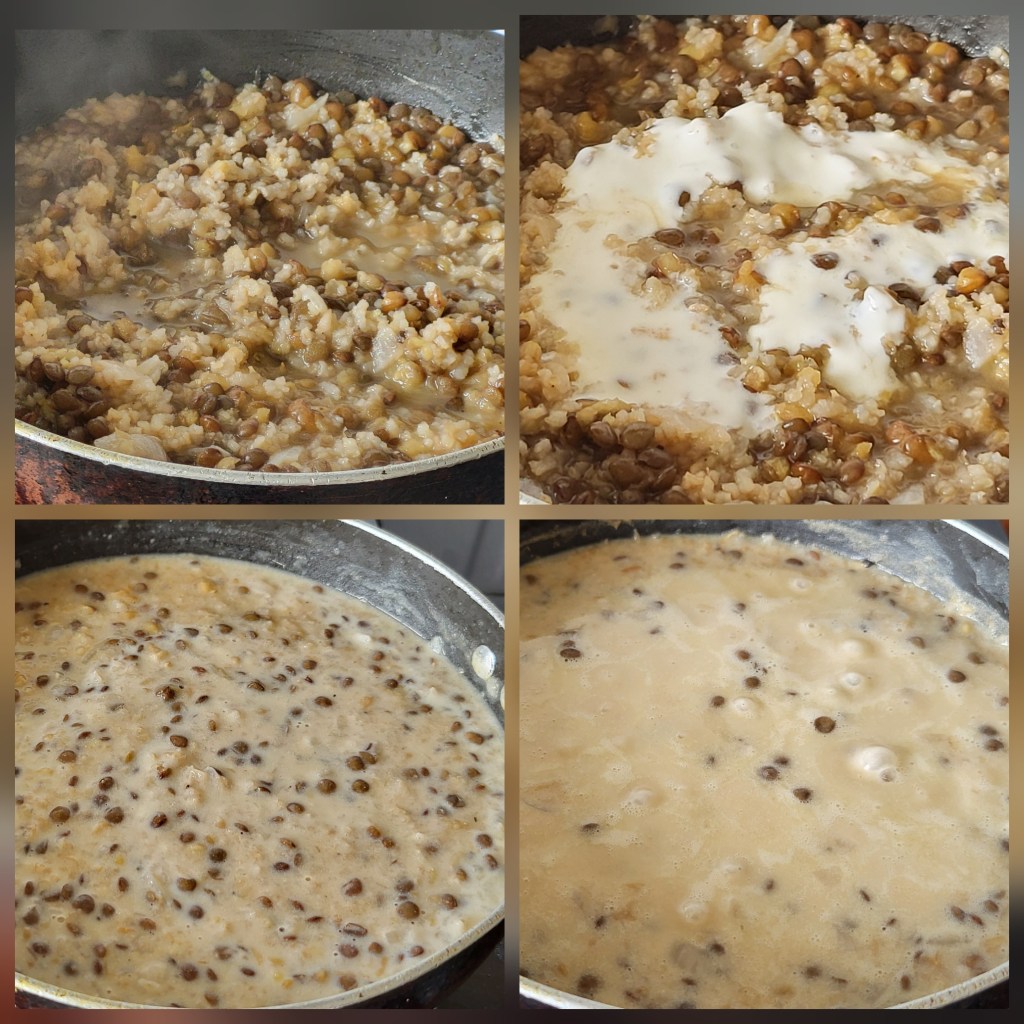
13. Stir the cooked lentil, rice, and dalia mixture gently.
14. Pour in the prepared curd and stir gently over low heat. Keep stirring continuously.
15. Let the mixture come to a gentle simmer. Allow it to simmer for a few more minutes so the flavours blend. Taste and adjust the salt as needed.
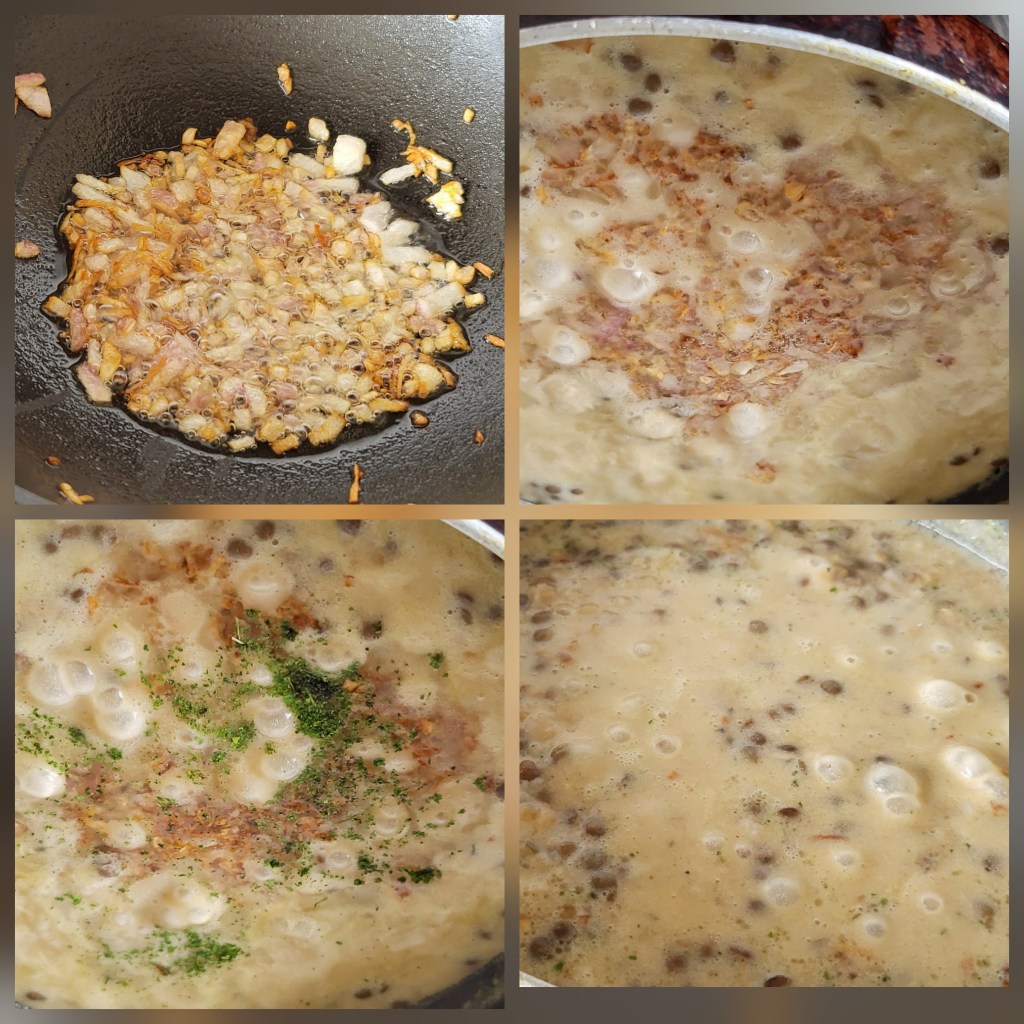
16. In another small pan, heat 1 tbsp of oil over medium heat.
17. Add the remaining onion and garlic and fry until golden brown and crisp.
18. Pour this golden onion-garlic mixture into the simmering stew.
19. Add 1 tsp of dried mint and mix well.
20. Cover the pot and let it sit for a few minutes so the spices blend into the stew.
That minty, garlicky topping is what gives Rashoof its signature flavour.
Our curd was tangy enough, so we didn’t need extra lemon.
Serve Rashoof hot with fresh bread on the side. Delicious and so comforting!
*Dalia is sometimes referred to as bulgur wheat. But bulgur is normally pre-cooked or parboiled rice. Whereas Indian dalia is made from raw whole wheat crushed into coarse pieces.
Happy Reading and Healthy Cooking!
Coming up next…Pulses in Lebanese Cuisine.
*****


This blog is beautifully written the way you tied Rashoof, jameed, Bedouin heritage & pulses together is remarkably well done Missy Jethai😍
LikeLike
Thank you so much for such a kind and thoughtful comment, Trina! I’m so glad you felt the connection – Rashoof is so much more than a recipe to me. It’s that beautiful story of Bedouin wisdom, where jameed and humble pulses became a dish of warmth, hospitality and survival.Trying to honour that heritage while keeping it accessible was really important to me, so your words truly mean a lot. Thank you for reading so deeply!Hope you get to try it.
LikeLiked by 1 person
Very interestingly written…
LikeLike
Thank you so much, Lita! Glad you found it interesting.
LikeLike
Love the beautiful combination of curd and lentils! 😍
LikeLike
Thank you Protima. Try it out, and let me!
LikeLike
Very interesting, and very well explained
LikeLike
Thank you Harshita
LikeLike