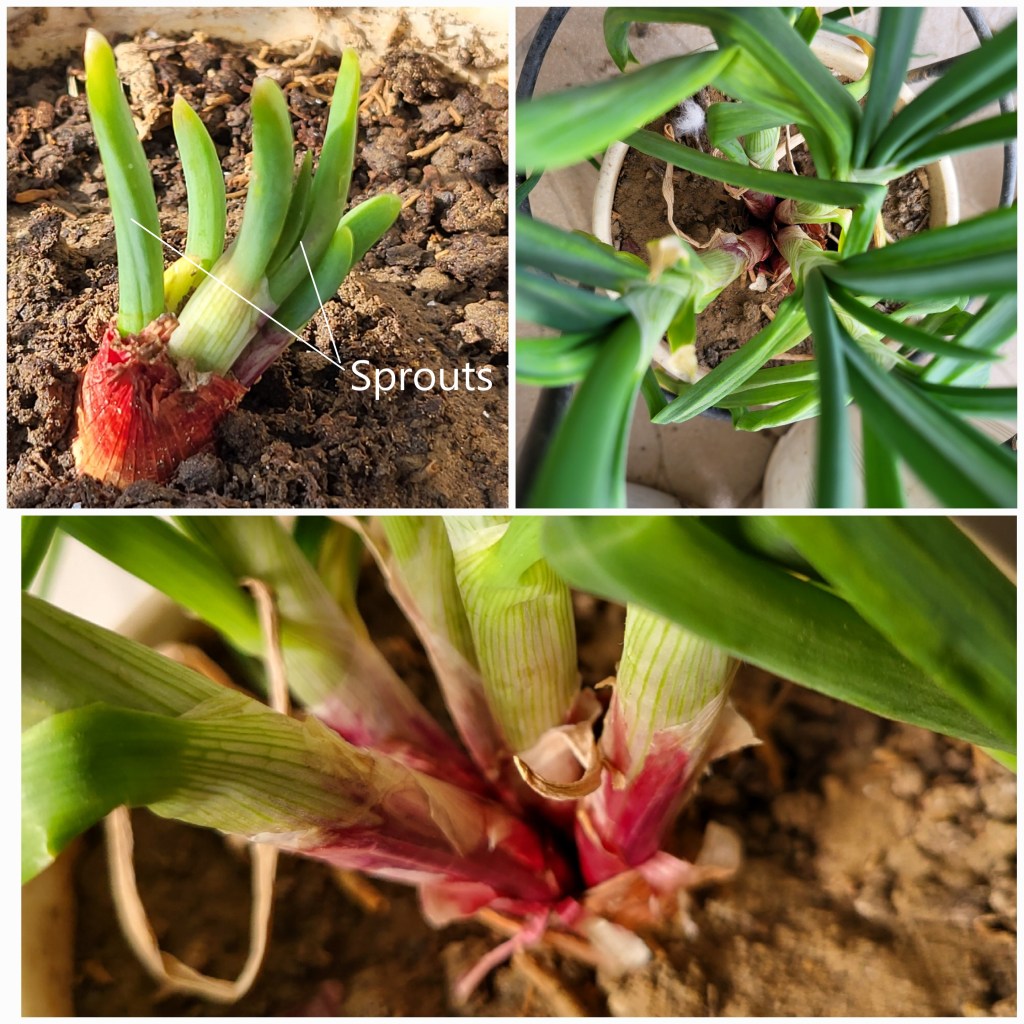
It’s only natural for an onion to sprout, much like a seed germinating into new life.
As the onion sprouts, green leaves emerge, and by peeling back the layers, you can discover the hidden sprouts. Recall our previous exploration, where we found that each onion contains at least 2-5 buds, each with the potential to grow into a new plant.
The process is simple: remove the layers, separate the sprouts, and plant them. The magic lies in the result: each sprout will develop into a full-fledged plant, and every plant will yield a brand-new onion!
Let’s embark on this experiment and witness the transformation first hand!
Separating the Sprouts from the Onion
To separate the sprouts, carefully peel the onion’s layers to reach the core. Begin by removing the brown, papery skins, followed by the fleshy layers, one by one.
Under each fleshy layer, you’ll find a thin, protective peel called the epidermal peel, which shields the onion from viruses and fungi.
As you peel, you’ll eventually reach the sprouts. In our case, it took removing 7 layers to partially reveal the two sprouts, and the 8th layer finally exposed them.
The sprouts are connected by the epidermal peel of the 8th layer and share the same stem, with the old, brownish parent stem below.
Planting the Sprouts
Using a sharp knife, carefully separate the sprouts, then plant them about 4 inches apart in a pot.
After 2 days, the sprouts settled in nicely, and within a month, the plant will be fully established and thriving.
It takes around 80-100 days for the onion plants to mature and be ready for harvest. If you want to see the flowers and collect seeds, you’ll need to wait another month or two.
What’s Next?
Stay tuned for our next post, “Onion’s Hidden Harmony,” where we’ll explore more fascinating aspects of onions.
In this post, we’ll embark on a journey to explore the onion’s layers. We’ll carefully peel away each layer, one by one, to discover what’s inside. Luckily, most onions have only a couple of papery skin layers left by the time they reach our kitchens, so we won’t have to peel too far.
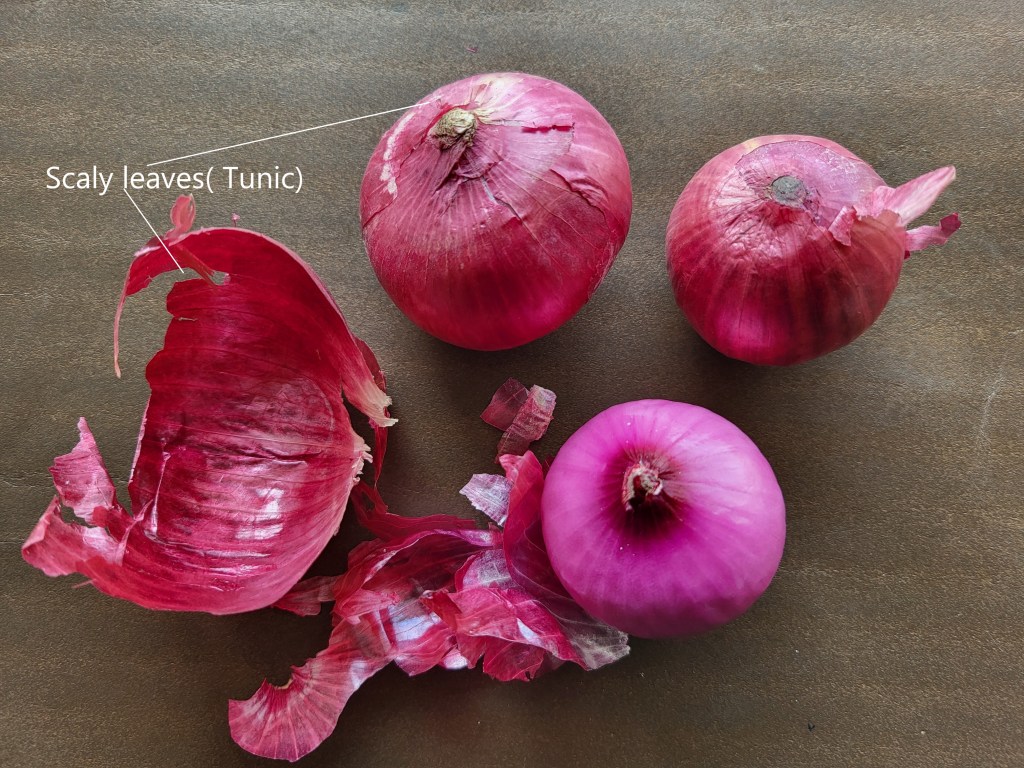
As we remove the outermost papery skin, called the tunic or scaly leaves, we’ll find the crunchy, flavorful part of the onion that’s perfect for cooking.
But that’s not all – beneath this first layer of fleshy leaves lies a thin, protective membrane known as the epidermal peel. This membrane acts as a shield, safeguarding the onion from viruses, fungi, and drying out.
As we continue to peel, we’ll find another layer of fleshy leaves, accompanied by another thin membrane that serves the same protective purpose. This pattern of fleshy leaves and protective membranes continues as we peel deeper into the onion.
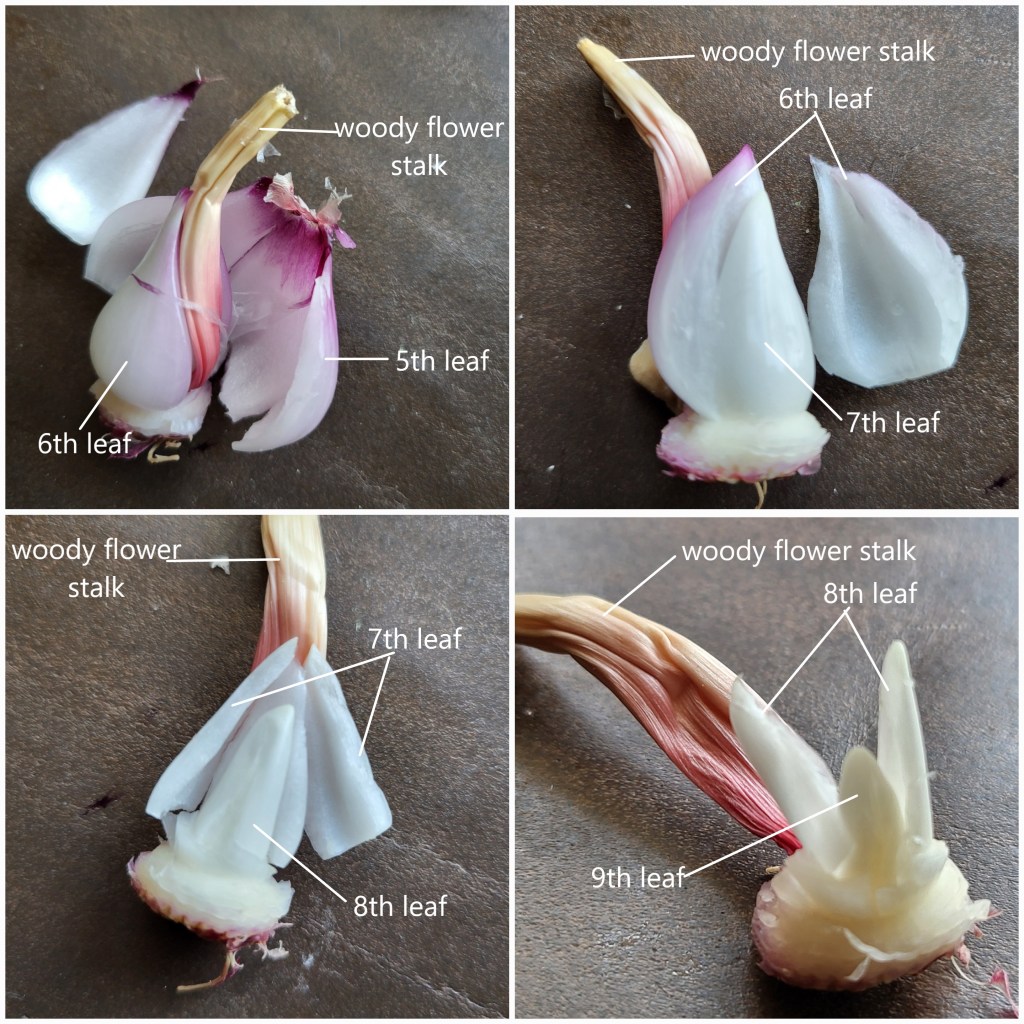
When we reach the 5th layer, to our surprise, underneath was a small woody flower stalk was revealed. This stalk was actually the remains of a flower stem that grew from the onion’s terminal bud during its growth phase.
Interestingly, one side of the stalk was bare, while the other side had a small, cone-shaped bud structure. This bud was still part of the onion’s fleshy leaves. To explore further, we carefully cut open the remaining leaves, one by one, while keeping the stem in place.
With great care, we removed the 6th and 7th fleshy leaves, which were cone-shaped too. As we continued, we found the 8th and 9th leaf to be conical as well. The 9th leaf was so small that we couldn’t remove it from the stem, so we gently bent it instead.
As we reached the 10th leaf, we discovered that it not only had a conical shape but also contained three tiny, conical buds inside, the new future plants. Although we couldn’t open this leaf further, its transparency allowed us to see the buds clearly.
An observation was made: starting from the 6th leaf and beyond, every single leaf – including the three buds – had a conical shape. Does it suggest that even though onion leaves begin growing from the stem with a circular base, they’re actually designed to develop into a cone-like shape as they mature?
Stay tuned! Next, we’ll plant the sprouts and watch them grow into onion plants!
In my previous post, I shared a big mistake: not separating individual sprouts. When we planted the whole onion with sprouts (each sprout was a plant), and each plant had to compete for space inside the onion, hindering their growth.
But how did I realize each sprout was a separate plant?
Let’s explore the onion’s internal structure.
When you hold an onion in your hand, you’ll notice the dry, papery skin covering it. This skin is actually made up of the onion’s first few leaves, which have shriveled and dried over time.
Despite their fragile appearance, these ‘tunic’ or ‘scaly’ leaves serve as a protective barrier, shielding the onion from moisture loss, insects, and germs. When we peel away this outer layer, we’re rewarded with the crunchy, flavorful flesh inside, perfect for cooking.
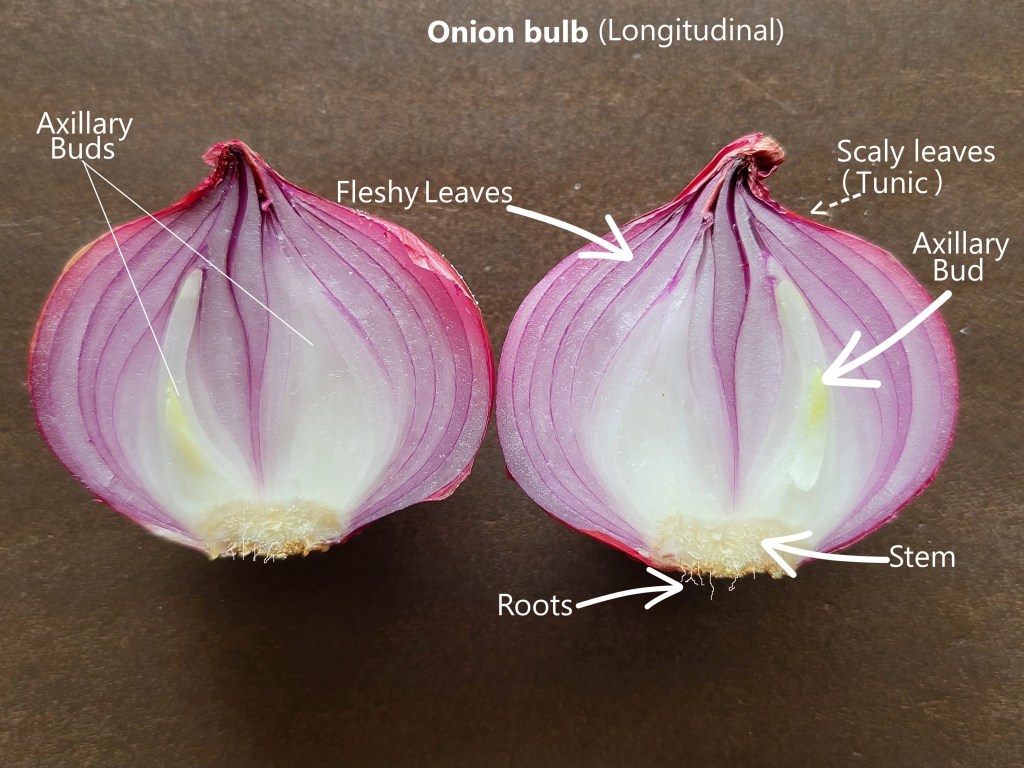
To take a closer look at the onion’s internal structure, let’s cut it in half lengthwise, or longitudinally. This will give us a clear view of the different parts inside. We can then label each part on the photograph for better understanding.
Slicing an onion lengthwise, reveals the various parts of the onion, making it easier to understand its composition.
1. Scaly Leaves (Tunic): The dry, papery skin that protects the onion from drying out and keeps insects and germs away.
2. Fleshy Leaves: The edible part of the onion. These leaves store nutrients produced by the green leaves, protect the central buds, and release chemicals that irritate eyes.
3. Axillary Buds: Future onion plants scattered around the center. These buds have the potential to grow into new onion plants.
4. Terminal Bud: Located at the center, this bud produces the flower stalk, which bears seeds and ensures the onion plant’s cycle. Not visible in the picture.
5. Stem: A condensed, short stem from which leaves and buds grow.
6. Roots: Adventitious roots that absorb minerals and water for the plant.
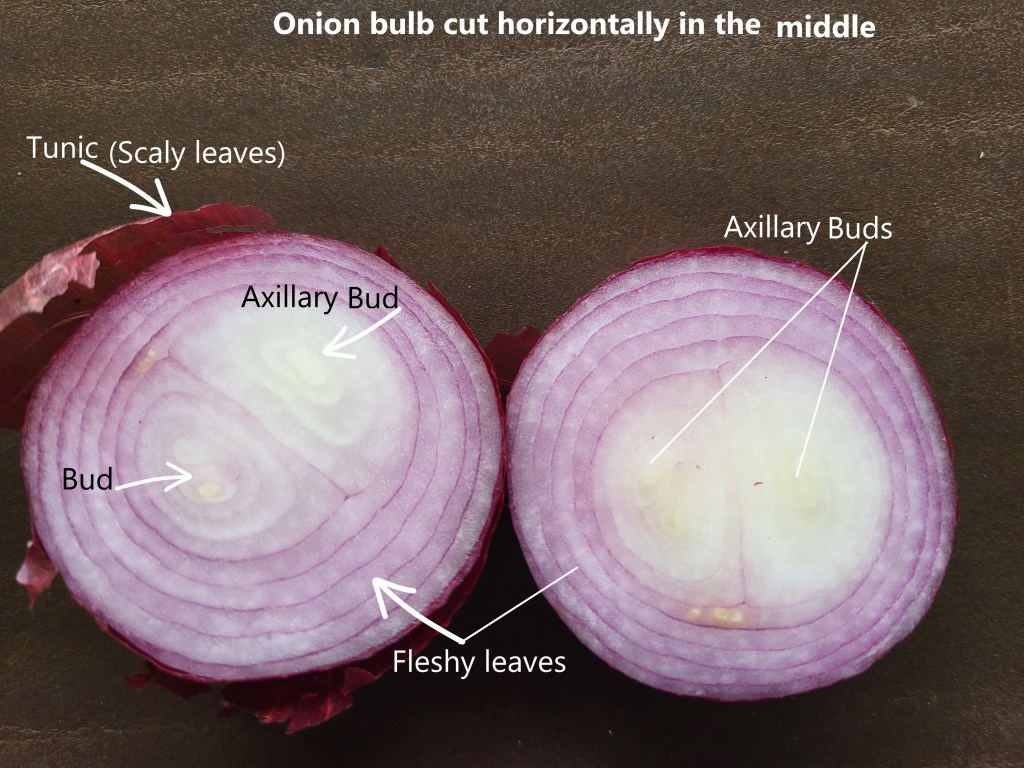
When you cut an onion horizontally, you’ll notice a beautiful pattern of concentric circles. These circles are actually the fleshy leaves that make up the onion bulb.
Take a closer look and you’ll see how these leaves curve inward, eventually joining together at the center of the onion, where the tiny buds are located. These buds are special, containing both terminal and axillary buds.
Onions typically have 2-5 hidden buds, called axillary buds. Amazingly, each of these buds has the potential to grow into a brand-new onion plant!
At the center of the onion, there’s a single terminal bud that plays a crucial role. Although it’s not visible in the picture, this bud grows into the flower stalk, which eventually produces a flower and seeds for new onion plants.
Now that we’ve explored the internal parts of an onion, remember that having a little knowledge about something can spark curiosity. When you encounter it again, you’ll likely to feel more intrigued and want to learn even more.
Our next journey will be to the heart of the onion, by carefully peeling away each layer to reveal the secrets within.
One day, I stumbled upon a sprouted onion in my kitchen. Excitement took over, and I quickly planted it in a pot on my balcony. Before long, beautiful sprouts began to emerge, growing rapidly into lush plants with luxuriant leaves. I even used a few of the leaves in my cooking!
As the plants grew, I noticed they were clustered together, competing for space. I realized that I had made a big mistake – not separating the individual sprouts when I planted them. Each sprout was, in fact, a separate plant!
Despite the cramped conditions, the plants continued to thrive. But I couldn’t help wondering: how would new onions form in such a small space? I didn’t investigate further, content to simply enjoy the sight of the healthy plants.
Then one morning, almost after two months, I was thrilled to spot a flower bud peeking out from among the leaves. As the stem grew longer, a second bud appeared.
Over the next 25-30 days, the buds slowly unfurled, revealing stunning flowers.
At the time, I wasn’t thinking about sharing this experience with others. I was simply enjoying the journey. But as I witnessed the onion plant’s remarkable transformation, I felt compelled to share it with friends and readers. And so, this blog series was born!
Happy reading!
Coming up next…………. Exploring the Structure of an Onion
The Humble Onion: A Tribute to Vincent van Gogh and the Flavours of Dal
Onions are a fundamental ingredient in many Indian recipes, including dal. But have you ever stopped to think about the significance of onions in our cooking? From adding flavour and texture to representing health and wellness, onions play a vital role in our culinary traditions.
Did you know that onions have also been a source of inspiration for artists? Vincent van Gogh’s beautiful painting, ‘A Plate of Onions’, is a testament to the humble onion’s ability to evoke emotions and spark creativity.
Painted in 1889, ‘A Plate of Onions’ is a still life that displays Van Gogh’s unique post-Impressionist style. The painting features a simple plate of onions, surrounded by everyday objects like a teapot and a book. Yet, despite its simplicity, the painting conveys a sense of warmth and comfort.
As I chopped onions for my favourite dal recipe, I started wondering… what’s the story behind this humble ingredient? How does it grow? What makes it so flavourful?
In this next post, I’ll share my own journey of discovery as I learn more about onions. From observing how they grow in my garden to exploring their different varieties and uses, I’ll take you along with me as I uncover the fascinating world of onions.
Uncovering the Geography and Heritage of India’s States
Dear readers,
We are thrilled to have completed our culinary journey through India’s states, with our last dal post from Telangana going live last Wednesday. This epicurean adventure took us from the northeastern state of Arunachal Pradesh to the southern state of Telangana, and what a fascinating ride it has been!
As we delved into researching dal recipes from different states, we discovered that the evolution of a recipe is deeply rooted in the state’s geography, cultural exchange, and history. The state’s landscape – whether nestled between rivers, bordered by seas, or mountains, or perched on hills and plains – plays a significant role in shaping its local ingredients and cooking techniques. Moreover, the neighboring states, countries, traders, travelers and immigrants – have all contributed to the tapestry of its culinary legacy.
This culinary journey through India’s states has been a great learning experience, helped us to discover the rich diversity and culinary traditions of our country.
We are deeply grateful to all of you who have accompanied us on this journey, sharing your valuable comments, cooking the recipes, and sending us pictures. Your enthusiasm and encouragement have meant the world to us!
Although, Dal Across India: The dal from every state of India, project comes to an end, Dal on the Table will still be around, sharing thoughts and recipes with you. Until next time… with love, blessings, and gratitude.
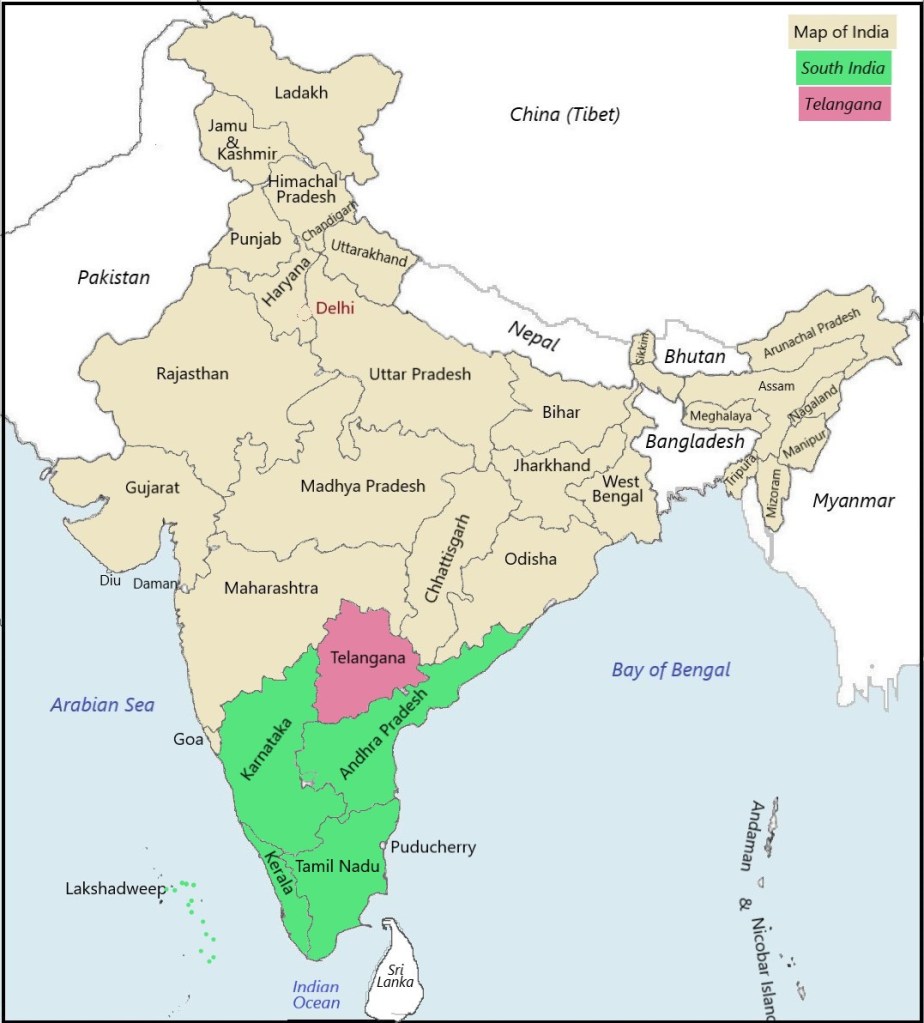
Located in south-central India, Telangana is aptly nicknamed ‘South of North and North of South’. Situated on the Deccan Plateau, it shares borders with Maharashtra and Chhattisgarh to the north, Karnataka to the west, and Andhra Pradesh to the south, east, and northeast. The vibrant city of Hyderabad serves as the capital of Telangana.
Telangana, India’s youngest state, is a treasure trove of history, culture, and natural beauty. It’s home to historic monuments like Golconda Fort and Charminar, and is famous for its pearl and diamond trade. The state is also known for its delicious Hyderabadi cuisine and stunning natural wonders like waterfalls and hills. With its rich handicrafts and thriving IT hub in Hyderabad, Telangana is a unique and fascinating place.
What impressed us most when we visited Hyderabad was the ingenious acoustics of Golconda Fort. This 16th-century fortress boasts a sophisticated sound alarm system, designed by Iranian architect for King Ibrahim Quli Qutb Shah. The dome’s unique architecture amplifies and echoes sound waves, while strategically placed buildings redirect sound to specific locations, secretly alerting the royal family to potential threats. Visit Golconda Fort to marvel at this ancient innovation and uncover the secrets of India’s rich history.
Pulse farming in Telangana
Pulse farming is a significant part of Telangana’s agriculture. The state’s fertile soil and favorable climate make it an ideal location for growing a variety of pulses, including red gram, green gram, and black gram. In fact, Telangana has several initiatives aimed at promoting pulse farming and supporting farmers. These pulses are not only a vital source of protein for the population but also contribute significantly to the state’s agricultural economy
Food:
Telangana’s cuisine is a vibrant reflection of its rich cultural diversity, with rice-based meals being a staple. The region’s bold and spicy flavors, achieved through the liberal use of chilies, turmeric, and coriander, are a hallmark of its culinary tradition. Influenced by Mughal, Turkish, and Arabic cuisines, Telangana’s food scene is a fascinating blend of flavors.
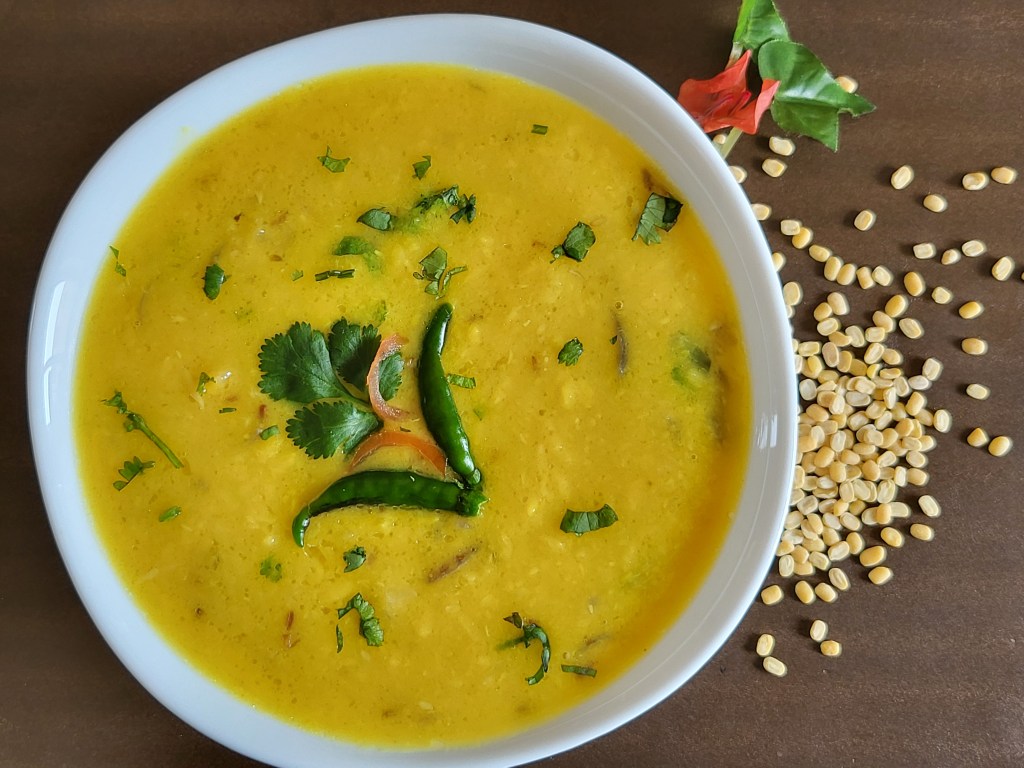
Today, we’ll explore Pesara Pappu, a beloved dal dish from the region. Made with yellow-green moong dal (split and husked), this simple yet delicious recipe displays the essence of Telangana’s culinary heritage.
Pesara Pappu (Moong Dal)
This recipe is remarkably simple, easy to make, and incredibly popular. What’s more, it requires minimal spices – just ginger, garlic, and onion. It’s comforting flavor profile makes it perfect for serving as a warm, soothing bowl of soup.
You need:
100 gm moong dal (split and husked green gram)
2 cups water
½ tsp turmeric powder
1 green chili
½ tsp salt
Tempering
1 tablespoon ghee or oil
1 small onion, chopped
2 cloves garlic, grated
1 inch ginger, grated
1 teaspoon cumin seeds
1 sprig curry leaves
Chopped coriander leaves, for garnishing
Method:
Wash and soak the moong dal for 10 minutes.
2. Transfer the soaked dal to a pressure cooker.
3. Add salt and turmeric powder to the dal, followed by the washed and stemmed chili.
4. Pour in 2 cups of water.
5. Close the lid of the cooker and cook over high heat. Once the cooker emits one whistle, reduce the flame to a minimum and simmer for 1 ½ minutes.
6. Switch off the heat and let the cooker cool down naturally.
7. Peel and wash the onion, ginger and garlic.
8. Finely chop the onion and grate the ginger and garlic.
9. Wash the curry leaves and coriander.
10. Wash the curry leaves and coriander.
11. Remove the curry leaves from their stem and chop the coriander leaves finely.
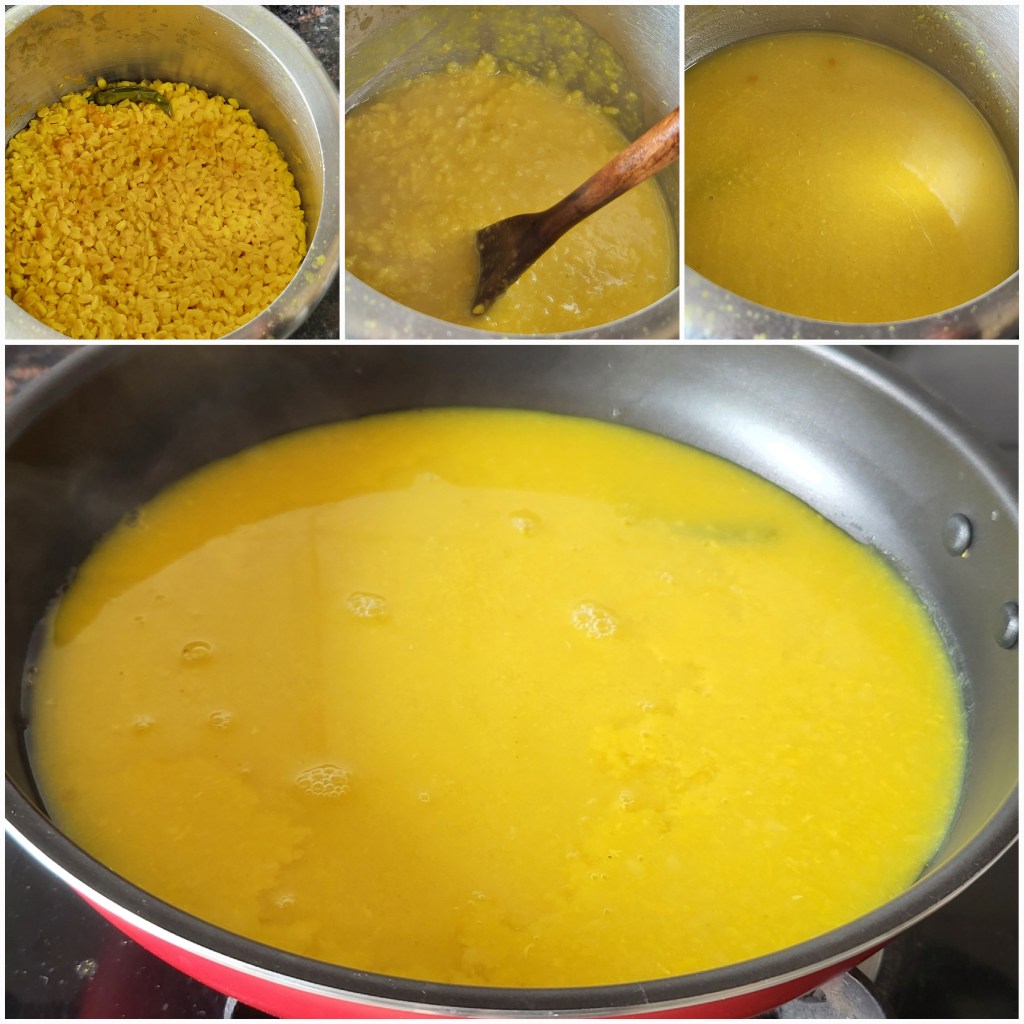
12. Once the pressure cooker has cooled, open it and mash the dal thoroughly.
13. Add 2 cupd of warm water and stir well.
14. Transfer the dal to a larger pan and bring it to a boil.
15. Reduce the heat to a simmer and let it cook gently.
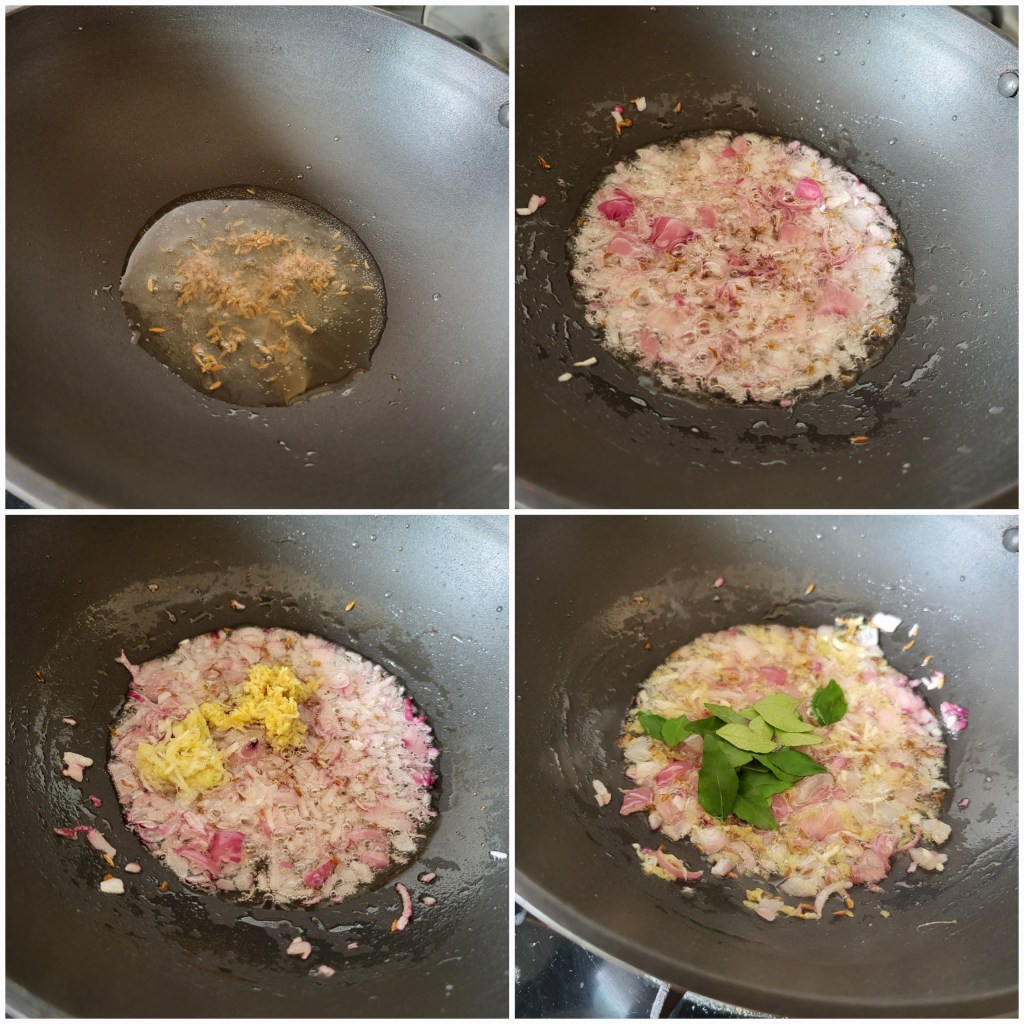
16. Heat oil in a pan over medium heat.
17. Add cumin seeds and let them sizzle for a moment.
18. Add the chopped onion and sauté for a few seconds, until slightly softened.
19. Then, add the grated garlic and ginger, stirring constantly to prevent burning.
20. Add the curry leaves and fry until the onions are translucent.
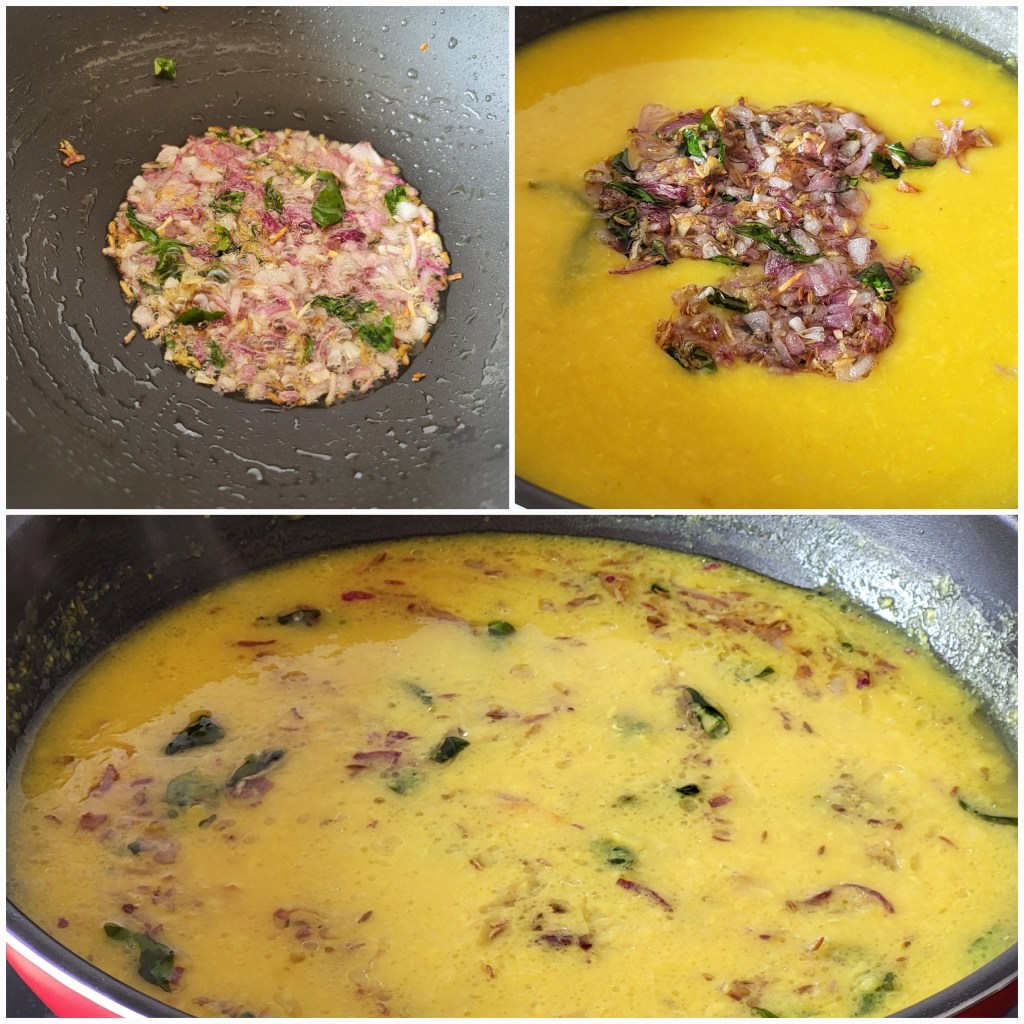
21. Add the fried spices to the dal and mix well.
22. Adjust the salt and the consistence of the to your taste.
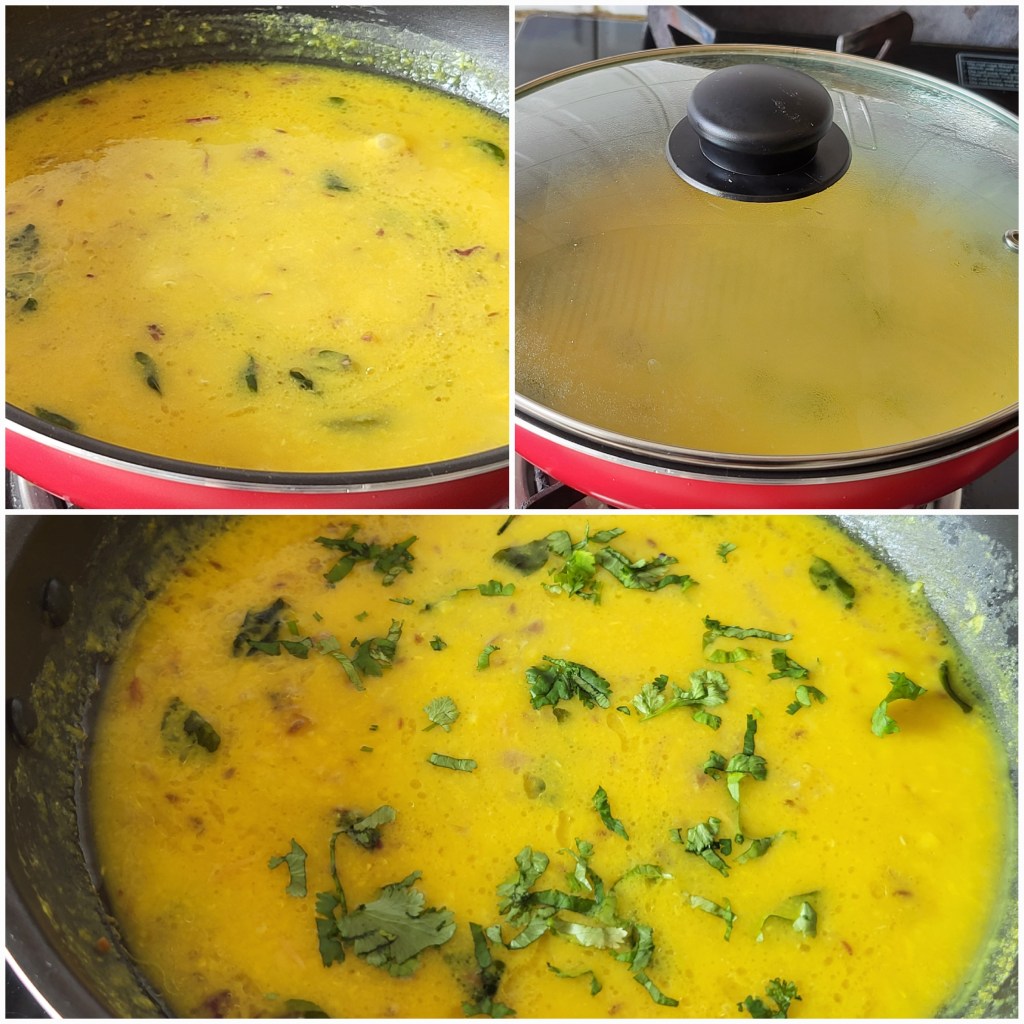
23. Bring the dal to a boil once more.
24. Cover the pan to allow the spices to infuse.
25. Uncover the pan and garnish with chopped coriander leaves.
Serve hot alongside steamed rice or roti. Enjoy your delicious and comforting Pesara Pappu!
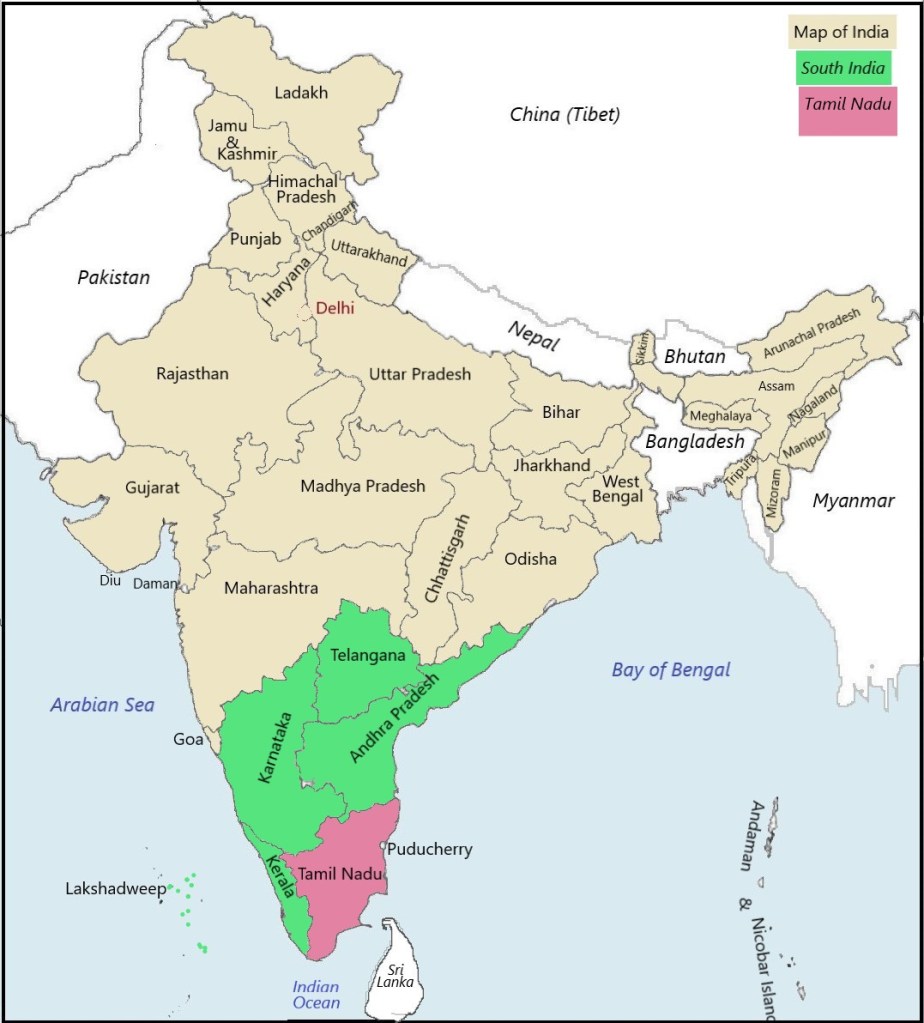
Tamil Nadu is located in the southern part of India, on the southeastern coast of the Indian Peninsula. It is bordered by the Bay of Bengal to the east, the Indian Ocean to the south, the state of Kerala to the west, and the states of Karnataka and Andhra Pradesh to the north. The capital of Tamil Nadu is Chennai (formerly known as Madras), which is located on the coast in the northeastern part of the state.
Kanyakumari, located at the southernmost tip of Tamil Nadu, is a unique confluence where the Arabian Sea, the Bay of Bengal, and the Indian Ocean meet. Interestingly, some observers have even spotted the distinct colours of the three bodies of water blending together at this remarkable intersection. But we missed witnessing this beautiful sight, personally.
Tamil Nadu is a treasure trove of ancient temples, displaying the state’s profound cultural and spiritual legacy. These majestic structures, crafted by illustrious dynasties like the Pallavas, Cholas, and Pandyas, are celebrated for their intricate carvings, soaring towers, and ornate mandapams. Beyond the temples lie enigmatic sites, such as Mahabalipuram and Rameswaram which continue to shroud the region in mystique.
The Ramayana epic tells the story of Lord Ram’s Bridge to Lanka (now Sri Lanka) to rescue his wife Sita from Ravana. According to myth, Rama and his army of monkeys built the bridge using limestone boulders inscribed with Rama’s name.
While historians and scientists question this story, they can’t explain the mysterious ‘floating stones’ found in Rameshwaram, which locals believe are remnants of Rama’s Sethu Bridge. The bridge is visible by naked eyes.
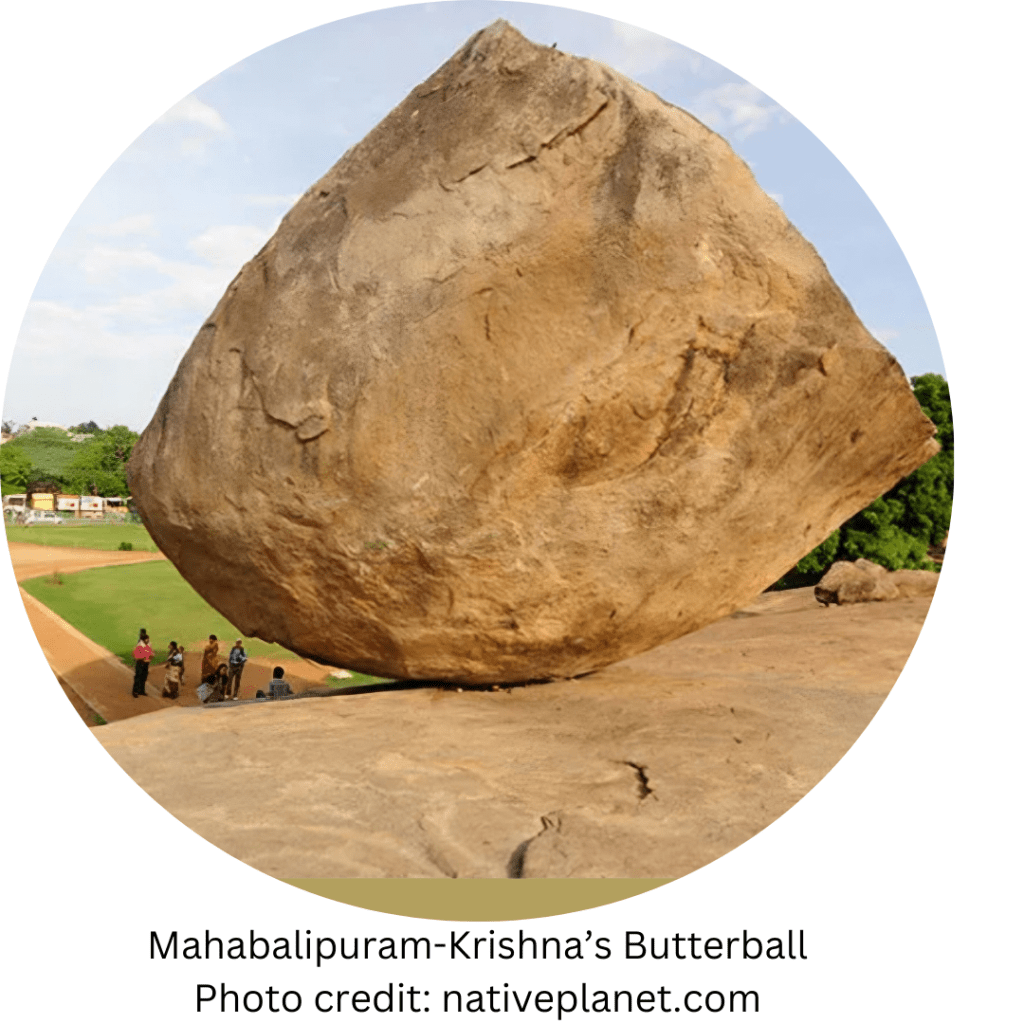
Krishna’s Butterball, a massive granite boulder in Mahabalipuram, defies gravity as it precariously balances on an inclined slope. Despite numerous attempts to explain this phenomenon, scientists remain baffled. In 1908, the Governor of Madras even enlisted seven elephants to try and move the boulder, but it remained stubbornly in place.
Locally known as ‘Vaan Irai Kal’ or ‘Sky God’s Stone’, this enigmatic wonder continues to intrigue visitors and scientists alike.
Pulse farming in Tamil Nadu:
Tamil Nadu is a significant producer of pulses in India, with major crops including black gram, green gram, cowpea, and horse gram. The state’s fertile soil, favorable climate, and extensive irrigation network support pulse cultivation. The state government is implementing initiatives to promote organic farming, improve crop yields, and enhance farmer livelihoods. The government also provides subsidies and support for pulse farmers, enabling them to adopt modern farming techniques and improve productivity. Additionally, Tamil Nadu’s pulse production contributes significantly to the country’s food security and nutritional requirements.
Food:
Tamil Nadu’s cuisine is known for its rich flavors, aromas, and textures, reflecting the state’s cultural diversity. Traditional Tamil cuisine is characterized by the use of rice, lentils, vegetables, and spices. Popular dishes include Idli, Dosa, Sambar, Rasam, and Pongal.Coastal regions enjoy a variety of seafood dishes.
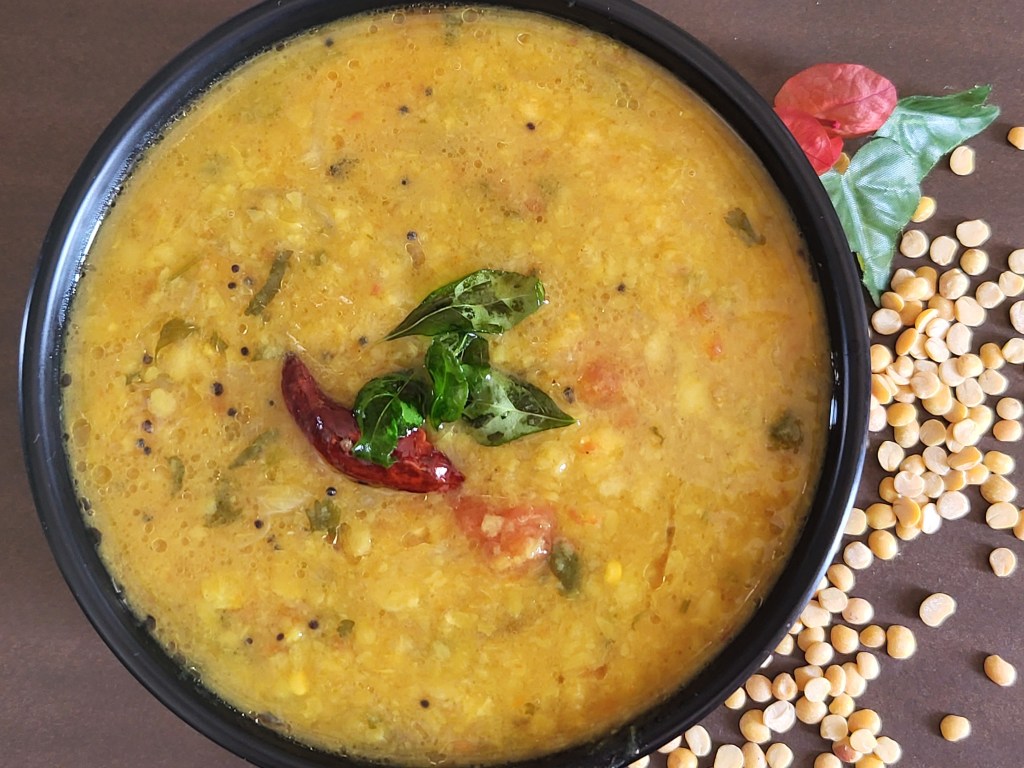
Today, we’re going to cook Paruppu Kadaiyal. In Tamil, toor dal is known as ‘thuvaram’, and it’s the most popular and preferred dal in Tamil Nadu.
By the way, did you know the word ‘kari'(in Tamil) is the origin of the English word ‘curry’!
Paruppu Kadaiyal
Paruppu Kadaiyal is a delightfully easy and simple recipe that’s sure to warm your heart. This soothing and comforting dish is a true pleasure to cook and savor. We thoroughly enjoyed making and devouring it, and hope you’ll share the same experience. With just a hint of hotness from the chillies, this spice-free recipe is a gentle delight.
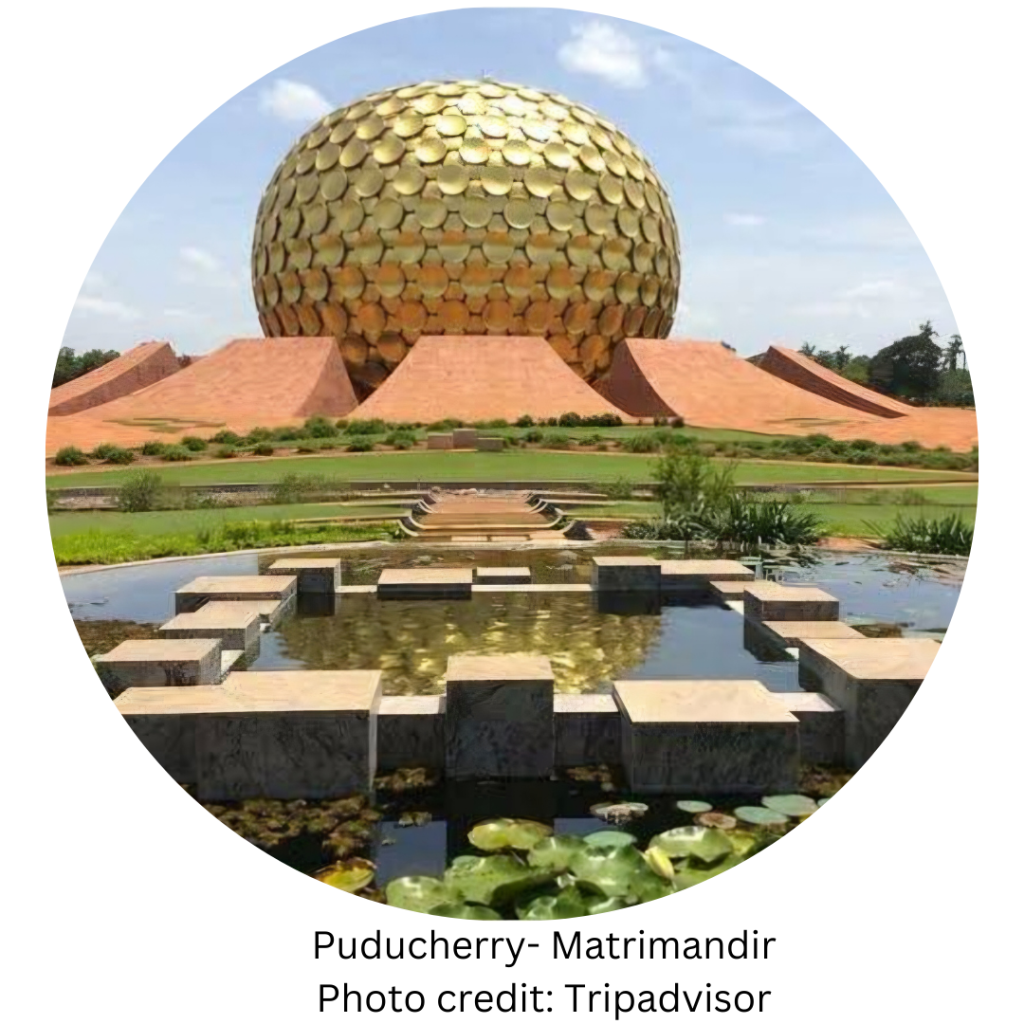
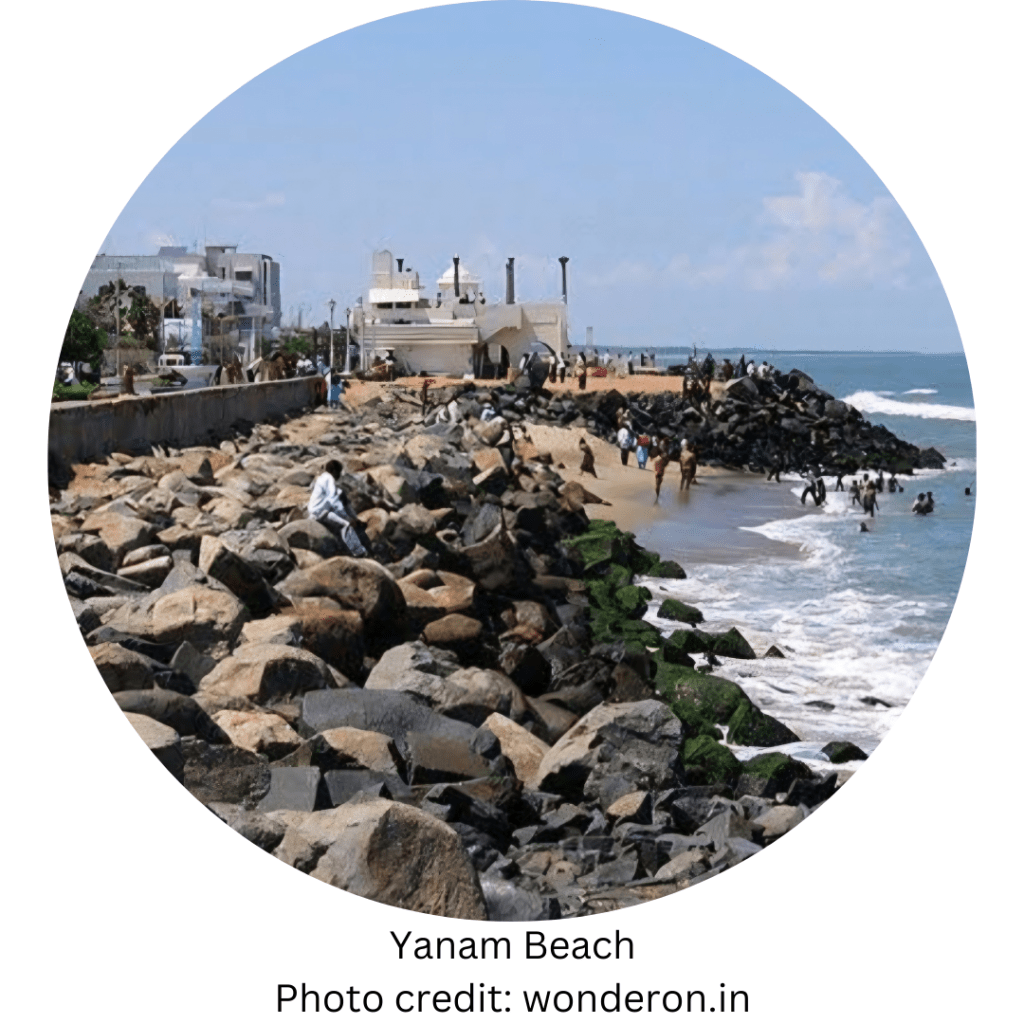
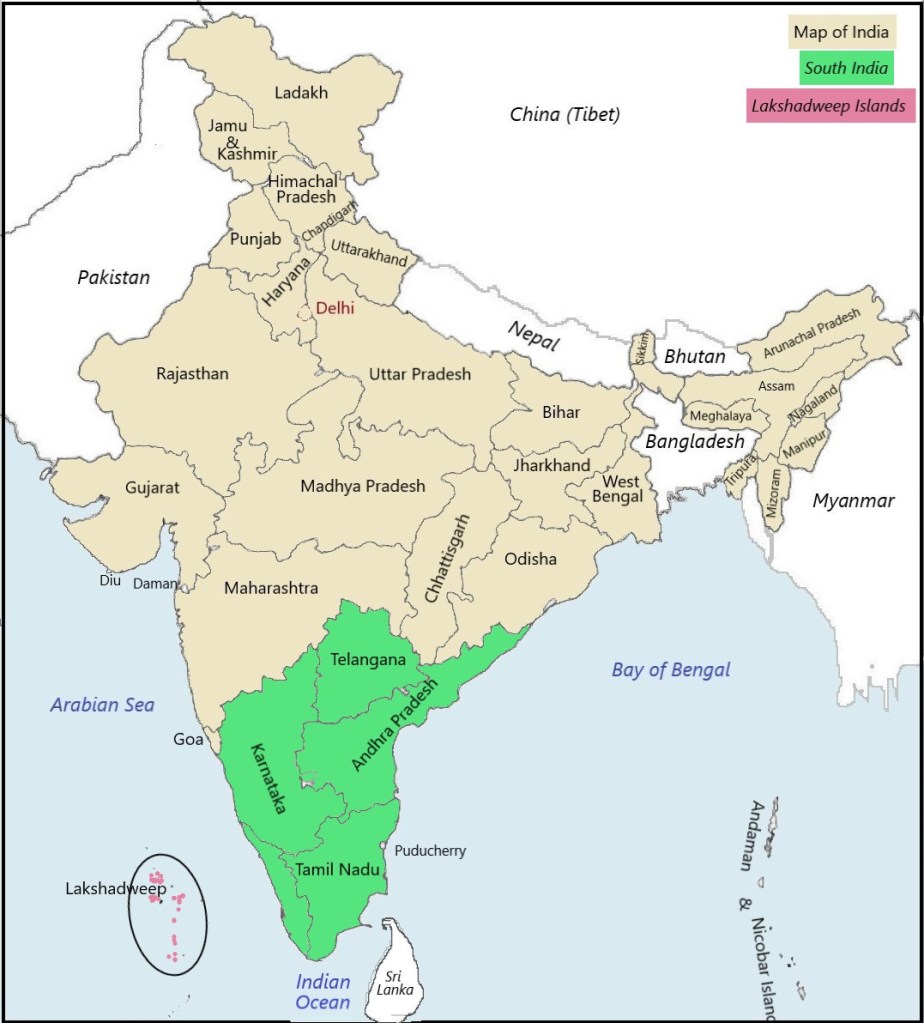
The union territory of Puducherry consists of four regions, namely Puducherry, Karaikal, Yanam and Mahe. All these regions are geographically located separately from each other.
Puducherry and Karaikal are in Tamil Nadu state on the eastern coast and surrounded by Bay of Bengal, while Yanam is also in the eastern coast of Andhra Pradesh and surrounded by Bay of Bengal. Mahe is on the western coast of Kerala state and surrounded by Lakshadweep Sea, which is a part of the Arabian Sea.
Puducherry is inTamil Nadu on the eastern coast and surrounded by Bay of Bengal. It was a French colonial settlement established in 1674 known as Pondicherry then. The French East India Company founded the city, and it became a major trading center. Over the years, Pondicherry changed hands several times, with the British and Dutch competing for control.
However, the French ultimately maintained their hold until India gained independence in 1947. Pondicherry officially became part of India in 1954.
Pulse farming in Puducherry
Puducherry is a significant producer of pulses, particularly black gram, green gram, and cowpea. The region has fertile soil and favorable climate.
Food
The culinary landscape of Puducherry is a fascinating blend of French, Tamil, and Telugu flavors. Rice and seafood form the backbone of the local cuisine, while vegetarian options abound, displaying a good range of lentils, vegetables, and fruits.
Karaikal is also inTamil Nadu on the Coromandel Coast. In 1739, the French established it as trading post which eventually grew into a full-fledged town. It remained under French control until 1954 before becoming a part of Indian Union territory.
Pulse farming in Karaikal
Karaikal is known for its cultivation of black gram, green gram, and horse gram. The region relies on rain-fed irrigation which impact pulse yields during drought years.
Food
Karaikal’s cuisine is deeply rooted in Tamil traditions, with seafood being a staple ingredient.
Mahe is on the western coast (Malabar) of Kerala state and surrounded by Lakshadweep Sea, which is a part of the Arabian Sea. It was a French trading post established in 1721. The French built a fort and a town, which became an important center for the export of spices, particularly pepper. Mahe remained a French enclave until 1954, when it joined the Indian Union.
Pulse farming in Mahe
Mahe’s pulse cultivation is mainly focused on black gram, green gram, and cowpea. The region has limited land and has high labor costs.
Food
Mahe’s gastronomic identity is shaped by Malayali and French influences, with seafood playing a starring role.
Yanam, located in the Godavari delta region, was a French colonial outpost established in 1723. It was a major center for the production and export of salt, rice, and other commodities. The town remained under French control until 1954, when it, along with the other French enclaves in India, became part of the Indian Union.
Yanam is a significant producer of black gram, green gram, and horse gram. Here the farmers rely on canal irrigation.
Food:
Yanam’s cuisine is characterized by its strong Telugu heritage, with seafood featuring prominently.
Today, we’re excited to share with you a classic Puducherry Sambar, crafted in the distinctive style of this captivating region.
Puducherry sambar
Puducherry sambar is a remarkably flavorful and aromatic sambar recipe. What sets it apart is the distinct blend of spices, which lends it a unique character that distinguishes it from other sambar recipes.
You need:
For the dal
150 gm toor dal
½ tsp turmeric powder
½ tsp salt
Ingredients to be added to the cooked dal
1 medium size tomato
1 medium size onion
2-3 clove of garlics
150 gm pumpkin (you can add any vegetable of your choice)
1 small size lemon Tamarind
1 tsp jaggary powder
2 tsp samber powder
1 tbsp refined oil
Sambar masala (Roast and grind)
1 tsp peppercorn
1 tsp cumin seeds
1 red chilies
1 sprig of curry leaves
Tempering:
1 tsp black mustard
1 sprig of curry leaves
2 Green chilies
1 tbsp refined oil
Method:
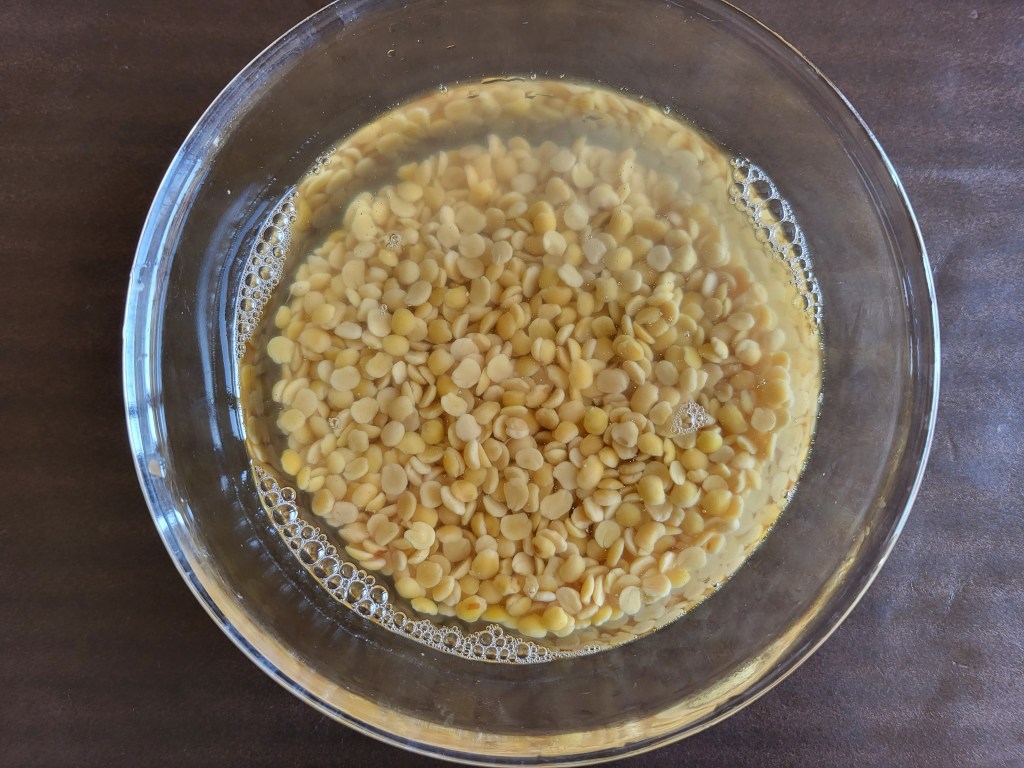
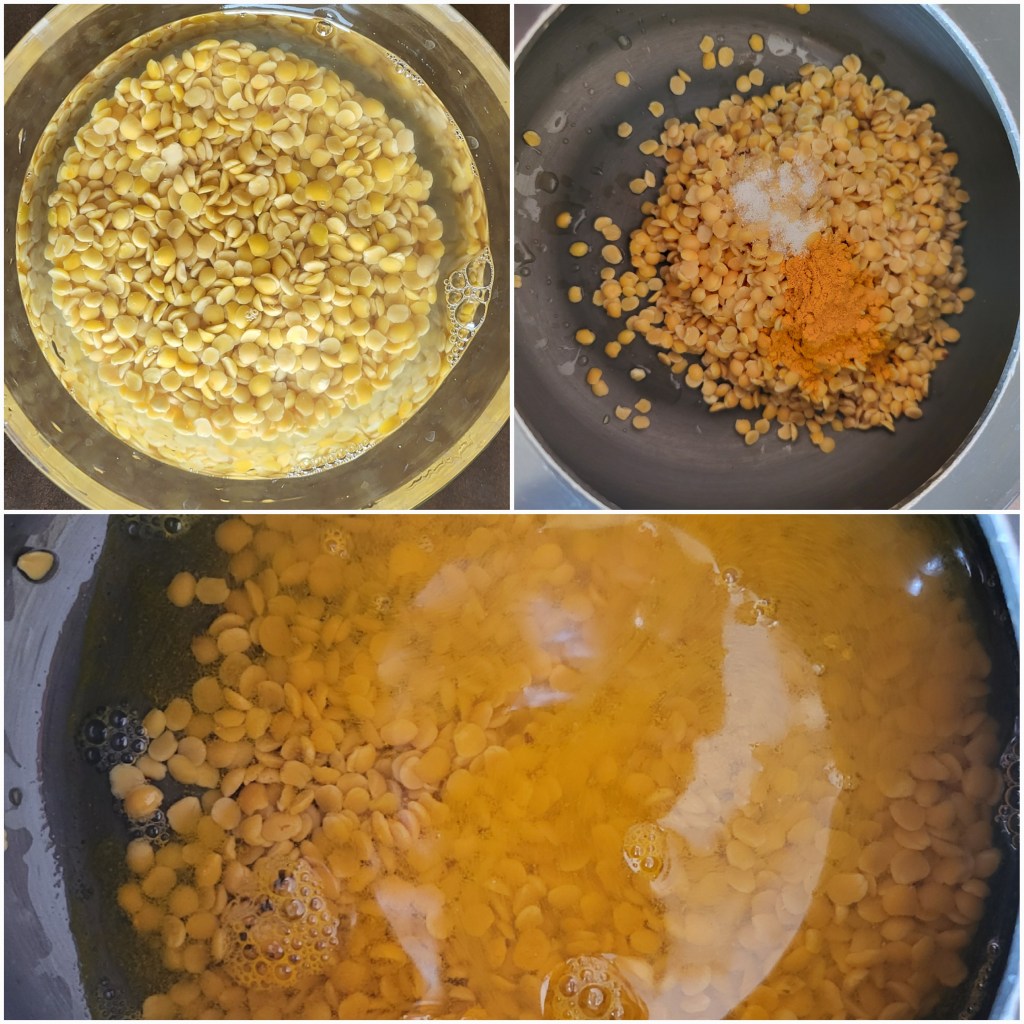
Wash and soak the dal for about 10 -15 minutes.
Transfer the dal to the pressure cooker.
Add salt and turmeric. Add 1 cup of warm water.
Cook on high heat till the first whistle, then reduce heat to minimum and cook for 2 minutes more. Let the cooker cool by itself.
While the dal cooks, let’s prepare the additional ingredients.
5. Soak 1 teaspoon of jaggery and a small lemon-sized piece of tamarind in hot water for about 15 minutes.
6. Once the water cools, squeeze out the tamarind juice and set it aside.
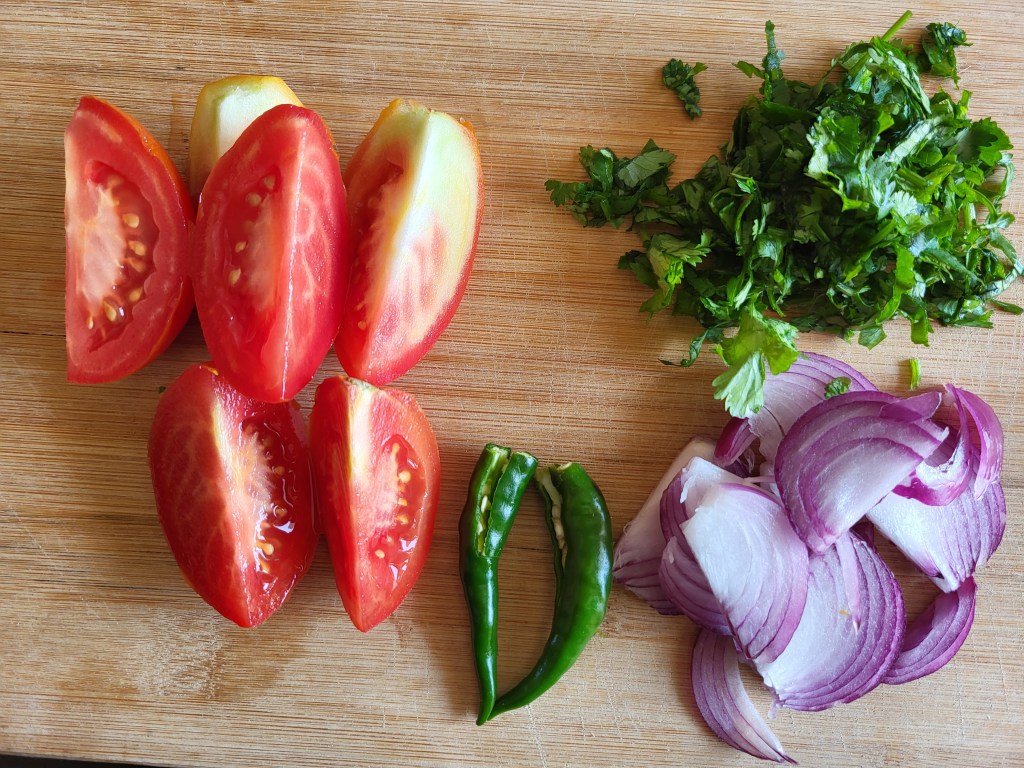
7. Finely chop the fresh tomatoes after washing them.
8. Wash and prep the pumpkin by removing the seeds, but leave the tender skin intact – it helps maintain the shape of the pumpkin pieces during cooking.
9. Peel, wash, and chop the onion, and grate the garlic.
For the masala
10. Heat a pan over medium heat. Roast the peppercorns, cumin seeds, dried red chilies (seeds removed), and curry leaves until the curry leaves turn crispy.
11. Remove the pan from the heat and let it cool.
12. Then, grind the roasted spices into a fine masala and set it aside.
13. Once the pressure cooker has cooled, stir the dal until it reaches a mushy consistency.
14. Add about 1 cup of warm water and set aside.
To bring out the full flavor of the dal, we’ll sauté the vegetables briefly. Simply boiling them can result in a slightly bland taste.
15. Heat oil in a large pan over medium heat.
16. Sauté the onions for a few seconds, followed by the grated garlic.
17. Add the tomatoes and sauté until they’re softened
!8. Add the pumpkin pieces and a pinch of salt.
19. Mix well, cover the pan, and let the pumpkin cook partially, stirring occasionally.
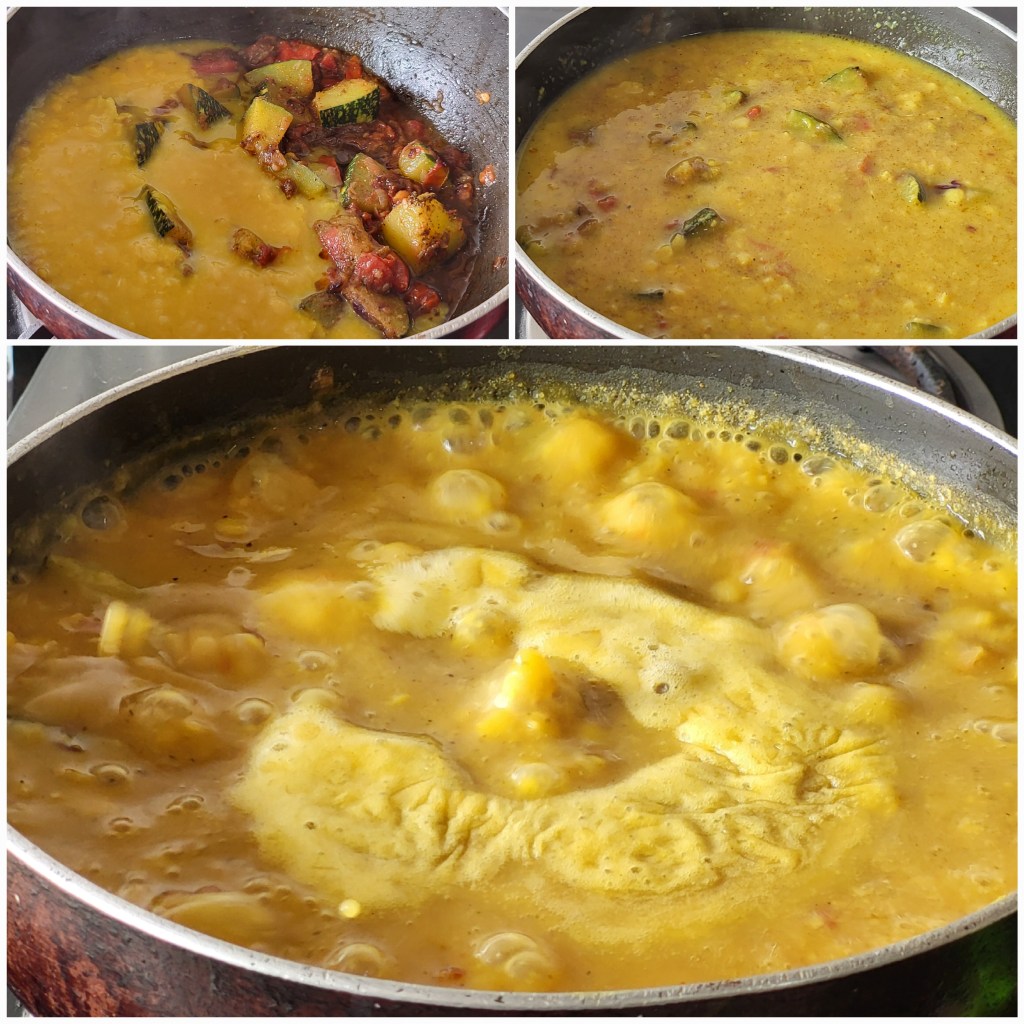
20. Once the pumpkin pieces are partially cooked, add 2 tsp of the ground masala and the tamarind water and mix well.
21. in the cooked dal.
22. Add a little warm water to achieve your desired consistency.
23. Bring it to boil and cook for about 2 minutes
24. and slit the top of the chilies.
25. Wash and remove the curry leaves from the stem.
26. Heat 1 tablespoon of refined oil in a pan over medium heat.
27. Once hot, add the mustard seeds and let them splutter.
28. Add the split green chilies and curry leaves, sautéing for a few seconds.
29. Pour the tempering mixture over the cooked dal and gently stir.
30. Cover for a minute to allow the flavors to infuse. Serve hot with rice or idli – it’s absolutely delicious! Give it a try and experience the flavor for yourself.
Lakshadweep, a union territory of India, is a group of islands situated approximately 400 kilometers off the southwestern coast of India, in the Arabian Sea. Its capital is Kavaratti.
Lakshadweep, a tranquil and stunning group of 36 coral islands with its pristine beaches, crystal-clear waters, and vibrant coral reefs, is a tropical paradise, perfect for relaxation, snorkeling, and diving. The islands’ rich cultural heritage, influenced by Arab and Indian traditions, is reflected in their unique cuisine, folk music, and colorful festivals, making Lakshadweep a fascinating destination for tourists.
Pulse farming in Lakshadweep:
Lakshadweep has a sandy terrain which makes traditional farming impossible. The islands rely heavily on imports from mainland India for essential staples like dal and pulses. Rice and dal are considered as luxury items in Lakshadweep.
The people of Lakshadweep always depended on Kerala for fruits and vegetables. However, with government help, they’ve initiated small-scale farming in pots and on rooftops, ensuring a steady supply of homegrown produce during the monsoon season, when connectivity with Kerala is almost cut off.
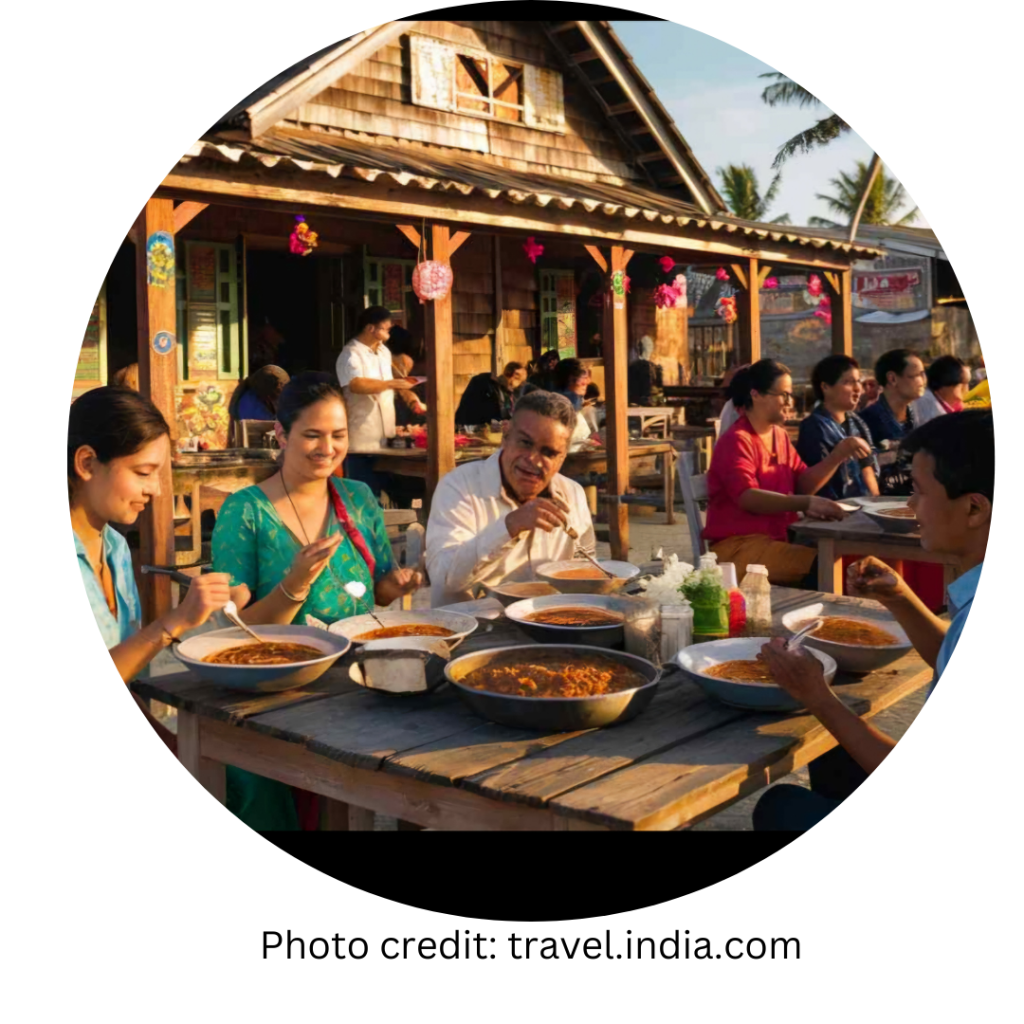
Despite these challenges, Lakshadweep still presents a unique and delectable cuisine. The islands’ restaurants often serve traditional Kerala dishes with a local innovative touch, making their cookery, a truly unforgettable experience.
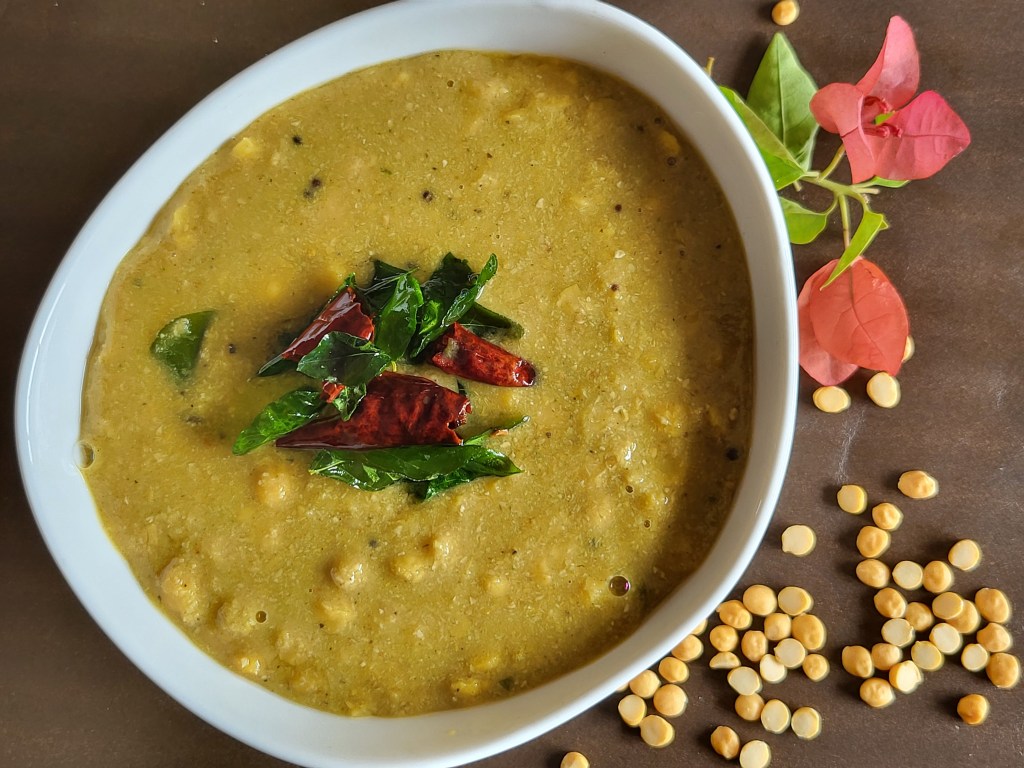
Today, we’ll be trying out this flavorful Lakshadweep-style dal. The dish is very popular in Lakshadweep and called Kadala Parippu. “Kadala” means chickpeas or gram, and “Parippu” means dal.
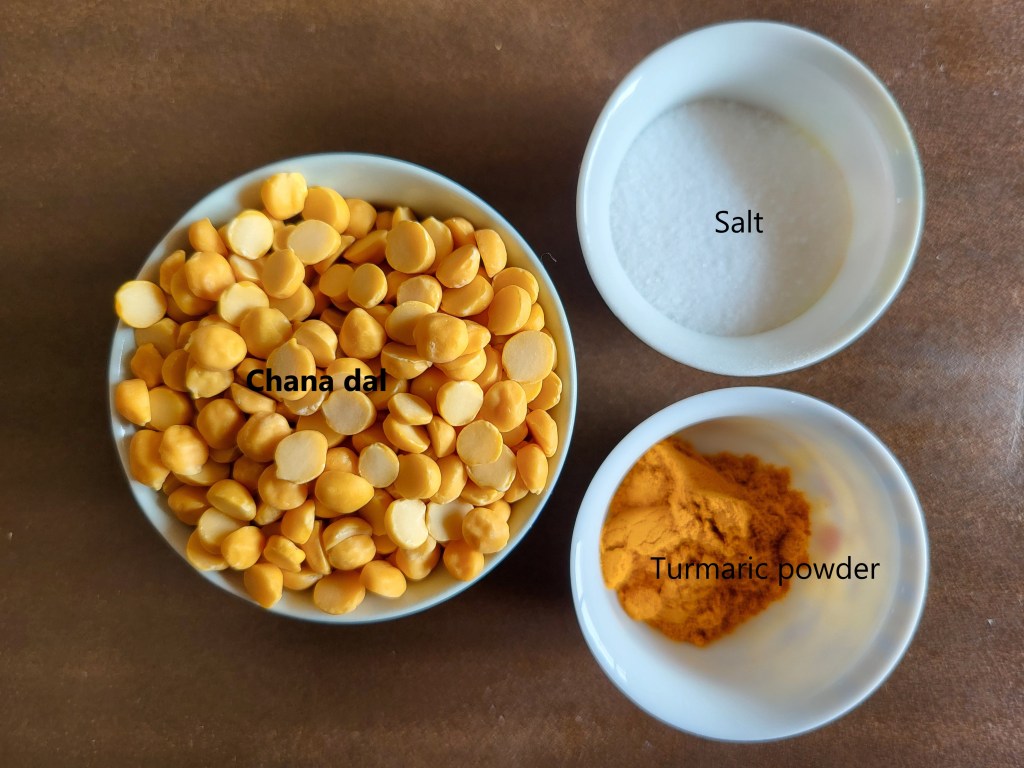
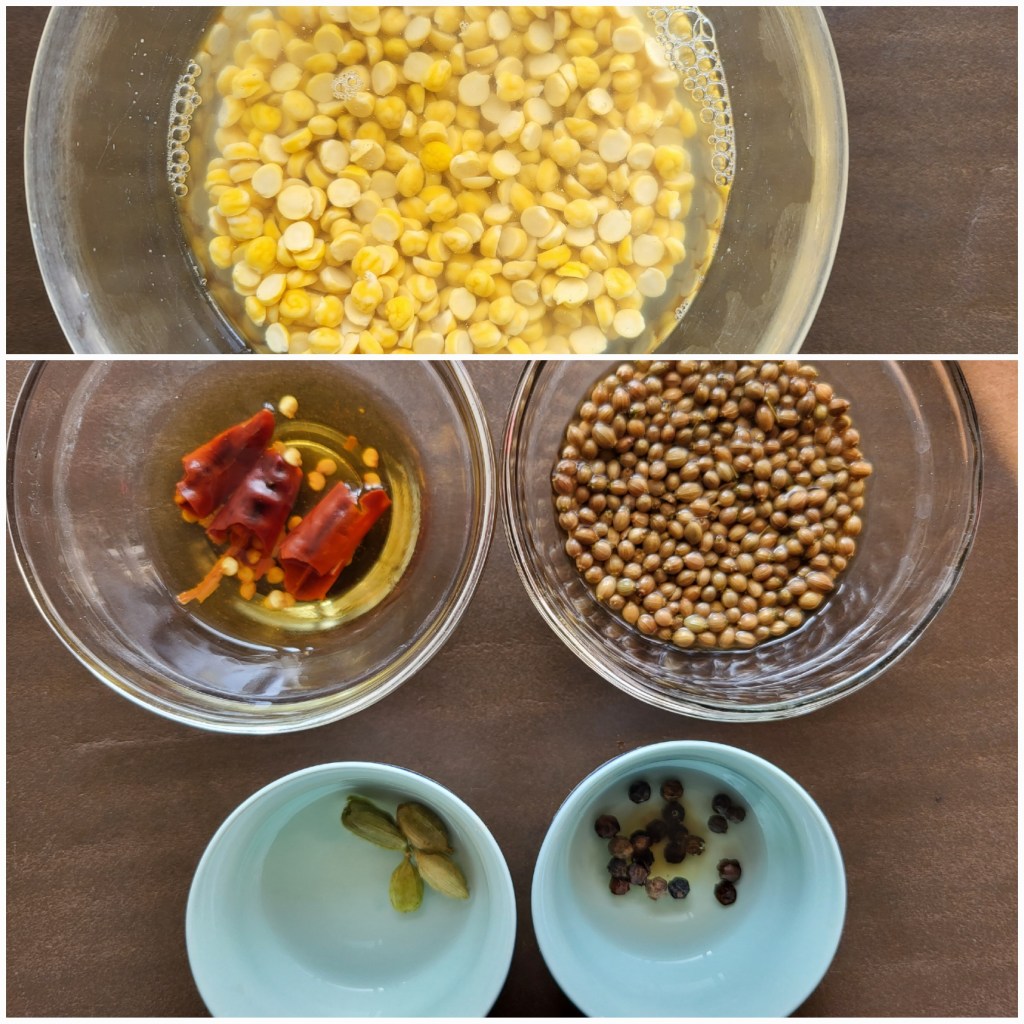
Soak the following ingredients separately in water for about 30 minutes: – dal, dried red chilies, coriander seeds, cardamom and black peppercorns, as in the picture.
2. Drain the soaked dal and transfer it to a pressure cooker.
3. Add salt, turmeric powder, and 2 cups of water.
4. Place the cooker on the stove and cook on high heat until the first whistle.
5. Reduce the flame to minimum and cook for 2 minutes.
6. Switch off the heat and let the cooker cool down naturally.
While the dal is cooking, prepare the ingredients to be ground.
7. Wash and remove the curry leaves from the stem.
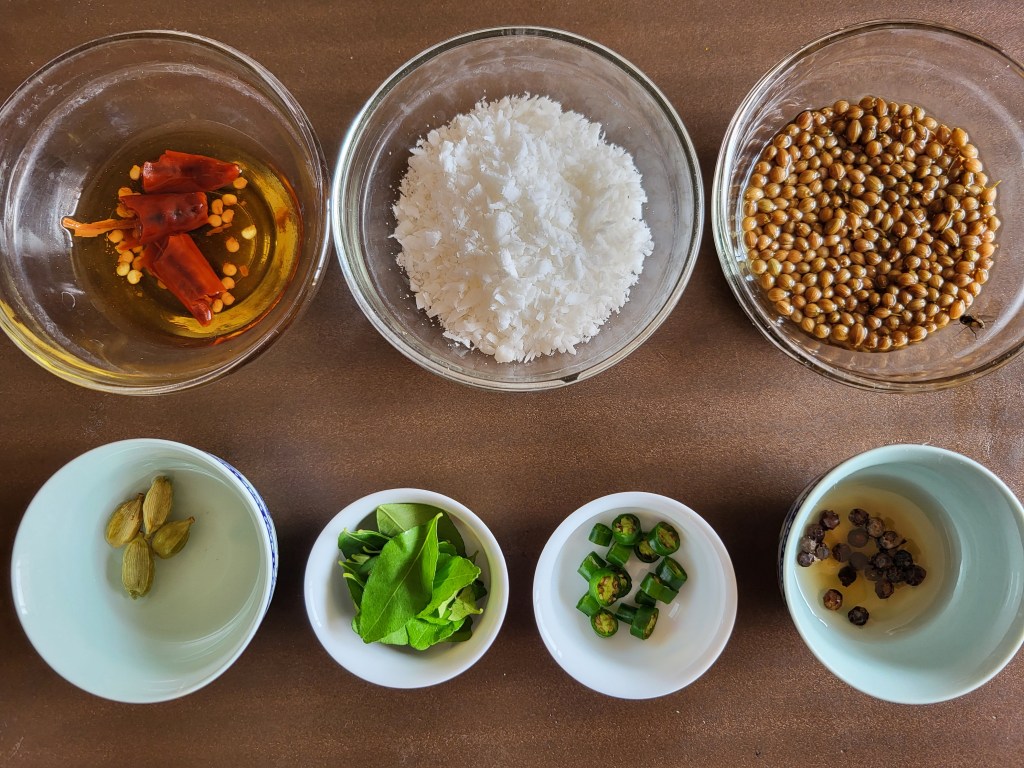
8. Wash and chop the green chili. Other ingredients such as dried red chili, cardamon and black peppercorn, coriander seeds are already been soaked.
9. Place all the ingredients in a grinder and grind them into a fine paste, using as little water as possible.
10. Transfer the ground spice mixture to a bowl and set aside.
Once the pressure cooker has cooled down,
11. Open the lid and gently mash the cooked dal with a spoon to break it down slightly.
12. Prepare the ingredients for tempering by – removing curry leaves from its stem and breaking dried red chilies into 3-4 pieces and discarding the seeds.
13. Heat oil in a pan over medium heat.
14. Then, add rai seeds to the hot oil and let them crackle.
15. Add the curry leaves and dried red chilies.
16. Sauté for a few seconds.
17. Add the prepared spice paste. Continue sautéing.
18. Stir and fry the spice paste until the oil starts to separate and ooze out.
19. Then, add the cooked dal and mix everything together well.
20. Adjust the consistency of the dal by adding water as needed.
21. Bring the mixture to a boil, then reduce the heat to low.
22. Simmer the dal for 3-5 minutes. Switch off the heat.
23. Serve the delicious dal hot with steaming rice!