Onion Pakora

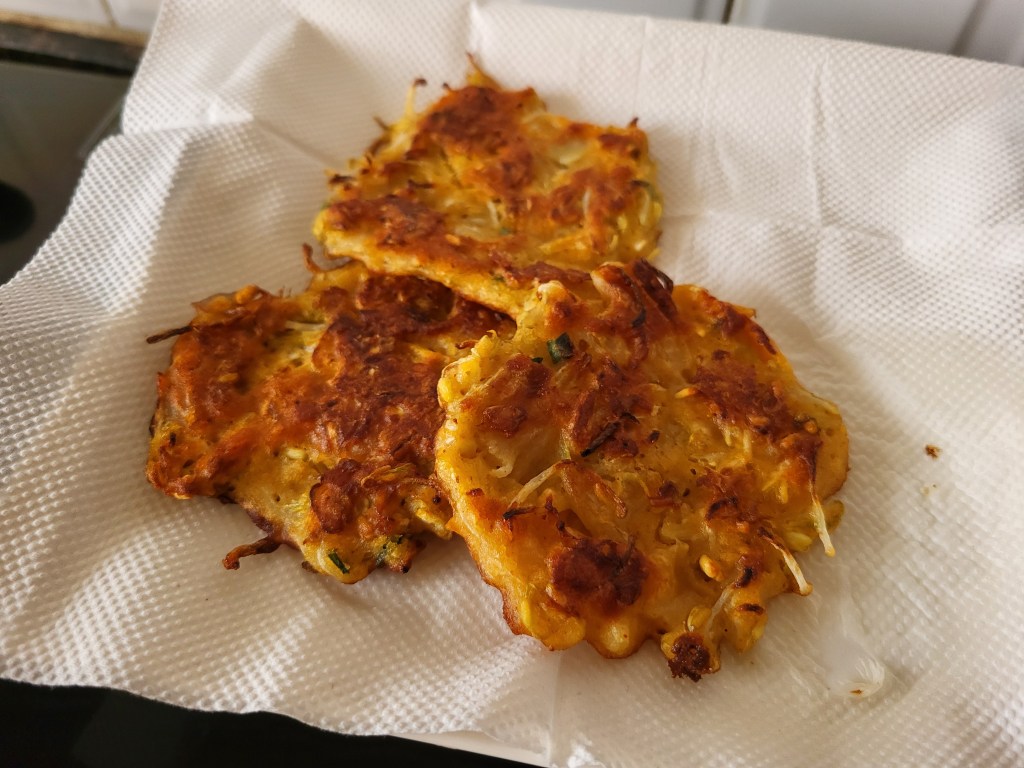
Pakora, also known as Pakoda is a popular Indian snack where onions are coated in a spiced gram flour (besan) batter and deep-fried to crispy perfection.

You need:

2 cups sliced onion

½ tsp grated ginger

½ tsp grated garlic

2 tbsp finely grated coriander leaves

1-2 finely chopped green chilies

¼ tsp turmeric powder

½ cup besan (Gram flour)

1 tbsp rice powder

Water if needed

Salt to taste

Refined oil for frying

Method:

  1. Slice onions thinly, add ½ tsp salt, and gently squeeze.
  2. Let it sit for 10 minutes, squeezing occasionally, to release the onion juice.

3. Meanwhile, prepare the aromatics: grate garlic and ginger, chop green chilies and coriander leaves.

4. Mix them with the onions and put it aside for about 5-10 minutes.

5. Add besan (gram flour), rice powder, and turmeric powder.

6. Mix well, using the released onion juice to bind the mixture. If needed, add 1-2 tsp water.

7. Let it stand for a few minutes. (If it is too dry, add water with a teaspoon one spoon at a time.) The mixture should look as in the picture.

8. Heat oil to medium heat.

9. Take half a dessert spoon of the mixture and gently release it into the heated oil with the help of another spoon. Don’t overcrowd.

10. Fry in batches with a few at a time until both sides are golden brown.

Serve hot with your favorite chutney or sauce!

Happy cooking!

Coming up next ………The Onion Wrap-Up!

                                        *******

Onion Ring

Instead of traditional flour coating, we’re using white lentil (urad dal) for a crispy twist. It’s simple, easy, and requires minimal ingredients. Give it a try – you won’t be disappointed!

You need:

1 large onion

50 gm urad dal (white lentil)

2 tbsp all-purpose flour (maida)

½ tsp pepper

¼ tsp paprika powder

Salt to taste

Refined oil for frying

Method:

  1. Soak urad dal in water for 4 hours or overnight.
  2. Drain and grind into a fine paste with water

3. Mix the dal paste with water to achieve a pancake-like consistency.

4. Add pepper, paprika, and salt to taste and keep it aside.

5. Peel and slice the onion into ¼-inch thick rings and separate the rings.

6. Soak them in cold water with ½ tsp salt for 30 minutes (refrigerate if desired).

7. Mix pepper, paprika powder and little salt to the flour.

8. Coat each onion ring in flour, then set aside to dry for 15-20 minutes.

9. Heat oil to medium heat and maintain the temperature.

10. Dip flour-coated onion rings in the urad dal batter and fry until golden brown.

11. Drain excess oil on kitchen tissue.

Serve cooled onion rings with your favorite sauce.

Enjoy your deliciously crunchy onion rings!

Coming up next ………  Onion Pakora

                               *******

Onion in the Kitchen: Blooming Onion

After exploring onions’ rich history, let’s dive into their culinary uses. Onions are incredibly versatile, serving as a vegetable, herb, and spice all in one. They’re low in calories, rich in fiber, and packed with flavor and medicinal properties.

The “blooming onion” is a popular onion dish featuring a large onion cut into a flower-like shape. Originating in America, it was initially known as “onion mum” in 1946 and later evolved into the “blooming onion” as we know today. It was invented by Jeff Glowski in 1985 in New Orleans.

Let’s give it a try and explore its deliciousness!

Blooming Onion

Instead of traditional all-purpose flour, I’m also using urad dal batter (white lentil) for a unique twist, inspired by Dalonthetable’s innovative approach.  The result? A crispy, uniquely textured Blooming onion that’s a sure to delight!  Give it a try and enjoy the flavorful twist!

You need:

1 large onion

50 gm urad dal (white lentil)

2 tbsp all-purpose flour (maida)

1 tsp pepper

1/2 tsp paprika powder

Salt to taste

Refined oil for frying

Method:

  1. Wash and soak urad dal in water for 4 hours or overnight.
  2. Drain and grind into a fine paste with water.

3. Mix the dal paste with water to achieve a pancake-like consistency.

4. Add pepper, paprika, and salt to taste and keep it aside.

5. Wash, peel, and cut off the top of the onion, leaving the root end intact.

6. Place the root side of the onion on a small bottle cap to prevent cutting through the onion.

7. Cut the onion vertically into halves, quarters, and then eighths, creating petal-like sections.

8. Soak the onion in cold water with ½ tsp of salt for 30 minutes in the fridge. 

9. Take the onion out of the cold water and separate the onion sections gently.

10. Mix flour, 1/2 tsp pepper, 1/4 tsp paprika and salt to taste in a bowl.

11. Coat the onion evenly, getting between the petals then set aside to dry for 15-20 minutes.

12. Heat oil to medium heat and maintain the temperature.

13. Dip the flour-coated onion in the urad dal batter and make sure each section is brushed with the batter.

14. Fry the onion in medium-hot oil for 3-4 minutes, tuning it occasionally, until golden brown.

15. Remove and drain on kitchen paper.

Serve with your favorite dipping sauce and enjoy your crispy Blooming Onion!

Happy cooking!

Coming up next ………. Onion Ring

                           *******

Beyond the Bulb…

Beyond the bulb, onions hold a rich history and a flavorful presence in the kitchen. While their storied past is fascinating, their culinary uses are a true delight. For those who love cooking, onions offer a chance to share joy with loved ones. Whether you’re a seasoned chef or a kitchen novice, onions are a versatile ingredient waiting to be explored and savored.

Origins and History of Onions

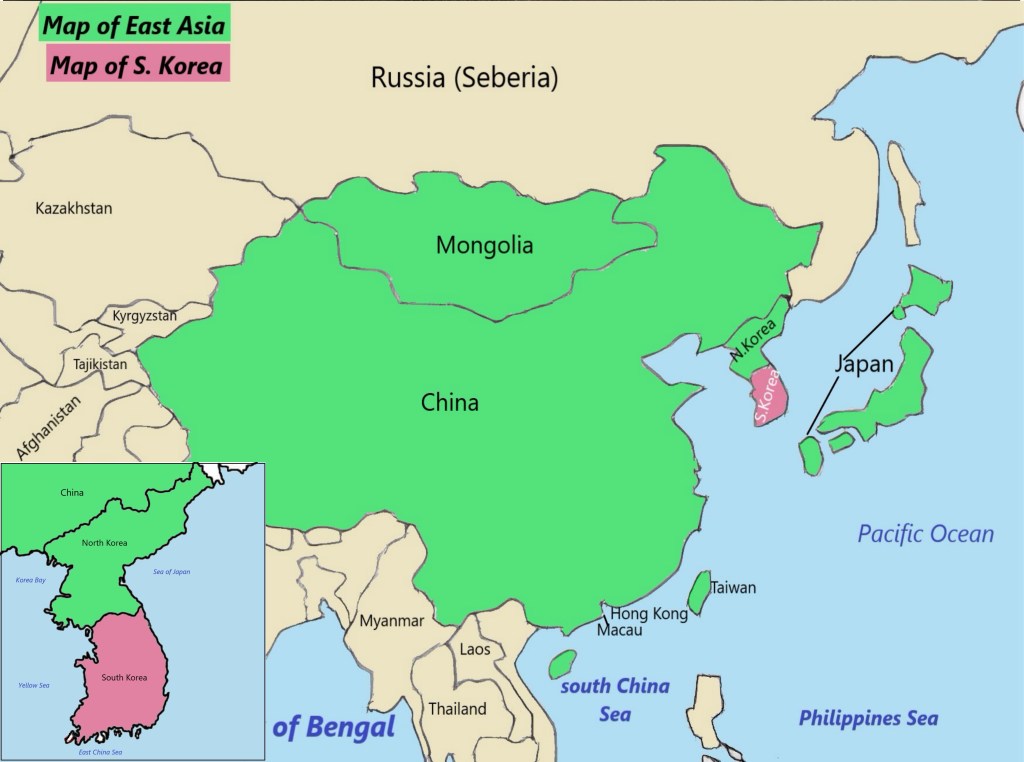
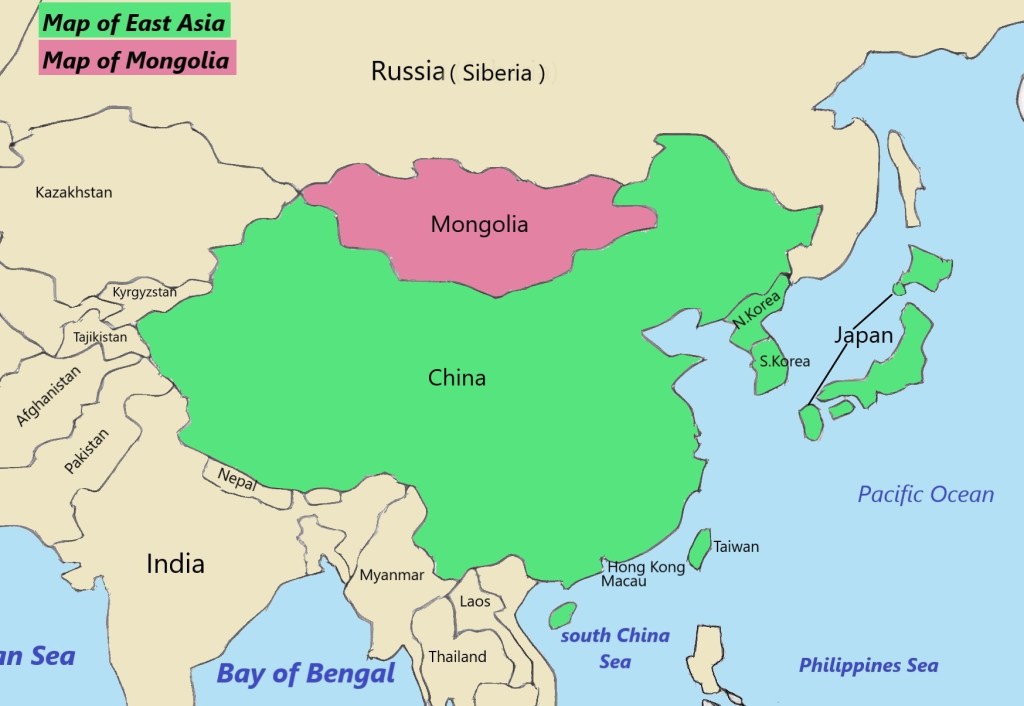
According to various sources, onions have a rich history that spans thousands of years. The possible birthplace of onions is often attributed to the regions of Kazakhstan, Kyrgyzstan, Tajikistan, Turkmenistan, and Uzbekistan.

However, some researchers suggest an alternative origin story, tracing onions back to Iran and West Pakistan.

A Rich History of Cultivation

Onions have been an important crop for thousands of years, with cultivation dating back over 7,000 years. Evidence of onion cultivation can be found in ancient civilizations such as Egypt, Greece, and Rome. While ancient Egypt made extensive use of onions, some historians believe that the Greeks and Romans introduced onions to Europe, who likely acquired the onion from the East in Central Asia.

The Romans and Greeks, with their vast trade networks and expansive empires, played a significant role in disseminating onion cultivation and consumption throughout their territories.

Europe and Americas

Roman and Greek influence helped spread onions to various parts of Europe, and later to the Americas by the Europeans, shaping the culinary landscape of both continents.

A Glimpse into India’s Culinary Past

Ayurvedic texts written by Charak Samhita (200 BCE – 300 AD) show onions were valued for healing. Yet, some considered onions and garlic ‘Tamasic’ and unhealthy, preferring ginger. Historically, India’s diet reflected this, with ginger dominating and onions/garlic being rare. The Mughal Empire (1526-1857) shifted this, making onions a staple. Now, modern research confirms onions’ benefits, echoing ancient wisdom – ancient meets modern!

Onions in Chinese Cuisine

Onions, particularly spring onions, have been a staple ingredient in Chinese cooking for centuries and are also valued in traditional medicine. Onion cultivation in China dates back to around 6000 BC, with onions being grown alongside other vegetables. This long history highlights the significance of onions in Chinese cuisine and culture.

Happy reading!

Coming up next ……. Onion in the Kitchen: Blooming Onion

                                    *******

Onion Blooms: The Inflorescence

Delve into the beautiful flowers that onions bloom.

Onion plants produce a flower cluster, or inflorescence, consisting of numerous small flowers.

In our last post, we explored the onion plant’s unique flowering process, where a tall, hollow stalk (scape) emerges from the center, topped with a conical bud enclosed in a protective spathe. Inside the bud, hundreds of tiny flowerets await their turn to bloom.

Slowly the onion’s protective spathe gives way as buds mature, bursting open to reveal the emerging inflorescence. Over 5-6 days, the buds unfurl, standing tall with the empty spathe providing base support (picture 4).

After a few days, the flowers begin to bloom, adding a vibrant touch to the plant.

The onion’s flower cluster, or umbel, is supported by a sturdy stalk called the peduncle or scape. This umbrella-like structure consists of tiny stalks (pedicels) holding hundreds of small flowers (florets), often over 200! The term ‘umbel’ originates from the Latin word ‘umbra’, meaning shade or shadow, reflecting its umbrella-like shape.

Parts of a floret of the Inflorescence:

Each delicate flower on the inflorescence featured, 6 white petals with green stripes, 6 stamens (anther and filament), and a central pistil (stigma, style, and ovary), all supported by slender pedicels.

A Curious Dissection

A friend asked me to dissect an onion floret, and I took on the task.

What Secrets Lie Within?

When I dissected an onion floret, I was amazed to find a three-celled ovary, each cell containing two ovules. This intricate design reveals the potential for seed production in each delicate flower.

Onion Floret’s Ovary. We didn’t notice the onion floret’s ovary had three cells until we dissected it. This tiny detail reveals the intricate design of the flower.

A 4-part collage displays the inflorescence’s progression:

A. Initial bloom

B. Buds awaiting bloom

C. Full bloom

D. Gradual drying

Onion seeds are usually ready to harvest after the inflorescence dries out, which takes about two to three months.

However, we couldn’t wait that long and collected 2-3 inflorescences after a month. Despite the seeds being slightly damp and brown, we were thrilled to see them.

Interestingly, during flowering, we observed no bees or insects visiting the plants, suggesting possible self-pollination, which likely contributed to our seed yield.

We’ll sow these onion seeds and follow up with you. The journey from tiny sprout to seed was truly captivating and we’re grateful for the experience.

Thanks for being part of it!

Happy reading!

Coming up next ………………. Beyond the Bulb. 

                                         ******                                                                                                                          

Onion Blooms: The Scapes

Exploring Onion Shoots and Flowers

As I examined my onion plants, I was thrilled to notice the emergence of the first flower bud. This unexpected development sparked excitement, and I was eager to learn more.

The cone-shaped flower bud features a protective covering called a spathe, which safeguards the delicate florets inside. The spathe itself is white with numerous parallel green veins that converge at the tip.

The scape or peduncle is the stem that supports the onion flower. It grows from the terminal bud, characterized by its long, hollow, leafless structure with parallel veins, tapering towards the end, and lined with epidermal cells internally.

The Two Phases of Onion Growth

Onion plants typically produce flowers in their second growth phase, following the initial phase of development from seedlings to small bulbs, known as sets.

Onion Bolting

When an onion plant sends up a flower stalk, a process known as “bolting,” it redirects its energy toward seed production, sacrificing the growth of the underground bulb(onion). As the plant focuses on nourishing the flower, the onion remains small. While farmers often remove these flower buds to prioritize bulb growth, I chose to let them bloom, embracing the plant’s natural cycle.

As days passed, our pot became a hub of activity, with many more scapes emerging alongside the leaves. At first glance, it was easy to confuse the two, but upon closer inspection, we noticed that the scapes were slightly thicker and with the distinctive flower buds perched on top.

We waited for almost two weeks for the buds to unfurl. The buds grew bigger and rounder, their skin becoming almost transparent, hence the floret buds are visible from outside.

Interestingly, scapes are edible when they’re still tender and have a mild onion flavor.

Stay tuned for the next update, where we’ll share more about the onion’s inflorescence!

Happy reading!

Coming up next ……. Onion Blooms: The Inflorescence

                                        ********

Onion Bulbing

Onion bulbing occurs when the plant’s energy shifts from leaf growth to bulb formation, storing excess food in the underground bulb, which we harvest as onions. Each leaf on the onion plant corresponds to a specific layer in the bulb, with the plant’s energy storing food in concentric rings as the leaves grow.

This process is triggered by factors like day length and temperature, resulting in the characteristic layered structure of the onion.

Both sunlight and temperature play significant roles in bulbing. When leaves receive sufficient sunlight, they produce food through photosynthesis, which is then transported to various parts of the plant. Excess food is stored at the base of the tubular leaves, contributing to bulb formation. Each green leaf produces food and stores excess in its corresponding sheath.

Onion Planting Depth

When planting onions from sprouts or sets, it’s essential to avoid planting them too deeply because as the onion bulb grows in size, the deeper it’s planted, the more resistance it will face from the surrounding earth. This increased pressure can result in smaller bulbs. Ideally, about ¼ of the mature onion should remain above the soil surface.

Planting onions no more than ½ to 1 inch deep allows for proper growth and development, which is why the soil often cracks as the bulbing process begins.

Day Length and Bulb Formation

Day length plays a crucial role in onion cultivation. Different varieties require specific amounts of daylight to trigger bulb formation. Understanding these differences is vital for commercial farmers, while home gardeners can benefit from grasping the basics.

The Onion Bulb: A Modified Stem

An onion is a bulb.  Botanically speaking, an onion is a modified underground stem with characteristic parts and functions.  It is not a stem as we understand.  The stem we know, is always above the soil.  But in case of onion, the stem remains underground along with its roots.  

Onion bulb is covered by a few layers of papery skin/peel called tunic and so  it is also known as tunicated bulb.   These papery skin protects the bulb from drying as well as keeps them safe  from insects and germs.

The stored food in the bulb is in the form of carbohydrates synthesized from sugars produced during photosynthesis. Onions belong to the Allium family, with the scientific name Allium cepa.

Onion Plant Roots

The roots develop from the base of the new stem, distinguishing them from the older stem. Initially delicate and white, the roots increase in number over time, spreading horizontally to anchor the plant and absorb water and minerals.

These roots tend to remain shallow, spreading horizontally to anchor the plant firmly in the soil, rather than growing deep. This positioning allows them to effectively absorb water and minerals from the top layer of soil.

When onion sets are planted, they often quickly establish themselves, producing new roots that spread horizontally. This helps the sets to anchor firmly in the soil and begin absorbing necessary nutrients and water for growth.

Happy reading!

Coming up next ……… Onion Blooms: The Scapes

                                *****
Structure of Green Leaves in Onions

The green leaves of an onion plant are long, thin, and tubular, emerging from the base of the plant to form a sheath around the developing bulb. These leaves are typically a vibrant green color and play a crucial role in photosynthesis, supporting the growth and development of the onion bulb.

Unfolding the Green Leaves of Onion Plants

Let’s examine the pseudostem of an onion plant. Notice how green leaves emerge from the tightly wrapped tubular sheaths. Upon closer inspection, it’s evident that the green leaves appear to branch out directly from these sheaths, forming the pseudostem.

As the onion sprouts grow, the green leaf tissues and pigmentation become active. The veins of the tubular sheath diverge, leading to the base of the green leaf.  This is the first green leaf of a sprout

Detailed View of Onion Leaf Interior

This enlarged picture reveals the interior side of same onion leaf as above, showcasing how veins in the tubular sheath diverge and connect to the green leaf’s base. The veins appear as light green lines within the white tubular sheath. Notably, a small, elongated portion of the white sheath extends above the green veins at the leaf’s base.

Exterior and Interior Views of a Mature Onion Leaf

The exterior side of the tubular sheath displays green veins that seamlessly transition into the green leaf.

In contrast, the interior side shows the veins diverging to the right and left, meeting the base of the green leaf.

 Interior of a Mature Onion Leaf

The interior side of a mature onion leaf is displayed flat, revealing parallel and diverging green veins from the tubular sheath. These veins form a silhouette with an elliptical shape at the center, tracing the base of the green leaf. The elongated white tubular sheath provides tight support, cradling incoming green leaves emerging from the center of the plant.

When we gently pressed the white sheath to flatten it, there was a slight tear on the white sheath but revealed the converging veins on the outer side, which became more prominent and seemed to trace the base of the green leaf.

Unwrapping Onion Leaves

It is the picture of the interior side of the same leaf: A 4-part collage reveals its structure.

1. A thin white membrane covers the interior.

2. The arrow indicates the hollow section, housing the leaf base.

3. After removing the membrane, the hollow leaf base is exposed.

4. A cross-section cut through the membrane and leaf reveals its hollow interior.

This examination revealed a distinct feature on the white tubular sheath where the green leaf emerges. Notice how the veins converge into this small area of the green leaf. Our examination showed:

Our observations suggest:

  • Veins from the tubular sheath connect to the inner part of the green leaf.
  • The outer side of the leaf remains round, supported by the sheath’s structure.
  • In contrast, the inner side is flat may be due to two factors: the connection of veins from the sheath and the pressure exerted by the pseudo stem.
  • The green leaves emerge sequentially from the top, each associated with a tubular sheath that it nourishes with nutrients during its growth.

Characteristics of Onion Leaves

Onion leaves are characterized by their bluish-green color, hollow and curved shape with pointed tips, and a rounded outer surface with a flat inner surface.

They exhibit parallel venation, which supports their structure and facilitates the transport of nutrients and food materials to the onion bulb for storage.

When we open up an onion leaf, we could see the parallel venation more clearly and also see the inside lined with a protective epidermal peel.

Each plant bears about 8-10 leaves measuring around 46-50 cm in length. Understanding onion leaf anatomy provides valuable insights into the plant’s development and function.

Happy reading!

Coming up next ………Onion Bulbing

********
The Pseudo Stem of an Onion Plant

Forming the Pseudo Stem:

The onion’s white tubular sheaths emerge from its stem, playing dual roles: forming the pseudostem to support green leaves for photosynthesis and storing excess food in the underground bulb for later use.

Now let us focus on Pseudostem Formation

The pseudostem is built layer by layer as new leaves emerge from the center of the plant. Each leaf consists of a green blade and a white tubular sheath. The green blade/leaves alternate with sequential tubular sheaths.

As new leaves emerge, they grow through the center of the existing sheaths, pushing through the tubular structures and forming a concentric layer.

This process repeats, adding layers to the pseudostem, which provides structural support to the plant, allowing it to grow upright and expose its leaves to sunlight.

The green leaves, at the top, are responsible for filling their corresponding tubular sheath with nutrients during its lifetime.

A Closer Look at the Tubular Sheath and Green Leaf

As new green leaves emerge, their tubular sheaths wrap tightly around the inner leaves, offering support and protection. This process is particularly visible in young sprouts, where the overlapping sheaths form a sturdy pseudostem.

In this way, each sheath holds the inner green leaves snugly, with each subsequent sheath growing slightly higher than the last. This layered structure allows the green leaves to emerge progressively higher, exposing them to sufficient light for photosynthesis and thus forming the pseudostem.

Veins of Tubular Sheath and Green Leaf

The veins of the tubular sheath seamlessly extend into the green leaf. When viewed from the outer side, the veins run parallel.

In contrast, the inner side shows a converging pattern, where the veins of the tubular sheath meet the green leaf, forming a flat surface. This arrangement allows for tightly packed green leaves.

The green leaf branches out from this point, while the tubular sheath continues to elongate a little, wrapping tightly around emerging inner leaves.

As each new leaf emerges, its tubular sheath wraps protectively around it, supporting the leaf during growth. This process repeats with each subsequent leaf, which creates elliptical holes or openings in the sheath as it pushes through. The result is the characteristic structure of the pseudostem.

As we previously discussed, the green leaves grow in an alternating pattern from the tubular sheaths, resulting in the distinctive V shape due to the slight extra growths from the sheaths, ultimately forming the wonderful pseudostem.

The tubular sheaths possess flexible properties, allowing them to stretch and accommodate the plant’s growth. However, over time, the sheaths become increasingly thin and fragile, eventually succumbing to wear and tear.

Happy reading!

Coming up next …… Structure of Green Leaves

                                *******

The Amazing Transformation of Sprout A

Recall our last post, where we carefully separated the two sprouts and labeled them A and B? We highlighted the incredible potential of sprout B, showing its compact structure and remarkable growth capabilities, which make it a powerhouse in its own right.

Today, we’re excited to share the next chapter in this growth story, as sprout A has made significant strides and grown into a small, flourishing plant.

Upon removing the last fleshy, white-purple layer, we discovered two small sprouts emerging once more.

We separated the two sprouts, labeling them A1 and A2, and presented them individually for clearer visualization.

Let’s take a closer look at Sprout A1.

To begin, we’ll carefully dissect the first tubular sheath.

The first leaf features a short green blade and a long tubular sheath, with a hole allowing the second, third, and fourth leaves to emerge. In contrast, these subsequent leaves have longer green blades but shorter tubular sheaths, roughly half the length of the first leaf’s sheath.

A consistent pattern emerges in every sprout: the first leaf is always the smallest, encased in a tightly wrapped tubular sheath that protects the inner green leaves. Notably, the emerging leaf’s hole is prominent, and its corresponding white tubular sheath is remarkably long.

As the leaves grow, the first leaf becomes the outermost layer, while subsequent leaves (second, third, and fourth) develop longer green blades compared to their white tubular sheaths.

These new leaves emerge from the young stem situated just above the older mother stem. Remarkably, this tiny sprout contains all the same components as its parent plant, making it a miniature version of a full-grown onion plant.

Examine the tiny plant on the right-hand side of the picture. Notice the new bud stem and the white tubular sheath, which will eventually develop into the pseudo-stem and the bulb. The pseudo-stem will support the green leaves, exposing them to sunlight to produce food for the plant and ultimately form the onion bulb at the base.

A Closer Look at Sprout A2

Notice the first green leaf: small and nestled within a tight white tubular sheath that encases longer inner leaves. Sprout A2 also showcases a new baby bud stem, giving rise to these leaves. This tiny stem contains axillary and terminal buds, essentially making it a mini plant.

These miniature onion plants are remarkable, equipped with everything needed to grow into thriving onion plants. Let’s appreciate these tiny powerhouses and watch them flourish!

Stay tuned for our next post. 

Happy reading!

Coming up next ………The Pseudo Stem.

                                      ……..