Rajma Plant

Seed2Seed:  Know your Kashmiri Rajma/Kidney bean through leaves and flowers.

The origin of rajma, also known as kidney bean, is Mexico. It was introduced to India by the Portuguese via Europe. Over time, the Kashmiri/Jammu rajma evolved from the regular kidney bean due to geographical and climatic conditions.

Kashmiri rajma, is smaller in size, brighter in colour, and tastier than the regular kidney bean. Although it’s a pulse, it’s used extensively in Indian kitchens, much like dal.

Rajma is a nutrient-rich food. Its scientific name is Phaseolus vulgaris. It’s an excellent source of protein, fiber, iron, and vitamins.

To get a glimpse of the plant’s life cycle, try sowing some rajma seeds and watch them grow. Observe the leaves and flowers as they develop.

Welcome to Seed2Seed!

In this project, we embark on a fascinating journey, sowing seeds and observing their transformation into plants. We’ll witness the seeds germinate, grow, and develop leaves, flowers, and fruits. Ultimately, these fruits will produce the same kind of seeds we started with.

But what exactly is a seed?

A seed is the embryonic stage of a plant’s life cycle. It’s a tiny, self-contained package that holds the potential for new life. A seed consists of three main parts:

1. Embryo: The embryo is the tiny, undeveloped plant inside the seed. It’s not visible to the naked eye, but it contains the genetic material necessary for growth.

2. Endosperm: The endosperm is the nutrient-rich tissue that surrounds the embryo. It provides the necessary nutrients for the seedling to grow.

3. Seed Coat: The seed coat is the protective outer layer of the seed. It shields the embryo and endosperm from damage and provides a safe environment for germination.

By understanding the structure and function of seeds, we can appreciate the incredible process of plant growth and development.

Is Rajma a Seed?

Let’s conduct a simple experiment.

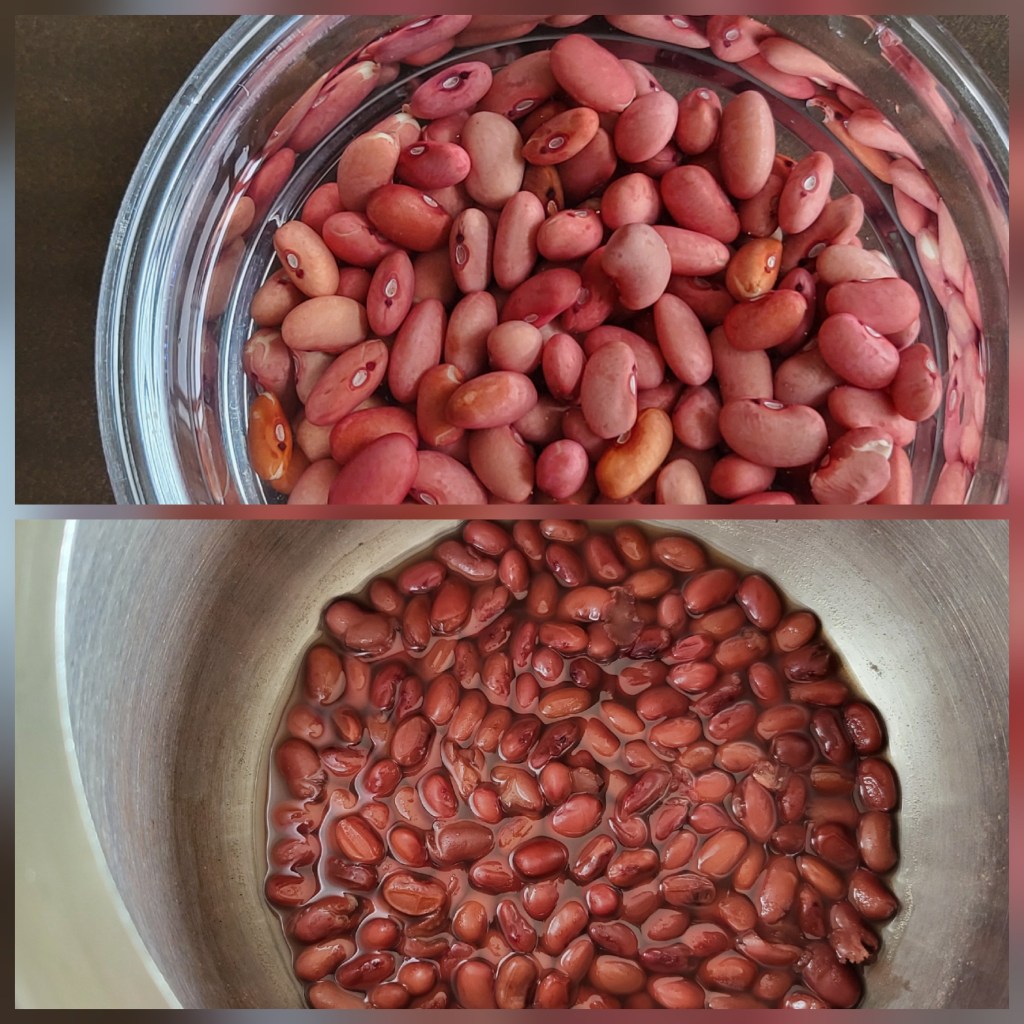
  1. Soak a few rajma beans in water for a couple of hours. This will make them softer and easier to handle.
  2. Remove the rajma beans from the water and wipe them carefully.

3. Use a blade or pin to carefully remove the red skin. This is the seed coat.

4. Slit open the seed and observe the two fleshy, white, leaf-like structures. These are the cotyledons or seed leaves, also known as the endosperm. They contain the nutrients for the new plant.

What’s Inside?

Inside the cotyledons, there’s a tiny structure (not easily visible) that’s the future plant of the seed. This is called the embryo. (see the picture above)

Now that we’ve explored the internal structure of rajma and rajma fulfils all the three criteria of a seed, we can proceed with our experiment!

Seed2Seed

Prepared a pot and soaked few rajma seeds overnight. When the seeds absorb the water, the germination is activated.

Sow the seeds 2 cms below the soil and watered them sparingly.

After about 7 days, a white coloured hook emerged from the soil, which is called Hypocotyl.

What is Hypocotyl?

The Germination Process under the soil:

We planted a few rajma seeds in a glass container for you to make it easier.

When a seed is planted in the soil, it may seem like nothing is happening for a few days. But beneath the surface, germination has begun. The first visible sign of growth is the emergence of the radicle, the embryonic root of the plant.

As the radicle grows downward in search of water, a node forms on the root from where a small portion begins to elongate and push upwards towards the light. This elongated portion is called the hypocotyl, marking the beginning of the seedling’s journey towards the surface.

As the hypocotyl grows, it carries the seed’s cotyledons and plumule upwards towards the light. Growing rapidly, the hypocotyl breaks through the soil surface, forming a hook-like shape while the seed remains underground. This distinctive shape earns it the nickname “plumule hook.”

Later, the seed emerges, still encased in its coat, with the cotyledons and plumule intact. As the seedling develops, the hypocotyl straightens and matures into the plant’s stem.

When the seed appears above the soil during germination it iscalled epigeal germination (epi = above, geo = earth).

Day 8: Germination Update

On the 8th day,a significant development occurred. The seed coat had burst open, revealing a glimpse of the plumule inside the cotyledon. The red seed coat was still partially attached, a reminder of the seed’s transformation.

The little rajma bean’s progress is adorable! Watching seeds germinate and grow is a magical experience.

Day 9: A New Transformation

Overnight, a magical change occurred! The cotyledons and plumules turned a vibrant green. As they grew, their names also changed. The plumules now became known as true leaves, while the cotyledons transformed into seed leaves.

Growth and Development

The Emergence of a New Plant

The hypocotyl is the portion between the root and seed leaves (cotyledons), while the epicotyl is the portion between the seed leaves and true leaves (plumule). True leaves are broader and heart-shaped. A stem bud emerged between the two true leaves.

The seed leaves provided stored nutrition to the new plant. As true leaves developed, they began to produce food for the plant. Meanwhile, the seed leaves shrivelled up. The young plant actively produced new stem and leaf buds.

Leaf Development

The first leaf that appeared was a 3-lobed trifoliolate leaf. Trifoliolate leaves have three leaflets attached to a common stalk.

Leaves continued to appear on the stem, growing into a beautiful plant.

Support and Protection

To protect the plant from pigeons, we covered it with an iron frame. As it grew, we removed the frame and supported the plant with a twig.

Flowering and podding

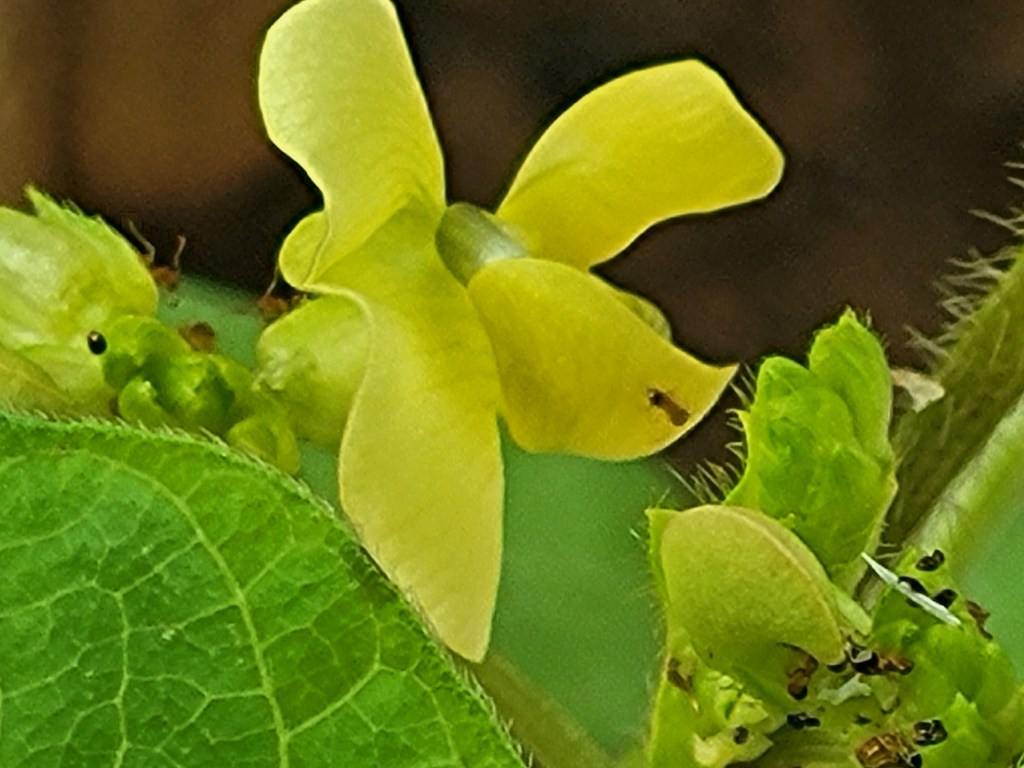
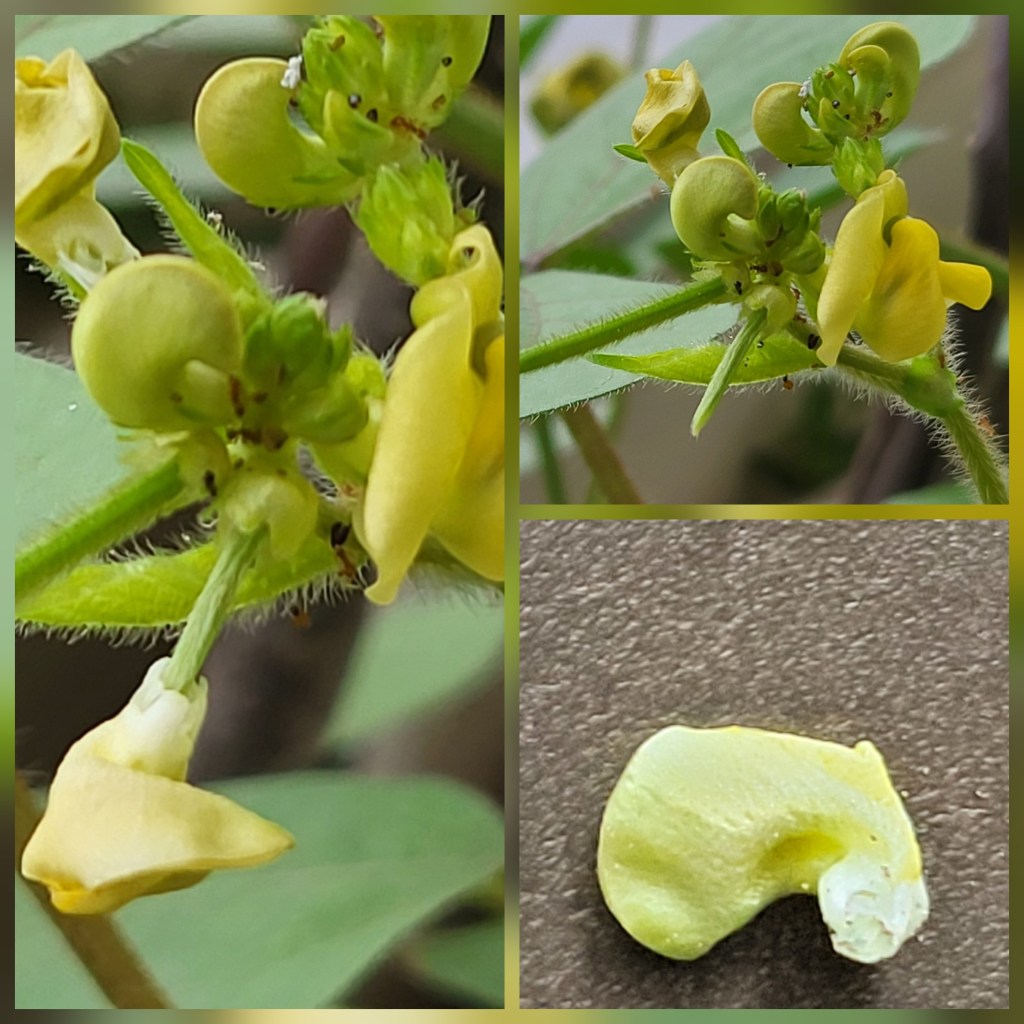
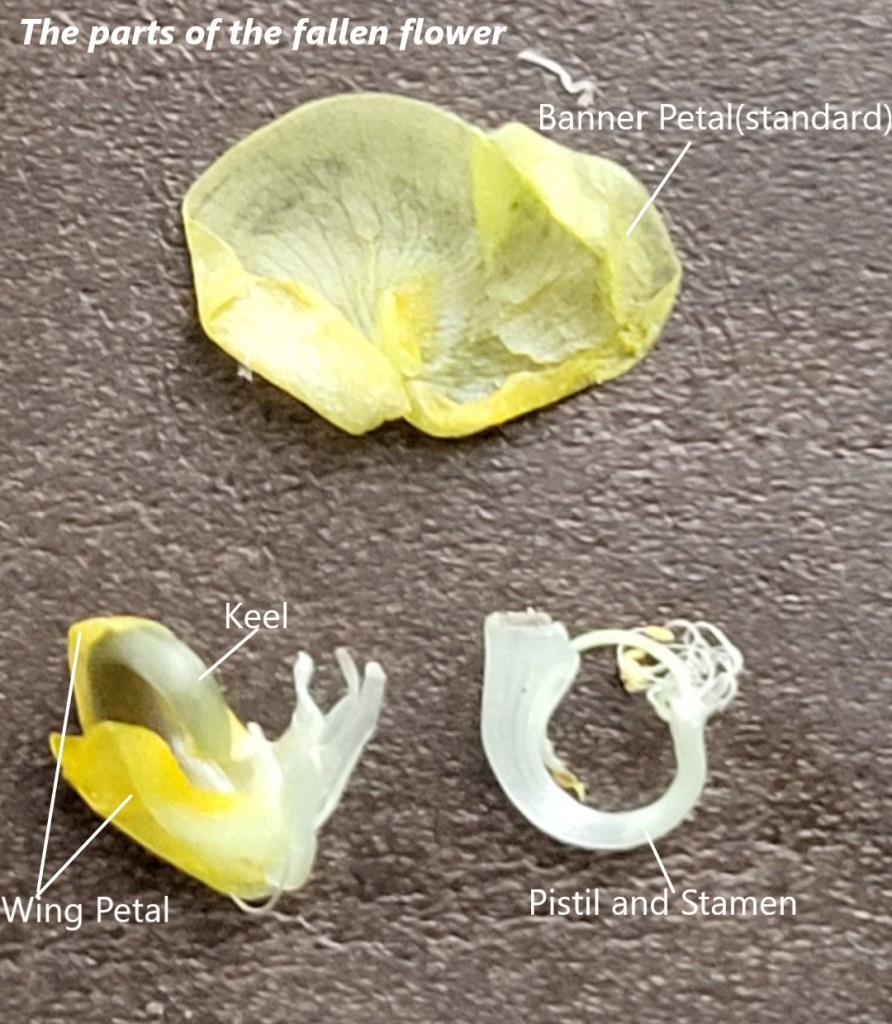
Beautiful white flowers adorned the plant, followed by more flower buds.

The first rajma pod appeared after 3 days, and soon more pods emerged. The base of the plant branched into several branches, promising a bountiful harvest.

Seed Development

At this early stage, the pod is difficult to open. It is tight squeeze. Upon closer look, we can see that only two seeds have begun to develop, while the others are still waiting to emerge.

As the seeds mature, they fill the pod and undergo a colour transformation:

1. From green to pinkish hues.                                                   2. Eventually turning bright red.

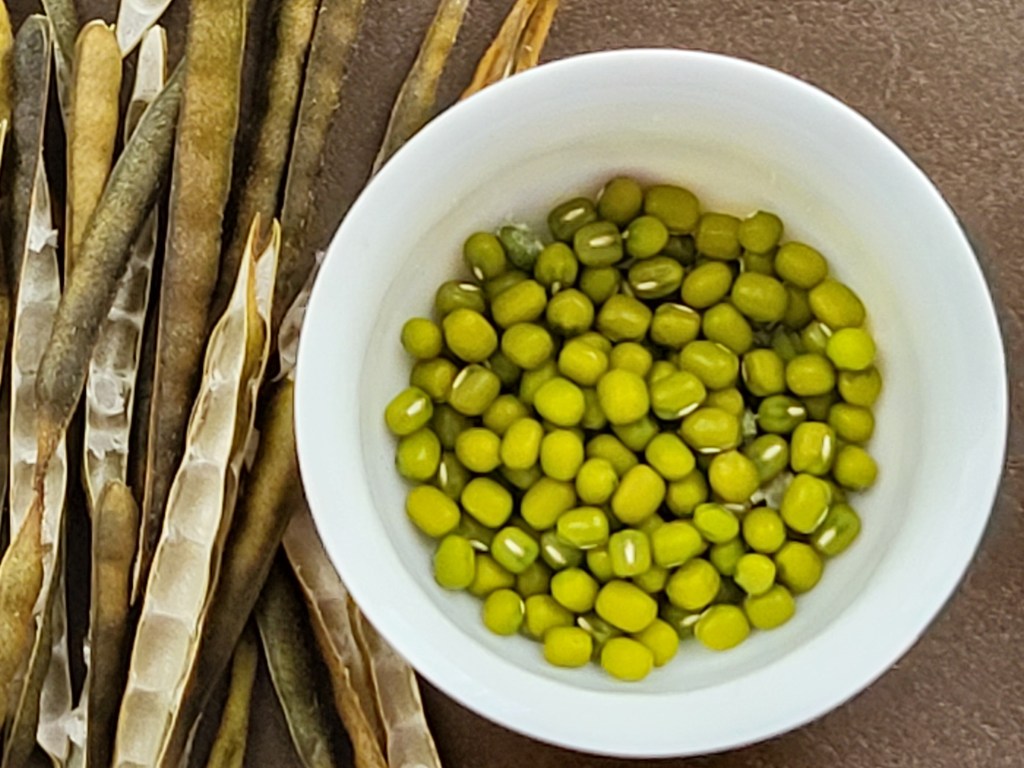
Take a look inside the rajma pods! You’ll find 5-6 seeds attached to the inner curve of the pod, where they receive nutrients and grow.

We carefully removed the pods, extracted the seeds, and revealed the beautiful, red, gem-like seeds.

A Speedy Harvest!

Typically, rajma plants take around 4 months (100-140 days) to mature from seed to harvest. But our little plants grew and reaching harvest readiness in just 95 days!

Happy reading!

                                      *******

Sprouts: The Tiny Powerhouses

How the leaves come out from the sprouts

In one of our last posts, we separated and planted the sprouts, watching them grow into full-fledged onion plants. But have you ever stopped to think about what makes these sprouts so special?

Today, we’re going to take a closer look at these tiny wonders and uncover the secrets behind their remarkable growth. So, what makes sprouts miniature plants, and what can we learn from them?

Studying a sprouted onion with emerging leaves is a great way to learn about how they grow. And we’re lucky to have a perfect specimen!

Upon gently peeling away several layers of the dry papery and fleshy leaves, we reached the 8th layer, revealing the two hidden sprouts beneath (9).

We labeled the two sprouts A and B for closer observation.

Let’s take a closer look at sprout B, which is smaller and hasn’t yet unfurled its leaves. We’ll start by gently removing the white and purplish fleshy leaf that’s wrapped around it, which is actually a remnant from the mother onion.

As we carefully peel it away, we’re left with a white, tubular sheath that has a green tip along with the stems of both the new and old onion.

We’ll refer to one side of the sprout as the ‘inner side’. This is because this side was originally attached to the other sprout, and we made a cut here to separate the two sprouts.

Take a closer look at sprout B and notice the tiny opening on the inner side. This small opening is the only exit route for the green leaves still inside the tubular sheath.

We carefully made a small slit near the tiny opening, extending it down towards the stem. Gently opening it up revealed the green leaves tucked inside the tubular sheath.

It’s possible that initially, this tiny hole was larger, matching the circumference of the new bud stem. Over time, the onion white tubular sheath may have closed in, leaving behind only a small opening for new leaves to emerge.

If this is the case, the process might repeat for every emerging leaf. The onion leaves grow very rapidly during sprouting. New leaves emerge before the outer tubular sheath can close.

As a result, we’re left with a picture of white, tubular sheaths wrapped around each green leaf, just like in the picture.

Take a look at the tiny plant on the right-hand side of the picture. It has a new bud stem.  It has the white tubular sheath which will become the pseudo-stem and expose the green leaves to the sun to produce food for the plant and eventually form the onion at the base.  This tiny sprout has all the parts of a big onion plant.  So, a tiny sprout is a miniature onion plant.

Here is another Sprout X, that illustrates this process perfectly: the sprouting leaves have emerged, gradually enlarging the tiny hole.

Next, we’ll take a closer look at Sprout A, where the leaves have already emerged from the bud casing. Stay tuned for our next update!

Happy reading!

Coming next ……… Transformation of Sprout A

                                          *******

From Buds to Sprouts: The Onion’s Transformation

Sprouting: A New Chapter in an Onion’s Life

Today, we’re going to explore the transformation of an onion bud into a sprout. To do this, let’s cut open an onion lengthwise. This will give us a clear view of all the different parts, including the roots, stem, fleshy leaves, inner buds, and papery covering.

Luckily, we have two onions to compare: one that’s fresh onion and another that’s just starting to sprout.

The top picture shows just a fresh onion. Notice the fleshy leaves and tiny buds nestled at the center.

In contrast, the lower picture shows the onion at the very initial stage of sprouting. Here, you can see the bud has elongated, become slightly transparent, and developed a faintly colored tip. You can also see the lightly yellowish leaves inside the bud.

An enlarged photograph shows the labeled parts of the initial stage of sprout inside an onion

First tubular sheath: A protective layer of fleshy leaf that shields the delicate parts of the new bud.

Green leaves: These will grow upward to produce food for the new plant through photosynthesis.

Tubular white sheaths: the upper part of which develops into the pseudo stem, and lower part becomes the onion bulb which we call the onion.

New stem: The stem that supports the new plant.

As an onion matures, begins to naturally sprout under the right conditions. This marks the start of an exciting new phase, where the onion’s energy shifts from growing a bulb to reproducing.

During sprouting, new bud stems are activated, producing fresh leaves that emerge from the circular base of the mother onion. These leaves are initially white, tubular sheaths with pigmentation on one side. Interestingly, each subsequent leaf has its pigmentation on the opposite side of the circle.  Eventually, the pigmented parts become green and develop into green leaves.

As the new stems grow, they work together with the old stem to push the leaves upward toward the sunlight. The green leaves grow rapidly, outpacing the white, tubular parts. Once exposed to sunlight, these green leaves use photosynthesis to produce food for the new plant, marking the beginning of a new life cycle.

In this remarkable process, the mother onion plays a vital role, supporting the growth of its offsprings as they reach for the sun.

In this picture, the sprouting is seen at a more advanced stage. Some leaves have already emerged, while others remain protected inside the first tubular sheath.

Eventually, each sprout grows and become small plants complete with leaves, stems and roots.

As we studied the sprouted onion, we discovered how the green leaves break free from their first tubular sheath. Stay tuned for the next part of our journey!

Happy reading!

Coming up next ………… Sprouts: The Tiny Powerhouses

                                        *******

Uncovering the Onion’s Hidden Harmony

In our previous post, we observed two sprouts grow into thriving onion plants, revealing the intricate beauty of nature’s design. The onion plant’s simplicity belies its remarkable complexity, with just a few leaves working in harmony to perform all essential functions. Each leaf plays a unique role, whether it’s green and photosynthetic, white and storage-rich, or fibrous and supportive. Together, they form a self-sustaining whole.

The Green Leaves: Food Producers

The green leaves of the onion plant are an extension of the fleshy leaves inside the onion bulb. They produce food for the plant through photosynthesis and send it to the bulb for storage. This process is crucial for the plant’s growth and development.

The Fleshy Onion Leaves: Storage and Protection

The fleshy onion leaves play a dual role: they receive and store nutrients produced by the green leaves and shield the stem and inner buds. They also produce a sulphur compound as a chemical defense mechanism, which can sometimes bring tears to our eyes.

The Pseudo Stem: A Marvel of Engineering

But that’s not all – these versatile leaves also form the intricate, layered pseudo stem, which supports the green leaves and enables them to stand upright. This unique structure maximizes their exposure to sunlight, allowing them to produce even more food for the plant. It’s a remarkable example of functional unity in nature.

The Three Phases of Onion Growth

The onion plant’s life cycle consists of three phases: vegetative, bulbing, and flowering. We’ve already explored how the leaves work harmoniously during the vegetative and bulbing stages to develop the onion plant.

During the flowering stage, the same leaves concentrate their energy on the flower stalk, diverting all their food and nutrition to support the growth of flowers and seeds.

In our next posts, we’ll continue to explore the life cycle of the onion plant, from the initial stage of a new bud to the production of new buds for the next generation. Stay tuned!

Happy reading!

Coming up next ……….Buds to Sprouts.

*********

From Sprouts to Plants

It’s only natural for an onion to sprout, much like a seed germinating into new life.

As the onion sprouts, green leaves emerge, and by peeling back the layers, you can discover the hidden sprouts. Recall our previous exploration, where we found that each onion contains at least 2-5 buds, each with the potential to grow into a new plant.

The process is simple: remove the layers, separate the sprouts, and plant them. The magic lies in the result: each sprout will develop into a full-fledged plant, and every plant will yield a brand-new onion!

Let’s embark on this experiment and witness the transformation first hand!

Separating the Sprouts from the Onion

To separate the sprouts, carefully peel the onion’s layers to reach the core. Begin by removing the brown, papery skins, followed by the fleshy layers, one by one.

Under each fleshy layer, you’ll find a thin, protective peel called the epidermal peel, which shields the onion from viruses and fungi.

As you peel, you’ll eventually reach the sprouts. In our case, it took removing 7 layers to partially reveal the two sprouts, and the 8th layer finally exposed them.

The sprouts are connected by the epidermal peel of the 8th layer and share the same stem, with the old, brownish parent stem below.

Planting the Sprouts

Using a sharp knife, carefully separate the sprouts, then plant them about 4 inches apart in a pot.

After 2 days, the sprouts settled in nicely, and within a month, the plant will be fully established and thriving.

It takes around 80-100 days for the onion plants to mature and be ready for harvest. If you want to see the flowers and collect seeds, you’ll need to wait another month or two.

What’s Next?

Stay tuned for our next post, “Onion’s Hidden Harmony,” where we’ll explore more fascinating aspects of onions. 

Happy reading!

Coming up next ……….Onion’s Hidden Harmony

                                     ********

Layer by Layer: Uncover the Onion’s Secrets!

In this post, we’ll embark on a journey to explore the onion’s layers. We’ll carefully peel away each layer, one by one, to discover what’s inside. Luckily, most onions have only a couple of papery skin layers left by the time they reach our kitchens, so we won’t have to peel too far.

As we remove the outermost papery skin, called the tunic or scaly leaves, we’ll find the crunchy, flavorful part of the onion that’s perfect for cooking.

But that’s not all – beneath this first layer of fleshy leaves lies a thin, protective membrane known as the epidermal peel. This membrane acts as a shield, safeguarding the onion from viruses, fungi, and drying out.

As we continue to peel, we’ll find another layer of fleshy leaves, accompanied by another thin membrane that serves the same protective purpose. This pattern of fleshy leaves and protective membranes continues as we peel deeper into the onion.

When we reach the 5th layer, to our surprise, underneath was a small woody flower stalk was revealed. This stalk was actually the remains of a flower stem that grew from the onion’s terminal bud during its growth phase.

Interestingly, one side of the stalk was bare, while the other side had a small, cone-shaped bud structure. This bud was still part of the onion’s fleshy leaves. To explore further, we carefully cut open the remaining leaves, one by one, while keeping the stem in place.

With great care, we removed the 6th and 7th fleshy leaves, which were cone-shaped too. As we continued, we found the 8th and 9th leaf to be conical as well. The 9th leaf was so small that we couldn’t remove it from the stem, so we gently bent it instead.

As we reached the 10th leaf, we discovered that it not only had a conical shape but also contained three tiny, conical buds inside, the new future plants. Although we couldn’t open this leaf further, its transparency allowed us to see the buds clearly.

An observation was made: starting from the 6th leaf and beyond, every single leaf – including the three buds – had a conical shape. Does it suggest that even though onion leaves begin growing from the stem with a circular base, they’re actually designed to develop into a cone-like shape as they mature?

Stay tuned! Next, we’ll plant the sprouts and watch them grow into onion plants!  

Happy reading!  

Coming up next ………..Sprouts to plants.

                                      *******   

Exploring the Structure of an Onion

In my previous post, I shared a big mistake: not separating individual sprouts. When we planted the whole onion with sprouts (each sprout was a plant), and each plant had to compete for space inside the onion, hindering their growth.

But how did I realize each sprout was a separate plant?

Let’s explore the onion’s internal structure.

When you hold an onion in your hand, you’ll notice the dry, papery skin covering it. This skin is actually made up of the onion’s first few leaves, which have shriveled and dried over time.

Despite their fragile appearance, these ‘tunic’ or ‘scaly’ leaves serve as a protective barrier, shielding the onion from moisture loss, insects, and germs. When we peel away this outer layer, we’re rewarded with the crunchy, flavorful flesh inside, perfect for cooking.

To take a closer look at the onion’s internal structure, let’s cut it in half lengthwise, or longitudinally. This will give us a clear view of the different parts inside. We can then label each part on the photograph for better understanding.

Slicing an onion lengthwise, reveals the various parts of the onion, making it easier to understand its composition.

1. Scaly Leaves (Tunic): The dry, papery skin that protects the onion from drying out and keeps insects and germs away.

2. Fleshy Leaves: The edible part of the onion. These leaves store nutrients produced by the green leaves, protect the central buds, and release chemicals that irritate eyes.

3. Axillary Buds: Future onion plants scattered around the center. These buds have the potential to grow into new onion plants.

4. Terminal Bud: Located at the center, this bud produces the flower stalk, which bears seeds and ensures the onion plant’s cycle.  Not visible in the picture.

5. Stem: A condensed, short stem from which leaves and buds grow.

6. Roots: Adventitious roots that absorb minerals and water for the plant.

When you cut an onion horizontally, you’ll notice a beautiful pattern of concentric circles. These circles are actually the fleshy leaves that make up the onion bulb.

Take a closer look and you’ll see how these leaves curve inward, eventually joining together at the center of the onion, where the tiny buds are located. These buds are special, containing both terminal and axillary buds.

Onions typically have 2-5 hidden buds, called axillary buds. Amazingly, each of these buds has the potential to grow into a brand-new onion plant!

At the center of the onion, there’s a single terminal bud that plays a crucial role. Although it’s not visible in the picture, this bud grows into the flower stalk, which eventually produces a flower and seeds for new onion plants.

Now that we’ve explored the internal parts of an onion, remember that having a little knowledge about something can spark curiosity. When you encounter it again, you’ll likely to feel more intrigued and want to learn even more.

Our next journey will be to the heart of the onion, by carefully peeling away each layer to reveal the secrets within.

Happy reading!

Coming up next …….. Layer by Layer.

                                  ********

A Sprouted Onion’s Suprise

One day, I stumbled upon a sprouted onion in my kitchen. Excitement took over, and I quickly planted it in a pot on my balcony. Before long, beautiful sprouts began to emerge, growing rapidly into lush plants with luxuriant leaves. I even used a few of the leaves in my cooking!

As the plants grew, I noticed they were clustered together, competing for space. I realized that I had made a big mistake – not separating the individual sprouts when I planted them. Each sprout was, in fact, a separate plant!

Despite the cramped conditions, the plants continued to thrive. But I couldn’t help wondering: how would new onions form in such a small space? I didn’t investigate further, content to simply enjoy the sight of the healthy plants.

Then one morning, almost after two months, I was thrilled to spot a flower bud peeking out from among the leaves. As the stem grew longer, a second bud appeared.

Over the next 25-30 days, the buds slowly unfurled, revealing stunning flowers.

At the time, I wasn’t thinking about sharing this experience with others. I was simply enjoying the journey. But as I witnessed the onion plant’s remarkable transformation, I felt compelled to share it with friends and readers. And so, this blog series was born!

Happy reading!

Coming up next…………. Exploring the Structure of an Onion

*******

Onion

The Humble Onion: A Tribute to Vincent van Gogh and the Flavours of Dal

Onions are a fundamental ingredient in many Indian recipes, including dal. But have you ever stopped to think about the significance of onions in our cooking? From adding flavour and texture to representing health and wellness, onions play a vital role in our culinary traditions.

Did you know that onions have also been a source of inspiration for artists? Vincent van Gogh’s beautiful painting, ‘A Plate of Onions’, is a testament to the humble onion’s ability to evoke emotions and spark creativity.

Painted in 1889, ‘A Plate of Onions’ is a still life that displays    Van Gogh’s unique post-Impressionist style. The painting features a simple plate of onions, surrounded by everyday objects like a teapot and a book. Yet, despite its simplicity, the painting conveys a sense of warmth and comfort.

As I chopped onions for my favourite dal recipe, I started wondering… what’s the story behind this humble ingredient? How does it grow? What makes it so flavourful?

In this next post, I’ll share my own journey of discovery as I learn more about onions. From observing how they grow in my garden to exploring their different varieties and uses, I’ll take you along with me as I uncover the fascinating world of onions.

Happy reading!

Coming up next ………….. A Sprouted Onion’s Suprise !

                                      *****
Beyond the Dal Recipe…

Uncovering the Geography and Heritage of India’s States

Dear readers,

We are thrilled to have completed our culinary journey through India’s states, with our last dal post from Telangana going live last Wednesday. This epicurean adventure took us from the northeastern state of Arunachal Pradesh to the southern state of Telangana, and what a fascinating ride it has been!

As we delved into researching dal recipes from different states, we discovered that the evolution of a recipe is deeply rooted in the state’s geography, cultural exchange, and history. The state’s landscape – whether nestled between rivers, bordered by seas, or mountains, or perched on hills and plains – plays a significant role in shaping its local ingredients and cooking techniques.  Moreover, the neighboring states, countries, traders, travelers and immigrants – have all contributed to the tapestry of its culinary legacy.

This culinary journey through India’s states has been a great learning experience, helped us to discover the rich diversity and culinary traditions of our country.

We are deeply grateful to all of you who have accompanied us on this journey, sharing your valuable comments, cooking the recipes, and sending us pictures. Your enthusiasm and encouragement have meant the world to us!

Although, Dal Across India: The dal from every state of India, project comes to an end, Dal on the Table will still be around, sharing thoughts and recipes with you. Until next time… with love, blessings, and gratitude.

Warm regards,

Indira Kakati, Dal on the Table

05 March 2025

                                    ******