Southern India is bounded by Indian Ocean in the south, Arabian Sea and Goa in the west and Bay of Bengal in the east, and Maharashtra, Chhattisgarh and Odisha in the north. Lakshadweep Islands which are also a part of South India lies in the Arabian Sea to the west.
South India, comprising the states of Tamil Nadu, Kerala, Karnataka, and Andhra Pradesh, is a treasure trove of rich cultural heritage and natural beauty. The region is home to ancient temples, such as the Brihadeshwara Temple in Thanjavur and the Meenakshi Amman Temple in Madurai, which display exquisite Dravidian architecture. The scenic backwaters of Kerala, the picturesque hill stations of Ooty and Kodaikanal, and the pristine beaches of Marina and Kovalam are just a few examples of South India’s breathtaking natural landscapes. The region is also famous for its vibrant classical music and dance forms, such as Carnatic music, Bharatanatyam, and delicious cuisine, which includes popular dishes like idlis, dosas, and sambars.
Kanya Kumari is the southern most tip of mainland India, where the India Ocean, Bay of Bengal and Arabian Sea meet. Sometimes one can see the three different colors of the three different seas.
Wonders of the States:
Andhra Pradesh – Visakhapatnam harbor.
Karnataka – Shri Murudeshwara Temple.
Kerala – Back waters.
Lakshadweep Islands – Beach.
Puducherry – Matrimandir, Auroville
Tamil Nadu – Meenakshi Temple
Telangana – Golconda Fort
Pulse farming in South India
Pulse farming is important in South India. Pulses like tur, chickpea, and urad are grown in states like Karnataka, Tamil Nadu, and Andhra Pradesh. Farmers face challenges like less rain, poor soil conditions and pests. But with good farming practices and government help, pulse farming has been successful and farmers are able to earn a good living.
Food:
South Indian cuisine is a masterpiece of flavors, with popular dishes like Idlis, Dosas, Vadas, Sambars and Rasam. Rice is their staple food. Coconut, spices and curry leaves are used extensively in their cuisine. They even use chana dal and urad dal as spices.
Let’s cook the unique dal dishes from each state: Andhra Pradesh, Karnataka, Kerala, Lakshadweep Islands, Puducherry, Tamil Nadu and Telangana.
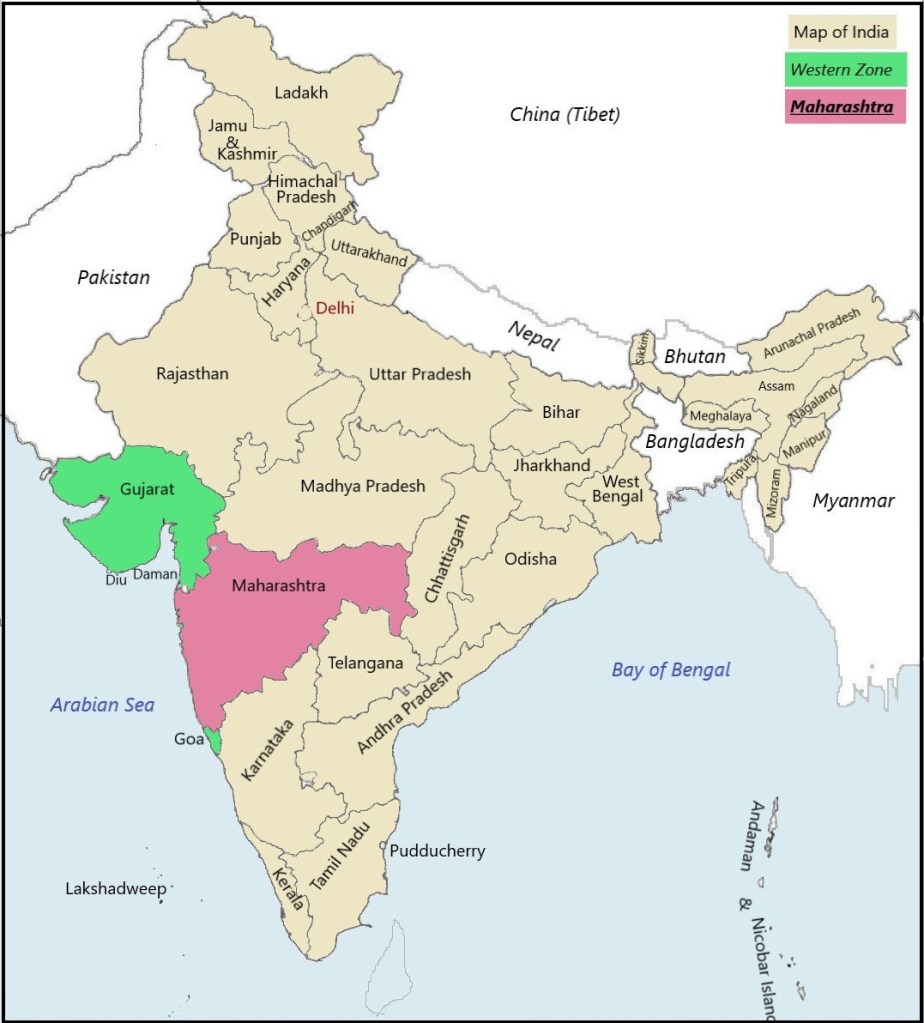
Maharashtra is located in the western and central part of India.It is bordered by the Arabian Sea to the west. The Indian states Karnataka and Goa are to the south,Telangana to the southeast and Chhattisgarh to the east, while Gujarat and Madhya Pradesh are to the north.Nagar Haveli Union territory lies in the north-west.
In 1534, the Portuguese occupied seven islands in Maharashtra, which eventually became the city of Bombay (now Mumbai). The name ‘Bombay’ originates from the Portuguese phrase ‘Bom Bahia’, meaning ‘good bay’. Initially, these islands were mere fishing villages, marshes, and hills.
In the 17th century, the King of Portugal gifted these islands to King Charles II of England as a dowry for his marriage to Princess Catherine of Braganza. This marked the beginning of British rule in Maharashtra. The British developed Bombay into a major trading hub, expanding their control to other parts of Maharashtra and establishing the British East India Company. After India gained independence in 1947, the British left Maharashtra in 1948. Initially, India merged Maharashtra and Gujarat into a single state, the ‘State of Bombay’ (1950-1960). However, on May 1, 1960, the state was divided into two separate entities: Gujarat and Maharashtra.
Ganesh Chaturthi is a popular festival in Maharashtra, celebrating the birth of Lord Ganesha. It’s a 10-day celebration that begins with installing clay idols of Ganesha at home or in public pandals. Daily prayers, offerings, and cultural events follow. The festival ends with an immersion ceremony, where the idols are submerged in water.
Ganesh Chaturthi is a time for spiritual growth, family bonding and community celebrations, honoring the beloved deity who removes obstacles and brings good fortune.
Pulse farming in Maharashtra
Maharashtra is a major producer of pulses in India. The state grows various pulses like tur, moong, urad, and chana. These crops are mainly grown in the Marathwada, Vidarbha, Khandesh, and Western Maharashtra regions. The government supports pulse farmers with initiatives like soil health cards, irrigation facilities, and crop insurance. This helps Maharashtra remain a leading producer of pulses in the country.
Food:
In Maharashtra, food habits are diverse and influenced by regional and cultural traditions. Staple foods include rice, wheat, and millet, with a focus on vegetarian and non-vegetarian options. Coconut, spices, and chilies are commonly used in cooking. Overall, Maharashtrian cuisine is a flavorful blend of texture, taste, and tradition.
Today we will try out Amti.
Amti
Amti, a favourite Maharashtrian curry, is a flavorful blend of split red lentils (toor dal) and aromatic spices. What’s remarkable is that it’s made without onion or garlic, yet its taste is simply delightful! We thoroughly enjoyed it, and we’re sure you will too – so be sure to give it a try!
You need:
For the dal:
½ cup toor dal
½ tsp salt
¼ tsp turmeric powder
2-3 green chilies
To be added to the cooked dal:
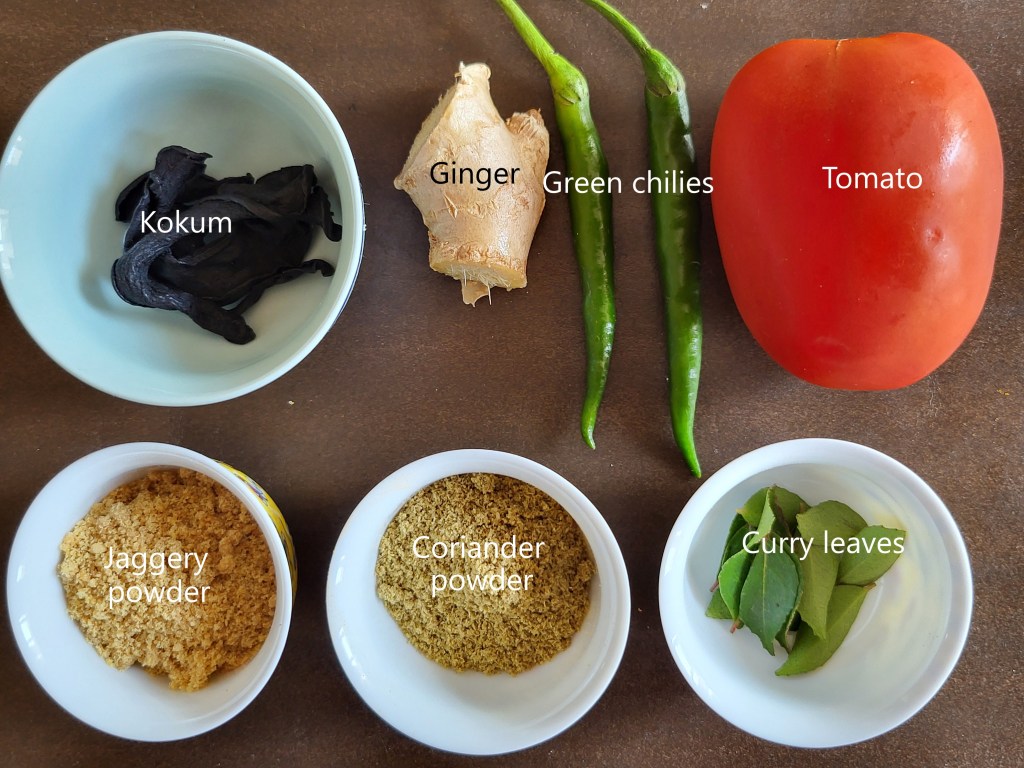
3-4 pieces kokum
2 tsp jaggery powder
2 tsp Goda powder
1 tbsp finely chopped coriander leaves
For tempering:
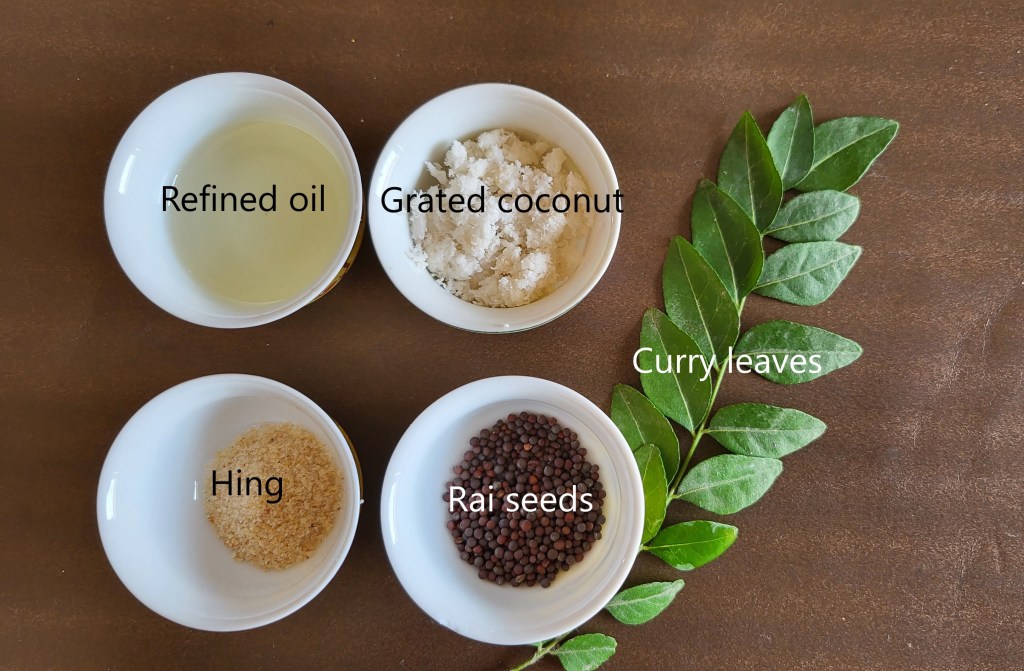
2 tbsp refined oil
1 tbsp grated fresh coconut
½ tsp rai/mustard seeds
¼ tsp hing (asafoetida)
A sprig of curry leaves
Method:
Begin by washing and soaking the dal for 15 minutes, which helps it cook faster.
Transfer the soaked dal to a pressure cooker. Add chilies, salt, and turmeric powder, followed by just enough water to cover the dal.
Place the cooker over medium heat. After the first whistle, reduce the flame to low and cook for 1.5 minutes.
Switch off the flame. Allow the pressure cooker to cool down naturally before opening.
While the dal cooks, prepare the additional ingredients.
5. Wash and soak the kokum pieces in hot water for about 15 minutes. (For a more intense flavor, lightly grind the kokum to release its natural sourness. Alternatively, you can add the kokum pieces directly without grinding. Strain and use the liquid.)
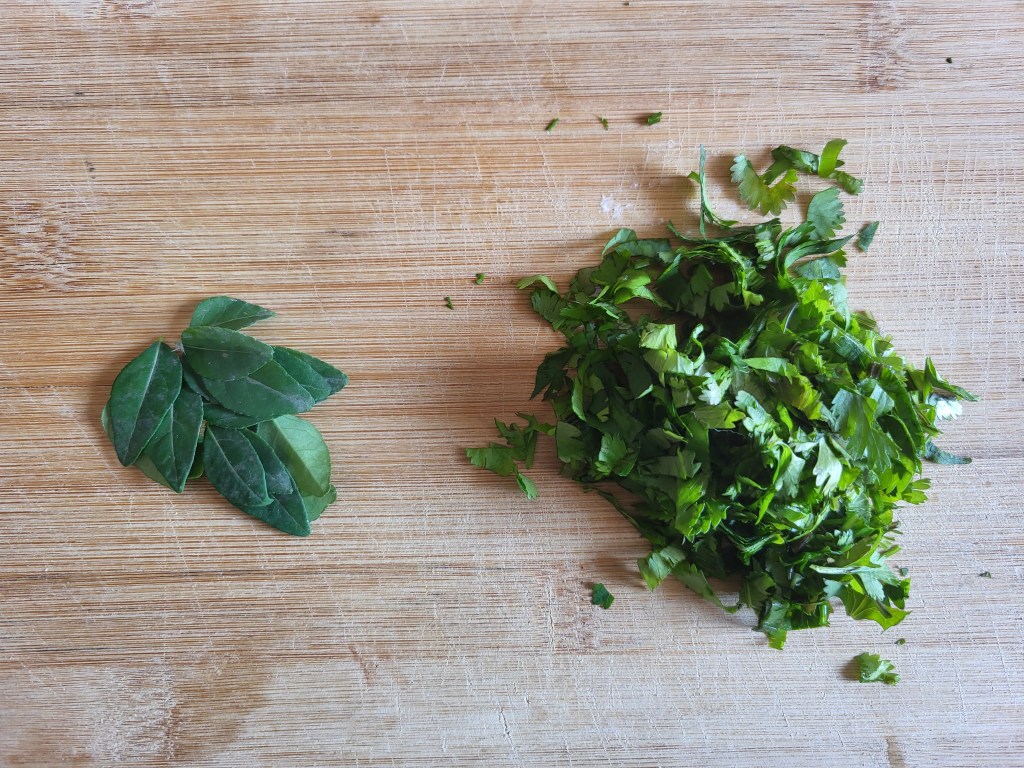
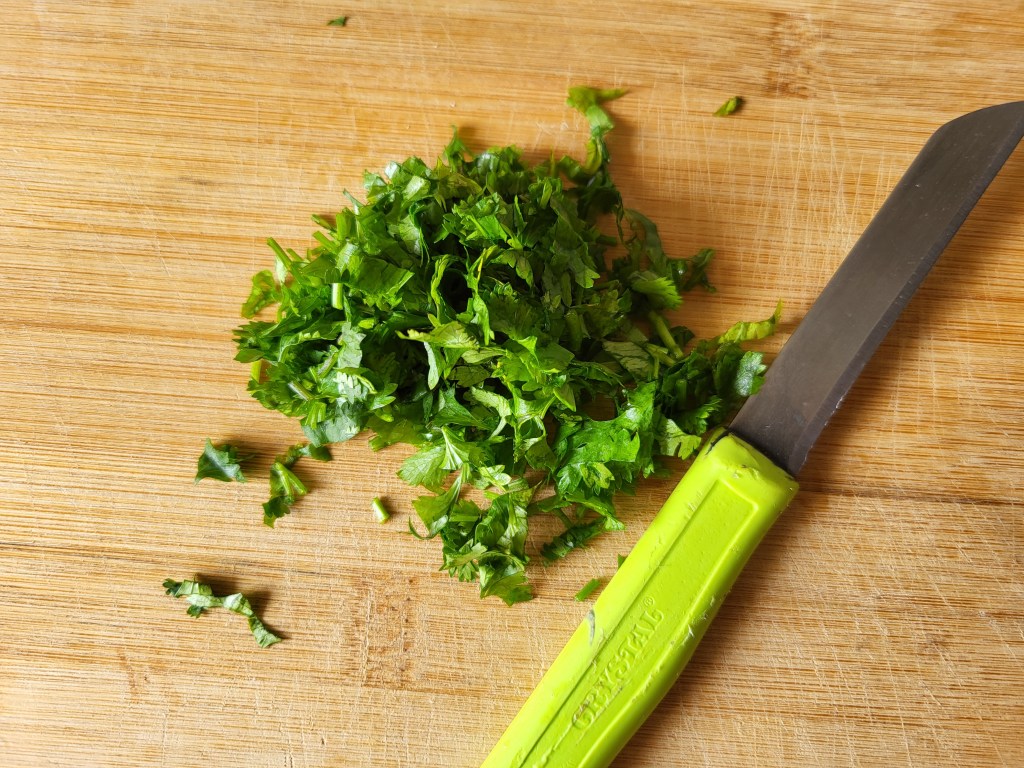
6. Wash and finely chop the coriander leaves.
7. Wash and remove the curry leaves from the sprig and set aside.
8. Once the pressure cooker has cooled, open and check if the dal is cooked.
9. If it’s done, add a little warm water to adjust the consistency, then transfer the dal to a wider pan.
10. Bring the dal to boil.
11. Add kokum, jaggery and Goda masala one at a time and mix well.
12. Stir in the chopped coriander leaves and continue cooking for another 5 minutes.
13. Adjust the consistency of the dal to your liking by adding more water.
14. Finally, taste and adjust the seasoning as needed by adding salt, jaggery, or Goda masala to perfect your Amti.
15. Heat oil in a pan over medium heat.
16. Add mustard seeds and let them crackle.
17. Then, add a pinch of hing (asafoetida).
18. Next, add curry leaves and sauté until they become crispy.
19. Finally, add grated coconut and fry for a few seconds, until lightly browned.
20. When the coconut turns slightly brown, add the spices to the dal and mix well.
Gujarat is situated on the west coast of India. Gandhinagar is its capital. It is bounded by the Arabian Sea on the west, Pakistan and Rajasthan in the north and north-east respectively, MadhyaPradesh in the south-east and Maharashtra in the south.
Thousands of years ago, the coastal region of Kutch District in Gujarat was a shallow part of the Arabian Sea. A geological shift formed a vast lake, as the hot temperature evaporated the water, a breathtaking expanse of white salt crystals emerged, giving birth to the Rann of Kutch. The term ‘Rann’ means ‘desert’ in Hindi. The region comprises two distinct parts: the Greater Rann and Little Rann, with differing topography creating a striking contrast. The Rann of Kutch transforms into a breathtaking white desert, filled with water during the monsoon season and evaporating in summer, leaving behind a blanket of white salt crystals. It is during this time that salt farmers undertake “Pannarin”, the labor-intensive process of harvesting and collecting salt from the evaporation ponds. Moreover, the Little Rann of Kutch is also renowned for its rich wildlife, including the Indian wild ass, eagles, and flamingos.
Gujarat is called the ‘Land of Festivals’ because it celebrates over 3,000 festivals every year! After a big earthquake in 2001, the government started the festival called Rann Utsav in 2004 to help rebuild and preserve the local culture. At first, it was just a 3-day celebration, but now it extends up to 2 months!
Rann Utsav is a very special festival. During this time, a whole new establishment is set up in the white salt desert with fancy tents and cottages. You can enjoy local music and dance performances, buy local handicrafts and try delicious local food. There are also fun activities like star gazing, camel rides, and sightseeing. You can even visit the highest point in Kutch, called Kala Dunga!
Pulse farming in Gujarat
Pulse farming thrives in Gujarat, making it a leading producer of pulses in India. The state’s favorable climate and soil, support various pulses like chickpeas, groundnuts, and moong. Government initiatives like irrigation projects and crop insurance schemes have boosted production, ensuring food security and employment for rural families.
Food:
Gujarati cuisine is a vibrant blend of vegetarianism, sweet and salty flavors, and local ingredients like peanuts and coconut. Onions and garlic are often avoided, with kokum used instead of tamarind for a unique taste. Gujarati dal is distinct, with a thin consistency and prominent sweet-sour flavor. Typically, methi (fenugreek) and hing (asafoetida) are essential ingredients, but feel free to adjust sweetness, sourness, and spices to your taste.
Today we will try out ‘Khatti Meethi Dal’ (Sweet and Sour Dal)
Khatti Meethi Dal (Sweet and Sour Dal)
This classic Gujarati dal perfectly balances sweet and sour flavors with a comforting blend of warm spices. We thoroughly enjoyed this delightful dish, and we hope you will too!
You need:
For the dal:
100 gm toor dal
40 gm peanuts
¼ tsp methi (fenugreek)
¼ tsp hing (asafoetida)
½ tsp turmeric powder
½ tsp salt
To be added to the cooked:
½ cup chopped tomato
2 tsp ginger-chili crushed
1 tsp coriander powder
3-4 pieces of kokum
1 tbsp jaggery
8-10 curry leaves
For tempering:
1 tbsp refined oil
1 tsp rai seeds/mustard seeds
2 dried red chilies
1 tbsp finely chopped coriander leaves
Method:
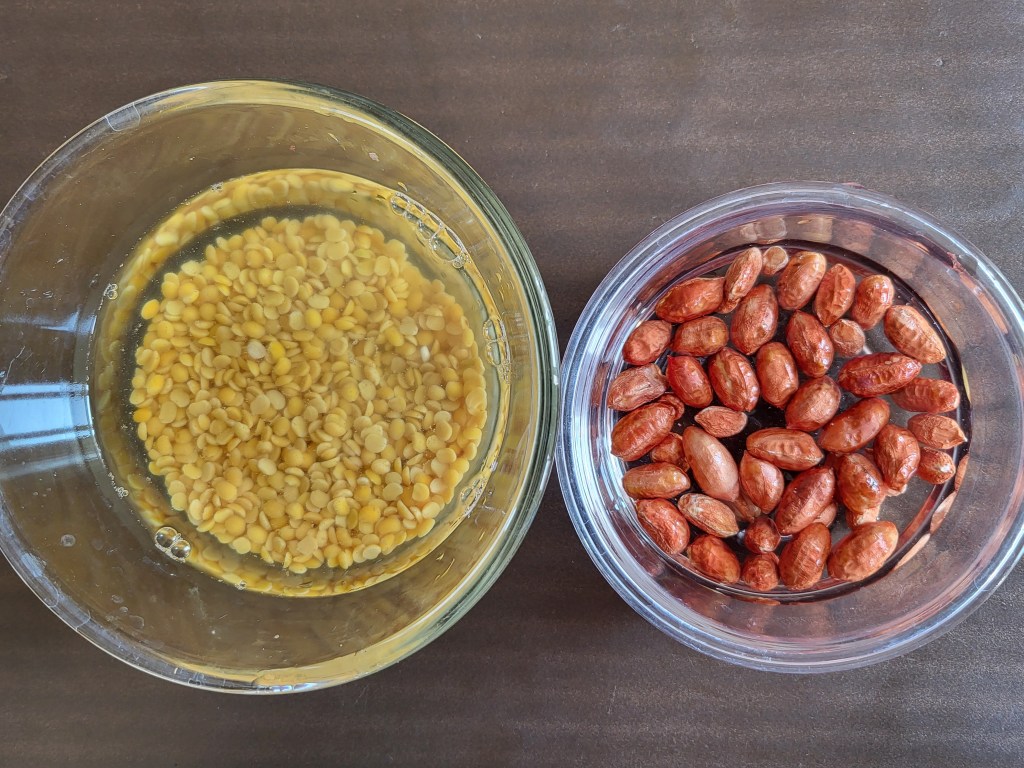
Wash and soak the dal and peanuts for about 10 -15 minutes.
2. Transfer the dal to the pressure cooker.
3. Add salt, turmeric, methi and hing.
4. Add 1 cup of warm water.
5. Place the soaked peanuts in a steel bowl with little water and place it on top of the dal as in the picture below.
6. Cook on high heat till the first whistle, then reduce heat to minimum and cook for 2 minutes more.
7. Let cooker cool by itself.
8. While the dal cooks, prepare the additional ingredients.
9. Soak kokum in hot water and set aside.
10. Finely chop washed chilies and tomatoes.
11. Peel and chop the ginger, then crush or grind it along with the chilies.
12. Once the pressure cooker has cooled, remove the bowl of peanuts.
13. Stir the dal until it reaches a mushy consistency, then add about 1 cup of warm water.
14. Transfer the dal mixture to a larger pan.
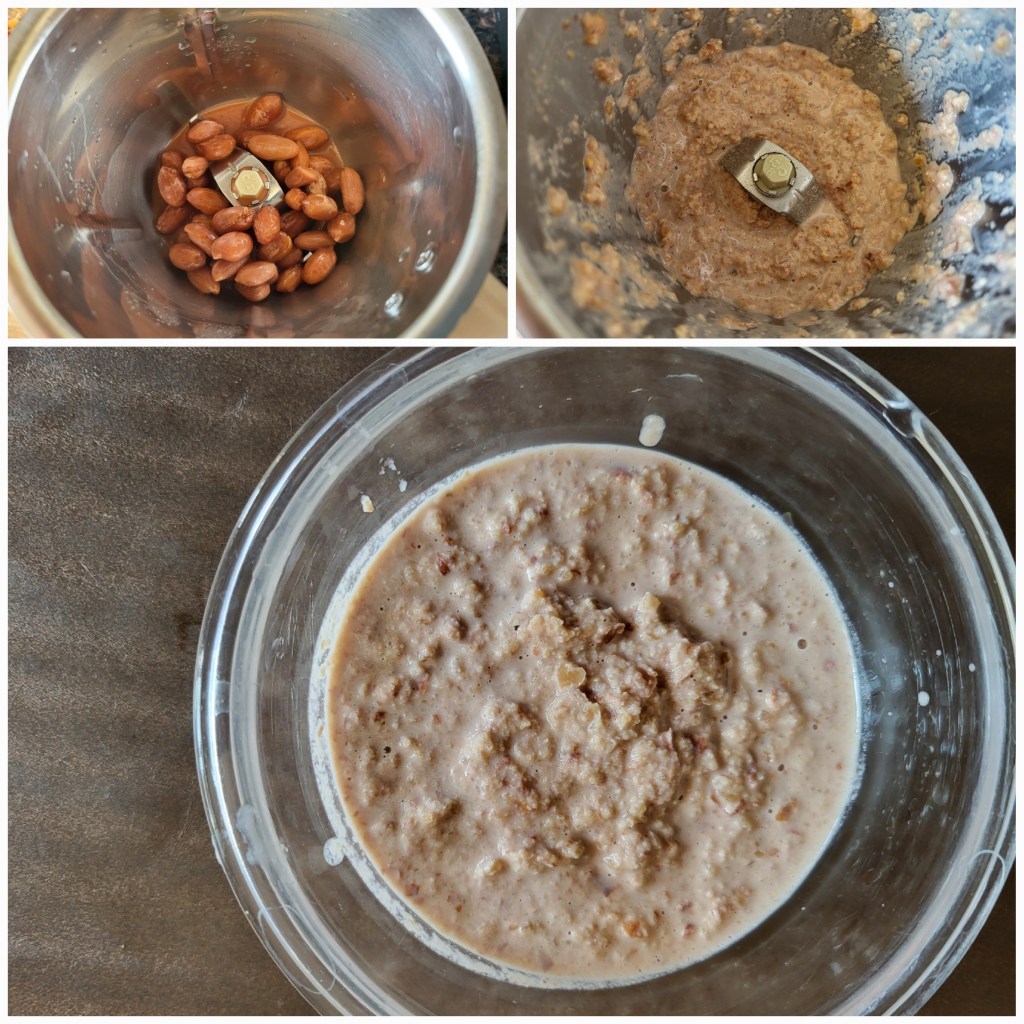
15. Grind the peanuts in a grinder coarsely and set aside.
16. Bring the dal to boil.
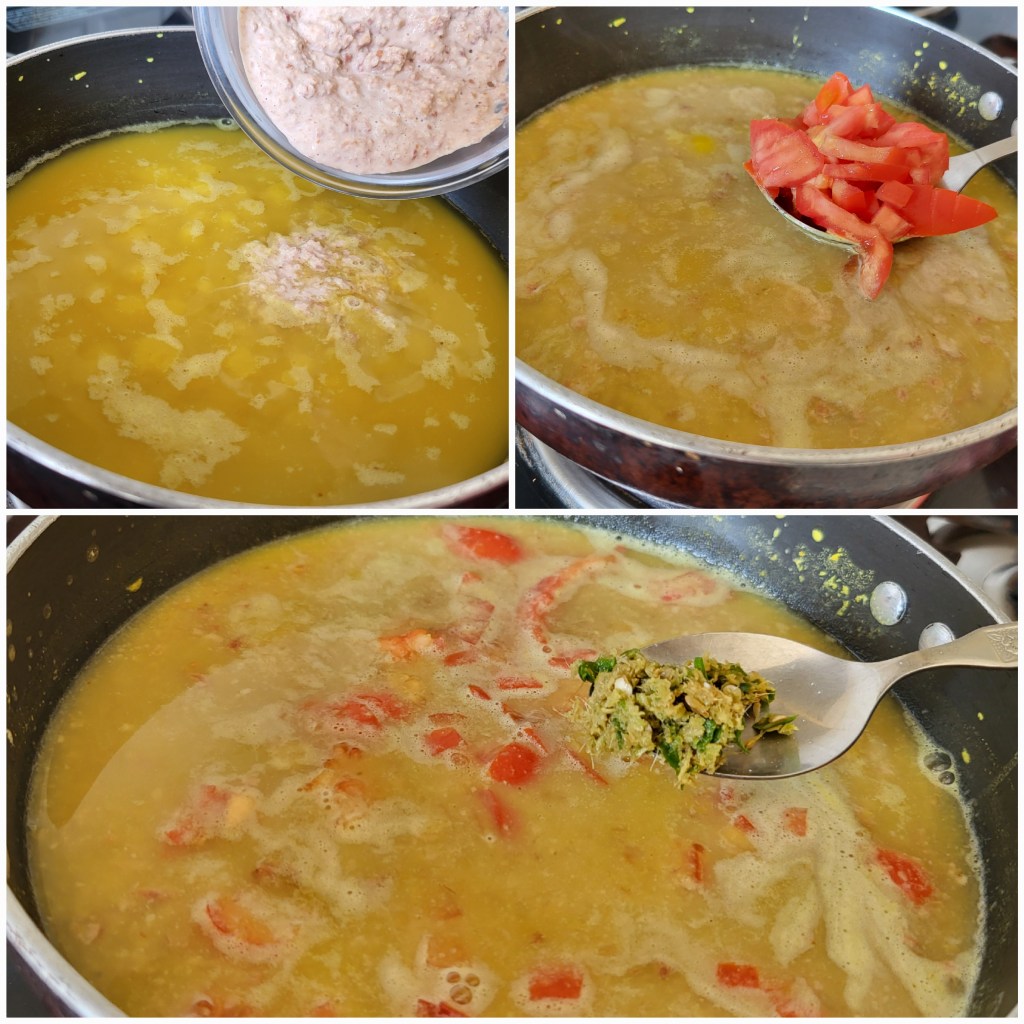
17. Add the crushed peanut and stir the dal well.
18. Add the chopped tomatoes and then the crushed ginger and green chilies.
19. Lower the flame and let the dal keep simmering for about 2 minutes.
20. Add the kokum along with its water to the dal.
21. Stir in curry leaves and coriander powder, then continue to simmer the dal for an additional 4-5 minutes.
22. Add the jaggery powder and stir well. Bring the dal to boil.
23. In a separate pan, heat the oil. Add the rai seeds and allow it to crackle. Switch off the heat.
24. Add the dried red chilies and stir till you get the aroma from the spices.
25. Pour the fried spices over the dal and gently stir in.
26. Wash and finely chop the coriander and stir into the dal.
27. Cover the dal, allowing the flavors to meld together.
28. Serve hot, paired perfectly with rice or roti. Enjoy!
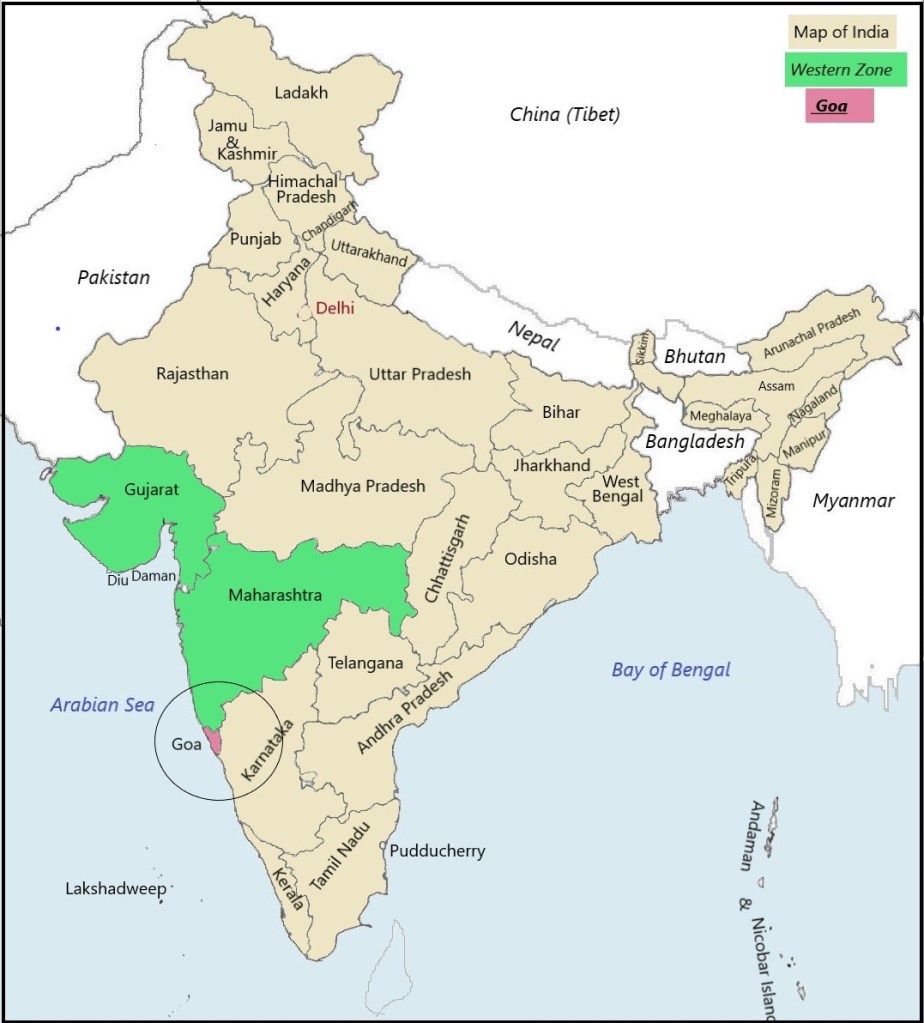
Goa a small state on India’s western coast, is bounded by the states of Maharashtra on the north and Karnataka on the east and south and by the Arabian Sea on the west. The capital is Panaji (Panjim). It is one of India’s smallest states.
Goa is a treasure trove of vibrant culture, rich history, and breathtaking natural beauty. Its diverse heritage is a feast for the eyes, with decorative Portuguese buildings and colorful Hindu temples.
Goa is home to several luxurious floating casinos that offer a unique gaming experience. From beach lovers to history enthusiasts, and foodies to adventure seekers, Goa’s diverse attractions make it a memorable destination for all.
Festival of Goa:
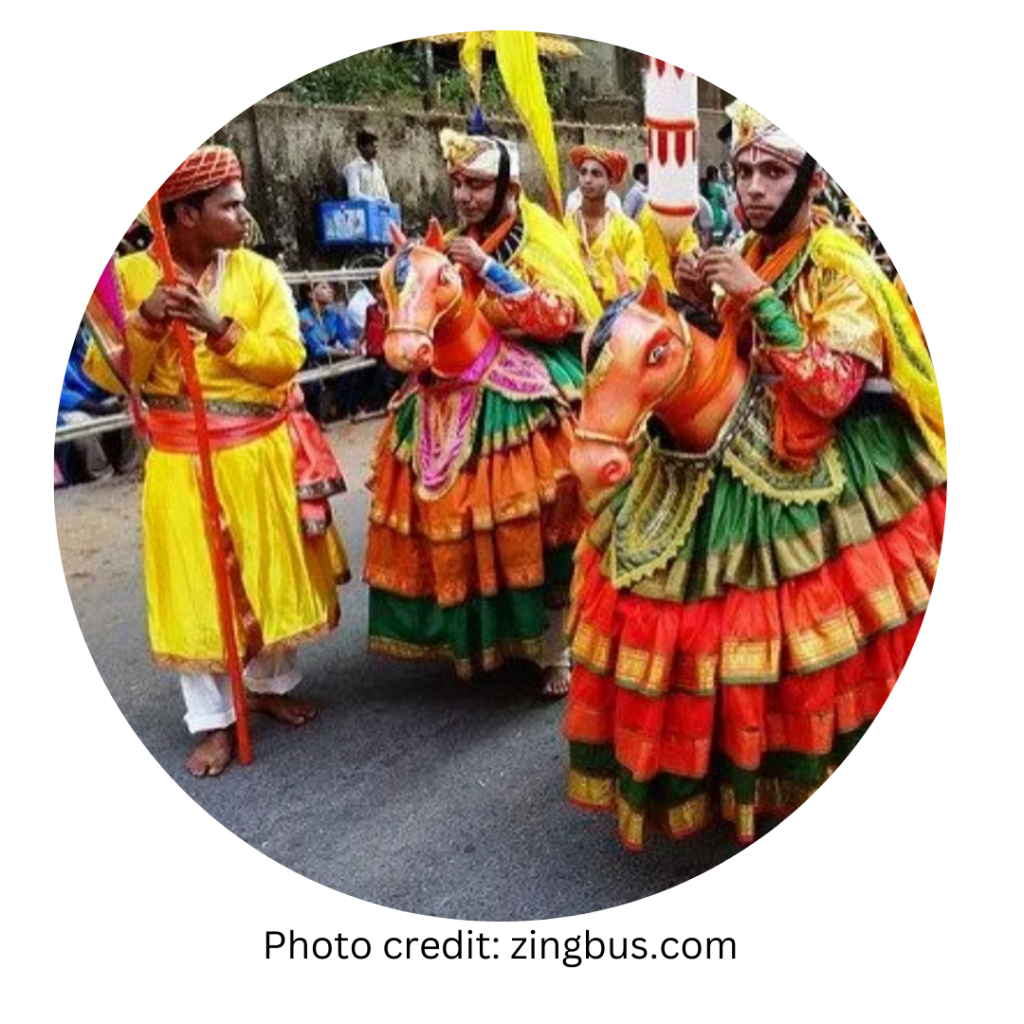
Shigmo is a vibrant festival in Goa, celebrating the arrival of spring and the harvest season. Colorful processions and parades fill the streets, featuring traditional dances like Ghode Modni and Shigmo Dance, performed by men and women in elaborate costumes. The air is filled with lively music, and drumming adding to the energetic atmosphere.
As a significant event, Shigmo festival strengthens community bonds and displays the state’s rich cultural heritage. It’s a wonderful experience that shows Goa’s spirit and joy!
Pulse farming in Goa
In Goa, cowpea (Alsando) is the main pulse crop grown, using sustainable practices like natural fertilizers and insecticides. The state’s unique cowpea variety is prized for its taste, high biomass, and fleshy texture. Cowpea and black-eyed bean (also known as black-eyed pea) are closely related but not exactly the same. In many parts of the world including India, the term “cowpea” and “black-eyed bean/Lobia” are often used interchangeably.
Goa’s well-drained soil and canal irrigation system, established by the Portuguese, make it ideal for pulse farming. This eco-friendly approach preserves Goa’s agricultural heritage while providing a steady supply of nutritious pulses for local consumption.
Food:
Goan cuisine is a fusion of seafood flavors and Portuguese cooking techniques. Rice and fish are staples, often cooked with spices, coconut, and fresh seafood. An iconic dish is Tonak Alsande, a spicy curry made with black-eyed beans, spices, and coconut. This flavorful curry is a staple at Goan weddings and is loved by all.
And, here’s a simple recipe for Tonak Alsande (Black-Eyed Bean Curry).
Tonak Alsande
It is a delightful dish and has a rich, creamy and slightly thick coconut -based gravy infused with the warmth of spices. Overall, it is a nourishing and delicious dish. We enjoyed it very much.
You need:
For the dal:
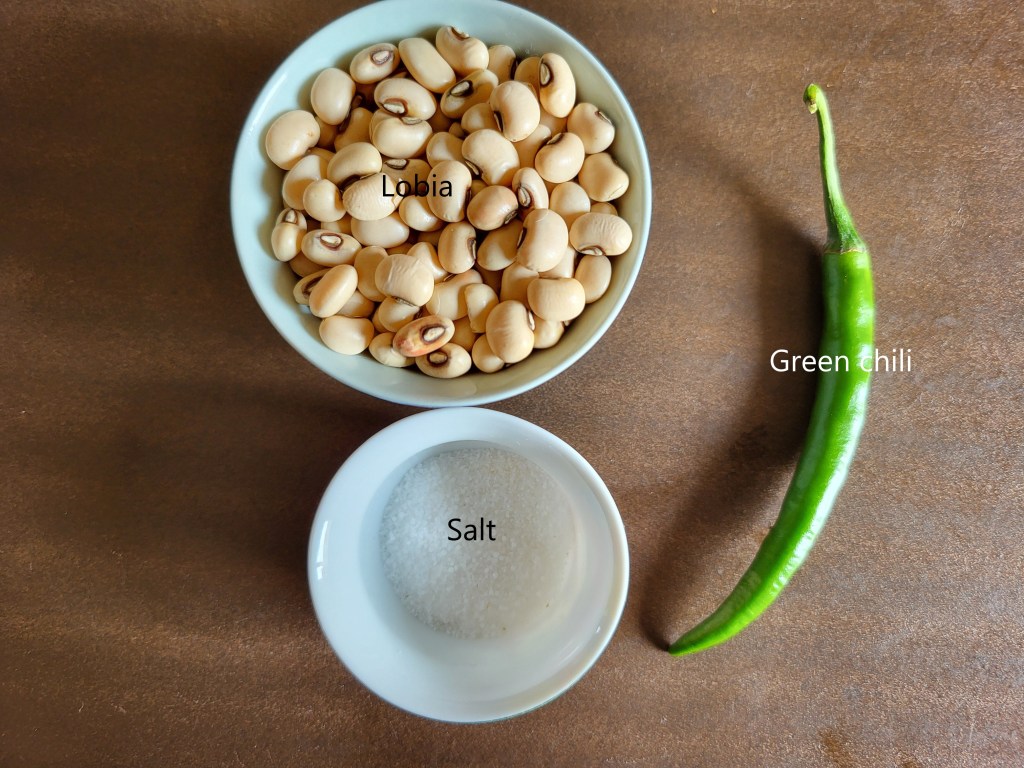
200gm black-eyed beans/Lobia (Alsande)
1 green chili
½ tsp salt
For tempering:
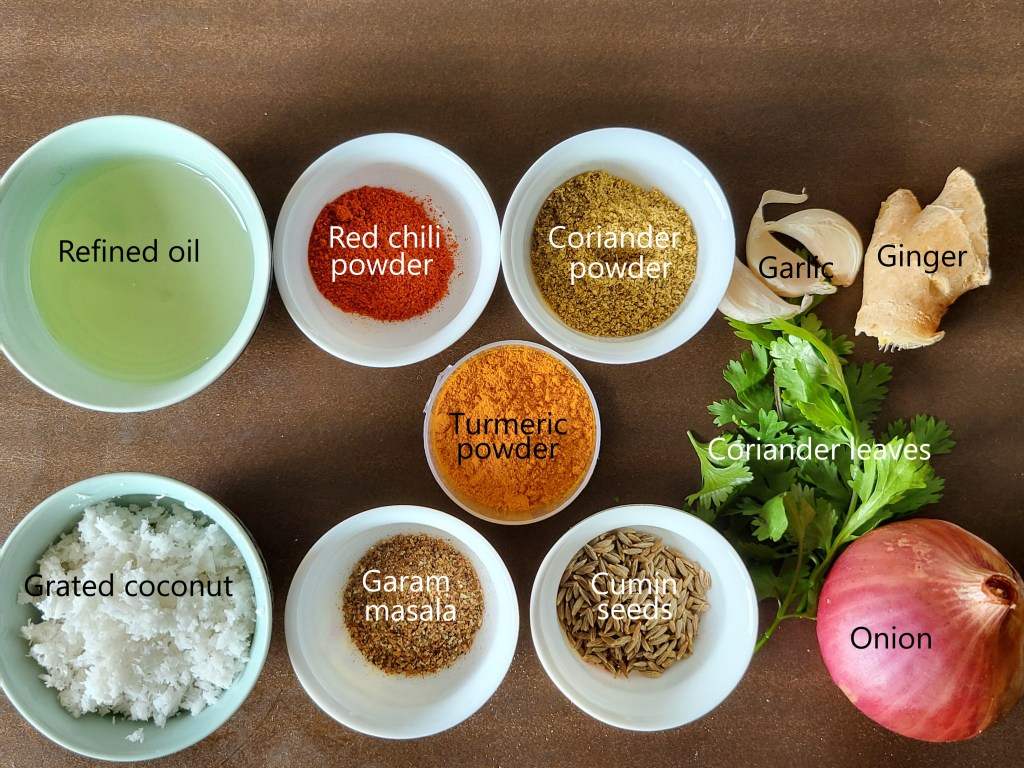
2 tbsp coconut oil/ Refined oil
1 onion, chopped
1 tsp grated garlic
1 tsp grated ginger
2 tbsp grated coconut
½ tsp cumin seeds
½ tsp coriander powder
½ tsp red chili powder
¼ tsp turmeric powder
½ tsp garam masala
A few sprigs of coriander leaves
Method:
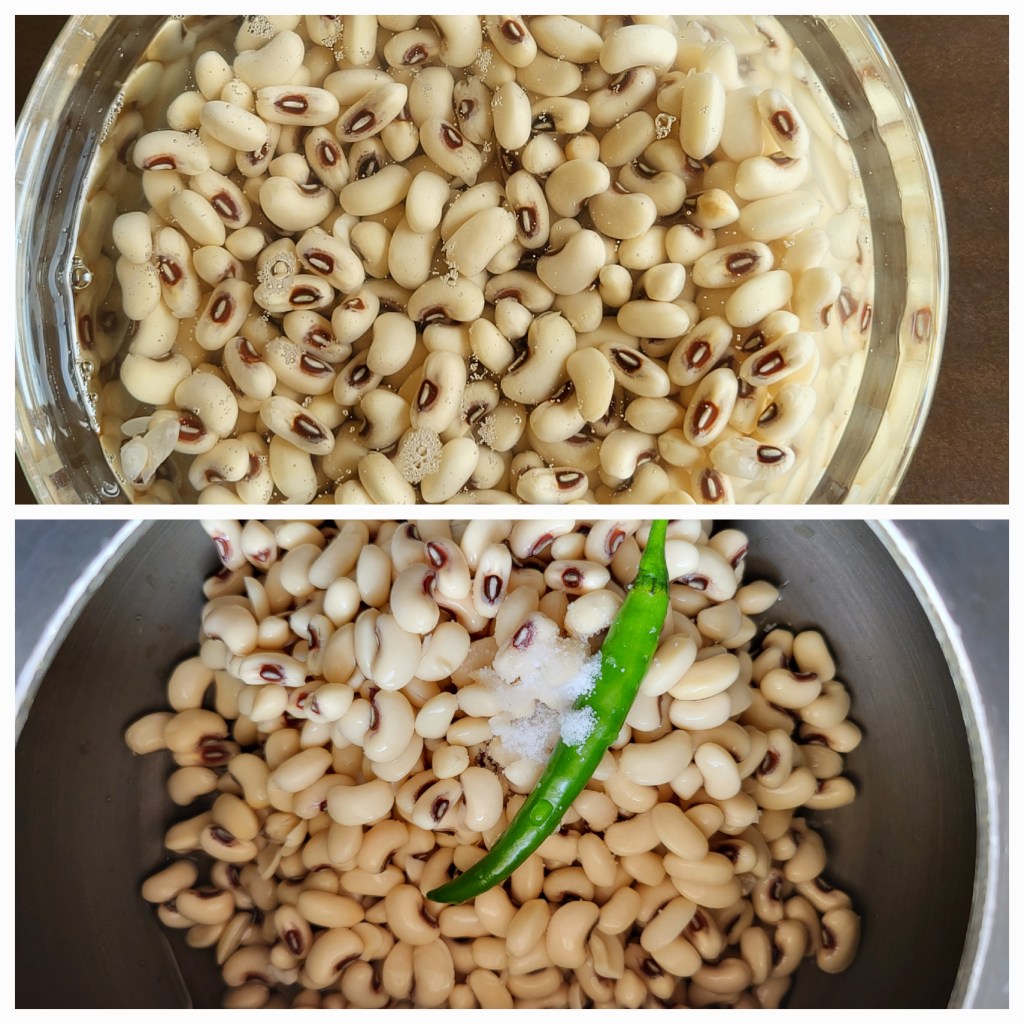
Rinse and soak black-eyed bean overnight.
Rinse it again and transfer dal to pressure cooker with ½ tsp salt, 1 green chili and 2 cups warm water.
Cook on high heat till 1st whistle, then reduce heat to minimum and cook for 2 minutes.
Let cooker cool by itself.
5. In the meantime, peel and wash the onion, ginger and garlic.
6. Chop the onion finely.
7. Grate ginger and garlic separately
8. Wash and finely chop the coriander leaves and keep aside.
9. Transfer the cooked dal to a bowl.
10. Take 1-2 tablespoons of the dal and mash it with a fork.
11. Return the mashed dal to the bowl, allowing it to thicken the gravy.
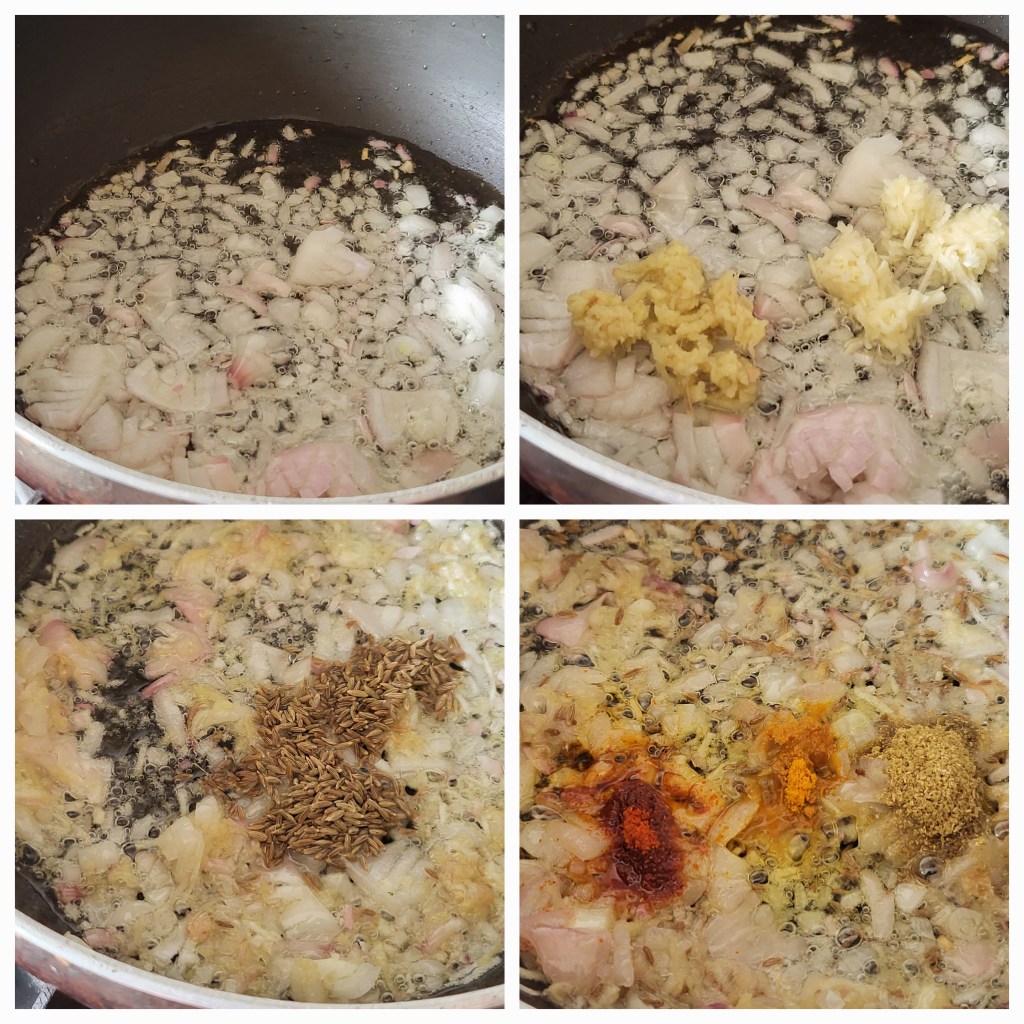
12. Heat oil in a pan and sauté onion until softened.
13. Add garlic and ginger and cook until fragrant.
14. Then, add cumin seeds and saute for a bit.
15. Next, add coriander powder and turmeric powder, mix well, and saute for 30 seconds.
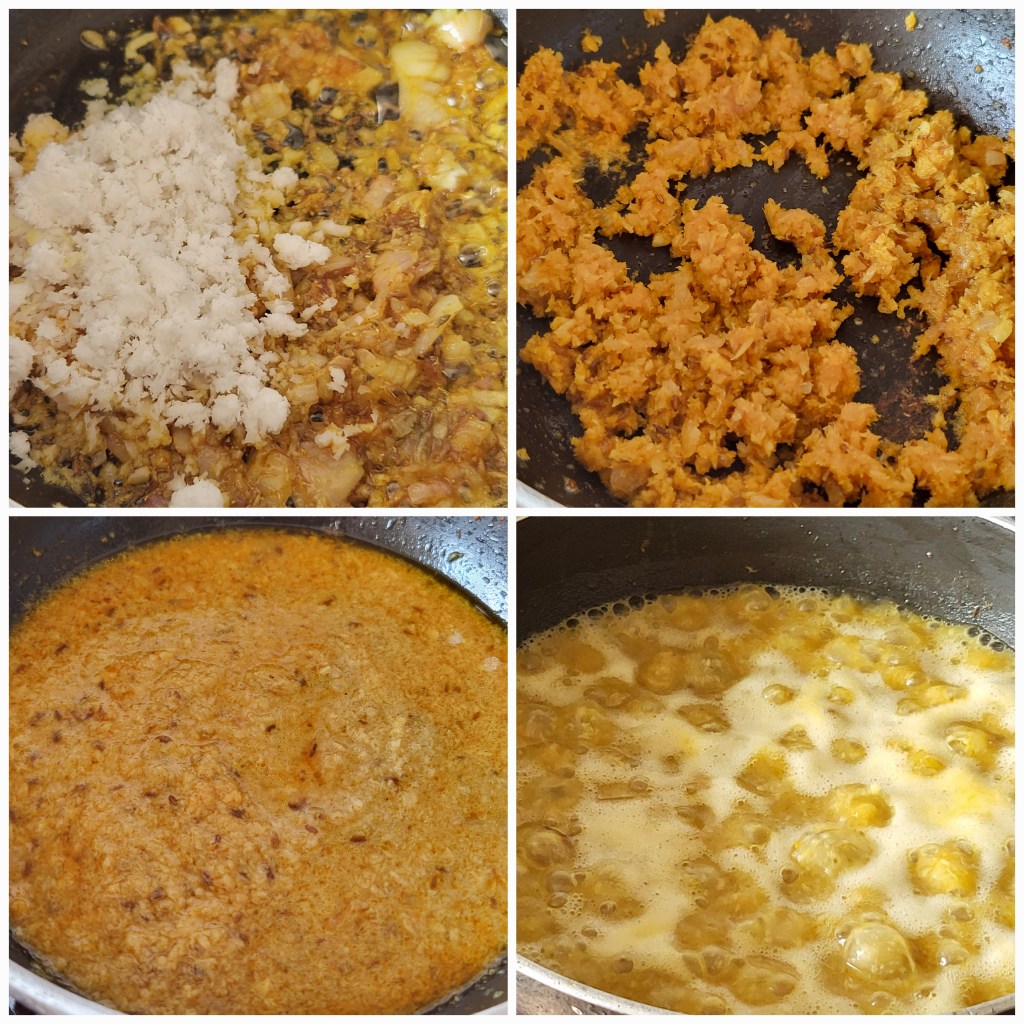
16. Add grated coconut and fry until oil starts to separate.
17. Then, add the watery gravy of the dal to the fried spices and bring to a boil.
18. Simmer for about a minute or two, allowing the flavors to mix together.
19. Stir in the black-eyed beans and mix well.
20. Bring the mixture to a boil, then cook for an additional minute, or until the beans are tender and the flavors have combined.
21. Add garam masala to the dal, reduce heat to a simmer, and cook for 1 minute. Adjust the salt.
22. Stir in chopped coriander leaves, cover, and let infuse for 1 minute.
Daman, Diu, Dadra, and Nagar Haveli, previously separate union territories, have been merged to form a single union territory in India. From a geographical perspective, Daman, Dadra, and Nagar Haveli are located on the mainland, situated near the western-southern border of Gujarat, adjacent to Maharashtra. On the other hand, Diu is an island located off the coast of Gujarat’sJunagarh district, separated by the Arabian Sea, approximately 200 km away.
The capital of Daman, Diu, Dadra and Nagar Haveli is Daman. Daman is the largest city in the union territory. Despite their distinct geographical locations, these four districts, which were formerly under Portuguese rule, have come together to form a unified union territory in India. These four tiny towns – Daman, Diu, Dadra, and Nagar Haveli – are steeped in rich history and fascinating legends.
Nariyal Purnima is a very popular festival in Daman and Diu, and is also known as the “Coconut Festival”. It is celebrated on the full moon day of the month of Shravan, usually in August or September. During Nariyal Purnima, people worship the sea god and offer coconuts to the sea.
The festival marks the beginning of the new fishing season and is a time for fishermen to offer thanks to the sea for their livelihood. The festival is celebrated with great enthusiasm, with traditional music, dance, and food. People also decorate their homes and boats with lights and colours, and there are boat races and other cultural events. Nariyal Purnima is a unique and important festival in Daman and Diu, and it’s a great time to experience the local culture and traditions!
Pulse farming in Daman, Diu, Dadra & Nagar Haveli
Daman & Diu and Dadra & Nagar Haveli, two union territories in western India, are promoting pulse farming to enhance food security and diversify agriculture. Farmers in these regions are cultivating various pulses like moong, urad and tur, which are suitable for the local climate. The government is providing support through initiatives like subsidized seeds, irrigation facilities, and technical guidance. As a result, pulse production is increasing, benefiting local farmers and contributing to the region’s nutritional well-being.
Food:
The local cuisine in Daman, Diu, Dadra and Nagar Haveli is a mix of Gujarati, Maharashtra, Portuguese, and local flavours. People often eat rice, fish and dal (lentil soup). Today, we’re exploring Masoor Dal Kharu, a favourite lentil curry made with red lentils, coconut milk, and spices. It’s an aromatic dish loved by locals!
Dal means lentil and Kharu in Gujarati means savoury or salty. So, Dal Kharu literally means savoury lentil.
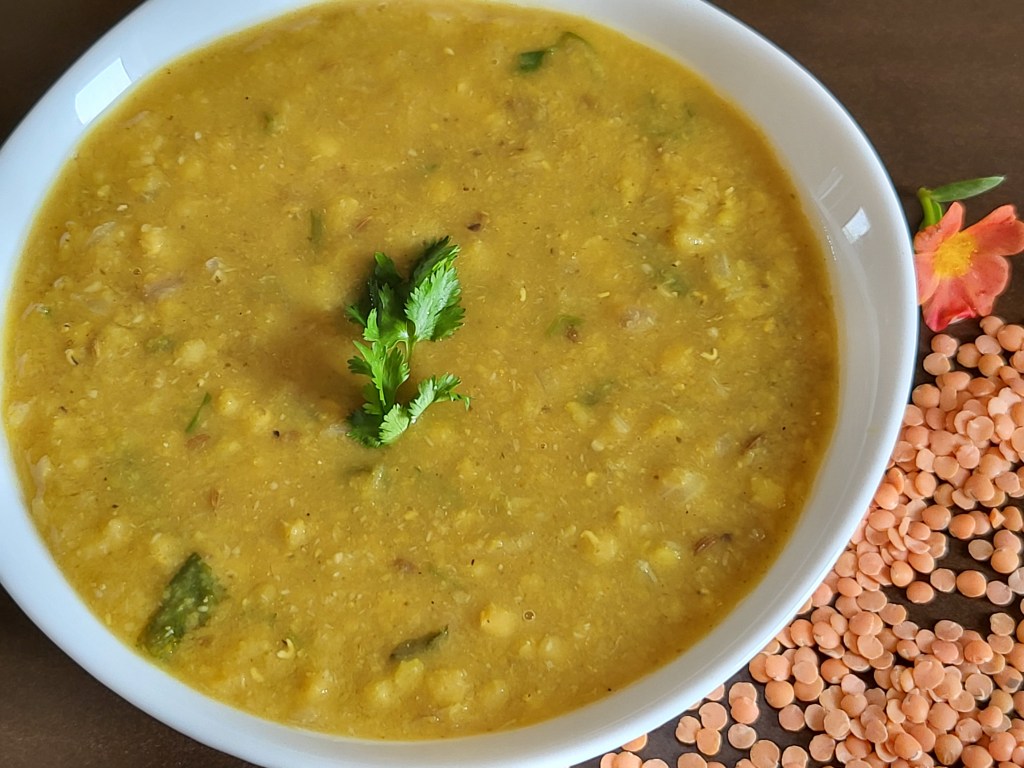
Masoor Dal Kharu
Dal Kharu is a flavourful and aromatic lentil curry, with coconut milk and a blend of spices. It is a popular dish in the region! The coconut milk adds a rich and creamy texture, while the spices and the tamarind give an aromatic and tangy flavour. Enjoy!
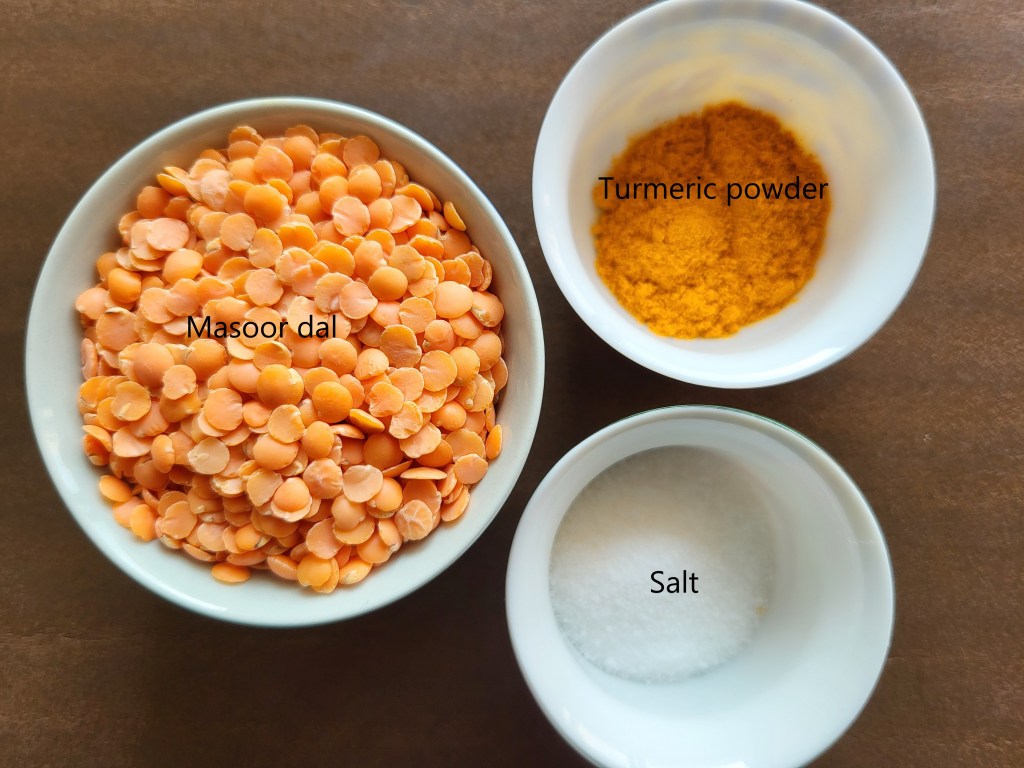
You need:
For the dal
100 gm masoor dal
½ tsp turmeric powder
½ tsp salt
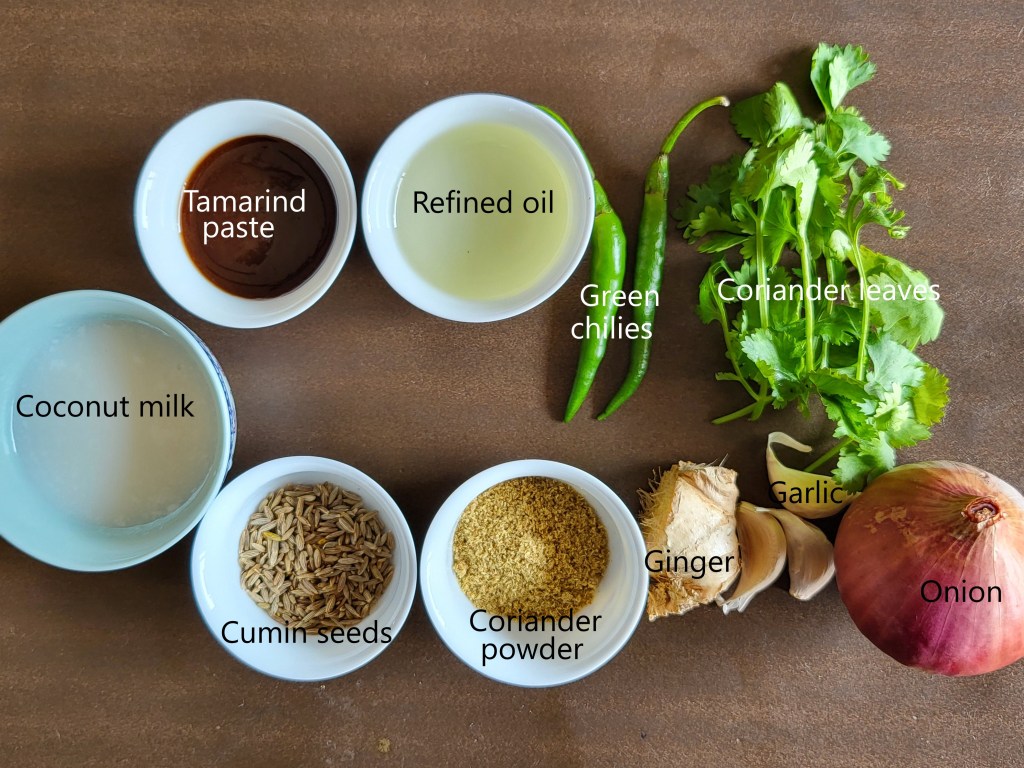
For tempering:
1 tbsp coconut oil/refined oil
¼ cup coconut milk
1 medium size onion, finely chopped
2 cloves garlic, minced
½ inch ginger, grated
2 green chilies
½ tsp cumin seeds
½ tsp coriander powder
½ tbsp tamarind paste
A few sprigs of coriander leaves
Method:
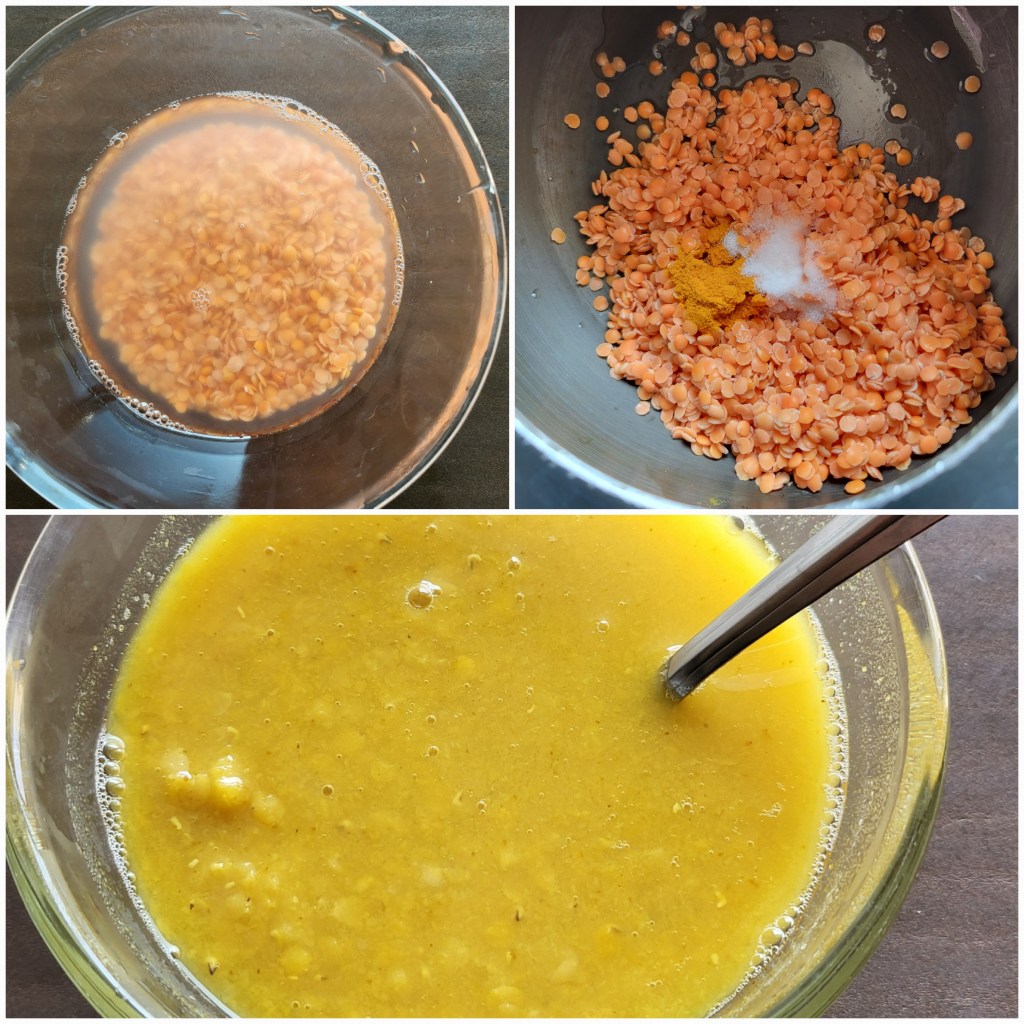
Wash and soak masoor dal for 10 minutes.
Transfer dal to pressure cooker with 1/2 tsp salt, 1/2 tsp turmeric powder, and 2 cups warm water.
Cook on high heat till the first whistle, then reduce heat to minimum and cook for 1minute and 30 seconds.
Let cooker cool, then transfer dal to a bowl, adding water if needed.
5. Heat oil in a pan and sauté the onion.
6. Add garlic, ginger and chilies until softened.
7. Add cumin seeds and saute for a bit.
8. Then, add coriander powder, mix well, and saute for 30 seconds
9. Add coconut water or milk and mix well.
10. Add the tamarind and fry till the oil oozes out.
11. Add the cooked dal.
12. Add about 2 cups of warm water and bring it to boil. Add more water to retain your consistency of the dal.
13. Bring the dal to a boil, then reduce the heat to a simmer.
14. Let it cook for 3-4 minutes. Adjust the salt.
15. Stir in chopped coriander leaves, cover, and let it infuse for a minute.
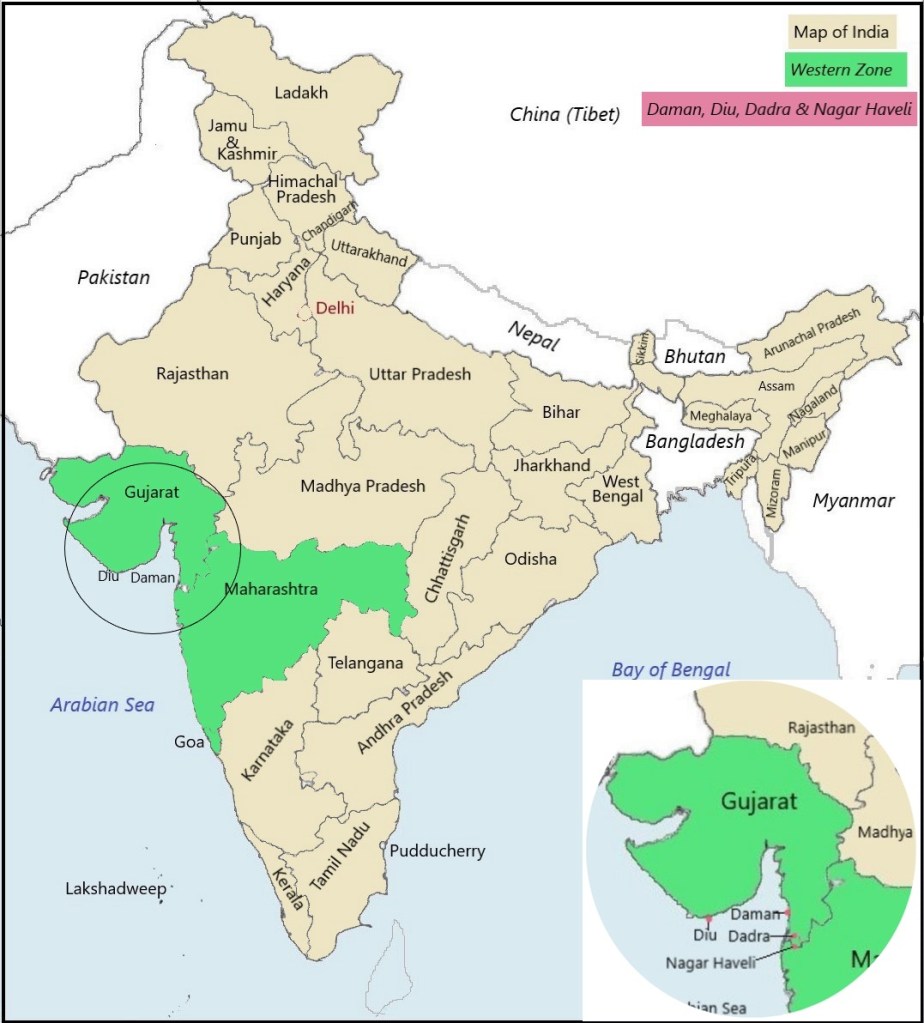
Western India comprises of three states – Gujarat, Maharashtra, and Goa – as well as the union territory of Daman and Diu, which recently merged with Dadra and Nagar Haveli.
This region is flanked by the Arabian Sea and Pakistan to the west, Rajasthan and Madhya Pradesh to the north, Chhattisgarh to the east, and Telangana and Karnataka to the south. Notably, Ghar Moti, a small village in the Kutch region of Gujarat, marks the westernmost point of India.
The western region of India, which includes Goa, Maharashtra, and Gujarat, has a rich history dating back to ancient times, with various dynasties and empires ruling the area. By the 15th century, the Bahamani Sultanate and the Gujarat Sultanate emerged as prominent powers, setting the stage for European colonization. The Portuguese arrived in Goa in 1510 and later occupied the 7 islands of Maharashtra – Mazagaon, Colaba, Chinsurah, Mahim, Parel and Worli in 1534, which now form the city of Mumbai (Bombay), as well as 4 towns in Gujarat (Daman, Diu, Dadra, and Nagar Haveli) between 1531 and 1779. This marked the beginning of Portuguese rule in the region, which lasted for several centuries until India’s annexation in 1961.
States of wonder:
Daman – A coastal town.
Goa – A beach.
Gujarat – White salt desert.
Maharashtra – Marine Drive.
Pulse farming in Western India
Western India is a major producer of pulses. However, pulse farmers face challenges like water scarcity and climate change. To overcome these, they grow multiple pulse crops. The government supports these farmers, ensuring food security and protecting their livelihoods.
Food:
Western India’s cuisine is diverse and vibrant. Staples like rice, roti, and dal are common. Some areas are mostly vegetarian, while coastal regions love seafood and coconut-based dishes. Dairy products are also popular. Let’s explore the unique dal dishes from each state: Daman & Diu, Goa, Gujarat, and Maharashtra.
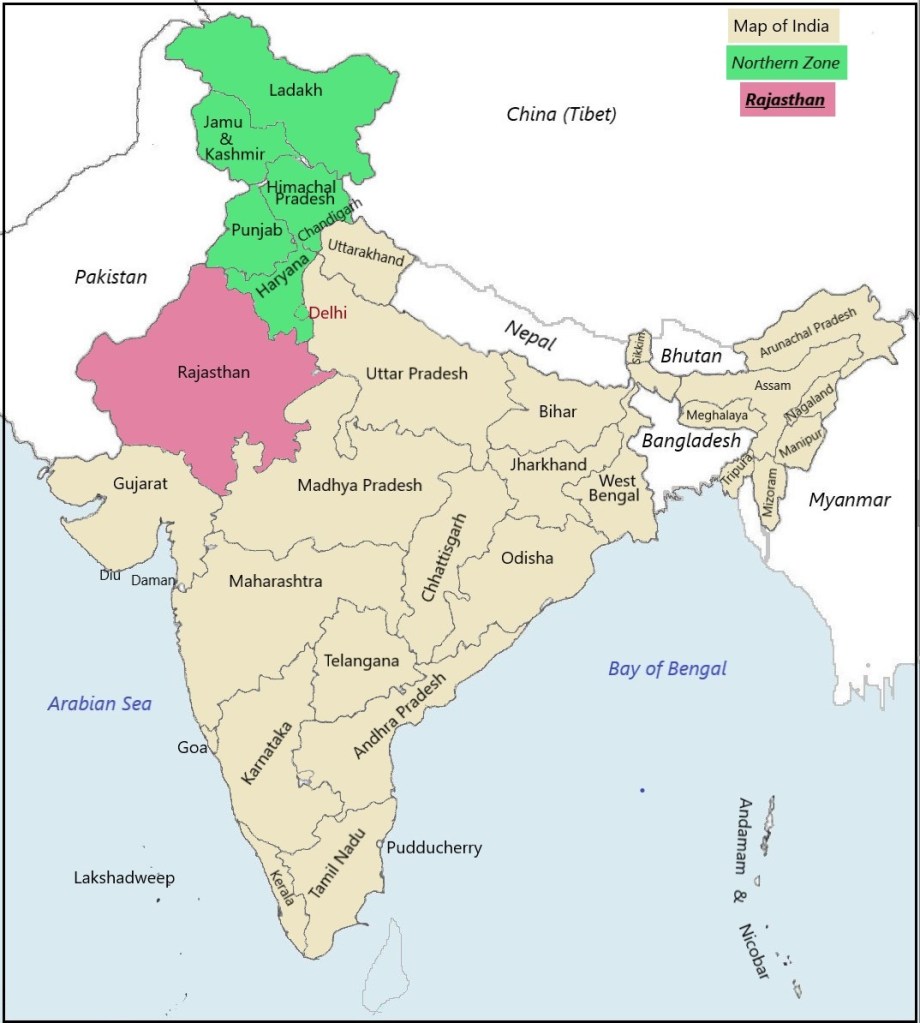
Rajasthan is a state located in the northwestern part of India. Its capital is Jaipur. It shares international border with Pakistan in the west. It is bordered by five other Indian states: Punjab to the north, Haryana and Uttar Pradesh to the northeast, Madhya Pradesh to the southeast and Gujarat to the southwest.
Rajasthan is home to the vast Thar Desert, which covers over half of the state. The desert’s golden sand dunes create a breathtaking landscape. The state also has several mountain ranges, including the Aravalli Range, and sparkling lakes that add to its natural beauty. Rajasthan’s rich history is reflected in its many magnificent forts, palaces, and temples, which showcase its glorious past.
There is an interesting story behind the Thar Desert which was once a lush paradise. As Lord Ram, accompanied by Sita and Lakshman, wandered in exile, King Ravana abducted Sita. Ram and Lakshman embarked on a perilous quest to rescue her. Their journey led them to Ramaswaram, where Ram pleaded the ocean deity to recede, and create a path to Lanka. However, the ocean refused to yield. With a heavy heart, Rama summoned a divine weapon to dry the ocean. The ocean begged for mercy and suggested to divert the weapon at Drumatulay, where people were dirtying the water. Rama agreed and unleashed the weapon towards the north. As the divine energy struck Drumatulay, the waters receded and the region became a desert. But Ram blessed the region for cattle rearing, agriculture, and hardy plants to flourish.
The Pushkar Fair/Mela is one of the largest camel fairs in the world which is held annually in a small town in Ajmer, Pushkar, during October-November, for 7 days, displaying the state’s rich cultural heritage. The fairground comes alive with colorful stalls selling traditional handicrafts, souvenirs and delicious local cuisine.
The air is filled with the sound of folk music, laughter and camel bells as thousands of camels are paraded. There are camel safaris, where one can hop on a camel’s back and take a joy ride across the desert. As the sun sets, the sky is painted with mesmerizing hot air balloon rides and the night sky twinkles with fireworks. The fair has something for everyone making it an unforgettable experience.
Pulse farming in Rajasthan:
Rajasthan is a leading producer of pulses like moth and mung. Its dry climate and soil suit pulse cultivation. Farmers use traditional and modern methods to grow high-quality pulses.
Food:
Rajasthani cuisine is a delectable fusion of tradition, flavor, and history! It is a predominantly vegetarian state, with assorted lentil curries which perfectly pair with roti and rice. Among the traditional dal dishes, Dal-Bati-Churma and Panchmel Dal stand out.
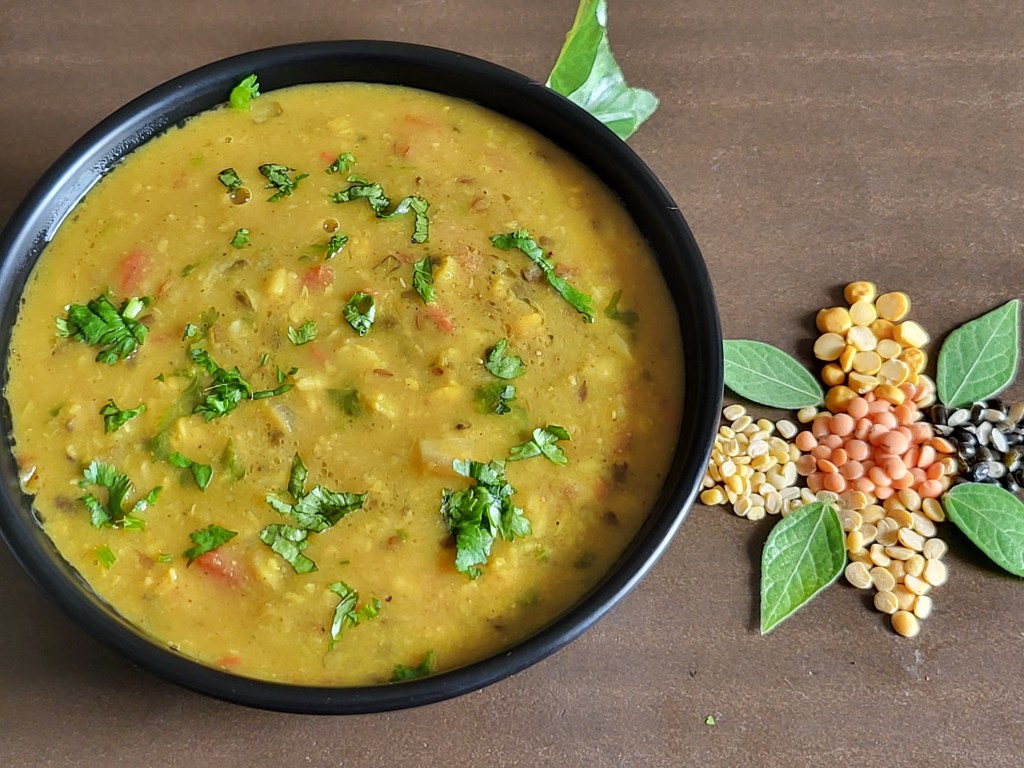
Today, we’re going to try out the flavors of Panchmel Dal. It is also known as Panchratna Dal. Panchmel Dal literally means ‘five-lentils’ and is a nutritious and flavorful dish.
Panchmel Dal
The dal dish harmoniously blends with the five distinct types of lentils, making it a true culinary treasure! We loved the dish. Hope you enjoy this recipe too!
You need:
For the dal:
30 gm moong dal
30 gm masoor dal
30 gm chana dal
30 gm urad dal
30 gm toor dal
1 green chili
1 bay leaf
½ tsp turmeric powder
½ tsp salt
For tempering:
1 tbsp refined oil
1 medium size onion chopped
2 cloves garlic, grated
1 inch ginger, grated
1 medium tomato, chopped
½ teaspoon cumin seeds
½ teaspoon coriander powder
½ teaspoon garam masala powder
A few sprigs of coriander leaves.
Method:
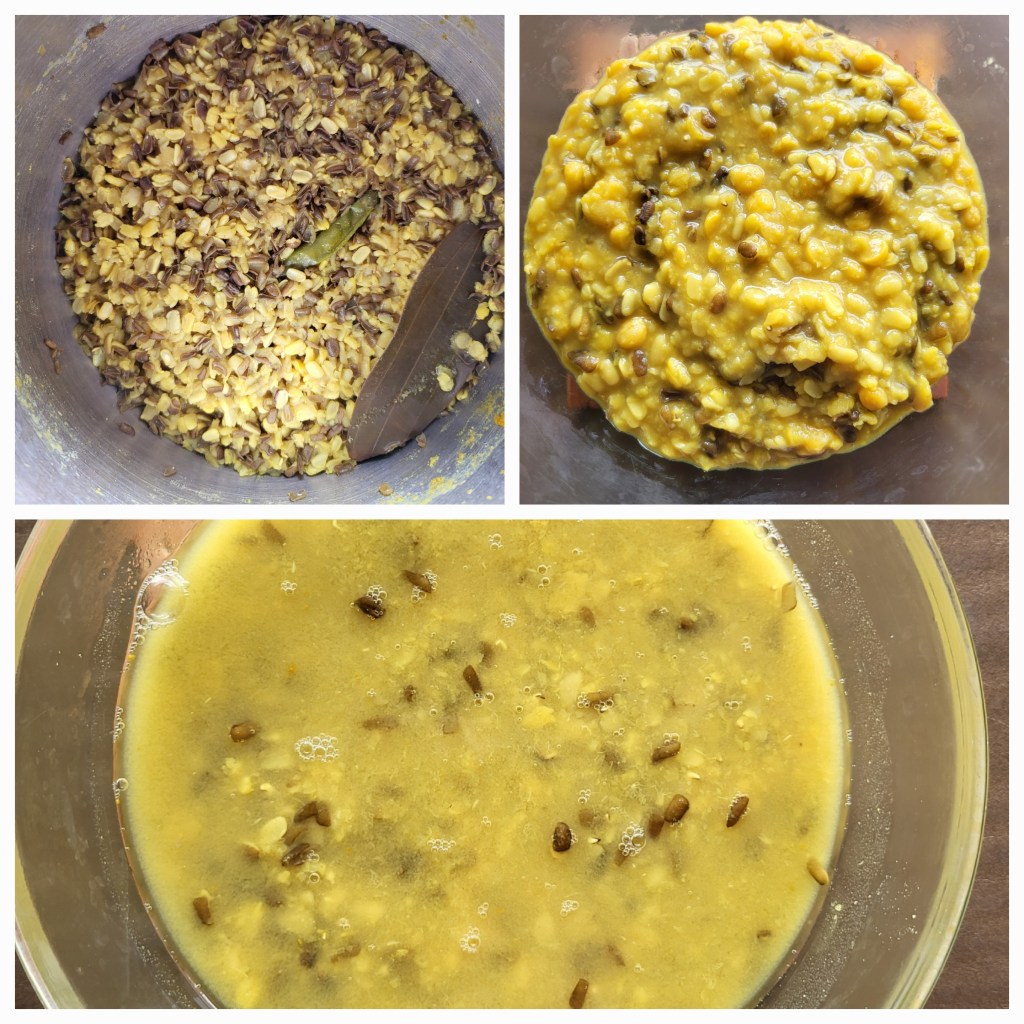
Rinse the dals together and soak them in water for 30 minutes.
Drain and place it in the pressure cooker.
Add bay leaf, chili, salt and turmeric powder.
Add 2 cups of water and close the lid and place it over the stove. After the first whistle, lower the flame to its minimum, and continue to cook the dal for 2 minutes.
Switch off the flame and allow the cooker to cool down by itself.
6. Open the cooker, check the dal whether cooked or not and then transfer the dal to a bowl.
7. Add 1 cup of warm water and stir in carefully and set aside.
8. Wash and peel the skins from ginger, garlic and onion.
9. Grate the ginger and garlic.
10. the onion finely.
11. Wash and chop the tomato finely.
12. Wash and chop the coriander leaves finely.
13. Heat the oil in a pan.
14. Lower the flame and add the cumin seeds and fry for a few seconds.
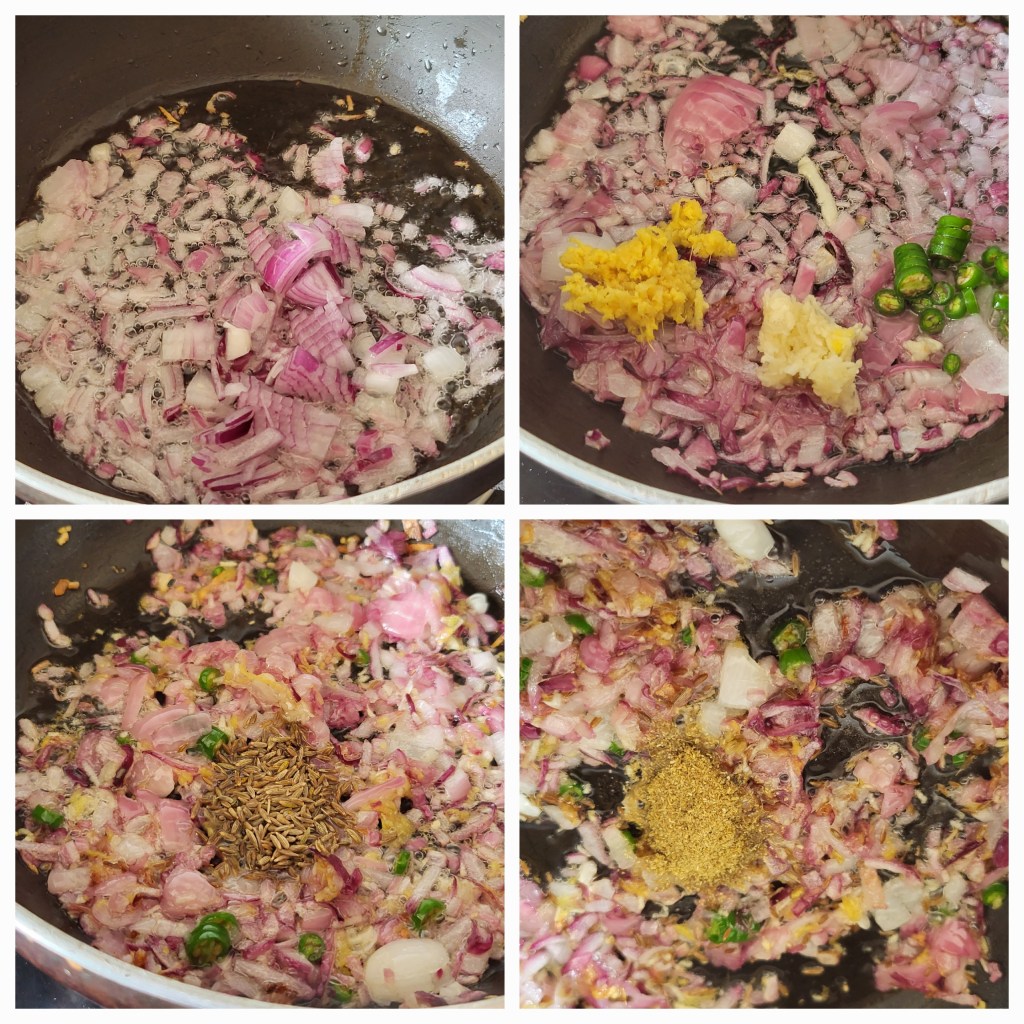
15. Add the onion and saute till translucent.
16. Add the garlic and ginger and coriander powder and fry till the raw smell disappears from the spices.
17. Add the chopped tomato and stir for a few minutes.
18. Add little salt and about ¼ cup of water to fried mixture.
19. Mix well and cover it. Stir from time to time so that the spice does not get burnt and oil starts to ooze from the mixture.
20. Add the dal and stir in well.
21. Slowly bring it to boil and keep cooking for about 3-5 minutes.
22. Add warm water if the dal thickens and maintain the consistency of the dal to your requirement.
23. Add ½ tsp of garam masala and 1 tbsp of chopped fresh coriander leaves and stir well.
24. Cover the pan for the flavors to blend well.
25. Serve hot with steamed rice or roti. It is delicious !
Punjab is in northern India and its capital is Chandigarh.
The state is bordered by Indian states of Jammu & Kashmir in the north, Himachal Pradesh in the north and northeast, Haryana in the south and southeast and Rajasthan in the south. It shares international border with Pakistan in the west.
The state is renowned for its vibrant green landscapes, thriving agriculture and warm hospitality. From the magnificent Golden Temple in Amritsar to the historic Wagah Border, Punjab is a treasure trove of history and spirituality. The state has a rich cultural heritage, dating back to the Harrapan culture, which once flourished here, nourished by the five tributaries of the Indus River.
The name ‘Punjab’ is derived from two words: ‘Punj’ meaning five, and ‘ab’ meaning water. Although the partition of India resulted in only three tributaries – Sutlej, Ravi, and Beas – flowing through Punjab, with the other two, Chenab and Jhelum, flowing through Pakistan, the state’s legacy as a land of five rivers remains an integral part of its identity.
A beautiful legendary tale of Puran Bhagat, a 12th-century saint-poet, has been etched in the annals of Panjabi folklore. Renouncing worldly pleasures, Puran Bhagat embarked on a quest for spiritual enlightenment, much to the dismay of his father. In a fit of rage, his father ordered him to be bricked alive within a room. Miraculously, Puran Bhagat survived this brutal confinement, continuing to meditate and compose devotional poetry. Years later, yogis chanced upon him and freed him from his earthen prison. Emerged with intensified spiritual powers, Puran Bhagat performed a multitude of miracles, including reviving the deceased and healing the ailing. His legend has stood the test of time, symbolizing the triumph of unwavering spiritual devotion over adversity. Inspiring generations to seek a profound connection with the divine, Puran Bhagat’s story has become an integral part of Punjabi heritage.
Baisakhi, the most iconic festival in Punjab, heralds the arrival of the Sikh New Year and the vibrant harvest season. Celebrated with great fervor on 13 or 14 April, this joyous occasion commemorates the founding of the Khalsa Panth by Guru Gobind Singh in 1699. As the auspicious day unfolds, Sikhs and Punjabis globally unite to revel in the spirit of renewal, gratitude, and triumph.
The festivities commence with a sacred bath in the revered Golden Temple, followed by the recitation of sacred scriptures, vibrant processions, and traditional folk dances like the energetic Bhangra. The air is filled with the sweet aroma of langar, a community kitchen serving free meals to all, embodying the spirit of unity and service. As the day progresses, families gather to share sumptuous meals, exchange gifts, and immerse themselves in the rich cultural heritage of Punjab. Baisakhi embodies the essence of hope, renewal, and the triumph of good over evil, making it an unforgettable experience that resonates with the heart and soul.
Pulse farming in Punjab
Punjab is famous for its farming and is called the “breadbasket of India”. Now, many farmers are growing pulses like chickpeas, lentils, and kidney beans. Pulses are a vital protein source and farmers earn more from them than traditional crops like wheat and rice.
Food:
Punjabi cuisine reflects the state’s rich history, with influences from Mughal and Sikh traditions. Punjab’s food habits are delicious and a reflection of its rich agricultural heritage and cultural traditions. Their food is characterized by an abundance of wheat-based dishes, dairy-rich delights, and a perfect blend of vegetarian and non-vegetarian options.
Today we will cook Rajma Masala or Rajma curry. The origin of ‘rajma chawal’ is in Punjab. It is a dish of red kidney bean in flavourful onion tomato gravy served over steamed rice. Usually, Punjabi rajma masala is made with the speckled and light-coloured rajma, known as Chitra rajma. But you may also use the dark red kidney bean.
Rajma Masala (Curry)
Rajma Masala is a flavorful and spicy delight. Made with tender kidney beans (rajma) in a rich, creamy tomato-based gravy. Aromatic spices like cumin and coriander add depth to the curry. We loved it. You may try out too.
You need:
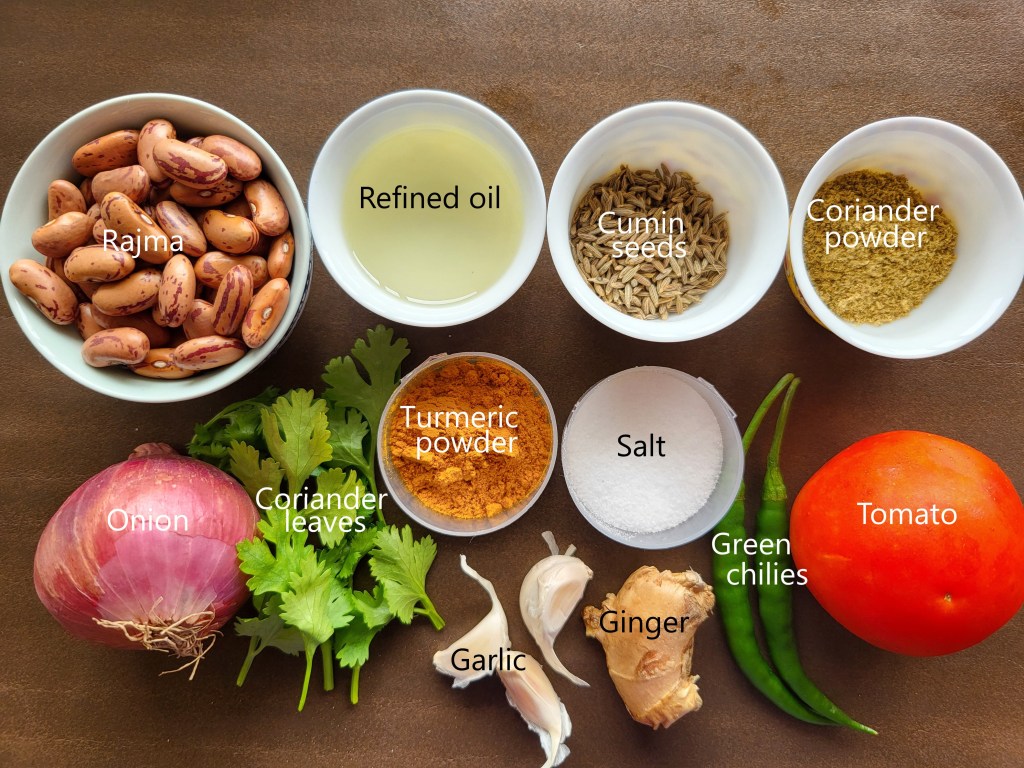
1 cup rajma
1-2 tbsp of refined oil
½ tsp cumin seed
½ tsp coriander powder
¼ tsp turmeric
1 big size onion (½ cup chopped onion)
2-3 big size tomatoes (1¼ cup tomato puree)
2 green chilies
2-3 clove garlic
1 inch piece ginger
A few sprigs of coriander leaves
Salt to taste
Method:
Wash and soak the rajma overnight.
Rinse the rajma and place in a pressure cooker. Add ½ tsp of salt and 2 cups of water. Close the lid and place it on the stove.
After the first whistle lower the flame to its lowest and cook for 2 ½ minutes.
Switch off the flame and allow the cooker to cool by itself.
Transfer the cooked rajma to a bowl with the stock.
For the tomato puree:
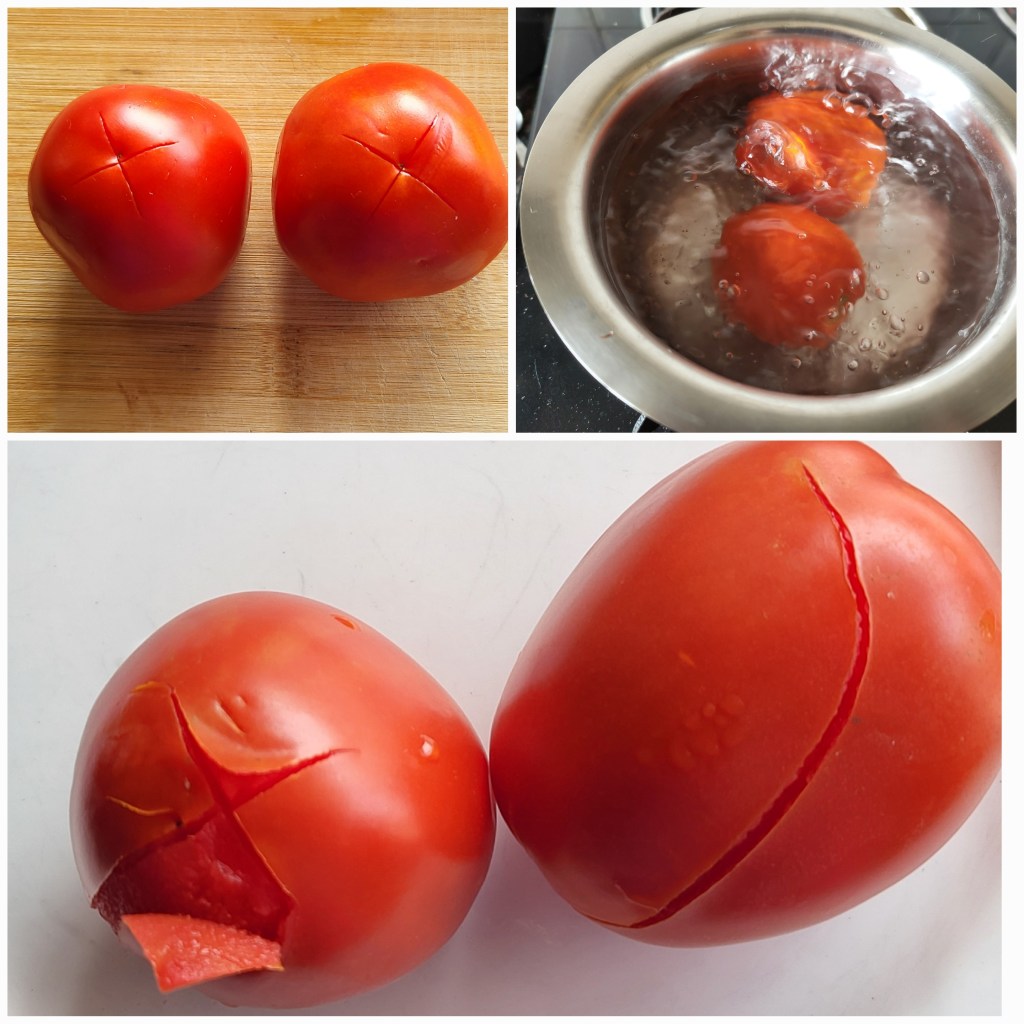
6. Wash and wipe 2-3 big red tomatoes. With a sharp knife cut a cross at the bottom of each tomato.
7. Boil water in a pan and plunge the tomatoes into it. Cover and leave it for 2-3 minutes.
8. Remove the tomatoes from the water.
9. Peel the skin and remove the eyes of the tomatoes.
10. Chop them roughly.
11. Make puree in a blender until smooth.
We need 1 ¼cup –for the recipe. You may store extra puree in the fridge. It stays well for a week.
12. Wash and peel the garlic, ginger and the onion.
13. Chop garlic and onion finely.
We need ½ cup of chopped onion, 1 tsp of chopped garlic and 1 tsp of grated ginger. Wash and chop the chilies finely.
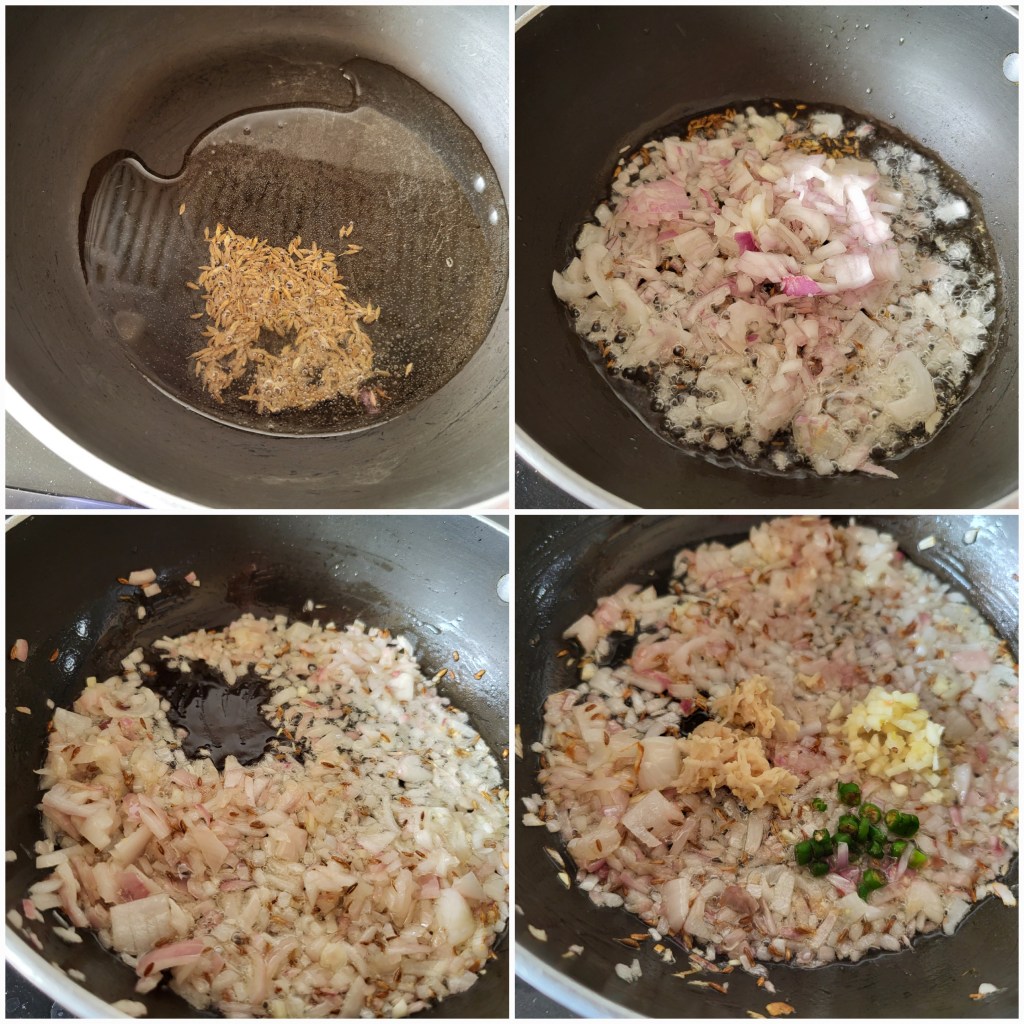
14. Heat 1-2 tbsp of oil in a pan.
15. Add the cumin seeds and saute for few seconds.
16. Add the onion and fry till slightly brown.
17. Add the garlic, ginger and chilies and keep frying till the mixture is golden brown.
18. Coriander and turmeric powder and fry for few more seconds.
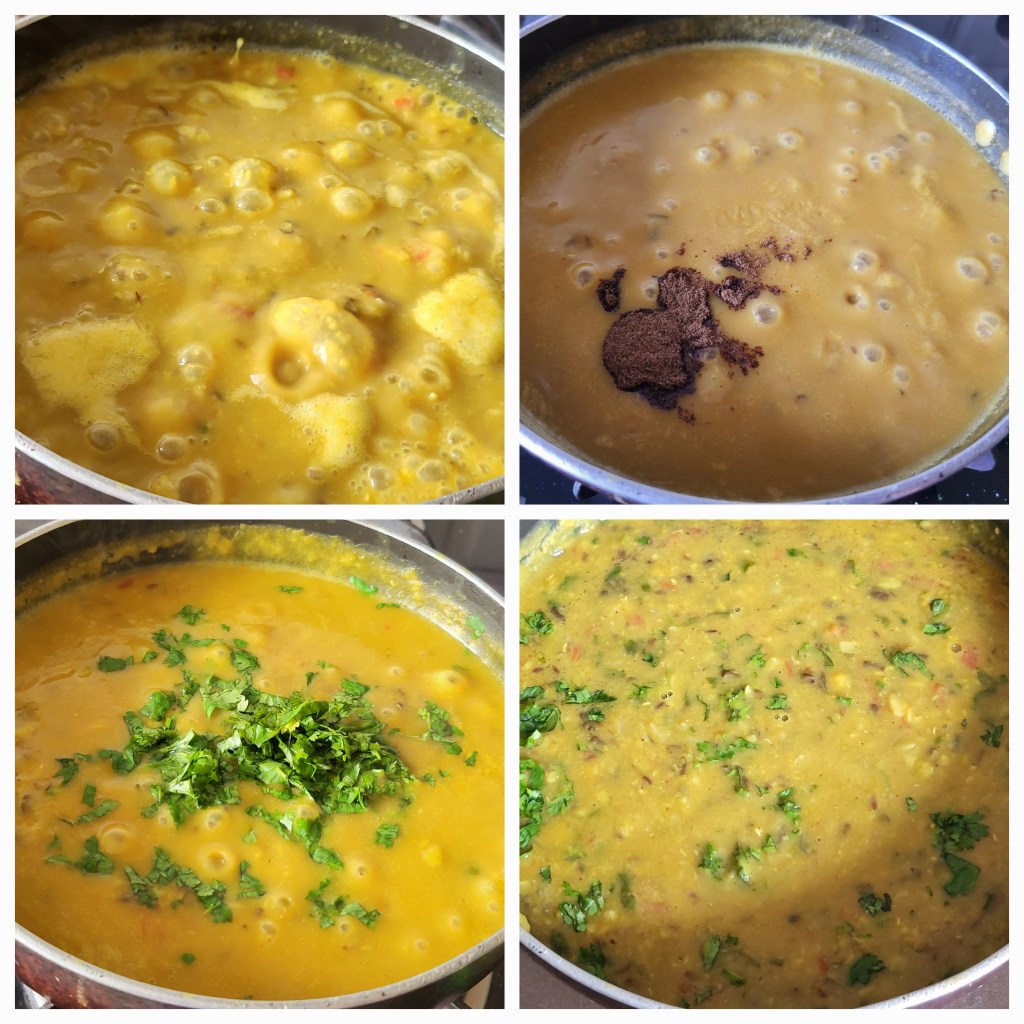
19. Add the tomato puree to the fried spices and fry until the oil starts to ooze from the mixture.
20. Add the rajma with the stock and mix well.
21. Slowly bring it to boil and cook for about 5 minutes.
22. Adjust the consistency of the rajma masala. Adjust the salt.
23. Wash and finely chop the coriander leaves.
24. Add to the rajma masala and bring it to boil.
25. Switch off the flame.
26. Serve it hot with steamed rice.
When it is served with rice it is called Rajma Chawal. Rajma masala goes very well with roti and paratha too.
Ladakh is a union territory, on the extreme north end of India. It has two capitals – Leh and Kargil. Leh is the summer capital and Kargil the winter capital.
Ladakh shares international boundaries with Tibet in the east and Pakistan in the west.
The Indian states, Himachal Pradesh and Jammu & Kashmir borders the state on the south.
Ladakh, fondly known as India’s “cold desert”, is a realm of breathtaking beauty. The majestic River Indus, from which India derives its name, winds its way through this enchanting land. The scenery in Ladakh is nothing short of spectacular, with its crystal-clear skies, towering mountain passes, and numerous Buddhist monasteries that dot the landscape. The region’s unique blend of natural wonder and cultural significance makes it a truly captivating destination.
In the tale of Ladakh, locals believe that the legendary King Gesar of Ling was born in Kargil. In the 11th century, this iconic ruler governed both Ladakh and Tibet, leaving an indelible mark on the region’s history. Revered for his extraordinary supernatural powers, King Gesar was hailed as a hero and a guardian of his people. Through his conquests, he brought unprecedented peace and prosperity to his subjects, cementing his legacy as a champion of the realm. The enduring legend of Gesar continues to inspire and influence the people of Ladakh, reflecting the region’s rich cultural heritage and profound spiritual traditions.
Ladakh has many exciting festivals, and the Hemis Festival is one of the most colorful and popular ones! It is also known as Hemis Tsechu Festival. It is annually held in July at the iconic Hemis Monastery, one of the largest and most renowned monasteries in Ladakh, this 2-day festival is a spectacular commemoration of the birth of Guru Padmasambhava, the founder of Tibetan Buddhism and believed by some to be the reincarnation of Lord Buddha.
The festival begins with a wonderful procession of monks wearing colorful costumes and masks, their movements synchronized to the rhythm of traditional music and rituals. The dances are performed to ward off evil spirits, invoking the blessings of the divine. This festival offers a rare and wonderful opportunity to immerse oneself in the rich cultural heritage and traditions of Ladakh, making it an unforgettable experience.
Pulse farming in Ladakh
Pulse farming has been an integral part of Ladakhi culture for centuries, with local varieties being cultivated despite the challenging climate, poor soil conditions, and water scarcity. Yet, pulse farming has proven to be a resilient and sustainable option for local farmers, who work tirelessly to make the most of the short cultivation period of just 4-5 months. During this brief window, they not only cultivate pulses but also a variety of root and green vegetables, which are carefully preserved to last through the harsh winter months. The dehydrated peas and beans, categorized as pulses, are a testament to the ingenuity and hard work of the Ladakhi people, who have honed their farming skills over generations to thrive in this unforgiving yet breathtakingly beautiful region.
Food:
The Ladakhi people have developed a distinct culinary identity, deeply rooted in their Tibetan heritage. Their diet is shaped by the principles of Buddhism, which emphasizes compassion for all living beings, as well as the region’s limited animal resources.
Hearty stews and soups, made with powdered barley, wheat, and vegetables, form the basic foundation of their staple diet. Yaks and cows are raised for milk, butter, and cheese. Over time, the region’s unique geography and climate have influenced the evolution of traditional dishes such as Tsampa (roasted barley flour), noodles, dumplings, and Skyu (a rich stew).
Today, we’ll be exploring the flavors of Skyu, a nourishing stew crafted with dried peas (pulses), wheat, and root vegetables, showcasing the resourcefulness and culinary creativity of the Ladakhi people.
Skyu
Skyu is a truly comforting and nourishing delight! This wholesome stew is a meal in itself, offering a gentle warmth that soothes the senses. Remarkably, it’s prepared without any spices, yet its natural flavors blend together in perfect harmony, creating a truly delicious experience. I highly recommend giving it a try. We loved it!
You need:
100 gm dried green peas
1 medium size carrot
1 medium size potato
1 medium size onion
2 green chilies
½ inch piece of ginger
1 tbsp refined/mustard oil
½ cup milk
Salt to taste
For the dumpling
75 gm wheat flour
Salt to taste
Method:
Soak the peas overnight.
2. Discard the water and lightly wash the peas again.
3. Place the peas in a pressure cooker.
4. Add ½ tsp of salt and ½ cup of water.
5. Close the cooker and place it over heat.
6. After the first whistle, lower the heat to its lowest and cook the peas for 2 minutes.
7. Allow the cooker to cool down by itself. And keep it aside.
For the dumpling:
8. Take the wheat flour (atta) in a bowl and add ¼ tsp of salt and mix well.
9. Add cold water little at a time to make a stiff dough.
10. Cover the dough and leave it for 5 minutes.
11. Knead the dough on a floured surface for a while.
12. Roll it out and cut into strips.
13. Take a strip and pinch out small amount and make small balls as in the picture.
14. Place the ball on your palm and press out with the thumb of your other hand into small curved shapes.
15. Cover them and keep them aside.
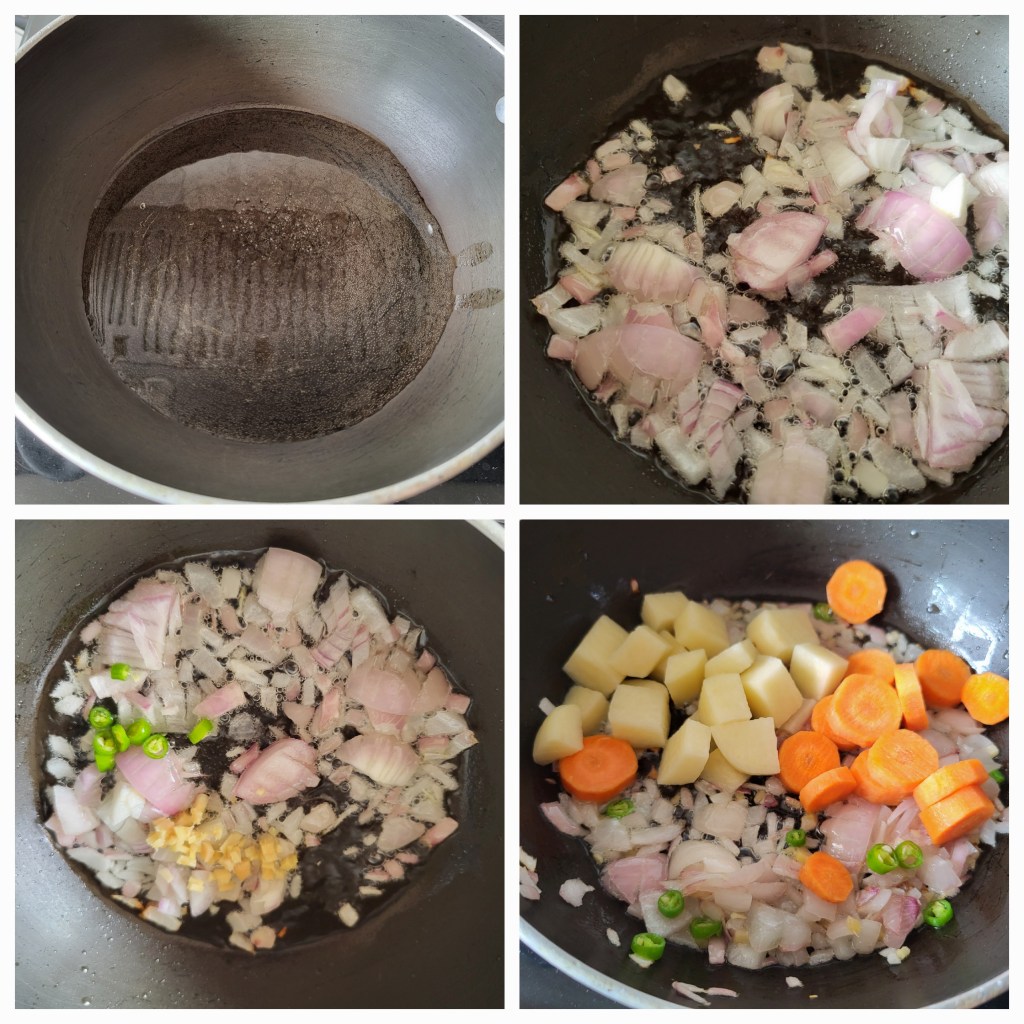
16. Peel, wash and chop the carrot, potato, onion and ginger as in the picture.
17. Wash and chop the chili too.
18. Heat oil in a pan. Lower the flame and add the chopped onion and fry for few seconds.
19. Add the chopped garlic and chilies and saute for a while.
20. Add the carrot and potato and saute a little.
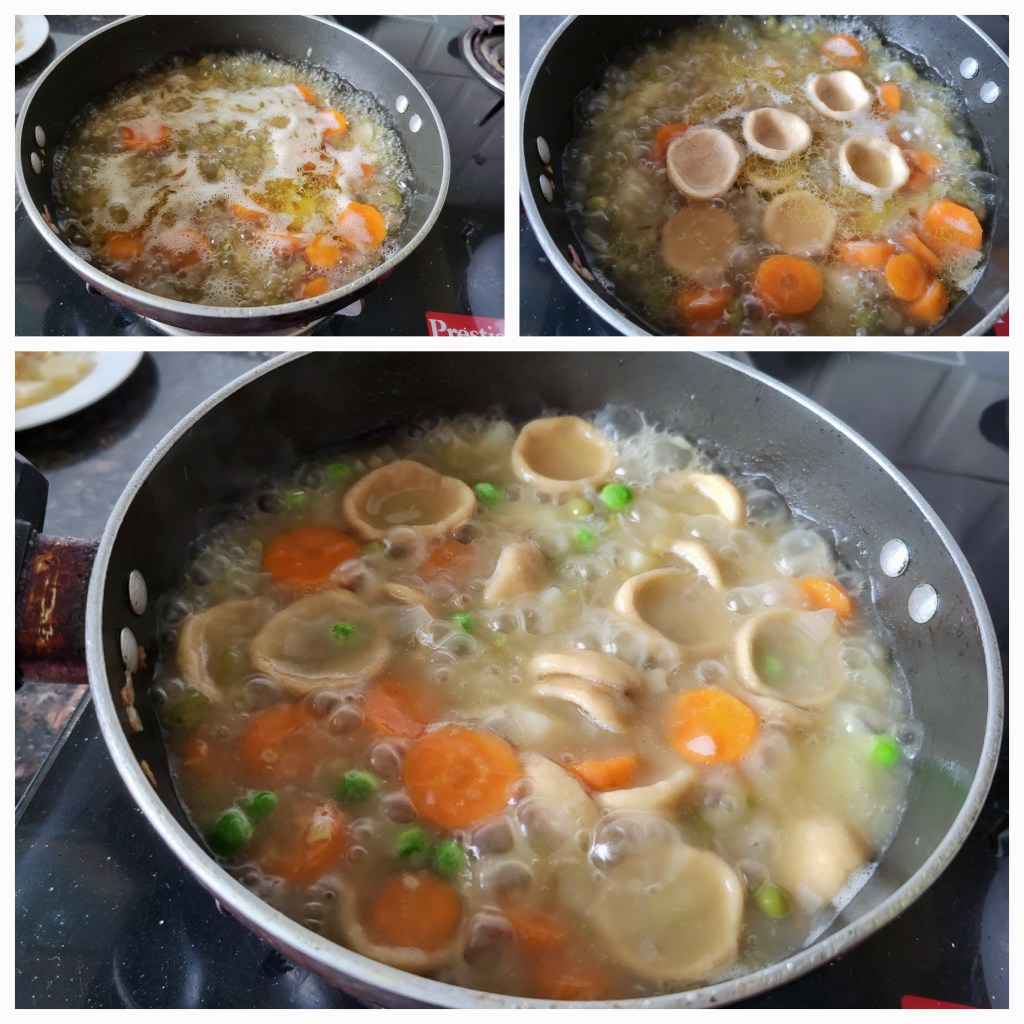
21. Increase the flame and add 1 cup of water and bring it to boil.
22. Cook until carrot and potato are soft.
23. Add the cooked green peas and bring it to boil.
24. Add the prepared dumpling one by one. When the dumpling will get cooked, they will float and come up to the surface.
25. Add ½ cup of milk and adjust the salt.
26. Keep cooking until the gravy becomes little thick.
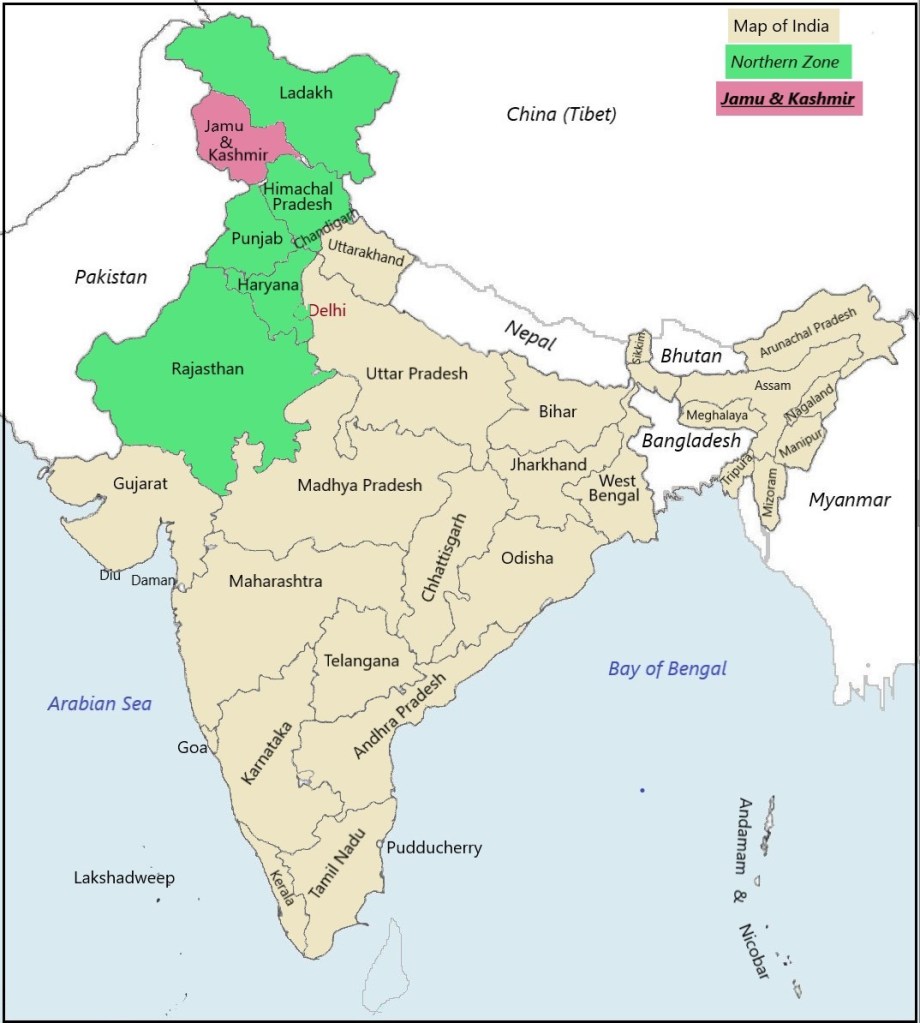
Jammu & Kashmir is a union territory in the northern India. It is bordered by Ladakh on the north and north-east, HimachalPradesh on the south and shares international border with Pakistan on west. It has two capitals ~ Srinagar and Jammu serve as the summer and winter capitals.
Kashmir is one of the most prized and revered regions in India, renowned for its breathtaking beauty, rich culture and spiritual significance.
According to Hindu mythology, the valley of Kashmir was once a huge lake. There was a demon who lived in that big lake. The demon was blessed by Brahma for eternal life as long as he is inside the water. But the demon’s demonic behavior towards the habitats forced Sage Kashyapa to seek Vishnu’s help. Sage Kashyapa drained off the water by cutting a gap in the mountains. Lord Vishnu struck the demon and killed him with his Chakrayudha (discus). Sage Kashyapa approached Parvathi, Lakshmi and Saraswathi- beseeching them to flow down from heaven. Thus, this lush valley Kashmir was named after Sage Kashyapa.
Another interesting story from epic Mahabharat, is that, Kashmir was once a part of Gandhara Kingdom (now Pakistan and Afghanistan). The Princess Gandhari, married to the Prince of Hastinapur Dhritrashtra was the mother of Kaurava.
In 14th Century BC, a Hindu King, Raja Jambu Lochand, during a hunting trip reached the Tawi River where he saw a goat and a lion drinking water at the same place. The king was so impressed that he decided to set up a town and called it Jambu (after his name). With the passage of time, Jambu became Jammu. Jammu and Kashmir have many such interesting stories.
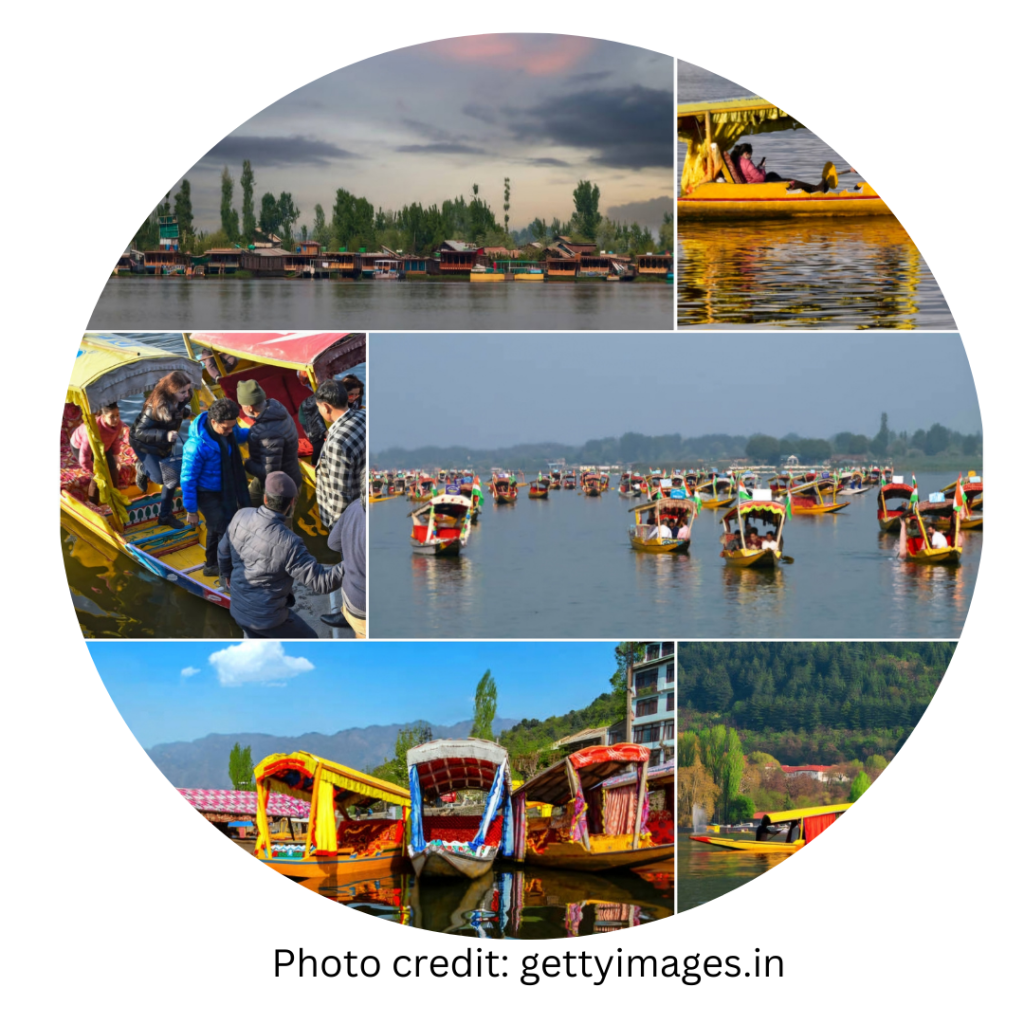
Jammu and Kashmir celebrate many fascinating and beautiful festivals. The Shikara Festival is one of them. Shikaras are their traditional hand-crafted wooden boats, built with local wood like walnut and deodar. The curved roofs of the boats are carved with intricate designs. The main attraction of the festival is the Shikara race. The race is a century- old tradition, held during the summer months.
The boatmen clean and decorate their boats with the fresh flowers and colorful fabrics before the festival. The race attracts a large crowd of locals and tourists. The sounds of cheering crowds, clanging oars and laughter fills the air as the shikaras dart across the finish line, creating an unforgettable experience. The festival continues with sweet music and aroma of local delicacies and the warmth of the local people, displaying the rich cultural heritage and natural beauty of Kashmir.
Pulse farming in Jammu & Kashmir
Jammu and Kashmir is a significant producer of pulses in India. They cultivate various pulses like kidney bean (rajma) black gram (urad) chickpea (gram) lentil (masoor), pigeon pea (tur) and horse gram. Pulses are sold in local markets and some are exported to other parts of India. Most farmers focus on growing crops for their own consumption.
The region has a temperate climate. The clay and sandy soil is suitable for pulse cultivation. But there are few challenges like climate change, soil degradation, limited irrigation and hilly and mountainous topography.
Nevertheless, the beauty of terrace farming in J&K is not only functional but also adds to the aesthetic appeal of the landscape making it a popular subject for photographers and artists.
Food:
Rice wheat and maize are staple foods while meat especially mutton is a common part of the diet, particularly in Kashmiri cuisine. Vegetarian dishes like dal and saag are popular in the Jammu region. Fruits, like apples and walnuts are abundant and spices like cardamom and cinnamon are liberally used. There is a traditional Kashmiri spice blend called ‘ver’ which includes spices like cinnamon and cardamom, cloves and few strands of saffron for it distinct flavor and aroma.
Today, we are going to cook Kashmiri Lasooni Ki dal. It is a popular traditional Kashmiri dish and often served during special occasions and festivals in Kashmir. Some use cardamon, cinnamon and clove to enhance the flavor.
Kashmiri Lasooni Dal
The unique aspect of the dal is the liberal use of garlic, and that gives the dish a distinct flavor and aroma. It is soothing and nutritious too. We loved it. Hope you will enjoy it too.
You need:
For the dal
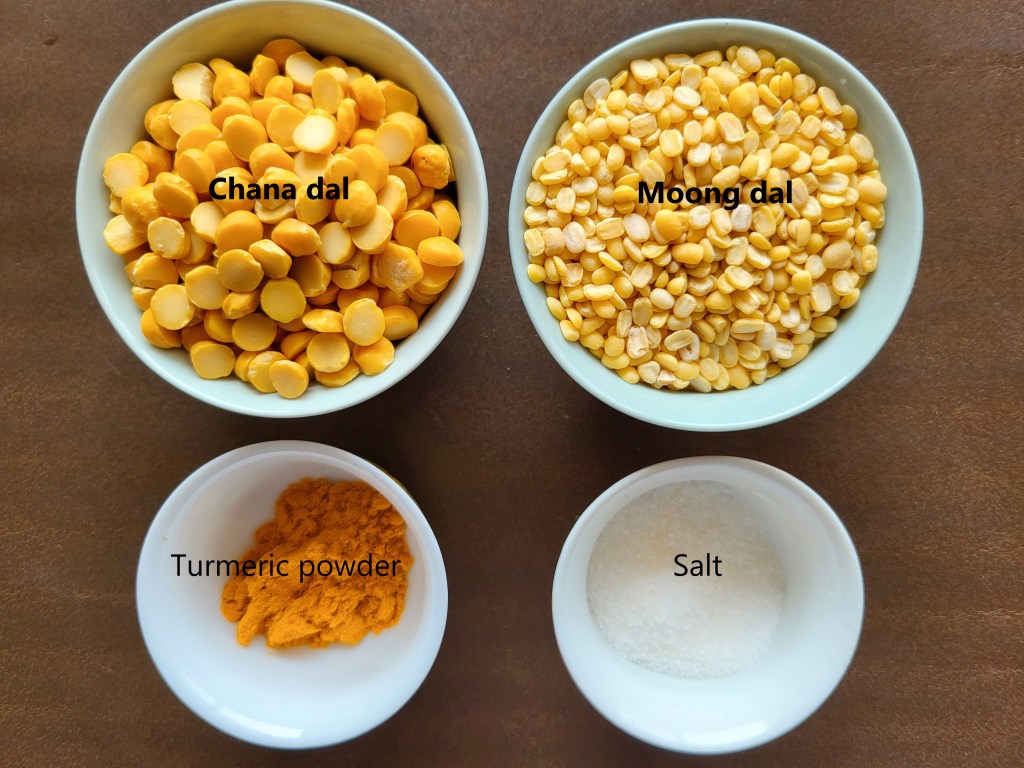
100 gm cup chana dal
50 gm cup moong dal
¼ tsp turmeric powder
½ tsp salt.
First tempering:
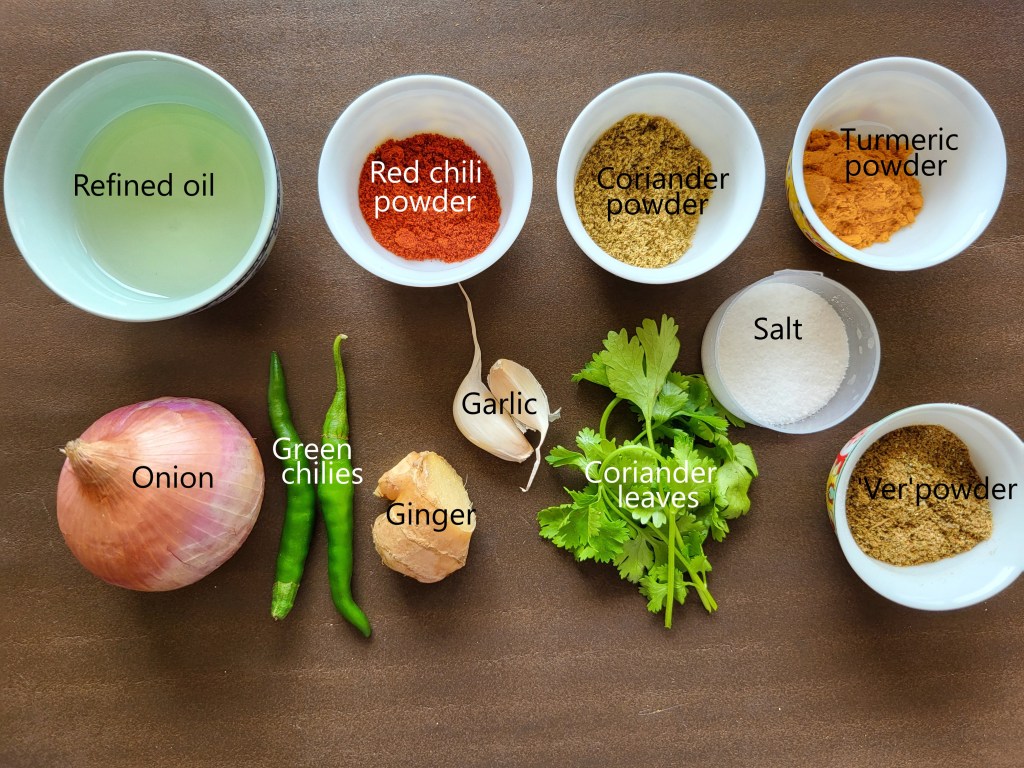
1 tbsp refined oil
½ tsp red chili powder
1 tsp coriander powder
¼ tsp turmeric powder
1 tsp of ‘ver’ powder
1 medium size onion
2 green chilies
1 small piece of ginger
2 garlic
A few sprigs coriander leaves
Second tempering:
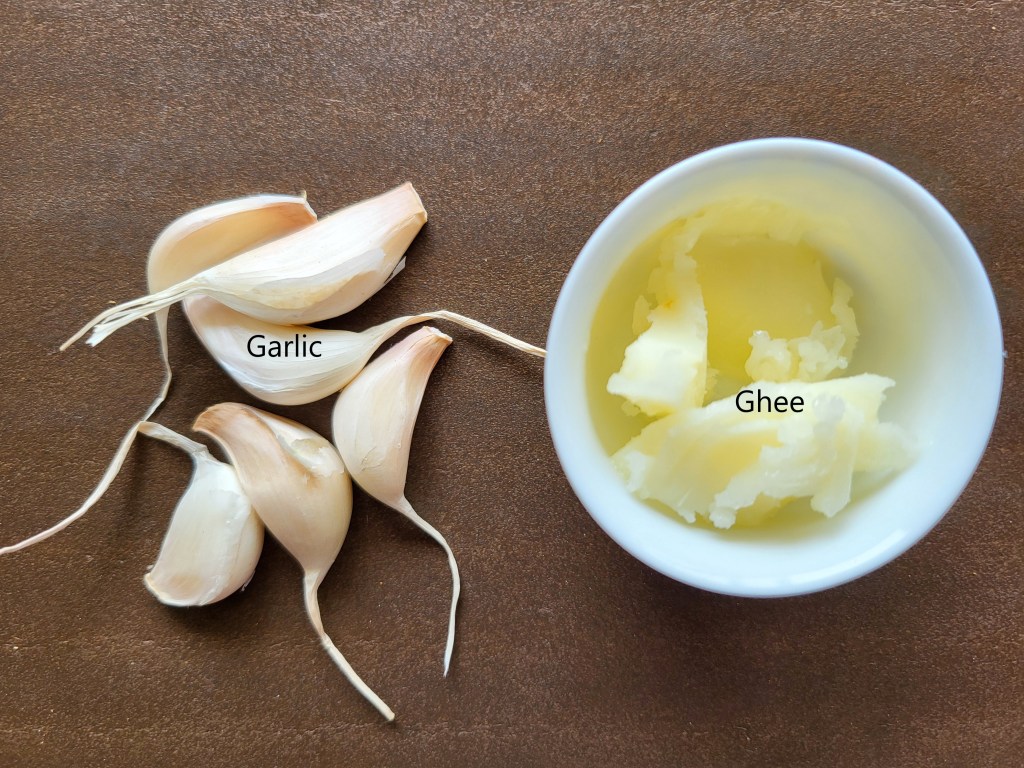
7-8 cloves of garlic
1 tbsp of ghee (clarified butter)
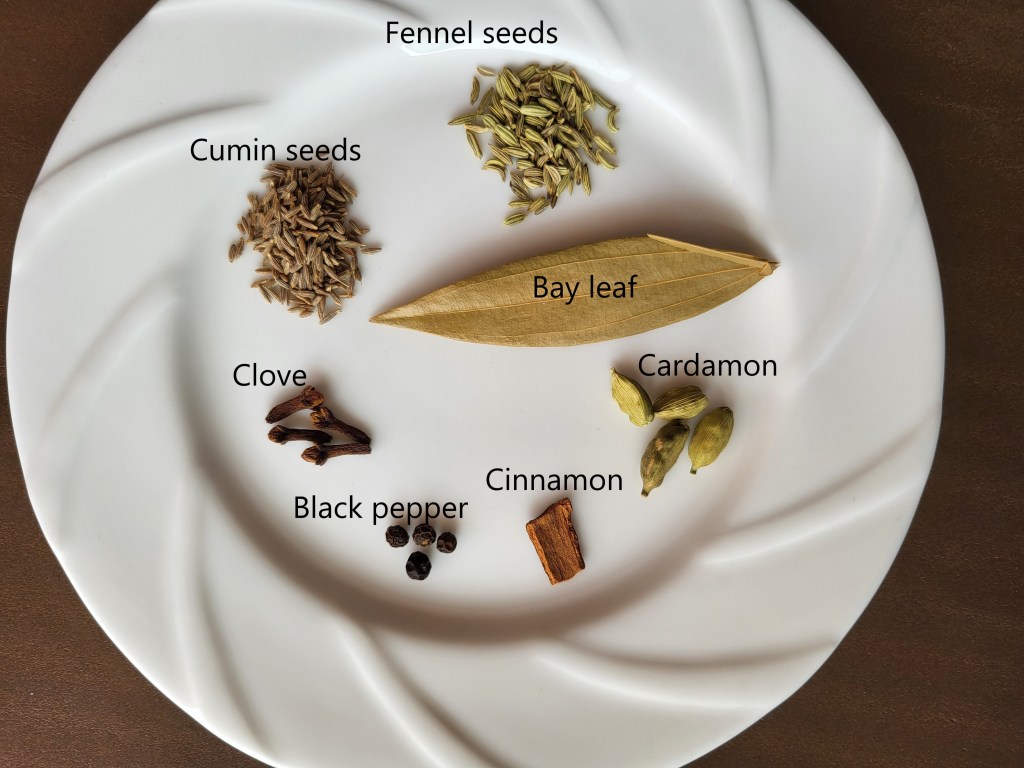
Ver masala
4 cloves
4 black pepper corn
1 small piece of cinnamon
4 cardamoms
1 small bay leaf
½ tsp of fennel seeds (saunf) ½ tsp of cumin seeds
Method:
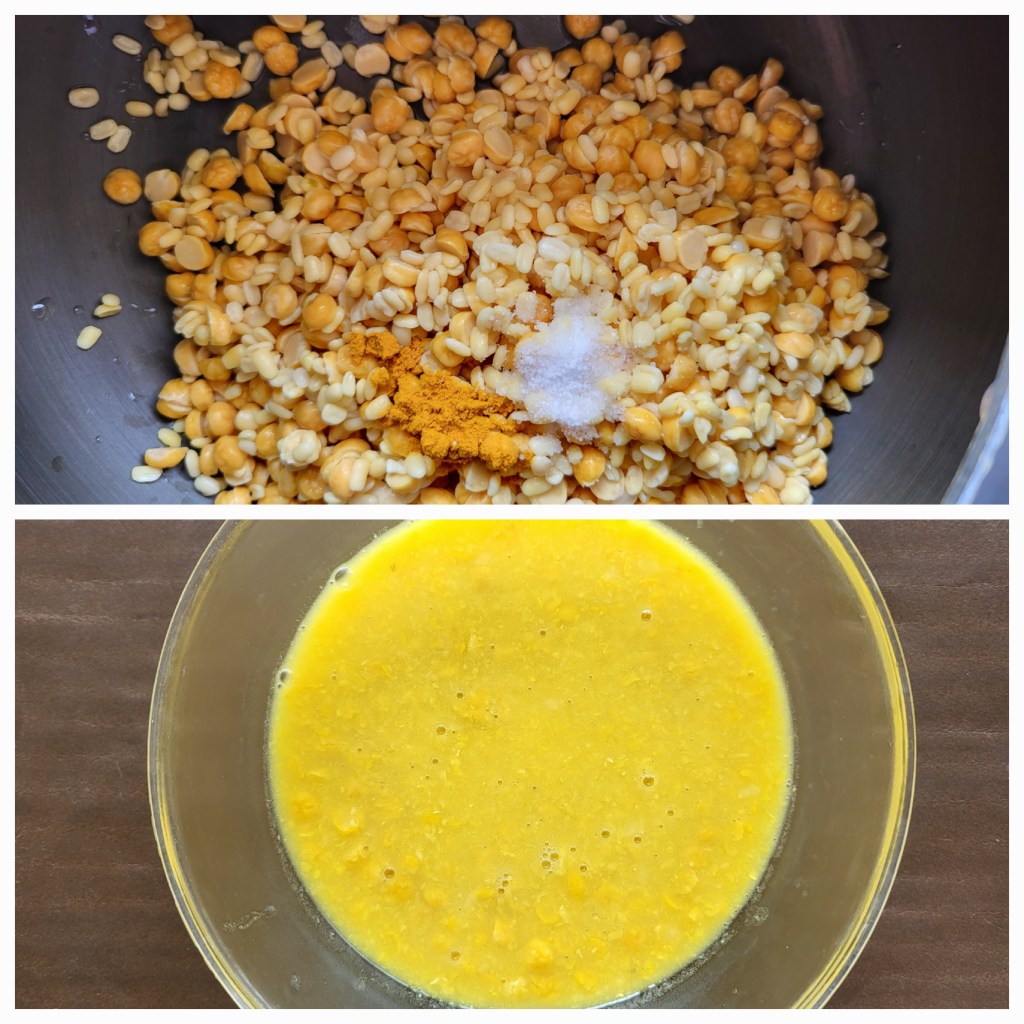
Take chana and moong dal in a bowl.
Wash and soak them for about 15 -20 minutes.
3. Place the dal in a pressure cooker.
4. Add salt and turmeric powder and 2 cups of water.
5. Place the cooker on the stove.
6. After the first whistle lower the flame to minimum and cook for 2 minutes.
7. Allow the cooker to cool down by itself.
8. Open the cooker and transfer the dal to a bowl.
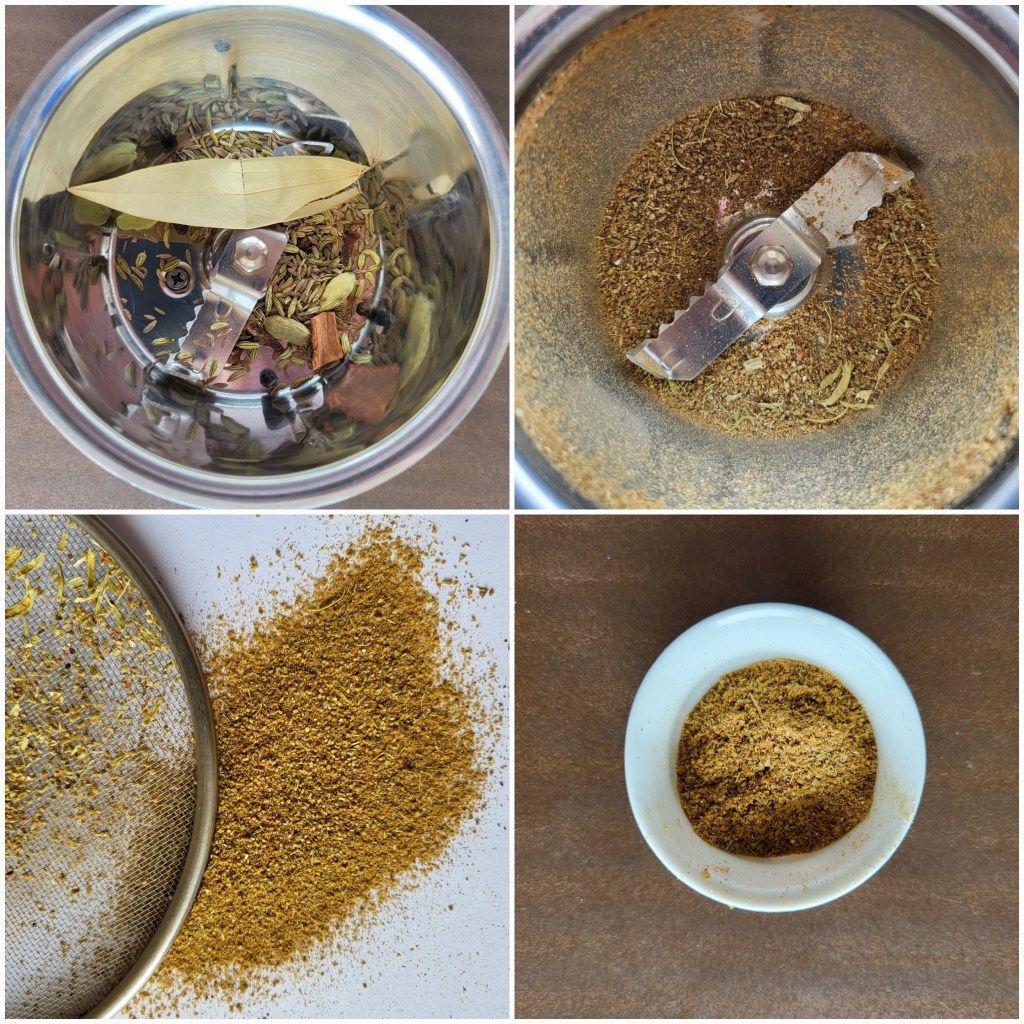
Make the Ver masala:
9. On a hot pan, lightly roast all the given masala and allow them to cool.
10. Place all the roasted masala in a dry grinder and grind them finely.
11. Sieve the masala and your ‘ver’ masala is ready.
12. Peel and wash, onion, garlic and ginger and chop them finely.
13. Wash the coriander leaves and chili and chop them finely too.
First tempering:
14. Heat the oil in pan.
15. Lower the heat and add the onion and saute for a few seconds.
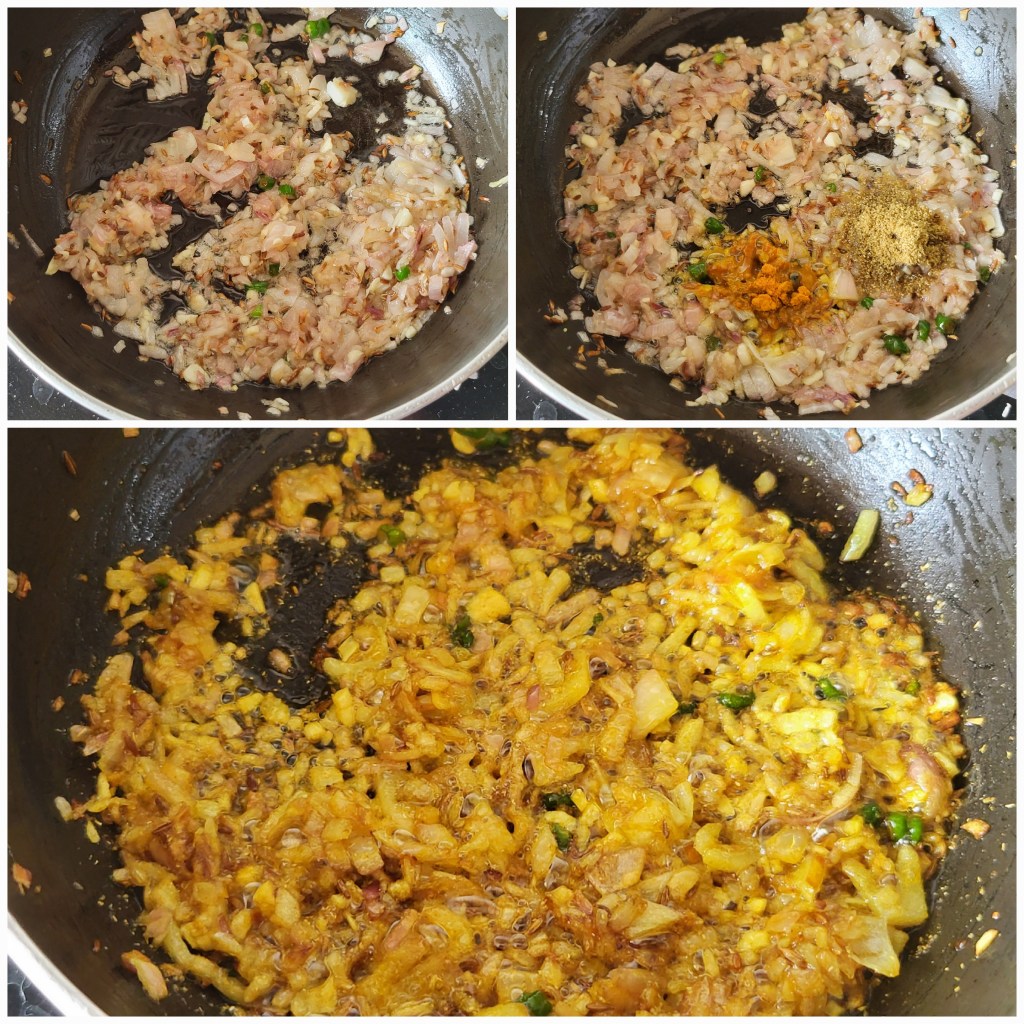
16. Add chopped garlic, ginger and chili and fry for few more seconds.
17. Add red chili powder, turmeric, coriander powder and the ‘ver’ powder and fry for sometime.
18. Add the cooked dal to the fried masala and mix well.
19. Bring the dal to boil.
Second tempering:
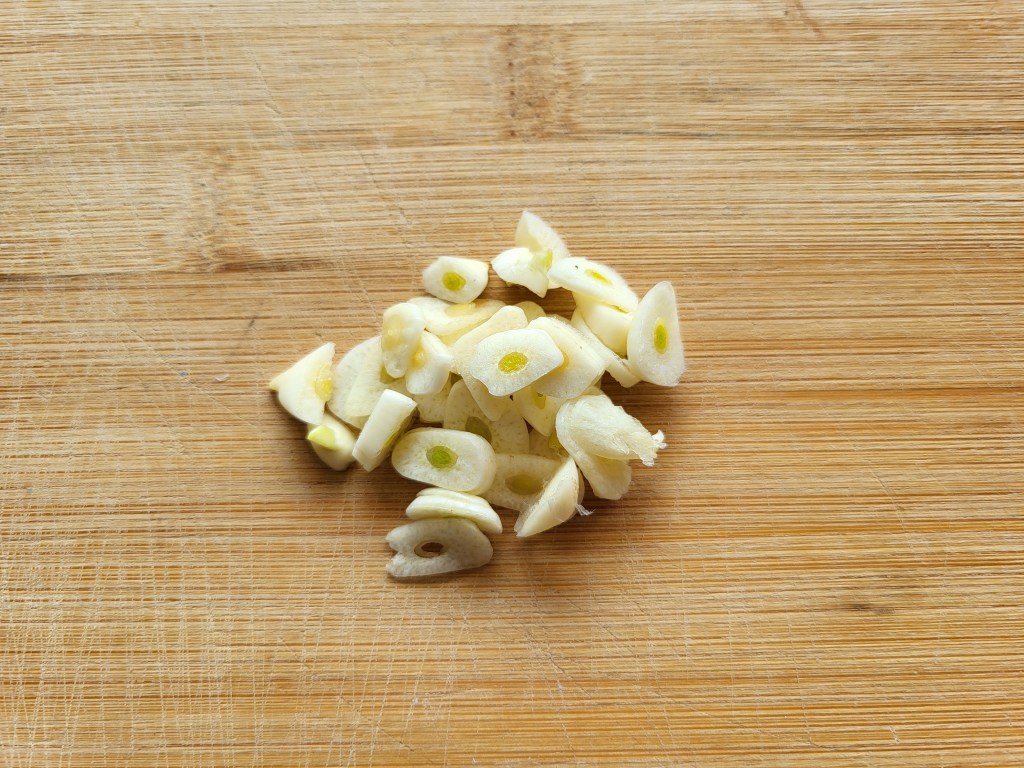
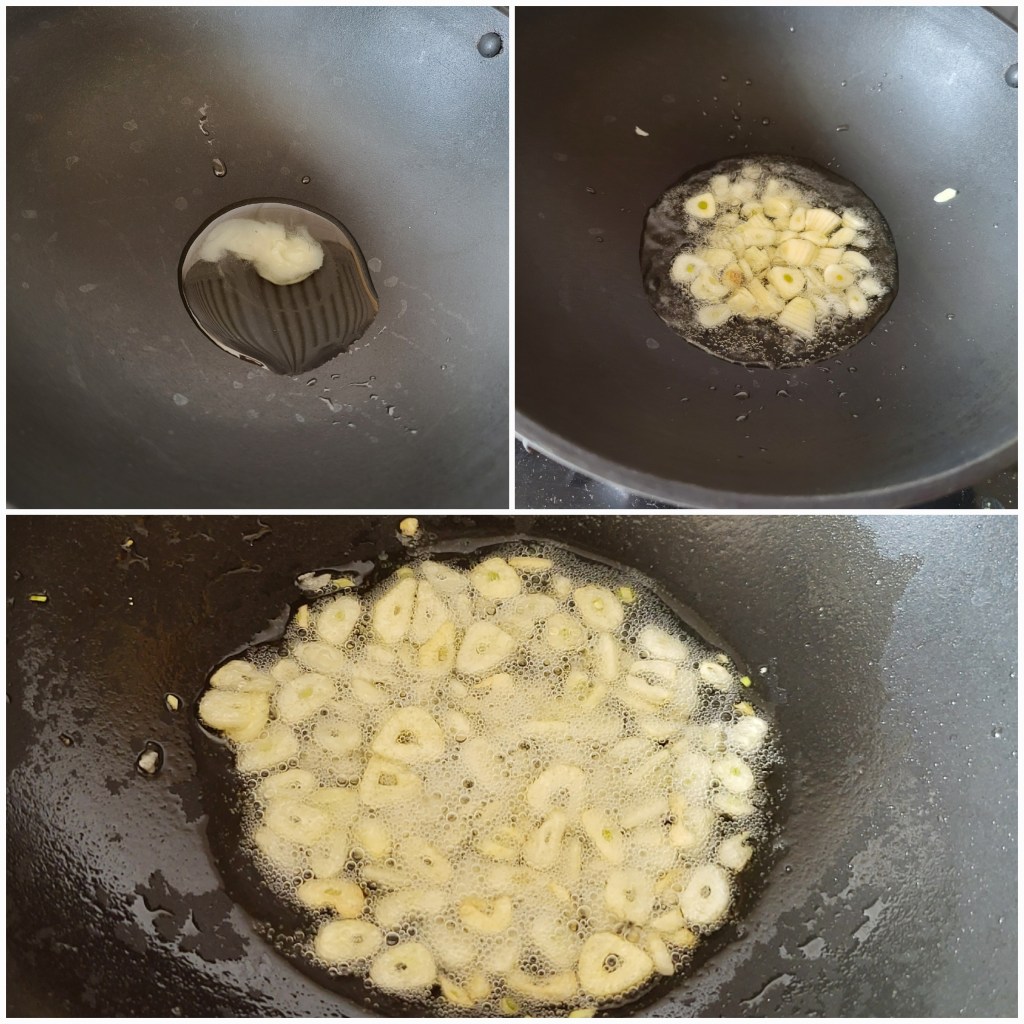
20. Peel and wash the garlic.
21. Slice them finely and keep aside.
22. Allow the dal boil for 2-3 minutes.
23. Heat a pan with the ghee. Switch off the heat.
24. Add the sliced garlic and keep frying them till lightly browned.
25. Pour the garlic on the dal and mix well.
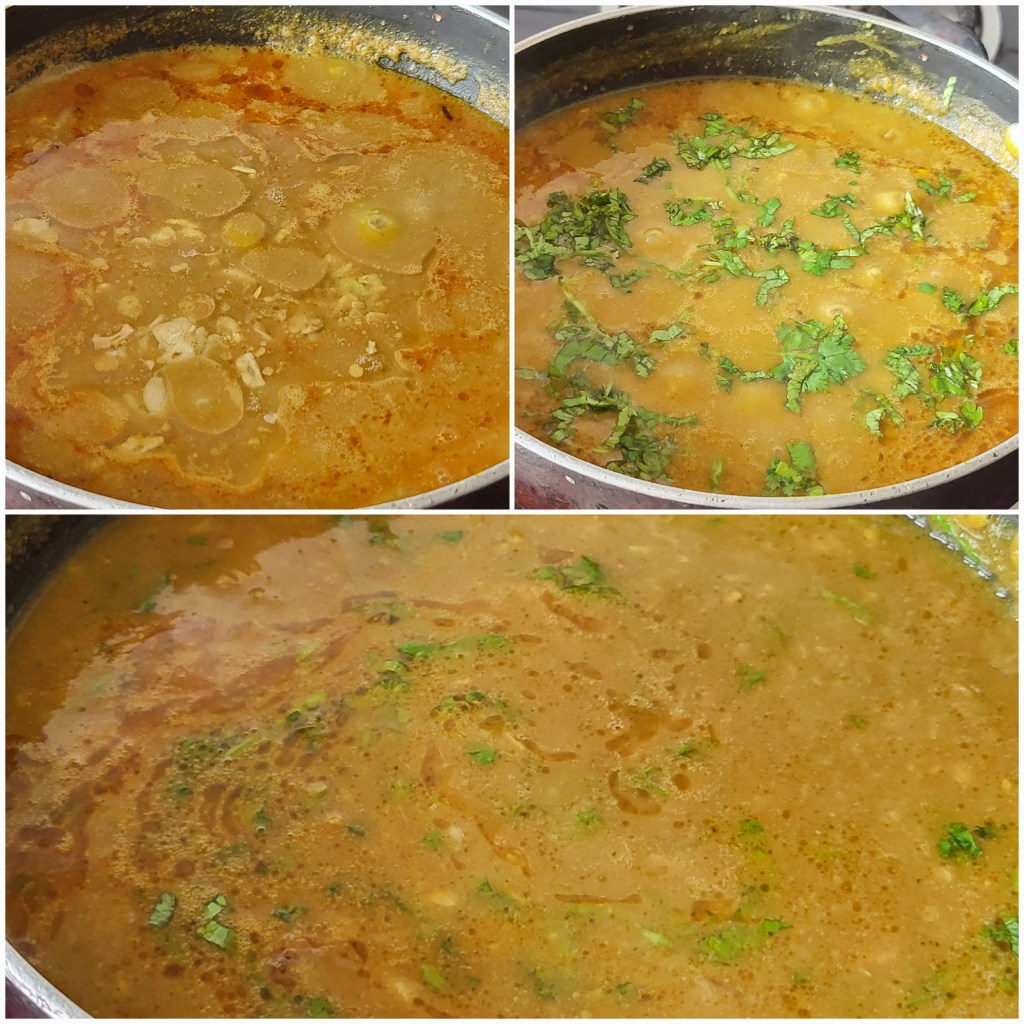
26. Add 1 tablespoon of chopped coriander leaves and stir well.
27. Cover the dal for few minutes.
Your Kashmiri Lasooni dal is ready. Serve hot with steamed rice. Hmm….. it is delicious.








































 Dal On The Table