
Saudi Arabia: Location and people
Saudi Arabia is a country in West Asia. It is governed as an absolute monarchy. The two holy Islamic cities, Mecca and Medina, are located in Saudi Arabia. Its capital is Riyadh.
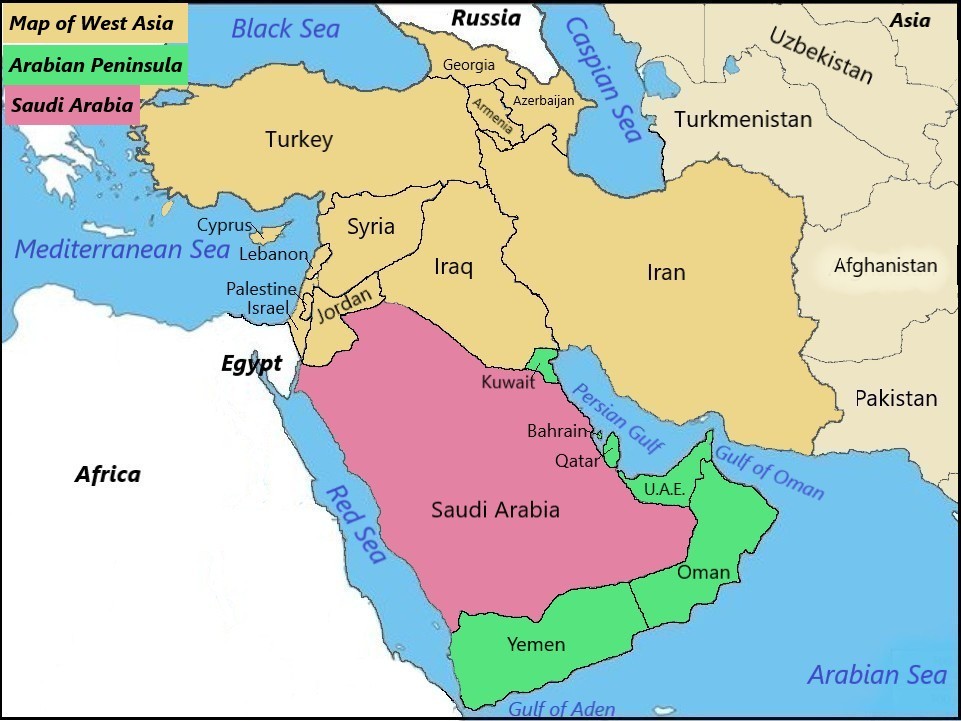
Saudi Arabia is bordered by Jordan and Iraq to the north; Kuwait, Bahrain, Qatar, and the United Arab Emirates to the east; Oman and Yemen to the south; and the Red Sea and Egypt to the west.
A Few Wonders of Saudi Arabia
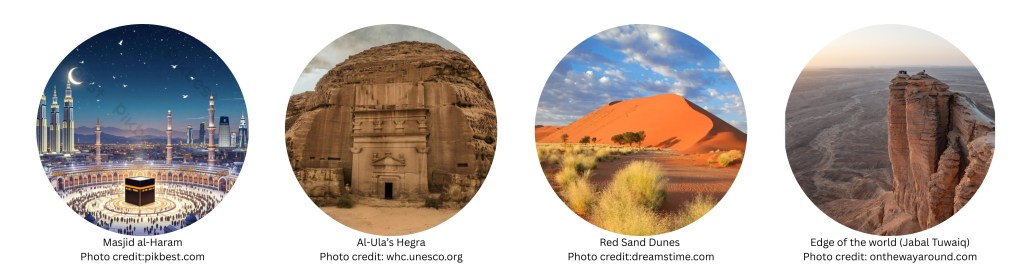
1. Masjid al-Haram: Masjid al-Haram in Mecca is Islam’s holiest mosque and a major pilgrim destination. The mosque surrounds the Kaaba, a sacred site for Muslims worldwide. Its grand architecture and spiritual significance make it a breathtaking experience.
2. Al-Ula’s Hegra: Hegra, in Al-Ula, is an ancient Nabatean archaeological site with stunning rock-cut tombs. The site’s unique sandstone formations and historical significance draw visitors from around the world. Explore the remnants of this ancient civilization.
3. Red Sand Dunes (Nafud Desert): The Red Sand Dunes in the Nafud Desert offer a surreal landscape of crimson sands. Experience dune bashing, camel rides, or simply take in the stunning vistas. The desert’s beauty is a photographer’s dream.
4. Edge of the World (Jabal Tuwaiq): The Edge of the World in Jabal Tuwaiq offers breathtaking views of the surrounding desert landscape. The cliff’s dramatic drop creates an illusion of standing at the world’s edge. A popular spot for hiking and stargazing.
People of Saudi Arabia

Saudis are known for their hospitality and strong cultural roots. The population is diverse, with Saudis valuing traditions like dates, Arabic coffee (gahwa), and Islamic heritage. They’re proud of their country’s history and the Two Holy Mosques.
Traditional Dress of Saudi Arabia

Saudi men typically wear a “thobe” (or dishdasha), a long, usually white robe suited to the desert climate. They often wear a “ghtra” (red checkered headscarf) or “shema” (white headscarf), held in place by an “agal” (black rope). Women wear an “abaya”, a loose black robe, often with a “hijab” (headscarf) or “niqab” (face veil), often part of their modest attire.
These outfits reflect Saudi Arabia’s cultural and heritage, commonly worn in daily life and formal occasions.
Pulses and Recipes
Saudi Arabia is exploring pulse cultivation as part of its efforts to enhance food security and reduce import dependency. The government is promoting oilseeds and pulses through subsidized land allocation and water access programs, particularly in northern provinces where climate conditions are suitable.
Lentils are everyday comfort across Saudi Arabia – simple, filling, and deeply loved. From homes in Riyadh to the coasts of Jeddah, pulses simmer slowly with cumin, garlic, and a squeeze of lemon until they turn rich and earthy.
You’ll find them at breakfast tables and after-iftar feasts alike, served in steaming bowls or beside warm tanoor bread. They’re humble, but they hold the whole table together.
Maraqa Adas and Marag Adas are the same dish. Marag is thinner, while Maraqa is thick enough to scoop up with bread.
Today, we’re cooking Maraqa Adas.
Maraqa Adas Saudi Red Lentil Stew
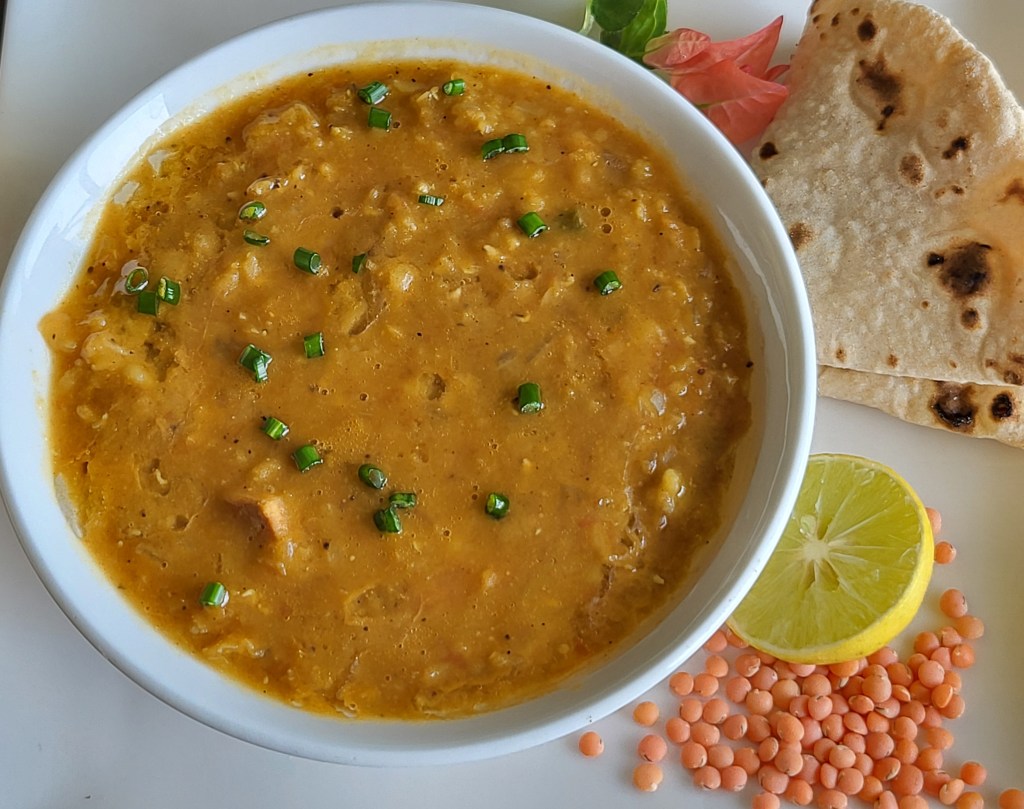
A simple, comforting red lentil stew eaten with khubz or with rice. This is everyday food in Saudi homes – simple, nourishing, and made to be shared.
You need:
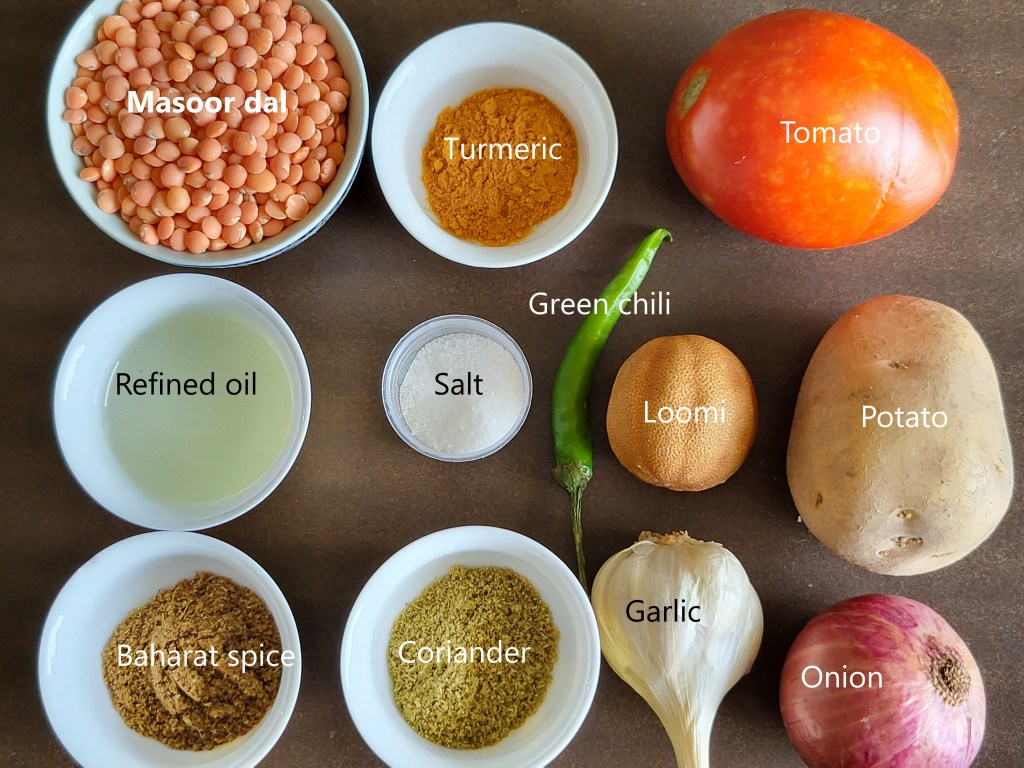
100 gm red lentils (masoor dal)
1 medium size onion
½ cup grated tomato
1 small potato
1 tsp grated garlic
1 green chili (optional)
1 tsp Baharat spice
¼ tsp turmeric powder.
1 tsp coriander powder
1 small Loomi
1 tbsp refined oil/olive oil
Salt to taste
Method:
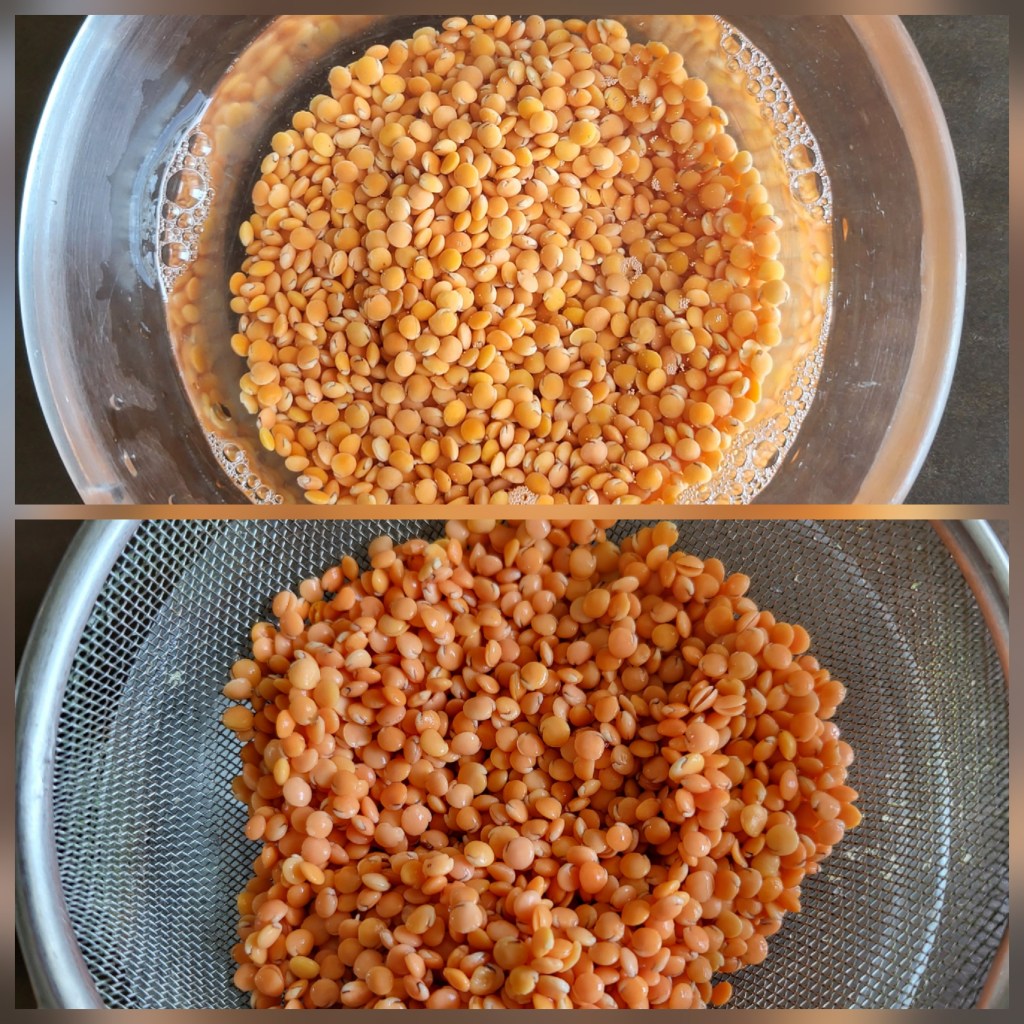
- Wash the red lentils thoroughly.
- Soak them in clean water for about 10 minutes, then drain completely.
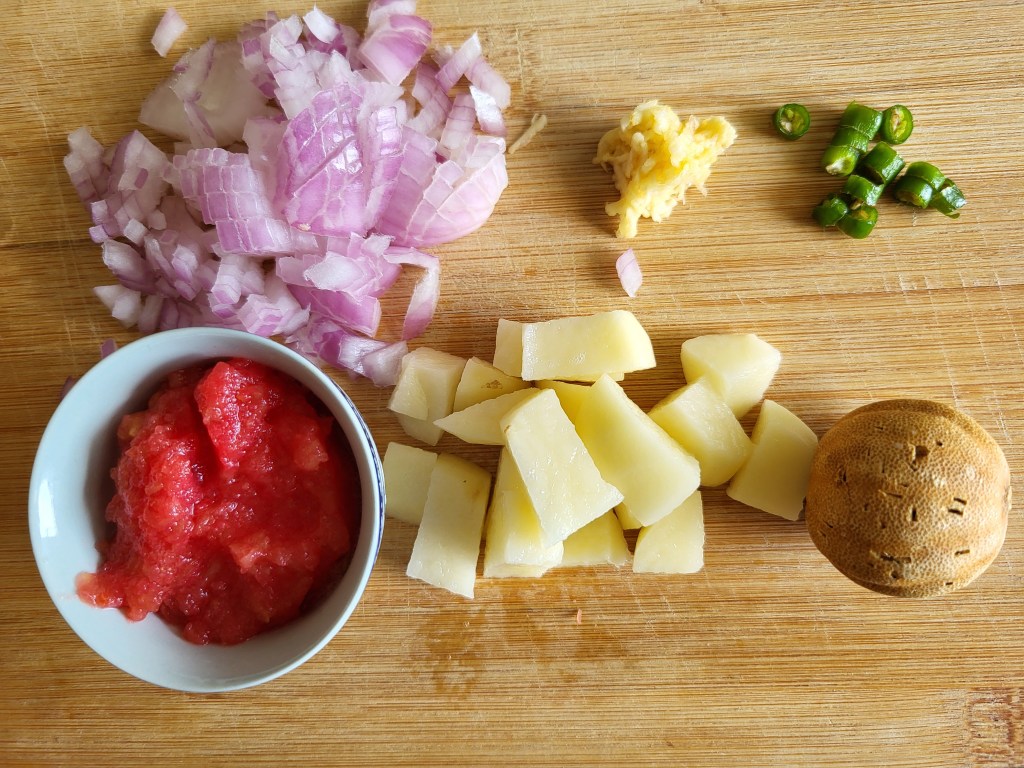
3. Finely chop the onion and green chili.
4. Grate the garlic.
5. Pierce the dried Loomi a few times with a fork to help it release flavour.
6. Grate the tomato and discard the skin.
7. Dice the potato into small, even cubes.
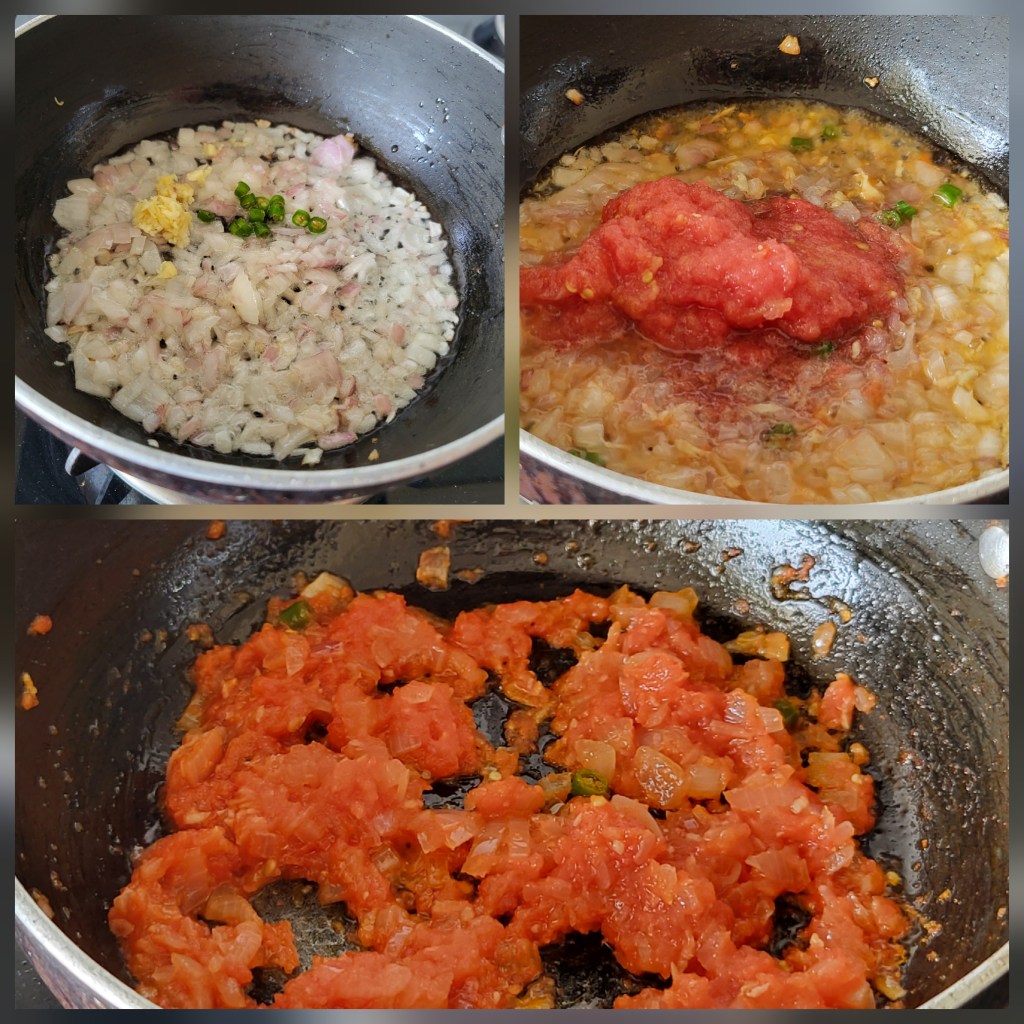
8. Heat refined oil in a pan over medium heat.
9. Add the chopped onion and cook until soft and lightly browned.
10. Add the grated garlic and chopped chili. Sauté for about 1 minute, until fragrant.
11. Stir in the grated tomato. Cook until the tomato breaks down and the oil starts to separate from the mixture.
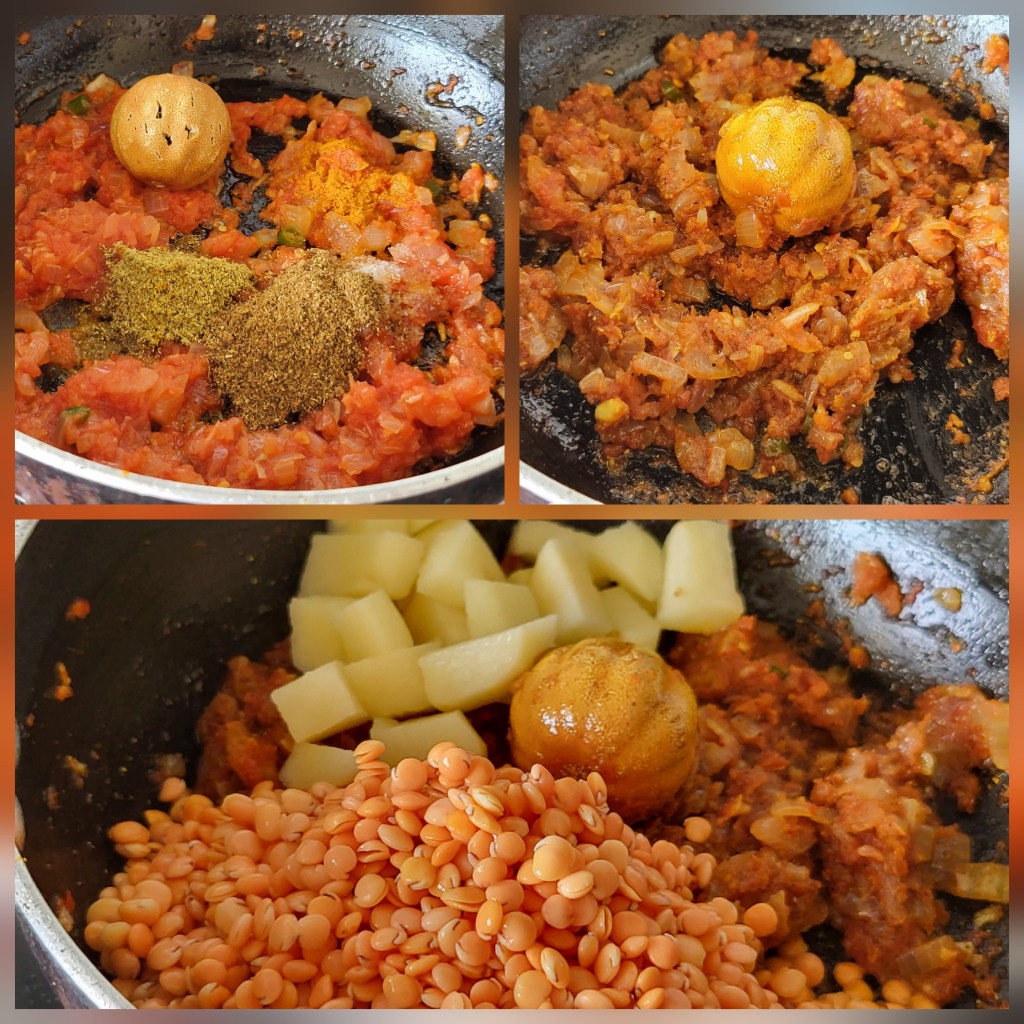
12. Add the pierced loomi, baharat, turmeric, ground coriander, and salt.
13. Stir for a few seconds until the spices are fragrant.
14. Add the drained red lentils and diced potato. Mix well to coat everything in the spices.
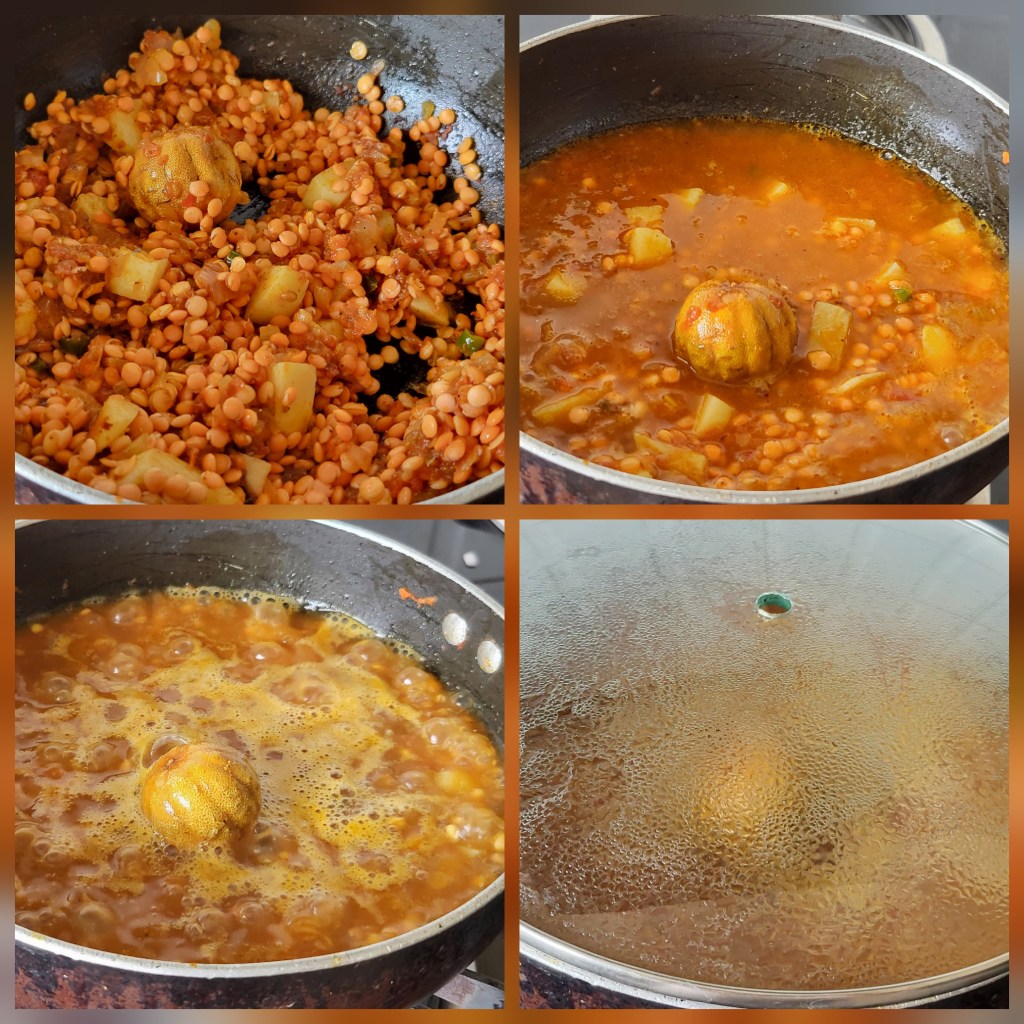
15. Sauté for a few seconds, then pour in enough water to just cover the lentil and potato mixture.
16. Bring to a boil over medium-high heat. Once boiling, reduce the heat to low and let it simmer.
17. Cover the pan. Stir occasionally to prevent sticking. Add more hot water if it looks dry. Cook for 25–30 minutes, or until the lentils and potato are tender and the stew is thick.
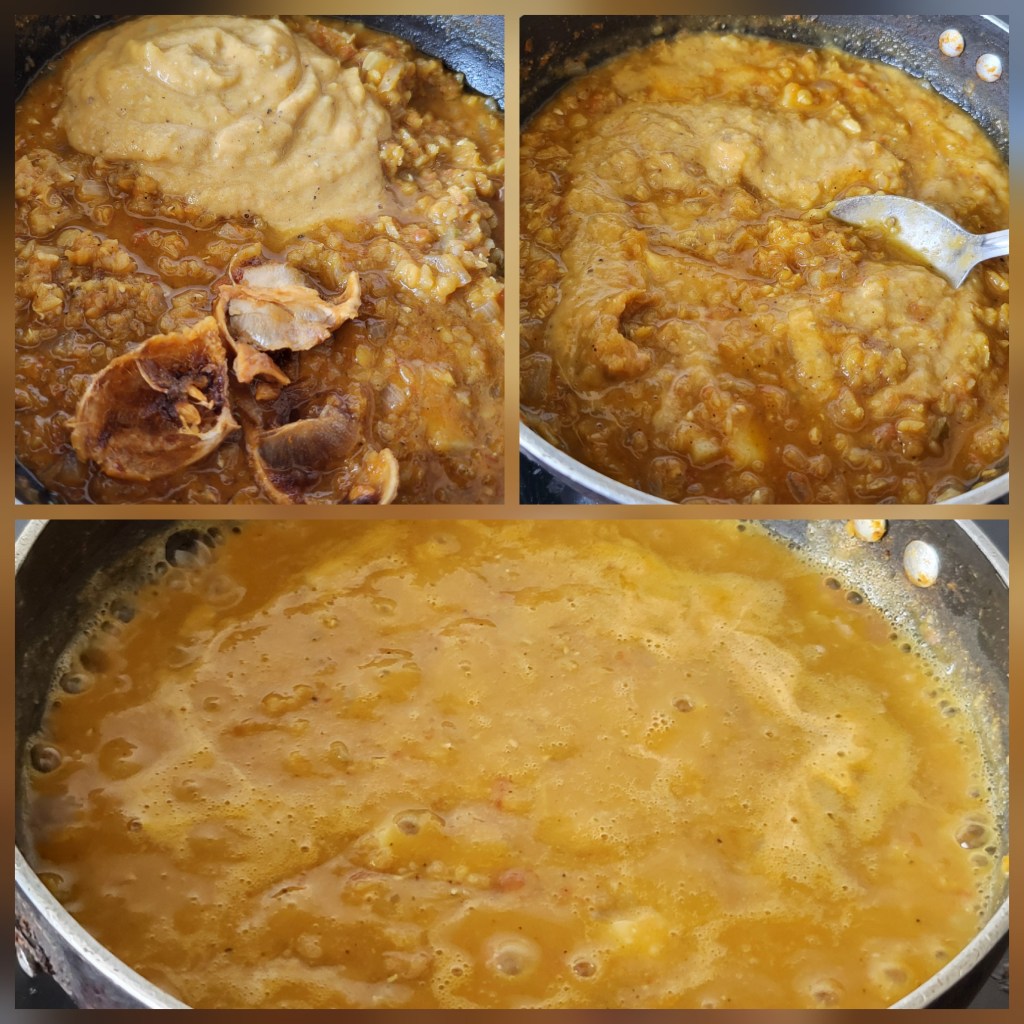
18. Remove the loomi from the pan. Tear it into smaller pieces, mash slightly, and return it to the stew.
19. Take 2 tbsp of the cooked lentils and blend until smooth. Stir the purée back into the pan for a thicker texture.
20. Taste and adjust salt or spices. Bring back to a brief boil, then switch off the heat. Add a little hot water if needed. The final texture should be thick enough to scoop with bread, but not a paste.
To Serve: Ladle the Maraqa Adas into bowls. Finish with a drizzle of olive oil and a squeeze of fresh lemon. Serve hot with khubz, plain rice, or roti.
Enjoy your Maraqa Adas.
Happy Reading, Healthy Cooking!
Coming up next …Pulses in United Arab Emirates Cuisine
*****


looks easy!
LikeLike
Thank you Meeta!
LikeLike
Your description of Saudi hospitality & the lentil came across so naturally & beautifully😍 thank you again for putting so much effort into each and every blog!
LikeLike
Thank you for reading so closely, Trina! Comments like yours make all the blog effort worth it.
LikeLiked by 1 person
Another beautifully written blog! Your research and the way you connect culture, history, and food make this such an enjoyable read.
LikeLike
Aww thank you, Protima!
I love weaving culture and history into recipes. So happy you enjoyed reading it as much as I enjoyed writing it.
LikeLike