Rajma Rice

An interesting way of serving rice is as Rajma rice.  It is a full meal by itself.  It is delicious and nutritious and easy to make.

You need:

150 gm rice

100 gm kashmiri rajma/kidney bean

1 Tbsp chopped onion

5 Tbsp tomato puree*

2 Tbsp refined oil

Few curry leaves

1tsp chopped green chillies

Salt to taste

Method:

  1. Wash and soak the rajma for about 4 hours. 
  2. Pressure cook the same with ½ tsp salt and ½ cup water.  After the first whistle, reduce the heat and cook for 4 minutes.  Allow the cooker to cool.
  3. Drain the water and keep it aside.

4. Wash and cook the rice with ½ tsp of salt.  When done separate the rice with a fork. (You may also use leftover rice.)

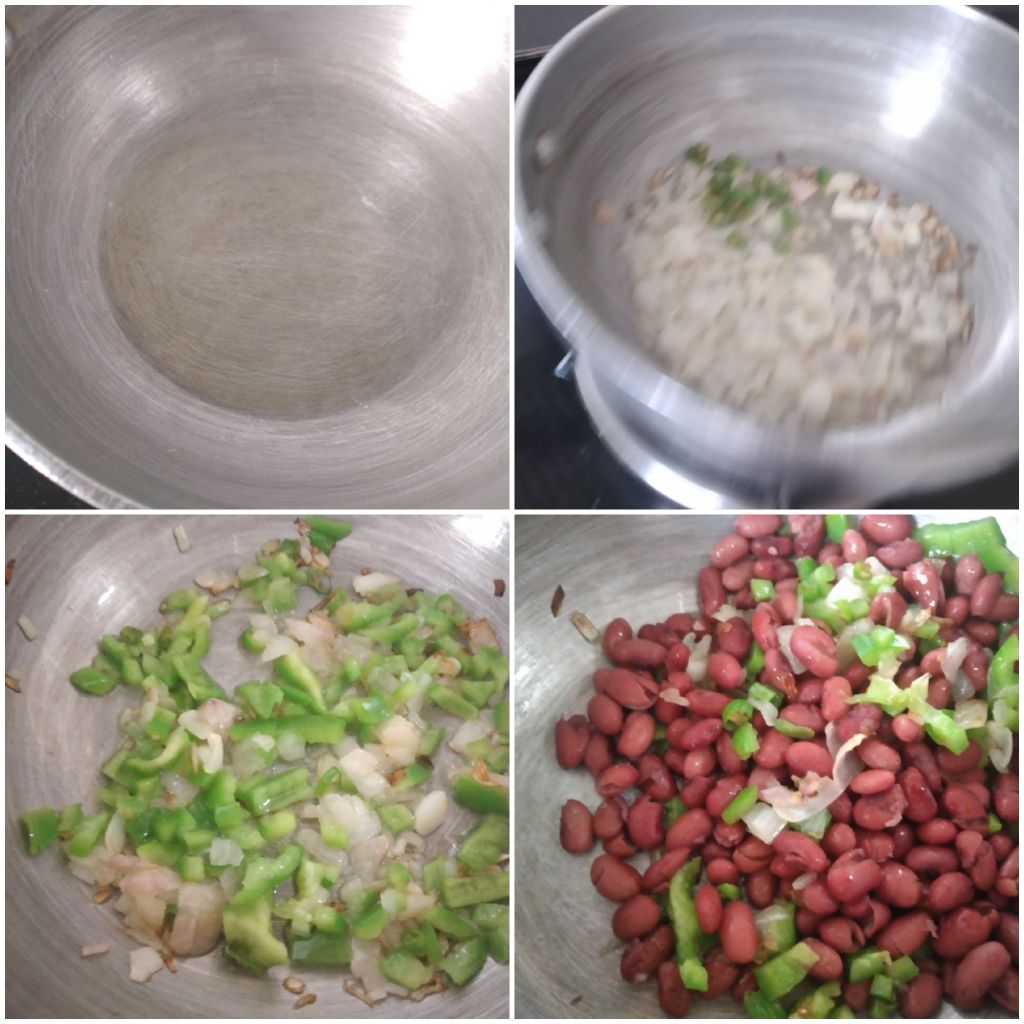
5. Heat the oil in a heavy and big pan.

6. Add the mustard seeds. When the seeds crackle and turn black, add the chopped onion.  Stir fry the onion for few seconds and then add the curry leaves and the chopped chillies. 

7. Add the tomato puree. Stir and fry until the colour of the tomato turns red.

8. Add rajma to the fried spices and keep frying over low heat for few seconds. 

9. Fold in the cooked rice gently and mix well. Switch off the heat.  10. Serve hot.

*Fresh Tomato puree tastes better.

2 medium size ripe tomatoes. Wash, Chop and grind.

Happy Cooking !


Yellow Idli

We tried out these yellow Idlis with toor dal/ pigeon peas. The colour is more vibrant than the presentation.  They are soft, spongy and tasty besides being nutritious like the traditional white idli.

Toor dal is one of the most popular pulse in India. It has a sweet nutty flavour and is a good source of protein. 

You need:

100 gm toor dal.

70 rice

30 gm urad dal

Few methi/fenugreek seeds

Salt to taste

Method:

  1. Wash toor dal, urad dal and rice separately.  Add a few methi seeds to urad and soak them all for about 4 hours.

2. Rinse and grind them with as little water as possible- toor and urad to fine pastes and rice slightly coarse like sooji/semolina. 

3. Mix all of them together with ¼ tsp of salt to a dropping consistency batter. Add little water if needed.

4. Cover and leave it in a warm place to ferment for 8 hours or overnight.

5. Once the batter is fermented, stir it well.

6. Oil the idli moulds and fill them up with the batter.  If you feel that the fermentation is not complete, you may add ½ tsp of baking powder and mix well

7. Heat the pressure cooker with 1 cup of water.

8. Place the idlis inside and close without the pressure weight. 

9. Once the steam escapes from the vent of the cooker, time it for 6 minutes and then switch off the cooker.

10. Allow it to cool for a minute or so.

11. Take the idlis out  from the cooker. 

12. Carefully remove them onto a plate.  Serve hot with chutney.  Go well with jam and butter

Happy Cooking !
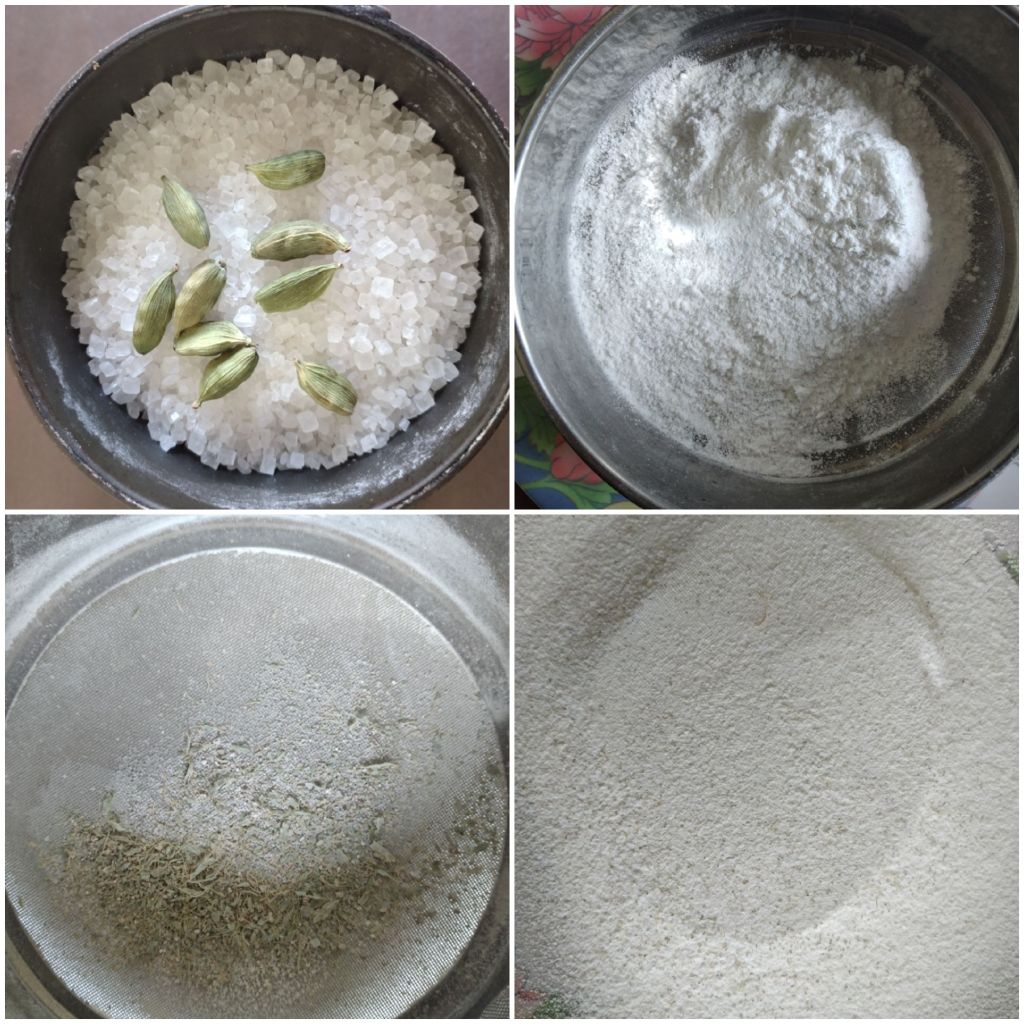

Moong Dessert with chocolate sauce

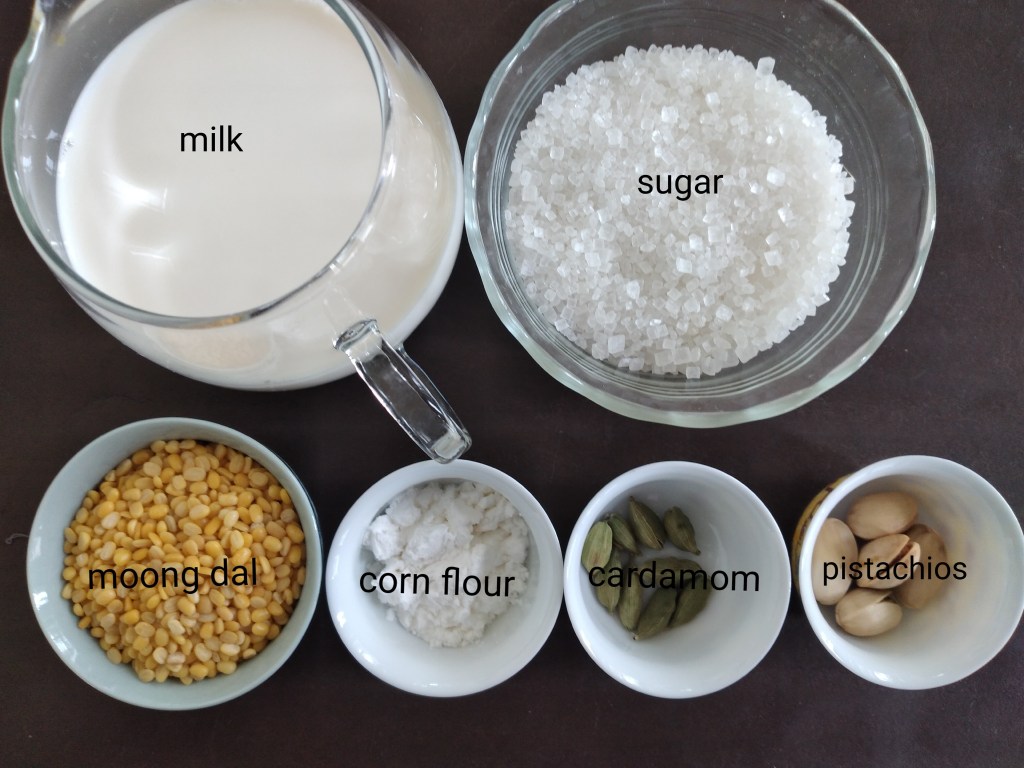
You need:

100 gm moong flour

100 gm butter

70 gm sugar

1 litre milk

1 tsp vanilla essence

¼ cup chocolate sauce*

Method:

  1. Over a low heat melt butter in a pan. 
  2. When the butter melts completely add the moong flour and fry it for a minute.

3. Pour milk over the fried mixture and mix well. Keep stirring. There should be no lumps. 

4. Cook over low heat until the mixture begins to boil.Add sugar and vanilla, cook until it thickens.  Stir well and remove it from the heat.

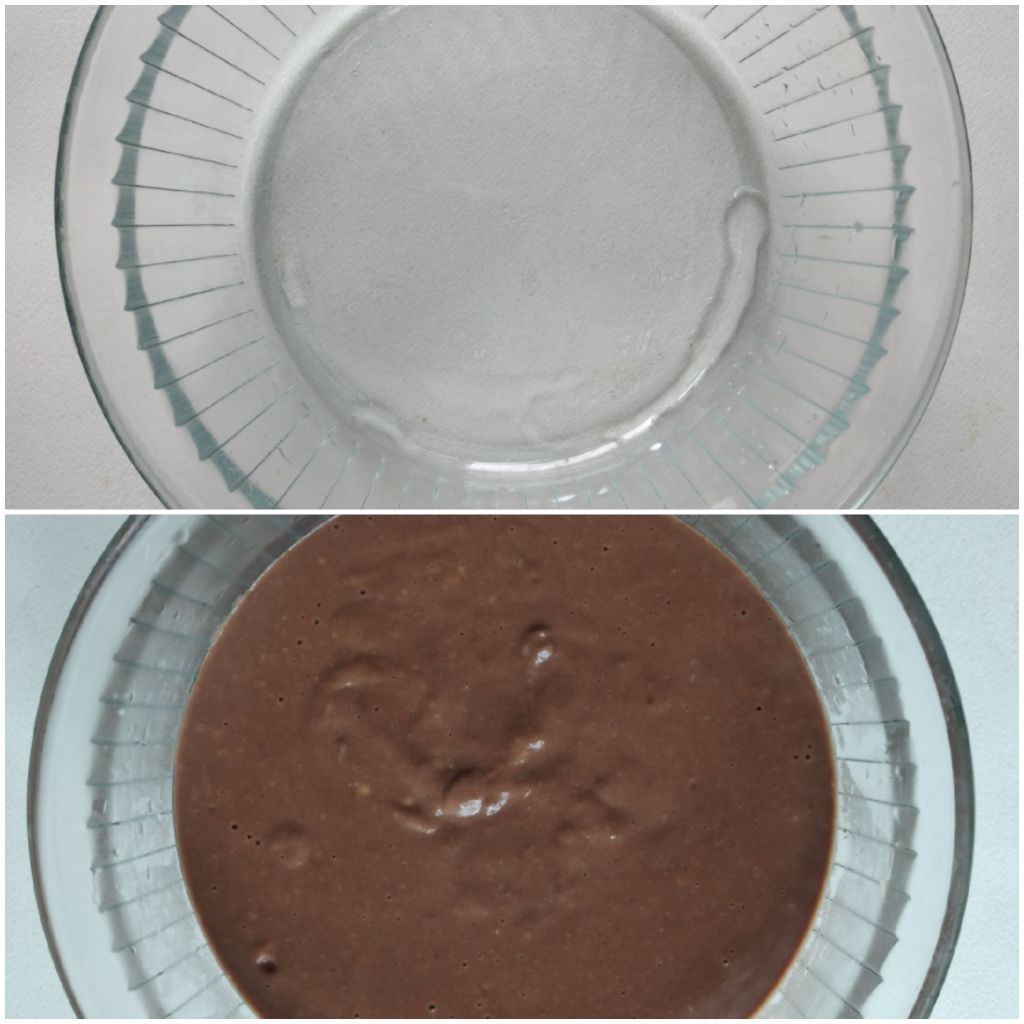
5. Pour 2 Tbsp of the chocolate sauce into the mould where you would like to set the dessert.  Pour the moong mixture while it is still warm over the sauce. 

6. Let it come to room temperature. Cover with a thin film and keep it in the fridge for 3 hours.  Overnight is the best.

7. Turn the mould onto a plate.

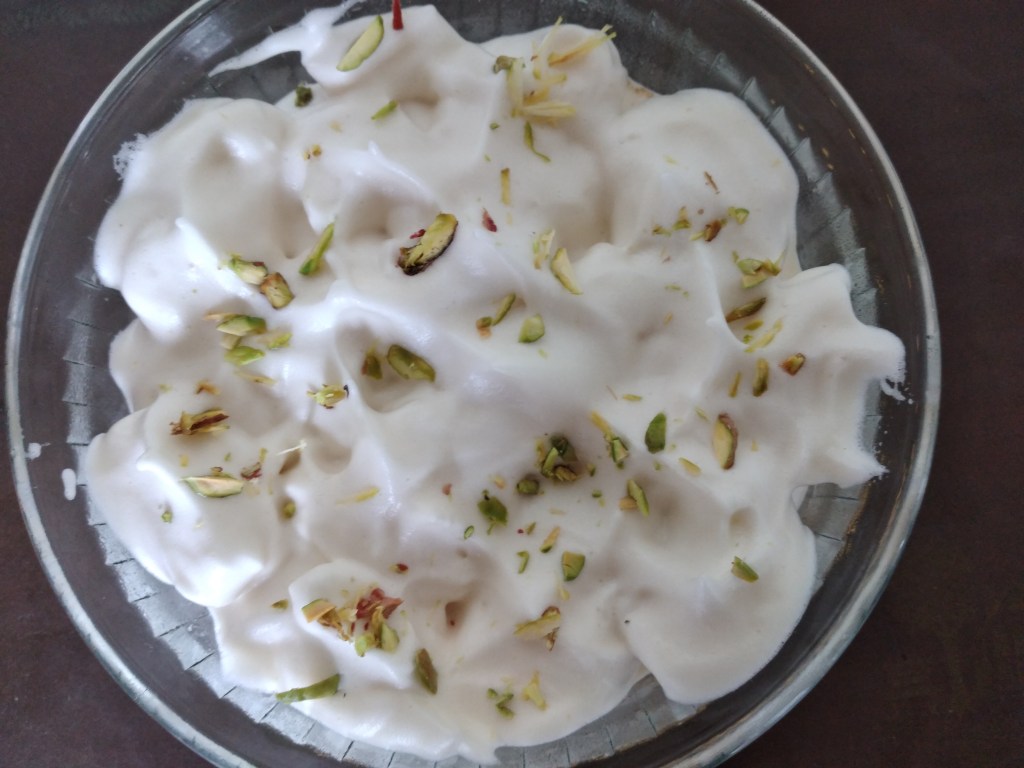
8. Pour more sauce on top to cover it completely. Decorate it and serve.


*Chocolate sauce

Chocolate sauce is available in the market, but if you wish you may make the sauce at home.

You need:

3 Tbsp unsweetened cocoa powder.

5 Tbsp sugar

2 tsp flour/maida

1 tea cup water

1 tsp butter

½ tsp vanilla

Method:

  1. Sieve cocoa powder and flour together. Mix the sugar to it.

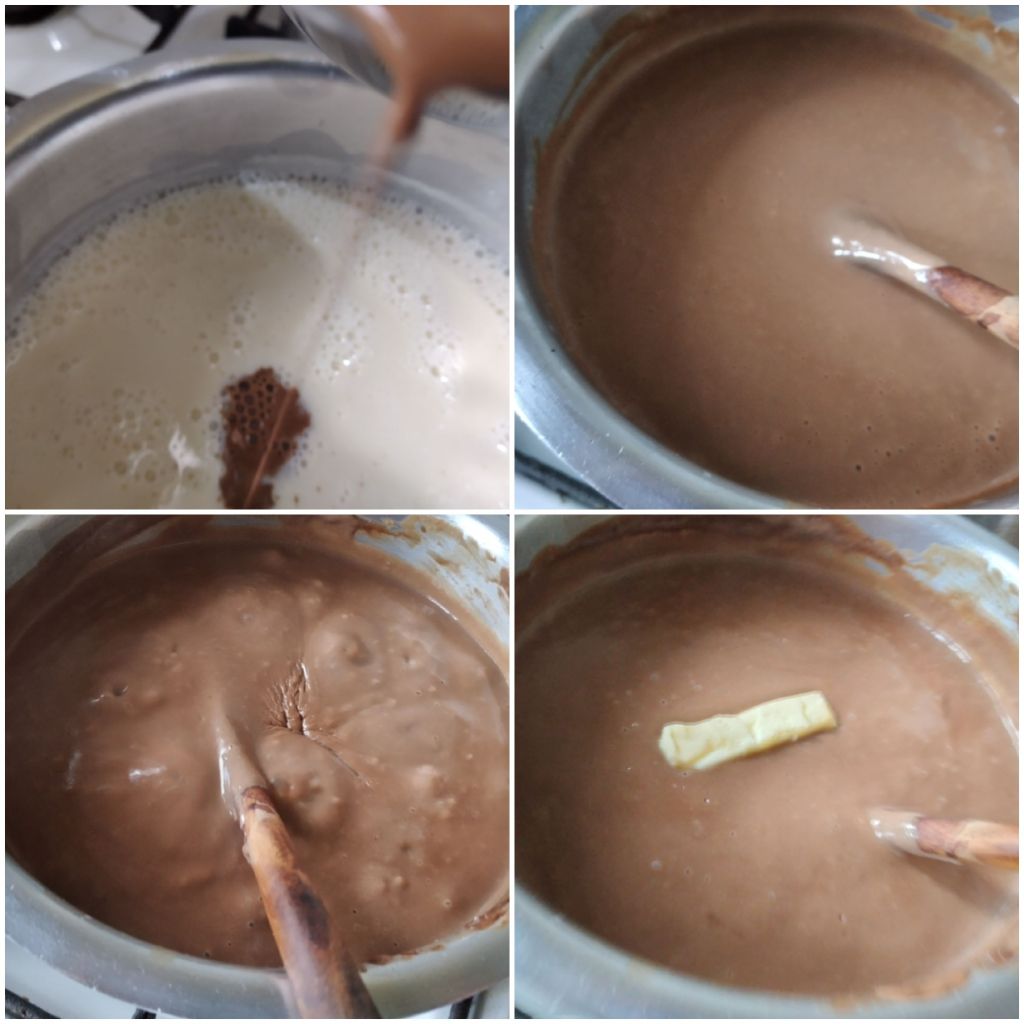
2. Warm the water over low heat and stir in the cocoa mixture until smooth.  Keep stirring while you cook the sauce.

3. Keep cooking until it thickens.  

4. Add the butter and vanilla, stir well.  Remove the pan from the heat.

While cooling, stir the sauce from time to time so that no skin is formed.

Happy Cooking !


Black Idli- Sabut Urad steamed cake

The traditional Idli is white. Just by replacing the urad dal/white lentil with sabut urad/ Black gram in a traditional idli mixture, we got a beautiful shade of black colour and hence its name – Black Idli.  Nourishing wise it is same as white idli if not more.

Sabut urad/Black gram is very nutritious. These beautiful black and rich legumes when soaked and grinded finely gives a wonderful grey colour to the batter. After steaming, colour is enhanced.

You need:

120 gm sabut urad

200 gm rice

1/2 tsp methi/fenugreek

Salt to taste

Method:

  1. Wash rice and sabut urad separately. Wash few methi and add them to the urad. Soak them for 4 -6 hours.

2. Grind urad to a fine paste.  Grind rice coarsely to a sooji/semolina like texture as shown in the picture. Mix the two well.   Add ½ tsp of salt to the mixture and leave in a warm place to ferment.

(Normally soaking is done in the morning.  Grind them by evening and leave it to ferment overnight.)

3. Once fermented, stir the batter well.  Adjust the salt.  Oil the idli moulds and fill them up with the batter.

4. Heat the pressure cooker with 1 cup of water. Place the idli stand into the cooker. 

5. Close the cooker with the lid but without the pressure weight.  Once the steam escapes from the vent of the cooker, cook the idlis for 6 minutes and then switch of the heat. Allow the cooker to cool.

6. Take out the idli stand from the cooker.  Carefully remove the idlis from the moulds and sever hot with chutney.

Happy Cooking !
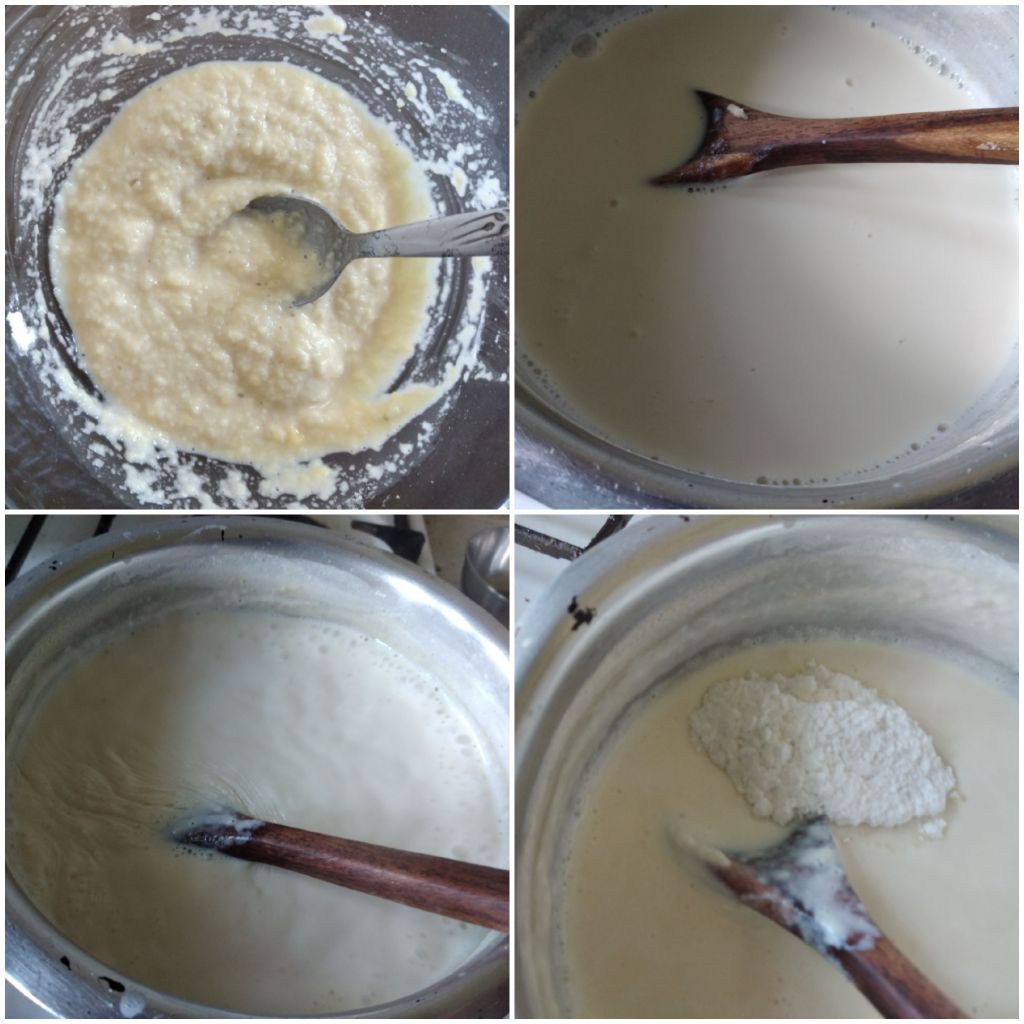

White Idli- Steamed Urad dal Rice cake

Idli is a popular breakfast item from South India.  It is  white, soft, spongy and of lens shaped. It is nutritious and healthy.

Urad dal/ white lentil is one of the main ingredients in idli.  It is the split/whole and skinned black gram.  It is rich in protein.

You need:

120 gm urad dal

200 gm rice

½  tsp of methi/ fenugreek seeds

½  tsp salt

Method:

  1. Wash rice and urad dal and soak them separately for about 8 hours .  Add few methi seeds to the urad while soaking.

2. Rinse and grind urad very finely whereas the rice should be little granular like sooji. Use as minimum water as possible while grinding because the final urad-rice batter should be of thick dropping consistency. 

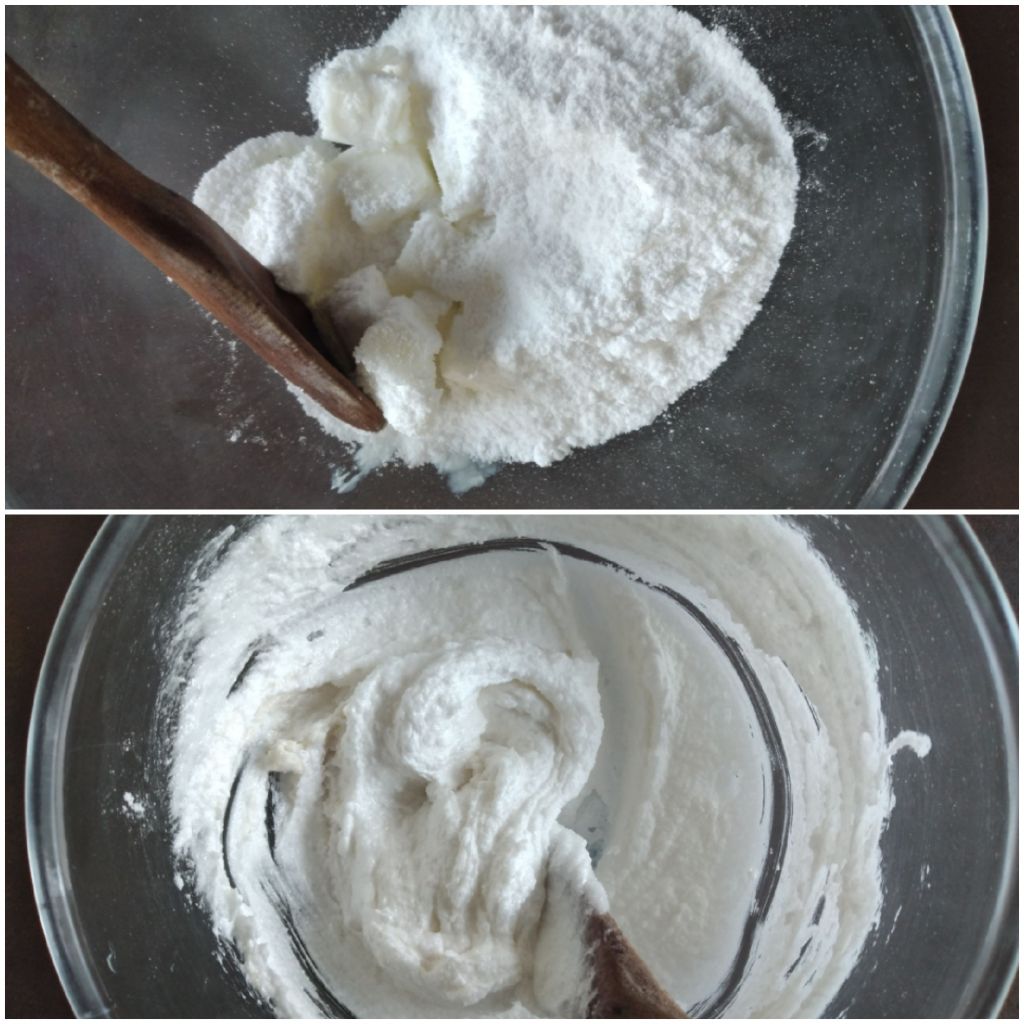
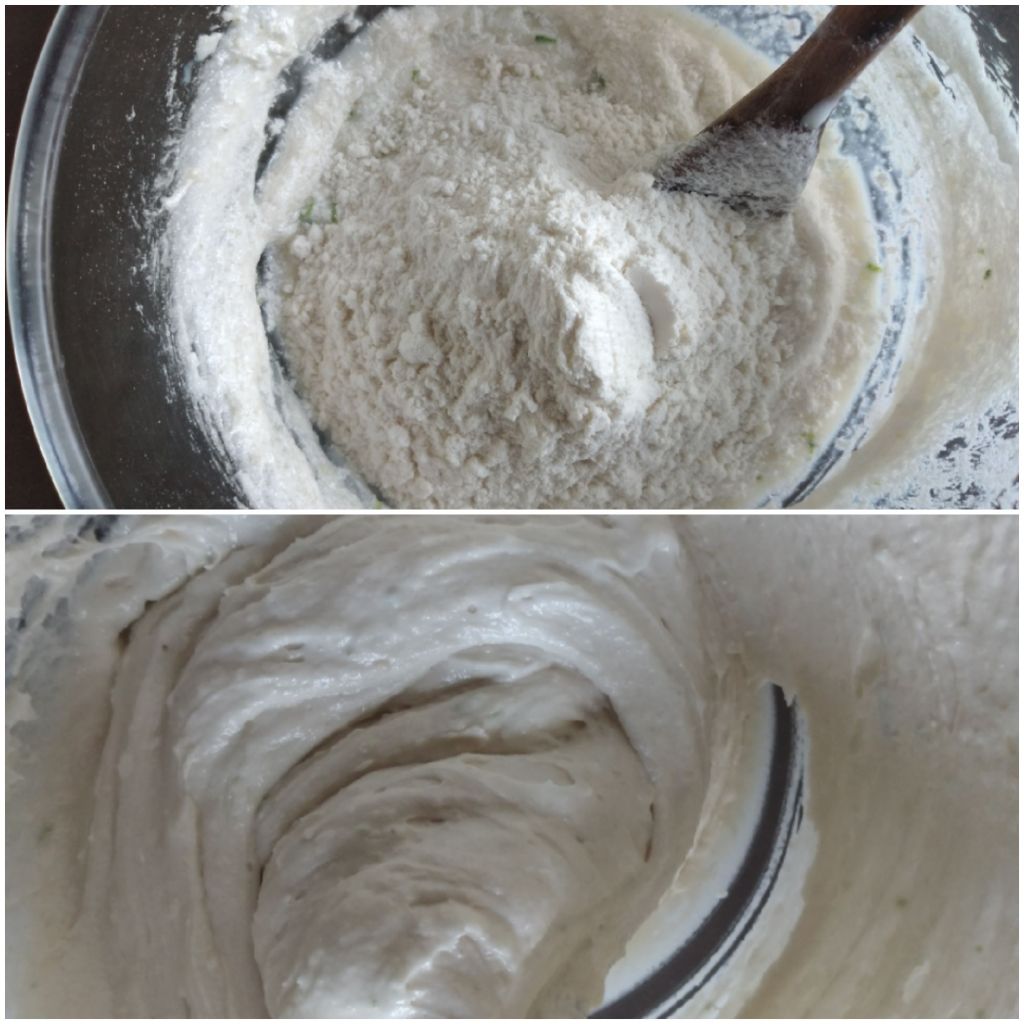
3. Mix rice, dal and ½  tsp of salt together into a smooth thick consistency batter.

4. Cover the batter and leave it in a warm place overnight or about 8-12 hours to ferment.

5. Stir the batter well. Oil the idli moulds and fill them up with the batter.

6. Heat the pressure cooker with 2 cups of water.

7.Place the idlis in the cooker.  Close the cooker without the pressure weight.  Once the steam escapes from the vent of the cooker.  Time it for 6 minutes and then switch of the cooker. Allow the cooker to cool.

8. Remove the idli stand from the cooker.  Carefully take out the idlis from the moulds.  

9. Serve hot with chutney/ sambar

Idlis go well with jam and butter and honey also.

Happy Cooking !


Seed to Seed : Know your Urad dal/ Black gram through leaves and flowers – Again

We are back again with urad dal to show you the beautiful flowers and pods which we missed in our earlier post.

Summarizing, the earlier post of Urad dal: the urad seeds underwent epigeal germination.  The seeds emerged from the soil as seed leaves to serve the plants before the true leaves. Later the plants grew into beautiful and healthy plants with compound leaves.

Just before winter, we sowed some sabut urad seeds. But only one plant survived. The surviving plant moved away from the support we provided, and climbed on to a neighbouring plant. Initially it was little difficult to take photographs without avoiding the host plant.

When the plant began to flower, it became noticeable. Its branches were clearly seen twinning around the bamboo sticks. 

Beautiful lemon yellow flowers adorned the plant.

The flowers also helped us to track the origin of the plant.  A small cluster of yellow buds were seen growing from the node of the plant.

We just focused on few buds and went through their succeeding stages. 

When the plant was about 90 days old the first bud was seen.  At a closer look, it was not just a single bud but a cluster, where one of them was about to unfold.  The cluster was at the end of a short stem which emerged from the space between a leaf and the stem.

The following day another bud unfolded.

In this way all the buds turned into a cluster of beautiful flowers.

2 – 3 days later flowers began to wither and the bud stem also became longer.  A tiny pod appeared from the base of one of the flowers.

3 days later another bud stem with more flowers and pods were seen.  In one cluster there are 3 flowers and 1 pod and in another 1 flower and 2 pods with the withered flowers still at their tips. The pods are marked with arrow heads.

The young pods were fully covered with fine white hair.

About 15 days later, only 2 pods each were left from both the clusters.   2 of them still had the dried flowers at their tips. 

12 days later the dried flowers from the tip of the pods dropped out and the dark green pods began to change their colour from dark green to lighter green.

Another 10 days later, the pods were quite matured.  The outlines of the seeds inside the pods were quite visible from outside and the colour changed from lighter green to yellowish green.

Another 5 days later one of the 4 pods had turned brownish black.

The following day out of the 4 pods, 2 became brownish black.

4 days later the 3 pods became brownish black. The 4th pod fell off.   When they become dark brownish black it means it is time to harvest the pods. 

The pod that fell off, we allowed it to dry for a day or two and then split it open to display its seeds

The plant started budding when it was about 90 days old. From flower bud to the harvesting stage it took about 45 days. So, total life cycle of the urad plant was about 135 days.  This is just a rough calculation.

Just an observation, as the pods changed their colours, so did the hair outside – from white to brown.

The colour of the seeds also changed along with the colour of their shells or sheaths – from green to browish black.

When the plants was about 150 days old, the leaves began to turn brown.  There were few green and black pods lingering.   

We are grateful to the plant for making our project a success.

We collected all the matured pods and allowed to dry.

A plateful of sabut urad, who could ask for more ?

Happy urad dal story !    


A plateful of colourful Idlis

Let’s celebate World’s Idli Day – this 30th March 2021, which also coincides with this season of the festival of colours, Holi.

Yes, these colourful idlis will always enhance the spirit of your family.

Idlis are nutritious and healthy. And of course there is nothing like a plate of hot idlis – white, fresh and soft – any day, any time ! 

“A slight change in colours – will it matter … ? ” thought Dalonthetable, and continued a small experiment.  Amazing, every colour- brown, green and yellow, pink and black all turned out so well, that, it is worth sharing. Idlis with just dal and pulses and their natural colours. Witness the softness of each colour by making them, you will never regret.

Happy Idli Day !

Seed to Seed : Know your Channa dal/Bengal gram through leaves and flowers Again

We are back with Channa dal/ Bengal gram plants again, because we want to show you the beautiful pods which we missed last time. 

Summarizing, the earlier post on Channa dal showed, how the seeds underwent hypogeal germination to beautiful plants with compound leaves and lilac coloured flowers

The channa plant starts with a single stem with alternate array of compound leaves.  Soon it branches out making the plant spread out and look bushy. These pictures are from the new sets of experiments.

When the plants were about 40 days old, the first bud was noticed. The bud is shown with an arrow head.

Soon more buds appeared.  Each bud opened up to a beautiful lilac colour flower.  

The first few flowers bloomed and withered.  But new buds and new flowers continued to blossom, keeping our hopes alive.

When the plant was about 55 days old, one little withered flower showed up a tiny pod at its base. That was our first pod. It is shown with an arrowhead. 

Three days later, the tiny pod grew bigger and the second pod came up. Shown with an arrow head. 

Seven days later both the pods became prominent.

Slowly more pods appeared on the main stem.

After 35 days the first and the second pods matured and began to turn brown.

The first four pods were left on the plant for about 45 days to mature.  The green pods turned to light brown.  The leaves of the plant also turned brown.  There are still some green pods.

More flowers and pods were still on the plant.

It took about 100-110 days from sowing the seeds to harvesting.

Our first harvest of the first 4 pods of channa dal.  Each pod had one seed inside.

Isn’t it wonderful !


Dal Dolma

Dal Dolma with a difference: 

Dolma is a dish from Middle East, Egypt and Southern region of Europe – grape leaves stuffed with meat and rice. 

You need:

Cabbage leaves

120 gm channa dal

120 gm rice

1 Tbsp finely chopped onion

1 Tbsp finely chopped capsicum

1 Tbsp tomato puree

3 Tbsp refined oil/olive oil

1 Tbsp lemon juice

Salt, sugar and pepper to taste

Method:

For the Rice:

Wash and soak the rice for about 2 hours, then drain it.

For the Dal:   

Wash and cook the channa dal in pressure cooker with ½ cup of water and ½ tsp of salt.  After the lst whistle, reduce the heat and cook for 3 minutes. Take the dal on a plate and crush ¾ of the dal with a fork.

For tomato puree:

Wash and cut 2 or 3 tomatoes, remove seeds if any and grind finely.  Heat a heavy pan with 1 tsp refined oil and cook the pulp with ½ tsp of salt until it become little thick.

For the cabbage leaves:

Take a medium size cabbage and cut the stem from the head of the cabbage deep enough. This will help the separation of the outer leaves from the core.  Dip the cabbage in boiling water.  Remove the first loosened leaf. Dip again and continue to remove the leaves one by one.

Prepare the stuffing material: 

In a heave pan heat 2 Tbsp of refined oil.  Add the onion and sauté it for few seconds.  Add the capsicum and 1/4 tsp of pepper powder and fry a little.  Add the tomato puree and stir well.  Add rice and mix well.  Next carefully fold in the channa dal into the fried mixture.  Switch off the heat.

Grease a round baking pan and cover its base with a cabbage leaf as shown in the picture.

Prepare the dolma:

  1. Cut off the thick central part of the cabbage leaf, making it into two parts.

2. Take a spoonful of the prepared mixture and place it on the thicker side of the leaf and roll it up loosely, keeping space for the rice to expand. 

3. Place the seam side of the roll downward onto the pan.  Make another roll the same way and place it next to the first with one end overlapping it as shown in the picture.

4. Repeat these two steps until the base of the pan is fully covered. Make a second layer on top of the first.

5. Take about 100 ml of water, add 1 Tbsp of lemon juice, sugar and salt to taste and mix well. 

6. Add 1 Tbsp oil to this mix and pour over the rolls. 

7. Cover the pan with a plate.

8. Steam in a pressure cooker.  After the first whistle of the pressure cooker, reduce the heat to minimum and cook for 20 minutes. Switch off the heat

9. When the cooker cools, remove the pan with the rolls and keep it outside for some time before turning the shape onto a plate. 

10. Or separate the dolmas.

11. Serve hot with brown onion sauce or as you like.

Happy Cooking !

Moonglates

Moonglates are moong balls coated with chocolate.  They are delicious and easy to make. Just try it out, something new and interesting !

You need:

For the moong balls

75 gm moong dal/yellow lentil

50 gm powdered sugar

1 tsp vanilla

5 Tbsp refined oil

Method:

  1. Wash and soak the dal for about 4 hours. Drain and grind finely with as minimum water as possible.

2. Heat the oil in a heavy pan.  Pour the dal mixture into the oil.  Keep stirring till the roasting aroma of dal is released and oil starts to ooze out.   Switch off the heat.  Add sugar and vanilla essence into the fried dal and mix well.

3. While the mixture is still warm, take teaspoonfuls and make a small balls.  Cover the balls with a thin film and keep it in the fridge for about 10 – 15 minutes.

For the coating:

75 gm dark chocolate

75 gm milk chocolate

75 gm white chocolate

Oven proof bowls

Buttered paper

If you are using compound chocolate, chop the chocolate finely. You may use chocolate chips also.  Cover a tray with butter paper.

  1. Chop dark chocolate finely and place it in an ovenproof bowl. Microwave the chocolate for 30 seconds at a time.  After each 30 second stir the chocolate. As soon as chocolate begins to melt, take out bowl from the oven and stir continuously until all the chocolate melts completely and becomes shinny

2. Dip the moong balls one at a time.  Lift the balls gently with a fork.  Tap the fork on the edge of the bowl to remove excess chocolate and place them on the butter paper. Let them stand until firm.

3. Repeat the same procedure with milk chocolate and white chocolate. First melt and then dip the balls.

4. Drizzle the top with the left over chocolate.

Enjoy your Moonglates!