“Our Daily Bread” – Channa Brown Bread

Bread with Sabut Channa/Bengal gram

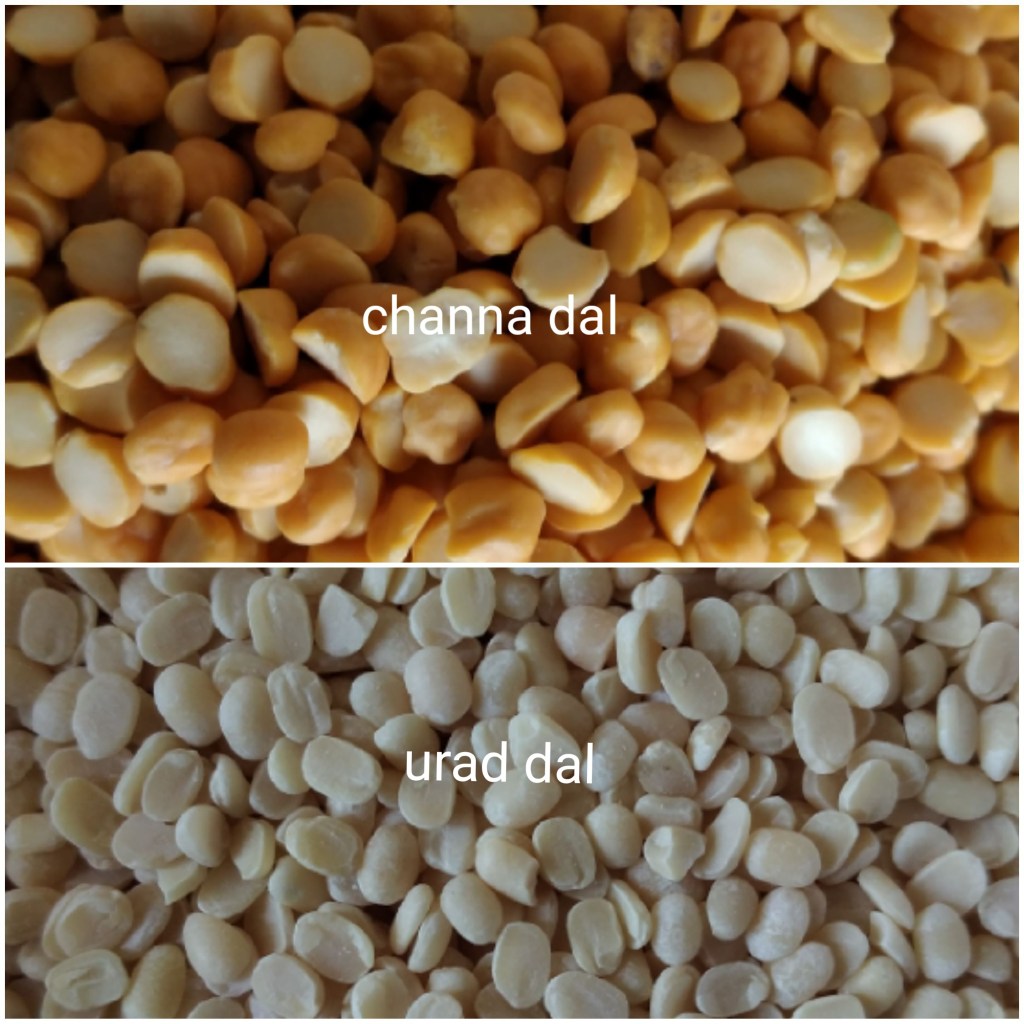
A handful of Sabut channa flour increases the nutrition value of the daily bread.  The dark brown skin contributes the light brown colour and the sweet nutty flavour adds to the taste of the bread.

How to make Sabut channa flour is given at the end of the recipe.

Ingredients:

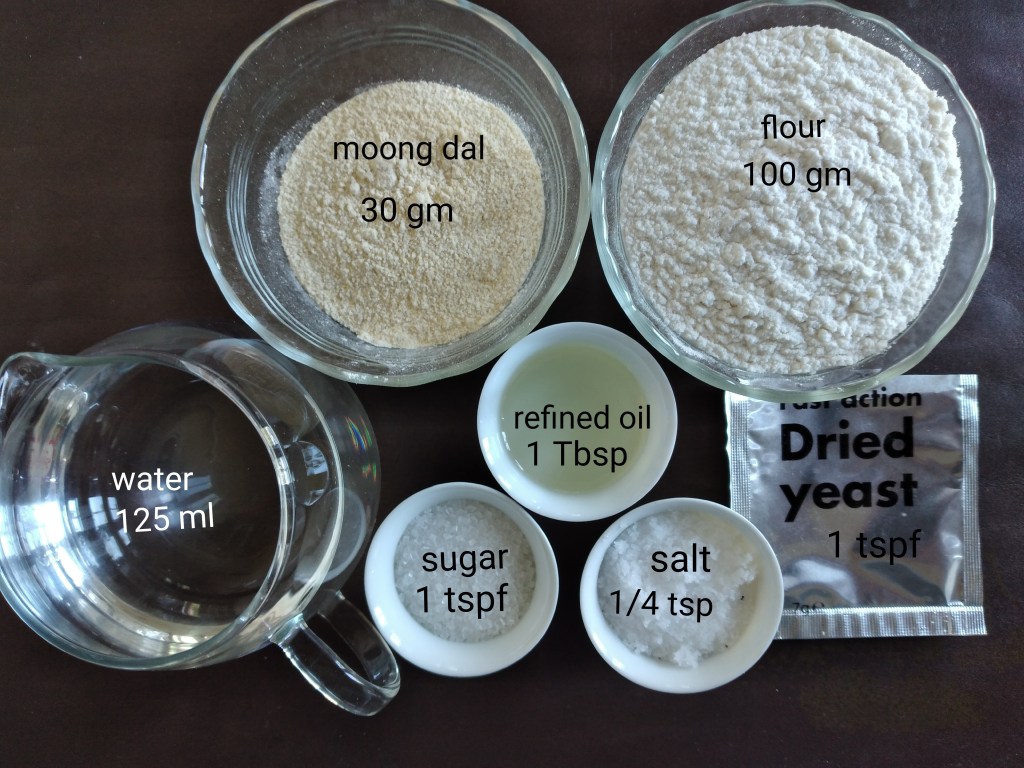
100 gm all purpose flour

30 gm Sabut channa flour *

1 Tbsp refine oil

¼ tsp salt

1 tsp sugar

1 tsp of yeast

125 ml water for the dough

Method:

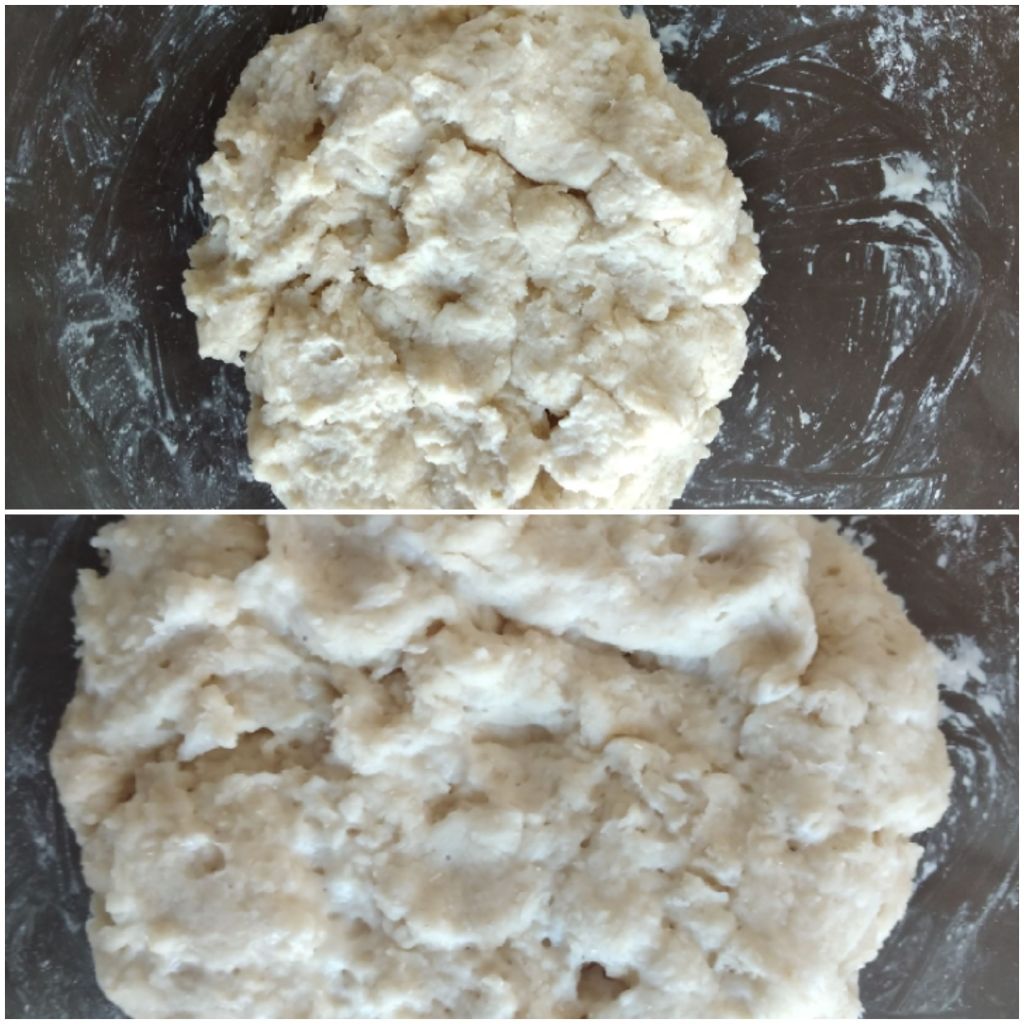
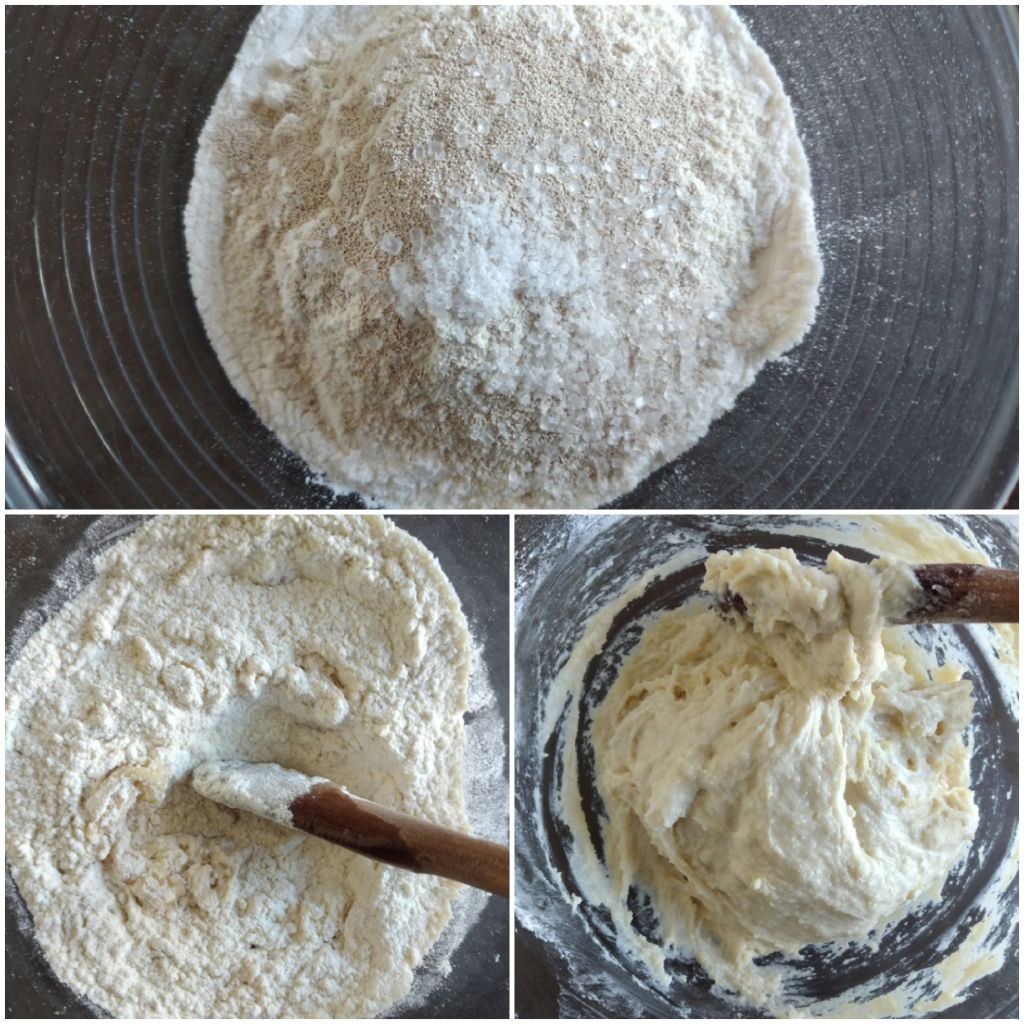
  1. Mix all the dry ingredients in a bowl.  Add the oil and mix it well.  Add the water gradually to make the dough sticky.

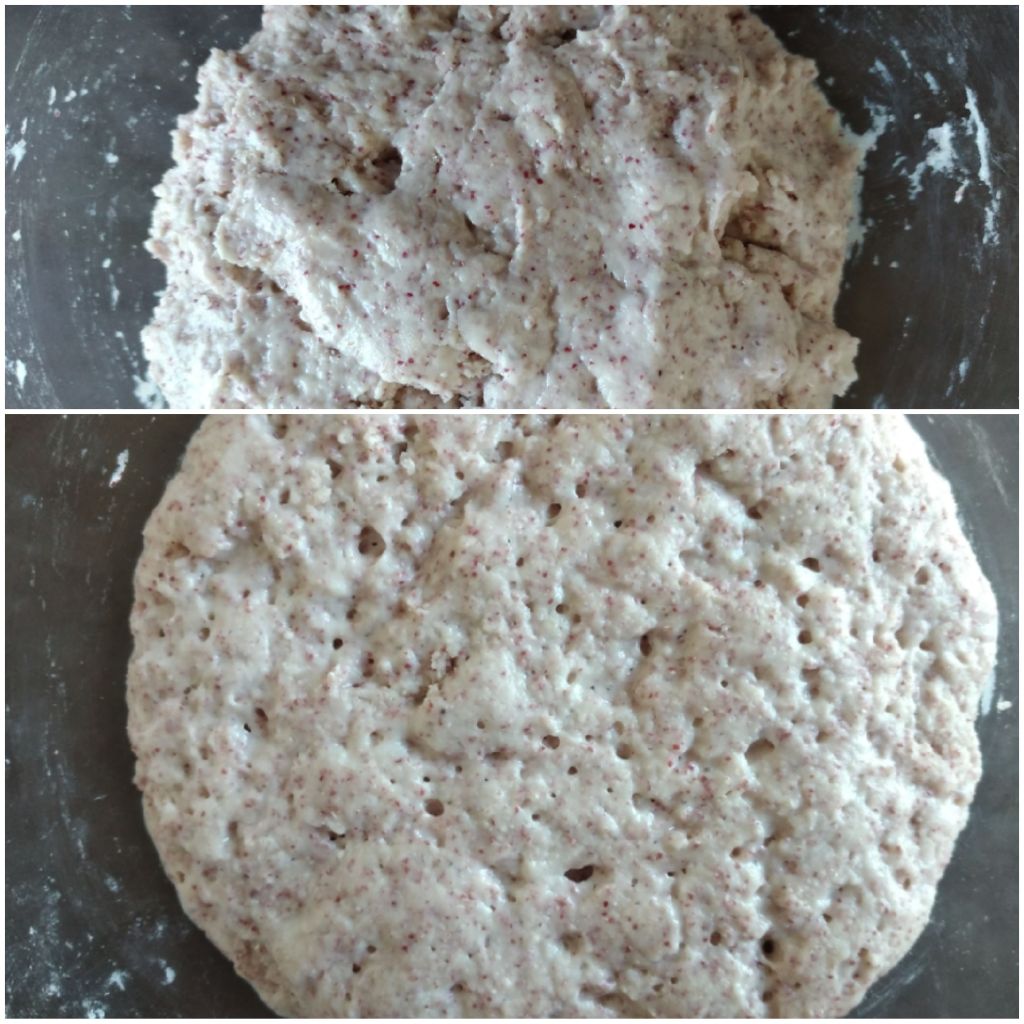
2. Cover it with a damp cloth/ thin film and leave it in a warm place to allow it to rise to double in bulk.

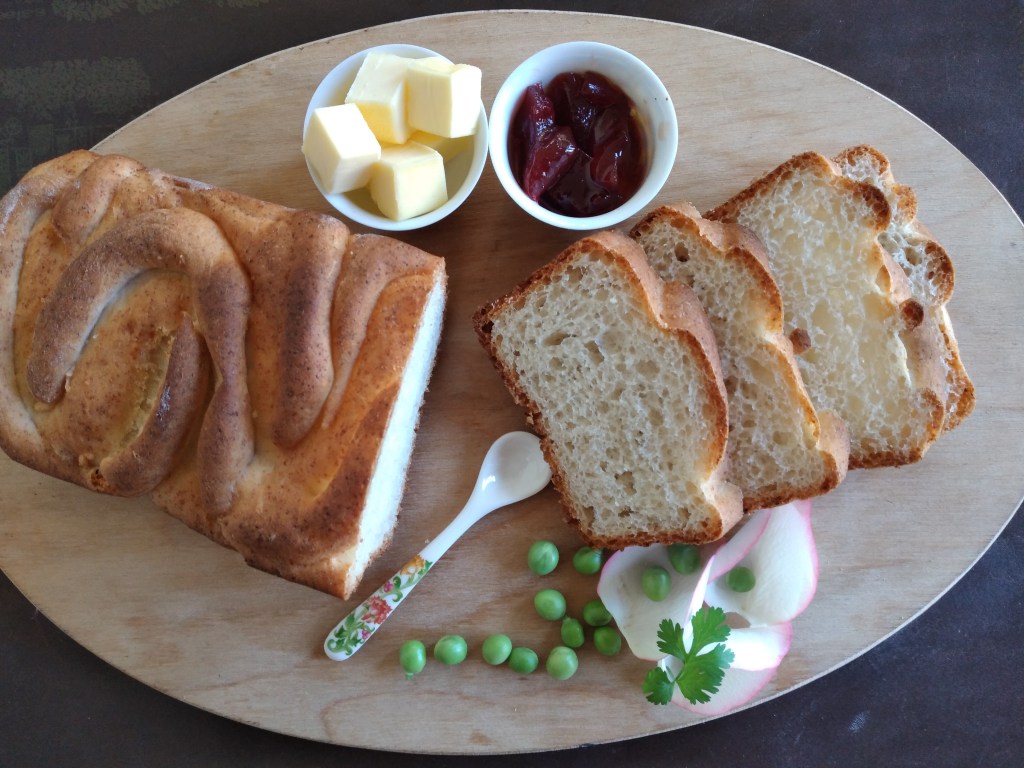
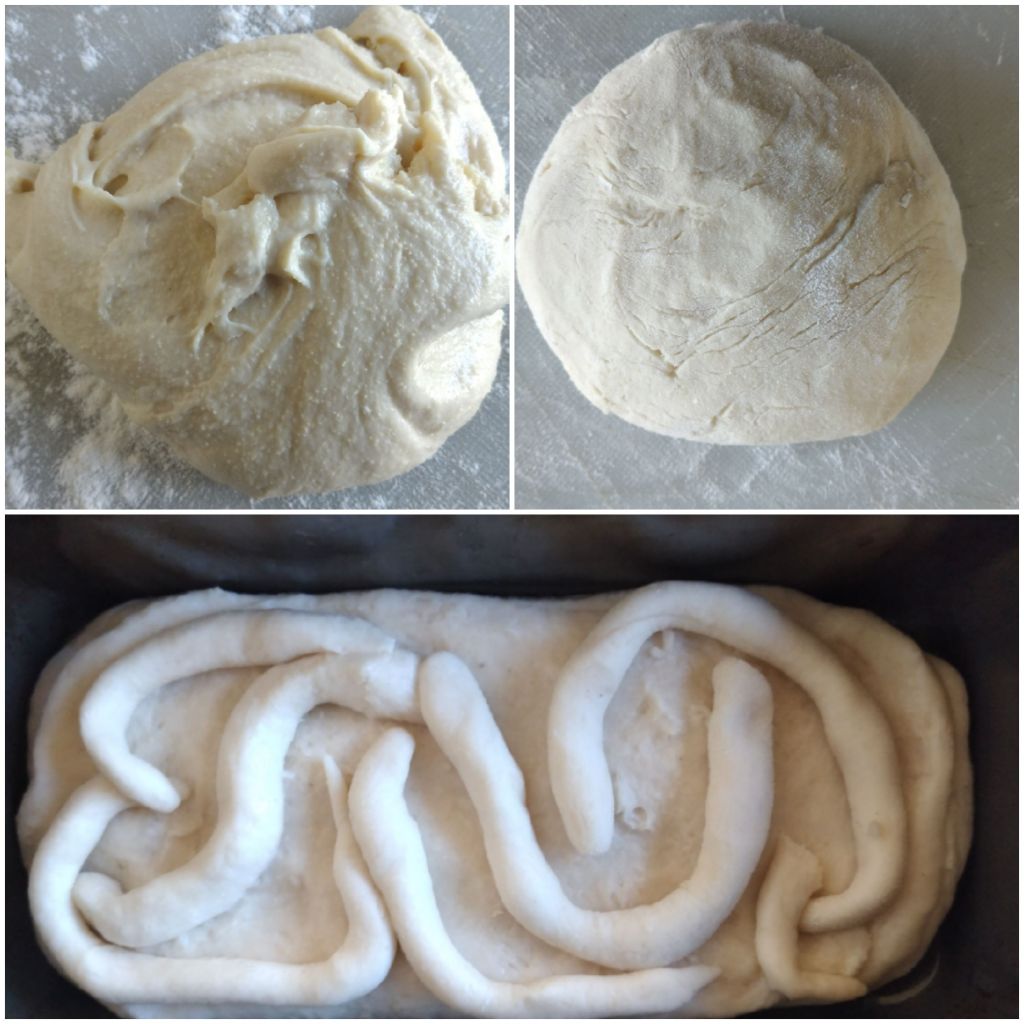
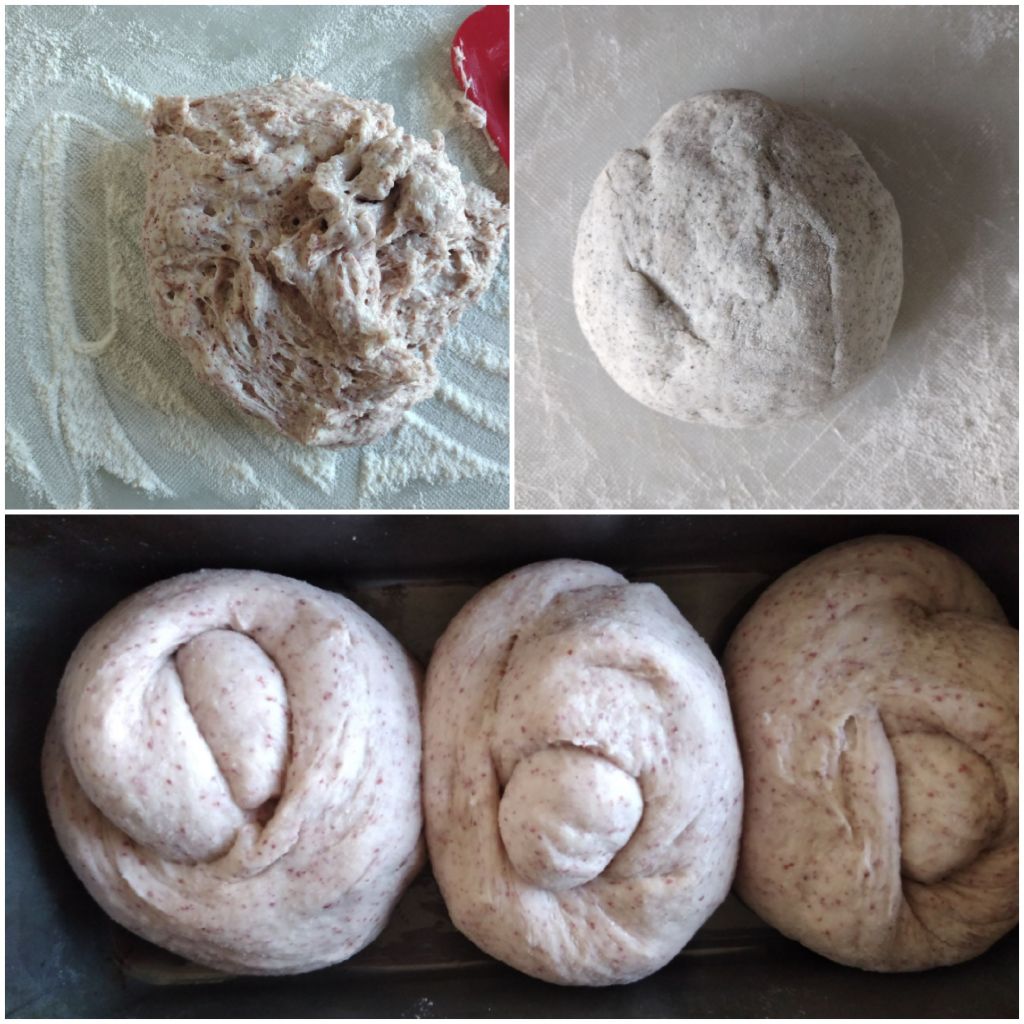
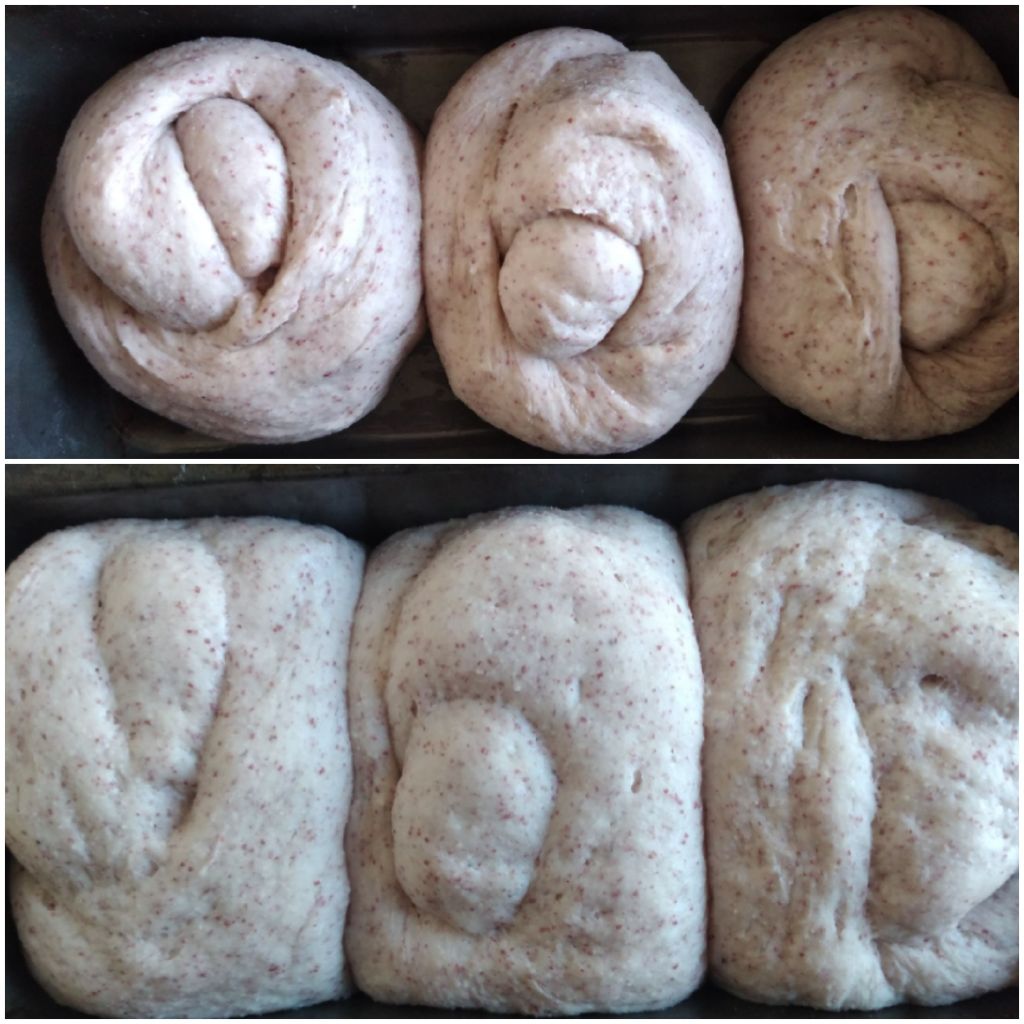
3. Turn the mixture onto a floured board and knead lightly for some time.  Bring the dough to the shape of a pan or any shape you wish to bake the bread. Here we made 3 balls which we elongated into 3 strings as in the picture, and plaited them together.

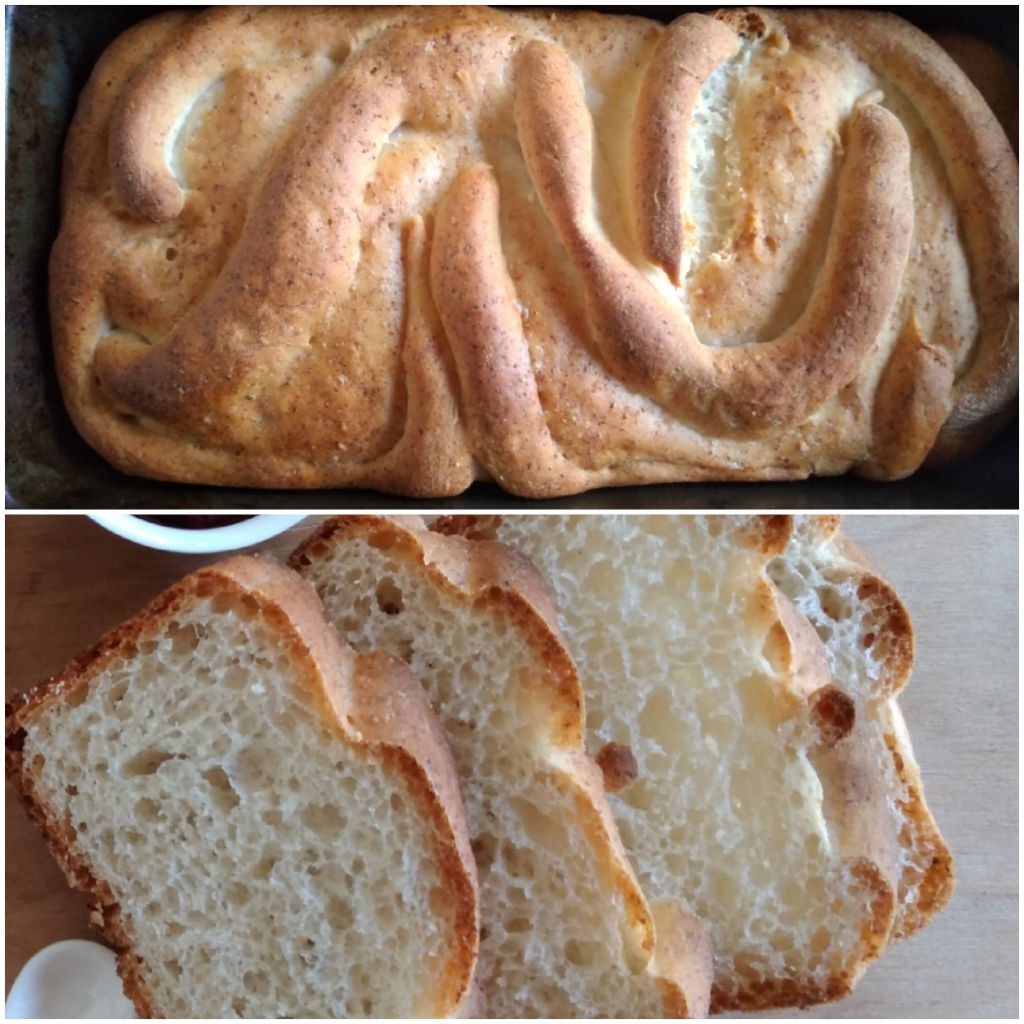
Transfer the shape onto a greased baking dish.  Cover it again with a damp cloth and leave it for an hour to rise to double its size.  Bake in a hot oven 400 degree C for about 15-20 minutes.

Cool it on a wire rack.  If you want a soft crust, wrap it up with a damp cloth while cooling.

*How to make Sabut channa flour:

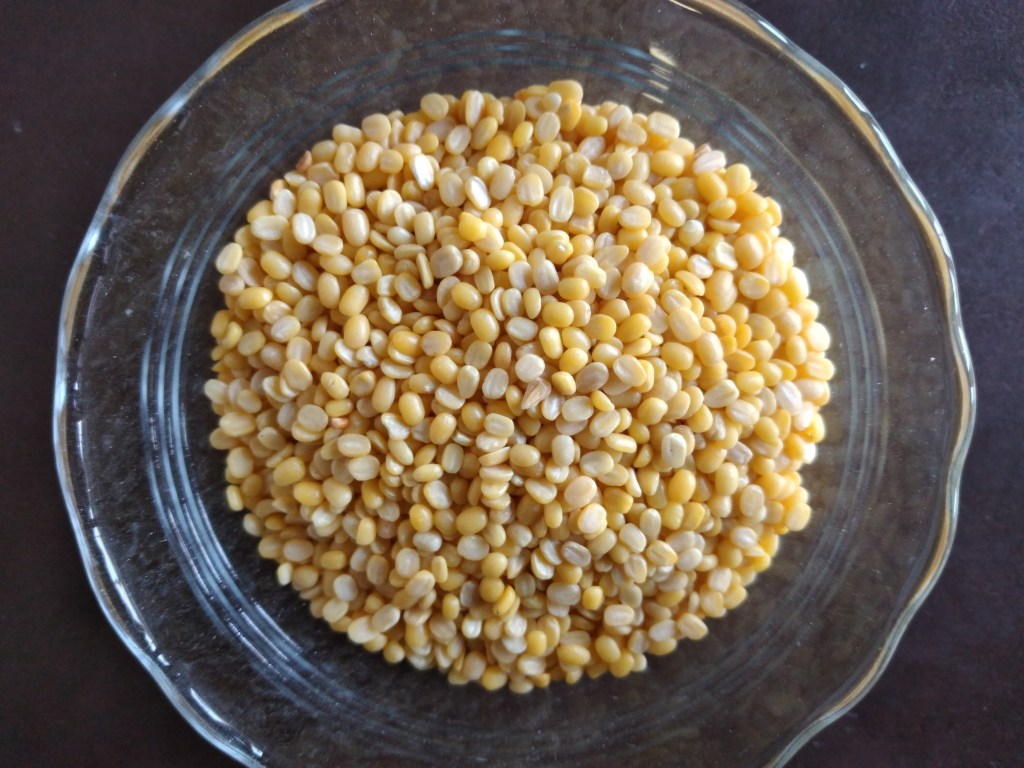
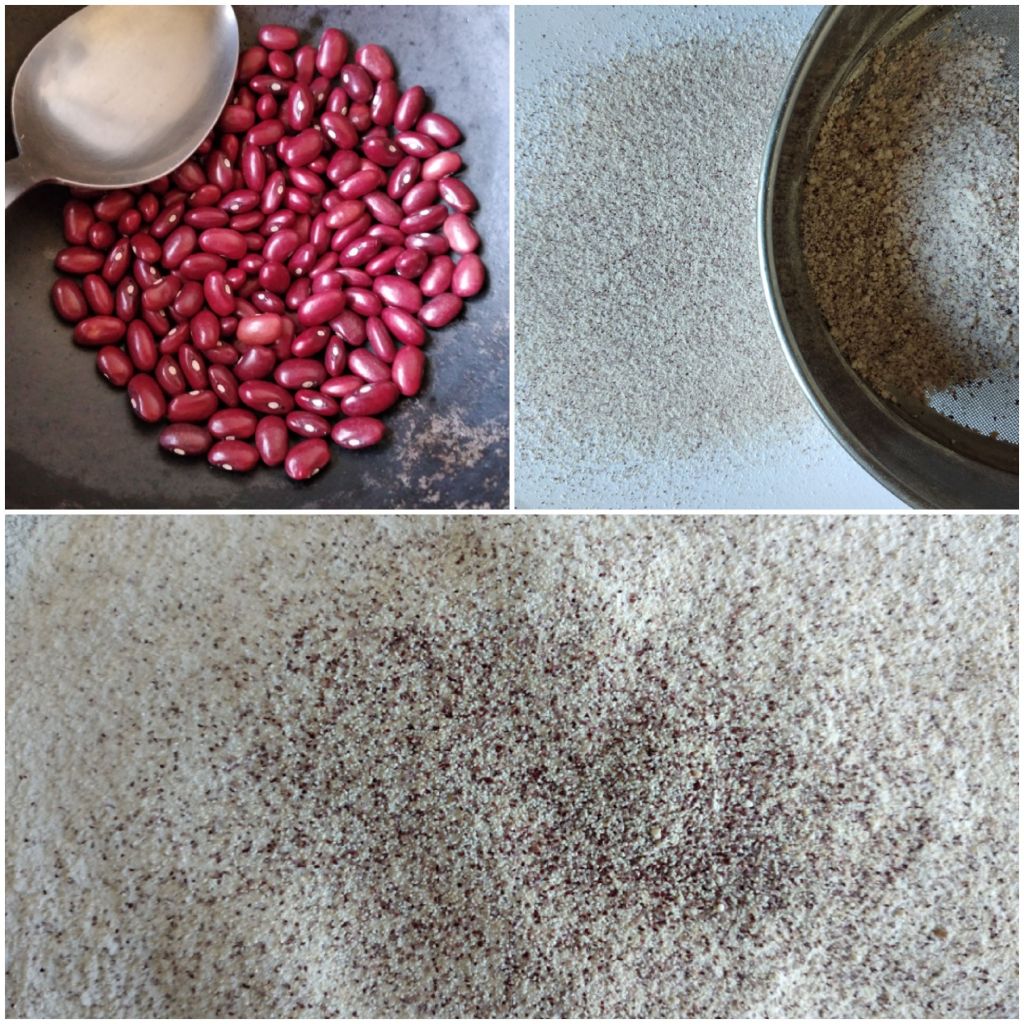
Over a heavy hot pan, stir the sabut channa for about 30 seconds and then allow the channa to cool on the pan.  Heating improves the flavour.

Grind and sieve through a fine sieve.  Store the flour in an air tight container.

Happy Baking 4 Healthy Breakfast !
                                        To be continued……..

“Our Daily Bread”

Dal is a nutritious food.  How about adding a handful of dal to our daily bread?

In India we have been using Sabut urad/ Black gram in roti/flat bread since very early times.

Here is a small story about kala roti.  The English translation of kala roti is black bread.  Since the gram is black (kala), the colour of the roti remains so and hence its name – kala roti.  In the harvesting season, after the first day of Black gram harvest, some workers would take a handful of the fresh black gram, grind them with stones and then mix with wheat flour to make roti. All the workers would be fed with these rotis before they set out to work.  Black gram rotis are very filling and nutritious, so the workers work happily the whole day. 

Dalonthetable tried out 6 different coloured breads – Brown, Yellow, Black, White, Pink and Green with different dal and pulses with success.

Urad Black Bread

Bread with Sabut Urad/ Black gram

The nutrition of a daily bread can be improved significantly with the addition of just a handful of urad dal.  Urad contains the highest nutrition values amongst all the dals.  The dark colour skin contributes the black colour to the bread.

How to make Sabut urad flour is given at the end of the recipe.

Ingredients:

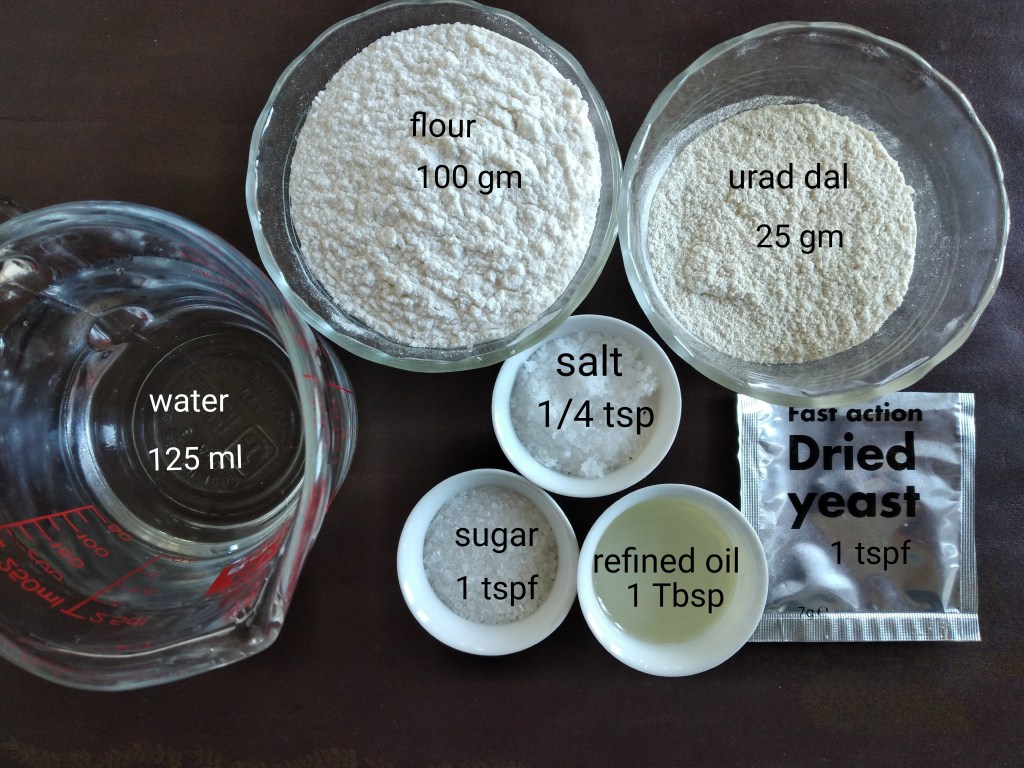
100 gm all purpose flour

25 gm sabut urad/ Black gram flour*

1 Tbsp refine oil

¼ tsp salt

1 tsp sugar

1 tsp of yeast

125 ml water to make sticky dough

Method:

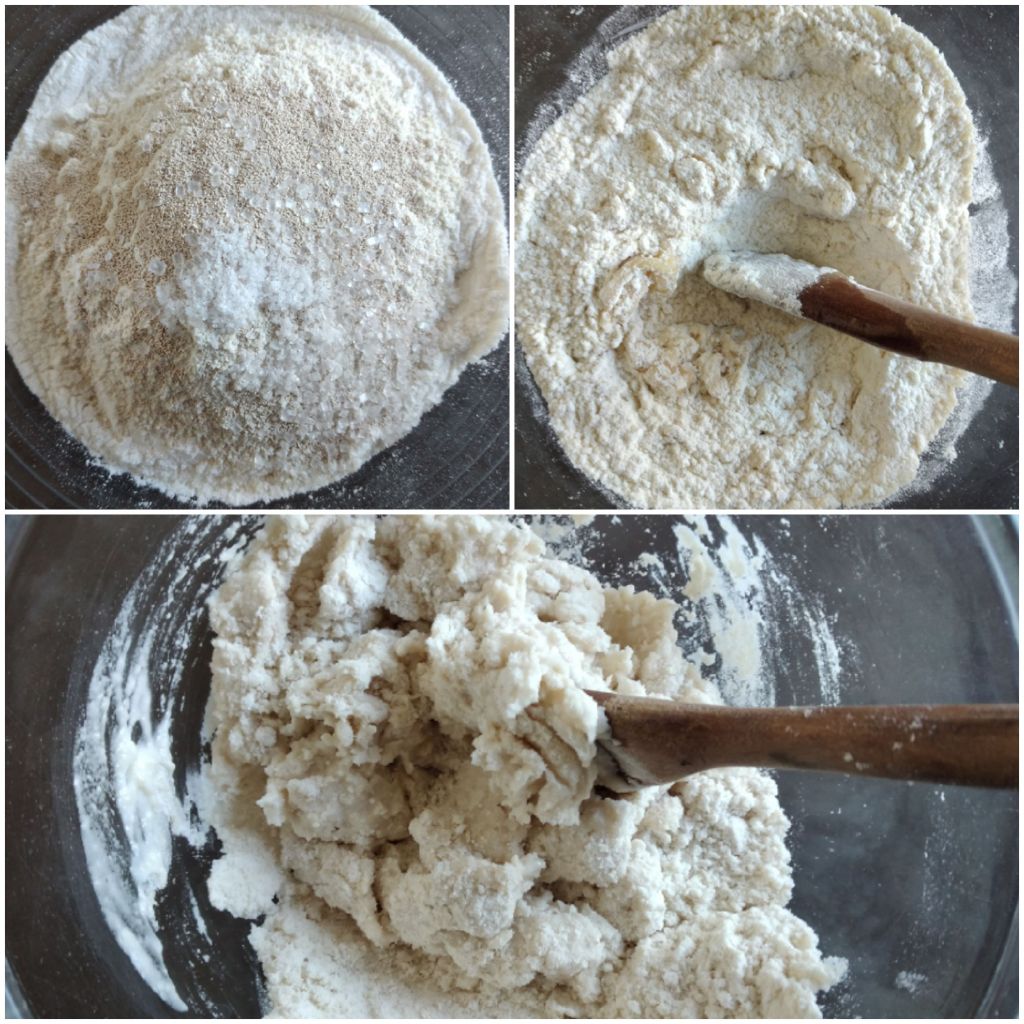
  1. Mix all the dry ingredients together.  Add oil to the mixture and mix it well.  Add water gradually to make a sticky dough.

2. Bring the mixture together and cover it with a damp cloth or thin film and leave it in a warm place for about 1 hour. It should be double in size.

3. Turn the dough on to a floured board and knead it well.  Shape the dough to the size of the baking pan.  Oil the pan well and drop the dough into it. 

4. Cover it with a damp cloth/ thin film and leave the pan in a warm place for another 1 hour.  Leave it to rise until it becomes double in bulk.

5. Bake in a hot oven 400 C for 15-20 minutes till the top is golden brown. Turn the loaf out of the pan and cool it on a wire rack.  If you like a soft crust, wrap it up with a damp cloth till it cools.  Serve it with jam, butter, cheese or mayonnaise.  It is delicious.

*How to make Sabut urad flour:

Over a heavy hot pan, toss the sabut urad/black gram for a few seconds. Switch off the heat.

Let it cool on the pan.  Little warming up improves the flavour.

Cool it and grind in a grinder till fine.  Sieve through a fine sieve.

Store the flour in an air tight container.  It will stay good for days.

Happy Baking 4 Healthy Breakfast !

                                                        To be continued…..

“Catch them Young”

Children of today are the future generation of tomorrow.  As they say “Catch them Young”, so should we. 

Children need to be made aware of dal and pulses.  To enjoy food one has to acquire the taste for it. So let us cook for them their favourites with a difference.

Dal and pulses are cheap and yet nourishing.  It is very rich in protein and therefore a good substitute for meat.

And here we go …….

Masoor/ Pink lentil Burgers

Burgers are fancy fast food and everybody’s favourite.  A burger is a full meal by itself.

It is a bun sliced and sandwiched with a patty.  Normally the patty is made with ground meat.  We will replace the meat with masoor dal.

Ingredients:

3 Buns

3 Patties: the meat is replaced by masoor dal

Salad vegetables: such as tomatoes, cucumber, cabbage, lettuce, capsicum, onion and so on.

Condiments: salt, ketchup, mustard, butter whatever is available at home to flavour your burger.

Ingredients for the patties:

120 gm masoor, coarsely ground paste

1 Tbsp of finely chopped onion

1 Tbsp of finely chopped capsicum/parsley/ coriander leaves

2 Tbsp of fresh bread crumbs

Oil for deep frying

Salt to taste

Method:

  1. Wash and soak masoor dal for about 6 hours.
  2. Drain water completely from the dal and grind coarsely.
  1. Mix all the ingredients except the bread crumbs. Use the bread crumbs little at a time if too moist.  It is mainly for binding the patties.
  2. Make loosely the patties to the size of the buns to be used for burger.
  3. Refrigerate them for about 5 minutes.

Heat oil in a pan and fry the patties over low heat on both sides until golden brown.

  1. Split the bun open and butter the inner sides of the bun.
  2. Place the buttered sides of the bun on a hot pan for extra crispness and flavour.
  3. Assemble the burgers with the patties, vegetables and the condiments in layers as you wish.


                          *****

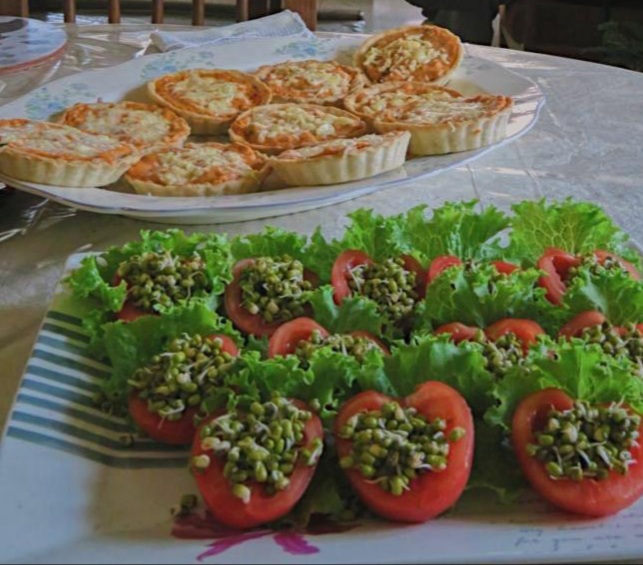
Pulse Pizza

Pizza is an Italian dish with a round flat bread base.  It is spread with tomato sauce, topped with meat, fish or vegetables and sprinkled with grated cheese on top.

Here we are replacing meat, fish and vegetable with pulses.

Ingredients:

1 pizza base

1 small bowl Grated cheese

1 small bowl Tomato sauce

1 small bowl pulse topping

Prepare the tomato sauce:

  1. Wash and chop 1 or 2 ripe tomatoes.
  2. Finely chop 1 Tbsp full of onion. 
  3. Heat a pan with 2 tsp of refine oil. 
  4. Sauté the onion and then add the chopped onion.  Add salt to taste.
  5. Lower the heat and simmer with a cover, until the tomato is cooked thoroughly. If water dries off add 1 or 2 tsp water to make a spreadable sauce.

Prepare the topping:

  1. Take one small bowl of mixed pulses.  Wash and soak for about 6 hours or overnight. 
  2. Cook it with cup of water and ½ tsp of salt in a pressure cooker for 2 minutes. It should be cooked. 
  3. Drain out the water completely. 
  4. Chop finely 1 Tbsp of capsicum and 1 Tbsp of onion. 
  5. Heat 2 tsp of refine oil in a pan, saute the onion and then add the capsicum.
  6. Add the cooked pulses and mix well.

  1. Spread the pizza base with the tomato sauce.
  2. Arrange the top with the topping.
  1. Sprinkle the top with grated cheese.
  2. Bake in a hot oven 350 C for about 5 minutes till the cheese melts and slightly browned.

                          *****

They are yummy. You’ll make them soon again!

                          *****

Seed to Seed – Know your Urad Dal/White lentil through leaves and flowers

Hi,

Hope you are enjoying the project – Seed to Seed  as much as we  are enjoying doing it . The whole idea of this project is to create an awareness of dal/lentil – a food so cheap, yet so nourishing.

This episode is about Urad dal/ white lentil.

Urad dal is available in the market in three forms: Whole with the skin, split with the skin and split without the skin.

The whole dal with the skin is known as Sabut Urad in Hindi and Black gram in English.  The split dal with the skin is known as Chilka urad in Hindi and split black gram in English.

Skinned and split urad dal in Hindi is known as White lentil in English.

Sabut Urad/ Black gram fulfils all the criteria of a seed.  The black shiny skin is its coat, the two white pieces which we call dal are the cotyledons and the embryo is in between the two cotyledons. The embryo is the dormant tiny plant within the  seed.

When we split the Black gram, the embryo gets destroyed, so we cannot get a plant out of a split gram.

Urad dal is a winter crop. We started our project Seed to Seed   just before Monsoon.  So let’s see how far we can go.

With this idea we started the experiment 1.

Experiment 1

We  prepared a pot and soaked few Black grams for about 4 hours and then sowed the seeds 2 cms below the soil and watered it sparingly.

The reason for soaking the seeds was to hasten the process of germinating. Otherwise the seeds will have to absorb the water from the soil and that will take a long time.

And keep watching the pot as the seeds grew ….

For the first couple of days there were no sign of the seeds in the pot. 

On 4th day few cotyledons emerged from the soil.

After sowing the black gram seeds, for three days there was nothing visible on the surface of the soil, as if the seeds were quietly sleeping cosily inside the soft soil.  But it was not so.  They were busy undergoing different stages of germination.

To show you the above process, we did the second experiment as follows.

Experiment 2

On 1st day we soaked a few Black grams for about 4 hours.  In the mean time we filled up a drinking glass with soil to 2 cm from the brim of the glass. Moisten the soil by lightly spraying water. Placed the soaked Black gram close to the side touching the glass surface and filled up the glass with the remaining soil.

On 2nd day, visually there was no change. The cotyledons absorbed more moisture from the soil and swelled up.  Their coats burst open and the tiny plants (embryos) became active.

On 3rd day the roots and the tiny shoots were visible. Roots were the first to come out of the seeds. So the root is longer than the shoot.  The root went down in search of water and the shoot went up in search of sunlight.

On 4th day the root went deeper into the soil and the shoot went up with its cotyledons almost reaching the top soil. 

On that same day by evening the cotyledons emerged to the surface of the soil (as seen in the first picture) 

In the  2nd picture from the side of the glass a tiny stem, with the cotyledons and a pair of green leaves were seen.

The same thing happened to the seeds in the pot. Now let us come back to the Exeriment: 1

On 4th day, few cotyledons emerged from the soil and behave like leaves providing food for the growing plants. So they are called seed leaves.  Such germinations are known as epigeal germination.

The bottom picture is the enlarged view of the top picture. Along with the cotyledons green leaves are also seen emerging from the cotyledons.

The first pair of green leaves is called true leaves.  The function of the seed leaves continue for sometimes even after the true leaves appear. With the true leaves the plants grow very fast.     

The true leaves have become big, but the cotyledons were still hanging on to the plants. Some believe the cotyledons should be removed once the true leaves appear. 

Within a week small stem buds are noticed in between the true leaves followed by leaf buds. 

When the leaves became prominent it was found  that the leafstalk had 3 leaflets instead of one leaf.

When a leafstalk has more than 1 leaf than the leaf is compound leaf. So urad plants have compound leaves.

Enlarged version of the compound leaf.

A couple of days later the 3 leaflets were noticed in every plant.

As the stem and the compound leaf became bigger another leaf and another stem bud came out from the base of the first leafstalk and stem.  In this way one after another leaves grew on the plants.

When the plants were about 45 days old the pot became quite crowded.  We weeded out few plants to enable the remaining to grow freely.  The plants were about 37 cm tall.

There was not much change in the heights of the plants but they definitely looked healthier than before. The plants could not stand up straight.  So we made a bamboo support near them.  The plants never tried to use the support.  We weaved the end of the plants in and out.

The plants grew taller with the new leaves and new branches.  The branches grew from the space in between the stem and the leafstalk as shown in the picture.

One morning we noticed that the ends of the plants were behaving like tendrils.  They were trying to climb up the bamboo supports. By that time the plants were about 60 days old.

The plants began to grow fast.

We had to extend the bamboo sticks.

In the morning sunlight, the end of the plant looked gorgeous.  The fine hair at the end of every plant shone brightly. The leaves looked  fresh and healthy.

The thin bamboo sticks could no longer hold the weight of the plants. We made extra support on top taking help of the wall.

They grew so fast that we had to soon transfer the plants to a larger trough. We broke the pot carefully. The roots took the shape of the pot. There were no sign of soil and the roots were completely dry.  We planted the plants without disturbing the roots and made a bamboo support again for the plants to climb.

The plants began to grow further.  Leaves looked healthier and stronger.

The plants completed 90 days.

By now the plants completed more than 120 days.  The brightness of the plants faded.  There were no sign of flowers. Leaves turned yellow and began to dry up.

We are happy that we could show you the beautiful urad dal plant and its leaves.

Urad dal is a winter crop.  So we will try again in winter. 

                                                             Till then ……….

Seed to Seed : Know your Channa dal/Bengal gram through leaves and flowers

Hi,

This episode of  Seed to Seed  is about – Channa dal’s plants, leaves and flowers.

Channa dal is the product of kala/Desi chana.  Desi chana is known as Bengal gram in English. Bengal gram belongs to the chickpeas family.  There are varieties of chick peas in the market.

Channa dal is nutritious and has a nutty flavour. There are many sweet and savoury dishes with Channa dal.  It is rich in protein and fiber.

The Botanical name of channa dal is Cicer arietinum.

Bengal gram fulfils all the requirements of a seed.  It has a rough dark brown skin which is the coat. It has 2 yellow cotyledons (channa dal)  and an embryo that is the tiny plant which can not been seen with naked eyes.

When Bengal gram is split to get channa dal,   the embryo gets destroyed.  So you cannot get a plant out of it.

Channa dal is a winter crop. We sowed the seeds just before the monsoon.  We placed the pots close to the wall of our house to protect them from the rain. 

Experiment 1

Prepared a pot and soaked few Bengal grams in water for about 4 hours and then sowed the Bengal gram about 2 cm inside the soil. 

For few days there were no sign of the grams.  We kept watering the pot to keep the soil moist.

On the 6th day tiny whitish green sprouts were seen.

During those 5 days when nothing was visible on the surface of the soil, there were lots of changes that took place with the seeds in the ground.  To find that out, we did another experiment side by side. And we call that Experiment 2.

Experiment 2.

Germination of the gram seeds inside a glass.

We filled up a glass with soil up to 2 cm below the brim and water it lightly. 

Placed 3 soaked gram seeds in the soil inside the glass touching the side of the glass.  Then covered them with soil to the top of the glass.

On 3rd day the germination of the seed could be seen through the glass.  The root came out and moved downward.

On the 4th day, the shoot came out – slightly greenish white in colour and moved upward.

On  5th day the shoot grew taller and headed upward in search of sun light.  The gram seed remained where it was placed at the beginning.  From there it nourished the plant.

On 6th day,  the shoot reached the top of the soil and a tiny stem with unfolding leaves were seen.

The Bengal gram seeds remained inside the soil nurturing the new plant.  When the seeds remain inside the soil during germination, it is called hypogeal germination.

Now back to the Experiment 1:

On the 6th day green shoots were visible on the surface of the soil. During the past 5 days the seeds in the pot went through the same changes as you saw in the glass.

On the 7th day tiny leaves unfolded into 3 and 5 small leaflets instead of single leaves.

The lower picture is the enlarged view of the above pot.  Here you can clearly see the leaf has 5 leaflets.

When a leafstalk has more than 1 leaves then the plant is said to have compound leaves.

So channa dal plants have compound leaves.

Once the green leaves are out, the plants no longer depend on their cotyledons.  The roots collect food materials from the soil and the leaves with the help of sunlight prepare the food for the plants. This process is known as photosynthesis. Once photosynthesis starts the plants grow very fast.

On 10th day the count of leaflets were 7.

By 12th day – some leafstalks had 9 leaflets. 

The plants grew taller and increased the count of leaflets to 11, 13 and 15.

The plants had luxuriant growth. The leaflets count increased from 7 to 15.  The stems were delicate and could not stand upright.  We made some bamboo support for the plants.

The plants completed 30 days.  They grew tall.

When they were about 45 days buds and flowers began to bloom.

The flowers had a rich lilac in colour.

Waited for the pods to come out.  But there was no pod.  Soon the flowers began to wither.

A dried flower.

The plants dried up one by one. After 60 days only 2 plants were left in the pot. The plants were about 55 cm tall.

Channa dal is a winter crop.  The experiment was done  before  monsoon.  Happy to see the plant, leaves and the flowers.  Will try again in October- November then we hope to see the pods. 

                         Will keep you posted……

Seed to Seed : Know your Masoor dal/ Pink Lentil through leaves and flowers

Hi,

We are here again with another episode of Seed to Seed: Know your Masoor dal/ Pink lentil through leaves and flowers.

When we talk about masoor dal/ Pink lentil, immediately the pink colour comes to our mind.  This is because we use the polished or split masoor dal more often than the whole unpolished dal.

Once a young girl called up her mother in India and sadly said, “Mom, today I cooked Masoor dal but could not keep its colour”. 

Masoor dal is a popular dal. Widely uses and it is nutritious

Masoor dal is available in the market in 3 forms :

Whole with skin, skinned whole and skinned and split.

Whole with the skin is kown as Sabut masoor in Hindi and Brown Lentil in English.

Both skinned whole and skinned split are known as Masoor dal in Hindi and Pink Lentil in English

Sabut masoor/ Brown lentils have all the characteristics of a seed.  It has a brown skin which is called the coat, two pink colours halves called the cotyledon. The embryo is in between the cotyledons which cannot be seen with our naked eyes.  The embryo is the tiny plant which eventually becomes the plant under favourable conditions.

A whole masoor without the skin is an unprotected seed. The probability of not getting a plant is much more than getting one.  In split masoor the embryo, the tiny plant is destroyed so you can never get a plant out of it.

Masoor  is a winter crop.  When we started the project it was monsoon. The whole idea of the project was to know more about each dal.  Plants and leaves are good enough even if we not see the flowers and the seeds.  We can always do it again in winter.

We sowed few masoor seeds and watched as they grew.

Experiment 1

Soaked a few whole masoor seed/ Brown lentil for about 4 hours and prepare a pot for the seeds.

Sowed the seed and covered with 2 cm of soil and watered sparingly.

For few days there was nothing visible on the surface of the soil.

But the seeds inside the soil were busy preparing themselves to grow into plants.

The seeds absorbed more water from the soil and swell up. The coats broke open. The roots were the first to come out of the seeds.  They went down into the soil in search of water. The shoots moved upward in search of sunlight.

To see all those changes, we did a second experiment which is the experiment 2.

Experiment 2

The day we planned to sow the seeds, we also prepared a drinking glass with soil leaving  about 2 cm from the top and watered it sparingly. 

On 1st day, placed 3 seeds far apart and covered them with soil to the brim of the glass as shown in the picture.

On 2nd and 3rd day nothing was visible through the glass.

On 4th day  one of the seeds could be seen clearly with its shoot going up and a small part of the root going down.

On 5th day , the shoot  almost reached the top but its root was not visible. 

In another seed, the root was visible and it reached the bottom of the glass.

On the 6th day the shoot  emerged from the soil.  The top picture is the view of the plant from top. 

In the picture below, we dug out little soil to show you the position of the seed, the root , shoot and the stem with leaves above the soil. 

When the seed remains inside the soil and nourishes the plant during germination, then it is called hypogeal germination.

In Experiment 2 we saw the germination of the seeds inside the soil. Now we will go back to Experiment 1 and follow the growth of the plant in pot from where we left.

Experiment 1 continuing ……

On 5th day there was nothing visible on the surface of the pot.

On 6th day green shoots appeared in the pot with unfolded leaves.

Once the leaves are out the plants grow fast. They no longer depend on the cotyledons for their food. The leaves prepare its own food with the help of sunlight which is called photosynthesis. 

The picture on the left shows the shoots with unfolding leaves.

Right hand side picture gives an enlarged view of the leaves. 

By 9th day, the plants became taller and leaves were more prominent. Leaves were coming out in pairs instead of a single leaf from the stem. Such leaves are called compound leaves.
So Masoor dal has compound leaves.


(The picture on the right is just an enlargement of the picture on the left.)

By 11th day the plants were already 10.5 cm tall and every plant had at least 3 alternate pairs of leaflets.

To make it visible, a white paper was placed behind.

On  12th day, in few plants  2 pairs of leaflets appeared.

After 14 days most of the leafstalks had 2 pairs of leaflets.

In that way every day the height of the plants increased.

Finally, on 30th day all the plants had 3, 4 and 5 pairs of leaflets clearly showing the shape of the compound leaf. 

The plants were growing well.  They were bushy herbs with slender stems. 

The pot became crowded.

Made a bamboo support to keep the plants upright.

Soon weeded a few plants so that the remaining plants could grow more freely.

The plants were 45 -47 days old and about 21 cm tall when the first flower was noticed.

We were so happy to see the flower.

The flower could not be focused well.  The flower was white in colour. It rose from the point between the leafstalk and the stem.

A few days later, more flowers were seen. 

(Flowers are shown with arrows in the left hand picture.)

Each rose from the point between the leafstalks and the branch.

About 6-7 days later, we saw a little pod.  One of the flowers had turned into a pod. 

The pod is shown in the picture with an arrow head.

We left the pod on the plant for about 8 days to mature. No other pods were seen.  The plants began to dry up.

Plucked the pod carefully from the plant and allowed the shell to dry up thoroughly. 

When a plant flowers and gives its fruit as pod, then the plant is called leguminous plant. 

Therefore, masoor dal plant belongs to the legume family.

After 10 days removed the shell and placed seed on a plate. 

It was shinning like a little diamond. 

Who could ask for more?

The pod was about 1.1 cm. It contained a single seed of 0.4 cm. It was brown in colour.

It took 65 days for masoor dal/Pink lentil to complete the story of seed to seed.  

Masoor dal is a winter crop. 

We started the project during monsoon.  Considering that it was a good harvest. 

Anyway we will sow it again in November-December  and keep you posted.

Did you know masoor dal is used as face mask ?

If you have come so far, please leave your comment or suggest. Thank you. 

                                          Keep reading ……..                            

Seed to Seed : Know your Moong dal/ yellow lentil through leaves and flowers

Hi,

This was a small project – know your dal through leaves and flowers, where we sowed few common dal seeds and watched as they grew.

Let us find out more about Moong dal.  Moong dal is available in the market in three forms. It is nutritious, easy to digest and versatile in use.

The whole moong dal with the skin is known as sabut moong in Hindi and Green gram in English.  Split with the skin on is known as chilka moong in Hindi and split Green gram in English.  The split moong without the skin is known as moong dal in Hindi and yellow lentil in English.

To get a plant we need a seed.  Among  sabut moong, chilka moong and moong dal only  sabut moong fulfils all the all the criteria of a seed. 

In a sabut moong, the olive green skin is its coat, the two yellow halves are the cotyledons and in between the two cotyledons there is an embryo which we cannot see with our naked eyes.  Embryo is the tiny plant that grows under favourable conditions.

When a green gram is split the embryo gets destroyed. Therefore you cannot get a plant out of a split dal.

The best time to sow Moong dal/Green gram is at the beginning of the rainy season (Monsoon) in India and the crop will be ready for harvesting within 90- 100 days or even less.

We started the experiment just before monsoon.  As they say right place at the right time.

The Experiment: 1

Prepared a pot for the plants and soaked a few moong dal seeds for about 4 hours. 

The purpose of soaking was to hasten the process of germination.

After 4 hours sowed the seeds in the pot about 2cm below the surface of the soil and watered it sparingly.

For few days there was no sign of the seeds. Everyday   watered the pot lightly to keep the soil moist. 

From the time of sowing to the 3rd day what actually happened to the seeds inside the soil.  Were the seeds sleeping or going through the germination ?  To find that out, we did another experiment.

We called this  Experiment 2:

On the 1st day just like before we soaked a few Green gram for about 4 hours.  In the mean time filled up a drinking glass with soil to 2 cm from the brim of the glass. We sprayed water  lightly just to moisten the soil.  Next placed the soaked seeds close to the side touching the glass surface and filled it up with the remaining soil.  The dotted line was the position of the seed.

On the 2nd day seed coat burst.  Since the picture was taken through glass it was not very clear.

On the 3nd day, the seed changed a lot.  It had a long root about 6 cm and a short stem with the cotyledons.  (Cotyledons are the 2 parts of the seed.)

On the 4rd day , the root went right down to the end of the glass, bent and grew about 3 cm more which was seen from the bottom of the glass giving a total length of 11 cm.

Seed or rather the cotyledons have moved upward from the dotted line to the surface of the soil.

So, the seeds were busy going through the different stages of germination. Absorbing moist, bursting of coats, roots going down and shoots pushing themselves up in search of sunlight.

During germination when the cotyledons emerges to the surface of the soil and behaves like leaves such germinations are called epigeal.

So on 4th day, both in the glass as well as in the pot the shoots emerged above the soil with the cotyledons.

Now back to the original Experiment 1:

On 4th day.  The shoots emerged to the surface of the soil with the cotyledons.

At this stage the cotyledons play a very important role.  They supply nutrition to the growing plant just like leaves. So such cotyledons are known as seed leaves.

(The lower picture is an enlarged view of the emerging cotyledons.)

On 5th day green leaves were noticed along with the cotyledons.

The picture below is an enlarged view of the above picture.

The first pair of green leaves is called true leaves.

On 6th day the green leaves became more prominent.

Once the green leaves are out, the plants are cable of producing their own food with the help of sunlight.

The process of preparing food by the green leaves with the help of sunlight is known as photothynthesis.  

About 10 days later the plants became taller. The cotyledons were still hanging on to the plants.  Their function was over.  They will fall off in their own accord.

15 days later small buds were noticed in between the true leaves in all the plants.

The picture below shows the buds enfolded into small leaves.  Each leaf consisted of three tiny leaflets.

When a  leafstalk has more than one leaf then it is called a compound leaf.     So Moong dal has compound leaves.

The plants grew very fast. Within a couple of days the first compound leaves became big. 

From the base of each compound leaf the next set of shoot and leaf bud appeared.  Soon that too matured into another compound leaf.

By the time the plants were 30 days old, each plant had 2 or 3 compound leaves and plants were about about 34-35 cm in height.

After 40 days, a tiny flower bud appeared. 

The top picture shows the first flower bud.  

The bottom picture shows a  beautiful yellow colour flower bloomed from the bud the following day. 

2 days later a smart pod was seen in place of the first flower together with another new flower.

When a plant bears flower and pod as its fruit, then it is said to belong to legume family.

So Moong dal belongs to legume family.

One of the fully matured plant in the pot shows the plants had 4 compound leaves, the ‘true leaves’ were still there and  its height was about 44-45 cm tall. The leaves are marked as 1,2,3 and 4.  The flowers come out from the base of the last leafstalks.

The ‘true leaves’ were beginning to wither.

After a day or two the pod became bigger. It is green in colour with fine hair on it. And a new full  bloom flower stood by it.

One day few leaves began to curl up and the back side began to turn brown.   It looked diseased.  I consulted a gardener.  He gave me a bottle of tobacco water to spray on the leaves. 

Tobacco water was sprayed for 2 days.

(Few pieces tobacco leaves soaked in water overnight.  Next morning he filtered the liquid.  That was his remedy.)

The tobacco water worked.  The pods began to mature.  The seeds were visible          from outside.

Soon one of the pods began to turn yellowish. I was worried thinking it may dry up and fall off.

The next day, the same pod became blackish brown.  I was thrilled.

This is the moment  I was  waiting for!

The pod should become blackish brown.

Gradually, the green pod turned to blackish brown.

Allowed the pod to mature for a few days on the plant then made my first harvest after about 65 days. Wonderful !

Kept the pod for 2 more days for the shell to dry up and then open it carefully to let the precious seeds to be displayed on a plate.

Day by day more pods turned yellow and then blackish brown.  Collected all the pods and let them dry.  To me it looked like beautiful harvest on the plate. 

This is the story of Seed to Seed of Moong dal/ Green gram.

I am happy I could show you the complete life cycle of the moongdal/ Green gram . 

Hope you enjoyed it as much as I enjoy nurturing the plants.

Please write your comments  and suggestions.  Thank you.

What is dal

Hi,

Let us find out today what is dal …

Dal is edible split pulse. 

Edible pulse are dried seeds (legumes) found in pods of leguminous plants.

Leguminous plants are those plants that flower and their fruit are always pods.

Green peas are the best example of legume, and of leguminous plant.

Dal /lentil is a staple food throughout the Indian subcontinent.  It is served with rice or roti (Indian bread)

Rice and Dal is for the East, what Bread and Butter is for the West.

When you say dal, it could either mean the raw ingredient or the cooked product.

The most commonly used dal /lentils are the toor dal, urad dal, channa dal, moong dal and masoor dal.

You have been using dal ever since you started cooking. But many of you have not got the opportunity to see a dal plant, its flowers and its fruit. So, we will be doing a project  – know your dal through leaves and flowers.

                                                  Keep reading………

Dal On The Table

Dal is nutritious and sustainable food for future

Rice and Dal is for the East, what Bread and Butter is for the West.

Who could have imagined that pulses would someday find such a recognition! In regarding  pulses as ‘nutritious seeds for a sustainable future’, the United Nations,  led by the Food and Agriculture Organization of the United Nations (FAO),   proclaimed the year 2016,  as the  International Year of Pulses (IYP)  and three years later, in 2019, it  declared 10 February as the World Pulses Day to increase public awareness of its nutritional benefits .

The British Dal Festival held on 10 February, 2018, marked the first United Nations World Pulse Day ‘in recognition of the contribution pulses make to health, nutrition, food security, biodiversity and combating climate change’.