
Afghanistan: Location and People
Afghanistan is a landlocked mountainous country. It is known for its rugged terrain, and rich history as a trading hub. It is strategically located on ancient trade routes – like the Silk Road. Its capital is Kabul.
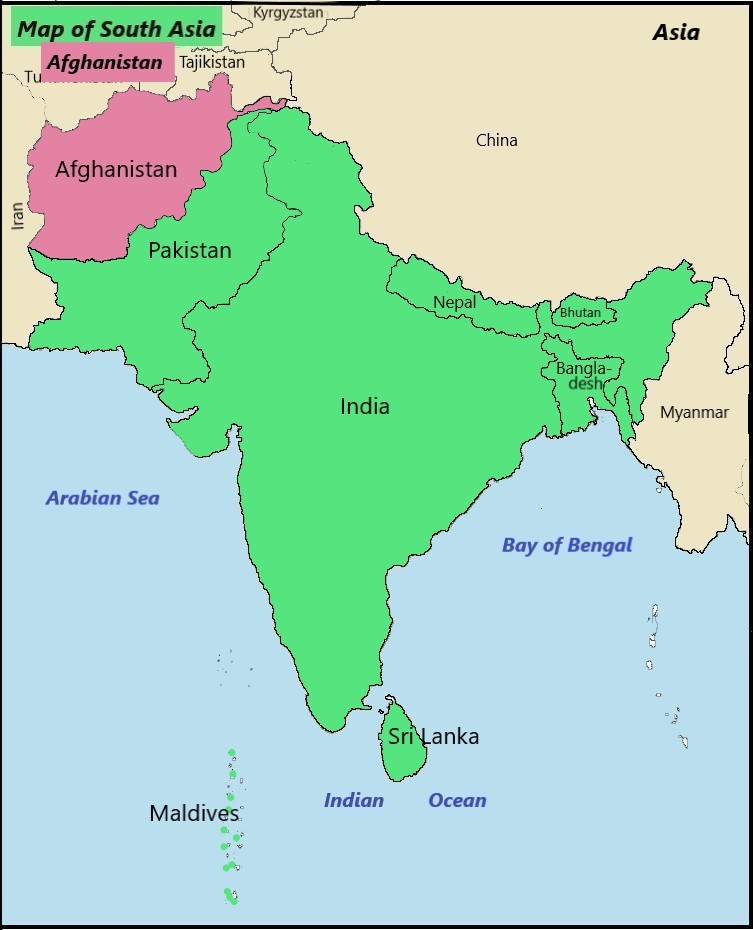
It is bordered by Pakistan in the east and south, Iran in the west Turkmenistan, Uzbekistan, Tajikistan and China in the north.
A Few Wonders of Afghanistan
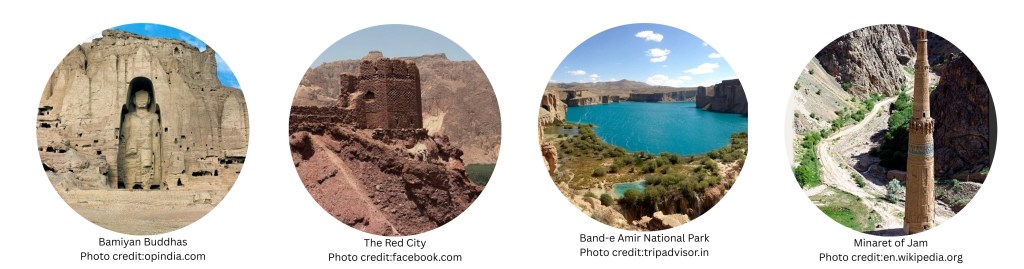
1. Bamiyan Buddhas: The Bamiyan Buddhas were two giant statues carved into the mountainside in the 6th century. Sadly, they were destroyed in 2001, but the site remains a powerful reminder of Afghanistan’s rich cultural heritage. Efforts are being made to restore and preserve what’s left. The name Bamiyan is believed to come from the Sanskrit word “Vamiyan”, meaning “the place of shining light” – fitting, given the valley’s stunning mountain surroundings.
2. Shahr-e Zohak (Red City): Shahr-e Zohak, or the Red City, is an ancient city perched on a hilltop. With its stunning architecture and strategic location, it was a key spot for various empires throughout history. Explore the ruins and imagine life in this historic fortress.
3. Band-e Amir National Park: Band-e Amir is a stunning national park with six turquoise lakes. Surrounded by mountains, it’s a breathtaking spot for nature lovers and trekkers. The lakes are considered sacred, adding to the park’s spiritual vibe.
4. Minaret of Jam: The Minaret of Jam is a 12th-century UNESCO World Heritage site. This intricate, tall tower displays Afghanistan’s architectural skill. With its ornate designs and rich history, it’s a must-visit for anyone interested in the country’s cultural past.
People of Afghanistan
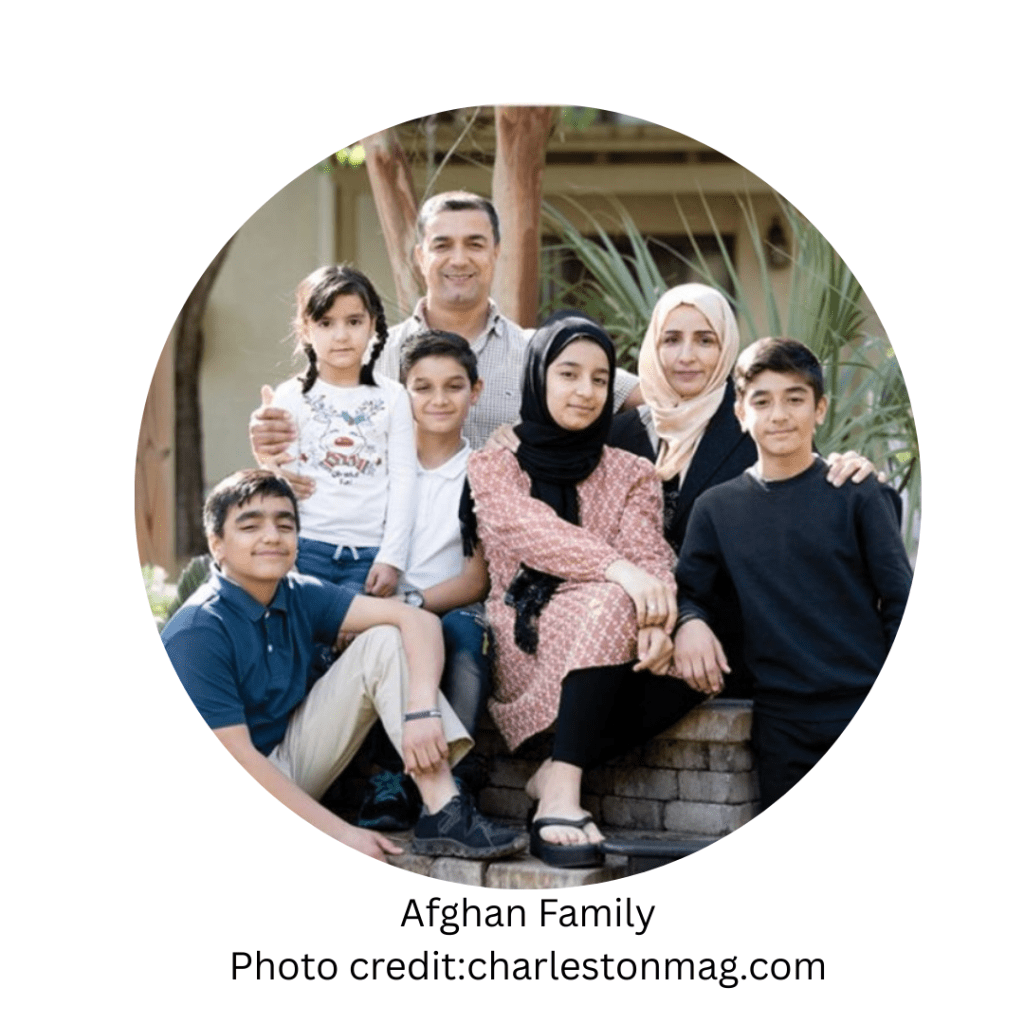
The people of Afghanistan are known for their hospitality and strong cultural heritage. With over 14 ethnic groups, including Pashtun, Tajik, and Hazara, Afghanistan’s population is diverse. Traditions like poetry, music, and textiles run deep.
Traditional Dress of Afghan
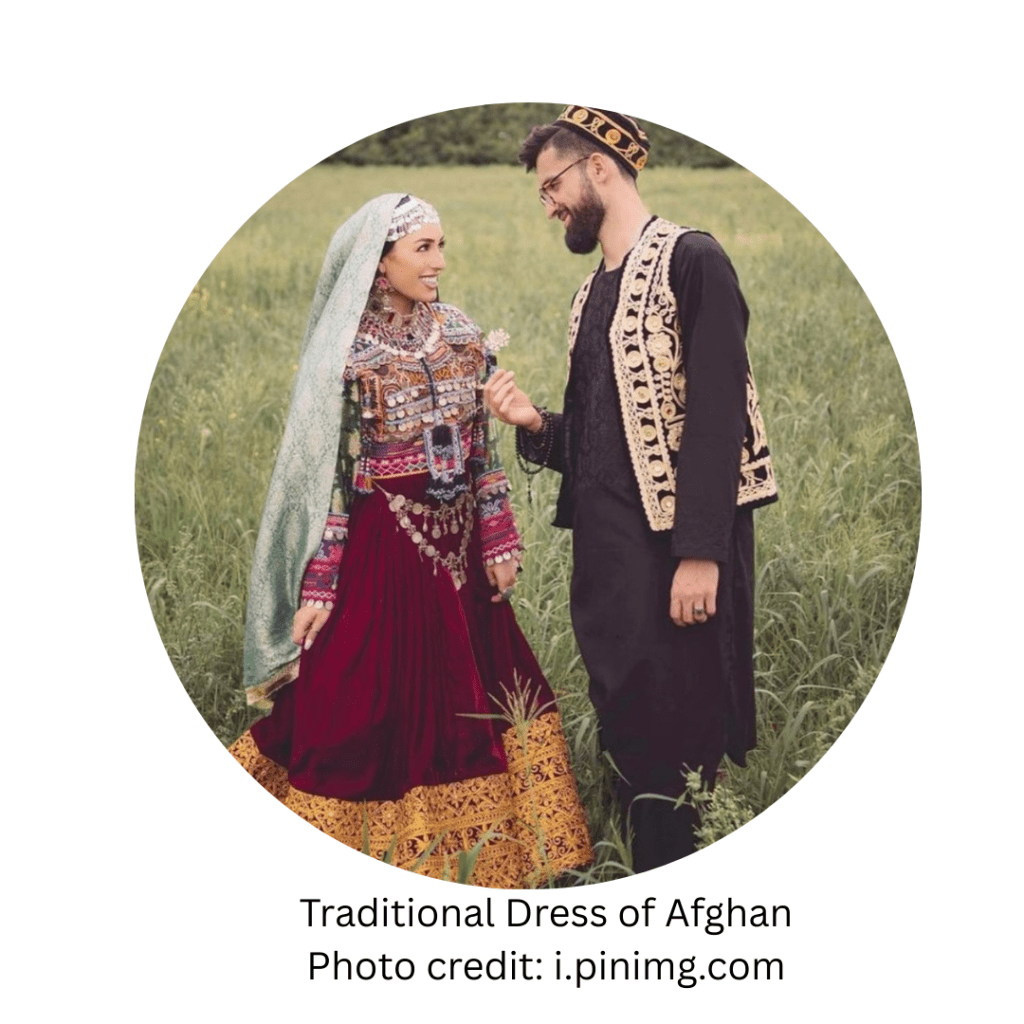
Afghan traditional dress is all about modesty and style! For men, it’s the pakol cap and keshmiri shalwar kameez. Women wear colourful burqa or hijab with embroidered dresses. Fabrics like cotton and wool are comfy for the climate.
Pulses and recipes
Afghanistan grows pulses like lentils, chickpeas, and beans. They’re a big deal for food security and farmers’ income. Mostly rainfed crops, pulses fit well in Afghan.
Afghan cuisine is characterized by a variety of popular and flavourful dishes that prominently feature pulses and beans, often prepared as stews, soups, and rice-based preparations. Notable examples include Qorma-e-Lubia (kidney bean stew), Mashawa (a hearty mix of beans and barley stew), and Maash Palau (a mung bean and rice dish).
Let’s get cooking with Qorma-e-Lubia!
Lubia (also spelled lobia or lubiya) in Afghanistan generally refers to red kidney beans. (Google)
Qorma-e-Lubia (Afghan Kidney Bean Stew)
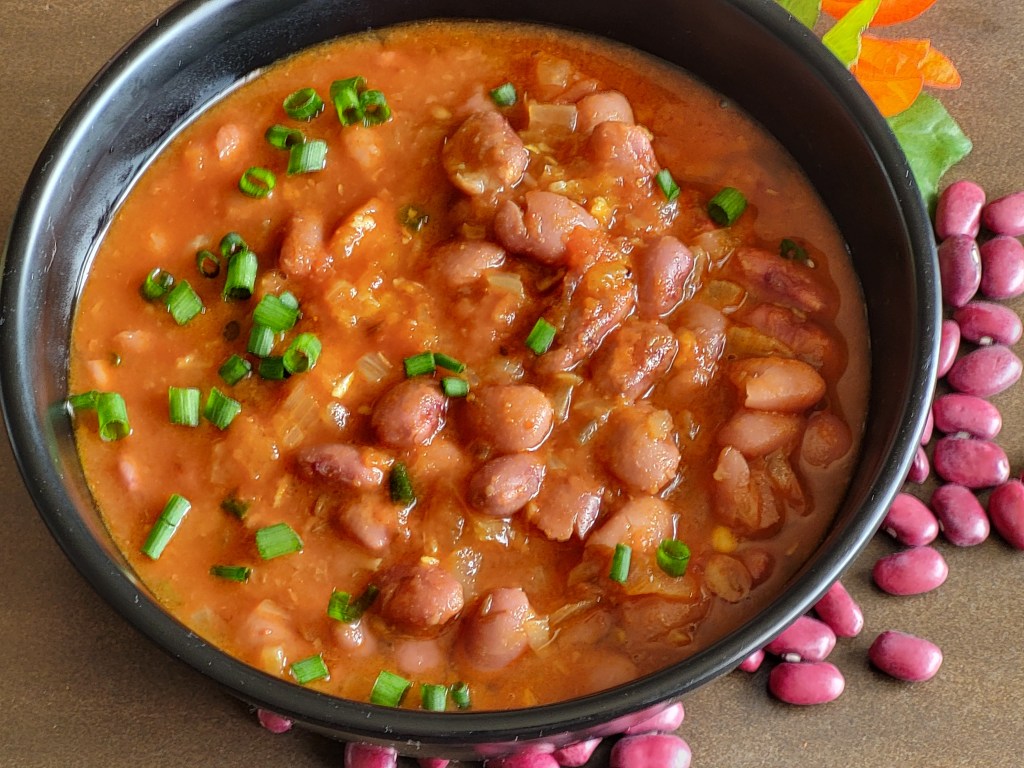
Qorma-e-Lubia’s an Afghan classic! Hearty kidney bean stew with onions, tomatoes, and spices. – It is flavorful, and pairs perfectly with naan or rice.
You need:
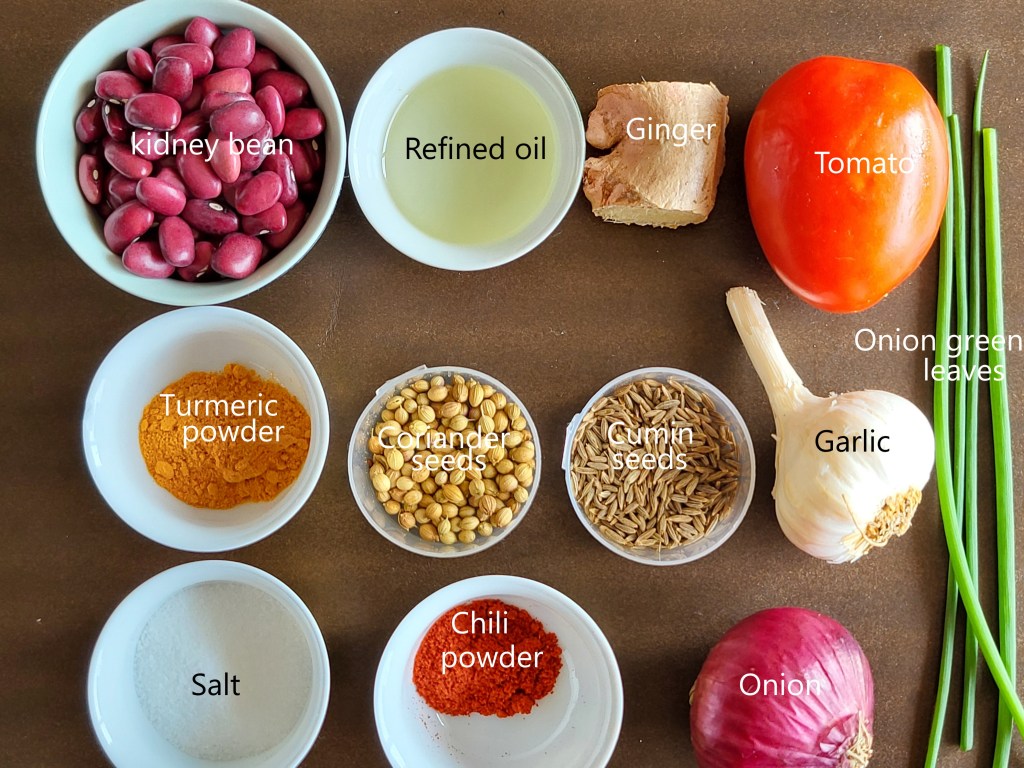
100 gm kidney beans (rajma)
1 medium size onion,
1 medium size tomato,
2-3 garlic cloves,
½ -inch ginger,
½ tsp cumin seeds
½ tsp coriander seeds
¼ tsp turmeric
¼ tsp chili powder (to taste)
Salt to taste
1 tbsp refined oil/ghee
Method:
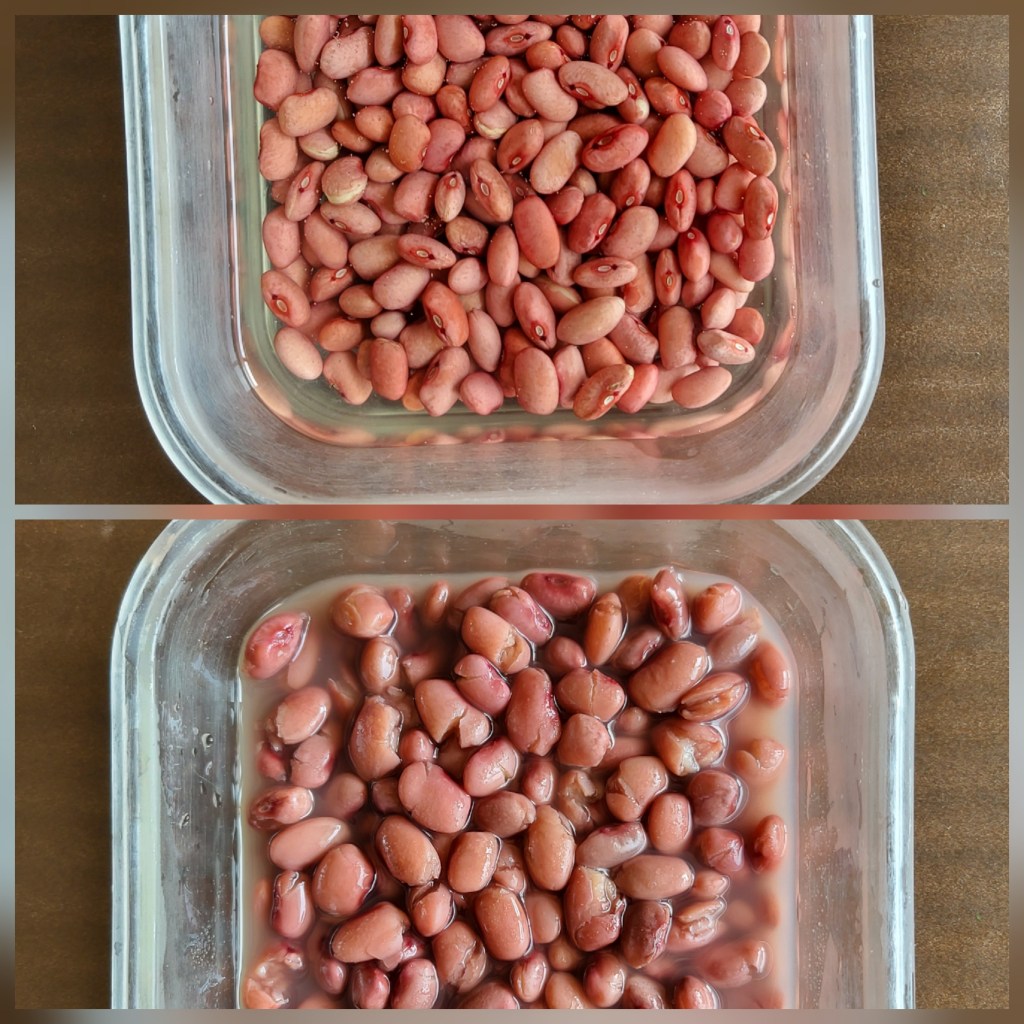
- Wash and soak the kidney beans overnight.
- Rinse and cook the beans with little salt until tender.
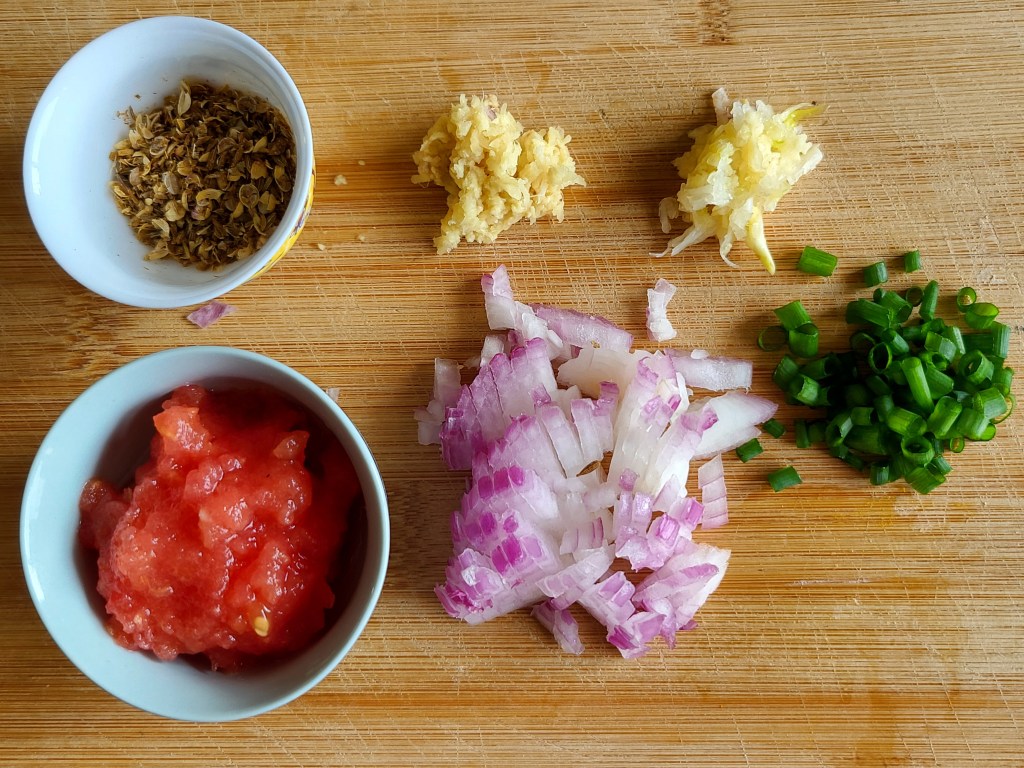
3. Coarsely crush cumin and coriander seeds.
4. Peel and grate garlic and ginger. Finely chop onion.
5. Grate tomato, discard skin.
6. Finely chop green onion leaves, set aside.
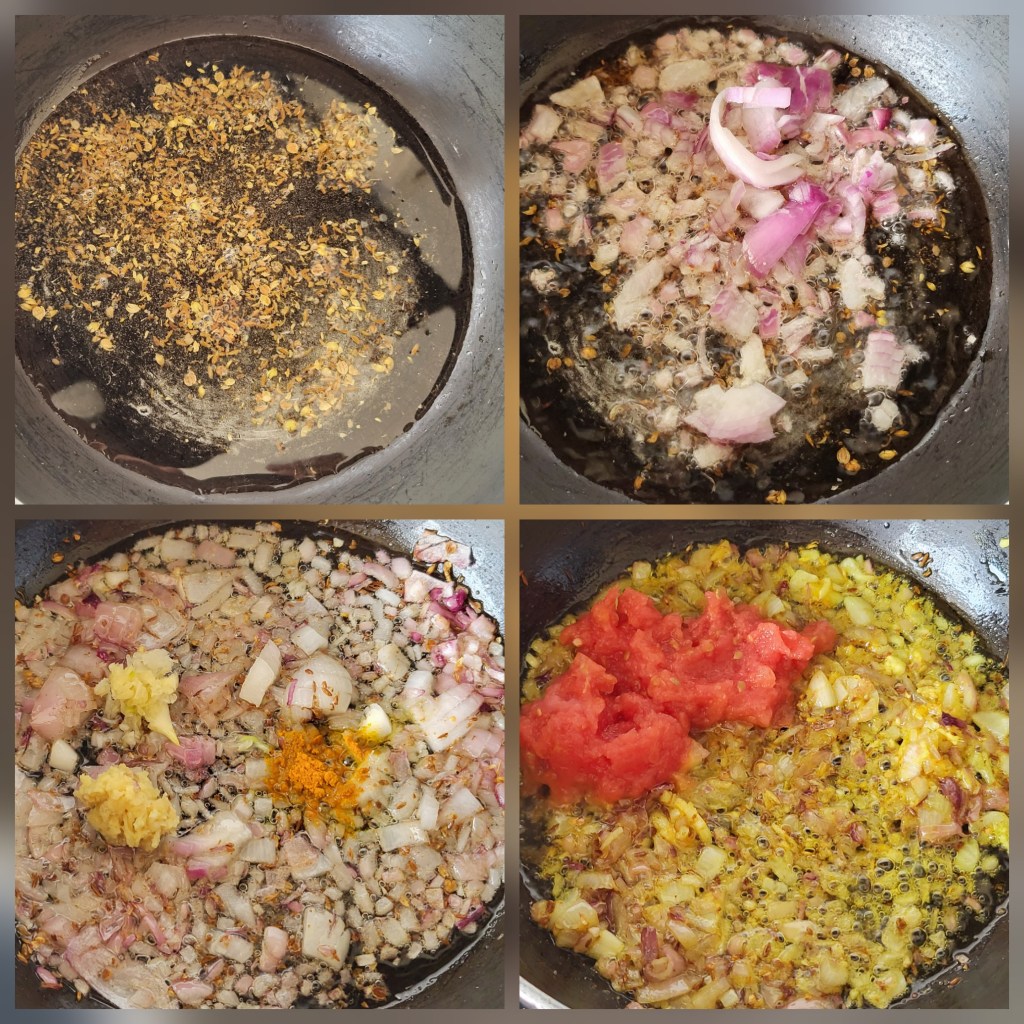
7. Heat oil in a pan, sauté crushed cumin and coriander seeds over medium heat until fragrant.
8. Add onion, sauté briefly.
9. Add garlic, ginger, and turmeric powder, mix well.
10. Add grated tomato, mix well.
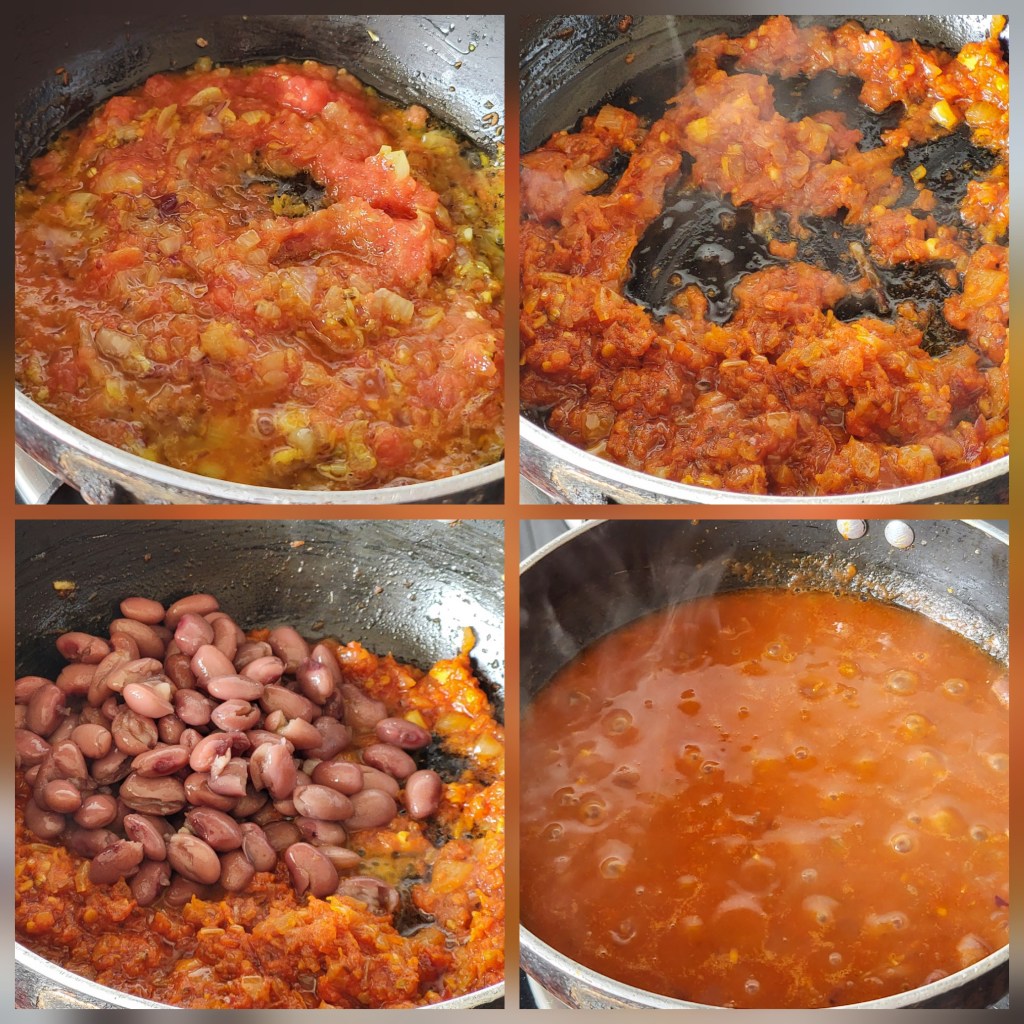
11. Add chili powder (if using), fry spices until oil separates.
12. Add cooked kidney beans, mix well.
13. Add ½ cup warm water, bring to a boil.
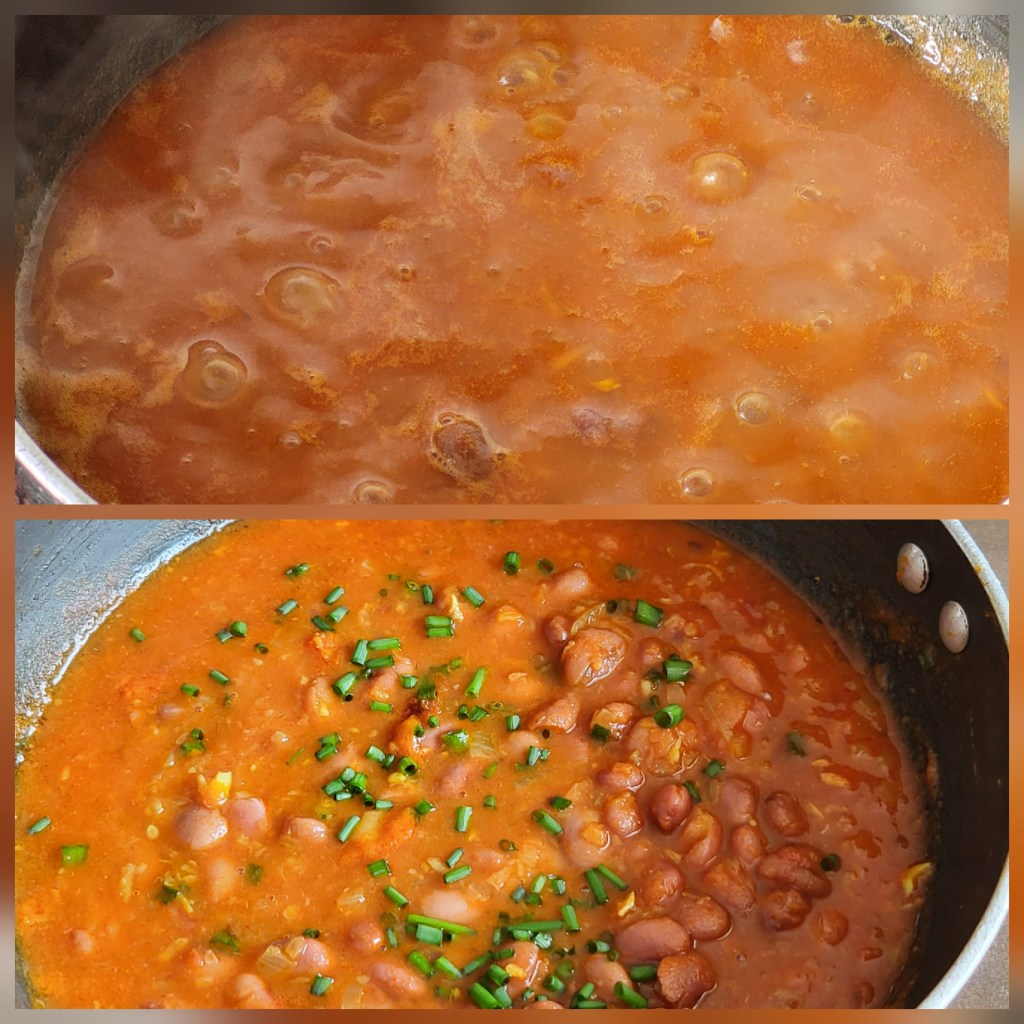
14. Adjust the salt and simmer stew for a few minutes, switch off heat.
15. Sprinkle chopped green onion leaves, cover pan, let flavors blend.
16. Serve hot with steamed rice.
Qorma-e-Lubia is ready! Enjoy!
Happy cooking!
Coming up next…. Pulses in Bangladeshi cuisine
******
 Dal On The Table
very nicely presented
LikeLike
Thank you so much Sailaj! Really glad you liked it
LikeLike
That closing note stayed with me😍 beautifully written as always!
LikeLike
Thanks a ton Trina! Means a lot that it resonated.
LikeLiked by 1 person
Such an interesting piece on Afgham culture, its people and recipes! Beautifully written and illustrated. ❤
LikeLike
Thanks a lot Tanvi! So glad you enjoyed the piece and got a glimpse into Afghan culture
LikeLike
Love how simple ingredients come together to create something so delicious and satisfying.
LikeLike