
Macau: Location and People
Macau or Macao, a Special Administrative Region of China, is situated on the southern coast of China, overlooking the South China Sea. It was a Portuguese territory until 1999, leaving a lasting cultural impact. Today, Macau has a unique blend of Chinese and Portuguese influences.
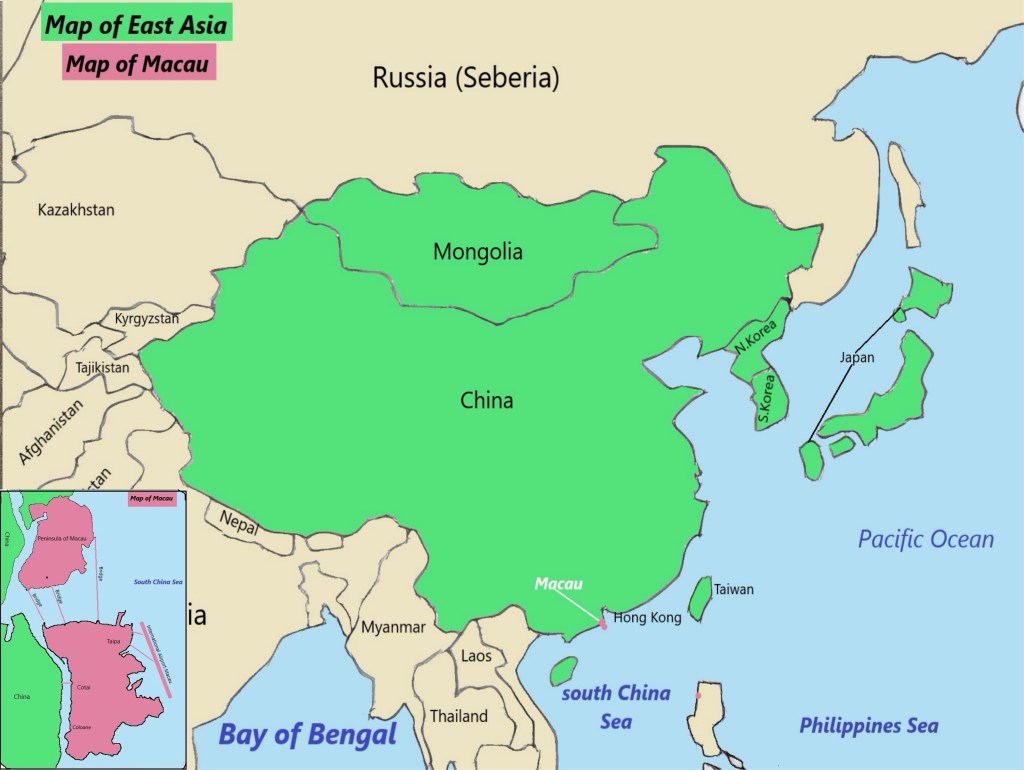
Macau is in the South China Sea, in east south of mainland China facing Hong Kong.
Macau consists of a peninsula and islands, including Taipa and Coloane. The peninsula is the main hub for activity, history, and casinos. Taipa and Coloane offer luxury resorts, beaches, and a laid-back atmosphere. Macau International Airport is located on reclaimed land between Taipa and the sea.
A few wonders of Macau:

1. The Venetian Macao Resort Hotel: A luxurious resort with a massive casino, shopping mall, and convention center, replicating Venice’s charm.
2. Ruins of St. Paul’s Cathedral: This 17th-century church’s remains are an iconic symbol of Macau’s rich history and cultural heritage. While the cathedral itself no longer stands, the stunning façade wall features intricate carvings crafted by a Japanese artist, displaying the blend of Eastern and Western influences that define Macau’s unique identity.
3. Macau Tower: Standing 338 meters tall, this iconic tower offers breathtaking, panoramic views of Macau. Thrill-seekers can experience the world’s highest commercial bungee jump, while shoppers and foodies can enjoy a range of restaurants, shops, and cinemas on the tower’s upper levels, 223 meters above the city. Adventure enthusiasts will also find plenty of activities to enjoy.
4. A-Ma Temple: A historic Taoist temple situated in Macau Peninsula, dedicated to the goddess Mazu, the revered protector of sailors and fishermen. This ancient temple displays Macau’s rich cultural heritage and dates back to the Ming dynasty. As you approach the temple, you’ll be greeted by symbolic guardian statues: a mother lion and her cub, as well as a male lion, watching over the worshippers. The temple’s architecture and tranquil atmosphere offer a glimpse into traditional Chinese culture.
People of Macau

Macau’s people are a vibrant and diverse community, reflecting the region’s rich cultural heritage. With Macanese, Chinese, Portuguese, and other ethnicities coexisting, the city offers a unique blend of traditions and warm hospitality. From bustling streets to tranquil temples, the people of Macau add warmth and vitality to this enchanting city.
The Traditional Dress of Macau
Macau’s traditional dress blends Chinese and Portuguese influences. Women often wear the elegant cheongsam, a form-fitting dress with intricate designs, while traditional Portuguese attire features embroidered bodices, decorated aprons, and headscarves. Men wear tailored trousers, vests, and hats in the Portuguese style. The Macanese community adds its own distinct touch, reflecting its unique Eurasian heritage.

The photo features a couple from Macau in traditional Chinese attire—a changshan (for men) and a cheongsam (for women, also known as qipao). These elegant outfits are typically reserved for formal occasions like weddings and traditional Chinese celebrations.
Pulses and Recipes
Pulse cultivation in Macau is limited due to the region’s small land area and urbanization. Agriculture plays a minor role in Macau’s economy, with most food being imported. However, some local farms and community gardens cultivate a variety of crops, including vegetables and fruits, to promote sustainability and self-sufficiency.
Let’s try making Macau-Style Almond Mung Bean Cookies, a traditional treat that represents the region’s unique blend of Chinese and Portuguese influences. Made with mung bean flour, almond flour, and rice flour and often shaped using a mooncake mold.
Macau Mung Bean Almond Cookies
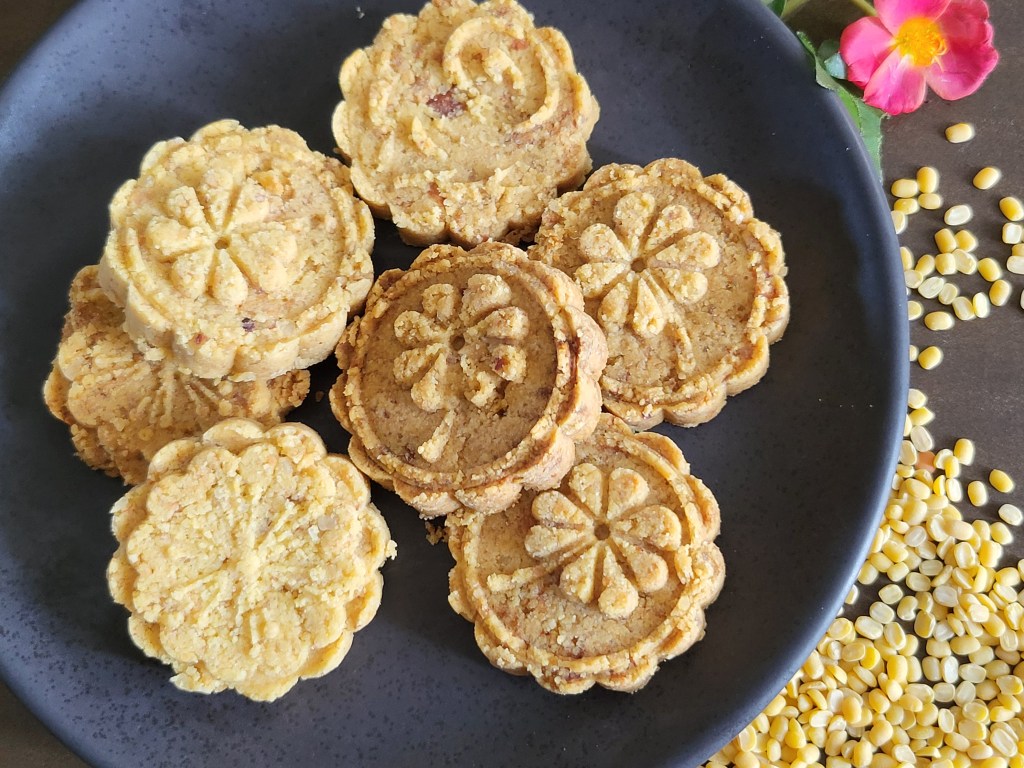
These cookies have a distinct texture and flavor, making them a perfect accompaniment to a cup of tea. They’re a delicious reflection of Macau’s rich cultural heritage and history of cultural exchange. Give them a try – you’ll love them!
You need:

50 gm mung bean flour
50 gm almond flour
40 gm granulated sugar
20 gm whole almond
25 gm refined oil
Water if needed
Method:

- Roast the almonds: Toast for a minute until fragrant. Cool, then roughly grind in a blender.

2. Grind sugar: Pulse sugar for 2-3 times in a grinder until fine.
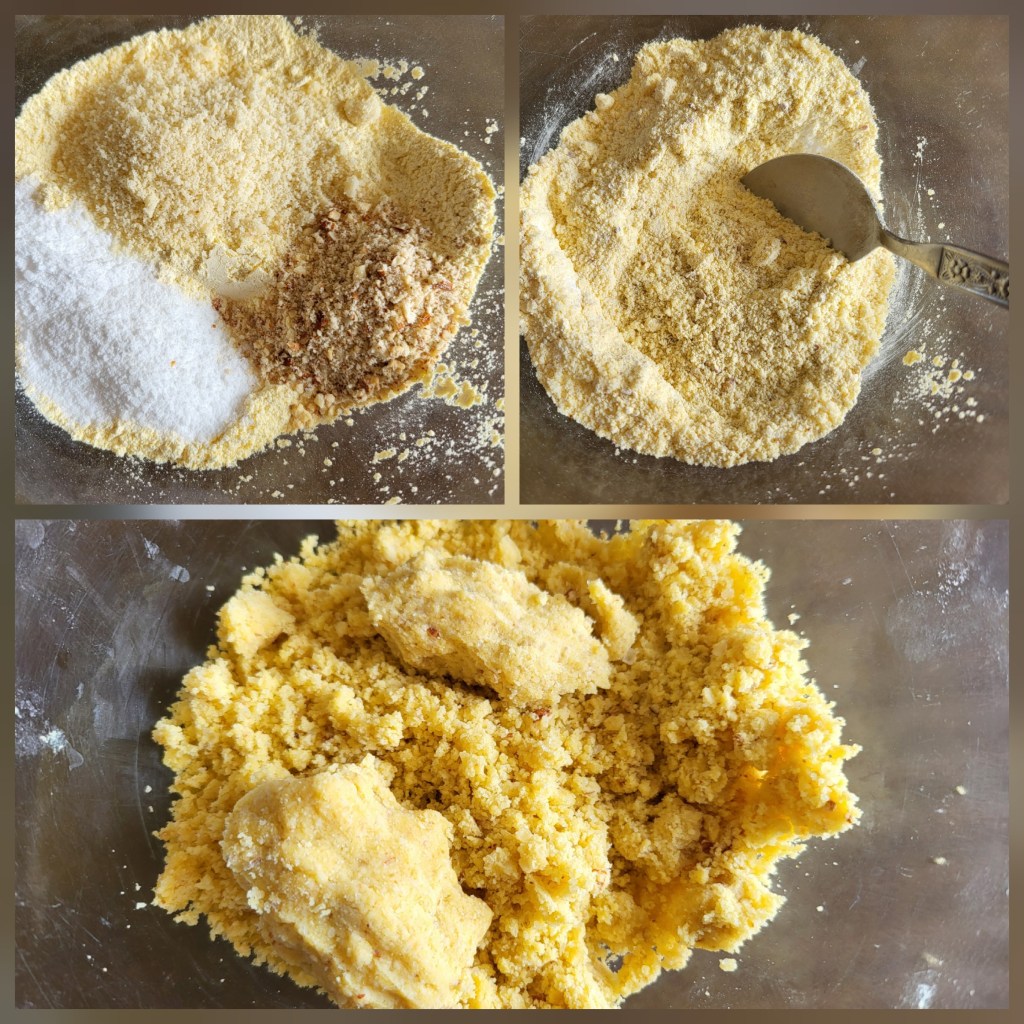
3. Mix dry ingredients: Combine ground almonds, sugar, and other dry ingredients.
4. Gradually add oil until the mix turns crumbly. If needed, add water (1 tsp at a time) until it holds shape when squeezed.
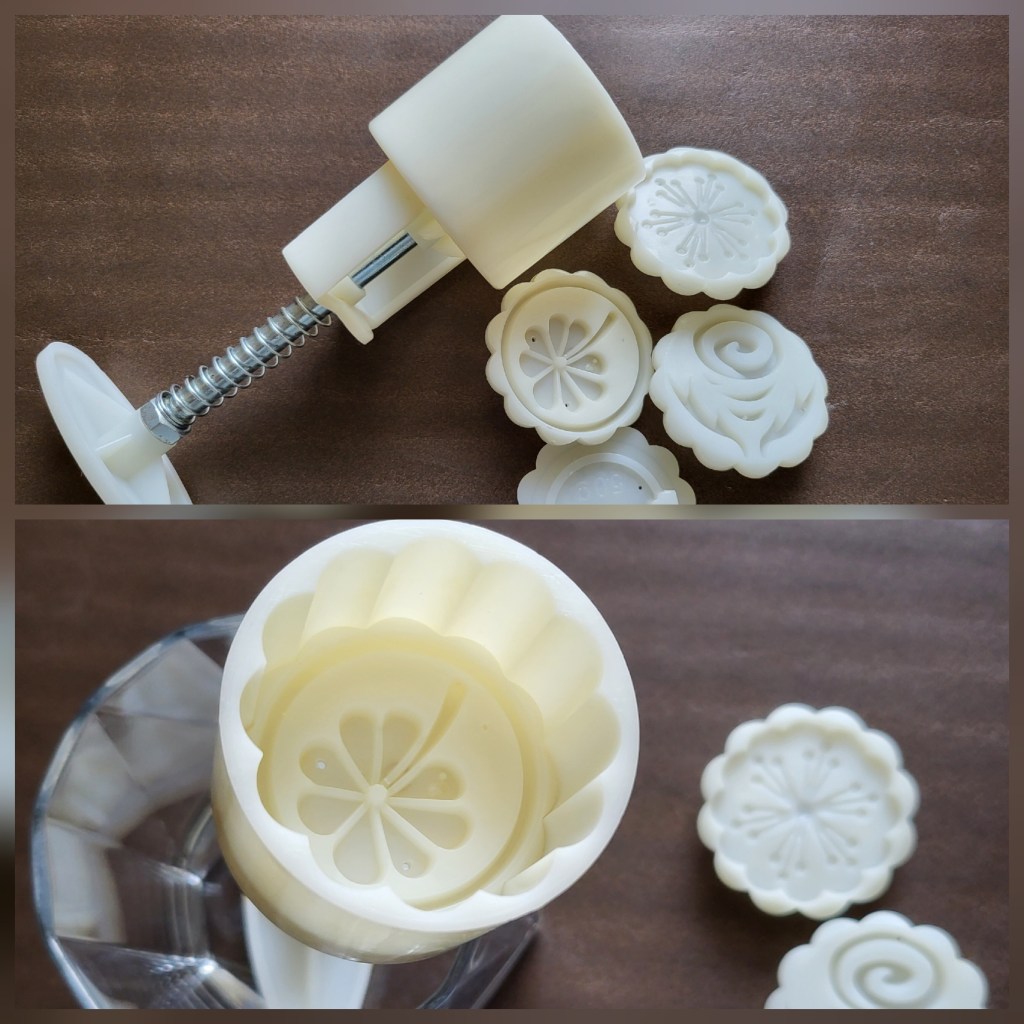
Shape the Mooncake cookies: Use a mold or shape by hand.
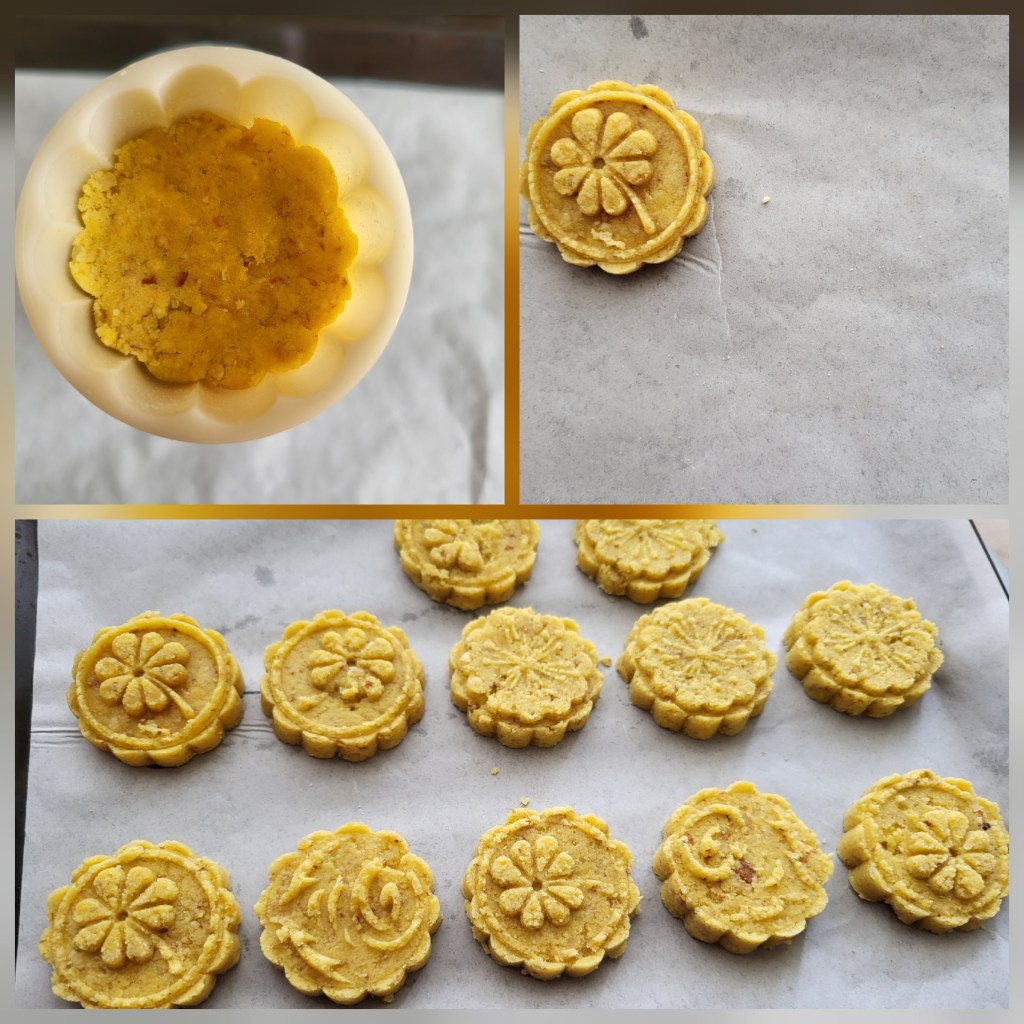
5. For the molds: insert a design plate in, scoop in 1 tablespoon (15g) of mix, press down with your finger, and tap gently to release onto a lined baking tray.
6. Repeat with the rest of the dough. Keep the tray in the fridge for 30 minutes to set.
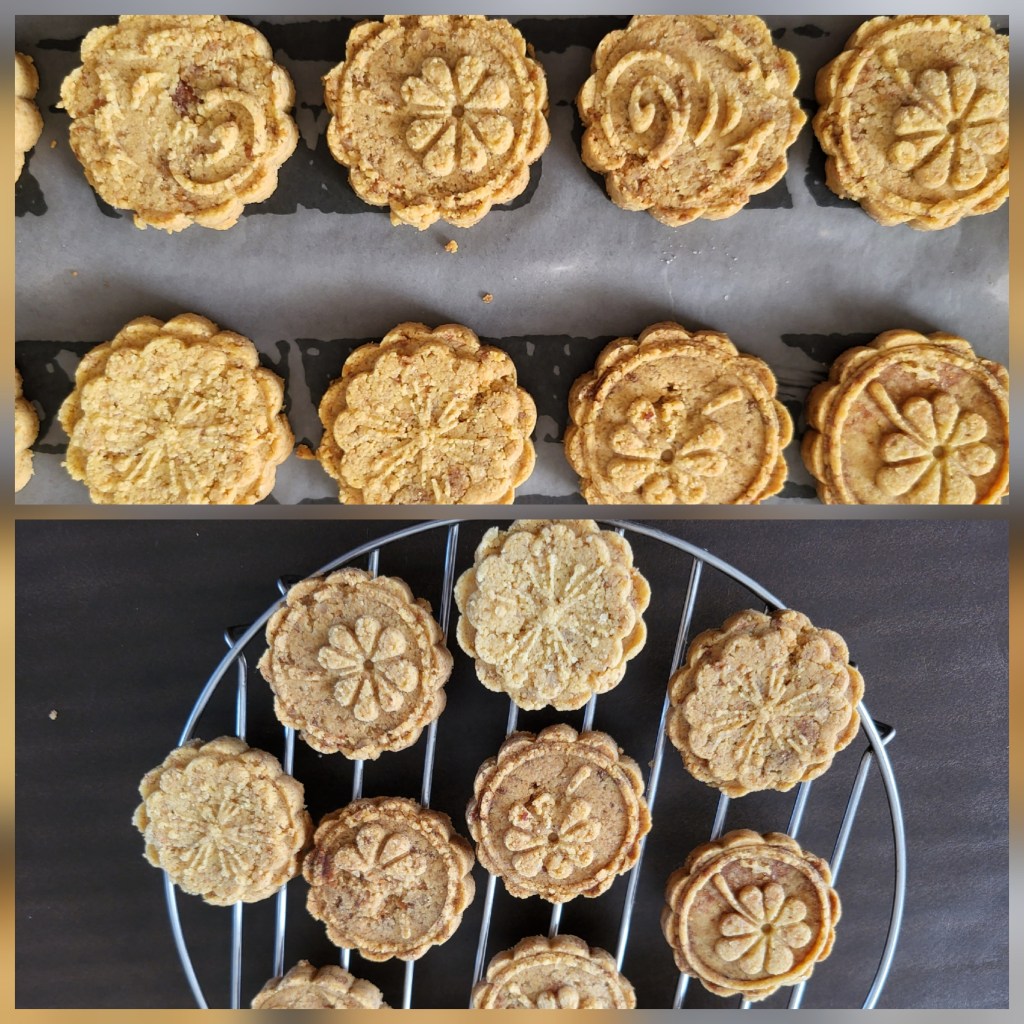
7. Bake: Preheat oven to 350°F (180°C). Bake for 20–25 minutes or until lightly golden.
8. Let cool on the tray for 10 mins, then transfer to a wire rack.
Enjoy your Mung Bean Almond Cookies!
Happy baking!
Coming up next……Pulses in North Korean Cuisine
******


Clear, insightful & deliciously presented as always💞
LikeLike
Aww, thanks a lot Trina!
LikeLiked by 1 person
Looks yummy and soft… thank you for sharing 😍
LikeLike
Thank you Protima. Have a beautiful day.
LikeLike