
Japan: Location and People
Japan is an island nation in East Asia, nestled off the northeastern coast of the Asian mainland in the Pacific Ocean. Its terrain is characterized by mountains and dense forests, with Tokyo as its capital city.

Bounded by the Sea of Japan (west), East China Sea (south), and Sea of Okhotsk (north), and Pacific Ocean to the east. The country comprises four major islands and over 14,000 smaller islands.
Japan is renowned for its captivating blend of traditional culture and cutting-edge technology. From breathtaking cherry blossoms and Mt. Fuji to futuristic bullet trains and vibrant pop culture, Japan seamlessly fuses old and new, making it a unique destination.
A Few Wonders of Japan
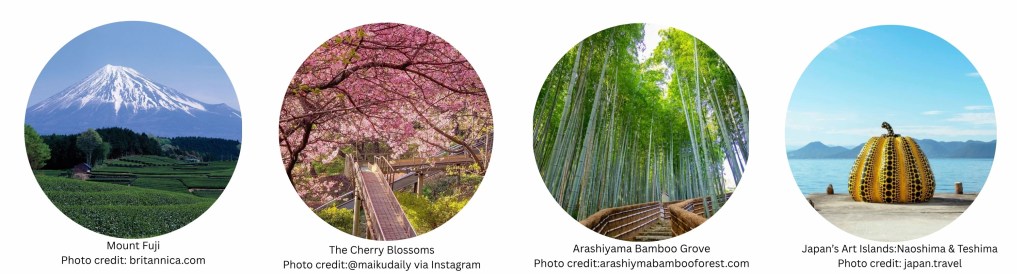
- Mount Fuji: An iconic, symmetrical volcano and Japan’s highest peak – a natural wonder, UNESCO World Heritage site, place of worship and inspiring artists & travellers.
- Cherry Blossoms (Sakura): Fleeting pink blooms transform Japan each spring. People gather for “hanami” picnics, celebrating beauty and life’s impermanence (mono no aware).
- Arashiyama Bamboo Forest: Kyoto’s serene bamboo groves sway gently, offering tranquillity amid history and culture (near Tenryu-ji Temple, UNESCO site).
- Naoshima Island’s Art Installations: Modern art meets nature (Yellow Pumpkin by Yayoi Kusama). An island-museum blending landscapes, art, and culture.
People of Japan

The Japanese prioritize community and harmony, valuing discipline and respect. Children learn to prioritize collective well-being, shaping Japan’s unique cultural identity.
Traditional Japanese Kimono
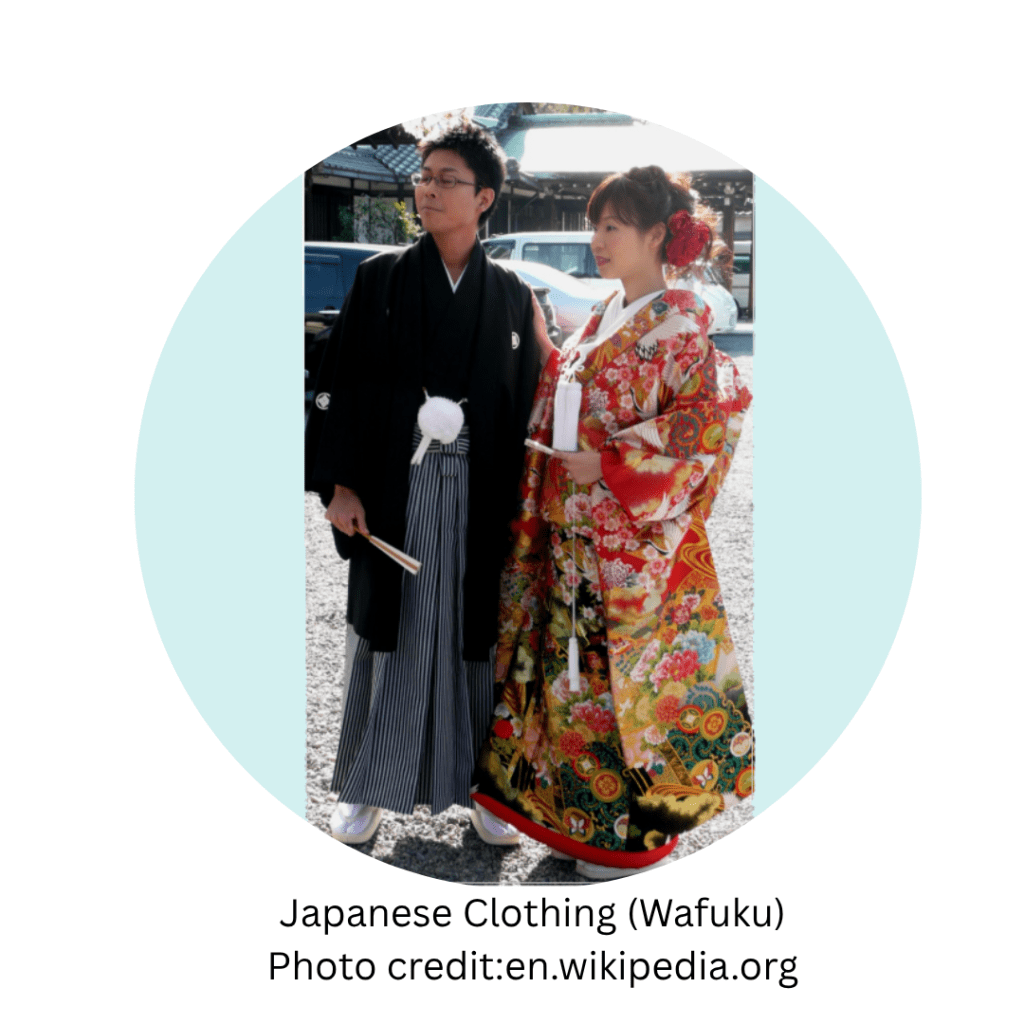
Women: Elegant Kimono (silk robe) with obi (sash) and geta (sandals).
Men: Kimono/Yukata with hakama or montsuki, paired with geta/zori.
The word “Wafuku” is often used interchangeably with “kimono”. In Japanese, “wa” means “Japanese” and “fuku” means “clothing”. Essentially, wafuku encompasses all traditional Japanese garments, symbolizing Japan’s cultural heritage and identity.
Pulses and Recipes
Pulse cultivation in Japan focuses on Adzuki, Kidney and broad beans and soybeans. They import chickpeas, lentils to meet domestic demand.
Japan grows Adzuki beans (significant in sweets like Anko/red bean paste) and soybeans (for miso, tofu). Its climate supports diverse pulse cultivation, enriching cuisine.
Let’s make Mizu Yokan, a refreshing dessert (perfect for summer) using Srinagar rajma (substitute for Adzuki beans).
Japanese Mizu Yokan Dessert

Mizu Yokan is soft, melts in your mouth, and pairs perfectly with green tea. We had a great time making it, and we hope you’ll give it a try too!
You need:
For the Azuki bean paste(Koshian/Anko,)

100 gm Srinagar rajma/Adzuki beans
50 gm sugar
1 cup of water
1tsp refined oil

For the Dessert
1 cup the red bean paste
200 ml water
20 gm sugar
1 tbsp agar-agar/unflavoured gelatine
Method:
To make the red bean paste (Koshian/Anko,)

- Rinse the dried red beans and soaking them in water for at least 4 hours or overnight. Then, drain and rinse the beans.
- Next, cook the beans in a pressure cooker with enough water to cover them, adding 1 tsp of sugar.
- After the first whistle, lower the flame and cook for 3 minutes. Let the pressure release naturally, then check if the beans are tender.

4. Transfer the cooked red beans to a grinder and blend them into a fine paste.
5. Add ½ cup water and mix it to the paste well.
6. Strain the paste through a muslin cloth to separate the skins and any solids. (This will give the paste a smoother texture.)

7. Next, transfer the strained red bean liquid to a pan.
8. Add 1 tsp of oil and cook it over low heat, stirring continuously, until it thickens. The oil will give the silky texture.

9. Add sugar and continue stirring until the paste reaches a dropping consistency.
10. Pour the red bean paste into a container and let it cool to room temperature.
Prepare the Mizu Yokan Dessert

Prepare the Agar-Agar/Gelatine:
11. Sprinkle agar-agar or gelatine over 100 ml of cold water and let it “bloom” for 5-10 minutes, or until it absorbs the liquid and becomes jelly-like.
12. Microwave for 10 seconds to dissolve and warm it slightly.

Warm the Red Bean Paste:
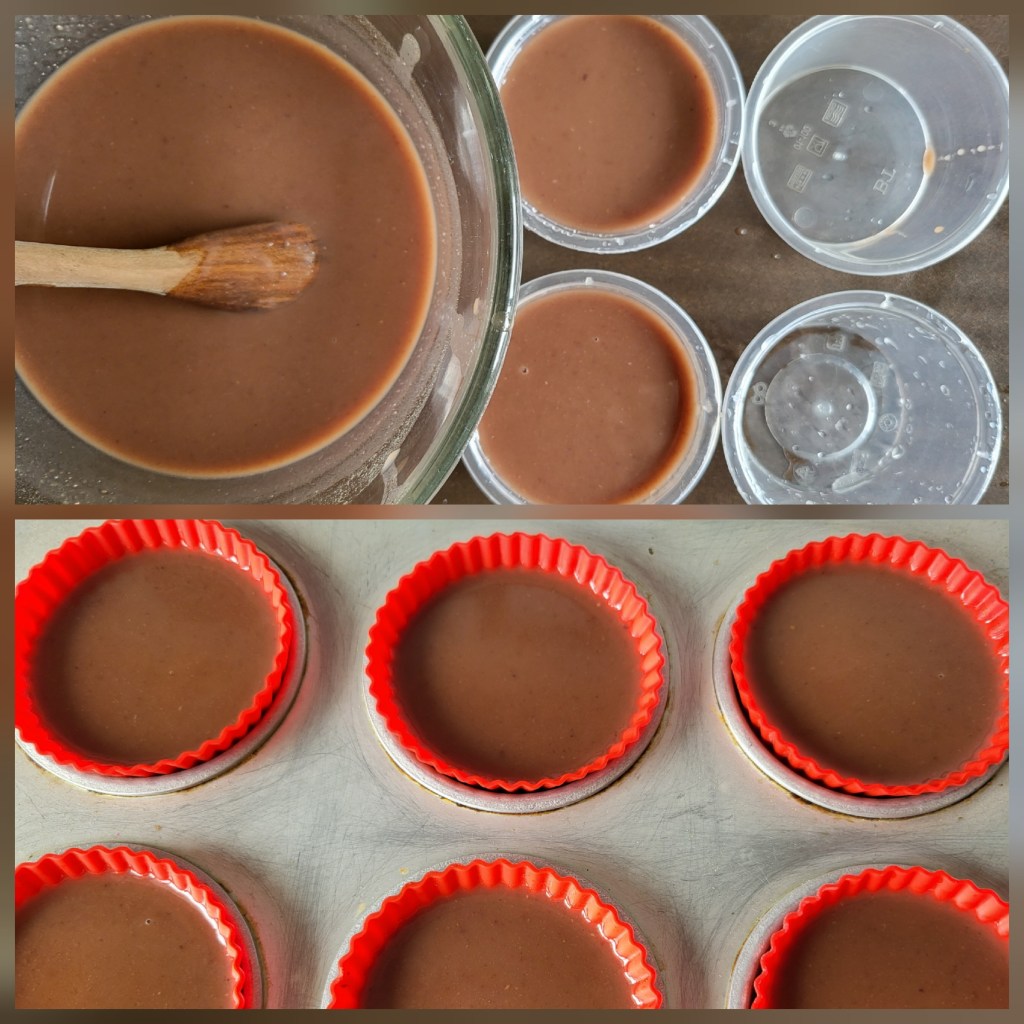
13. Warm the prepared red bean paste for 30 seconds. (It measures exactly 1 cup). Place it in a larger bowl.

Set the Mizu Yokan:
16. Pour the mixture into a large or individual moulds.
17. Cover and refrigerate for at least 4 hours.
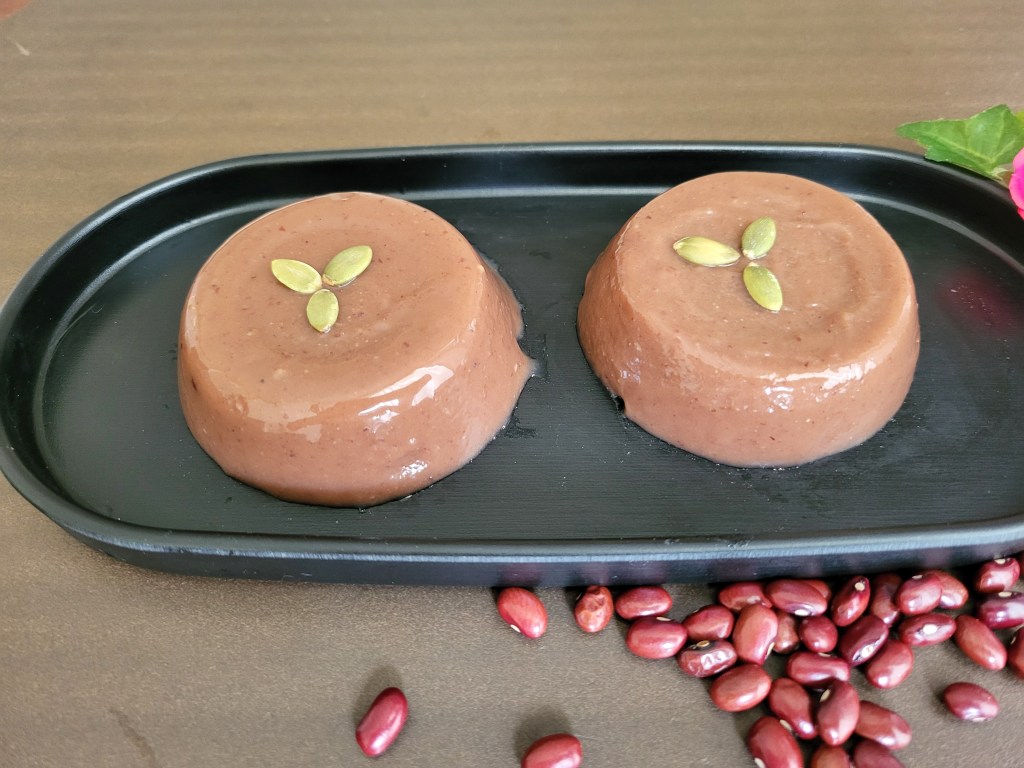
18. Once firm, gently remove the Mizu Yokan from the mould. Serve chilled with green tea or black tea.
Enjoy your delicious homemade Mizu Yokan!
Happy cooking!
Coming up next ……Pulses in Macanese Cuisine
*****


👍
LikeLiked by 1 person
Delicious…will definitely try this 😋
LikeLiked by 1 person
Can’t wait to hear how it turns out! Enjoy cooking and bon appétit!
LikeLiked by 1 person
Your writing has a rare spark, it’s beautifully different❤️ it’s on my must-try list! Thank you!
LikeLike
Thank you very much, Trina. I’m thrilled you liked the post about Japanese cuisine! Your kind words made my day! If you try any of the dishes, I’d love to hear about your experience!
LikeLiked by 1 person