
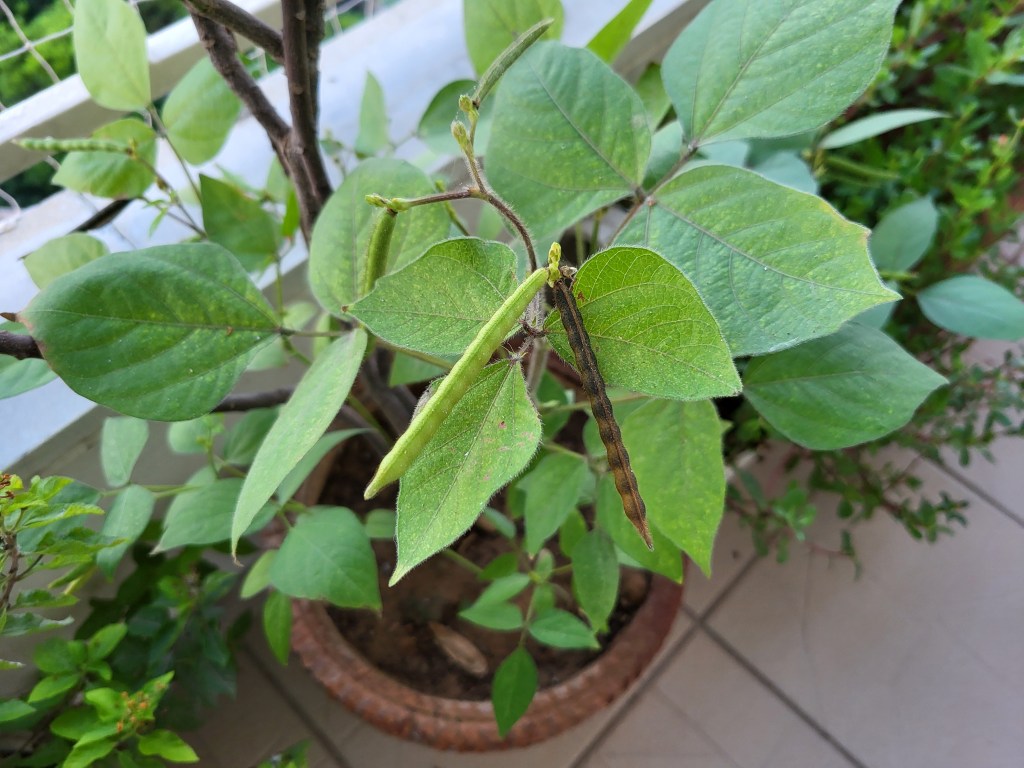
Mung plants have a fascinating progression of leaves, featuring three distinct types: the initial seed leaves, followed by the true leaves, and ultimately, the characteristic trifoliate compound leaves. Each type plays a vital role in the plant’s growth and development.
Seed Leaves (Cotyledons)
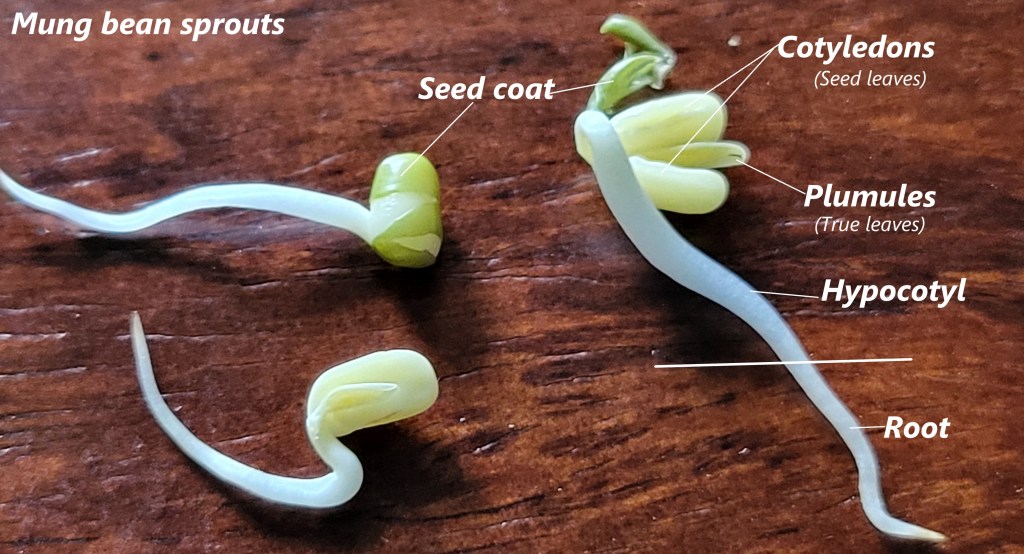
Mung beans exhibit epigeal germination, where the cotyledons (seed leaves) emerge above the soil surface and function like leaves, nourishing the young plant by utilizing stored food from the parent seed. These seed leaves are the first visible signs of life in a mung bean seedling, providing essential nutrients during germination.
Notably, hidden between the cotyledons is a tiny pair of leaves called plumules, which eventually develop into true leaves, marking the next stage of growth.
True Leaves

As the seedling grows, the plumules emerges as the first set of green leaves, known as true leaves, harnessing sunlight to manufacture food through photosynthesis for the new plant. With their vibrant green color and delicate shape, the true leaves play a vital role in propelling the mung bean plant towards maturity, marking an exciting milestone in the plant’s development!
Trifoliate Compound Leaves: A Key Stage in Mung Plant Development
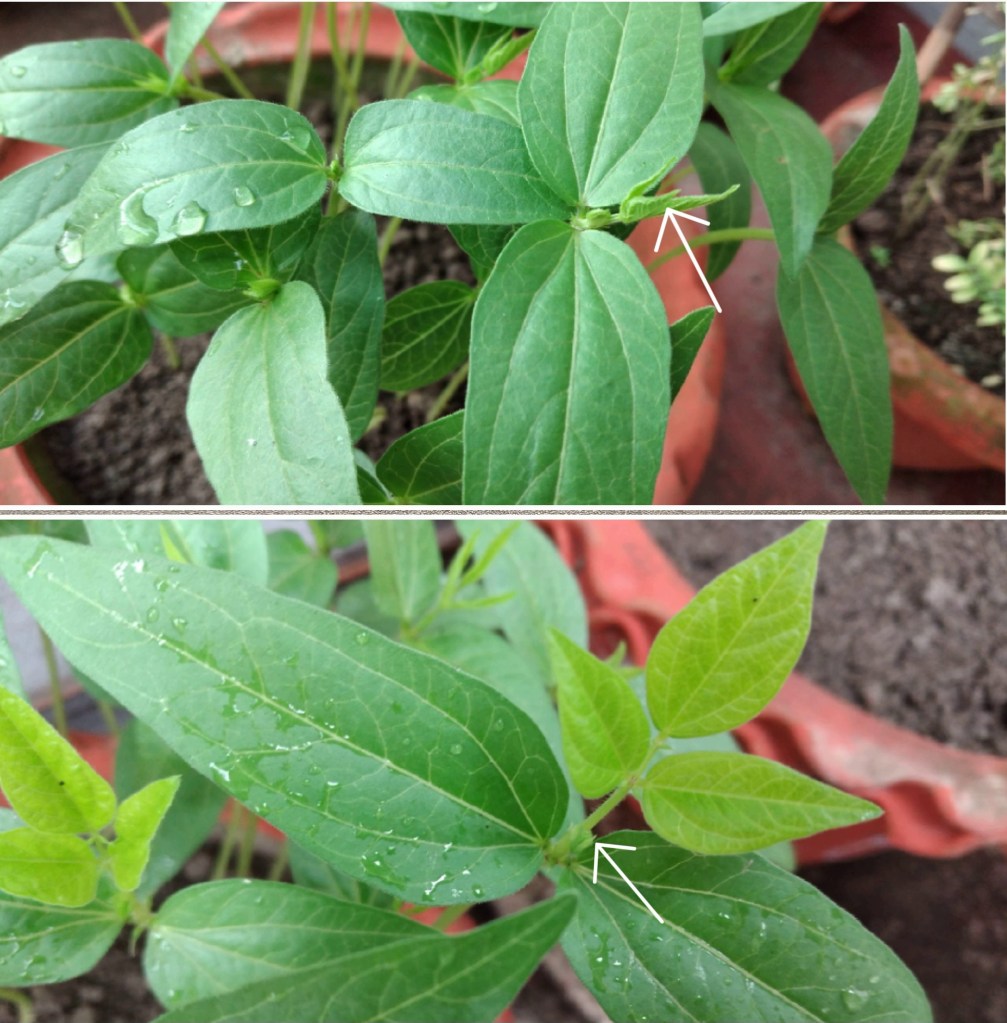
The trifoliate compound leaves of the mung plant emerge from between the true leaves, displaying a characteristic three-leaflet structure. These leaves play a crucial role in photosynthesis, supporting the plant’s growth and development. As the plant matures, trifoliate leaves form at every node, becoming a distinctive feature of the mung plant’s architecture.
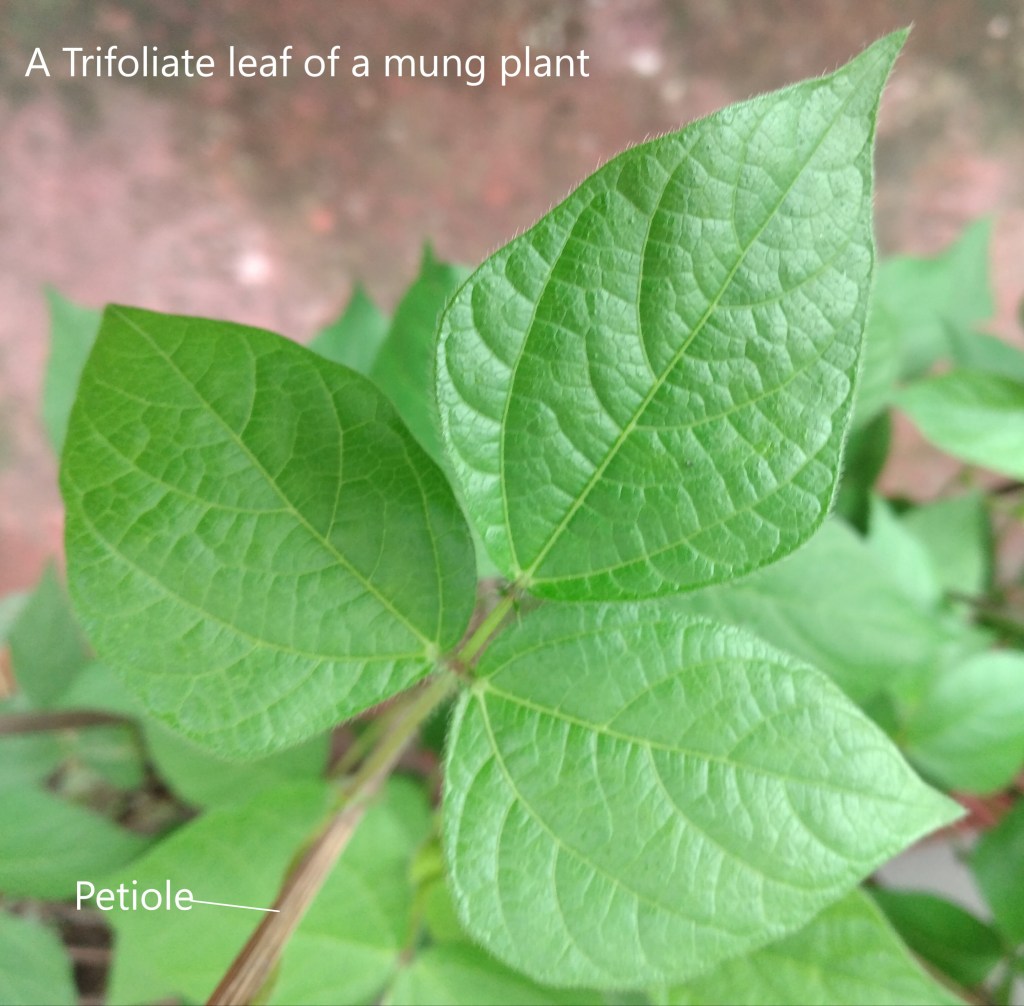
The trifoliate leaf has three leaflets attached to a single petiole. The leaflets display a distinctive 3-veined pattern radiating from their base. They’re adorned with sparse hairs, particularly noticeable on the underside, adding to their unique texture.
Branching and Further Growth
As the mung plant grows, axillary buds at the nodes along the main stem develop into new stems or branches. These branches produce their own leaves, flowers, and axillary buds, resulting in a bushy structure characteristic of mung bean plants.
Flower Formation

The flowers emerge from axillary buds at the nodes, which stimulate the growth of inflorescence branches under suitable conditions and hormonal signals. These flowers grow in clusters, supported by the peduncle (flower stalk)
Ready to Harvest: Changes in the Mung Plant
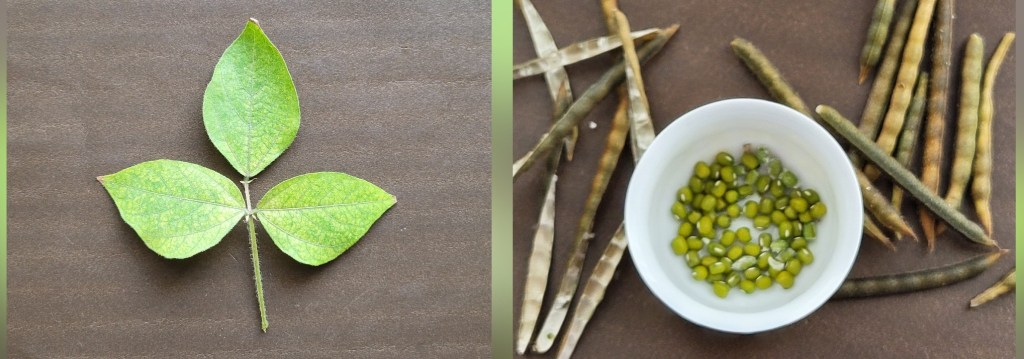
As the mung bean pods mature and turn yellowish-brown, the plant’s leaves also begin to yellow. The chlorophyll, which gives leaves their green color and enables photosynthesis, starts to break down, signaling the plant’s transition from vegetative growth to seed maturation. This natural process indicates that the plant is nearing the end of its life cycle and is ready for harvesting.
Happy reading!
Coming up next …. Pulses in East Asian Cuisines
******
 Dal On The Table
How do you manage to grow the dal grain into a tree in a flowerpot ! Awesome!
LikeLiked by 1 person
Thank you Meeta. Glad you loved them.
LikeLiked by 1 person
Amazing! Love your perseverance.
LikeLiked by 1 person
Thank you so much Leeta. I am glad that you like it.
LikeLiked by 1 person
Only you could turn mung leaves into a botanical love story pure gouw brilliance😍
LikeLike
Thanks so much, Trina — glad the mung leaves charmed you 💚 😉
LikeLiked by 1 person