
After a mung flower is pollinated and fertilized, its ovary develops into a mung pod. The flower often remains attached to the developing pod for a while before eventually dropping off, leaving the young pod to mature.
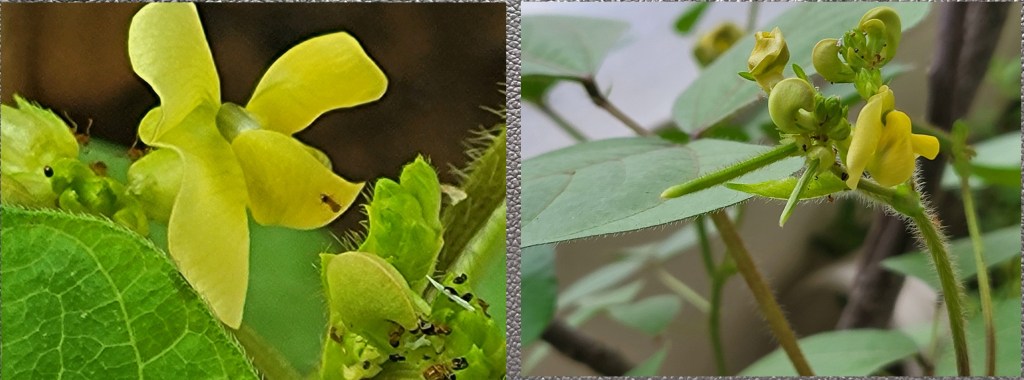
The pod develops into a long, protective structure that encases and nurtures the growing seeds.
Tender pods are very difficult to split and open. We waited till they were little matured.
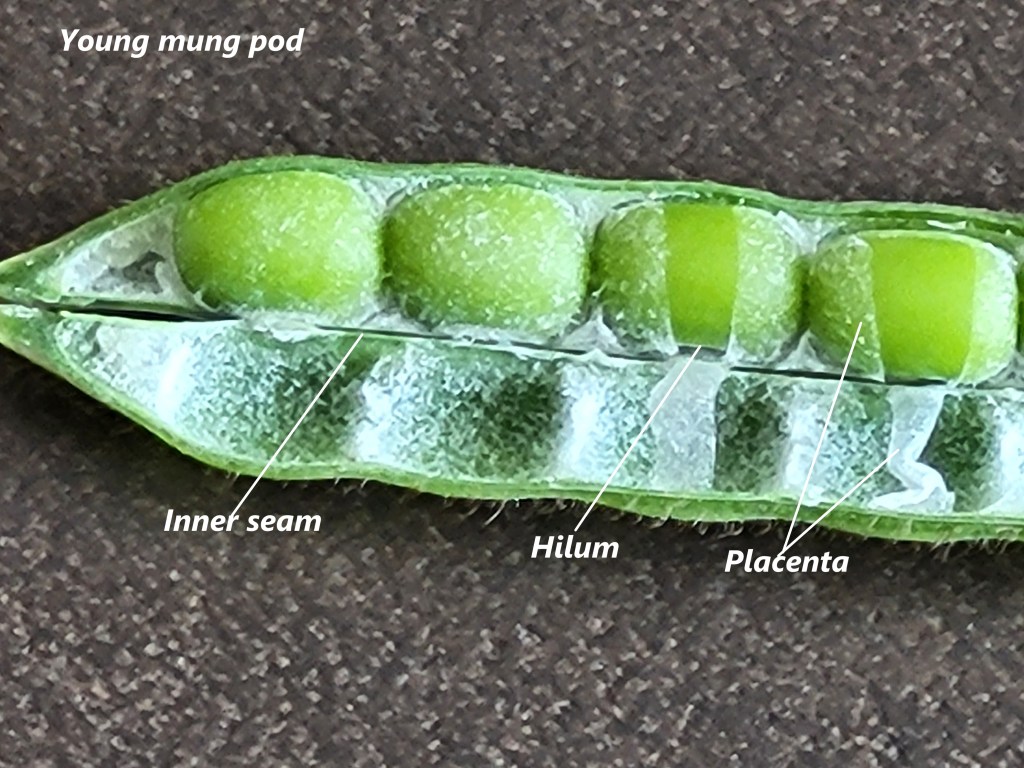
Inside the Pod
A thin membrane called the placenta lines the pod, attaching the seeds to the inner seam. The placenta supplies the seeds with essential nutrients. The point of attachment, where the seed meets the inner seam, is known as the hilum.
As the pod ripens, the plant gradually reduces its nutrient supply, indicated by the pod’s color change from green to yellow and eventually to brownish-black, indicating that the seeds are mature and ready for harvest or dispersal.
Let’s take a closer look at the four pods at different stages:
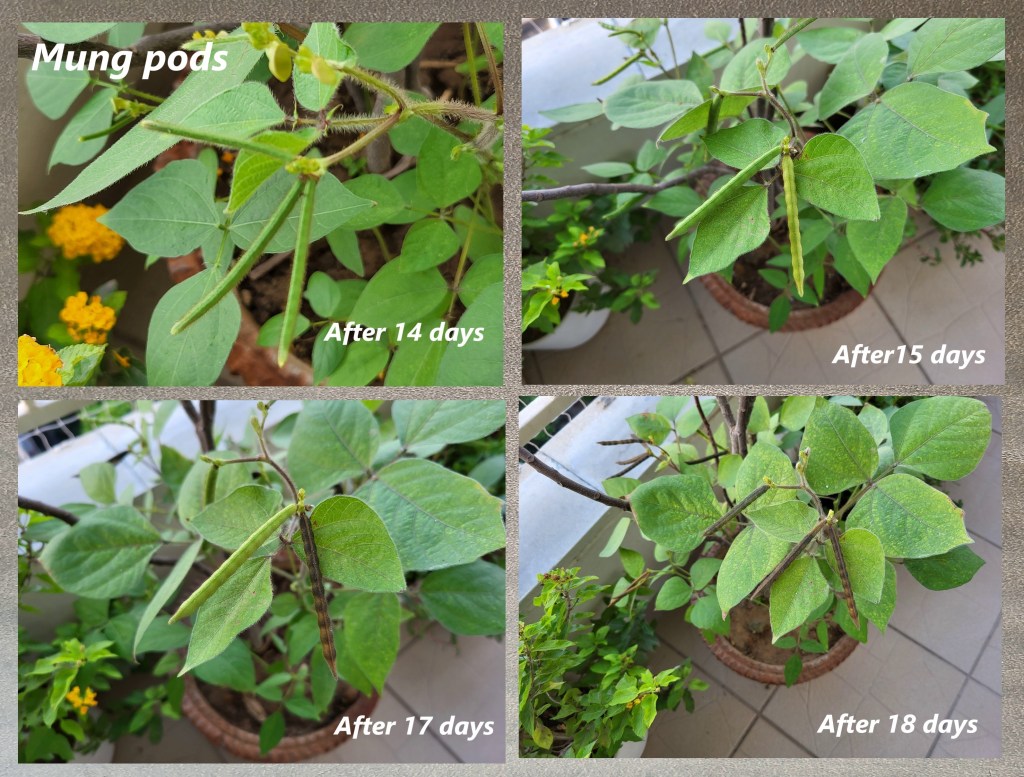
As the seeds inside the pods mature, the green pods turn yellow and eventually brownish-black. This is because the seeds no longer require as much food from the mother plant. The chlorophyll, which gives the pods their green color and helps produce food for the seeds, begins to break down. As the chlorophyll content decreases, the pods change color, revealing other pigments and eventually turning yellow and then brownish-black as they dry out.
Let’s open up the seeds at various stages to take a look inside the pods and see how they’re developing.
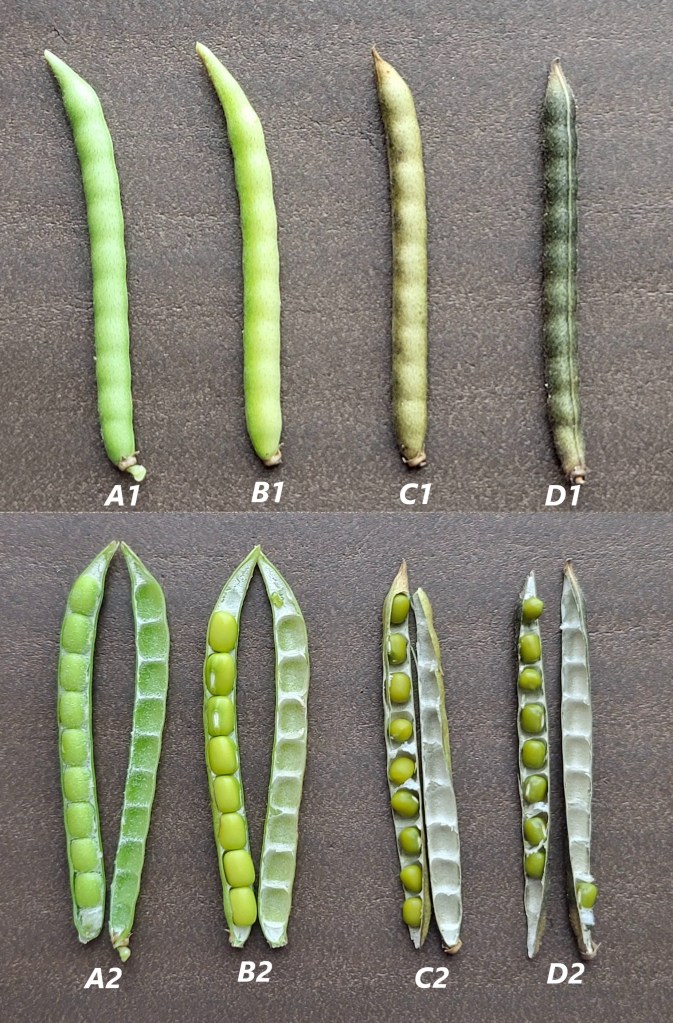
A1 and A2: The green pod contains green seeds that are neatly arranged and attached to the visible membrane (placenta). Upon closer inspection, the membrane is clearly visible, holding the seeds in place.
B1 and B2: The pod has transitioned to a light-yellow color, and the seeds have become brighter green. Notably, the membrane has disappeared, marking a significant change in the pod’s development.
C1 and C2: The pod’s color has shifted to a mix of yellow and black, indicating drying. The green seeds are now prominent, and the membrane is no longer present to hold them in place. The pod has also become slightly difficult to open due to drying.
D1 and D2: The pod has turned darker, almost black, and is dry, making it challenging to slit open. The seeds have matured to a darker olive-green color.
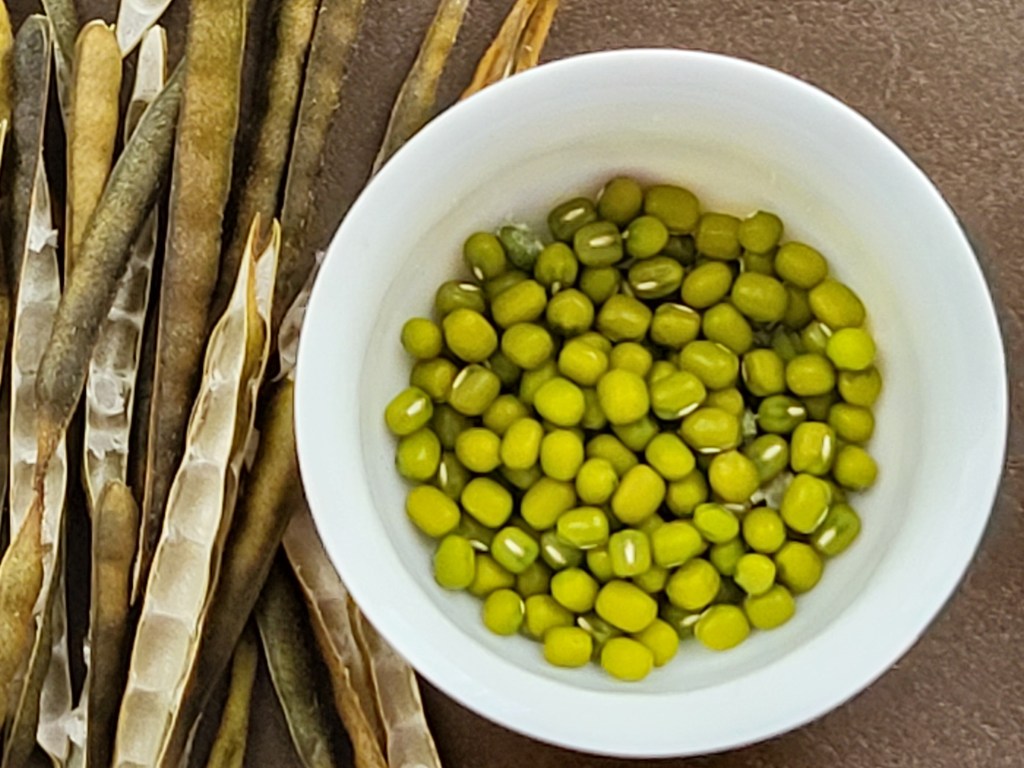
After eagerly awaiting the harvest, we finally collected our mung bean bounty and carefully extracted the seeds
What I love about mung beans is their impressive nutritional profile, soothing taste, and remarkably easy to grow. The plant itself is quite resilient!
If you haven’t already, give mung beans a try – I think you’ll be pleasantly surprised!
Happy reading!
Coming up next …. Mung Bean Leaves: Structure and Growth
*****
 Dal On The Table
Ideal for curious cooks who love understanding the “why” behind the recipe. Beautifully presented as always!
LikeLike
Thank you so much! I’m thrilled to hear that the content resonated with curious persons like yourself. Understanding the “why” behind a recipe can make all the difference in cooking, and I’m glad I could provide that insight. Appreciate your kind words about the presentation too!
LikeLiked by 1 person
Beautifully written! Loved how you described the journey from petals to pods — so natural and inspiring.
LikeLike
Aw, thank you so much, Protima! I’m glad you enjoyed the description. The journey from petals to pods is indeed a beautiful process, and I’m happy to have shared it in a way that inspired you!
LikeLike
Interesting presentation!
LikeLike
Thank you Lita.
LikeLike
👍
LikeLike