
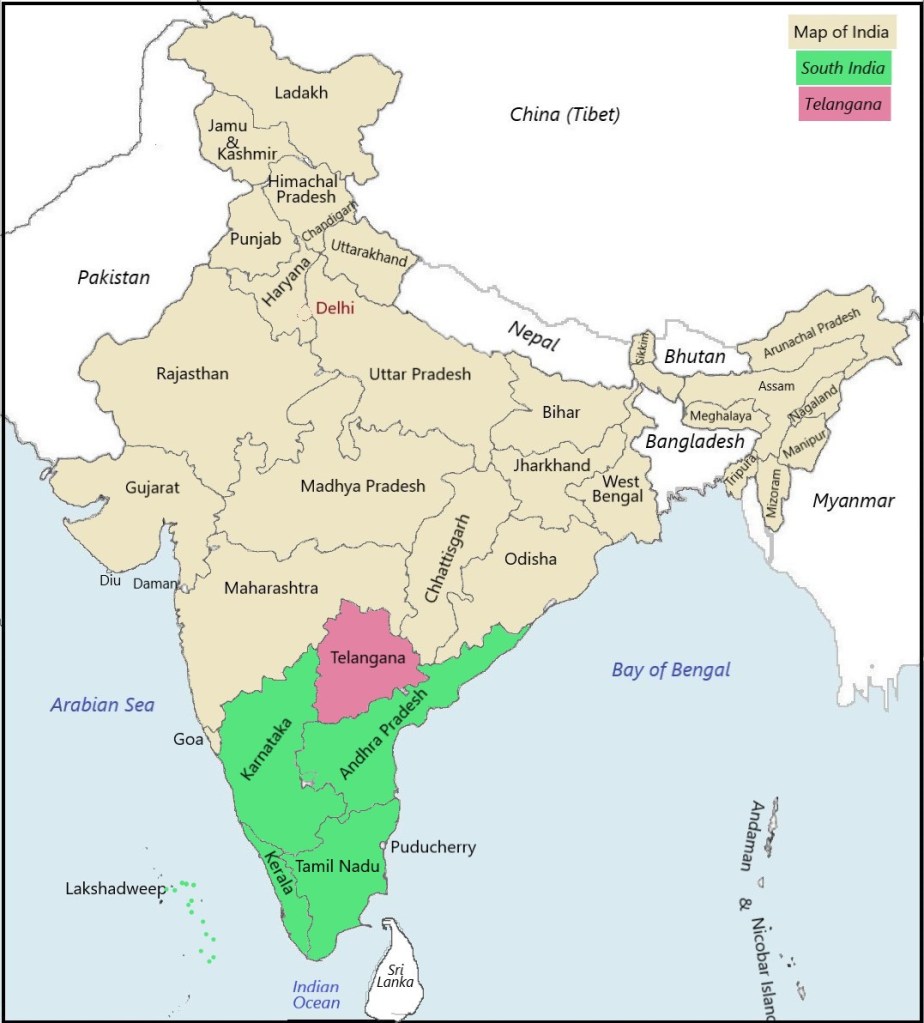
Located in south-central India, Telangana is aptly nicknamed ‘South of North and North of South’. Situated on the Deccan Plateau, it shares borders with Maharashtra and Chhattisgarh to the north, Karnataka to the west, and Andhra Pradesh to the south, east, and northeast. The vibrant city of Hyderabad serves as the capital of Telangana.
Telangana, India’s youngest state, is a treasure trove of history, culture, and natural beauty. It’s home to historic monuments like Golconda Fort and Charminar, and is famous for its pearl and diamond trade. The state is also known for its delicious Hyderabadi cuisine and stunning natural wonders like waterfalls and hills. With its rich handicrafts and thriving IT hub in Hyderabad, Telangana is a unique and fascinating place.

What impressed us most when we visited Hyderabad was the ingenious acoustics of Golconda Fort. This 16th-century fortress boasts a sophisticated sound alarm system, designed by Iranian architect for King Ibrahim Quli Qutb Shah. The dome’s unique architecture amplifies and echoes sound waves, while strategically placed buildings redirect sound to specific locations, secretly alerting the royal family to potential threats. Visit Golconda Fort to marvel at this ancient innovation and uncover the secrets of India’s rich history.
Pulse farming in Telangana
Pulse farming is a significant part of Telangana’s agriculture. The state’s fertile soil and favorable climate make it an ideal location for growing a variety of pulses, including red gram, green gram, and black gram. In fact, Telangana has several initiatives aimed at promoting pulse farming and supporting farmers. These pulses are not only a vital source of protein for the population but also contribute significantly to the state’s agricultural economy
Food:
Telangana’s cuisine is a vibrant reflection of its rich cultural diversity, with rice-based meals being a staple. The region’s bold and spicy flavors, achieved through the liberal use of chilies, turmeric, and coriander, are a hallmark of its culinary tradition. Influenced by Mughal, Turkish, and Arabic cuisines, Telangana’s food scene is a fascinating blend of flavors.
Today, we’ll explore Pesara Pappu, a beloved dal dish from the region. Made with yellow-green moong dal (split and husked), this simple yet delicious recipe displays the essence of Telangana’s culinary heritage.
Pesara Pappu (Moong Dal)
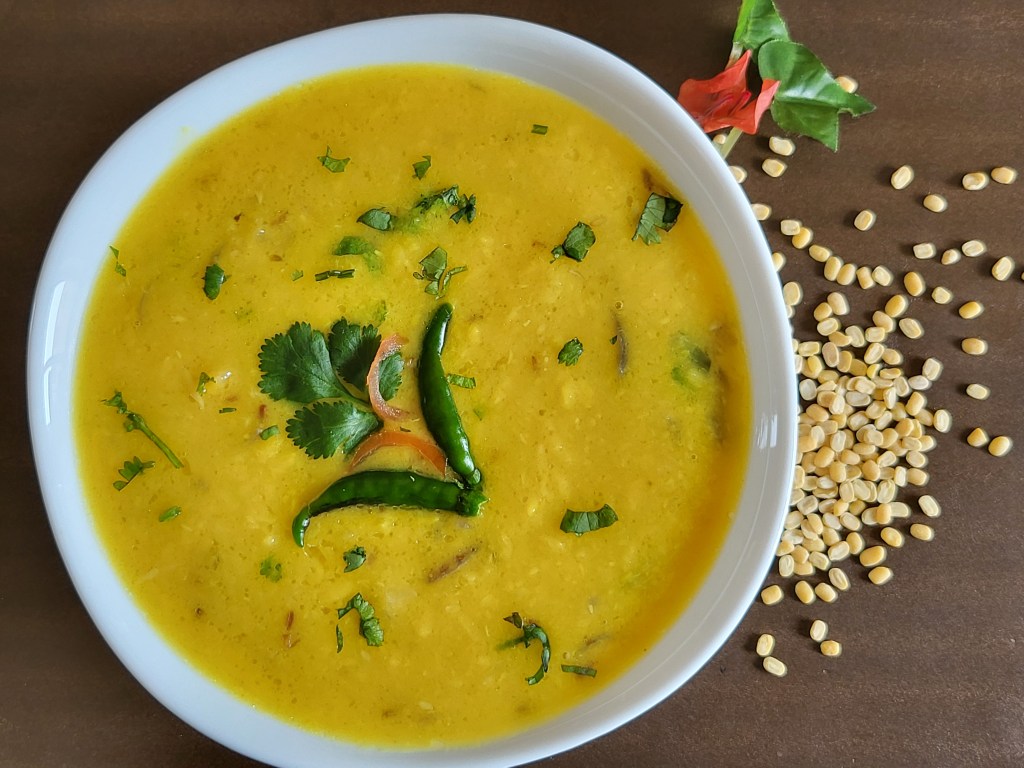
This recipe is remarkably simple, easy to make, and incredibly popular. What’s more, it requires minimal spices – just ginger, garlic, and onion. It’s comforting flavor profile makes it perfect for serving as a warm, soothing bowl of soup.
You need:

100 gm moong dal (split and husked green gram)
2 cups water
½ tsp turmeric powder
1 green chili
½ tsp salt

Tempering
1 tablespoon ghee or oil
1 small onion, chopped
2 cloves garlic, grated
1 inch ginger, grated
1 teaspoon cumin seeds
1 sprig curry leaves
Chopped coriander leaves, for garnishing
Method:

- Wash and soak the moong dal for 10 minutes.

2. Transfer the soaked dal to a pressure cooker.
3. Add salt and turmeric powder to the dal, followed by the washed and stemmed chili.
4. Pour in 2 cups of water.
5. Close the lid of the cooker and cook over high heat. Once the cooker emits one whistle, reduce the flame to a minimum and simmer for 1 ½ minutes.
6. Switch off the heat and let the cooker cool down naturally.

7. Peel and wash the onion, ginger and garlic.
8. Finely chop the onion and grate the ginger and garlic.
9. Wash the curry leaves and coriander.
10. Wash the curry leaves and coriander.
11. Remove the curry leaves from their stem and chop the coriander leaves finely.
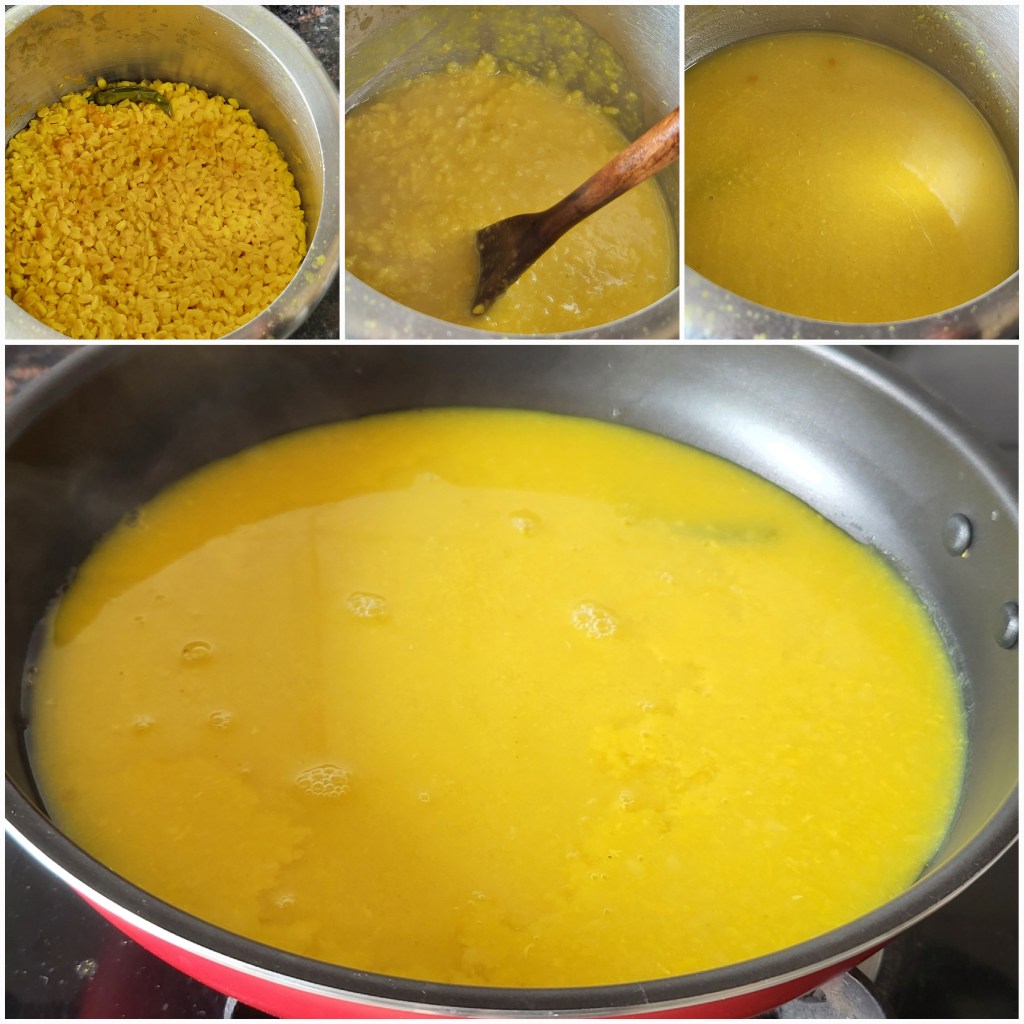
12. Once the pressure cooker has cooled, open it and mash the dal thoroughly.
13. Add 2 cupd of warm water and stir well.
14. Transfer the dal to a larger pan and bring it to a boil.
15. Reduce the heat to a simmer and let it cook gently.
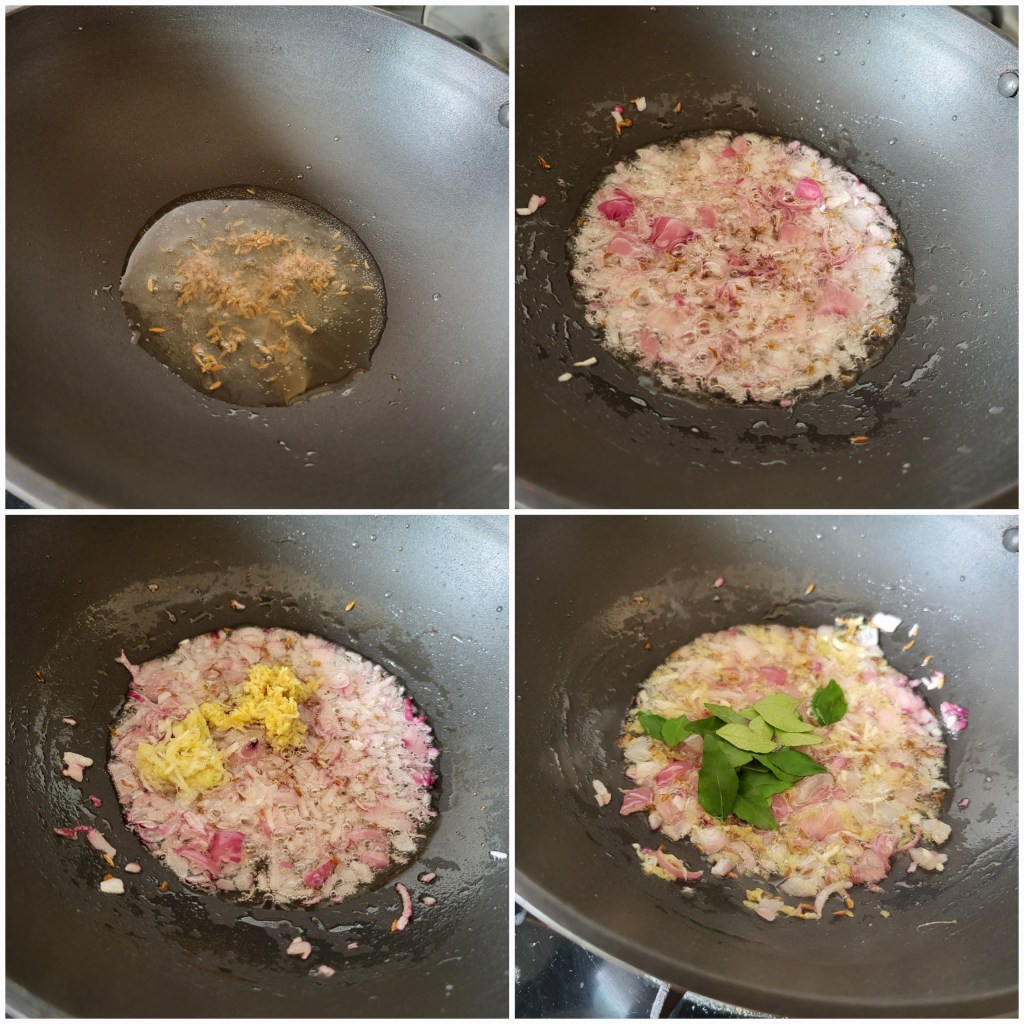
16. Heat oil in a pan over medium heat.
17. Add cumin seeds and let them sizzle for a moment.
18. Add the chopped onion and sauté for a few seconds, until slightly softened.
19. Then, add the grated garlic and ginger, stirring constantly to prevent burning.
20. Add the curry leaves and fry until the onions are translucent.
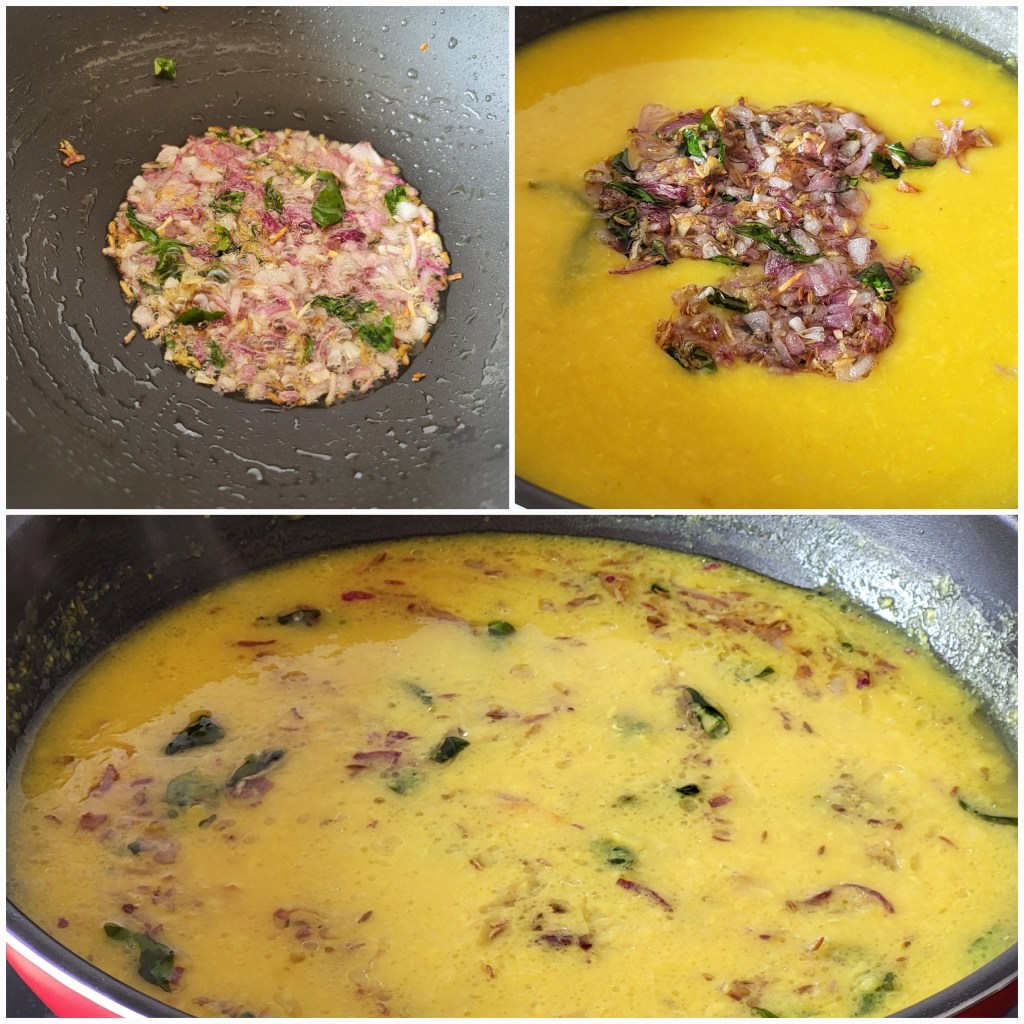
21. Add the fried spices to the dal and mix well.
22. Adjust the salt and the consistence of the to your taste.
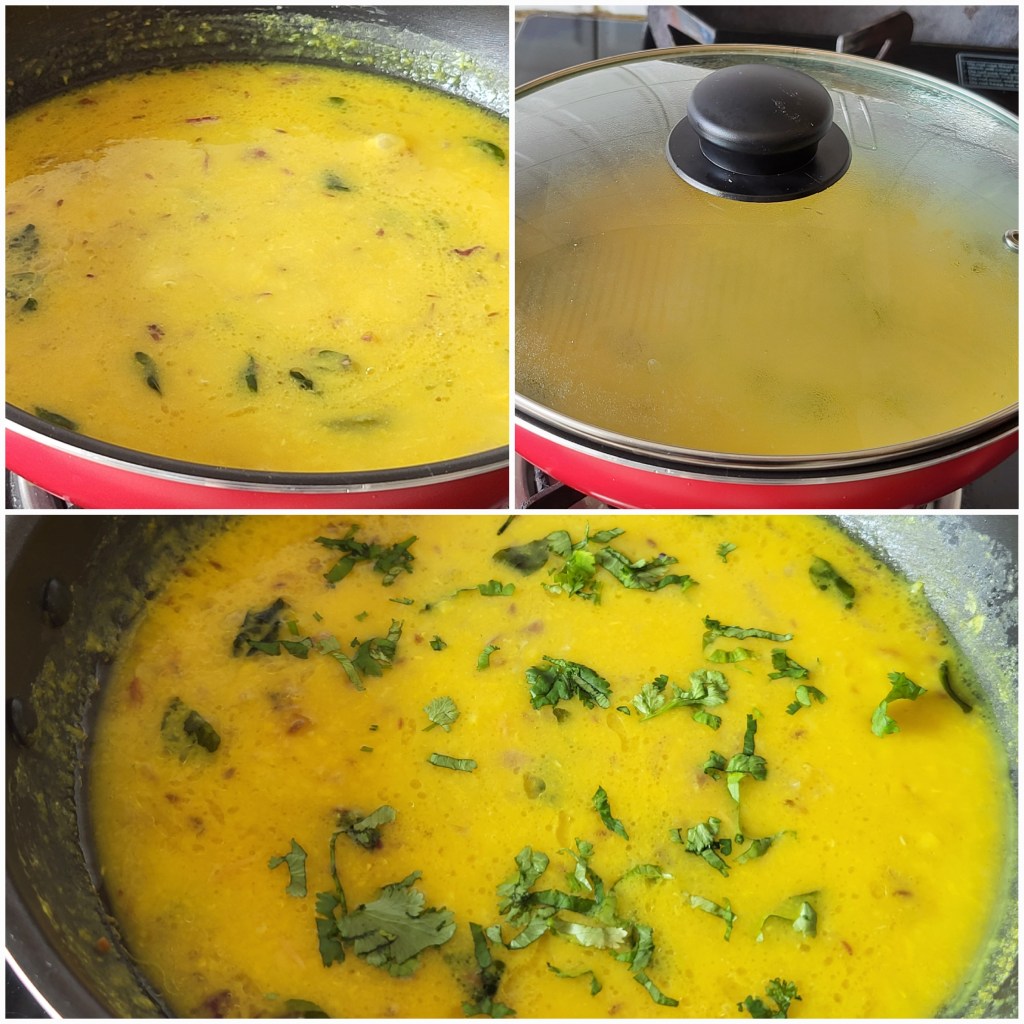
23. Bring the dal to a boil once more.
24. Cover the pan to allow the spices to infuse.
25. Uncover the pan and garnish with chopped coriander leaves.
Serve hot alongside steamed rice or roti. Enjoy your delicious and comforting Pesara Pappu!
Happy Cooking !
Coming up next …………………. Beyond the Dal Recipe…
*****


Tremendous effort, Missy!
You brought all the major dals of India together – truly admire your perseverance and hard work from researching which dal represents the region best, cooking it and documenting each step so lucidly.
LikeLike
Thank you Lita for your big support. I always need it.
LikeLike
Awesome!
LikeLike