

The union territory of Puducherry consists of four regions, namely Puducherry, Karaikal, Yanam and Mahe. All these regions are geographically located separately from each other.

Puducherry and Karaikal are in Tamil Nadu state on the eastern coast and surrounded by Bay of Bengal, while Yanam is also in the eastern coast of Andhra Pradesh and surrounded by Bay of Bengal. Mahe is on the western coast of Kerala state and surrounded by Lakshadweep Sea, which is a part of the Arabian Sea.
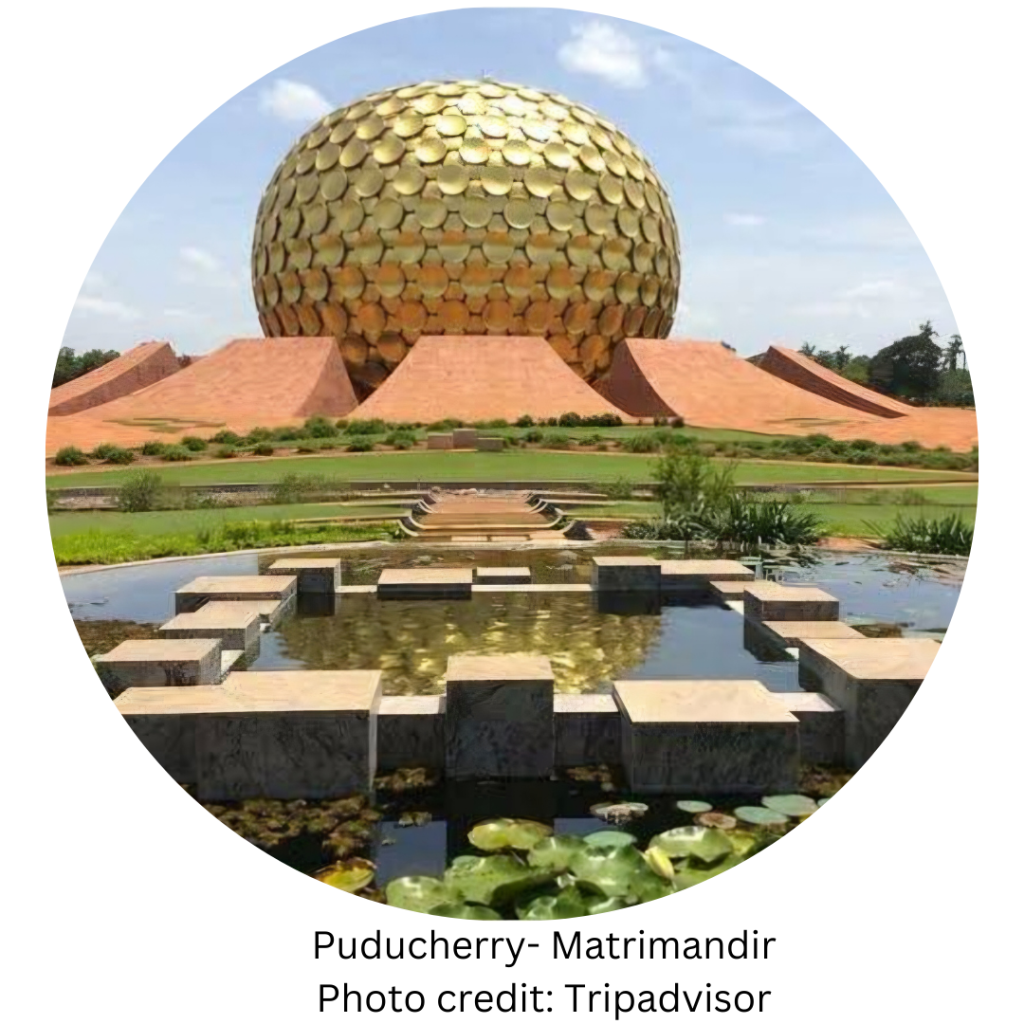
Puducherry is inTamil Nadu on the eastern coast and surrounded by Bay of Bengal. It was a French colonial settlement established in 1674 known as Pondicherry then. The French East India Company founded the city, and it became a major trading center. Over the years, Pondicherry changed hands several times, with the British and Dutch competing for control.
However, the French ultimately maintained their hold until India gained independence in 1947. Pondicherry officially became part of India in 1954.
Pulse farming in Puducherry
Puducherry is a significant producer of pulses, particularly black gram, green gram, and cowpea. The region has fertile soil and favorable climate.
Food
The culinary landscape of Puducherry is a fascinating blend of French, Tamil, and Telugu flavors. Rice and seafood form the backbone of the local cuisine, while vegetarian options abound, displaying a good range of lentils, vegetables, and fruits.

Karaikal is also inTamil Nadu on the Coromandel Coast. In 1739, the French established it as trading post which eventually grew into a full-fledged town. It remained under French control until 1954 before becoming a part of Indian Union territory.
Pulse farming in Karaikal
Karaikal is known for its cultivation of black gram, green gram, and horse gram. The region relies on rain-fed irrigation which impact pulse yields during drought years.
Food
Karaikal’s cuisine is deeply rooted in Tamil traditions, with seafood being a staple ingredient.

Mahe is on the western coast (Malabar) of Kerala state and surrounded by Lakshadweep Sea, which is a part of the Arabian Sea. It was a French trading post established in 1721. The French built a fort and a town, which became an important center for the export of spices, particularly pepper. Mahe remained a French enclave until 1954, when it joined the Indian Union.
Pulse farming in Mahe
Mahe’s pulse cultivation is mainly focused on black gram, green gram, and cowpea. The region has limited land and has high labor costs.
Food
Mahe’s gastronomic identity is shaped by Malayali and French influences, with seafood playing a starring role.
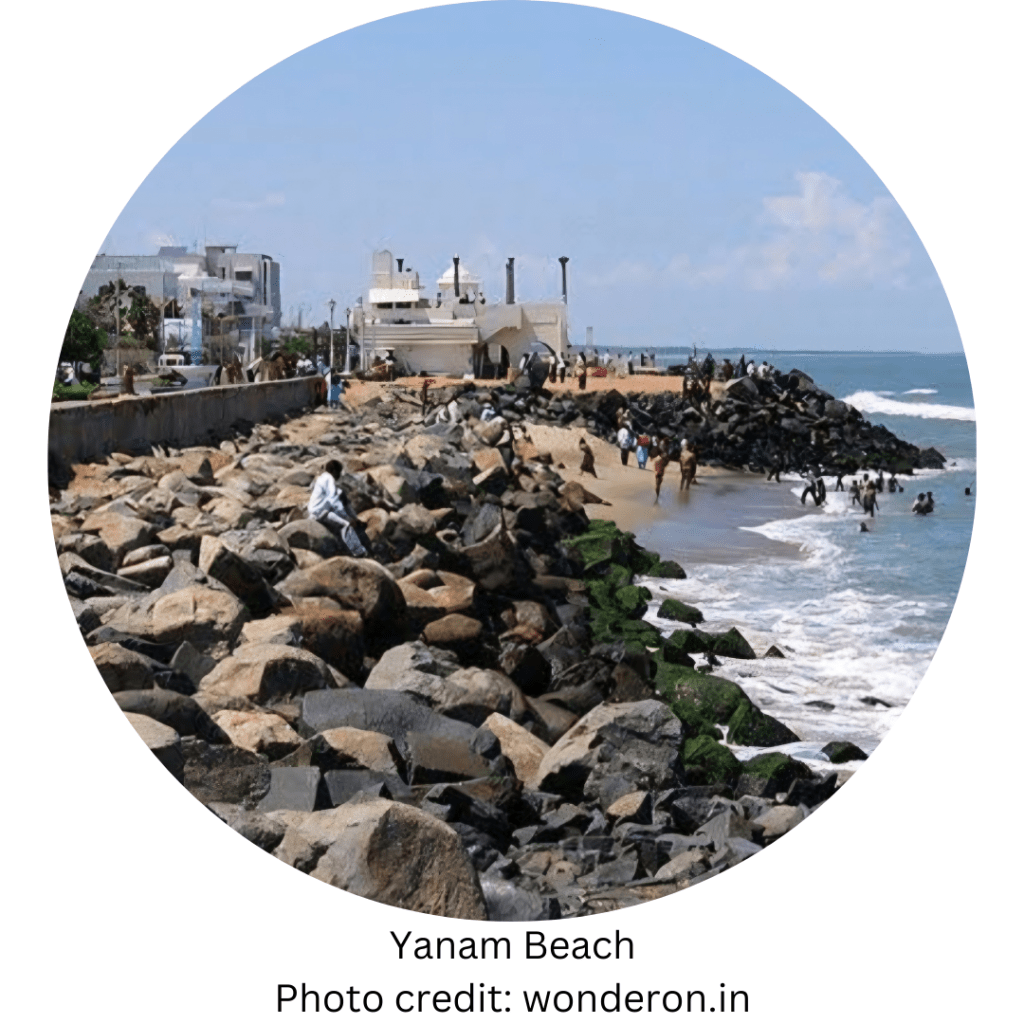
Yanam, located in the Godavari delta region, was a French colonial outpost established in 1723. It was a major center for the production and export of salt, rice, and other commodities. The town remained under French control until 1954, when it, along with the other French enclaves in India, became part of the Indian Union.
Yanam is a significant producer of black gram, green gram, and horse gram. Here the farmers rely on canal irrigation.
Food:
Yanam’s cuisine is characterized by its strong Telugu heritage, with seafood featuring prominently.
Today, we’re excited to share with you a classic Puducherry Sambar, crafted in the distinctive style of this captivating region.
Puducherry sambar

Puducherry sambar is a remarkably flavorful and aromatic sambar recipe. What sets it apart is the distinct blend of spices, which lends it a unique character that distinguishes it from other sambar recipes.
You need:

For the dal
150 gm toor dal
½ tsp turmeric powder
½ tsp salt
Ingredients to be added to the cooked dal

1 medium size tomato
1 medium size onion
2-3 clove of garlics
150 gm pumpkin (you can add any vegetable of your choice)
1 small size lemon Tamarind
1 tsp jaggary powder
2 tsp samber powder
1 tbsp refined oil

Sambar masala (Roast and grind)
1 tsp peppercorn
1 tsp cumin seeds
1 red chilies
1 sprig of curry leaves

Tempering:
1 tsp black mustard
1 sprig of curry leaves
2 Green chilies
1 tbsp refined oil
Method:
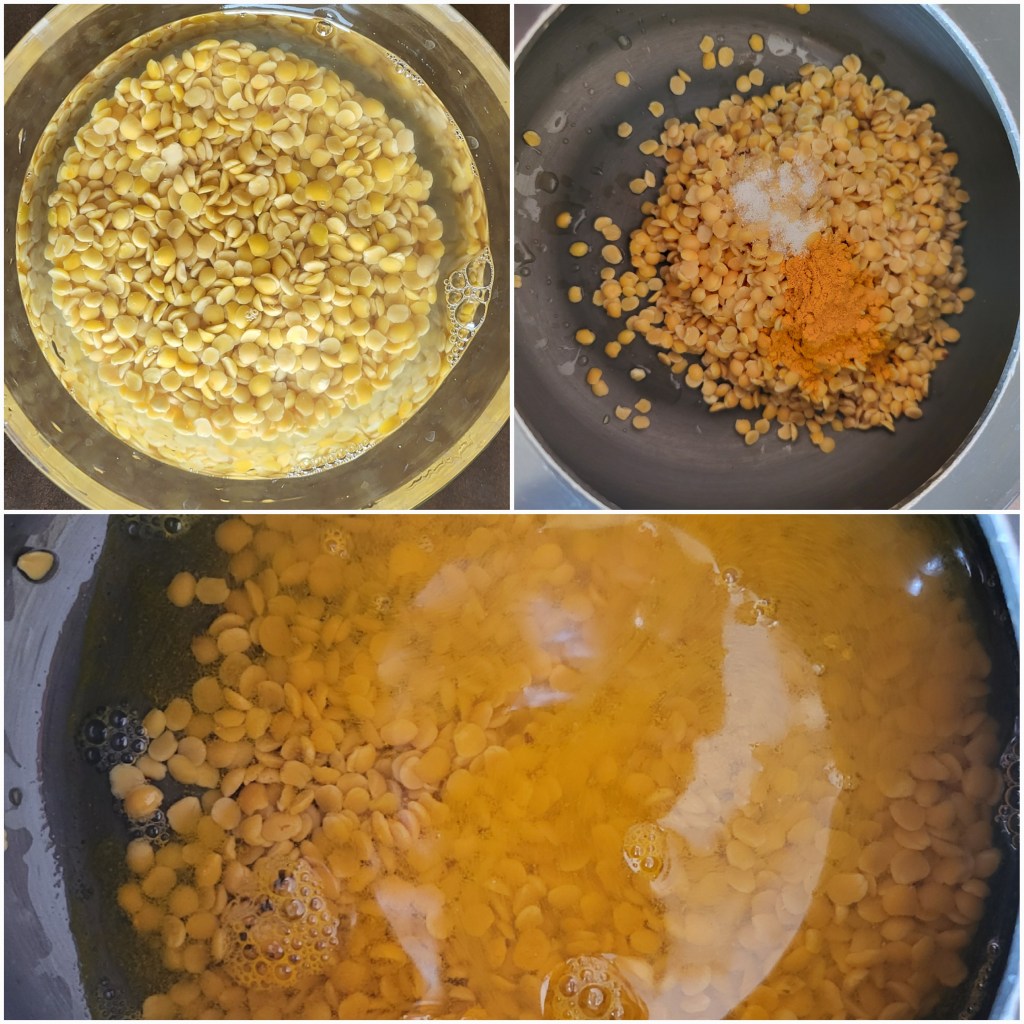
- Wash and soak the dal for about 10 -15 minutes.
- Transfer the dal to the pressure cooker.
- Add salt and turmeric. Add 1 cup of warm water.
- Cook on high heat till the first whistle, then reduce heat to minimum and cook for 2 minutes more. Let the cooker cool by itself.
While the dal cooks, let’s prepare the additional ingredients.

5. Soak 1 teaspoon of jaggery and a small lemon-sized piece of tamarind in hot water for about 15 minutes.
6. Once the water cools, squeeze out the tamarind juice and set it aside.

7. Finely chop the fresh tomatoes after washing them.
8. Wash and prep the pumpkin by removing the seeds, but leave the tender skin intact – it helps maintain the shape of the pumpkin pieces during cooking.
9. Peel, wash, and chop the onion, and grate the garlic.
For the masala

10. Heat a pan over medium heat. Roast the peppercorns, cumin seeds, dried red chilies (seeds removed), and curry leaves until the curry leaves turn crispy.
11. Remove the pan from the heat and let it cool.
12. Then, grind the roasted spices into a fine masala and set it aside.

13. Once the pressure cooker has cooled, stir the dal until it reaches a mushy consistency.
14. Add about 1 cup of warm water and set aside.
To bring out the full flavor of the dal, we’ll sauté the vegetables briefly. Simply boiling them can result in a slightly bland taste.

15. Heat oil in a large pan over medium heat.
16. Sauté the onions for a few seconds, followed by the grated garlic.
17. Add the tomatoes and sauté until they’re softened

!8. Add the pumpkin pieces and a pinch of salt.
19. Mix well, cover the pan, and let the pumpkin cook partially, stirring occasionally.

20. Once the pumpkin pieces are partially cooked, add 2 tsp of the ground masala and the tamarind water and mix well.
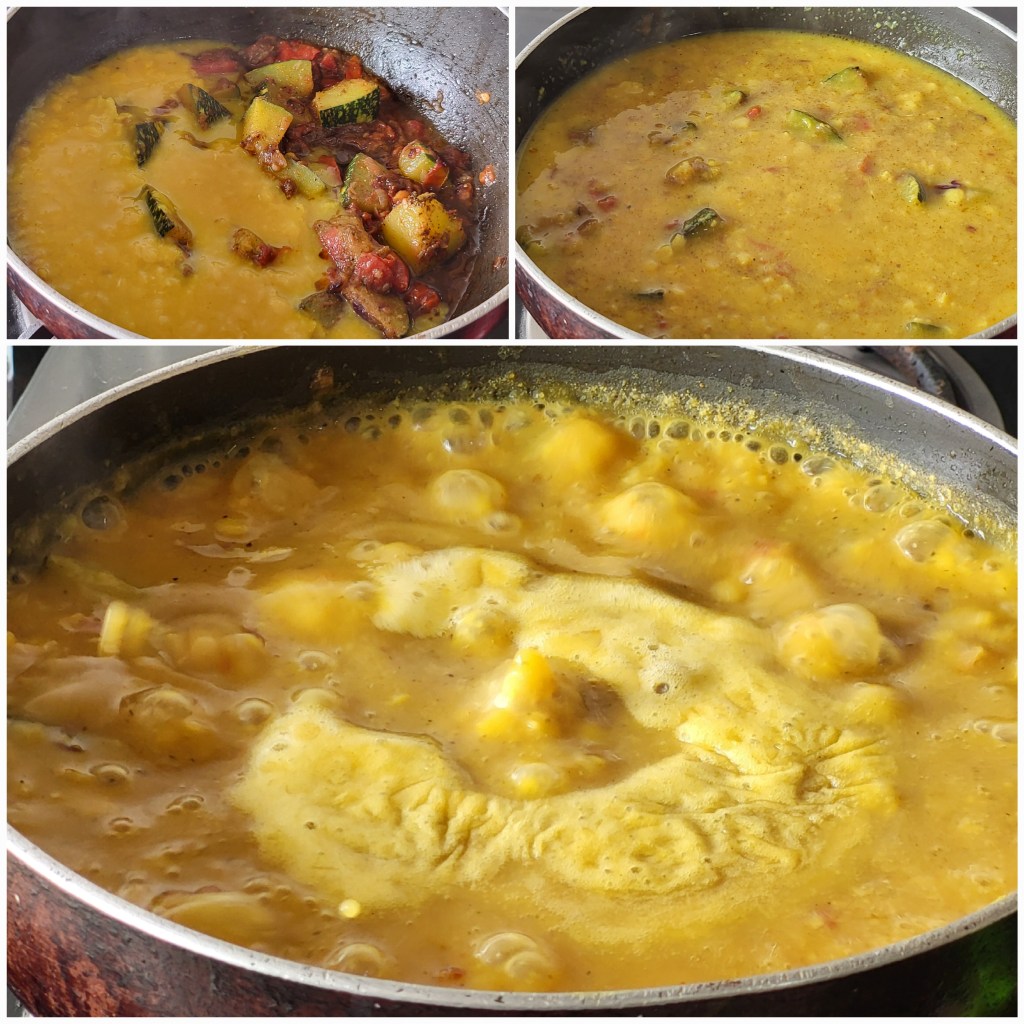
21. in the cooked dal.
22. Add a little warm water to achieve your desired consistency.
23. Bring it to boil and cook for about 2 minutes

24. and slit the top of the chilies.
25. Wash and remove the curry leaves from the stem.

26. Heat 1 tablespoon of refined oil in a pan over medium heat.
27. Once hot, add the mustard seeds and let them splutter.
28. Add the split green chilies and curry leaves, sautéing for a few seconds.

29. Pour the tempering mixture over the cooked dal and gently stir.
30. Cover for a minute to allow the flavors to infuse. Serve hot with rice or idli – it’s absolutely delicious! Give it a try and experience the flavor for yourself.
Happy Cooking !
Coming up next………………Dal from Tamil Nadu
******


I must try this as it has curry leaves added twice…curry leaves till late I never knew the benefits of curry leaves…
Seems delicious 😋
LikeLike
Thank you .
LikeLike
Thank you so much Madhu.
LikeLike