

Kerala is located in the southwestern region of Inda. It is bordered by Tamil Nadu to the east, Karnataka to the north and Arabian Sea to the west. Thiruvananthapuram (also known as Trivandrum) is the capital of Kerala.
Kerala is a tropical paradise renowned for its breathtaking natural beauty, rich cultural heritage, and warm hospitality. Dubbed “God’s Own Country,” Kerala is a treasure trove of lush green landscapes, meandering backwaters, rolling hills, and pristine beaches. The state’s diverse landscapes offer a unique merger of adventure, relaxation and spirituality, from the tranquil tea plantations of Munnar to the vibrant city life of Kochi, and from the majestic elephants of Thekkady to the serene waterways of Alleppey. Furthermore, Kerala is also the birthplace of Ayurveda, the ancient Indian system of traditional medicine, which has been an integral part of the state’s culture and heritage for centuries.

Kerala has many interesting, vibrant and diverse festivals which are definitely worth experiencing! Onam, is one of the most iconic festivals. It is held annually over 10 days, to mark the Malayalam New Year and also their harvest festival. It also commemorates the homecoming of King Mahabali, a legendary ruler who brought peace and happiness to his kingdom.
During Onam, Keralites adorn their homes with intricate flower arrangements, known as “pookalam,” and indulge in traditional delicacies like “sadya,” a sumptuous feast served on banana leaves. The festival also features traditional dances, music, and games, culminating in a grand finale of fireworks, processions, and merriment.
Pulse farming in Kerala
Pulse farming is a vital part of Kerala’s agriculture, with main crops including black gram, green gram, cowpea, horse gram, and pigeon pea. These crops are typically sown during the southwest monsoon season and harvested during the post-monsoon period. To overcome challenges like low productivity and inadequate irrigation, the government is supporting farmers in adopting sustainable and organic practices, ultimately enhancing their income and livelihoods.
Food:
Kerala’s cuisine is a unique blend of traditional, cultural influences and geographical location. Rice is the staple food, often served with a variety of side dishes, including lentils, vegetables, and seafood. Coconut and spices are fundamental ingredients in Kerala’s cooking.
Today, we’re going to prepare Parippu Curry, a classic Kerala dish. “Parippu” means lentils in Malayali. For Parippu curry, normally split moong dal is used, but one can use any other dal of one’s choice.
Parippu Curry
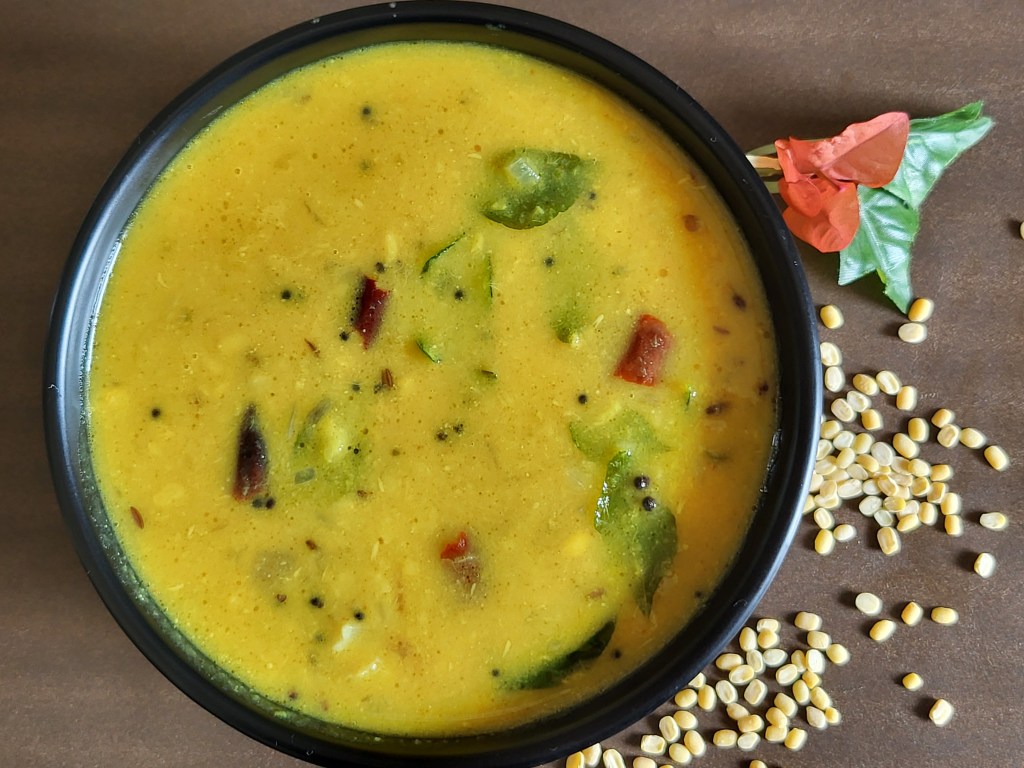
The moong dal cooks smoothly and blends well with coconut milk, making the dish creamy and slightly nutty. The spices add a mild and sweet flavor, making the curry comforting and delicious. I loved cooking this dish and hope you’ll enjoy it too!
You need:
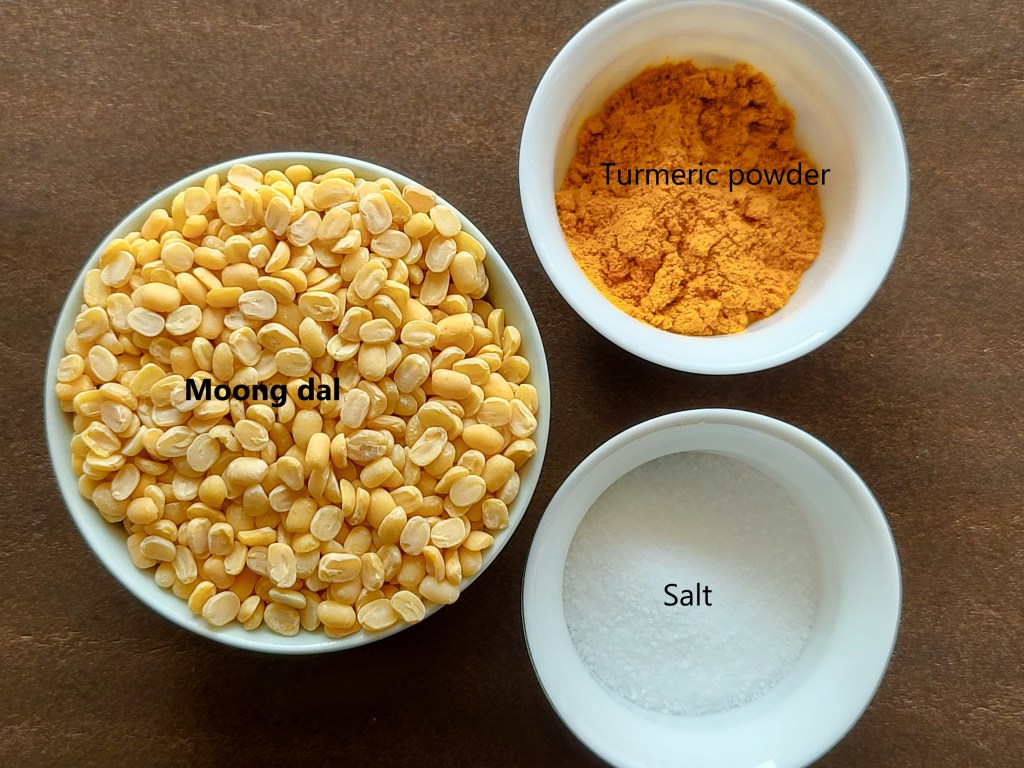
For the dal:
100 gm moong dal
¼ tsp turmeric powder
½ tsp salt

To be added to the cooked dal:
1/4 cup coconut milk

For tempering:
1 tbsp ghee (clarified butter)/ refined oil
½ tsp cumin seeds
½ tsp rai seeds/mustard seeds
¼ tsp red chili powder
2 dried red chilies
2 green chilies
1 medium size onion
1 sprig curry leaves
Method:

- Wash the dal and transfer it to a pressure cooker.
- Add turmeric powder and salt. Add just enough water to cover the dal.
- Place the cooker on the stove and cook on high heat until you hear the first whistle. Then, reduce the flame and cook for another 1.5 minutes.
- Switch off the heat and let the cooker cool down naturally.

5. Open the cooker and stir in the coconut milk.
6. Add a little water to achieve your desired consistency.
7. Simmer the mixture for 2-3 minutes, stirring occasionally to prevent the dal from sticking to the bottom of the pan.

Prepare the following ingredients on a plate as follows:
8. Wash and chop the green chilies.
9. Wash and pluck curry leaves.
10. Peel, wash and chop the onion finely.
11. Break the dried red chilies into smaller pieces and remove the seeds.

12. Heat oil in a pan over medium heat.
13. Once the oil is hot, switch off the flame.
14. Immediately add the rai seeds and let them splutter.
15. Add the cumin seeds, followed by the green chilies and curry leaves.
16. Sauté for a few seconds, until the mixture becomes fragrant.
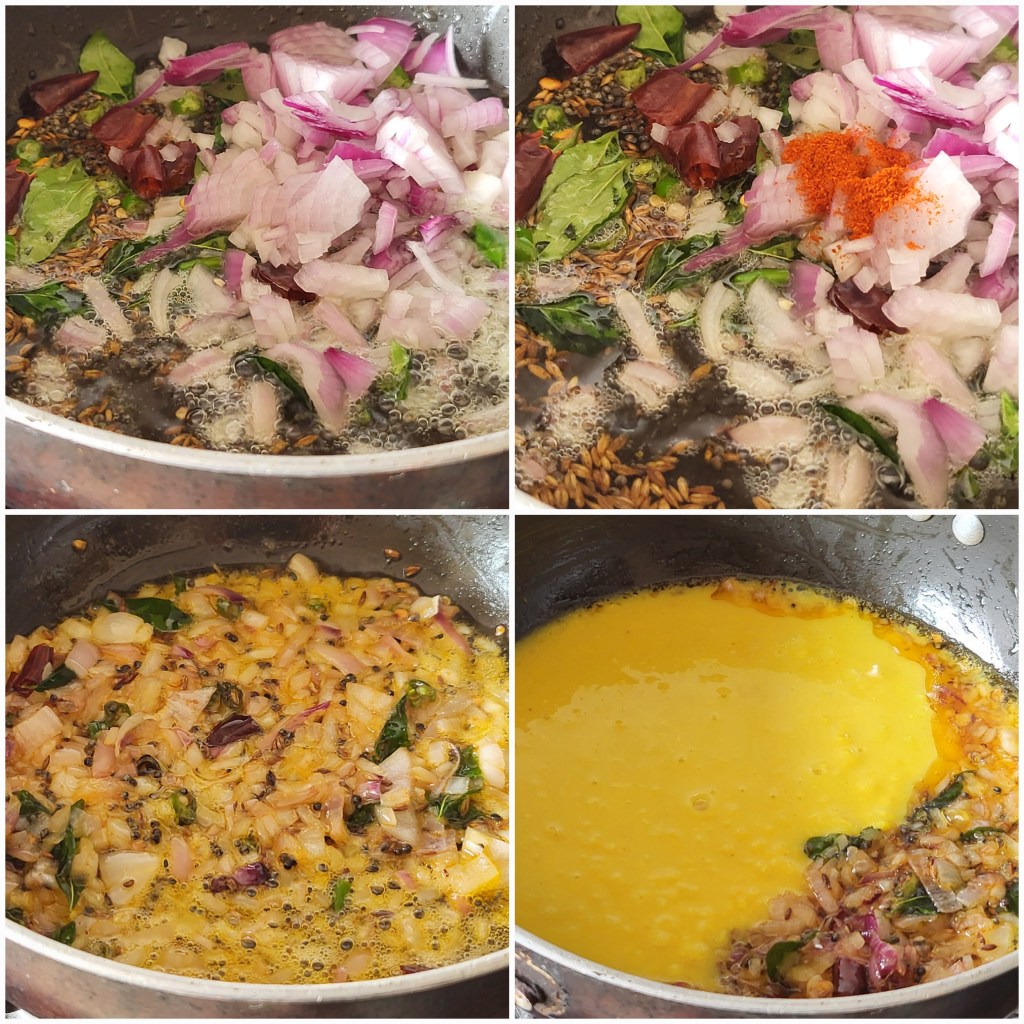
17. Add the chopped onion and red chili powder to the pan, mixing well.
18. Saute until the onion turns golden brown.
19. Then, stir in the cooked dal, combining it with the onion mixture.
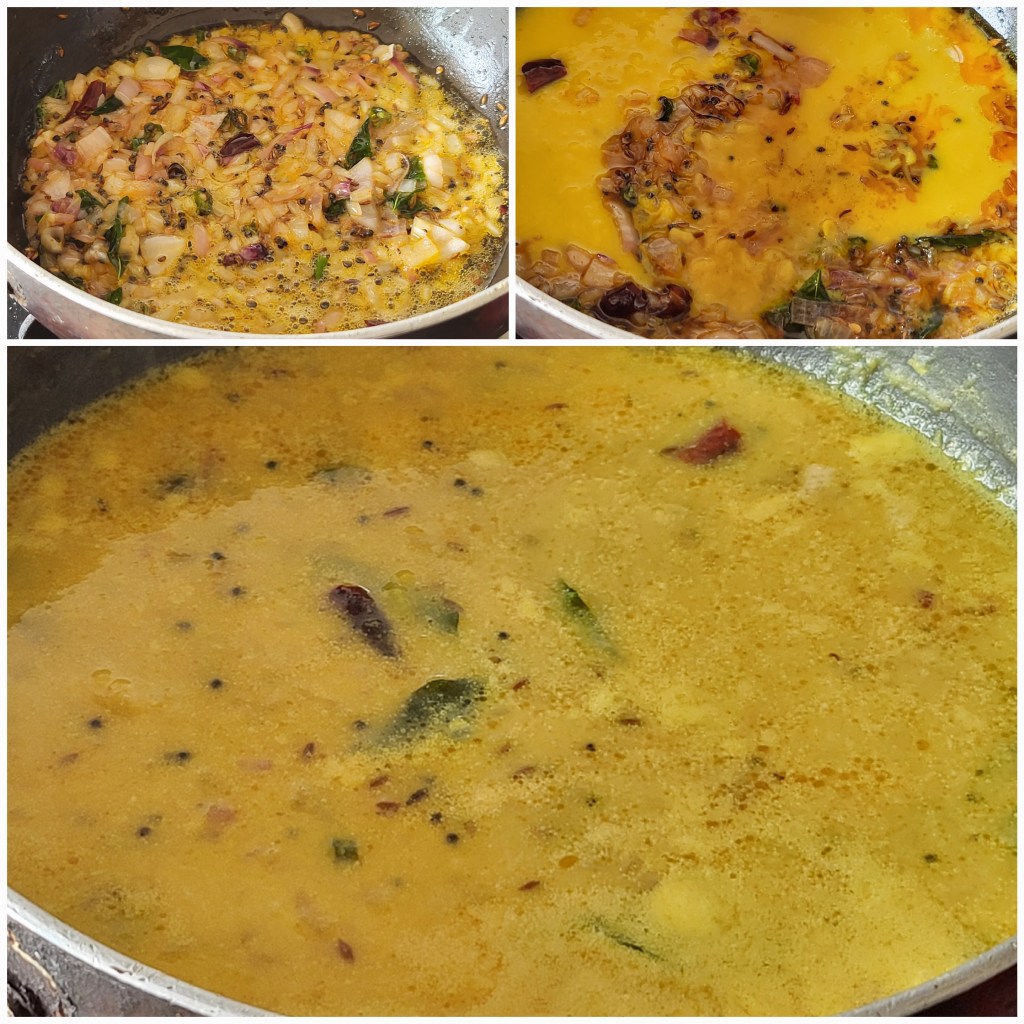
20. in the fried spices and cover the pan for a few minutes, allowing the flavors to meld together.
21. Serve the Parippu curry hot with steamed rice and enjoy!
Happy cooking !
Coming up next ……………Dal from Lakshadweep
******
 Dal On The Table
very simple & delicious recipe 😋
LikeLike
Thank you Protima.
LikeLike