
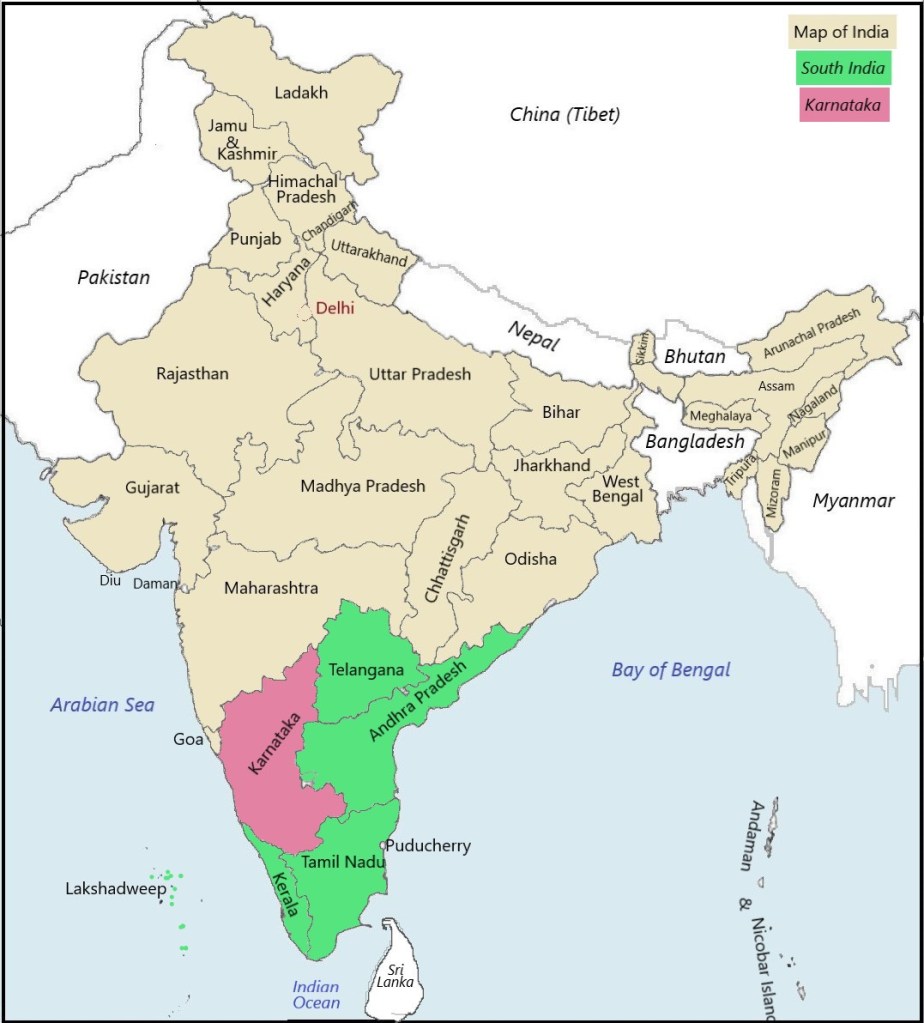
The state of Karnataka is in southwest India. Its capital is Bengaluru (formerly Bangalore). Karnataka was earlier known as Mysore state.
The state is bordered by Lakshadweep-sea to the west, Goa to the northwest, Andhra Pradesh to the east, Tamil Nadu to the southeast and Kerala to the southwest.
Karnataka is known as the “Silicon Valley of India.” The state effortlessly blends tradition and innovation creating a beautiful cultural landscape. Beyond its successful tech industry, the state also displays its impressive cultural heritage through its stunning temples, majestic monuments, and the iconic Mysore Palace. The exquisite temples of Belur and Halebidu exemplify Karnataka’s rich heritage, featuring intricate carvings and masterful architecture. Moreover, the state’s diverse wildlife sanctuaries and national parks offer a glimpse into its stunning natural beauty, making Karnataka a treasure trove of diversity and wonder.
Festivals of Karnataka:
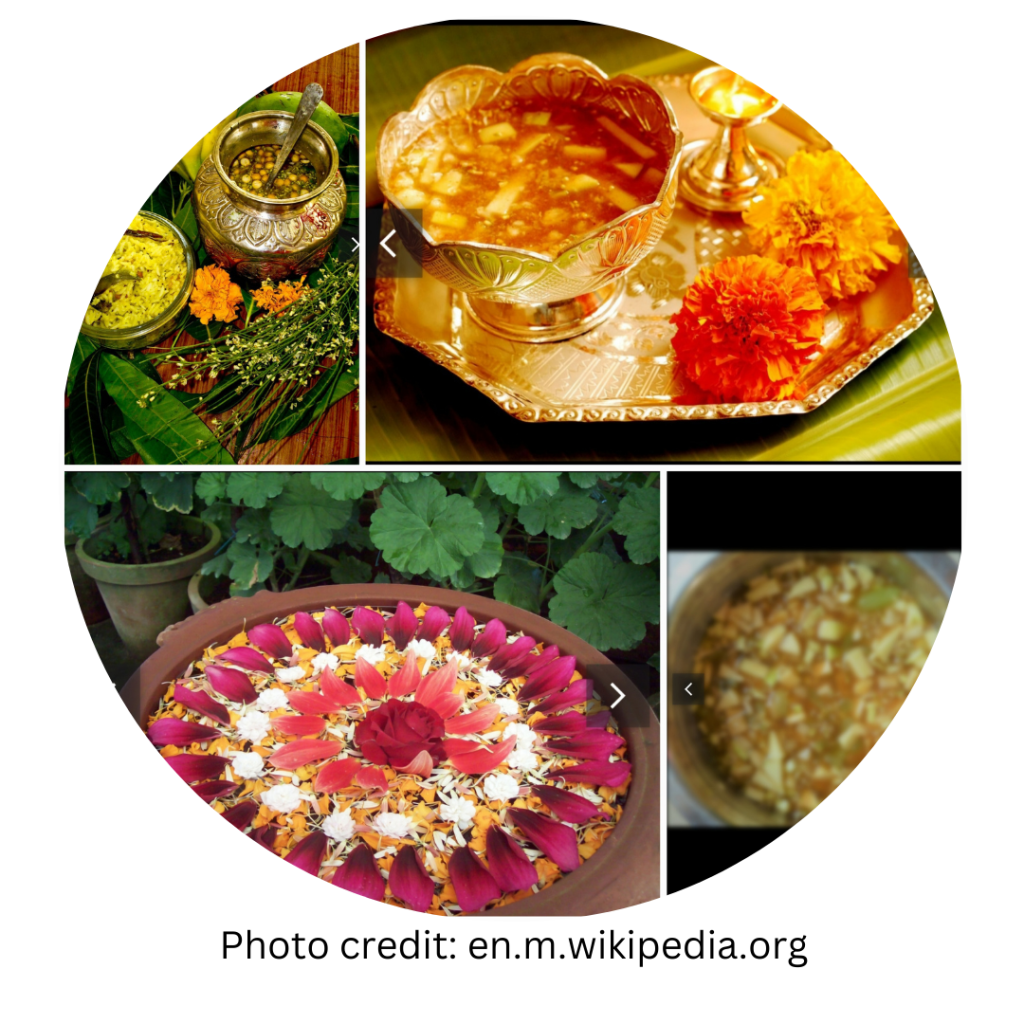
Yugadi, also known as Ugadi, heralds the arrival of the Kannada New Year, typically celebrated on the first day of the Chaitra month, which usually falls in March or April. This significant festival in Karnataka marks the beginning of a new cycle, filled with hope, renewal, and joy. As the festivities unfold, homes are meticulously decorated, and people adorn themselves in new attire, symbolizing a fresh start.
The exchange of gifts adds to the merriment, while traditional delicacies like pachadi, a sweet and sour dish crafted with raw mango, jaggery, and neem flowers, and holige, a sweet flatbread, are carefully {since you used meticulous earlier] prepared and shared with loved ones, strengthening bonds and creating lasting memories. As the celebrations reverberate across Karnataka, the atmosphere is filled with laughter, music, and an unwavering sense of community.
Pulse farming in Karnataka
Karnataka plays a vital role in India’s pulse production, contributing around 15% to the country’s overall pulse production. The main pulse crops grown in Karnataka are: Toor (Red gram), Bengal gram (Chickpea), Green gram (Mung bean), Black gram (Urad) and Cowpea. These crops form a significant part of Karnataka’s agricultural landscape.
Food
Karnataka claims one of India’s oldest and most enduring culinary traditions. The state’s diverse cuisine is a vibrant tapestry of regional and cultural influences, woven together by various communities and geographic areas. This rich culinary heritage encompasses a wide range of vegetarian and non-vegetarian dishes. In the coastal regions, seafood and rice are staples, while lentils, vegetables, coconut, tamarind, chilies, and jaggery are essential ingredients that add depth and flavor to Karnataka’s distinctive cuisine.
Let’s Explore a Karnataka classic recipe – Muddi Palya. It is a traditional recipe widely enjoyed in Karnataka and also other parts of South India. In Kannada, “Muddi Palya” roughly translates to: “Muddi” means “lump” or “mash” and “Palaya” means “side dish”.
So, Muddi Palya refers to a mashed side dish, which accurately describes the recipe’s consistency and preparation!
Muddi Palya
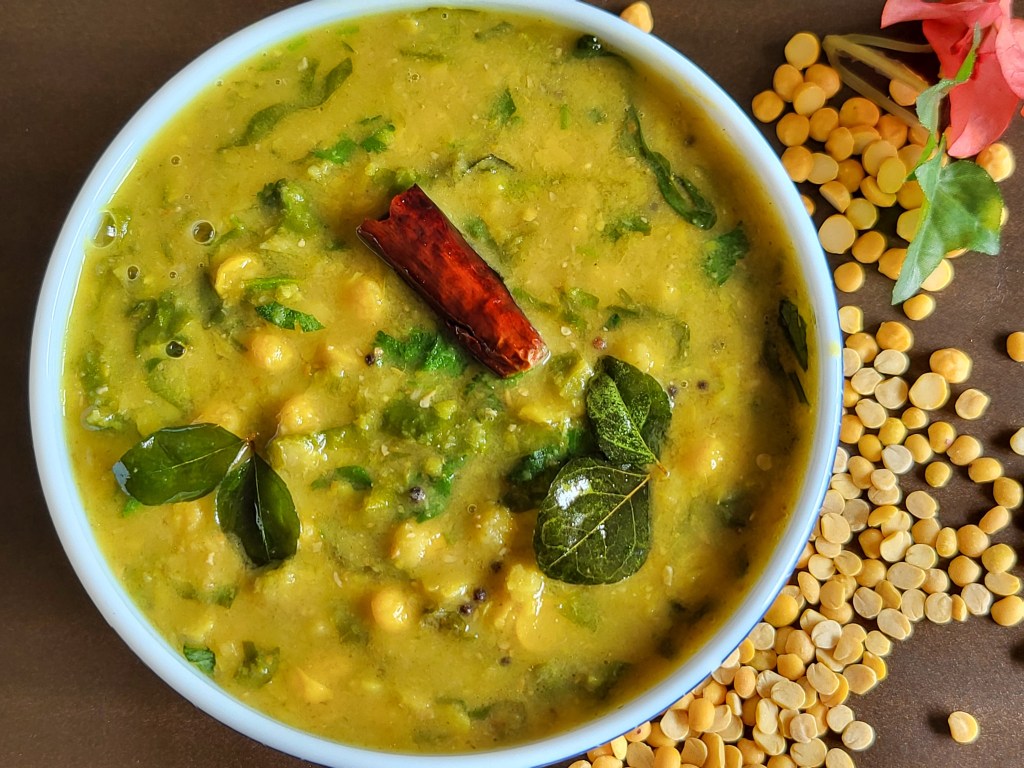
Muddi Palya is a most loved and traditional South Indian dal dish, cherished for its exceptional nutritional value and delectable flavor. Typically served as a side dish, it pairs perfectly with rice, roti or idli. This iconic dal recipe is a staple in Karnataka and is widely savored throughout South India.
You need:

For the dal:
100 gm toor dal
25 gm chana dal
¼ tsp turmeric powder
½ tsp salt
To be added to the cooked dal:
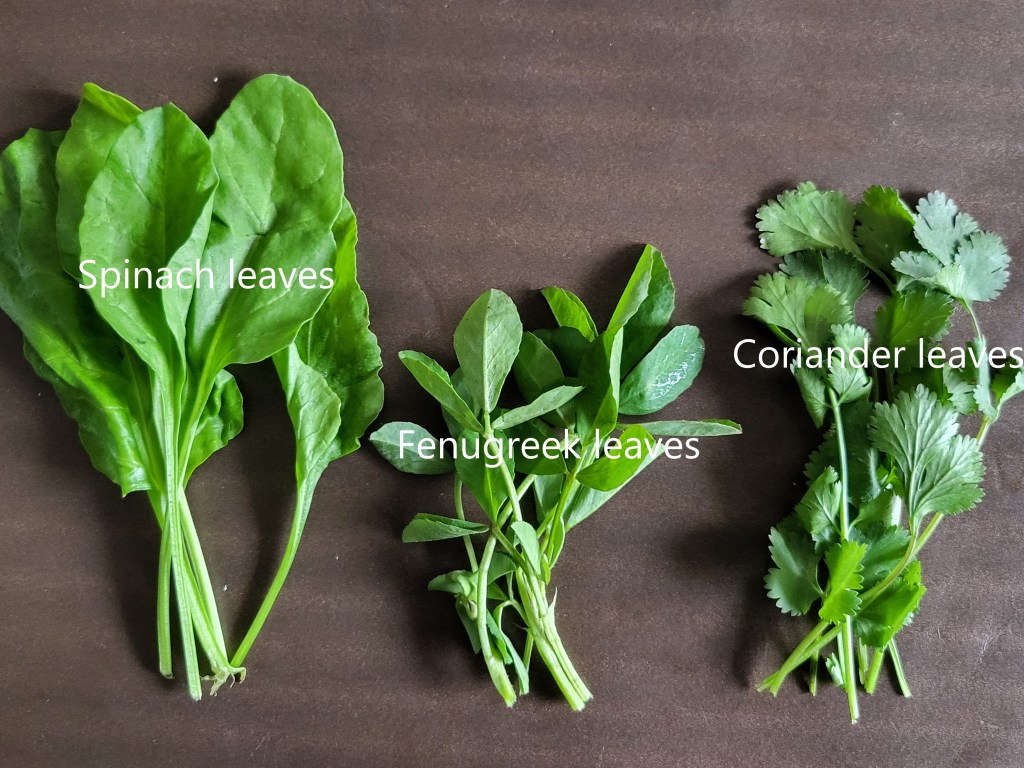
1 ½ cups finely chopped spinach
1 tbsp finely chopped fenugreek leaves (optional)
1 tbsp finely chopped coriander leaves

To be grounded:
2 tbsp grated coconut
½ inch ginger piece
1 green chilies
1 sprig of curry-leaves
1 tsp jeera seeds
2 tsp coriander seeds
A small marble size tamarind

For tempering:
2 tbsp refined oil
1 tsp of mustard seeds
1 dried red chili
A pinch of hing
1 sprig of curry-leaf
Method:

- Wash and soak the chana dal for 20 minutes, because chana dal takes longer to cook.

2. Soak coriander seeds, cumin seeds and tamarind in three separate bowls as in the picture.
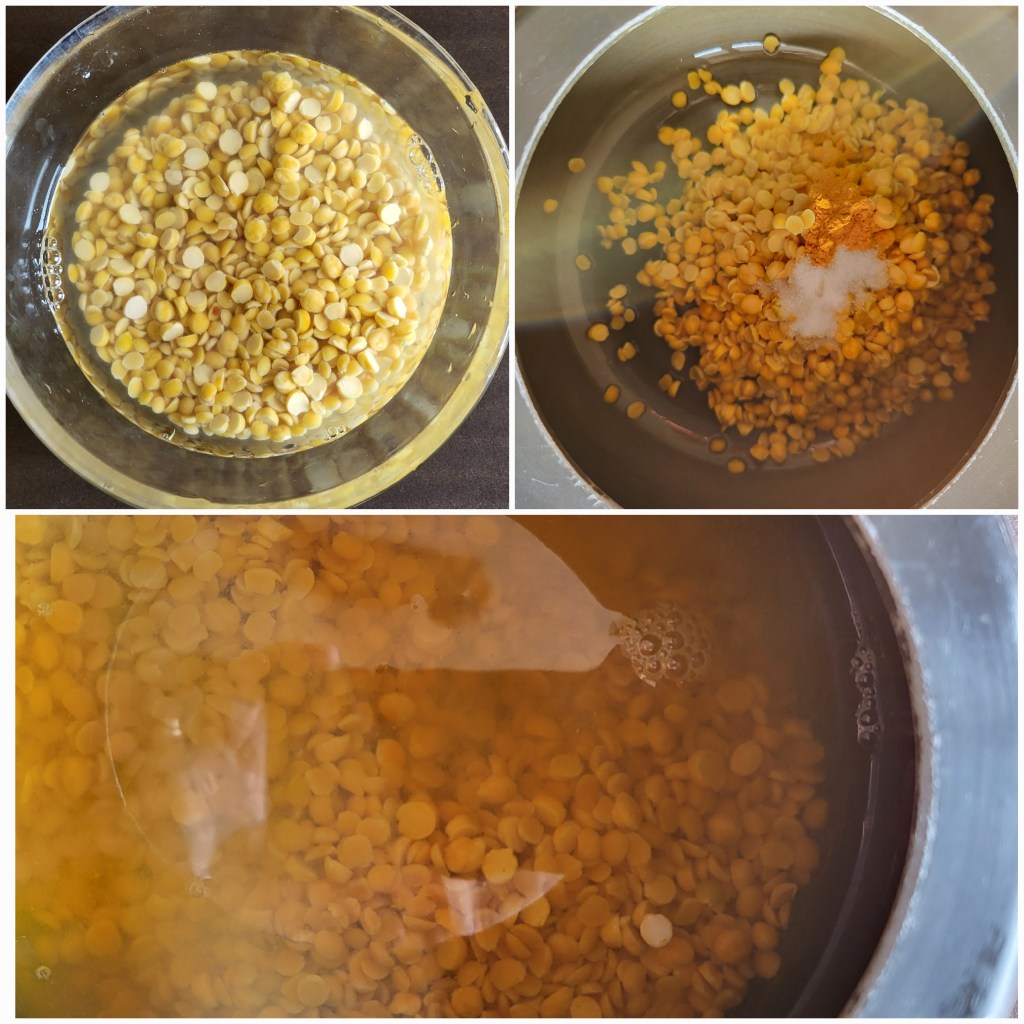
3. Mix both the dals and wash well. 4. Transfer the dal to the pressure cooker.
5. Add salt, turmeric and 2 cups of water. Close the lid and place the cooker over high flame.
6. After the first whistle lower the flame and cook for 2 minutes.
7. Allow the cooker to cool down by itself.

While the dal cooks, prepare the additional ingredients.
8. Wash and chop finely spinach, fenugreek and coriander leaves.

Gather all the ingredients to be ground on a plate.
9. Wash and chop the ginger and the chili.
10. Rinse and drain cumin and coriander seeds separately.
11. Wash and pluck curry leaves.
12. Extract the pulp from the tamarind and 2 tablespoons of grated coconut.

13. Place all the above ingredients in a grinder and grind finely.
14. Add water if necessary.
15. Transfer the grounded spices to a bowl.

16. Open the lid of the cooker and check if it is cooked.
17. If cooked transfer the dal to a bowl.
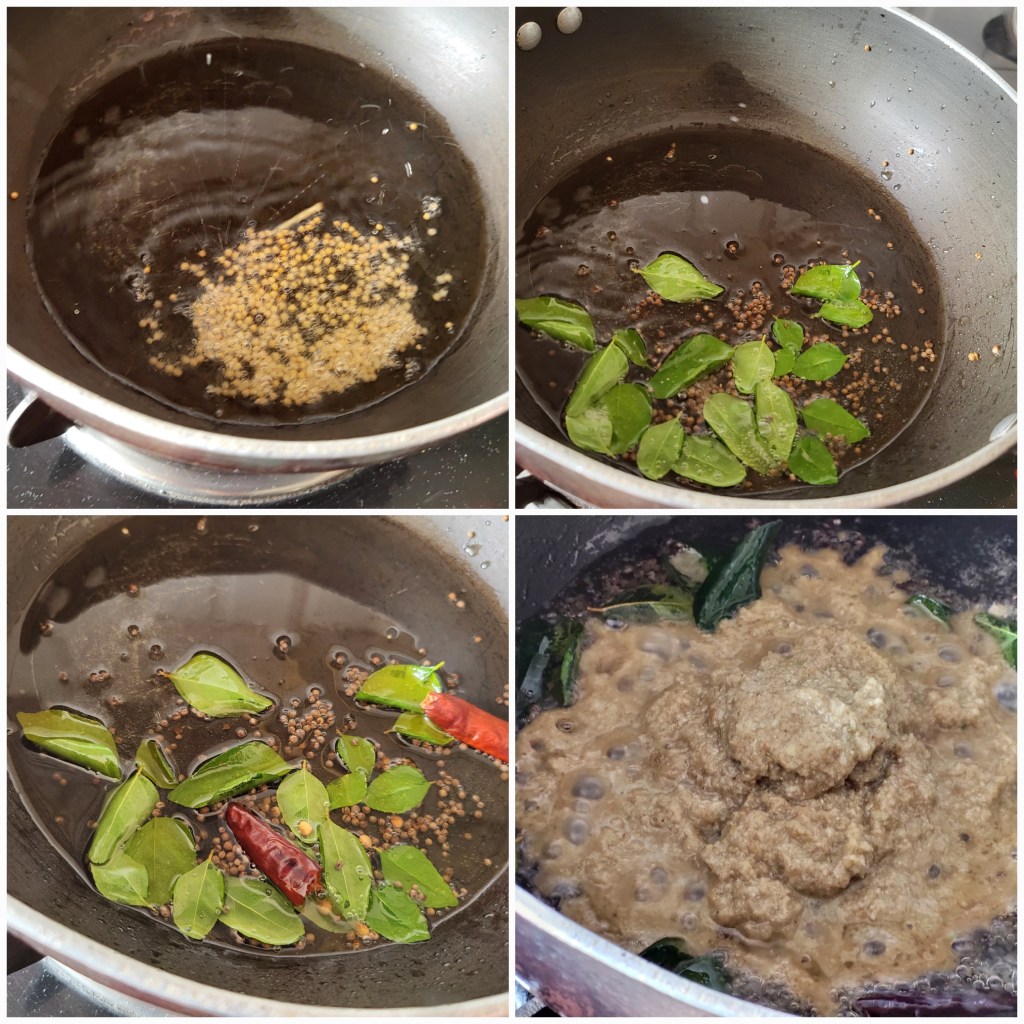
18. Heat oil in a pan over medium heat. Once hot, switch off the flame. 19. Add mustard seeds and let them splutter.
20. Add curry leaves and asafoetida (hing).
21. Break the dried red chili into halves, remove the seeds, and add to the pan.
22. Sauté for a few seconds, until fragrant.
23. Finally, add the ground spices and mix well.
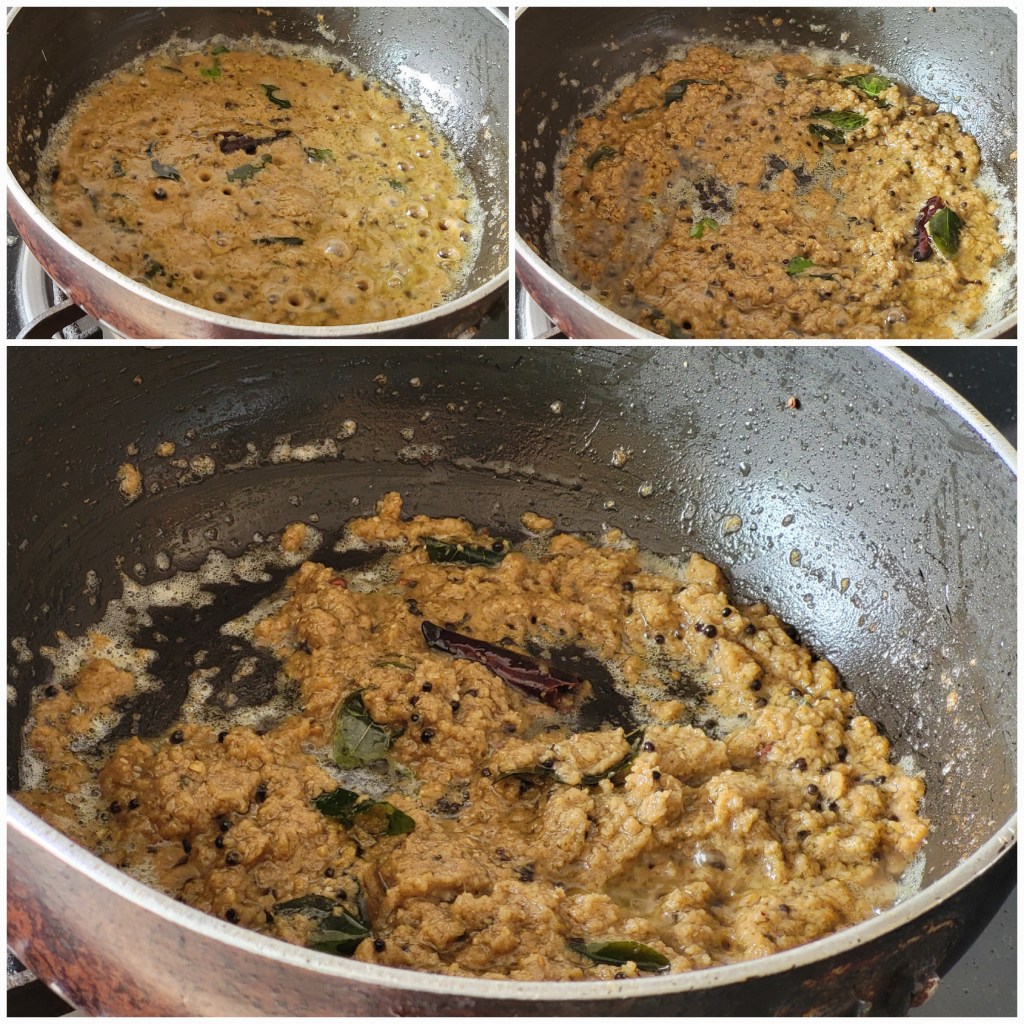
24. Continue frying the spices until they turn aromatic and the oil starts to separate, oozing out from the mixture.

25. Add the chopped fenugreek leaves and stir well to combine.
26. Add the chopped spinach leaves and sauté for a few minutes, until the leaves wilt and blend with the spices.
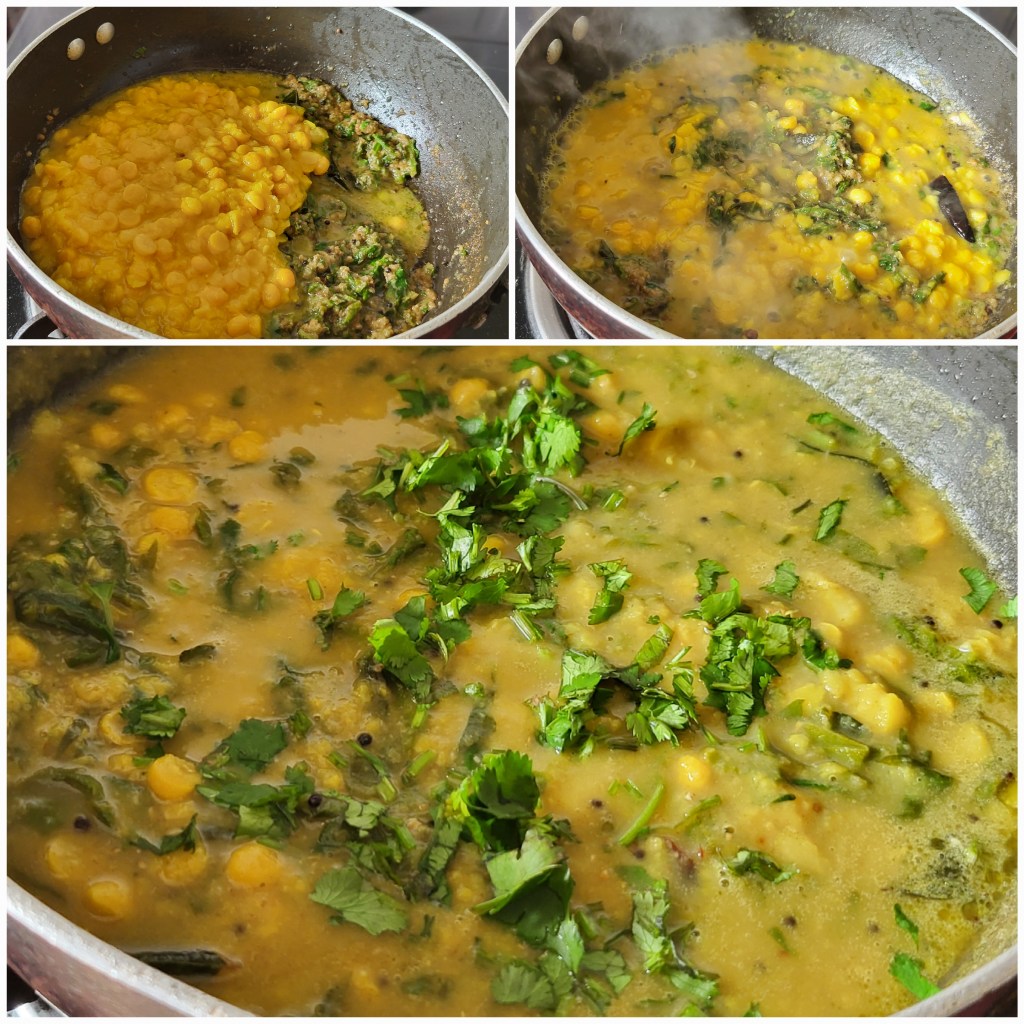
27. Add the cooked dal to the pan and mix well to combine with the spices.
28. Add a small amount of water and bring the mixture to a boil.
29. Reduce the heat and simmer for about 2 minutes, allowing the flavors to meld.
30. Switch off the flame. Stir in the chopped coriander leaves. Cover the pan for a minute to allow the flavors to infuse. Serve hot with steaming rice, roti or idli. Enjoy !
Coming up next ……………Dal from Kerala
*****
 Dal On The Table
Interesting history of the dish!
LikeLike
Simple & Healthy recipe !
LikeLike
Thank you Protim.
LikeLike