

Gujarat is situated on the west coast of India. Gandhinagar is its capital. It is bounded by the Arabian Sea on the west, Pakistan and Rajasthan in the north and north-east respectively, Madhya Pradesh in the south-east and Maharashtra in the south.
Thousands of years ago, the coastal region of Kutch District in Gujarat was a shallow part of the Arabian Sea. A geological shift formed a vast lake, as the hot temperature evaporated the water, a breathtaking expanse of white salt crystals emerged, giving birth to the Rann of Kutch. The term ‘Rann’ means ‘desert’ in Hindi. The region comprises two distinct parts: the Greater Rann and Little Rann, with differing topography creating a striking contrast. The Rann of Kutch transforms into a breathtaking white desert, filled with water during the monsoon season and evaporating in summer, leaving behind a blanket of white salt crystals. It is during this time that salt farmers undertake “Pannarin”, the labor-intensive process of harvesting and collecting salt from the evaporation ponds. Moreover, the Little Rann of Kutch is also renowned for its rich wildlife, including the Indian wild ass, eagles, and flamingos.

Gujarat is called the ‘Land of Festivals’ because it celebrates over 3,000 festivals every year! After a big earthquake in 2001, the government started the festival called Rann Utsav in 2004 to help rebuild and preserve the local culture. At first, it was just a 3-day celebration, but now it extends up to 2 months!
Rann Utsav is a very special festival. During this time, a whole new establishment is set up in the white salt desert with fancy tents and cottages. You can enjoy local music and dance performances, buy local handicrafts and try delicious local food. There are also fun activities like star gazing, camel rides, and sightseeing. You can even visit the highest point in Kutch, called Kala Dunga!
Pulse farming in Gujarat
Pulse farming thrives in Gujarat, making it a leading producer of pulses in India. The state’s favorable climate and soil, support various pulses like chickpeas, groundnuts, and moong. Government initiatives like irrigation projects and crop insurance schemes have boosted production, ensuring food security and employment for rural families.
Food:
Gujarati cuisine is a vibrant blend of vegetarianism, sweet and salty flavors, and local ingredients like peanuts and coconut. Onions and garlic are often avoided, with kokum used instead of tamarind for a unique taste. Gujarati dal is distinct, with a thin consistency and prominent sweet-sour flavor. Typically, methi (fenugreek) and hing (asafoetida) are essential ingredients, but feel free to adjust sweetness, sourness, and spices to your taste.
Today we will try out ‘Khatti Meethi Dal’ (Sweet and Sour Dal)
Khatti Meethi Dal (Sweet and Sour Dal)

This classic Gujarati dal perfectly balances sweet and sour flavors with a comforting blend of warm spices. We thoroughly enjoyed this delightful dish, and we hope you will too!
You need:

For the dal:
100 gm toor dal
40 gm peanuts
¼ tsp methi (fenugreek)
¼ tsp hing (asafoetida)
½ tsp turmeric powder
½ tsp salt
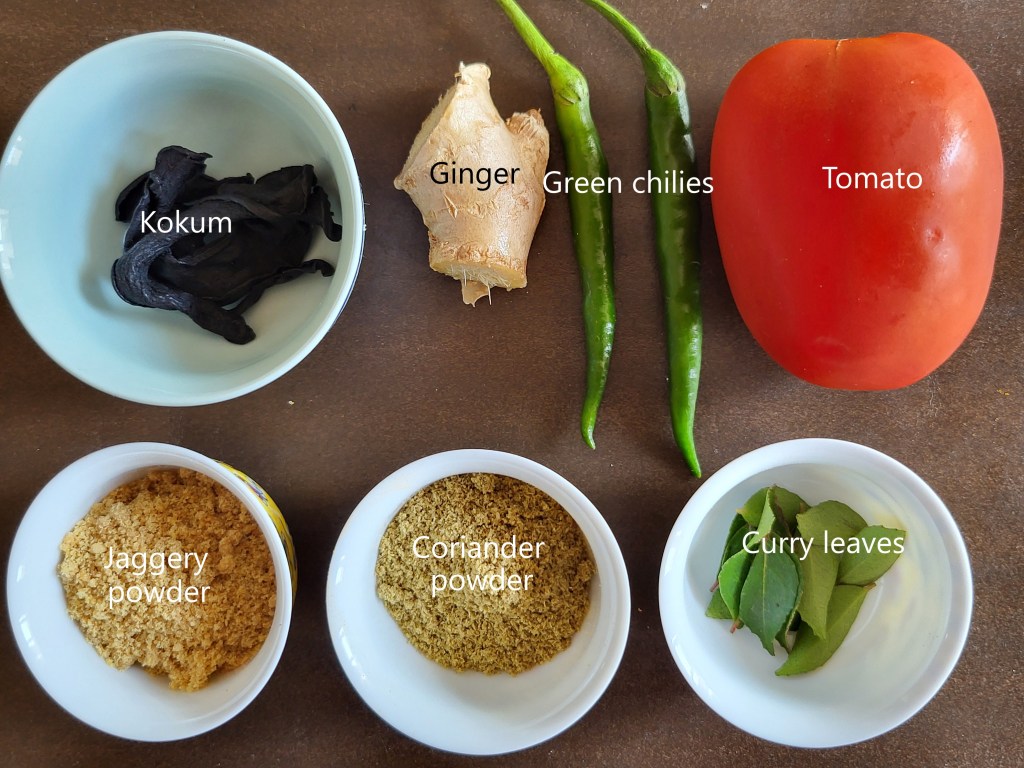
To be added to the cooked:
½ cup chopped tomato
2 tsp ginger-chili crushed
1 tsp coriander powder
3-4 pieces of kokum
1 tbsp jaggery
8-10 curry leaves

For tempering:
1 tbsp refined oil
1 tsp rai seeds/mustard seeds
2 dried red chilies
1 tbsp finely chopped coriander leaves
Method:
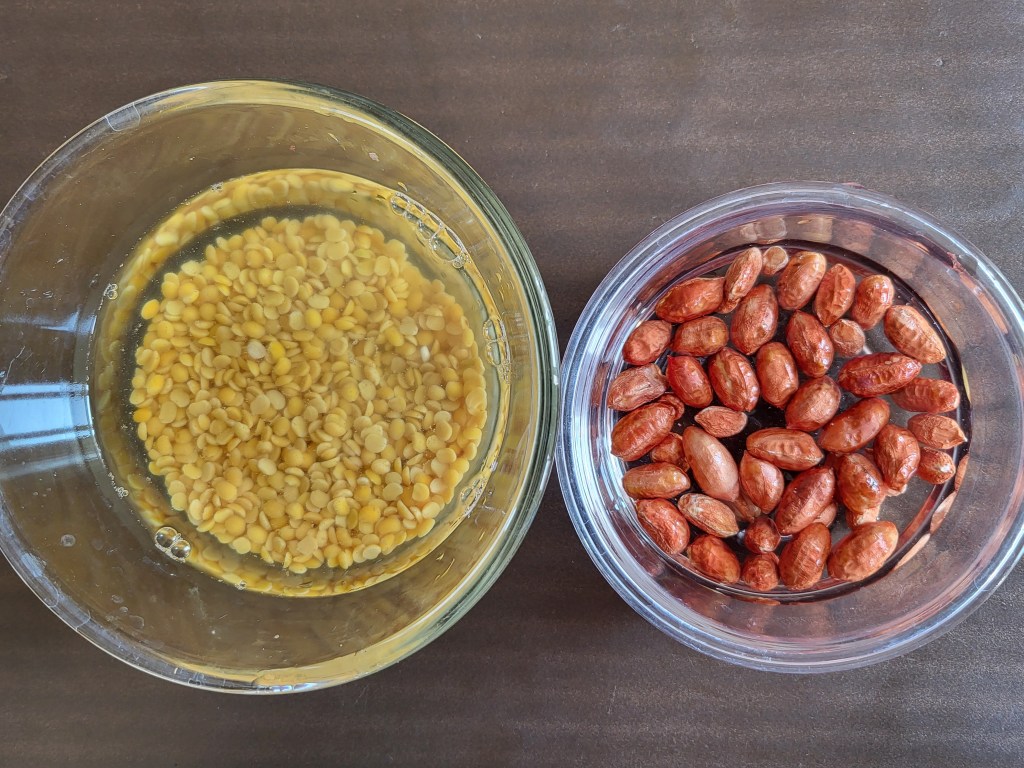
- Wash and soak the dal and peanuts for about 10 -15 minutes.

2. Transfer the dal to the pressure cooker.
3. Add salt, turmeric, methi and hing.
4. Add 1 cup of warm water.
5. Place the soaked peanuts in a steel bowl with little water and place it on top of the dal as in the picture below.
6. Cook on high heat till the first whistle, then reduce heat to minimum and cook for 2 minutes more.
7. Let cooker cool by itself.

8. While the dal cooks, prepare the additional ingredients.
9. Soak kokum in hot water and set aside.
10. Finely chop washed chilies and tomatoes.
11. Peel and chop the ginger, then crush or grind it along with the chilies.

12. Once the pressure cooker has cooled, remove the bowl of peanuts.
13. Stir the dal until it reaches a mushy consistency, then add about 1 cup of warm water.
14. Transfer the dal mixture to a larger pan.
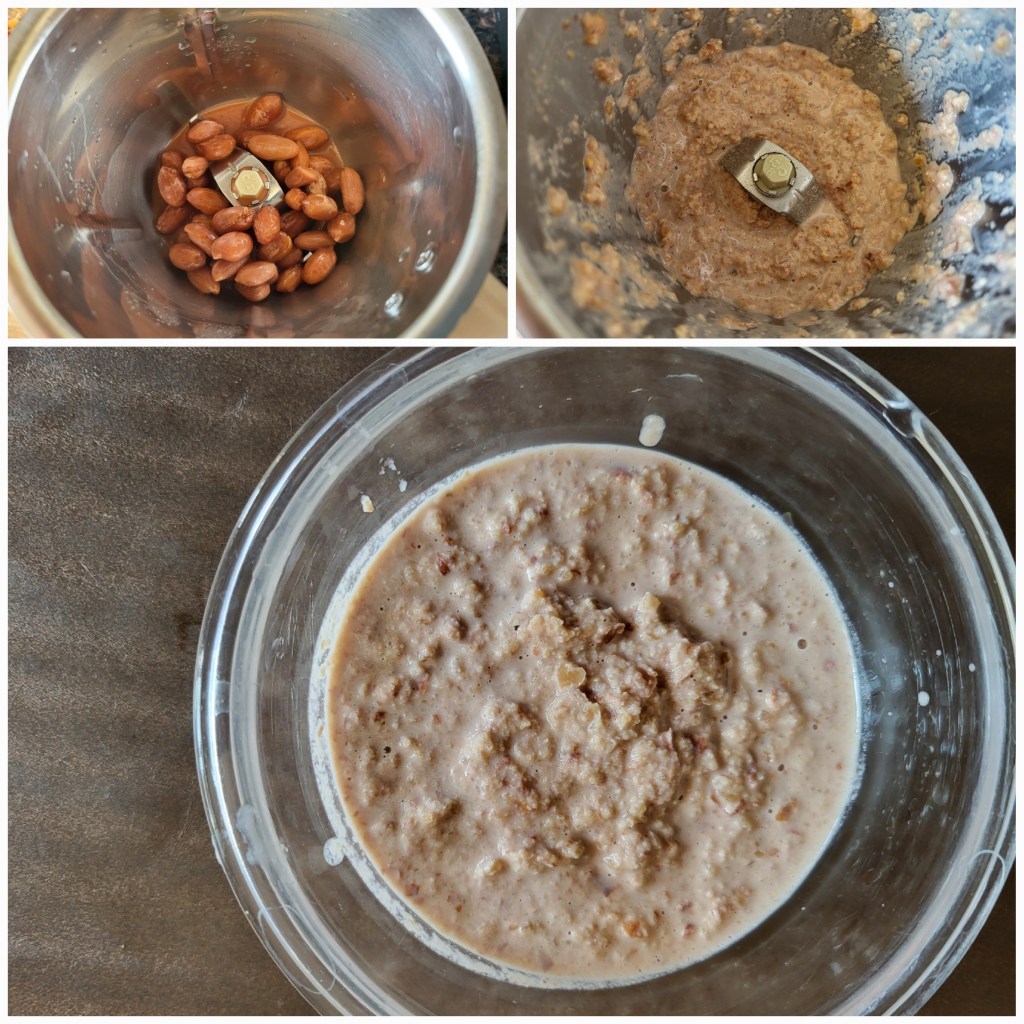
15. Grind the peanuts in a grinder coarsely and set aside.
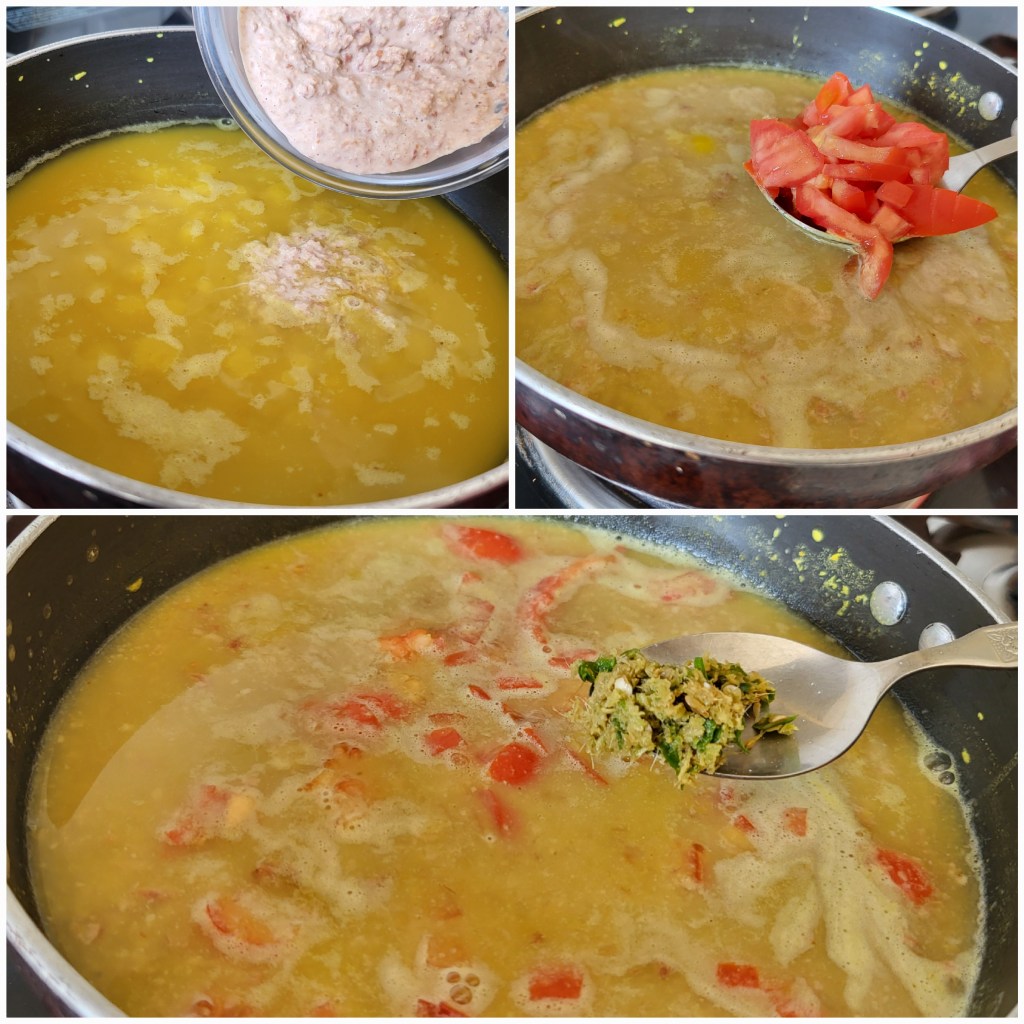
16. Bring the dal to boil.
17. Add the crushed peanut and stir the dal well.
18. Add the chopped tomatoes and then the crushed ginger and green chilies.
19. Lower the flame and let the dal keep simmering for about 2 minutes.

20. Add the kokum along with its water to the dal.
21. Stir in curry leaves and coriander powder, then continue to simmer the dal for an additional 4-5 minutes.

22. Add the jaggery powder and stir well. Bring the dal to boil.

23. In a separate pan, heat the oil. Add the rai seeds and allow it to crackle. Switch off the heat.
24. Add the dried red chilies and stir till you get the aroma from the spices.
25. Pour the fried spices over the dal and gently stir in.

26. Wash and finely chop the coriander and stir into the dal.
27. Cover the dal, allowing the flavors to meld together.
28. Serve hot, paired perfectly with rice or roti. Enjoy!
Happy Cooking !
Coming up next ……………………Dal from Maharashtra
********
 Dal On The Table
Can I add sugar instead of Jaggery?
LikeLike
Thank you Protima. You can surely use sugar. According to your taste.
LikeLike
Must try it …as it coukd be having a very different taste…
but what is kokum.. I is it the coal shown on the picture…
LikeLike
Thank you Madhu, for inspiring me….Kokum is a small sour fruit used in place of tamarind and lemon. It has a unique taste. Its local name: Bhirand/ Sola. It is called Thekera in Assam.
LikeLike
Beautiful description of the Rann Utsav! Can’t wait to try out the recipe! Is kokum only available in Gujrat?
LikeLike
Thank you so much Akanksha. Kokum is available in Maharashtra, Goa, Karnataka, Kerala and Assam.
LikeLike
Must try out! Gujarati Cuisine is one of my favorite😍!Season’s greetings to you, Missy Jethai🤗❤
LikeLike
Thank you Anudhrita. I would love to see a picture of your cooking.
LikeLike