
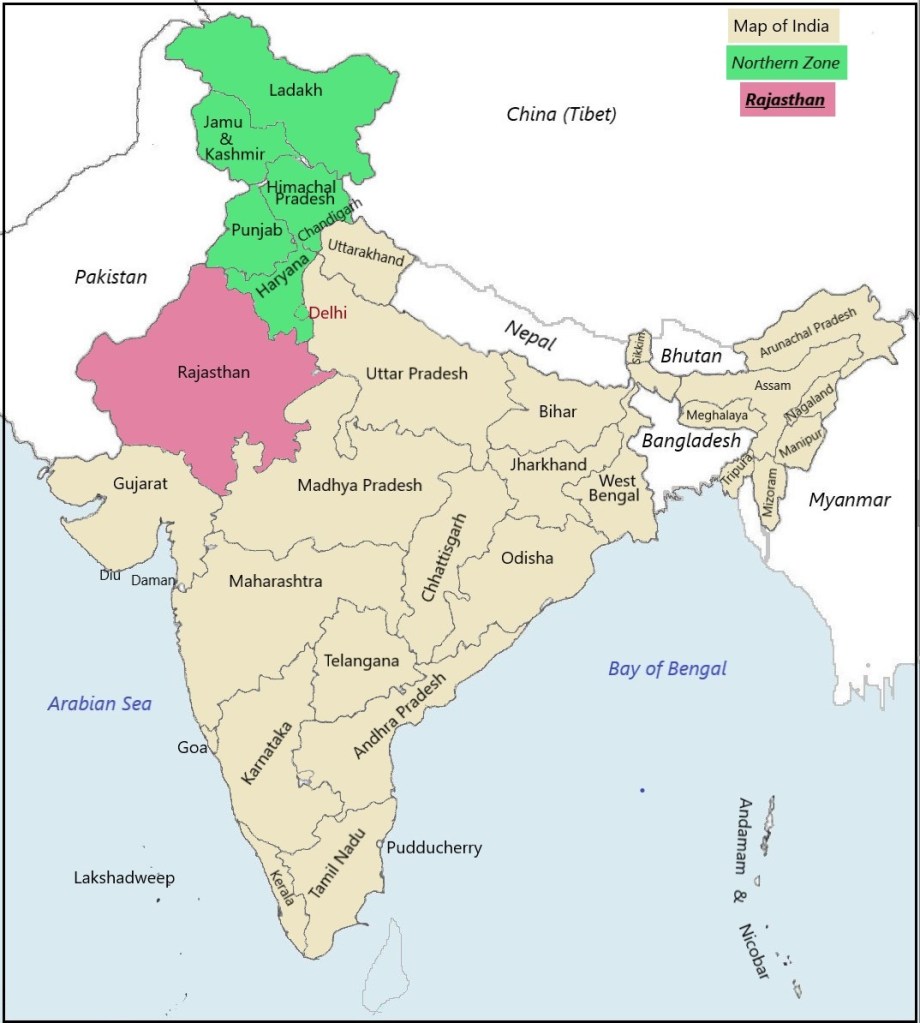
Rajasthan is a state located in the northwestern part of India. Its capital is Jaipur. It shares international border with Pakistan in the west. It is bordered by five other Indian states: Punjab to the north, Haryana and Uttar Pradesh to the northeast, Madhya Pradesh to the southeast and Gujarat to the southwest.
Rajasthan is home to the vast Thar Desert, which covers over half of the state. The desert’s golden sand dunes create a breathtaking landscape. The state also has several mountain ranges, including the Aravalli Range, and sparkling lakes that add to its natural beauty. Rajasthan’s rich history is reflected in its many magnificent forts, palaces, and temples, which showcase its glorious past.
There is an interesting story behind the Thar Desert which was once a lush paradise. As Lord Ram, accompanied by Sita and Lakshman, wandered in exile, King Ravana abducted Sita. Ram and Lakshman embarked on a perilous quest to rescue her. Their journey led them to Ramaswaram, where Ram pleaded the ocean deity to recede, and create a path to Lanka. However, the ocean refused to yield. With a heavy heart, Rama summoned a divine weapon to dry the ocean. The ocean begged for mercy and suggested to divert the weapon at Drumatulay, where people were dirtying the water. Rama agreed and unleashed the weapon towards the north. As the divine energy struck Drumatulay, the waters receded and the region became a desert. But Ram blessed the region for cattle rearing, agriculture, and hardy plants to flourish.

The Pushkar Fair/Mela is one of the largest camel fairs in the world which is held annually in a small town in Ajmer, Pushkar, during October-November, for 7 days, displaying the state’s rich cultural heritage. The fairground comes alive with colorful stalls selling traditional handicrafts, souvenirs and delicious local cuisine.
The air is filled with the sound of folk music, laughter and camel bells as thousands of camels are paraded. There are camel safaris, where one can hop on a camel’s back and take a joy ride across the desert. As the sun sets, the sky is painted with mesmerizing hot air balloon rides and the night sky twinkles with fireworks. The fair has something for everyone making it an unforgettable experience.
Pulse farming in Rajasthan:
Rajasthan is a leading producer of pulses like moth and mung. Its dry climate and soil suit pulse cultivation. Farmers use traditional and modern methods to grow high-quality pulses.
Food:
Rajasthani cuisine is a delectable fusion of tradition, flavor, and history! It is a predominantly vegetarian state, with assorted lentil curries which perfectly pair with roti and rice. Among the traditional dal dishes, Dal-Bati-Churma and Panchmel Dal stand out.
Today, we’re going to try out the flavors of Panchmel Dal. It is also known as Panchratna Dal. Panchmel Dal literally means ‘five-lentils’ and is a nutritious and flavorful dish.
Panchmel Dal
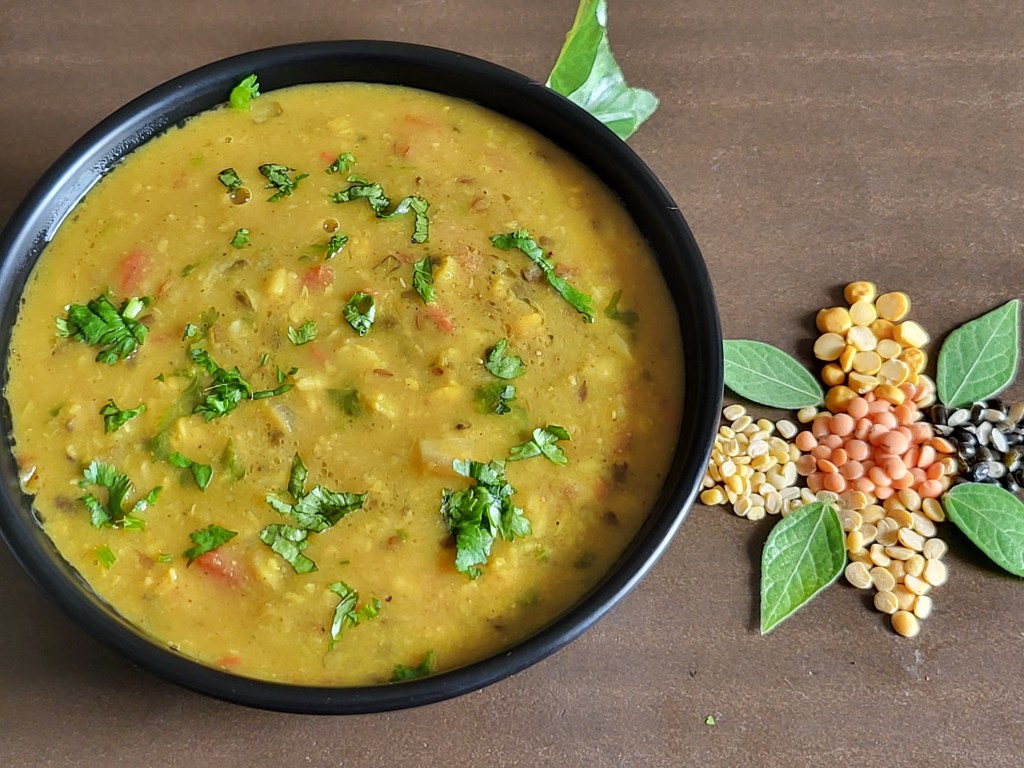
The dal dish harmoniously blends with the five distinct types of lentils, making it a true culinary treasure! We loved the dish. Hope you enjoy this recipe too!
You need:

For the dal:
30 gm moong dal
30 gm masoor dal
30 gm chana dal
30 gm urad dal
30 gm toor dal
1 green chili
1 bay leaf
½ tsp turmeric powder
½ tsp salt

For tempering:
1 tbsp refined oil
1 medium size onion chopped
2 cloves garlic, grated
1 inch ginger, grated
1 medium tomato, chopped
½ teaspoon cumin seeds
½ teaspoon coriander powder
½ teaspoon garam masala powder
A few sprigs of coriander leaves.
Method:

- Rinse the dals together and soak them in water for 30 minutes.
- Drain and place it in the pressure cooker.
- Add bay leaf, chili, salt and turmeric powder.
- Add 2 cups of water and close the lid and place it over the stove. After the first whistle, lower the flame to its minimum, and continue to cook the dal for 2 minutes.
- Switch off the flame and allow the cooker to cool down by itself.
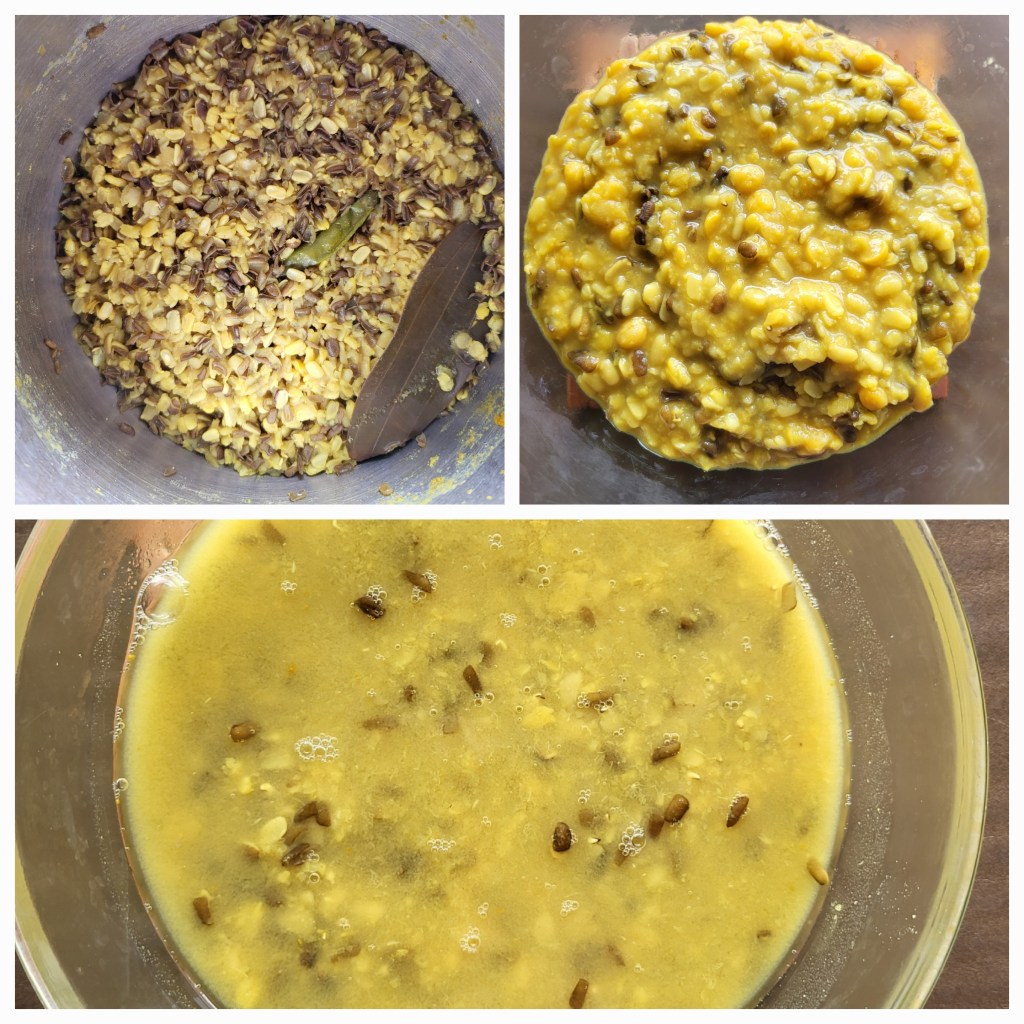
6. Open the cooker, check the dal whether cooked or not and then transfer the dal to a bowl.
7. Add 1 cup of warm water and stir in carefully and set aside.

8. Wash and peel the skins from ginger, garlic and onion.
9. Grate the ginger and garlic.
10. the onion finely.
11. Wash and chop the tomato finely.

12. Wash and chop the coriander leaves finely.

13. Heat the oil in a pan.
14. Lower the flame and add the cumin seeds and fry for a few seconds.
15. Add the onion and saute till translucent.
16. Add the garlic and ginger and coriander powder and fry till the raw smell disappears from the spices.

17. Add the chopped tomato and stir for a few minutes.
18. Add little salt and about ¼ cup of water to fried mixture.
19. Mix well and cover it. Stir from time to time so that the spice does not get burnt and oil starts to ooze from the mixture.

20. Add the dal and stir in well.
21. Slowly bring it to boil and keep cooking for about 3-5 minutes.
22. Add warm water if the dal thickens and maintain the consistency of the dal to your requirement.
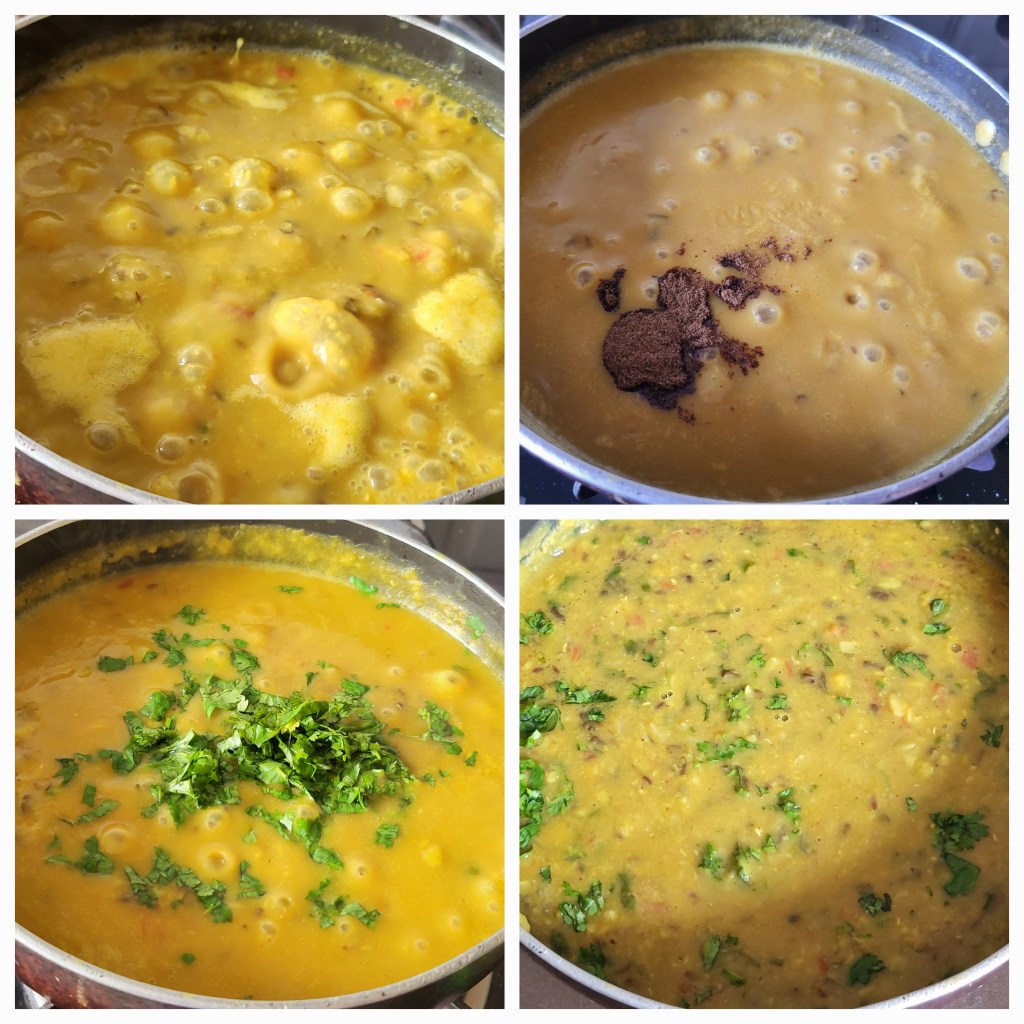
23. Add ½ tsp of garam masala and 1 tbsp of chopped fresh coriander leaves and stir well.
24. Cover the pan for the flavors to blend well.
25. Serve hot with steamed rice or roti. It is delicious !
Happy cooking !
Coming up next…………………….Dal from Western India.
*******
 Dal On The Table
This dal will be very nutritious because so many different varieties of dals are cooked together. Great recipe!
LikeLike
Thank you Lita. Yes it is.
LikeLike
This dal is nutritious, flavorful, and packed with protein. Will definitely try this recipe
LikeLike
Very delicious and nutritious too!👌👌
LikeLiked by 1 person
Thank you Abha.
LikeLike