

Punjab is in northern India and its capital is Chandigarh.
The state is bordered by Indian states of Jammu & Kashmir in the north, Himachal Pradesh in the north and northeast, Haryana in the south and southeast and Rajasthan in the south. It shares international border with Pakistan in the west.
The state is renowned for its vibrant green landscapes, thriving agriculture and warm hospitality. From the magnificent Golden Temple in Amritsar to the historic Wagah Border, Punjab is a treasure trove of history and spirituality. The state has a rich cultural heritage, dating back to the Harrapan culture, which once flourished here, nourished by the five tributaries of the Indus River.
The name ‘Punjab’ is derived from two words: ‘Punj’ meaning five, and ‘ab’ meaning water. Although the partition of India resulted in only three tributaries – Sutlej, Ravi, and Beas – flowing through Punjab, with the other two, Chenab and Jhelum, flowing through Pakistan, the state’s legacy as a land of five rivers remains an integral part of its identity.
A beautiful legendary tale of Puran Bhagat, a 12th-century saint-poet, has been etched in the annals of Panjabi folklore. Renouncing worldly pleasures, Puran Bhagat embarked on a quest for spiritual enlightenment, much to the dismay of his father. In a fit of rage, his father ordered him to be bricked alive within a room. Miraculously, Puran Bhagat survived this brutal confinement, continuing to meditate and compose devotional poetry. Years later, yogis chanced upon him and freed him from his earthen prison. Emerged with intensified spiritual powers, Puran Bhagat performed a multitude of miracles, including reviving the deceased and healing the ailing. His legend has stood the test of time, symbolizing the triumph of unwavering spiritual devotion over adversity. Inspiring generations to seek a profound connection with the divine, Puran Bhagat’s story has become an integral part of Punjabi heritage.

Baisakhi, the most iconic festival in Punjab, heralds the arrival of the Sikh New Year and the vibrant harvest season. Celebrated with great fervor on 13 or 14 April, this joyous occasion commemorates the founding of the Khalsa Panth by Guru Gobind Singh in 1699. As the auspicious day unfolds, Sikhs and Punjabis globally unite to revel in the spirit of renewal, gratitude, and triumph.
The festivities commence with a sacred bath in the revered Golden Temple, followed by the recitation of sacred scriptures, vibrant processions, and traditional folk dances like the energetic Bhangra. The air is filled with the sweet aroma of langar, a community kitchen serving free meals to all, embodying the spirit of unity and service. As the day progresses, families gather to share sumptuous meals, exchange gifts, and immerse themselves in the rich cultural heritage of Punjab. Baisakhi embodies the essence of hope, renewal, and the triumph of good over evil, making it an unforgettable experience that resonates with the heart and soul.
Pulse farming in Punjab
Punjab is famous for its farming and is called the “breadbasket of India”. Now, many farmers are growing pulses like chickpeas, lentils, and kidney beans. Pulses are a vital protein source and farmers earn more from them than traditional crops like wheat and rice.
Food:
Punjabi cuisine reflects the state’s rich history, with influences from Mughal and Sikh traditions. Punjab’s food habits are delicious and a reflection of its rich agricultural heritage and cultural traditions. Their food is characterized by an abundance of wheat-based dishes, dairy-rich delights, and a perfect blend of vegetarian and non-vegetarian options.
Today we will cook Rajma Masala or Rajma curry. The origin of ‘rajma chawal’ is in Punjab. It is a dish of red kidney bean in flavourful onion tomato gravy served over steamed rice. Usually, Punjabi rajma masala is made with the speckled and light-coloured rajma, known as Chitra rajma. But you may also use the dark red kidney bean.
Rajma Masala (Curry)

Rajma Masala is a flavorful and spicy delight. Made with tender kidney beans (rajma) in a rich, creamy tomato-based gravy. Aromatic spices like cumin and coriander add depth to the curry. We loved it. You may try out too.
You need:
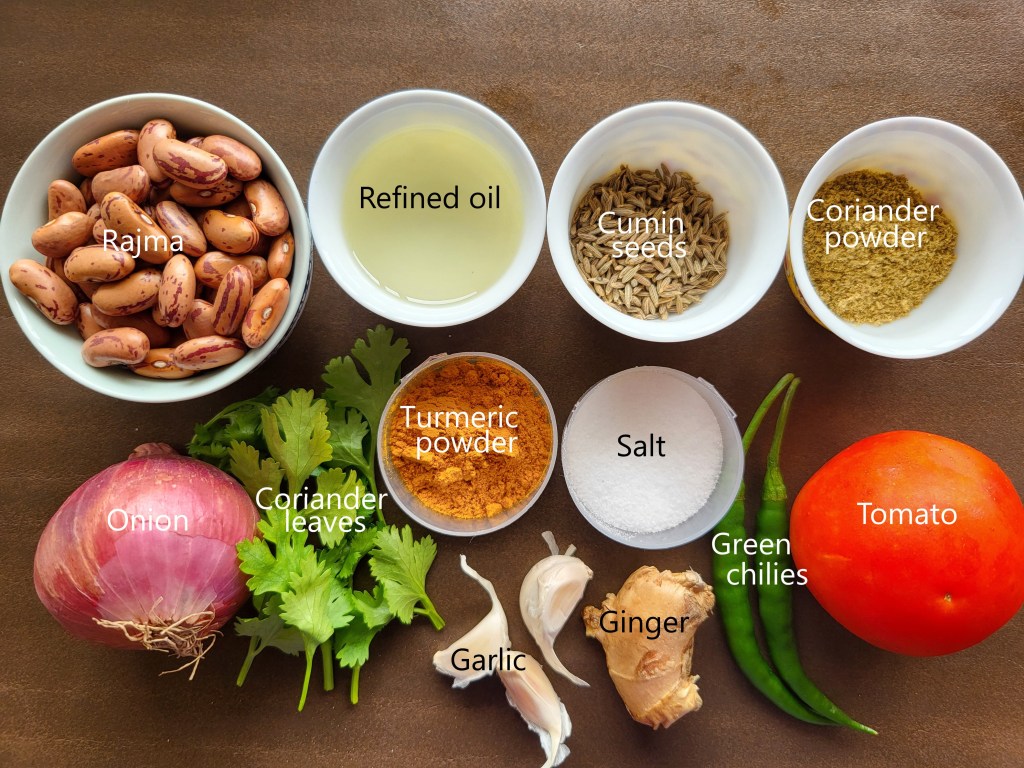
Method:

- Wash and soak the rajma overnight.
- Rinse the rajma and place in a pressure cooker. Add ½ tsp of salt and 2 cups of water. Close the lid and place it on the stove.
- After the first whistle lower the flame to its lowest and cook for 2 ½ minutes.
- Switch off the flame and allow the cooker to cool by itself.
- Transfer the cooked rajma to a bowl with the stock.
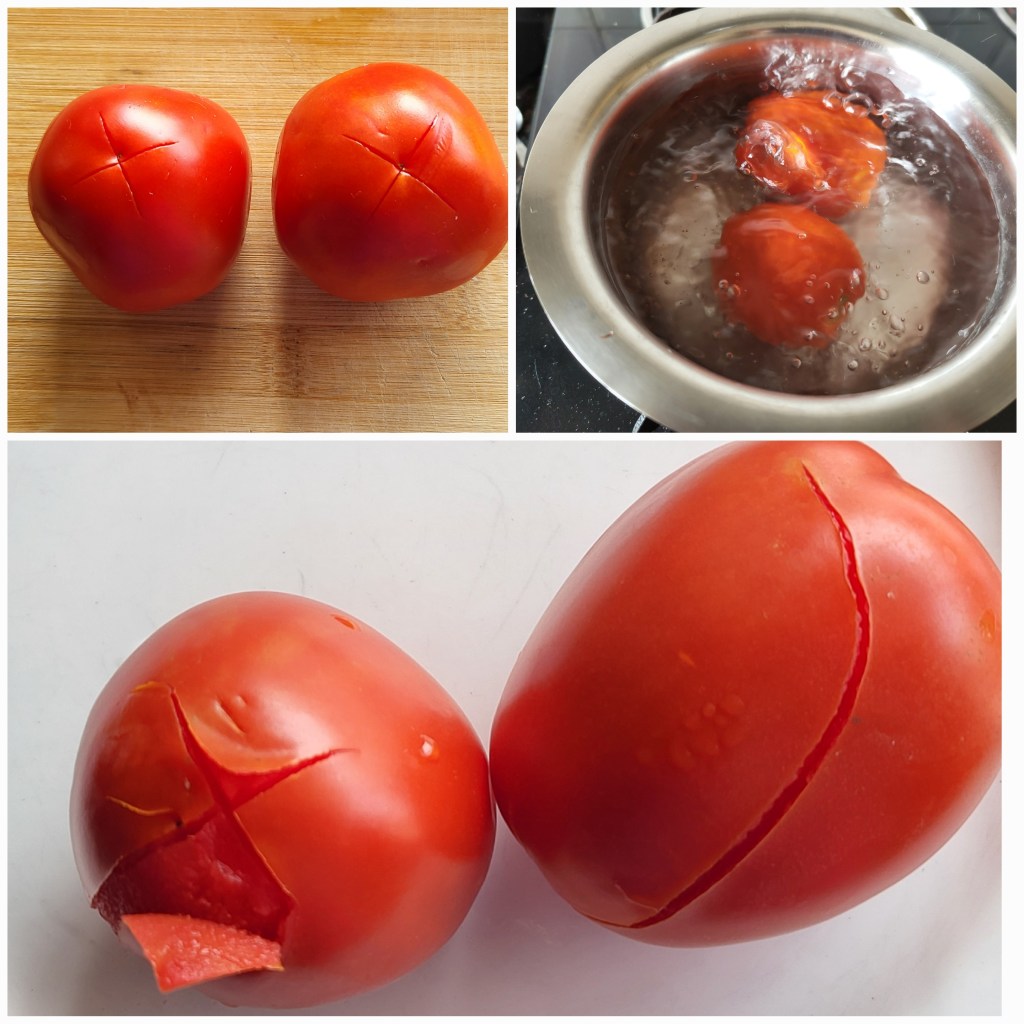
For the tomato puree:
6. Wash and wipe 2-3 big red tomatoes. With a sharp knife cut a cross at the bottom of each tomato.
7. Boil water in a pan and plunge the tomatoes into it. Cover and leave it for 2-3 minutes.
8. Remove the tomatoes from the water.

9. Peel the skin and remove the eyes of the tomatoes.
10. Chop them roughly.
11. Make puree in a blender until smooth.
We need 1 ¼ cup –for the recipe. You may store extra puree in the fridge. It stays well for a week.

12. Wash and peel the garlic, ginger and the onion.
13. Chop garlic and onion finely.
We need ½ cup of chopped onion, 1 tsp of chopped garlic and 1 tsp of grated ginger. Wash and chop the chilies finely.
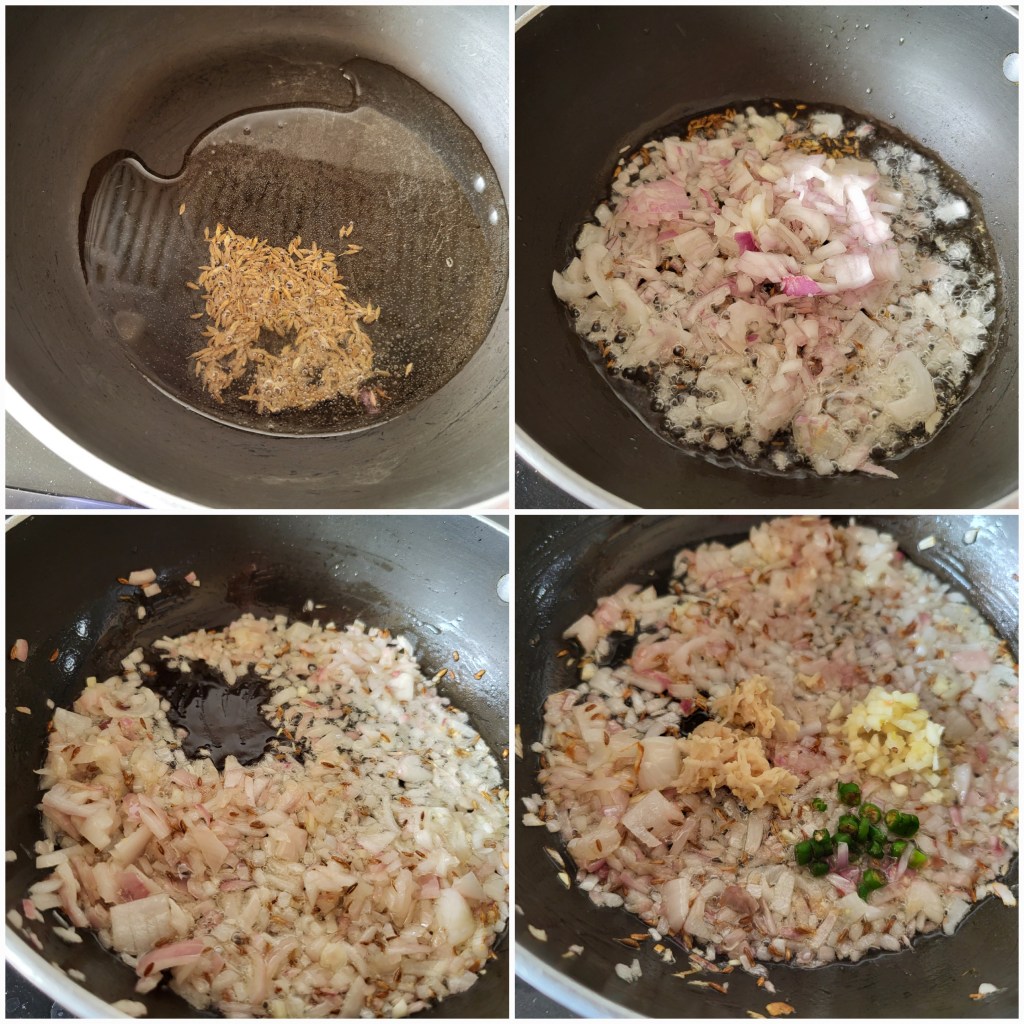
14. Heat 1-2 tbsp of oil in a pan.
15. Add the cumin seeds and saute for few seconds.
16. Add the onion and fry till slightly brown.
17. Add the garlic, ginger and chilies and keep frying till the mixture is golden brown.
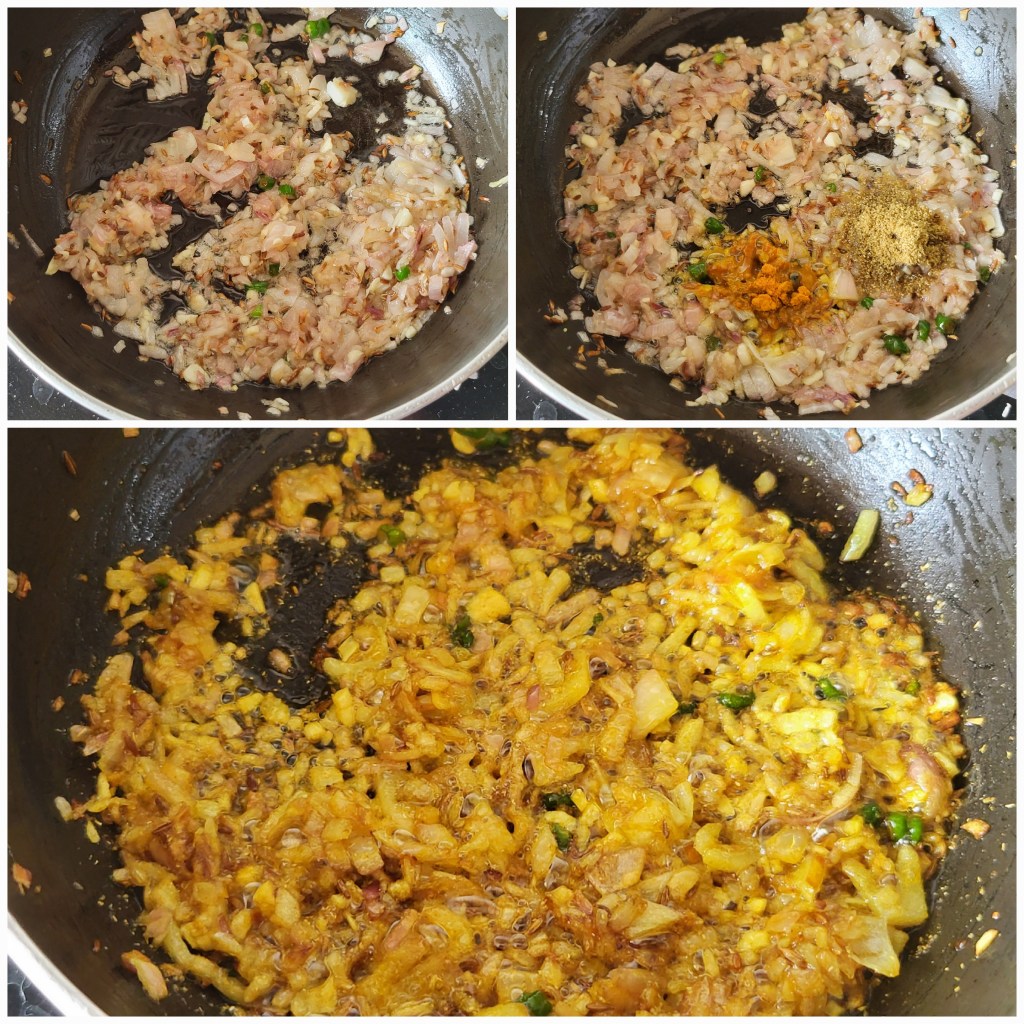
18. Coriander and turmeric powder and fry for few more seconds.

19. Add the tomato puree to the fried spices and fry until the oil starts to ooze from the mixture.

20. Add the rajma with the stock and mix well.
21. Slowly bring it to boil and cook for about 5 minutes.
22. Adjust the consistency of the rajma masala. Adjust the salt.

23. Wash and finely chop the coriander leaves.
24. Add to the rajma masala and bring it to boil.
25. Switch off the flame.
26. Serve it hot with steamed rice.
When it is served with rice it is called Rajma Chawal. Rajma masala goes very well with roti and paratha too.
Happy Cooking !
Coming up next ……………….Dal from Rajasthan.
*******
 Dal On The Table
thank you aai for a simple but relishing rajma recipe
LikeLike
Thank you Protima.
LikeLike
Rajma is an all time favourite. Thanks for sharing the recipe.
LikeLike
Thank you Abha.
LikeLike