

Uttarakhand is a state in Northern India, on the southern slope of Himalayan range. Its capital is Dehradun. The two major rivers, the Ganges and Yamuna, originate and flow through Uttarakhand. Uttarakhand is often referred to as the “Devbhumi” – Land of the Gods. The state is divided into two divisions, Garhwal and Kumaon.
Uttarakhand has festivals for every season and Kumbh Mela is one of their biggest and most popular festival. It is world’s largest religious human gathering. Millions of pilgrims take bath in the holy rivers and believe that a dip in the river will wash away their sins. UNESCO has recognised Kumbh Mela as an Intangible Cultural Heritage.
Uttarakhand shares international borders with Tibet in the north, and Nepal on east south.
Within India it shares boundaries with Uttar Pradesh on the south and south west, a small part touching Haryana in the west, and Himachal Pradesh on the north west.

Pulse farming in Uttarakhand
Uttarakhand is a hilly agricultural state. With all the limitations of a hilly region, farmers have been cultivating pulses ever since. Uttarakhand is well known for their organic farming.
Major pulses grown in Uttarakhand include grams (green, black, horse), beans (kidney, moth, soya), Toor (pigeon pea), Chana (chick pea) and masoor (lentil). Other crops such as rice and wheat are cultivated mostly for their own consumption.
Food:
Uttarakhand’s staple food are rice, dal, roti and vegetables. Their cuisines are simple, healthy and flavourful. They use very little spices and variety of organic pulses. All their ingredients are locally grown, which makes a big difference in taste and flavour.
We are going to cook a traditional Pahari dal dish – Chainsoo which is also known as Chaunsa. The preparation of the dal was so much loved by the people for generations, that the dish has become a traditional dish and served during festivals and ceremonies.
There are two ways of preparing this dal. First, soaking and then grinding the dal to a coarse paste; Second – dry-roasting and grinding to a coarse powder. The end results are almost same – rich and creamy with a distinctive aroma.
Chainsoo Dal

Chainsoo is a rich creamy and nutritious dal with a very unique taste and flavor. It is the roasted dal that blended well with the spices giving a unique aroma. We had it with steamed rice. It was delicious. The dal dish will go well with roti/bread as well. Try it out or you will miss it.
You need:

100 gm whole urad dal
3-4 garlic
1 inch piece of ginger
1-2 green chili
2 tbsp mustard/ Refined oil
½ tsp whole cumin seeds
1 medium size onion
½ tsp turmeric powder
½ tsp red chili powder
Salt to taste
1 tsp of coriander powder
A few sprigs of coriander leaves
Method:
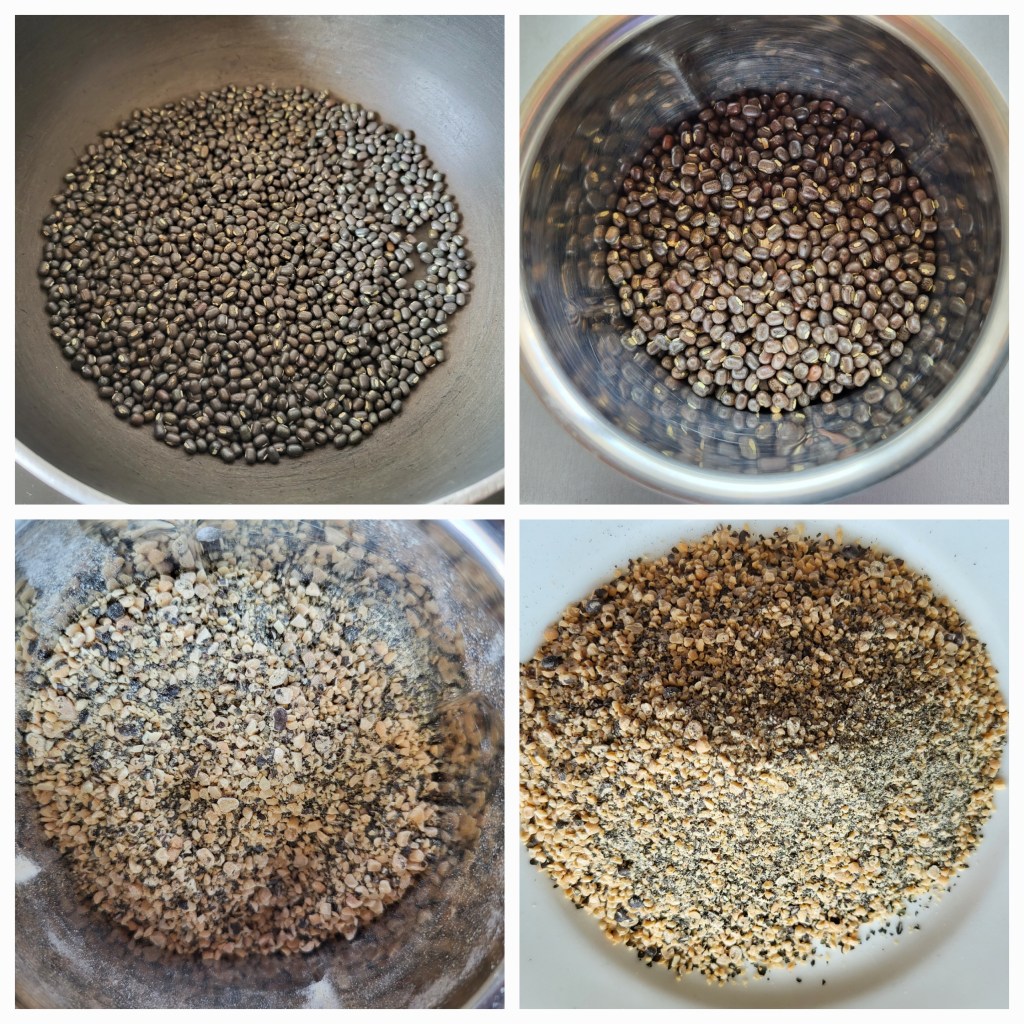
- Clean and dry roast the dal on a pan over low heat until it gives off a slight aroma.
- Allow it to cool.
- Grind it into a coarse powder.

4. Peel and wash garlic, ginger and onion.
5. Chop them finely. Wash the chillies, remove the stem and chop them.

6. Grind the chillies, ginger and garlic and keep it aside.
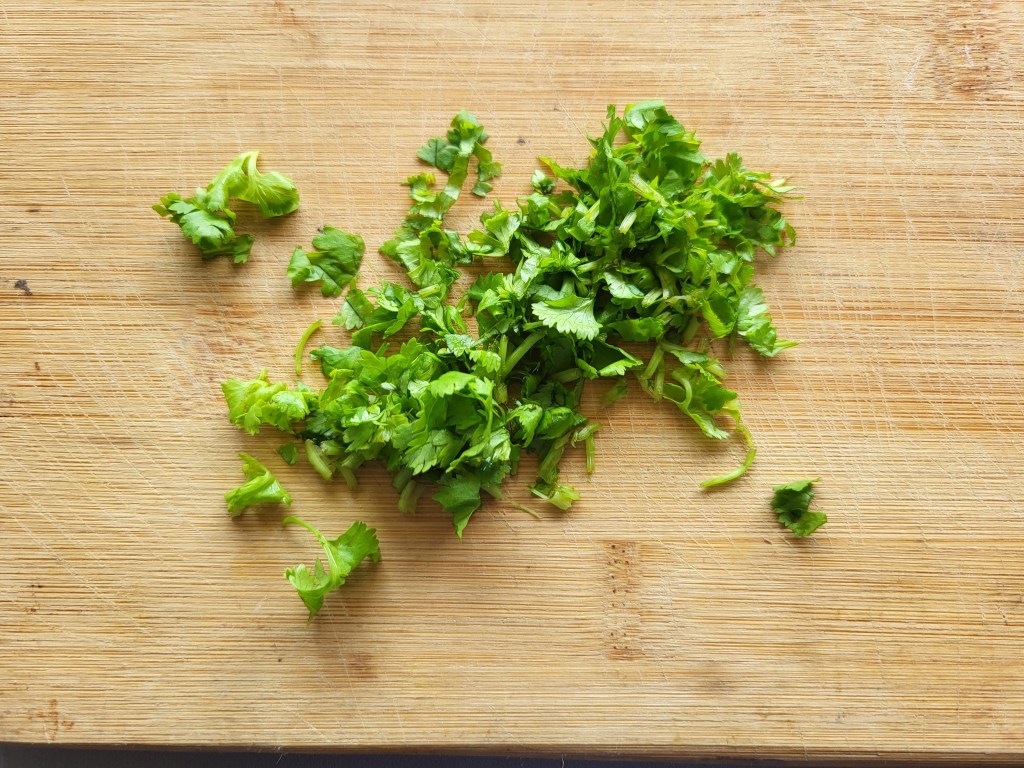
7. Wash the coriander leaves and chop them finely. Keep it aside.
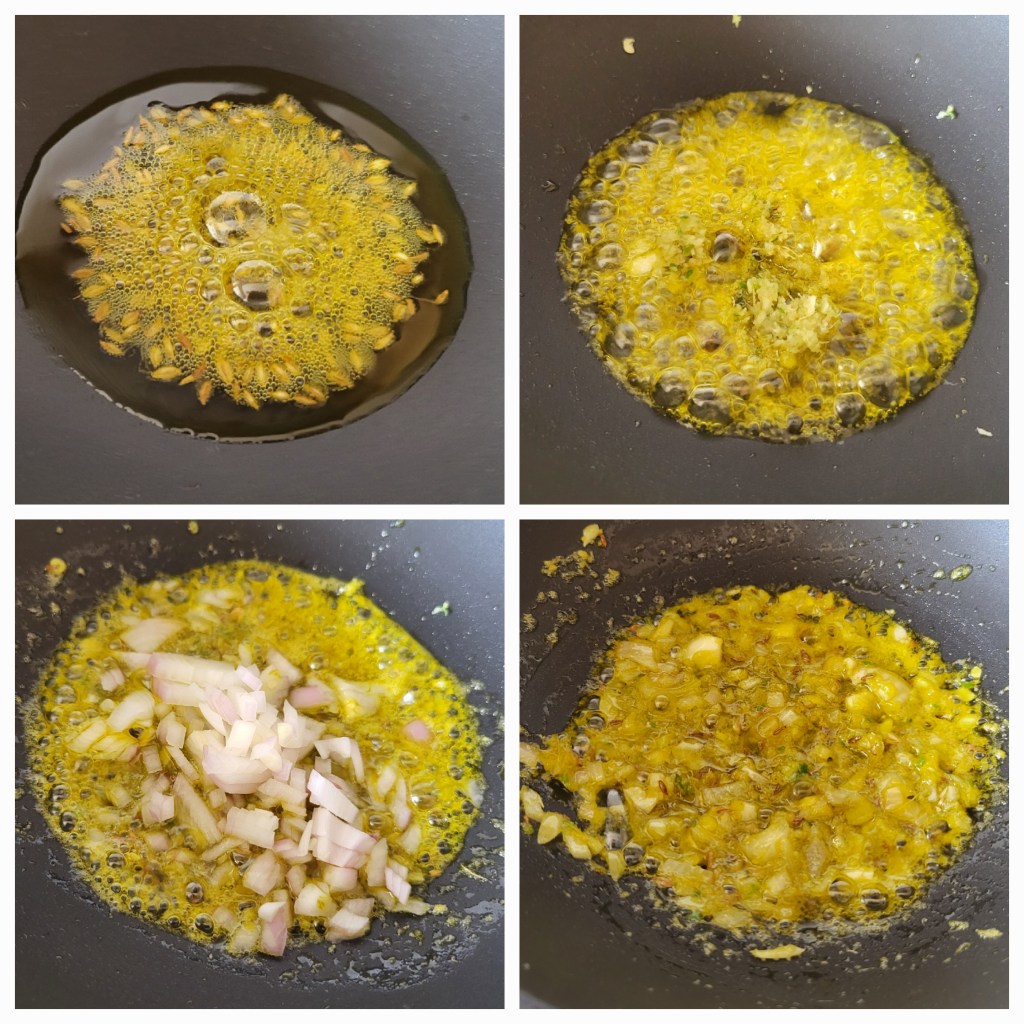
8. Heat the oil in a pan.
9. Lower the heat and add the cumin seeds and fry for a few seconds.
10. Add the ginger-garlic mixture and stir fry for few seconds.
11. Add the chopped onion and fry until lightly browned.
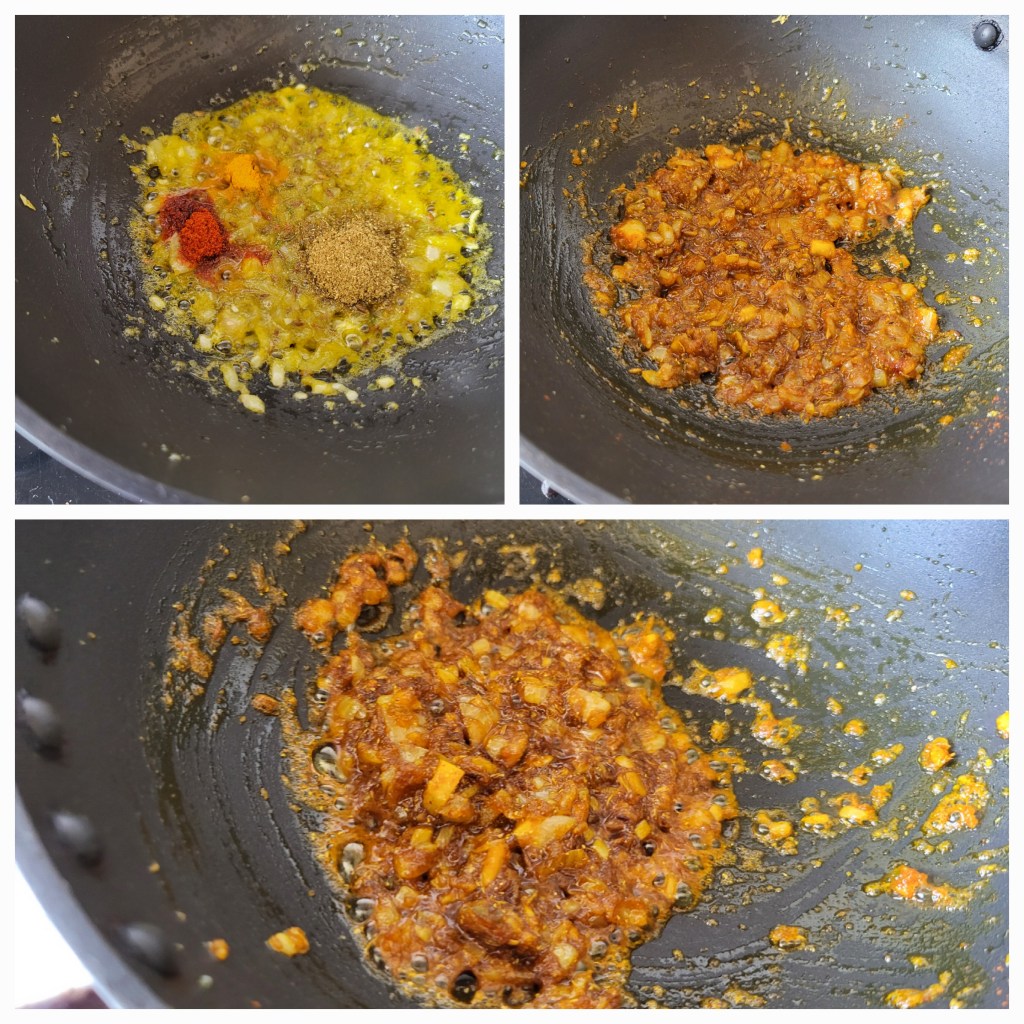
12. Add turmeric powder, red chili powder and coriander powder.
13. Mix them well and fry for a few more seconds.

14. Add the roasted and ground dal to the fried spices and mix well.
15. Add salt and 1 cup of warm water.
16. Stir well and bring it to boil.
17. Cook the dal over medium heat.

18. Stir the dal from time to time so that it does not get stuck at the bottom of the pan.
19. Keep adding warm water, little at a time whenever necessary, to keep the consistency of the dal. It will take about 40 minutes for the dal to get cooked.
20. When it is done sprinkle the chopped coriander leaves and serve with steamed rice.
Happy Cooking !
Coming up next …………..Dal from Uttar Pradesh.
********
 Dal On The Table
Delicious! 😋
LikeLike
Thank you Akandsha. Keep reading ….
LikeLike
so tempting 😋
LikeLike
Thank you Protima….
LikeLike
Must try the Recipe…Simple and nice
LikeLike
Thank you Madhu. Please try it out and let me know.
LikeLike