

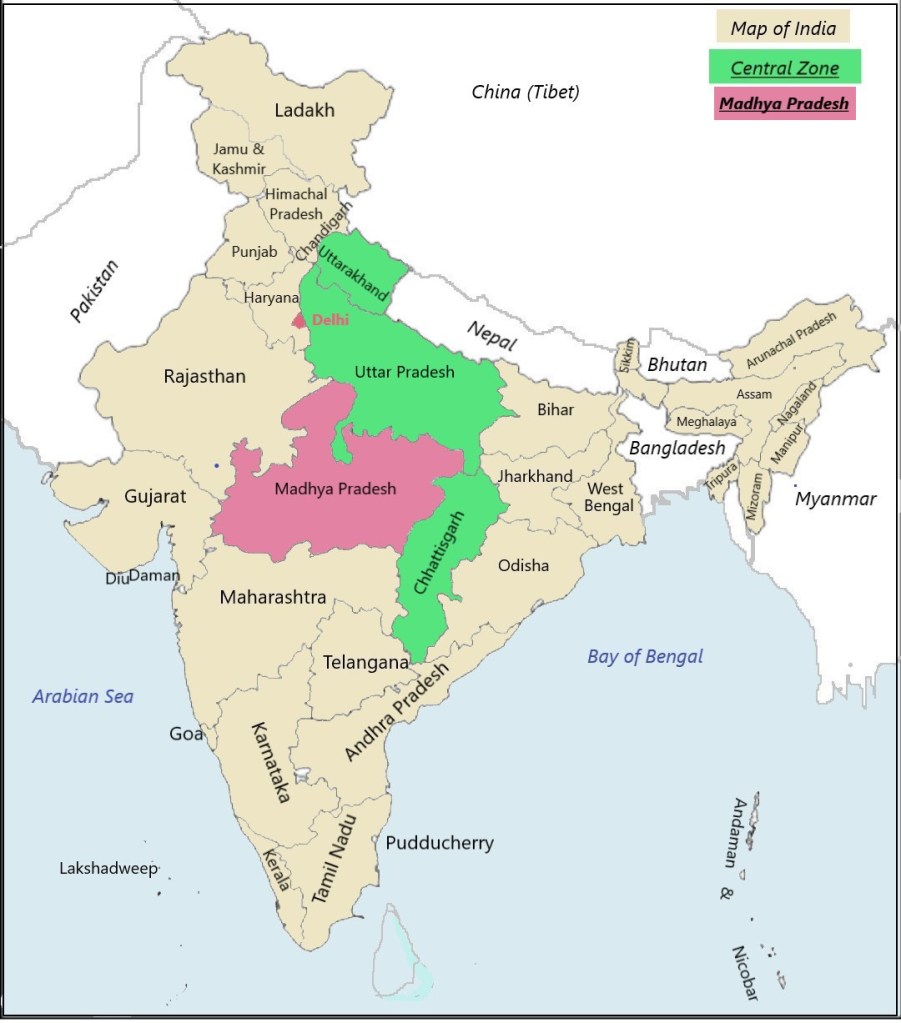
Madhya Pradesh is known as the Heart of India, due to its geographical location in the country. It is also known as “Tiger State”, because the tiger population is highest in Madhya Pradesh. It is known for its historical monuments and cultures, besides the spiritual heritage of many religions. Bhopal is its capital.
Madhya Pradesh has three UNESCO world Heritage sites, beside the Pench National Park which inspired Rudyard Kipling to write ‘The Jungle Book’.
Khajuraho is a popular heritage festival of Madhya Pradesh. This remarkable festival takes place during the month of February in front of the temple of Chitragupta and Viswanatha temple. It is a week-long program in open air, organized by the Directorate of Culture of Madhya Pradesh. Indians believe, the gods and goddesses were great lovers of dance and music, so every year this festival is observed not only to pay tribute to gods and goddesses but also to the great architect of this temple.
Madhya Pradesh is land-locked by Uttar Pradesh in the north.
Chhattisgarh in the east, Maharashtra in the south.
Gujarat and Rajasthan in the west.
Pulse farming in Madhya Pradesh.
Madhya Pradesh, is the second largest pulse producing state in India. Earlier it was No.1 until Rajasthan surpassed them. Their three main pulse productions are gram, Urad, and Toor. They cultivate other pulses too, food grains and oilseeds for their own consumption.
Food:
The food habits of the people of Madhya Pradesh are interesting. Northern and Western part emphasise on wheat and meat, while the Eastern and Southern part on rice and fish as their staple diet.
We will be cooking a very easy but popular dal recipe with minimal ingredients called Dhanwani. The recipe is from a small village called Mandla in Madhya Pradesh.
Dhanwani

Dhanwani is a delicious and unique dal dish from Madhya Pradesh. The dal pakoras (dumplings) dunked in a slurry coriander dal. The pakoras just adequately soaked melt in the mouth. The gravy folds in smoothly into the steamed rice giving an awesome taste.
You need:
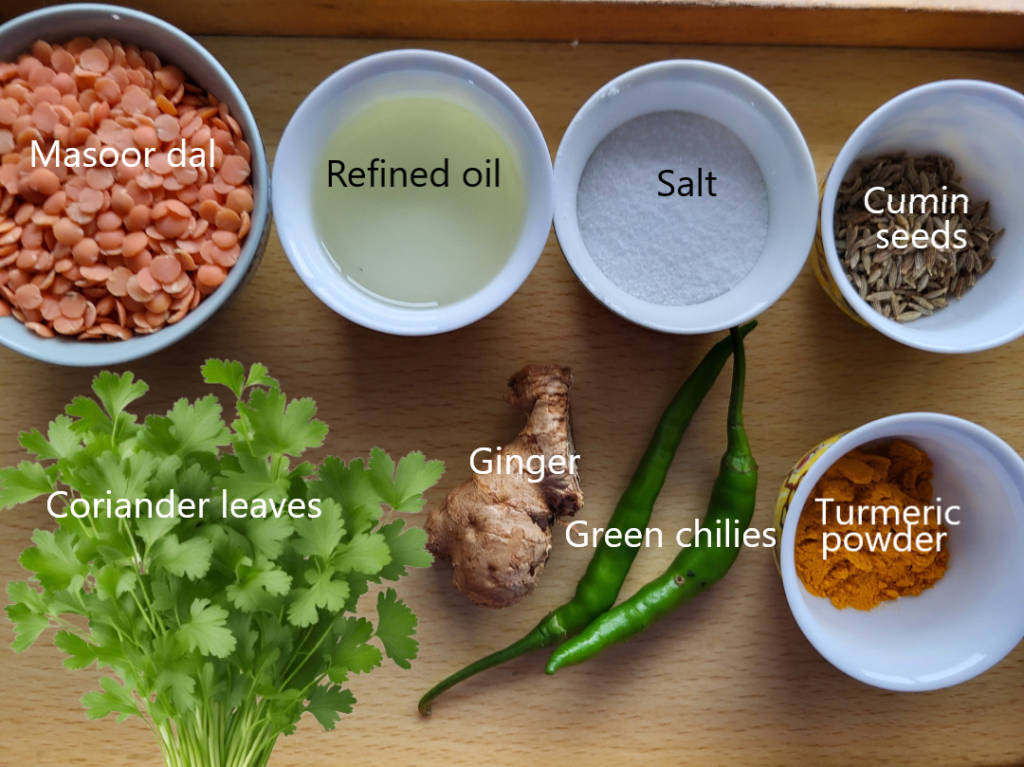
120 gm masoor dal
½ tsp turmeric powder
½ tsp cumin seeds
1-2 green chilies (according to your taste)
1 inch piece of ginger
1 bunch of fresh coriander leaves
Salt to taste
1 tbsp of mustard oil/refined oil for tempering
Extra oil to deep-fry the pakodas (dumplings)
Method:
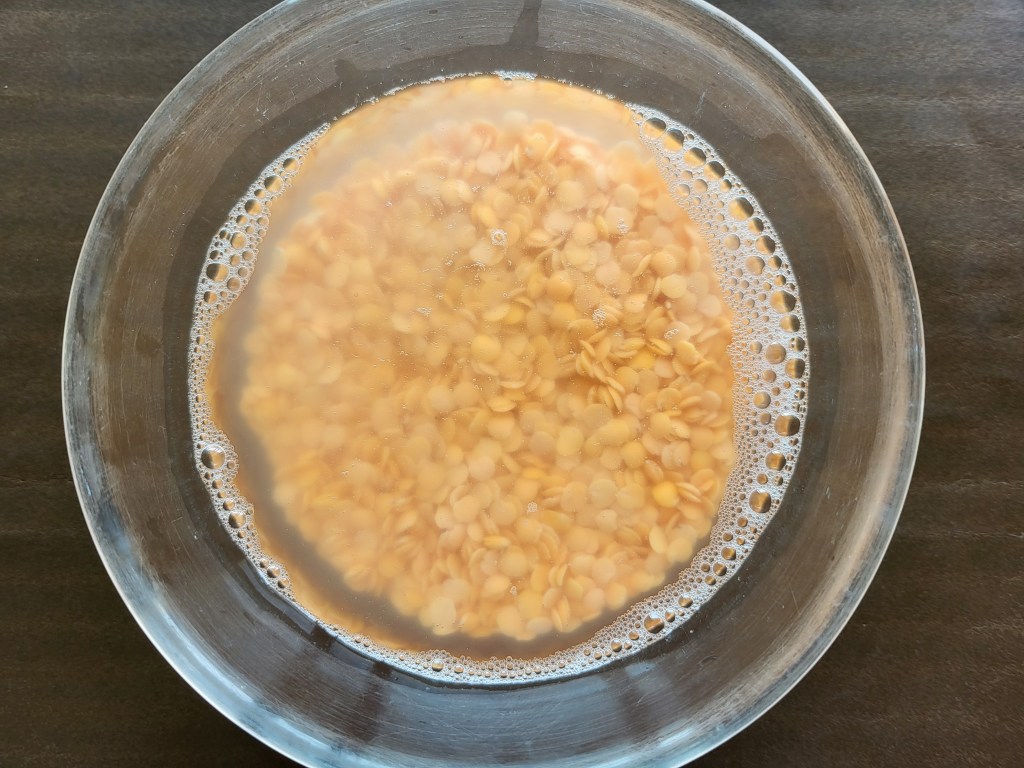
- Wash and soak the dal for 3-4 hrs.
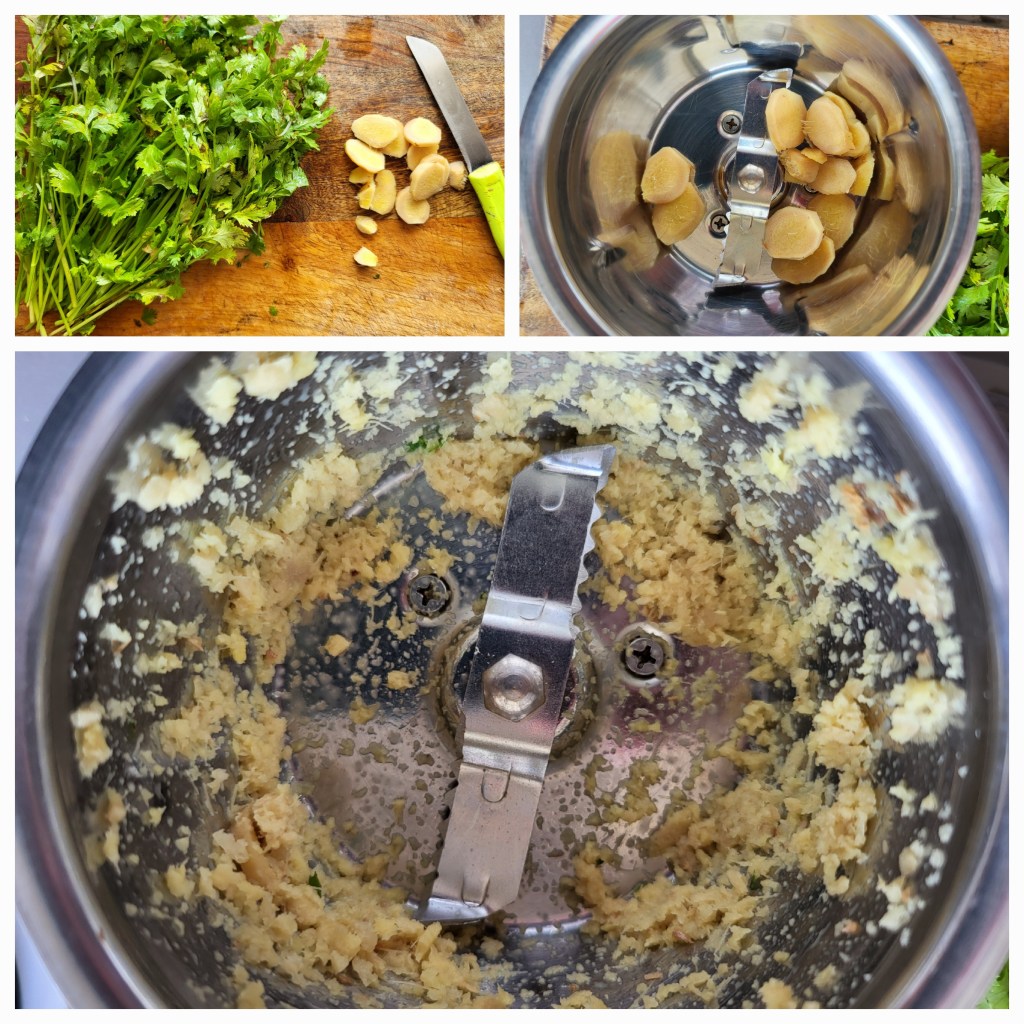
2. In the meantime, wash the coriander leaves.
3. Wash, peel and dice the ginger piece.
4. Grind the ginger in a grinder.
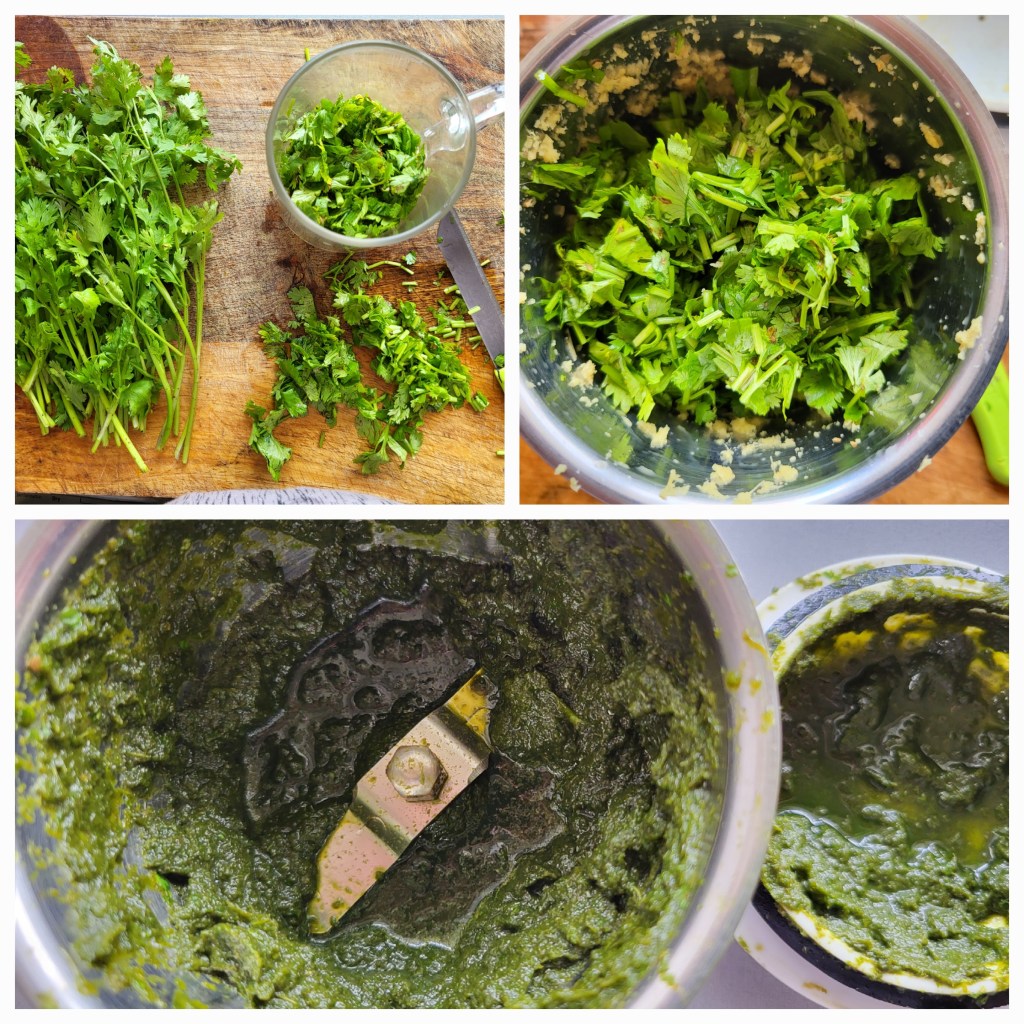
5. Chop the coriander leaves.
6. Keep aside 1 tbsp of chopped coriander leaves for later use.
7. Grind the remaining coriander leaves together with the ginger to a very fine paste. Add1 tbsp of water if needed and then keep it aside.

8. Wash the chilies and cut off the stems. Make small slits on the broader side of the chilies and keep them aside.

9. Wash the soaked dal lightly one more time and grind it in a grinder to a fine paste.

10. Take out the dal paste into a bowl.
11. Add ¼ tsp salt, ¼ tsp of turmeric powder, and 1 tbsp of finely chopped coriander leaves.
12. Beat it till light and fluffy. If it is too thick you may add one or two tsp of water.
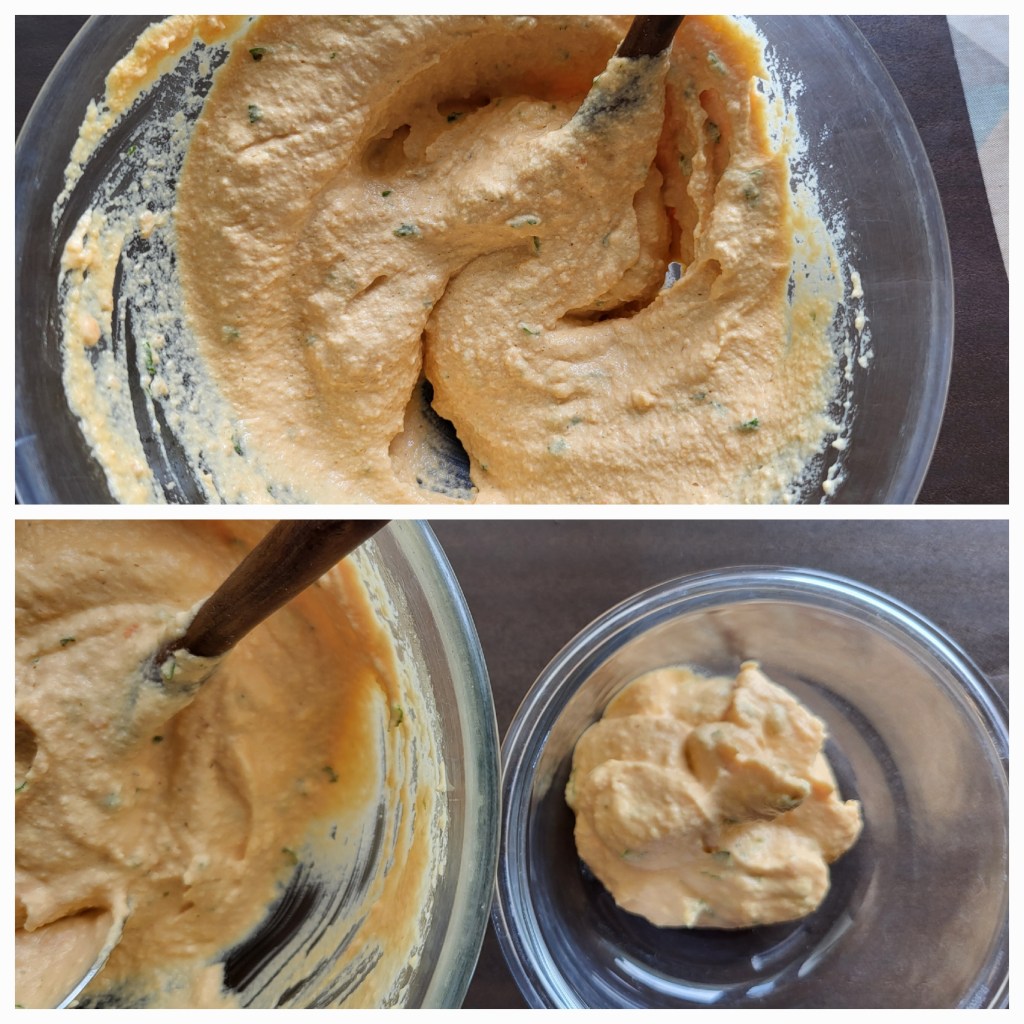
13. Keep 1 tbsp of the mixture aside for the gravy.

14. Use the remaining mixture for the pakoras. Heat a pan with enough oil to deep fry the pakoras.
15. Scoop out 1 tsp of the dal mixture and place it in the oil.
16. Make 3- 4 of them and fry until golden brown.
17. Do the same with the remaining mixture.
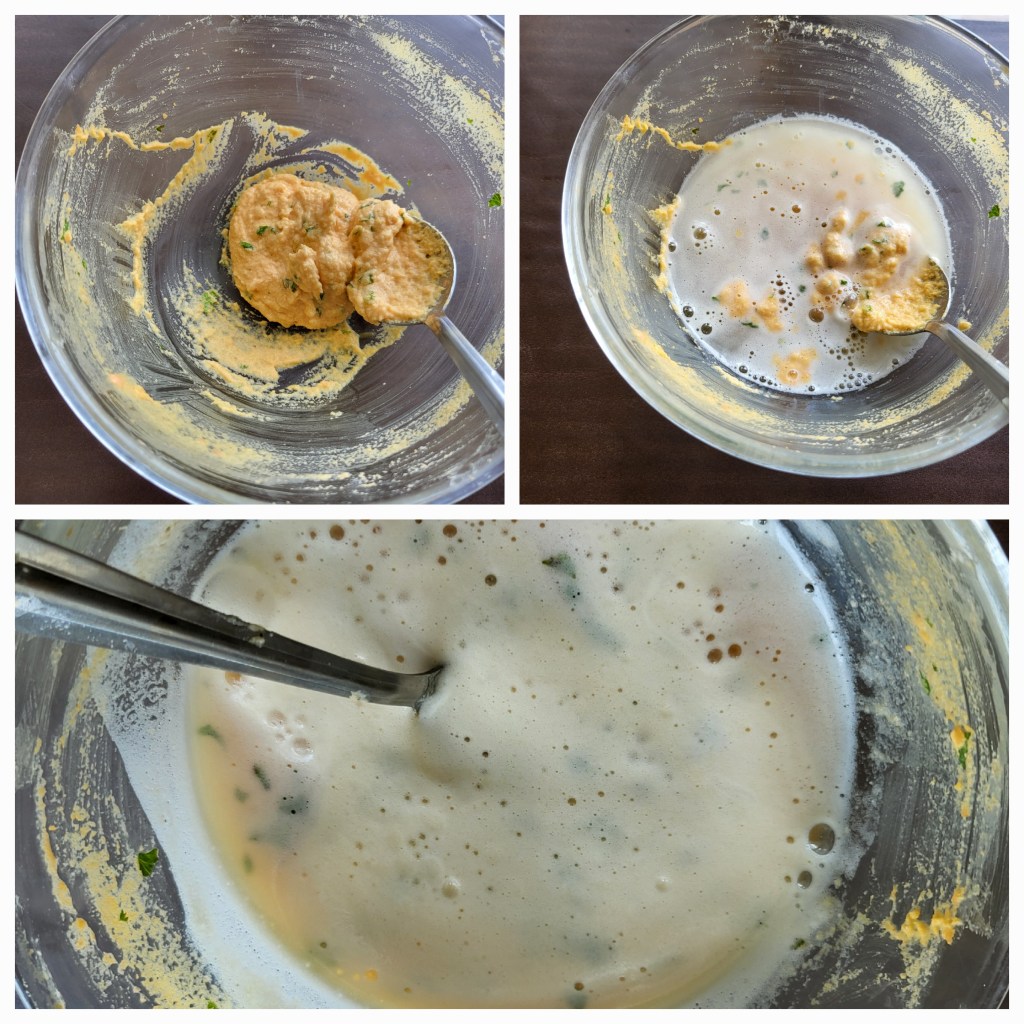
18. Place the dal mixture which was kept aside for the gravy into the bowl and add 2 cups of water and mix it well.
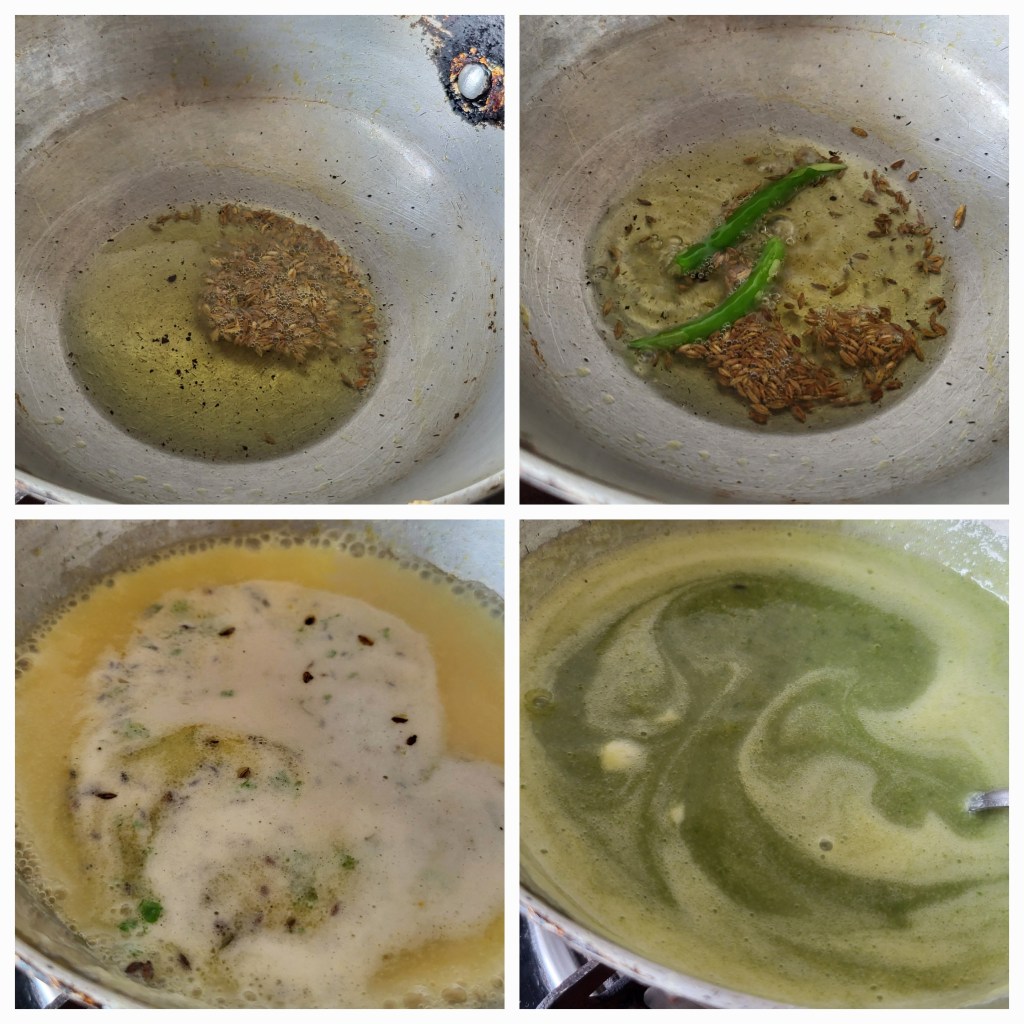
19. Heat 1 tbsp of oil in a pan.
20. Add ½ tsp of cumin seeds and fry for a few seconds.
21. Add the green chillies and stir fry a little.
22. Pour the slurry dal mixture into the pan and allow it to boil for a minute or so.
23. Add 3 tbsp of the coriander paste and mix well.
24. Cook for another minute or so.

25. Add the pakoras to the dal and bring it to boil once and then switch off the heat.
26. Dhanwani is ready to be served.
Happy Cooking !
Coming up next …………Dal from Uttarakhand.
*******
 Dal On The Table
Congratulations, Indira, interesting details regarding MP. Will try out the recipe sometime.
LikeLike
Thank you Faith. Comments are so inspiring ….
LikeLike
this is absolutely beautiful missy jethai… loved it… will try out soon…
LikeLiked by 1 person
Thank you so much Priyanka. Please try it out and let me know. ….
LikeLike