
The term ‘dal’ in India covers a wide range of dried legumes, including split pulses, beans, and lentils, whether cooked or raw.

Dal is edible split pulse.
Edible pulse are dried seeds found in pods of leguminous plants.
Leguminous plants are those plants that flower and their fruits are always pods.

Green peas are the best example of legume, and of leguminous plant.
To find out what a leguminous plant looks like, its leaves, flowers, pods and finally the seeds, dalonthetable decided to plant the seeds of different dals. The small project was named Seed2Seed: Know your dal through leaves and flowers.
Parts of a channa seed has been taken for an example:
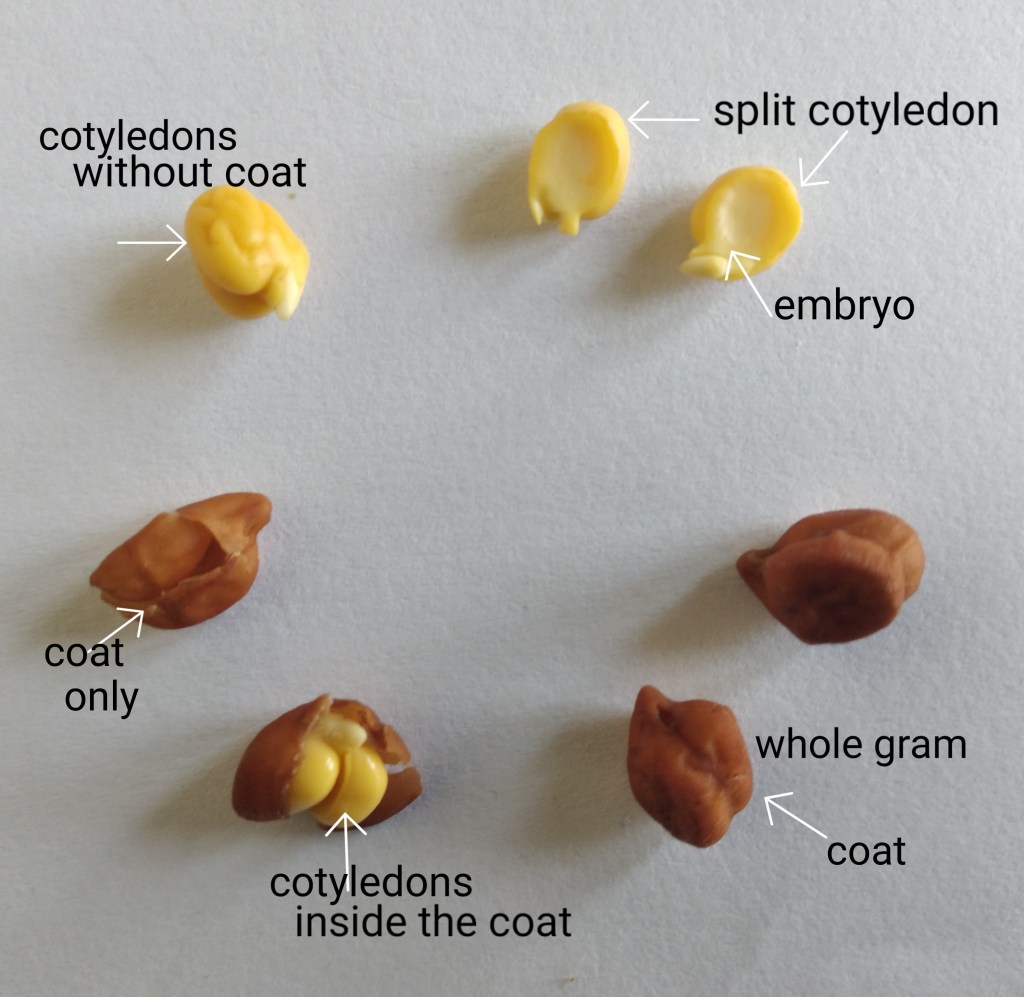
To get a plant we need a seed. Only a sabut dal, that is a whole pulse can be called a seed, because it fulfils all the criteria of a seed. A seed must have a coat to protect the two cotyledons inside. The cotyledons protect the little embryo i.e. the tiny plant inside the seed.
Similarly for the other dals. Moong Gram has a olive green coat with a pale yellow cotyledons. Urad has a black shiny coat with 2 white cotyledons Masoor has a thin brown coat with 2 pink cotyledons. The embryo inside the cotyledons are so small that they can not be seen with naked eye.
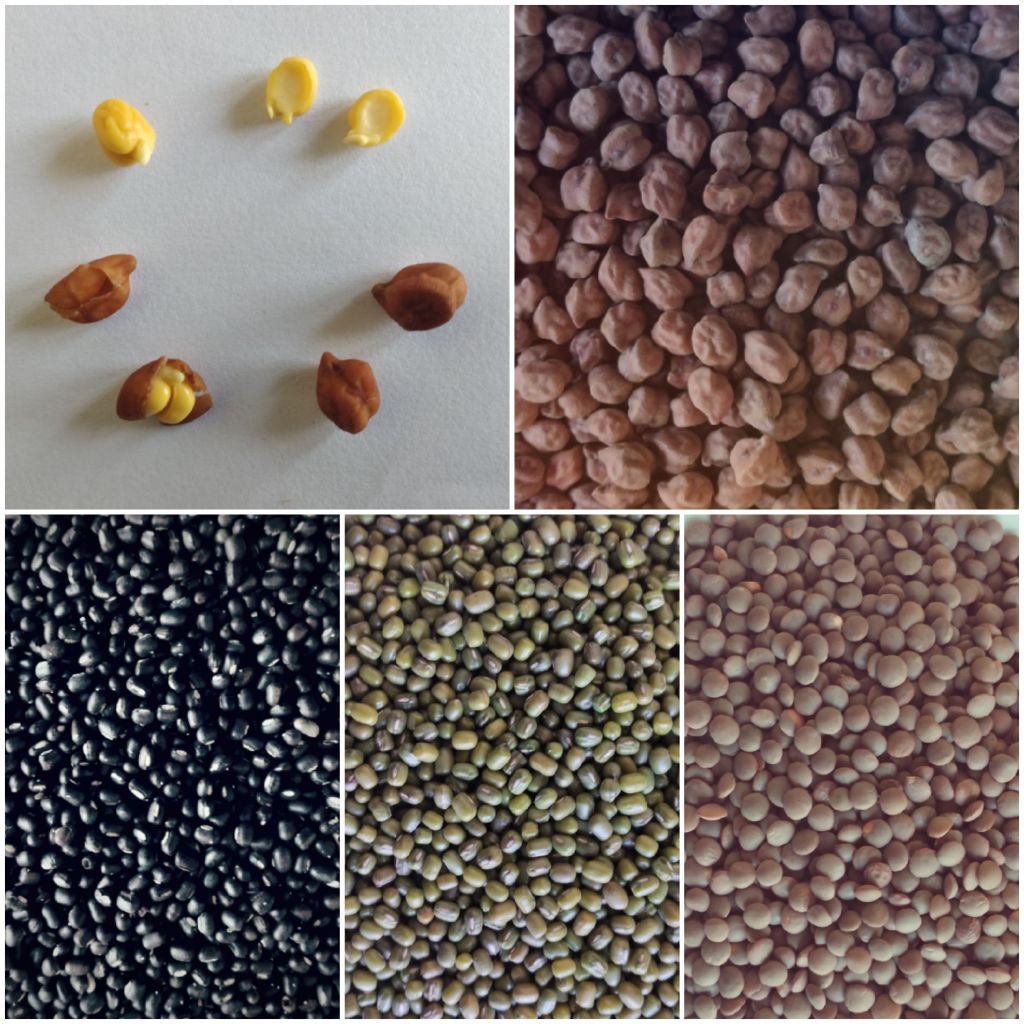
When a pulse is split the embryo gets destroyed. So you cannot get a plant out of a split pulse that is dal.
Out of the five commonly used dals, only four kinds sabut dals are available in the grocery shops namely sabut moong, sabut masoor, sabut urad and sabut channa. Sabut toor could not be found in the market.
Dalonthetable did the experiments with the four available sabut dals with success.
******
 Dal On The Table