
Uzbekistan: Location and People
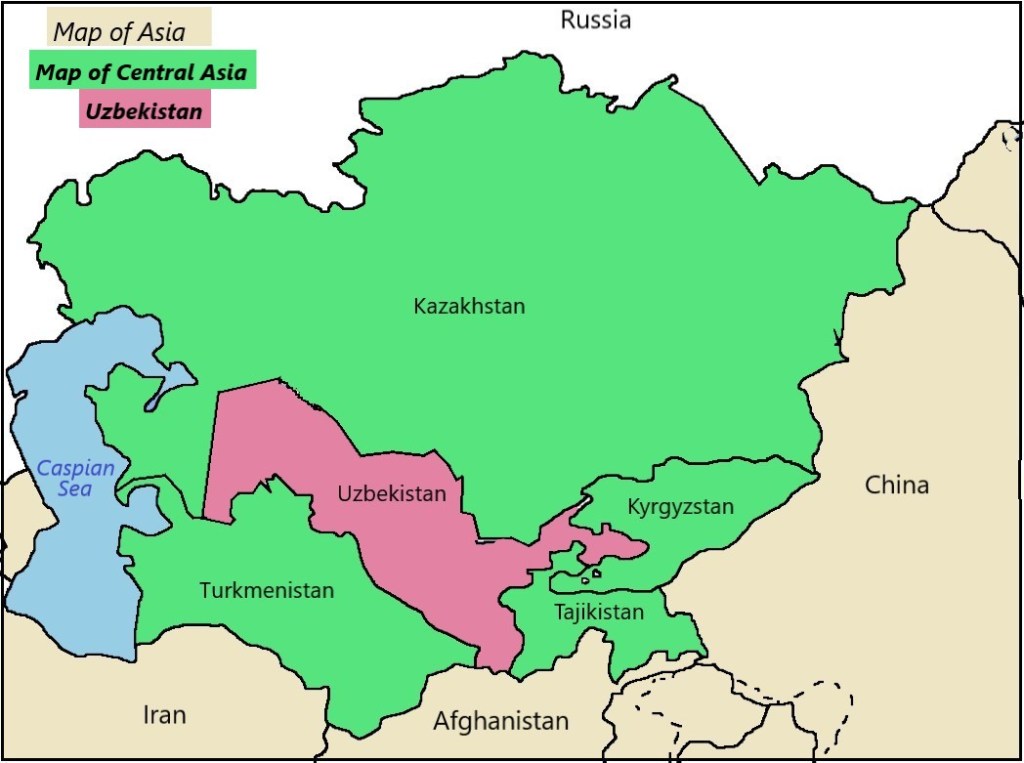
Uzbekistan, a Central Asian country, is surrounded by Kazakhstan to the west, north, and northeast, Kyrgyzstan and Tajikistan to the east, Afghanistan to the south, and Turkmenistan to the southwest. Uzbekistan is uniquely known as a “double-locked” country, being landlocked and surrounded by other landlocked countries. Its capital is Tashkent.
Uzbekistan’s geography is diverse, with the Kyzylkum Desert covering much of the west. The fertile Fergana Valley lies in the east, while the Tian Shan and Pamir-Alai mountains stretch across the southeast. The Amu Darya and Syr Darya rivers are vital for irrigation and support the country’s agriculture, particularly cotton production. The Aral Sea, shared with Kazakhstan, has shrunk significantly due to water diversion.
A Few Wonders of Uzbekistan
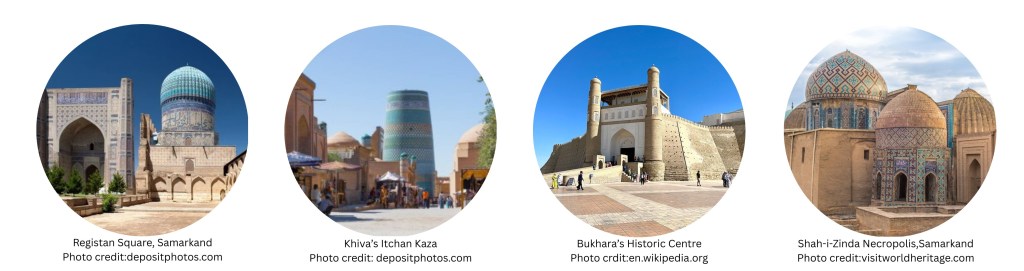
1. Registan Square, Samarkand: Registan Square is the heart of Samarkand, a UNESCO World Heritage Site. This majestic square is flanked by three stunning madrasas (Islamic schools) – Ulugh Beg, Sher-Dor, and Tilya-Kori – displaying intricate tile work and architecture.
2. Khiva’s Itchan Kaza: Itchan Kaza, the old city of Khiva, is a well-preserved medieval town. Its narrow streets, ancient mosques, and madrasas transport visitors back in time, offering a glimpse into Uzbekistan’s rich history.
3. Bukhara’s Historic Centre: Bukhara, one of the oldest cities on the Silk Road, boasts a rich history. Its historic centre features ancient mosques, madrasas, and the iconic Kalyan Minaret, showcasing Islamic architecture.
4. Shah-i-Zinda Necropolis, Samarkand: The Shah-i-Zinda necropolis is a stunning complex of mausoleums and mosques in Samarkand. Its intricate tile work, blue domes, and historical significance make it a must-visit wonder in Uzbekistan.
People of Uzbekistan
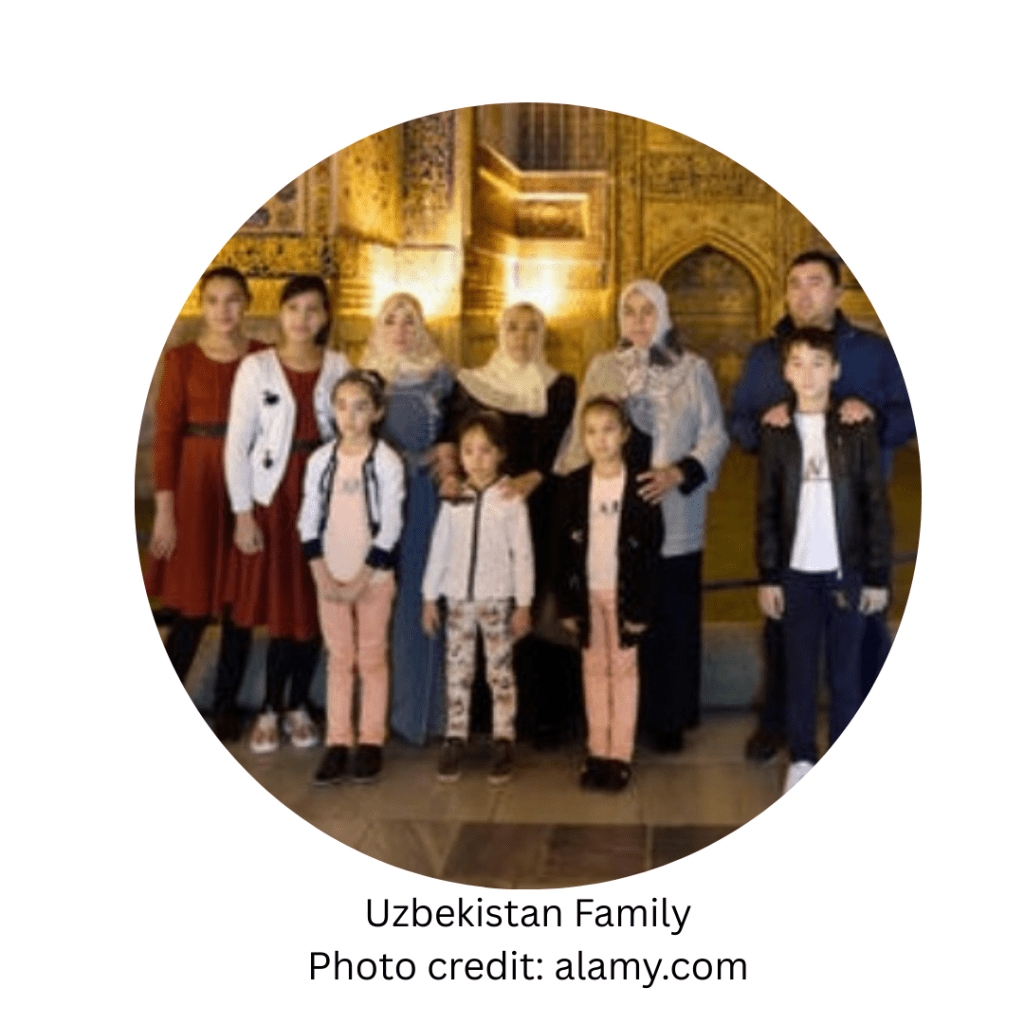
The people of Uzbekistan are known for their warm hospitality and rich cultural heritage. With a blend of Turkic, Persian, and Russian influences, Uzbek culture is a fascinating mix of traditions. Family and community ties are strong, and guests are treated with great respect. Uzbeks take pride in their history, and their cuisine, music, and crafts reflect this.
The country is also home to stunning architecture, vibrant markets, and the ancient Silk Road cities of Samarkhand and Bukhara.
Traditional dress of Uzbekistan
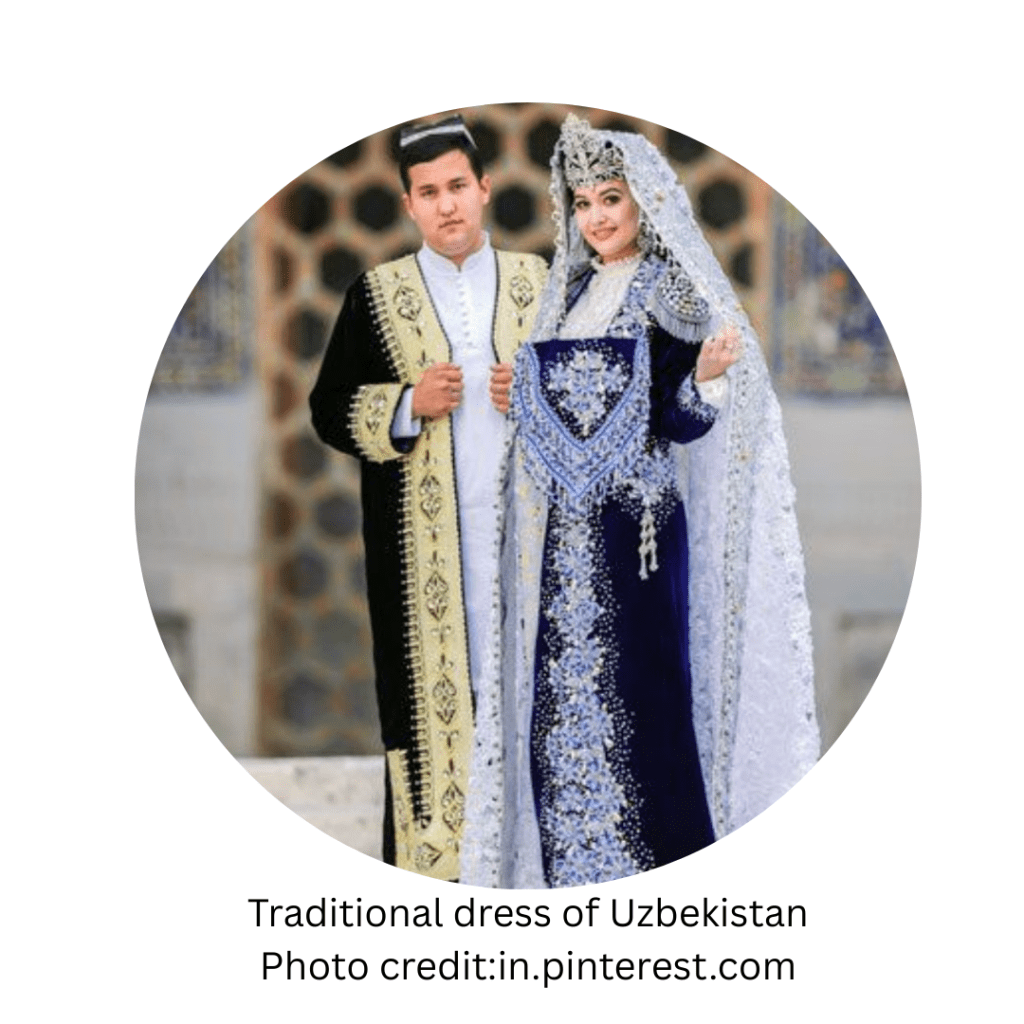
The traditional dress of Uzbekistan reflects the country’s rich cultural heritage. Men typically wear a ‘cha’pan’, a long, loose-fitting robe often decorated with intricate embroidery, paired with a ‘doppi’, a traditional skullcap.
Women wear colourful dresses, often adorned with vibrant patterns and embroidery, along with a headscarf. Traditional attire is often complemented by handmade jewellery and accessories, displaying the country’s skilled craftsmanship.
Pulses and recipes
Pulse Cultivation in Uzbekistan
Uzbekistan is a significant producer of pulses, particularly chickpeas, lentils, and beans. These crops are mainly grown in rotation with cotton and wheat, helping maintain soil fertility. Pulses are a vital source of protein in the local diet and play a key role in sustainable agriculture. Most cultivation relies on irrigation from the Amu Darya and Syr Darya rivers. Efforts are being made to improve yields and expand pulse production.
We’re cooking Mashhurda (or Moshkhurda) today! In Central Asia, meat is usually the star ingredient in all traditional dishes, but this dish is a cool surprise – beef is optional! We were encouraged because dalonthetable is all about veggie delights, so this one’s a perfect fit. We decided on it right away!
Mashhurda (Uzbek Mung Bean Stew)
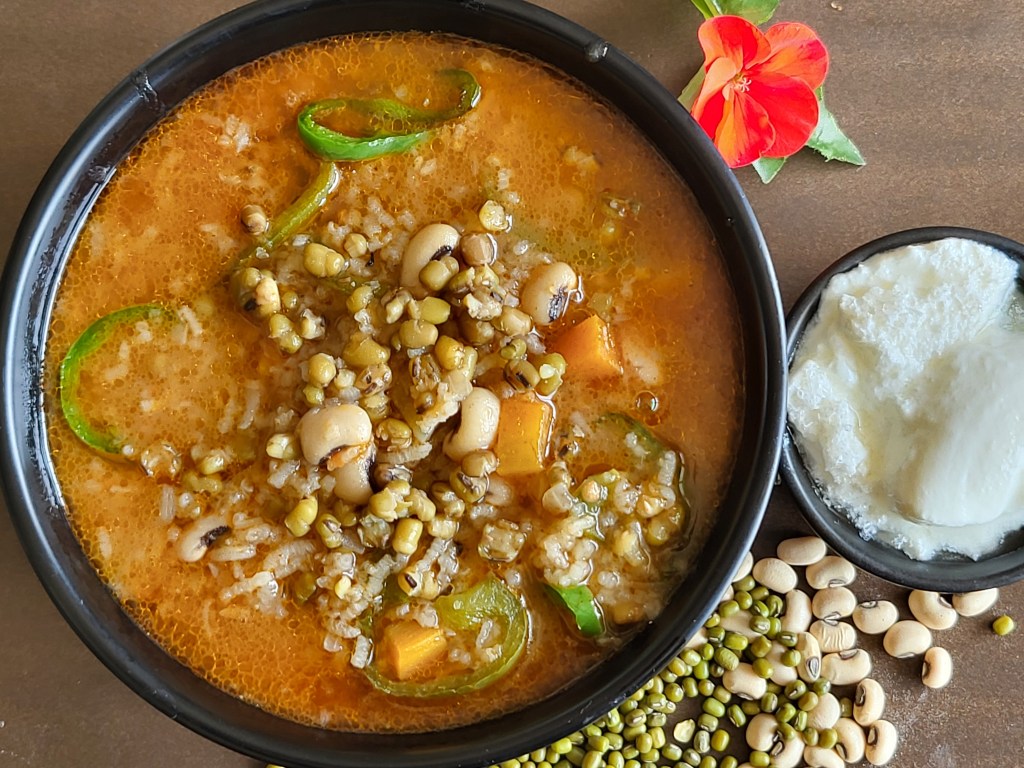
Mashhurda is a hearty Uzbek stew made with mung beans, black-eyed peas, veggies, and rice. This comforting dish is packed with flavors from spices, garlic, and fresh herbs. Perfect for a cozy meal with yoghurt on the side.
You need:
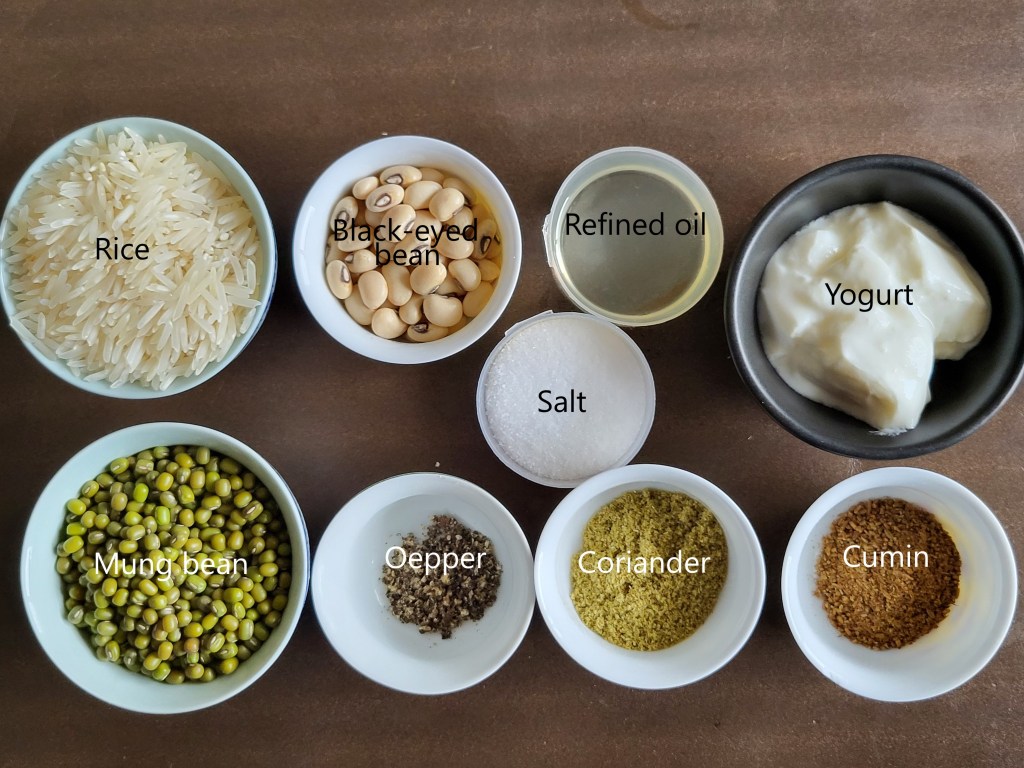
50 gm mung beans
25 gm black-eyed beans
50 gm rice
½ tsp pepper powder
½ tsp coriander powder
½ tsp cumin powder
1 tbsp refined oil
Salt to taste
Curd/yogurt to serve
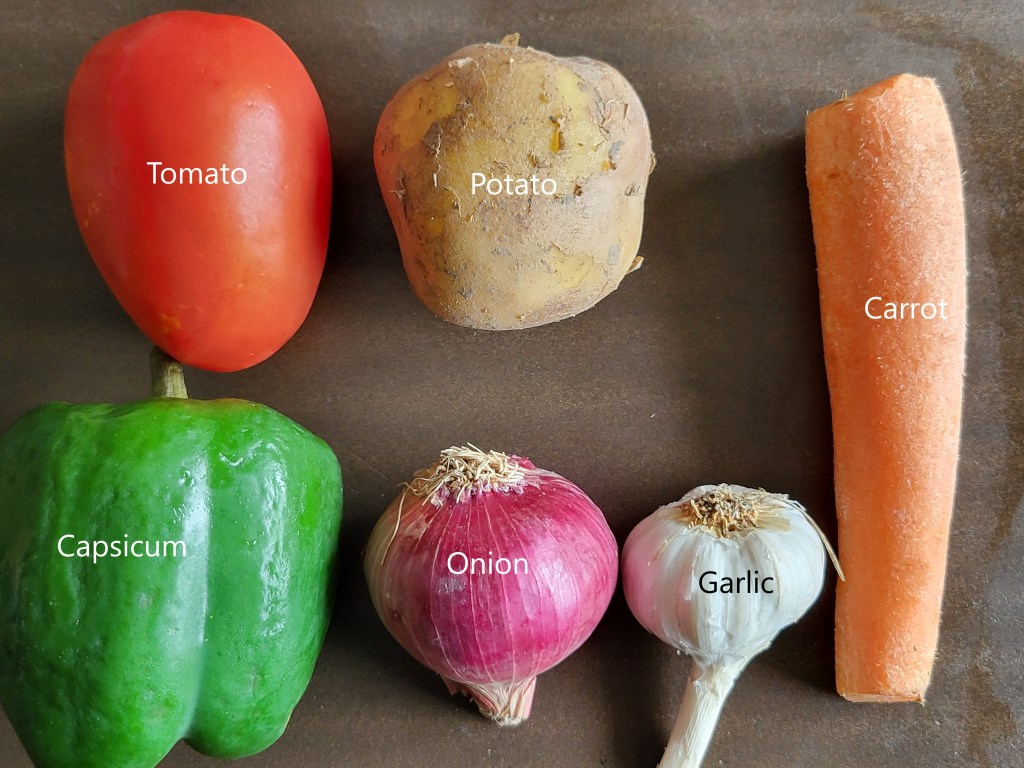
Vegetables:
2 tbsp chopped onion
1 tsp grated garlic
1 medium size green capsicum
¼ cup diced carrot
¼ cup diced potato
1 medium size tomato
Method:
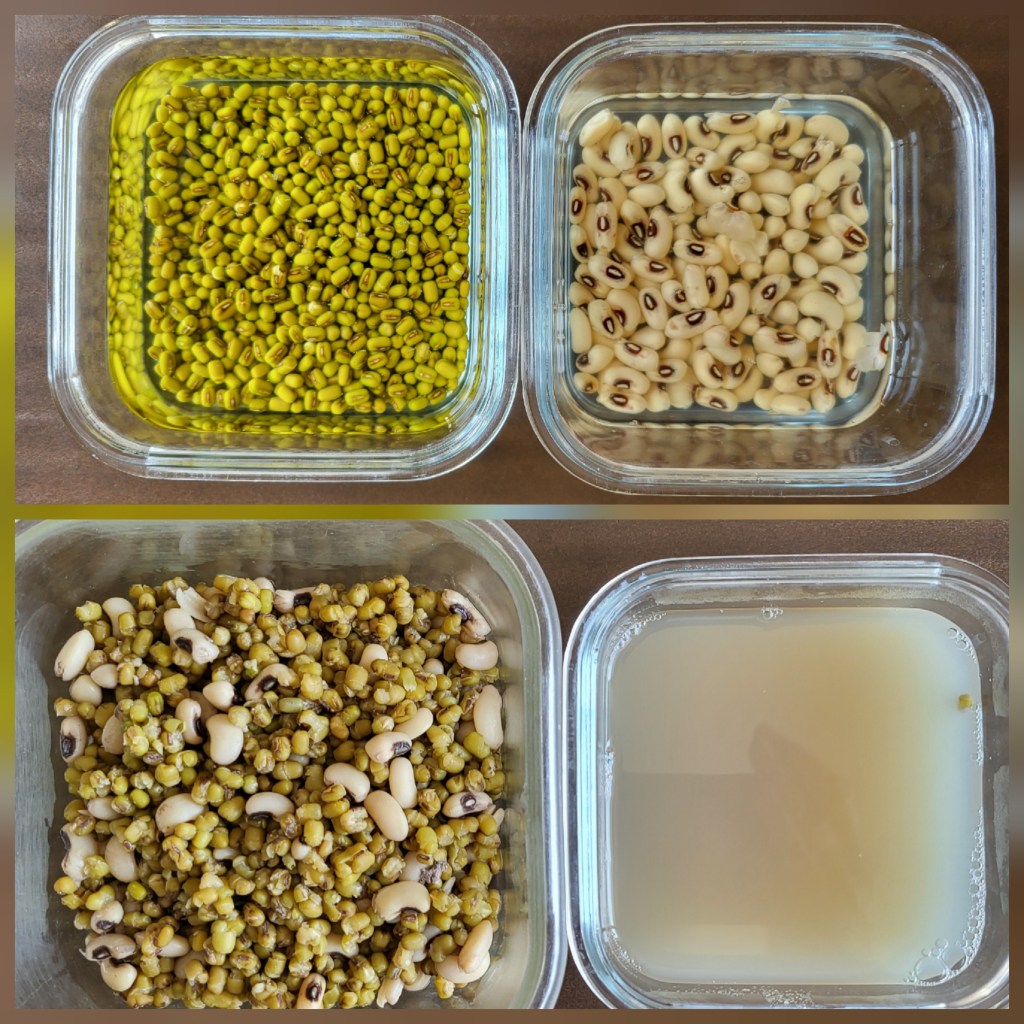
- Wash and soak mung and black-eyed beans overnight.
- Cook with a bit of salt till tender.
- Separate beans from liquid (keep the liquid!).
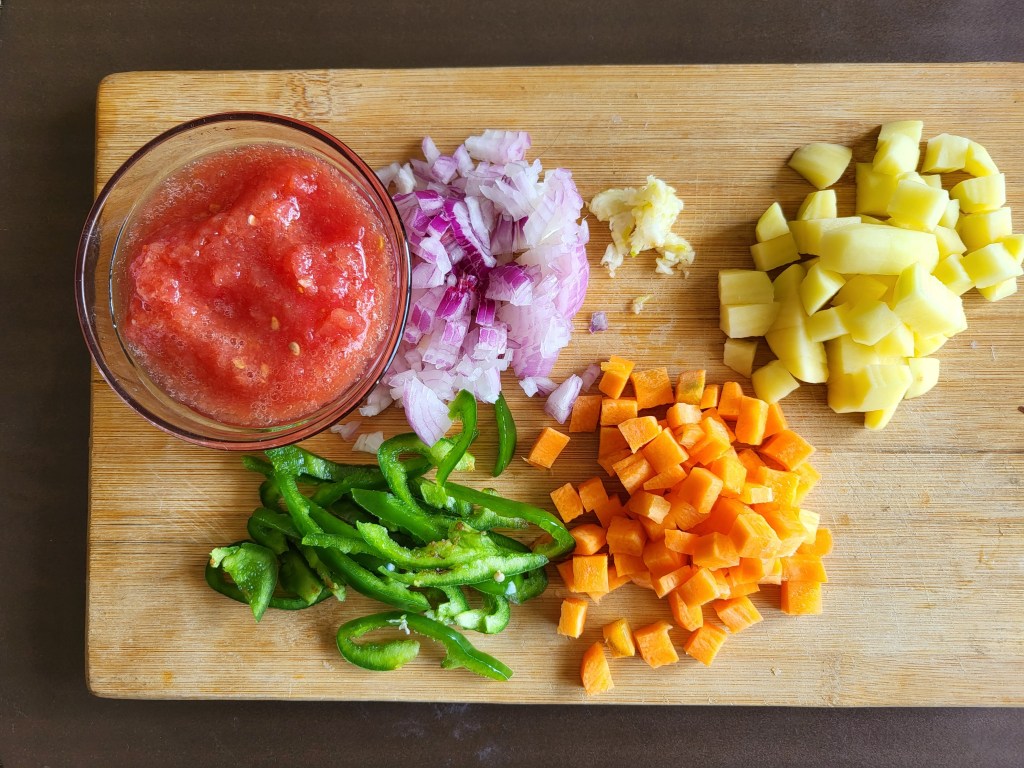
Prep veggies:
4. Grate tomato (discard skin).
5. Chop onion finely, grate garlic.
6. Dice potato and carrot.
7. Cut capsicum into fine strips.
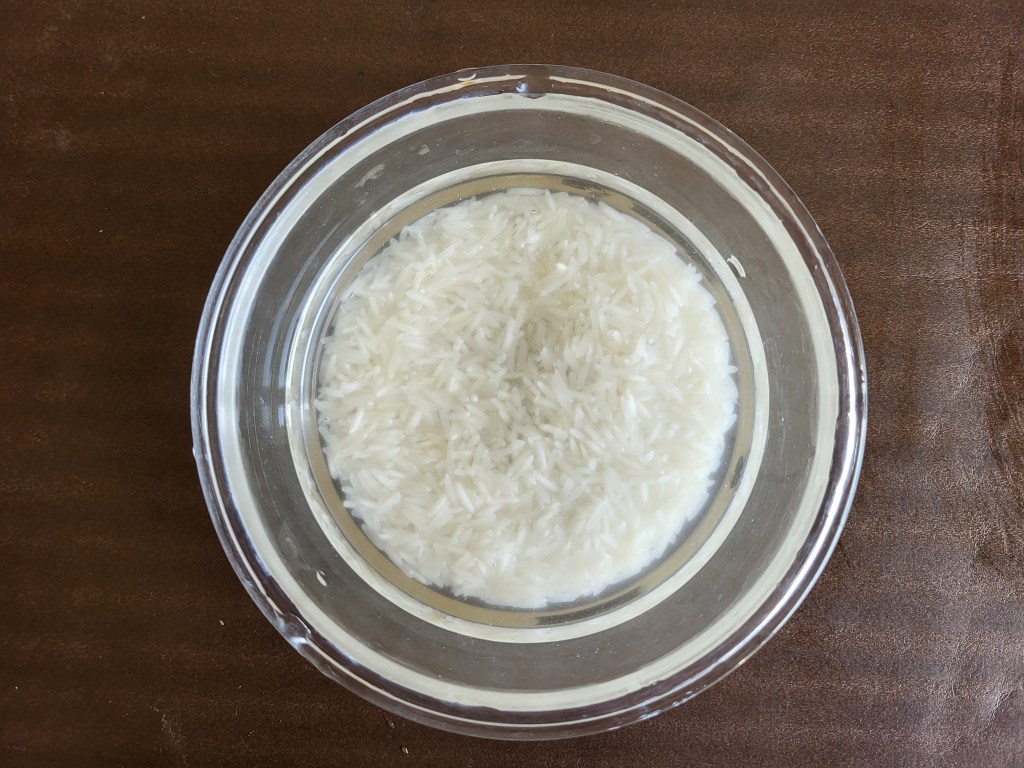
8. Wash and soak rice for about 10 minutes.
9. Drain and set aside.
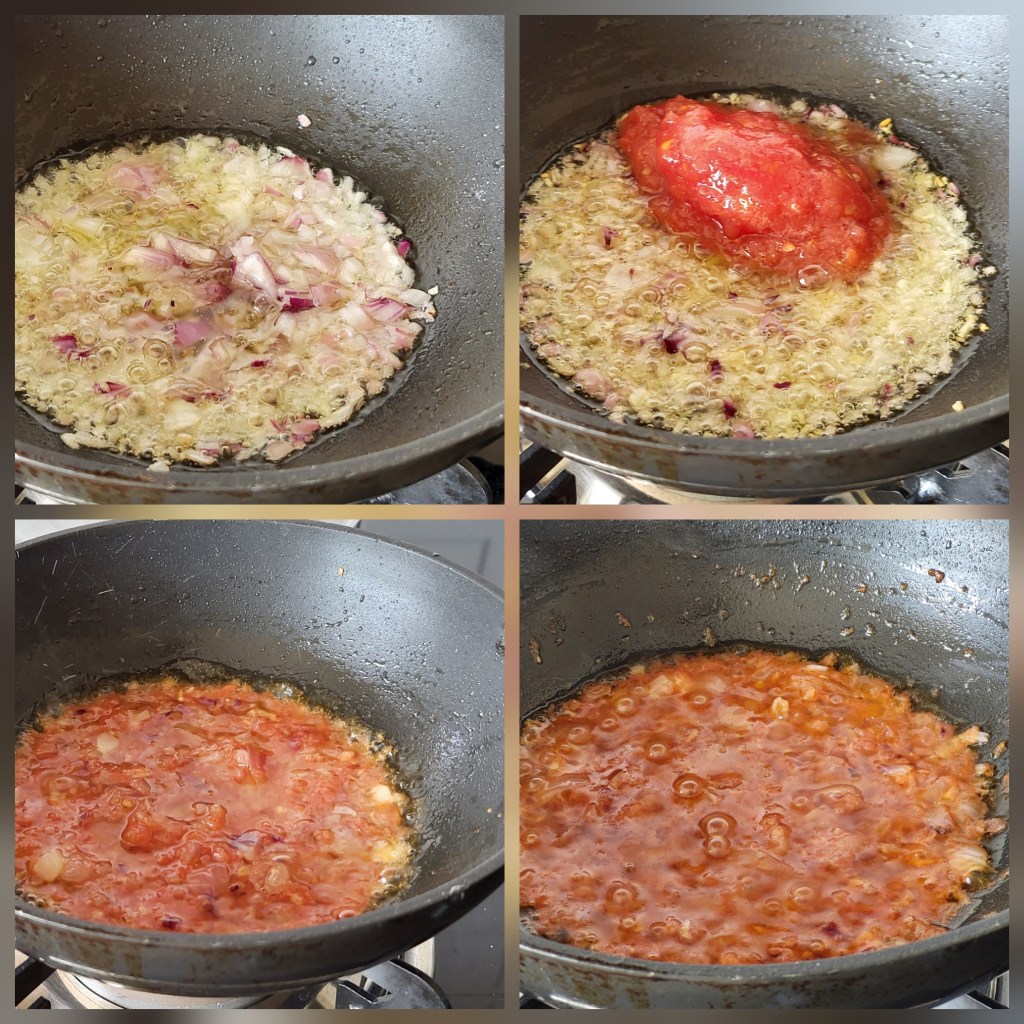
10. Heat oil in a pan.
11. Add onion, sauté briefly.
12. Add garlic, then tomato. Fry low till oil separates.
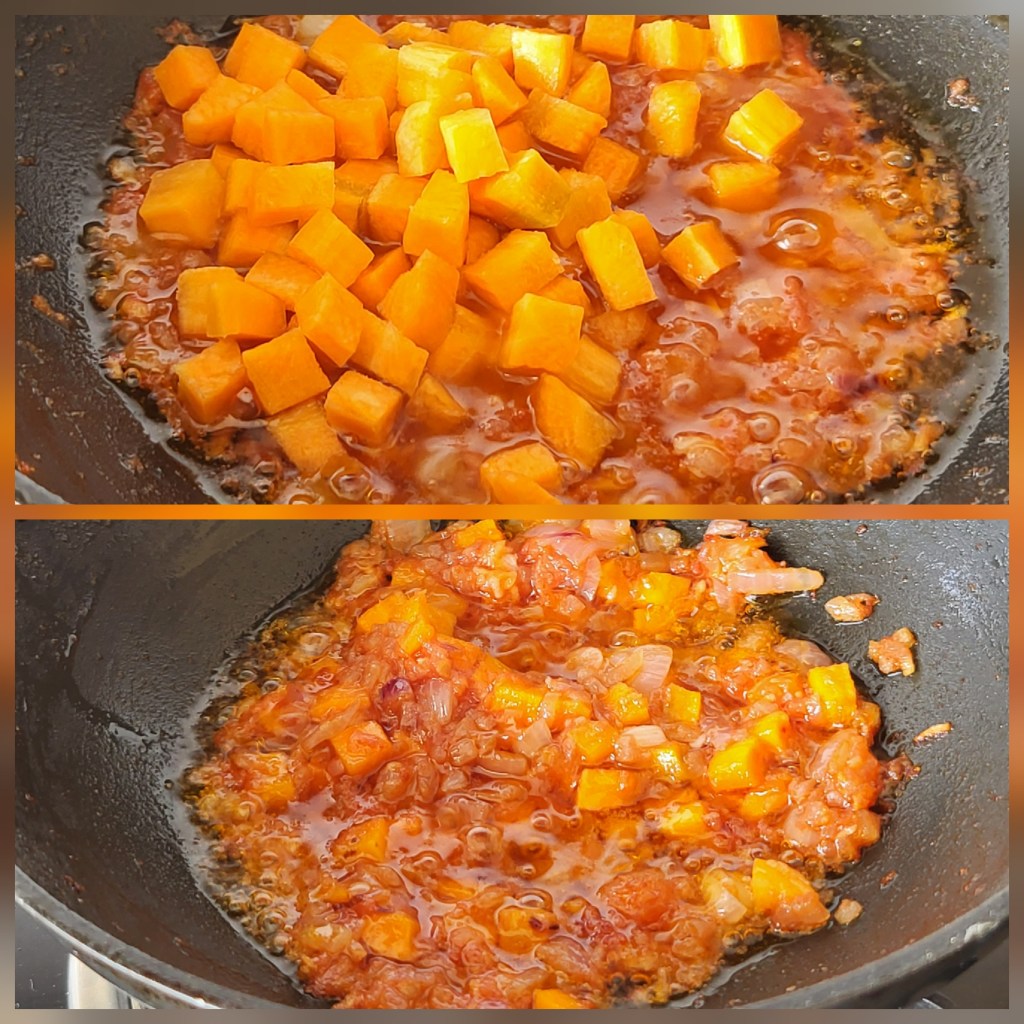
13. Add diced carrot, fry over low heat till tender.
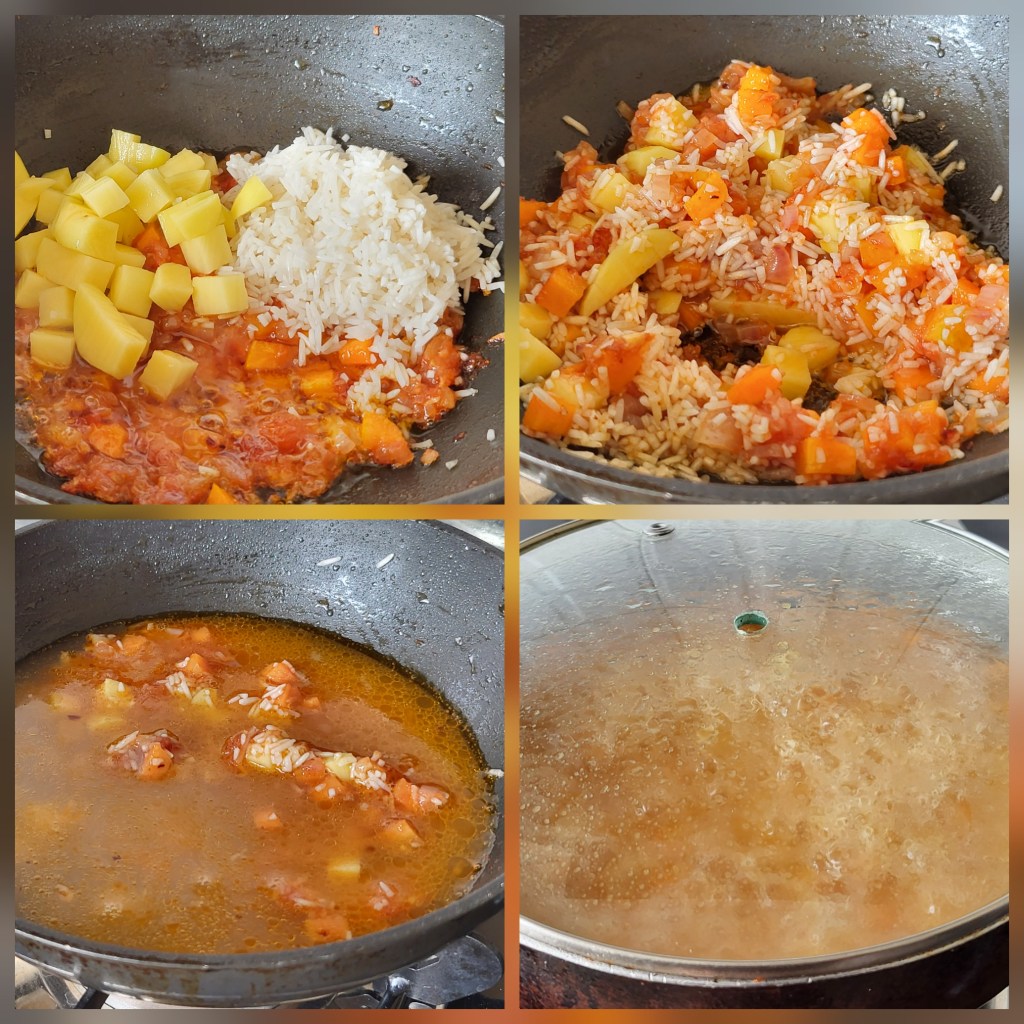
14. Add rice, potato; mix with spice.
15. Add bean liquid and extra water as needed.
16. Stir, cover, cook till potato and rice are done. Stir occasionally.
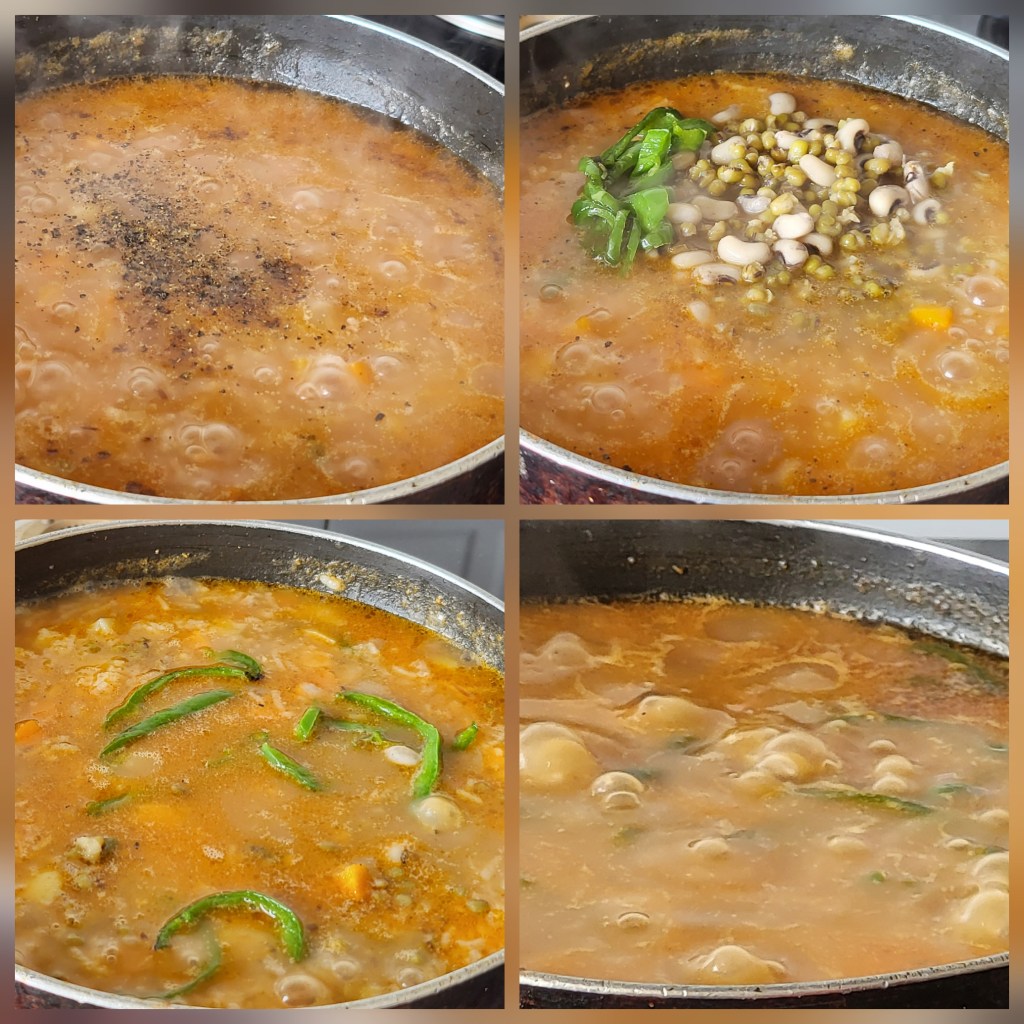
17. Add crushed cumin, coriander powder, pepper powder; bring to boil.
18. Add cooked beans, capsicum.
19. Simmer for 5 minutes, stirring occasionally.
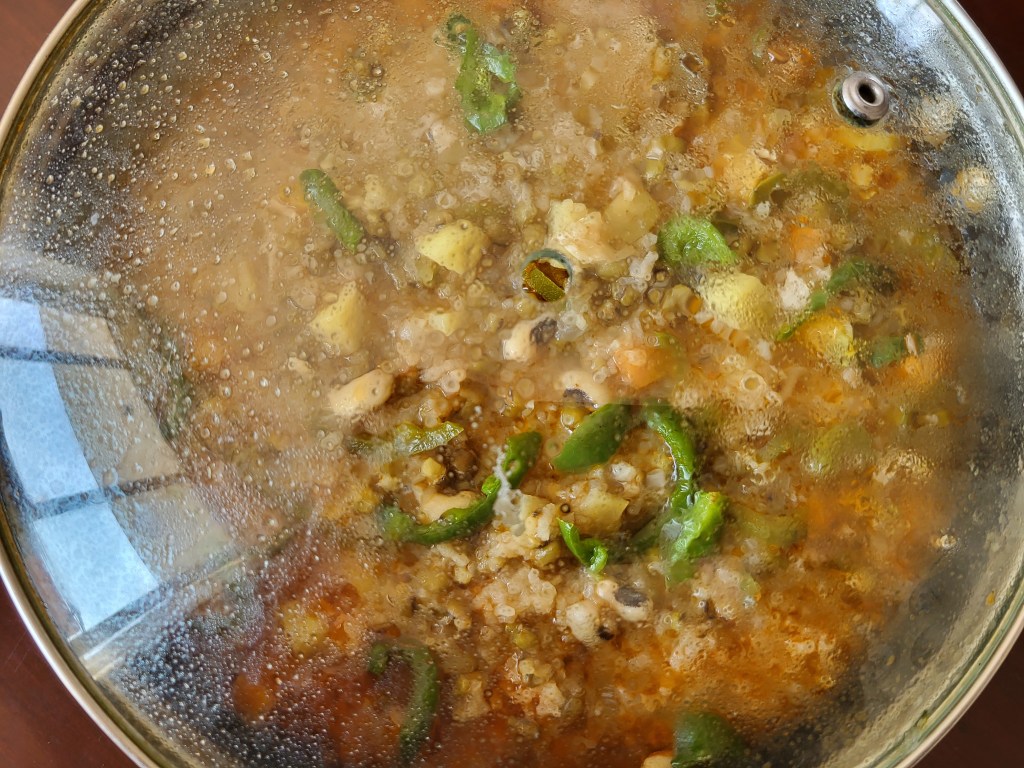
20. Switch off heat, cover for 10 mins.
21. Serve hot with curd/yogurt.
Enjoy your Mashhurda.
Happy cooking!
Coming up next… Pulses in South Asian Cuisine.
*****
 Dal On The Table
Have been there! Must try!
LikeLike
Thanks, Meeta! What’s next on your travel list?
LikeLike