
Korea: Location and People
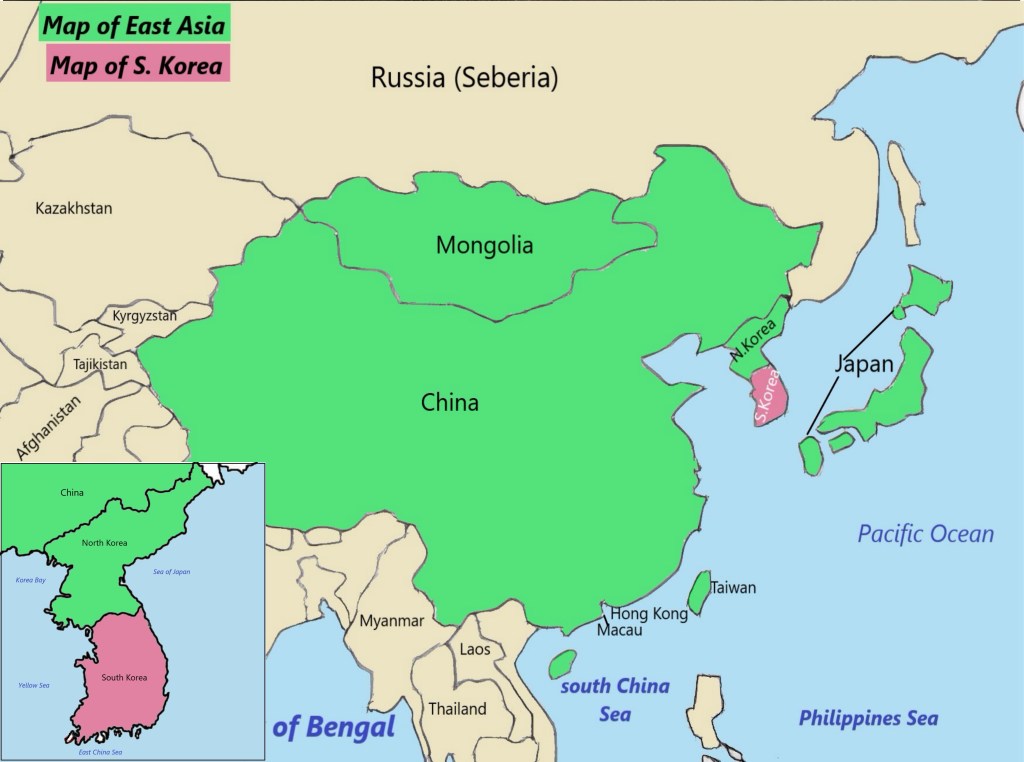
South Korea, located in East Asia, occupies the southern part of the Korean Peninsula. It shares a border with North Korea to the north, and is surrounded by the Yellow Sea to the west and the Sea of Japan to the east. The capital and largest city is Seoul.
The country is predominantly mountainous, but despite this, it has achieved remarkable economic growth, earning the nickname “Miracle on the Han River”. South Korea is also renowned for its technological advancements, vibrant culture, and delightful cuisine.
A Few Wonders of South Korea:
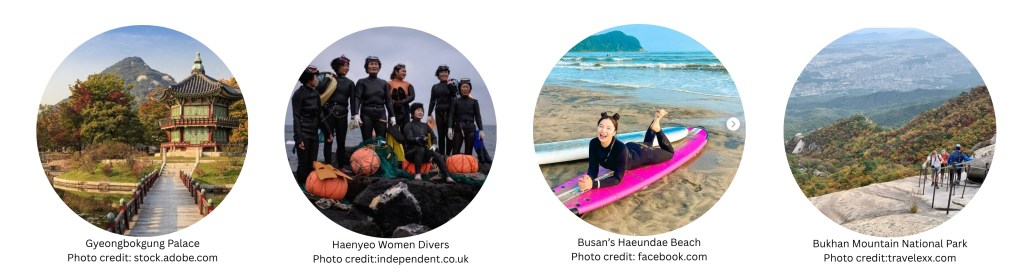
1.Seoul’s Gyeongbokgung Palace: Gyeongbokgung Palace is South Korea’s largest and most iconic palace, showcasing the country’s rich Joseon Dynasty heritage. With its stunning architecture and beautiful gardens, it’s a must-visit destination in Seoul. The palace complex features impressive structures like the Geunjeongjeon Hall and the National Folk Museum.
2.Jeju Island’s Haenyo Women Divers: Jeju Island’s Haenyeo women divers are a testament to the island’s unique cultural heritage. These skilled female divers spend hours underwater without oxygen, harvesting seafood and pearls for centuries, earning their place as cultural icons. The island itself is a UNESCO World Heritage site, boasting stunning natural beauty and volcanic landscapes.
3.Busan’s Haeundae Beach: Haeundae Beach in Busan is South Korea’s most popular beach destination, attracting millions of visitors each year. Its crystal-clear waters, scenic views, and lively atmosphere make it a perfect spot for relaxation and fun. The beach is also known for its vibrant nightlife and seafood restaurants.
4.Bukhan Mountain National Park: Bukhan Mountain National Park is a nature lover’s paradise, offering breathtaking scenery and hiking trails just outside Seoul. The park features stunning rock formations, temples, and scenic views, making it a popular destination for outdoor enthusiasts. Visitors can explore the park’s many trails and enjoy the beautiful Korean landscape.
People of South Korea
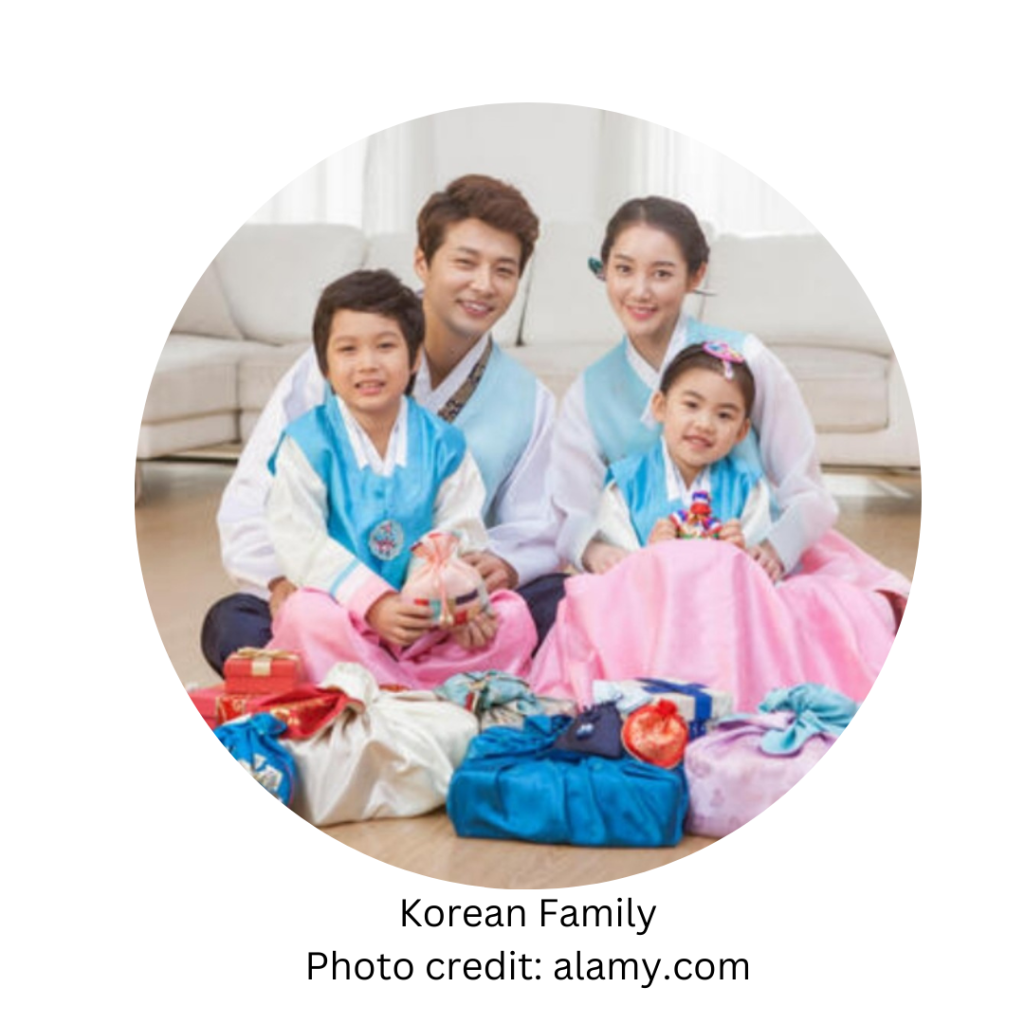
South Korea is known for its vibrant culture and rich traditions. The people of South Korea, Koreans, are known for their warm hospitality and respect for elders. They’re a proud nation with a strong sense of community and family ties. From bustling Seoul to serene countryside landscapes, Korea offers a unique blend of modernity and heritage.
Traditional dress of south Korea
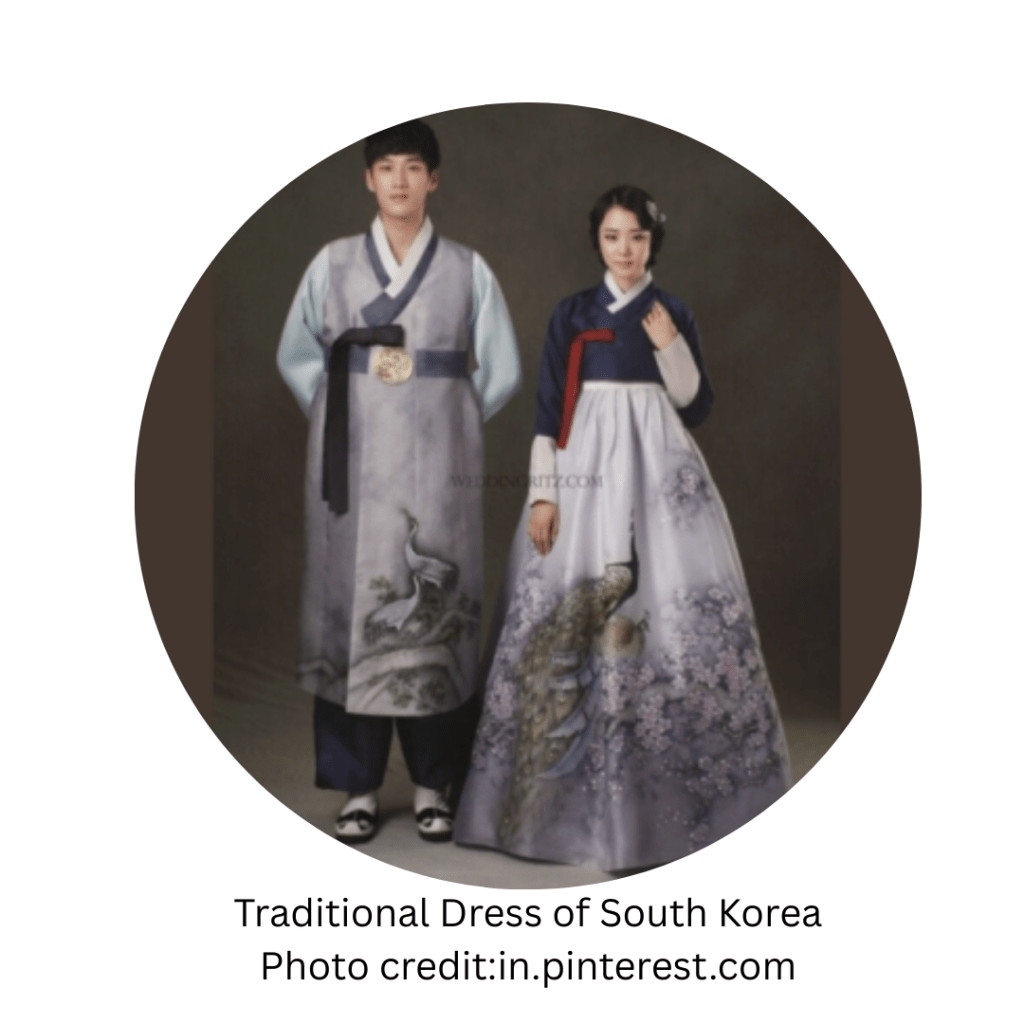
The traditional dress of South Korea is the Hanbok, a beautiful and elegant attire that’s steeped in history and culture. They’re often worn on special occasions like festivals, weddings, and holidays, showcasing the country’s rich traditions.
For women, it typically consists of a jeogori (blouse) and chima (skirt), while men wear a jeogori and baji (pants). Hanboks are known for their vibrant colors, intricate designs, and flowing silhouettes, making them a stunning representation of Korean heritage. They’re often worn on special occasions like festivals, weddings, and holidays, displaying the country’s rich traditions.
Pulses and Recipes
Pulse cultivation in South Korea is a significant aspect of the country’s agriculture. South Korea cultivates various pulses, including mung beans, soybeans, and azuki beans. The country’s climate and soil conditions make it an ideal place for growing a variety of pulses. Korean farmers typically grow pulses using sustainable farming practices, focusing on quality and yield. Pulses are a staple in Korean cuisine, used in various traditional dishes like kongnamul (bean sprouts), doenjang (fermented soybean paste), and patbingsu (shaved ice dessert).
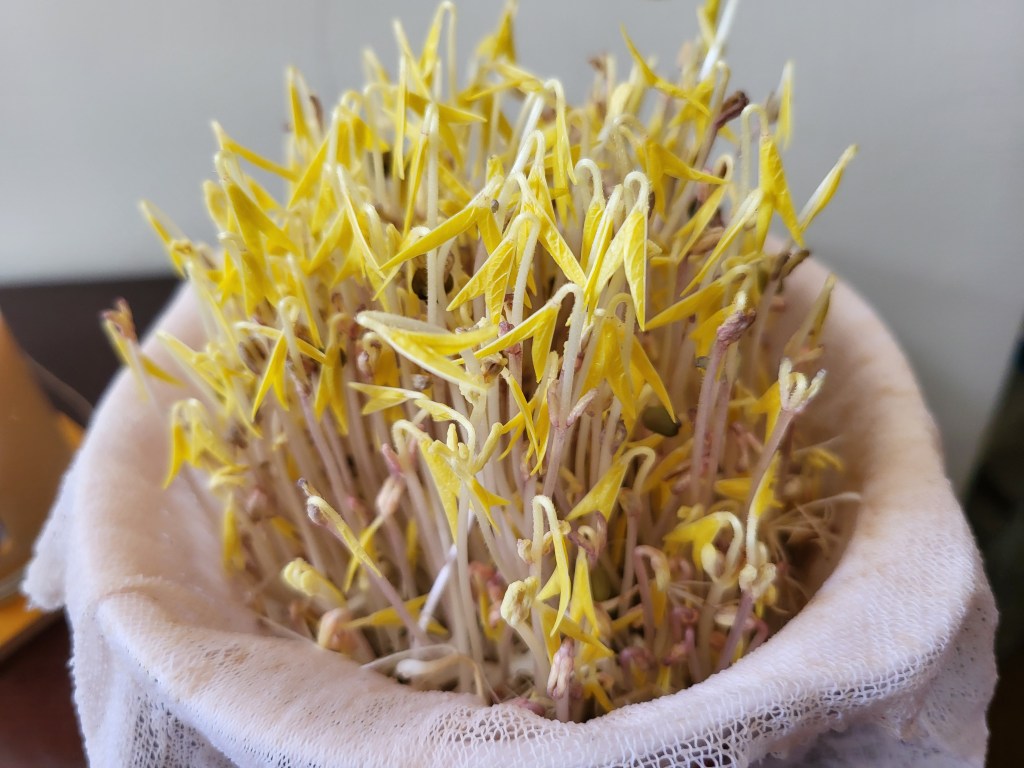
Today’ special: we are going to make a salad with our homegrown mung bean sprouts! It is a very popular South Korean side dish.
Mung Bean Sprout Salad (Sukjunamul-muchim )
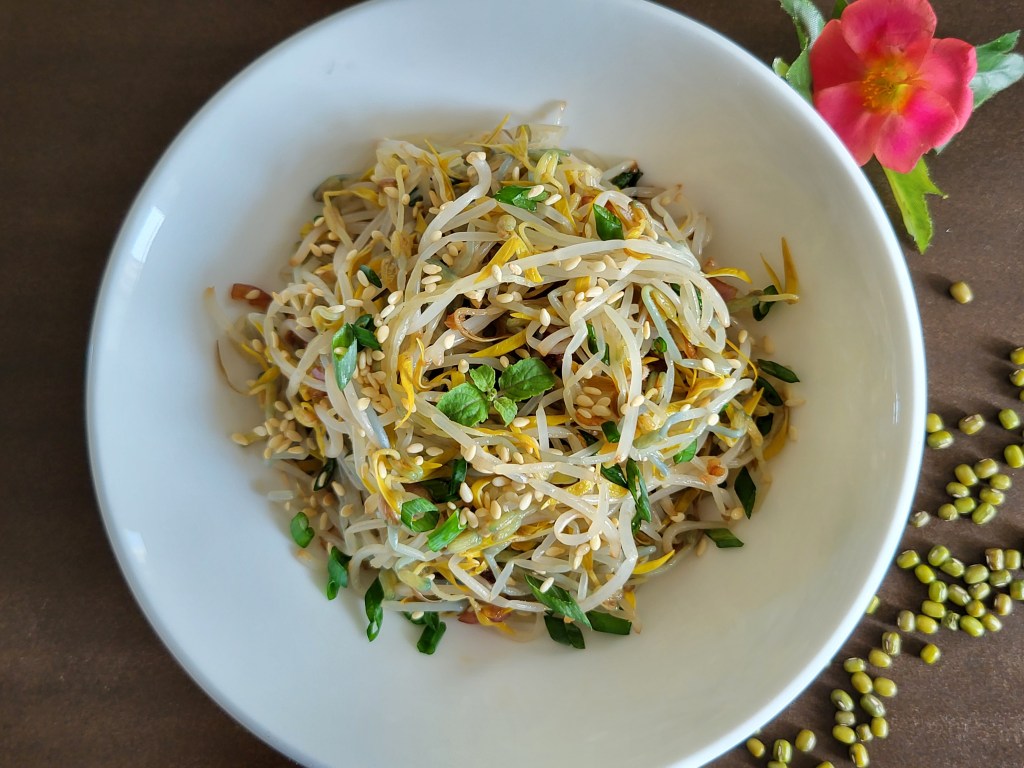
Mung Bean Sprout Salad, or Sukjunamul-muchim, is a classic Korean side dish that’s both refreshing and packed with flavour. Made with homegrown mung bean sprouts, this salad is a staple in South Korean cuisine, perfect for serving alongside hot rice or your favourite Korean BBQ. Its mild taste makes it a versatile companion to any meal!
You need:
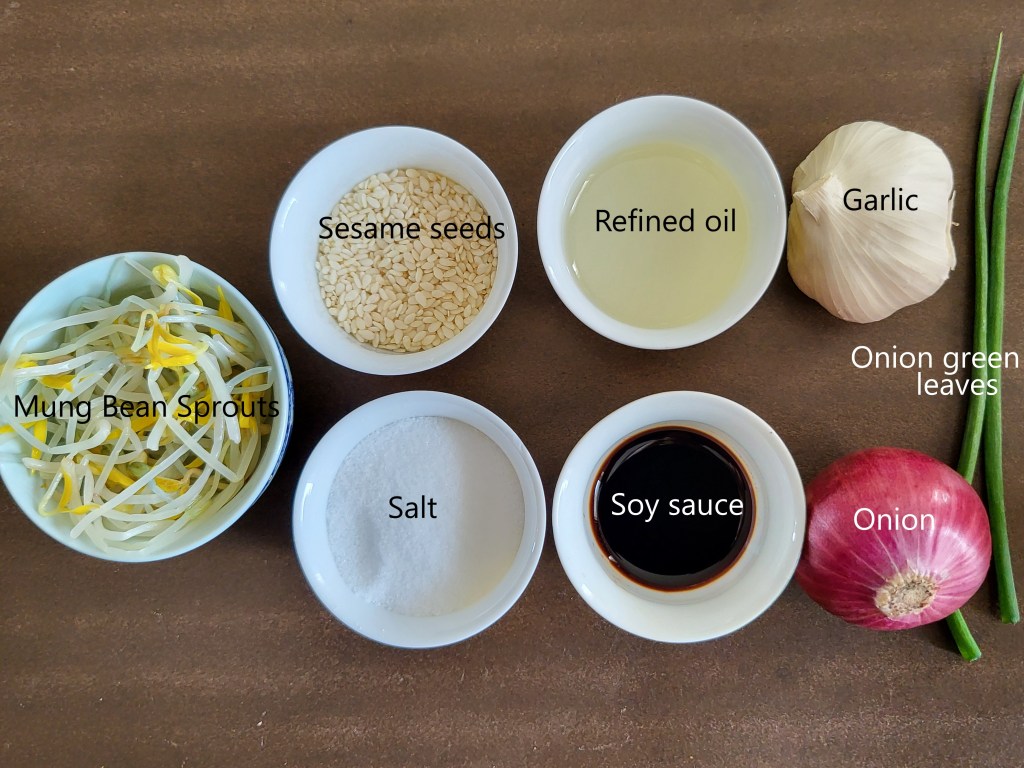
100 gm mung bean sprouts
1-2 tsp soy sauce
2 tsp sesame oil/refined oi1
½ tsp grated garlic
1 tbsp of finely chopped onion
1 tbsp of chopped green onion leaves/1 green onion
½ tbsp toasted sesame seeds
Salt to taste
Method:
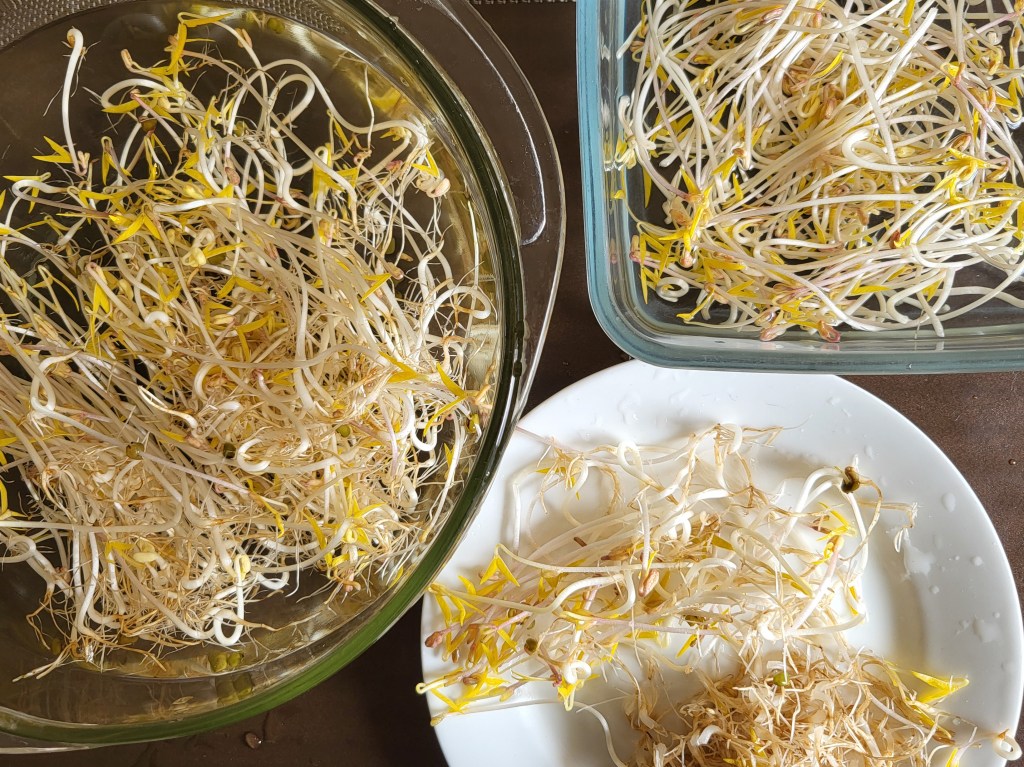
- Rinse the mung bean sprouts 2-3 times with cold water.
- Trim the roots and drain them well.
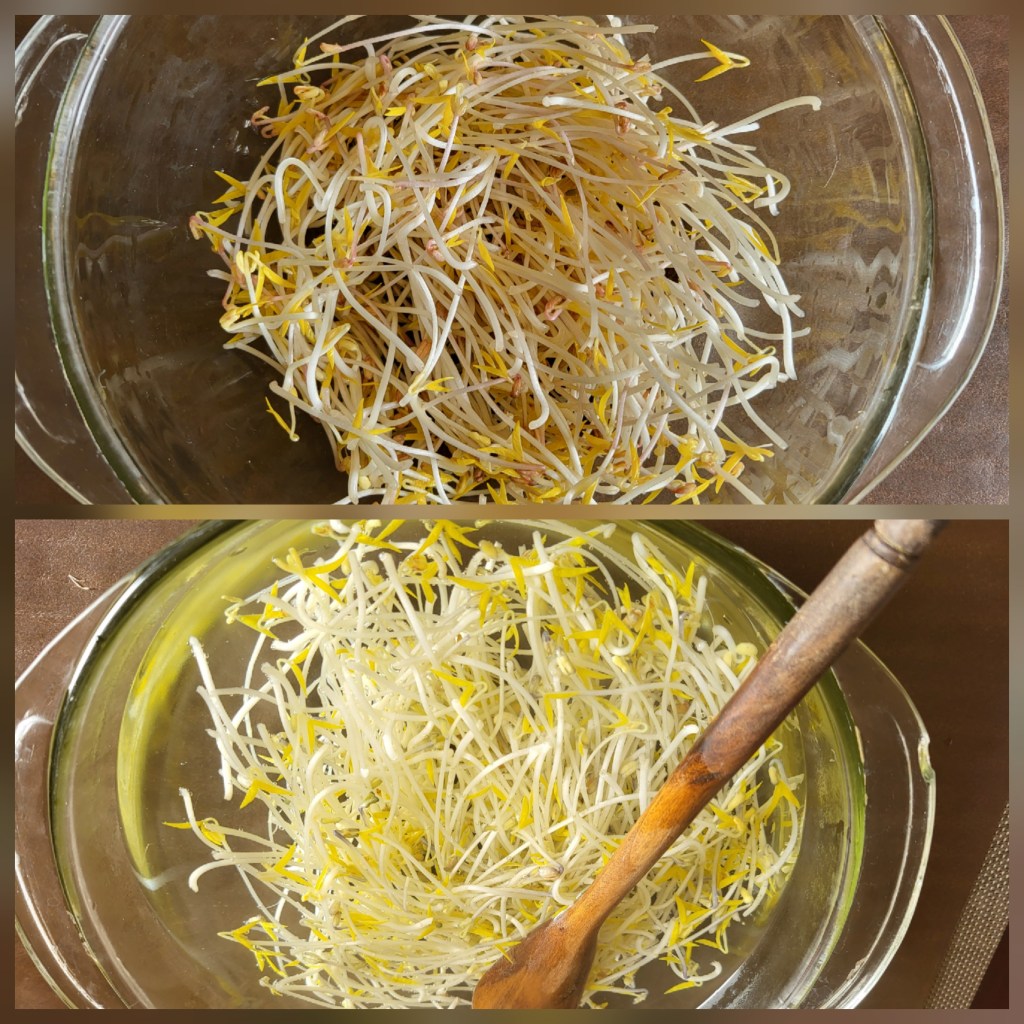
3. Boil enough water, and pour over the sprouts – make sure they are fully submerged – and blanch for just 1 minute.
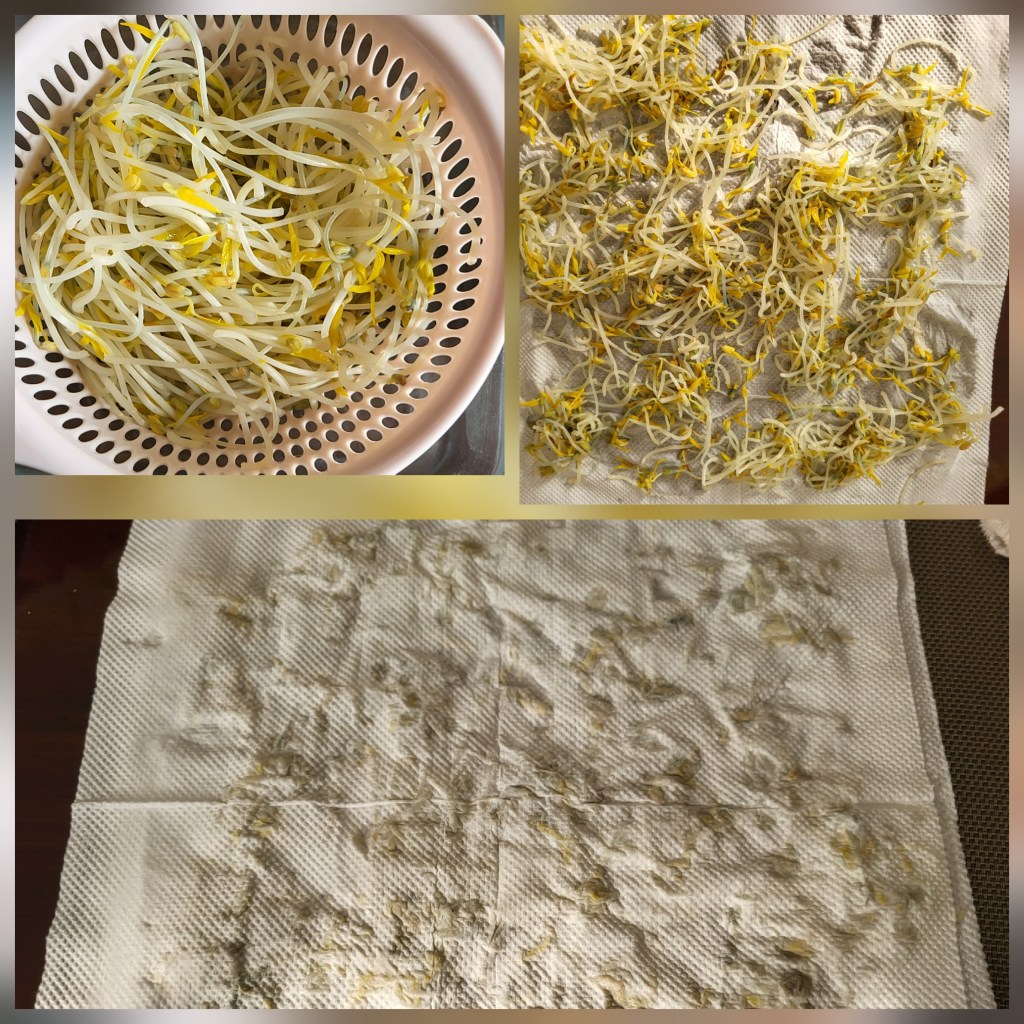
4. Get the sprouts out of the hot water and drain them really well.
5. Spread them out on a kitchen towel, cover with another towel, and pat nice and dry.
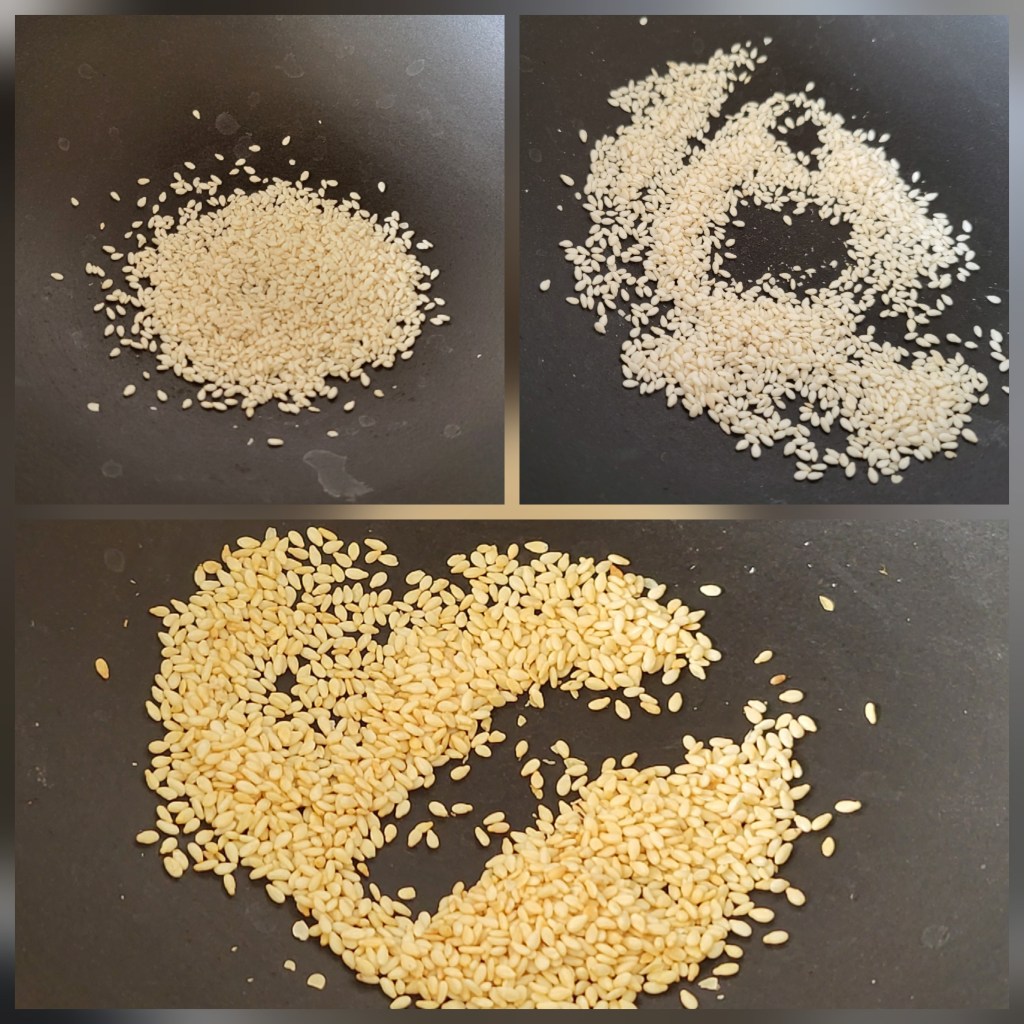
6. Toss the sesame seeds in a pan over medium heat, toast them until golden brown and fragrant.
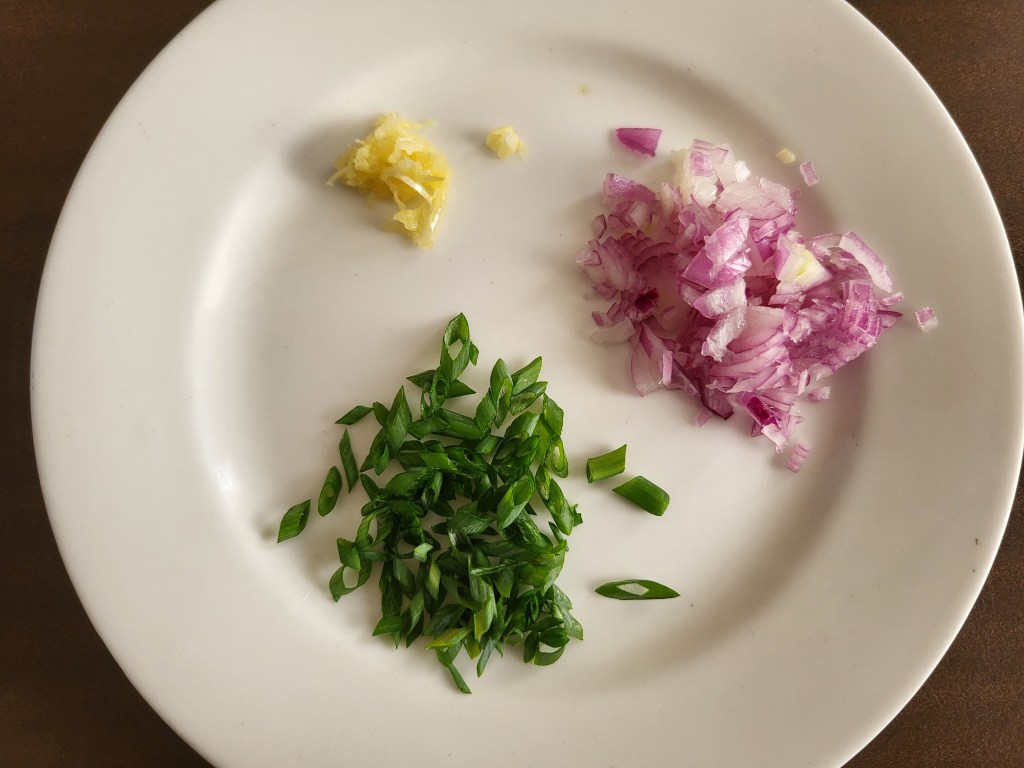
7. Grate the garlic, chop the onion, and slice those green onion leaves.
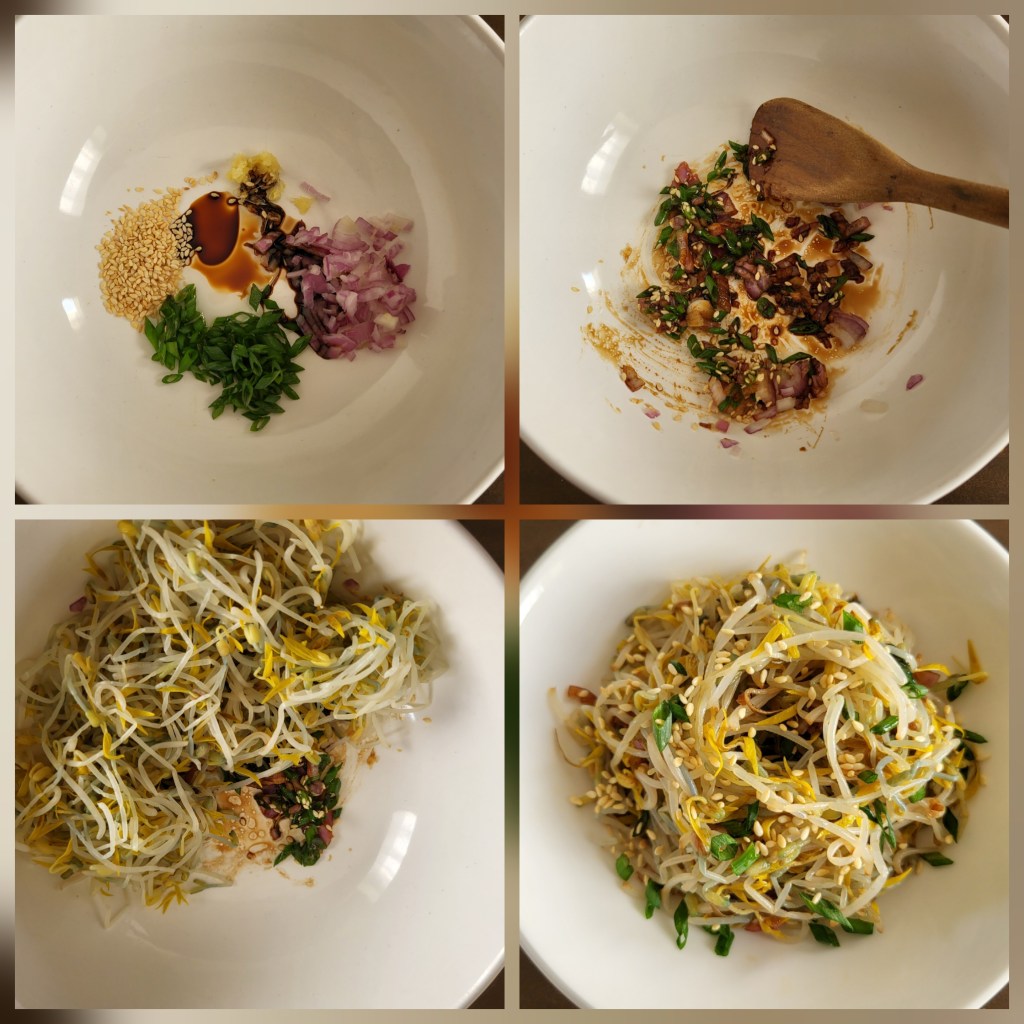
8. In a big bowl, mix together garlic, onion, oil, green onions, soy sauce, oil and the toasted sesame seeds.
9. Add the blanched sprouts and gently toss it all together.
The delicious Mung Bean Sprout Salad is ready! Serve it with hot rice or your favourite dish – it’s got a mild flavour that complements anything!
Enjoy your delicious Sukjunamul-muchim!
Happy cooking!
Coming up next……Pulse in Taiwanese Cuisine
******
 Dal On The Table
Such a fresh and healthy salad!
LikeLiked by 1 person
Thank you so much Protima!
LikeLiked by 1 person
A wonderfully crisp & inspiring read💞 thank you!
LikeLike
Thanks so much Trina! Glad you enjoyed the post!
LikeLiked by 1 person