

Indonesia is a country in Southeast Asia between the Indian and Pacific Oceans. It comprises of more than 17,000 islands and its capital is Jakarta. The equator passes through Indonesia with several islands directly its path. It is the world’s largest archipelagic state.
A Few Wonders of Indonesia
Indonesia is famous for its diverse natural beauties, beaches to volcanoes, temples to museums.

- Borobudur Temple: A magnificent Buddhist monument and UNESCO World Heritage Site.
- Komodo National Park: a UNESCO World Heritage site. Home to the iconic Komodo dragons and stunning natural beauty.
- Mount Bromo: An active volcano with breathtaking sunrise views.
- Raja Ampat Islands: Known for their crystal-clear waters, coral reefs, and diverse marine life.
The people of Indonesia

The people of Indonesia are a vibrant and diverse nation, with over 300 ethnic groups and more than 700 languages spoken across the archipelago. They’re known for their warm hospitality, strong family ties, and rich cultural heritage. Indonesians take great pride in their traditions, arts, and cuisine, and are often described as friendly, resilient, and community-oriented.
From the islands of Java to Bali and beyond, Indonesian culture is a beautiful blend of influences, reflecting the country’s history and diversity.
Indonesian traditional dress is a vibrant reflection of the country’s rich cultural diversity and heritage. While styles vary across regions, some common traditional attire includes:

For Women: – Kebaya (intricately embroidered or batik blouse-dress). Batik skirt or sarong, and Selendang (shoulder cloth or scarf)
For Men: Batik shirt, Kain batik or sarong (wrapped cloth), and Songkok or peci (traditional hat)
This attire beautifully reflects the country’s diverse cultural heritage and is often worn on special occasions.
Pulse in Indonesia
Pulses play a significant role in Indonesian agriculture and cuisine. With favourable soil and climate conditions, Indonesia produces substantial quantities of pulses like red lentils, chickpeas, and mung beans.
Let’s try making Bubur Kacang Hijau, a beloved Indonesian dessert porridge. “Bubur” translates to porridge, while “Kacang Hijau” refers to mung beans.
Bubur Kacang Hijau (Mung Bean Porridge)

Bubur Kacang Hijau is a traditional Indonesian dessert made from green beans (mung beans) and coconut milk. The combination of palm sugar, coconut milk, and mung beans creates a sweet and comforting treat.
You need:

50 gm green mung beans (kacang hijau)
¼ cup coconut milk
2 tbsp of palm sugar (or brown sugar)/cane sugar**
Pinch of salt
Pandan leaves for flavor
Method:

- Rinse and soak mung beans overnight.
- Boil water with a pandan leaf, then add the soaked mung beans and a pinch of salt.
- Reduce heat to low and simmer until the mung beans are cooked and tender.
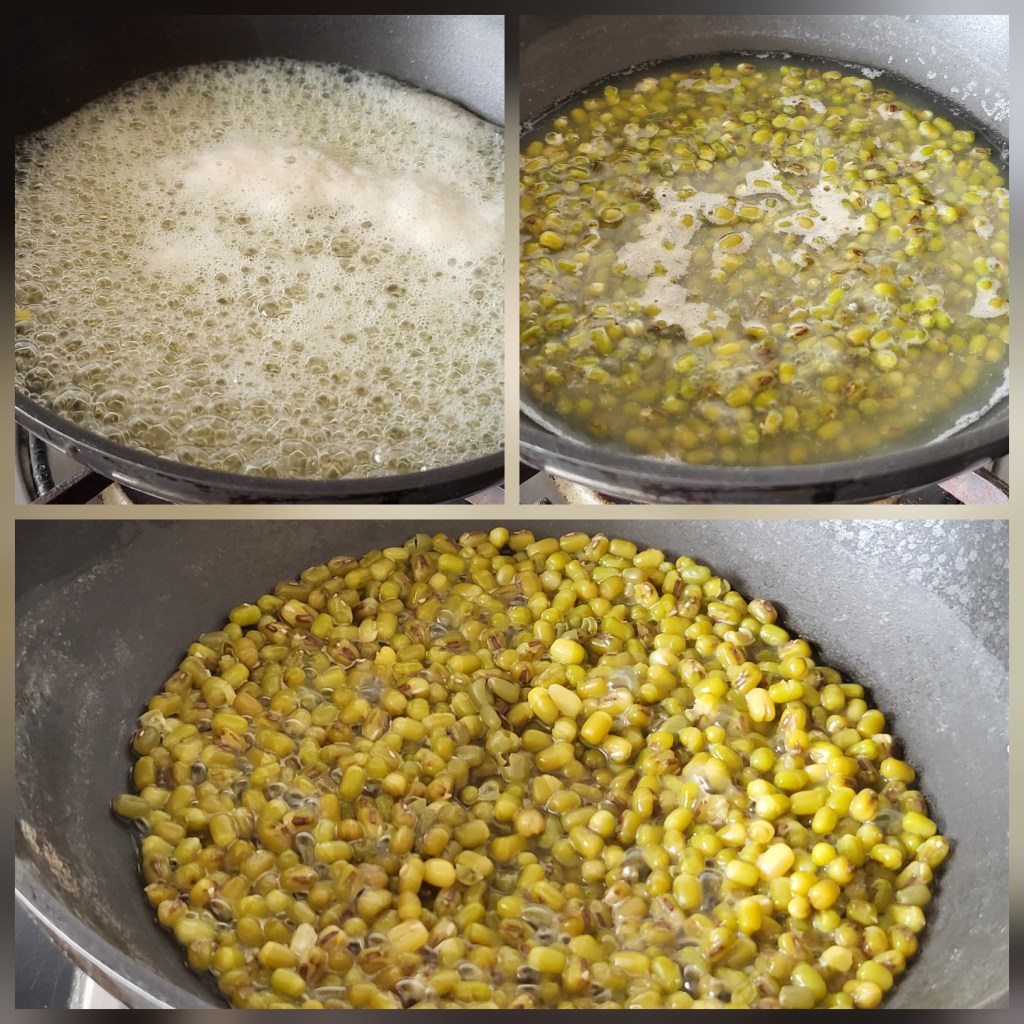
4. Skim off any scum that forms on the surface while cooking the mung beans.
5. Remove the pandan leaf once done.

6. Mash some of the cooked mung beans, then add milk and sugar.
7. Bring the mixture to a boil.
8. Adjust sweetness and consistency to taste by adding more palm sugar or coconut milk.
9. Serve warm or chilled, according to preference.
**Palm sugar and cane sugar can be used interchangeably, but they have distinct flavor profiles. Palm sugar adds a rich, caramel-like taste, while cane sugar is lighter and sweeter. Combining both can create a unique flavor blend, offering the best of both worlds
Happy cooking!
Coming up next… Pulses in Laotian Cuisine
******
 Dal On The Table
Interesting. Being Indian, I don’t think I’ll put milk in the dal, lol. But it must be a healthy porridge. How was the taste? Very informative blog. I didn’t know they had that many islands 🙈
LikeLiked by 1 person
Yes, adding milk might not be traditional, but it’s all about experimentation, right? The porridge turned out creamy and comforting. Glad you enjoyed the blog! The islands were definitely a surprise for me too – so much diversity in Indonesian culture.
LikeLiked by 1 person
looks easy to cook…what can we substitute for pandang leaf? Or is it available in India?
LikeLiked by 1 person
Thank you, Lita! The pandan leaf is little difficult to get in India. I got one and work with it. Pandan is to Asian as what vanilla is to Western.
LikeLiked by 1 person
The diverse variation is intriguing. 👍
LikeLiked by 1 person
Totally Meeta! The diverse variations are what make traditional cuisine so rich and fascinating, aren’t they?
LikeLiked by 1 person
Bubur Kacang Hijau sounds absolutely comforting & your storytelling made it feel like a shared memory. Keep up the beautiful work😍
LikeLike