
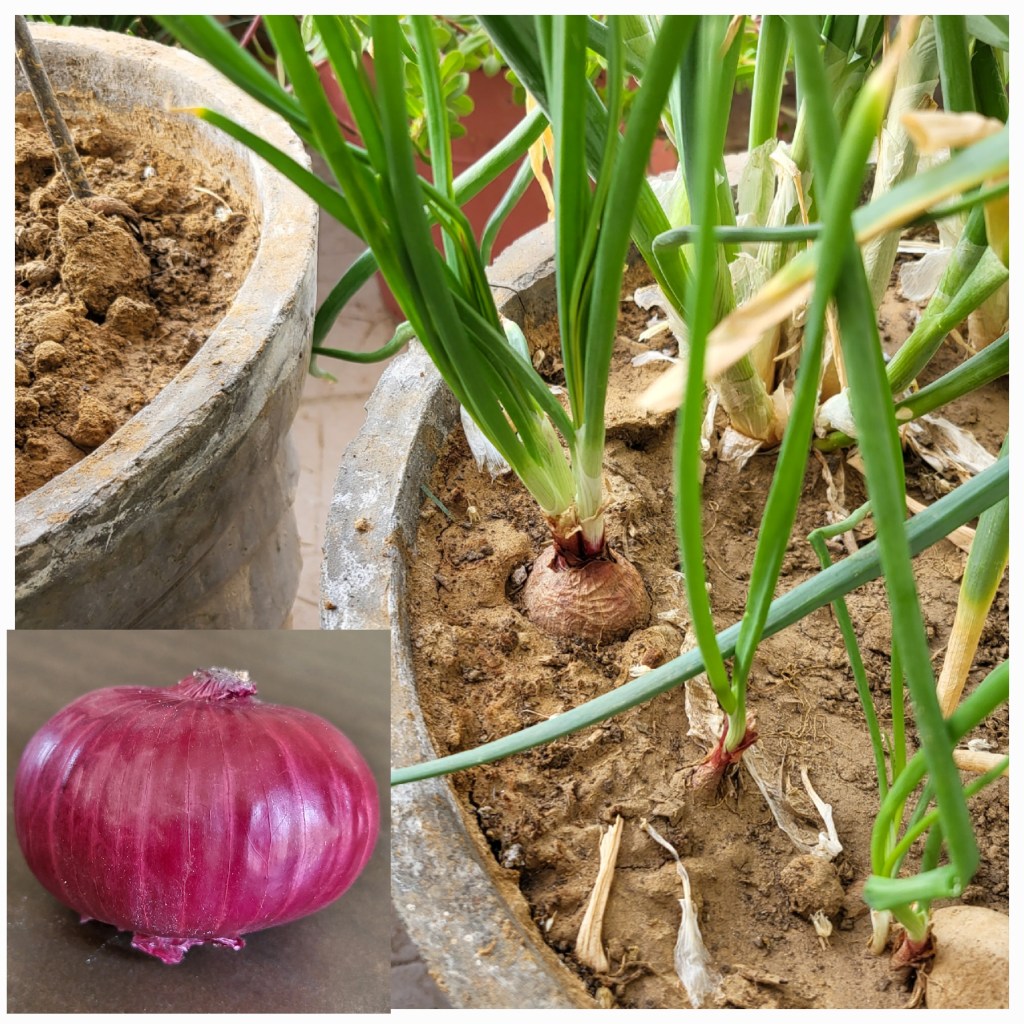
Onion bulbing occurs when the plant’s energy shifts from leaf growth to bulb formation, storing excess food in the underground bulb, which we harvest as onions. Each leaf on the onion plant corresponds to a specific layer in the bulb, with the plant’s energy storing food in concentric rings as the leaves grow.
This process is triggered by factors like day length and temperature, resulting in the characteristic layered structure of the onion.

Both sunlight and temperature play significant roles in bulbing. When leaves receive sufficient sunlight, they produce food through photosynthesis, which is then transported to various parts of the plant. Excess food is stored at the base of the tubular leaves, contributing to bulb formation. Each green leaf produces food and stores excess in its corresponding sheath.
Onion Planting Depth
When planting onions from sprouts or sets, it’s essential to avoid planting them too deeply because as the onion bulb grows in size, the deeper it’s planted, the more resistance it will face from the surrounding earth. This increased pressure can result in smaller bulbs. Ideally, about ¼ of the mature onion should remain above the soil surface.
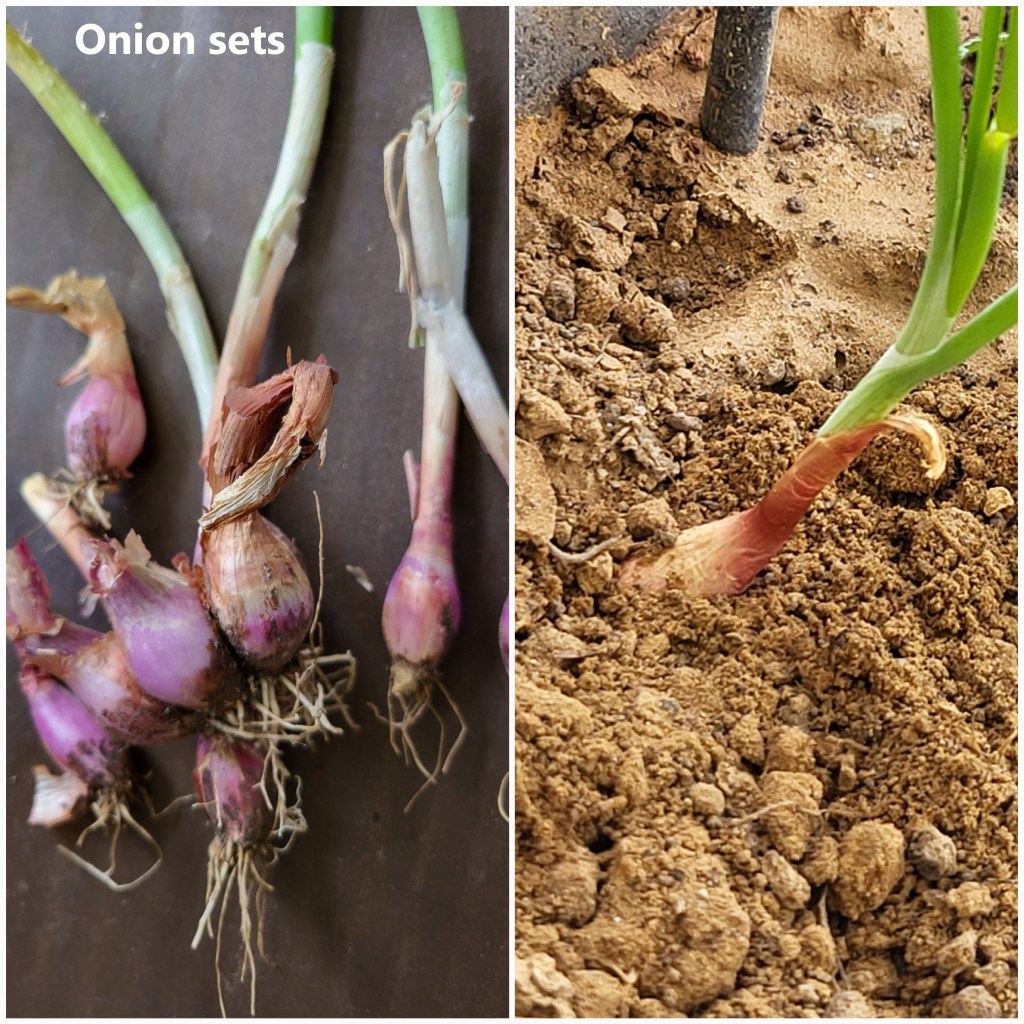
Planting onions no more than ½ to 1 inch deep allows for proper growth and development, which is why the soil often cracks as the bulbing process begins.
Day Length and Bulb Formation
Day length plays a crucial role in onion cultivation. Different varieties require specific amounts of daylight to trigger bulb formation. Understanding these differences is vital for commercial farmers, while home gardeners can benefit from grasping the basics.
The Onion Bulb: A Modified Stem
An onion is a bulb. Botanically speaking, an onion is a modified underground stem with characteristic parts and functions. It is not a stem as we understand. The stem we know, is always above the soil. But in case of onion, the stem remains underground along with its roots.

Onion bulb is covered by a few layers of papery skin/peel called tunic and so it is also known as tunicated bulb. These papery skin protects the bulb from drying as well as keeps them safe from insects and germs.
The stored food in the bulb is in the form of carbohydrates synthesized from sugars produced during photosynthesis. Onions belong to the Allium family, with the scientific name Allium cepa.
Onion Plant Roots
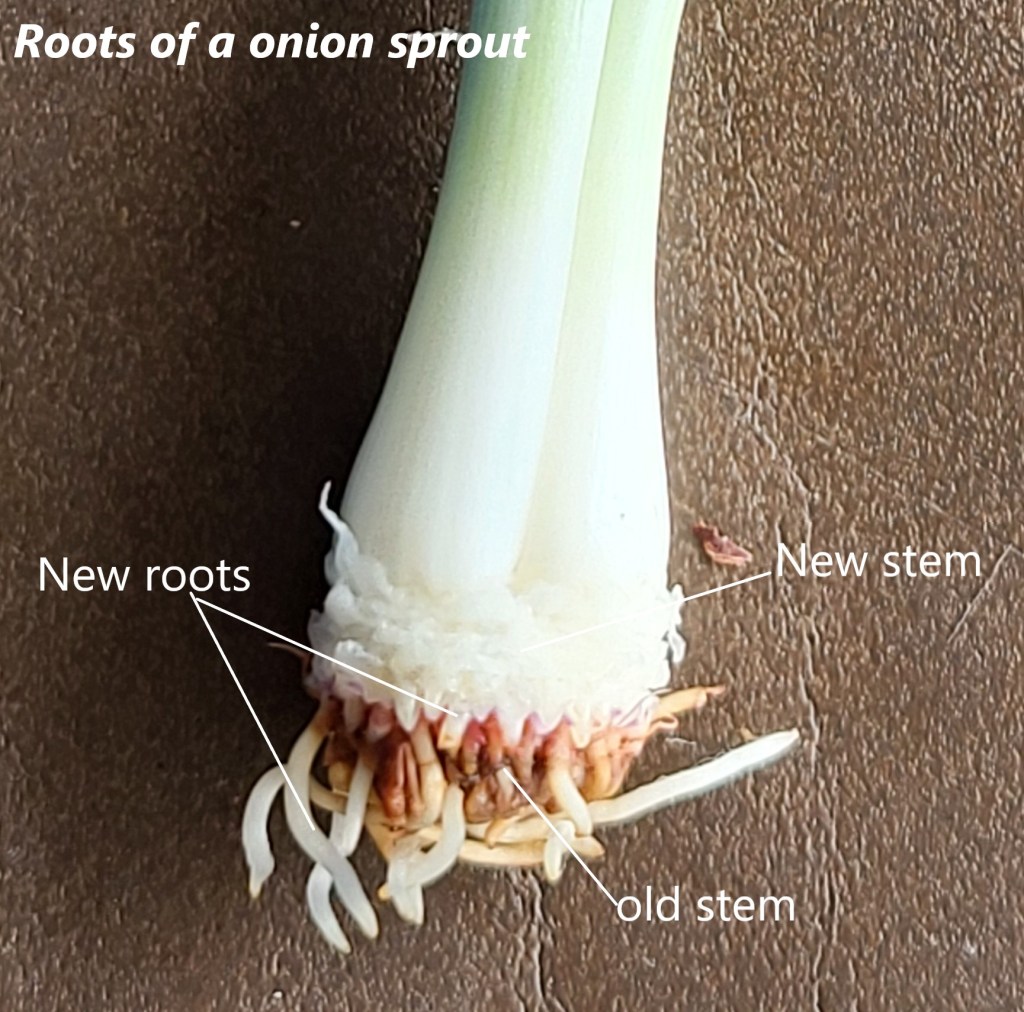
The roots develop from the base of the new stem, distinguishing them from the older stem. Initially delicate and white, the roots increase in number over time, spreading horizontally to anchor the plant and absorb water and minerals.
These roots tend to remain shallow, spreading horizontally to anchor the plant firmly in the soil, rather than growing deep. This positioning allows them to effectively absorb water and minerals from the top layer of soil.

When onion sets are planted, they often quickly establish themselves, producing new roots that spread horizontally. This helps the sets to anchor firmly in the soil and begin absorbing necessary nutrients and water for growth.
Happy reading!
Coming up next ……… Onion Blooms: The Scapes
*****
 Dal On The Table
Keep going!
LikeLike
Thank you Meeta.
LikeLike
The journey of these onions’ growth is so wonderful to witness! You’ve captured it so beautifully. Learning a lot from your blogs!
LikeLike
Thank you, Tanvi! We’re thrilled you’re following along and learning with us!
LikeLike
The journey of these onions’ growth is so wonderful to witness! You’ve captured it so beautifully. Learning a lot from your blogs!
LikeLike
Thank you, Tanvi! We’re thrilled you’re following along and learning with us!
LikeLike
Very informative post! Thank you for explaining the process in such a clear and simple way!
LikeLike
Thank you so much Protima. I am very happy that you are enjoying reading about onion,
LikeLike