
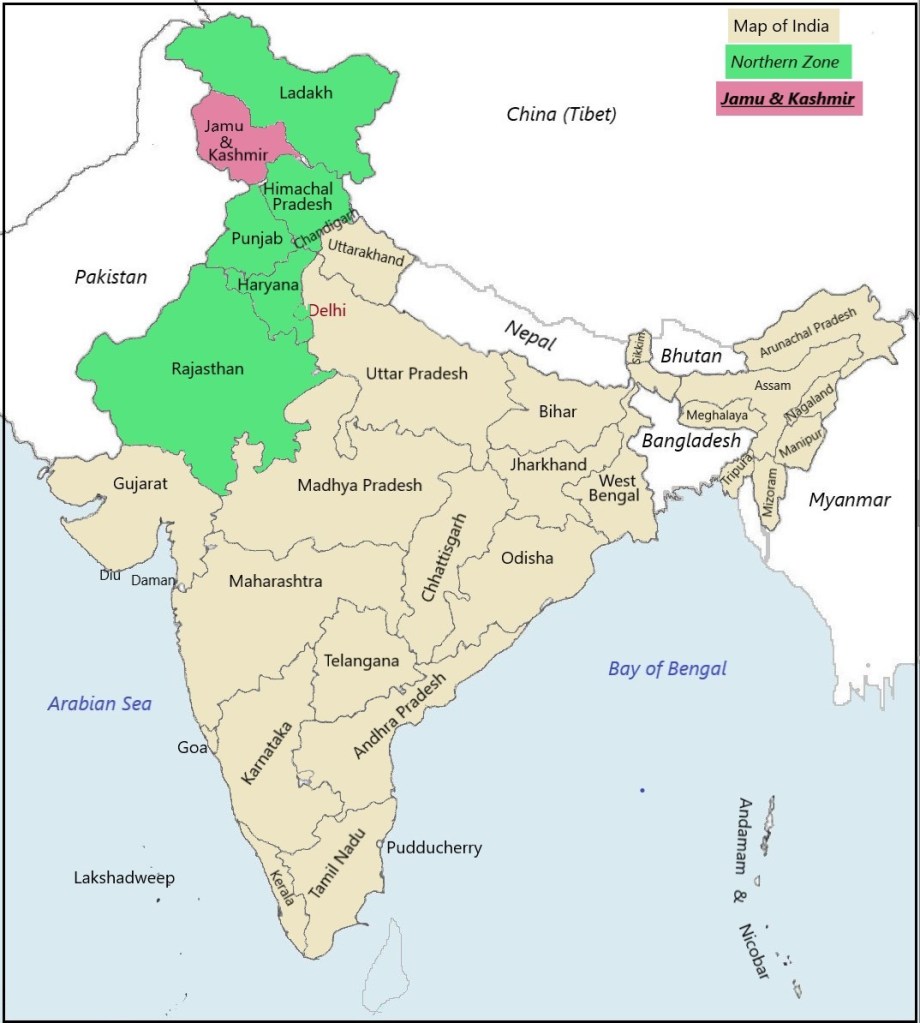
Jammu & Kashmir is a union territory in the northern India. It is bordered by Ladakh on the north and north-east, Himachal Pradesh on the south and shares international border with Pakistan on west. It has two capitals ~ Srinagar and Jammu serve as the summer and winter capitals.
Kashmir is one of the most prized and revered regions in India, renowned for its breathtaking beauty, rich culture and spiritual significance.
According to Hindu mythology, the valley of Kashmir was once a huge lake. There was a demon who lived in that big lake. The demon was blessed by Brahma for eternal life as long as he is inside the water. But the demon’s demonic behavior towards the habitats forced Sage Kashyapa to seek Vishnu’s help. Sage Kashyapa drained off the water by cutting a gap in the mountains. Lord Vishnu struck the demon and killed him with his Chakrayudha (discus). Sage Kashyapa approached Parvathi, Lakshmi and Saraswathi- beseeching them to flow down from heaven. Thus, this lush valley Kashmir was named after Sage Kashyapa.
Another interesting story from epic Mahabharat, is that, Kashmir was once a part of Gandhara Kingdom (now Pakistan and Afghanistan). The Princess Gandhari, married to the Prince of Hastinapur Dhritrashtra was the mother of Kaurava.
In 14th Century BC, a Hindu King, Raja Jambu Lochand, during a hunting trip reached the Tawi River where he saw a goat and a lion drinking water at the same place. The king was so impressed that he decided to set up a town and called it Jambu (after his name). With the passage of time, Jambu became Jammu. Jammu and Kashmir have many such interesting stories.
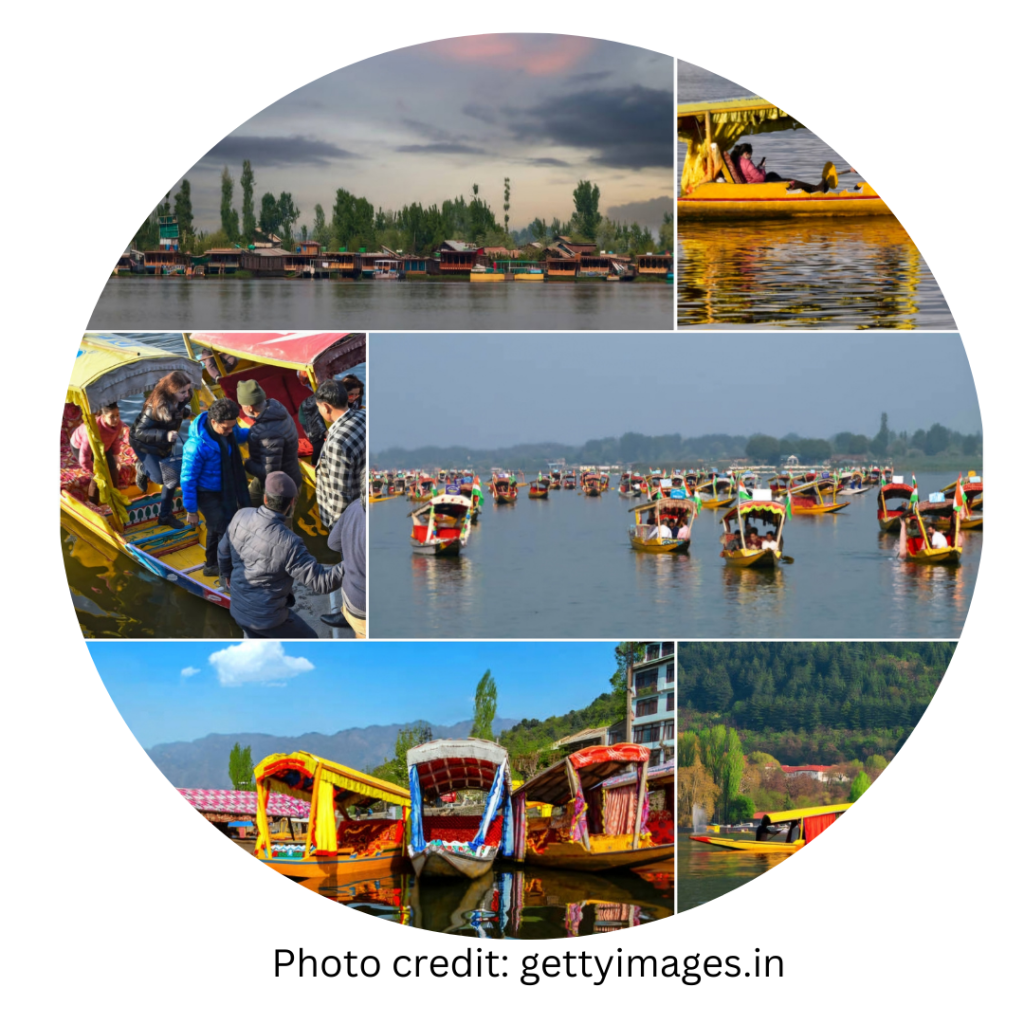
Jammu and Kashmir celebrate many fascinating and beautiful festivals. The Shikara Festival is one of them. Shikaras are their traditional hand-crafted wooden boats, built with local wood like walnut and deodar. The curved roofs of the boats are carved with intricate designs. The main attraction of the festival is the Shikara race. The race is a century- old tradition, held during the summer months.
The boatmen clean and decorate their boats with the fresh flowers and colorful fabrics before the festival. The race attracts a large crowd of locals and tourists. The sounds of cheering crowds, clanging oars and laughter fills the air as the shikaras dart across the finish line, creating an unforgettable experience. The festival continues with sweet music and aroma of local delicacies and the warmth of the local people, displaying the rich cultural heritage and natural beauty of Kashmir.
Pulse farming in Jammu & Kashmir
Jammu and Kashmir is a significant producer of pulses in India. They cultivate various pulses like kidney bean (rajma) black gram (urad) chickpea (gram) lentil (masoor), pigeon pea (tur) and horse gram. Pulses are sold in local markets and some are exported to other parts of India. Most farmers focus on growing crops for their own consumption.
The region has a temperate climate. The clay and sandy soil is suitable for pulse cultivation. But there are few challenges like climate change, soil degradation, limited irrigation and hilly and mountainous topography.
Nevertheless, the beauty of terrace farming in J&K is not only functional but also adds to the aesthetic appeal of the landscape making it a popular subject for photographers and artists.
Food:
Rice wheat and maize are staple foods while meat especially mutton is a common part of the diet, particularly in Kashmiri cuisine. Vegetarian dishes like dal and saag are popular in the Jammu region. Fruits, like apples and walnuts are abundant and spices like cardamom and cinnamon are liberally used. There is a traditional Kashmiri spice blend called ‘ver’ which includes spices like cinnamon and cardamom, cloves and few strands of saffron for it distinct flavor and aroma.
Today, we are going to cook Kashmiri Lasooni Ki dal. It is a popular traditional Kashmiri dish and often served during special occasions and festivals in Kashmir. Some use cardamon, cinnamon and clove to enhance the flavor.
Kashmiri Lasooni Dal

The unique aspect of the dal is the liberal use of garlic, and that gives the dish a distinct flavor and aroma. It is soothing and nutritious too. We loved it. Hope you will enjoy it too.
You need:
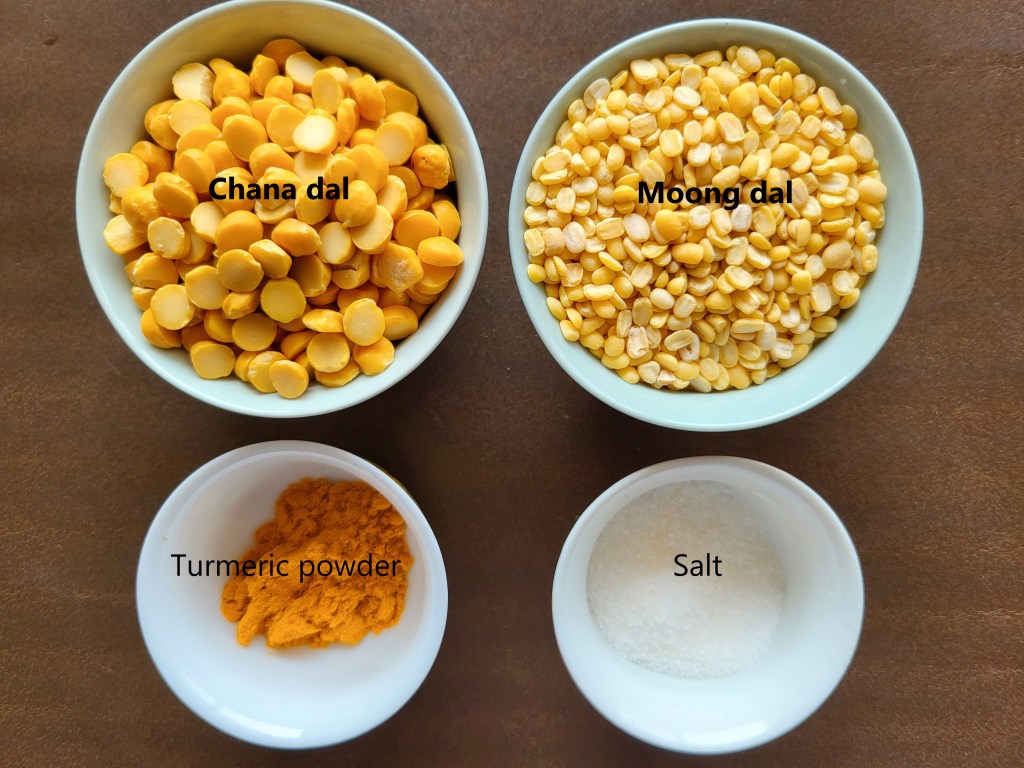
For the dal
100 gm cup chana dal
50 gm cup moong dal
¼ tsp turmeric powder
½ tsp salt.
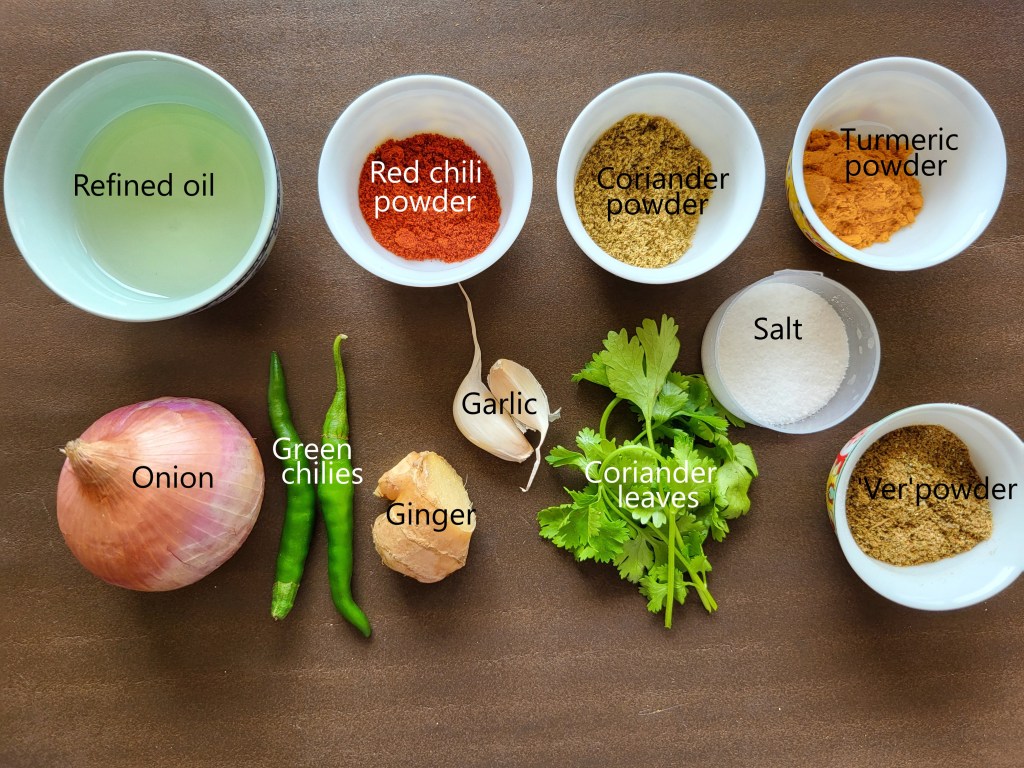
First tempering:
1 tbsp refined oil
½ tsp red chili powder
1 tsp coriander powder
¼ tsp turmeric powder
1 tsp of ‘ver’ powder
1 medium size onion
2 green chilies
1 small piece of ginger
2 garlic
A few sprigs coriander leaves
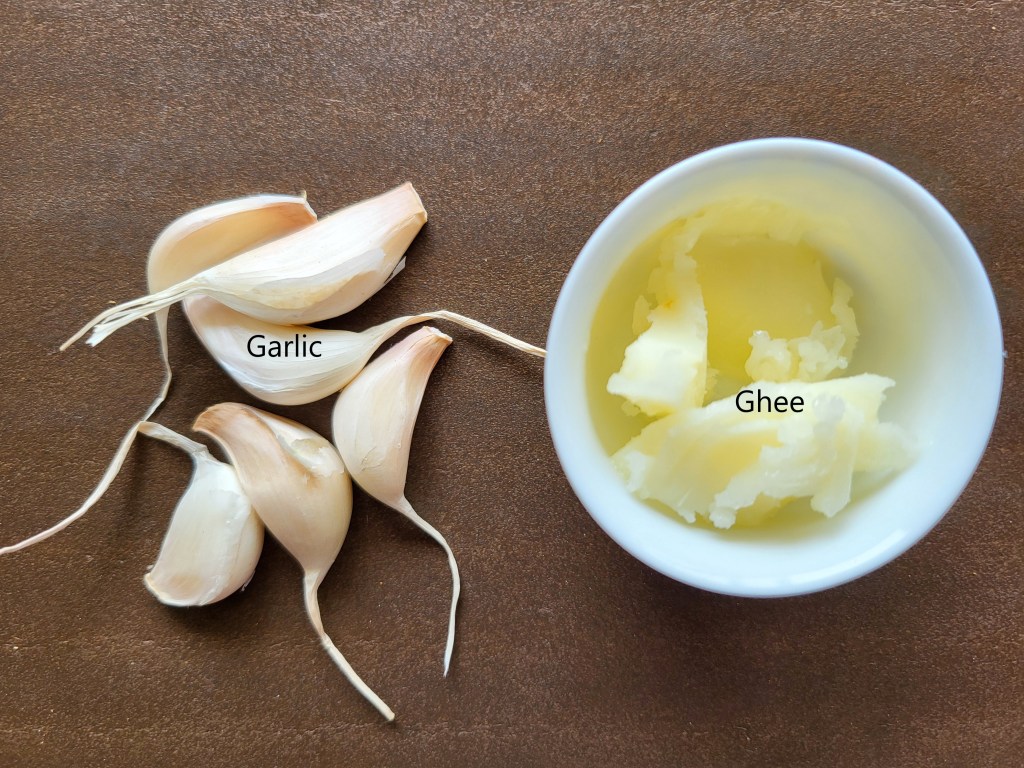
Second tempering:
7-8 cloves of garlic
1 tbsp of ghee (clarified butter)
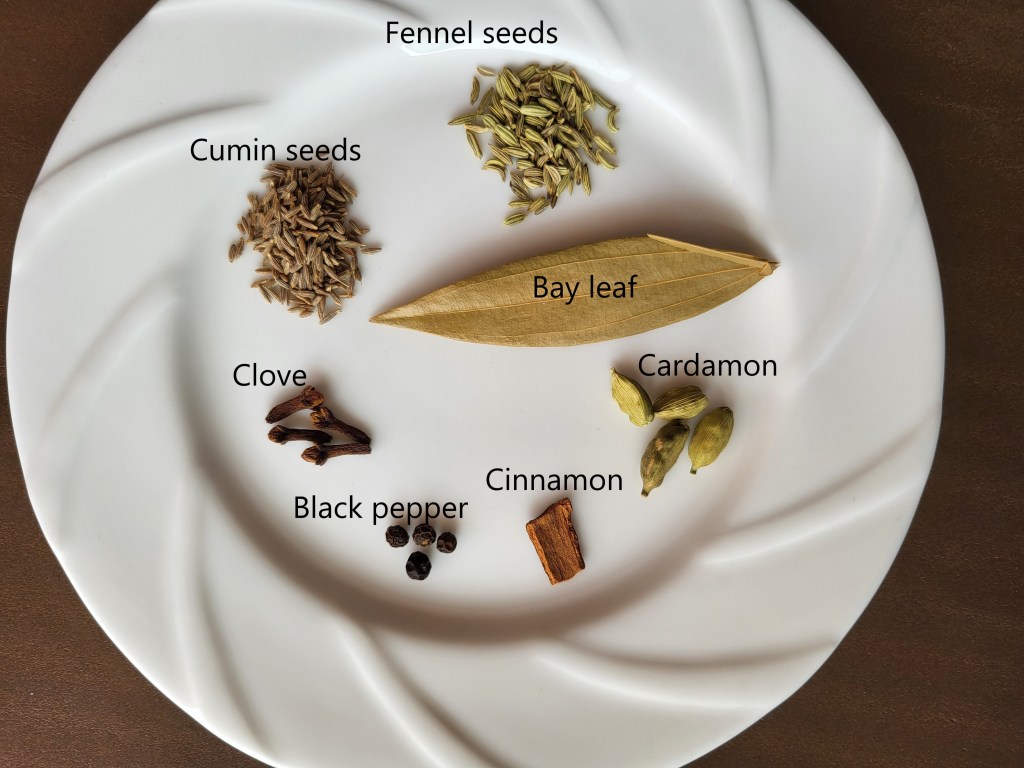
Ver masala
4 cloves
4 black pepper corn
1 small piece of cinnamon
4 cardamoms
1 small bay leaf
½ tsp of fennel seeds (saunf) ½ tsp of cumin seeds
Method:

- Take chana and moong dal in a bowl.
- Wash and soak them for about 15 -20 minutes.
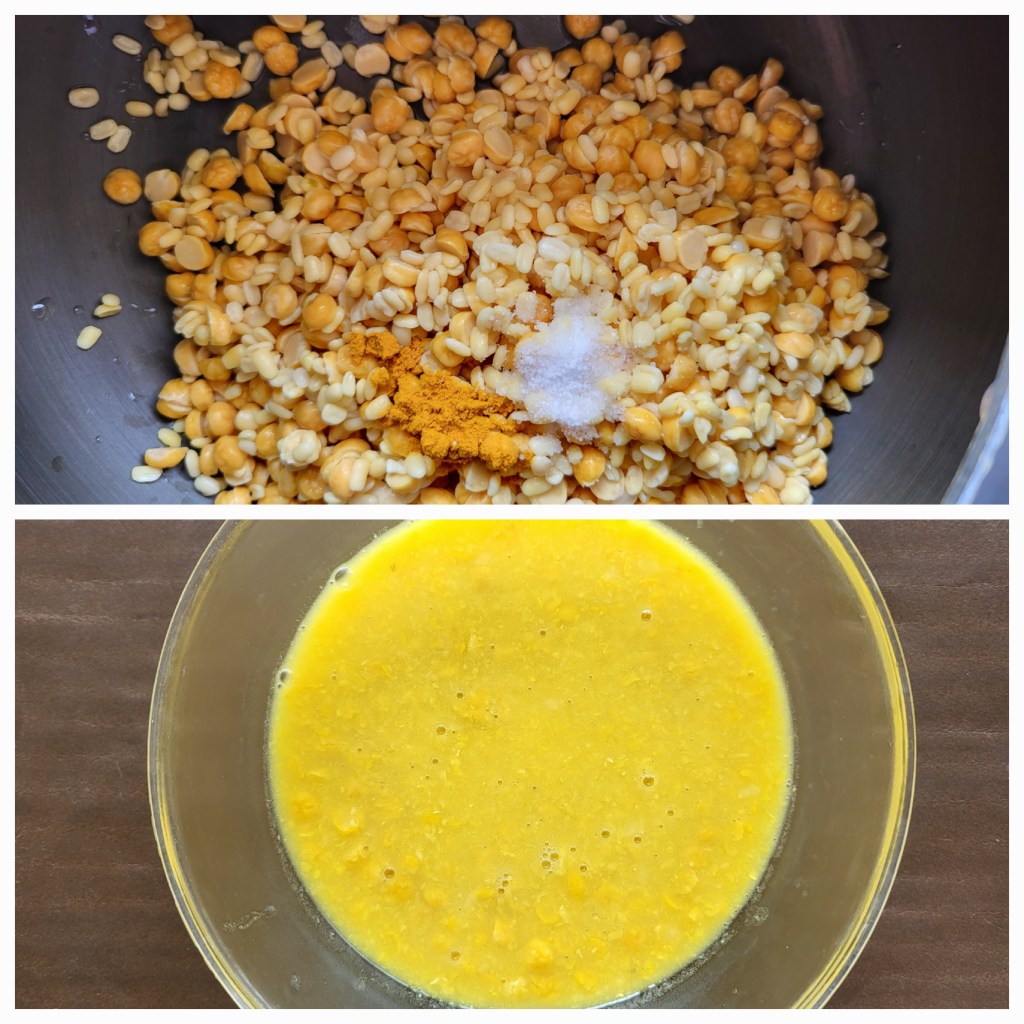
3. Place the dal in a pressure cooker.
4. Add salt and turmeric powder and 2 cups of water.
5. Place the cooker on the stove.
6. After the first whistle lower the flame to minimum and cook for 2 minutes.
7. Allow the cooker to cool down by itself.
8. Open the cooker and transfer the dal to a bowl.

Make the Ver masala:
9. On a hot pan, lightly roast all the given masala and allow them to cool.
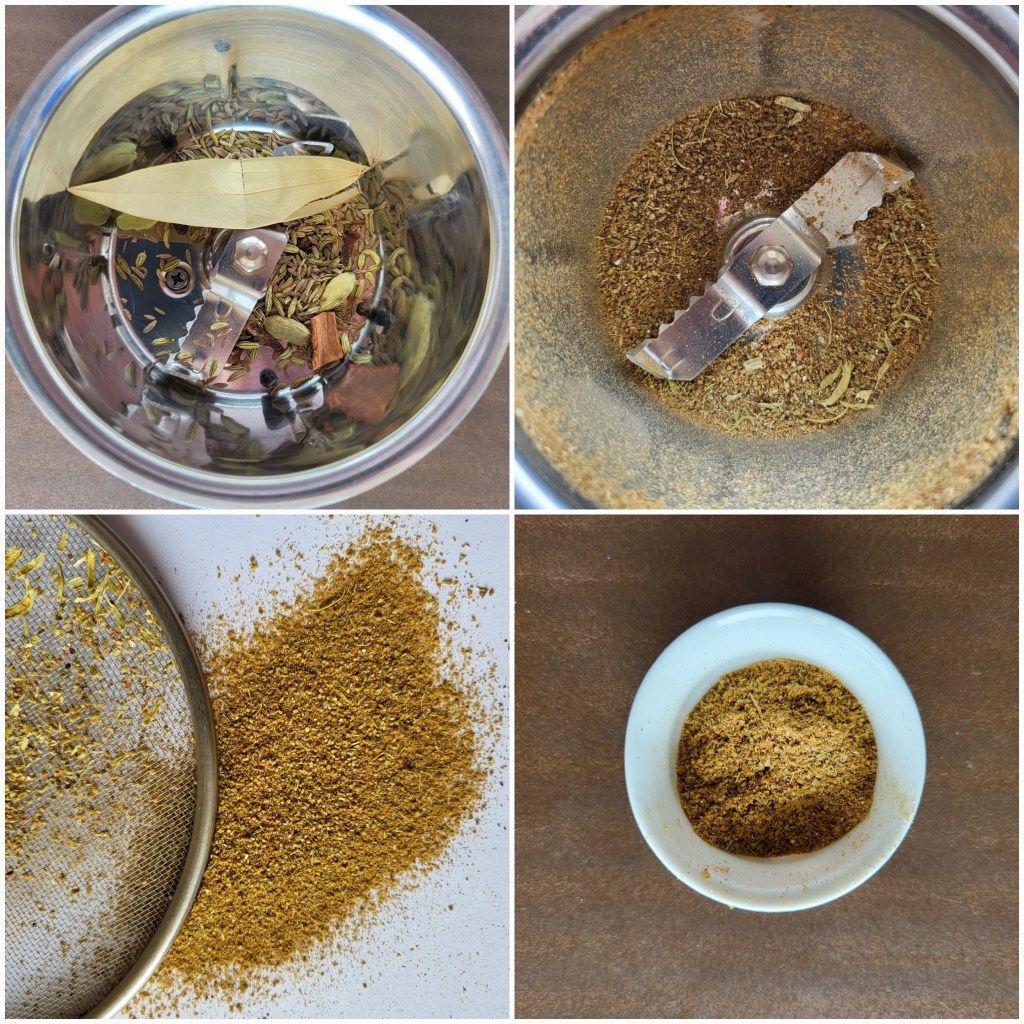
10. Place all the roasted masala in a dry grinder and grind them finely.
11. Sieve the masala and your ‘ver’ masala is ready.

12. Peel and wash, onion, garlic and ginger and chop them finely.
13. Wash the coriander leaves and chili and chop them finely too.

First tempering:
14. Heat the oil in pan.
15. Lower the heat and add the onion and saute for a few seconds.
16. Add chopped garlic, ginger and chili and fry for few more seconds.
17. Add red chili powder, turmeric, coriander powder and the ‘ver’ powder and fry for sometime.

18. Add the cooked dal to the fried masala and mix well.
19. Bring the dal to boil.
Second tempering:
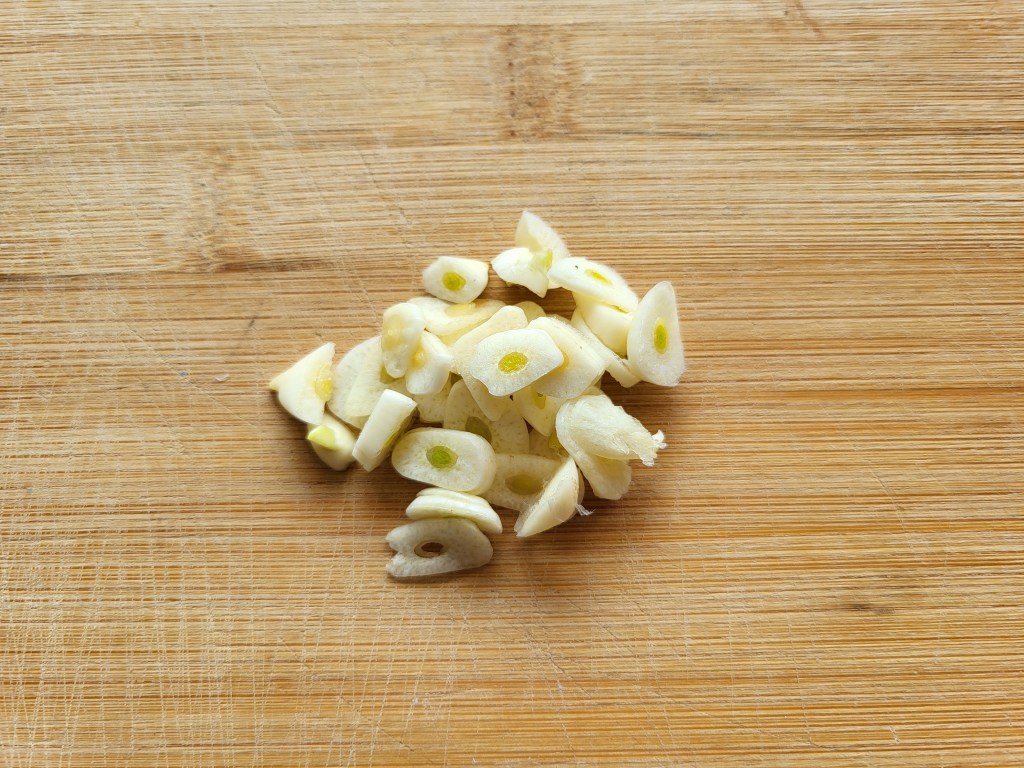
20. Peel and wash the garlic.
21. Slice them finely and keep aside.
22. Allow the dal boil for 2-3 minutes.
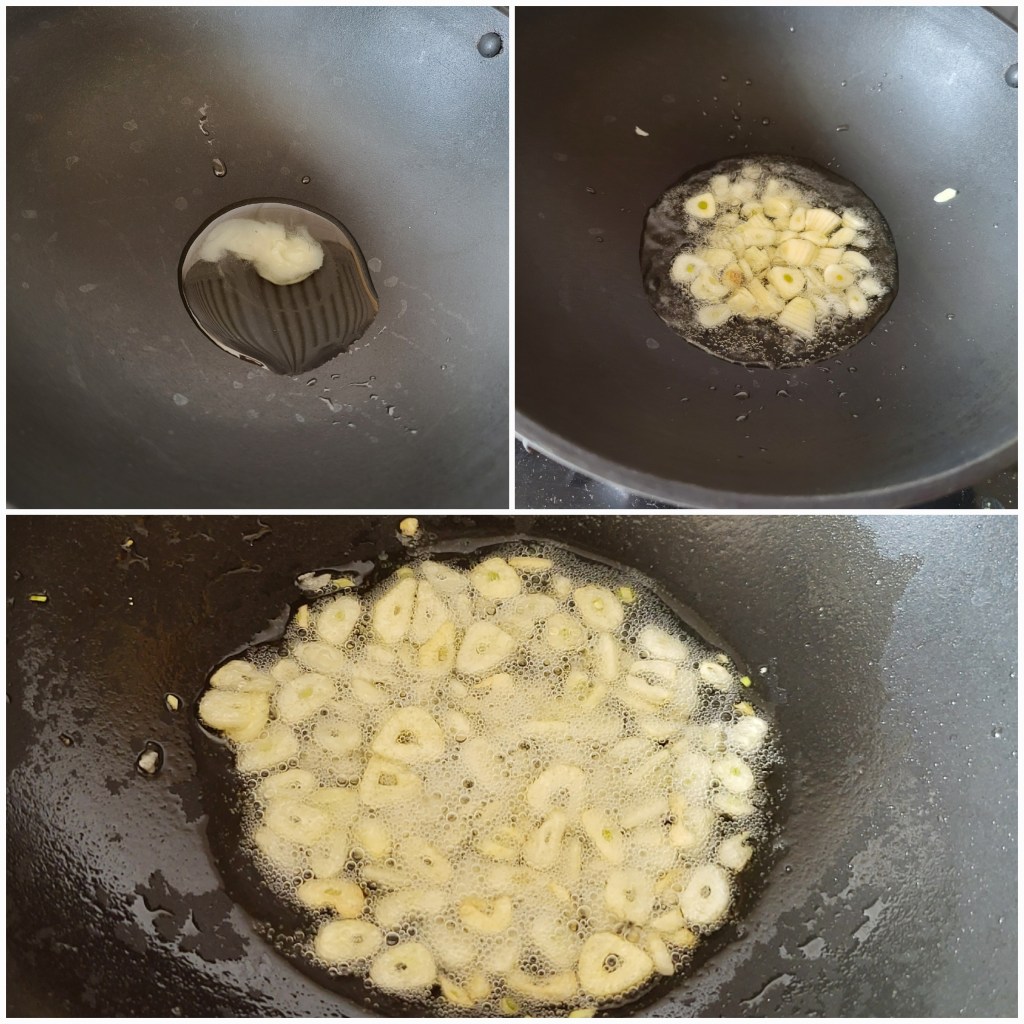
23. Heat a pan with the ghee. Switch off the heat.
24. Add the sliced garlic and keep frying them till lightly browned.
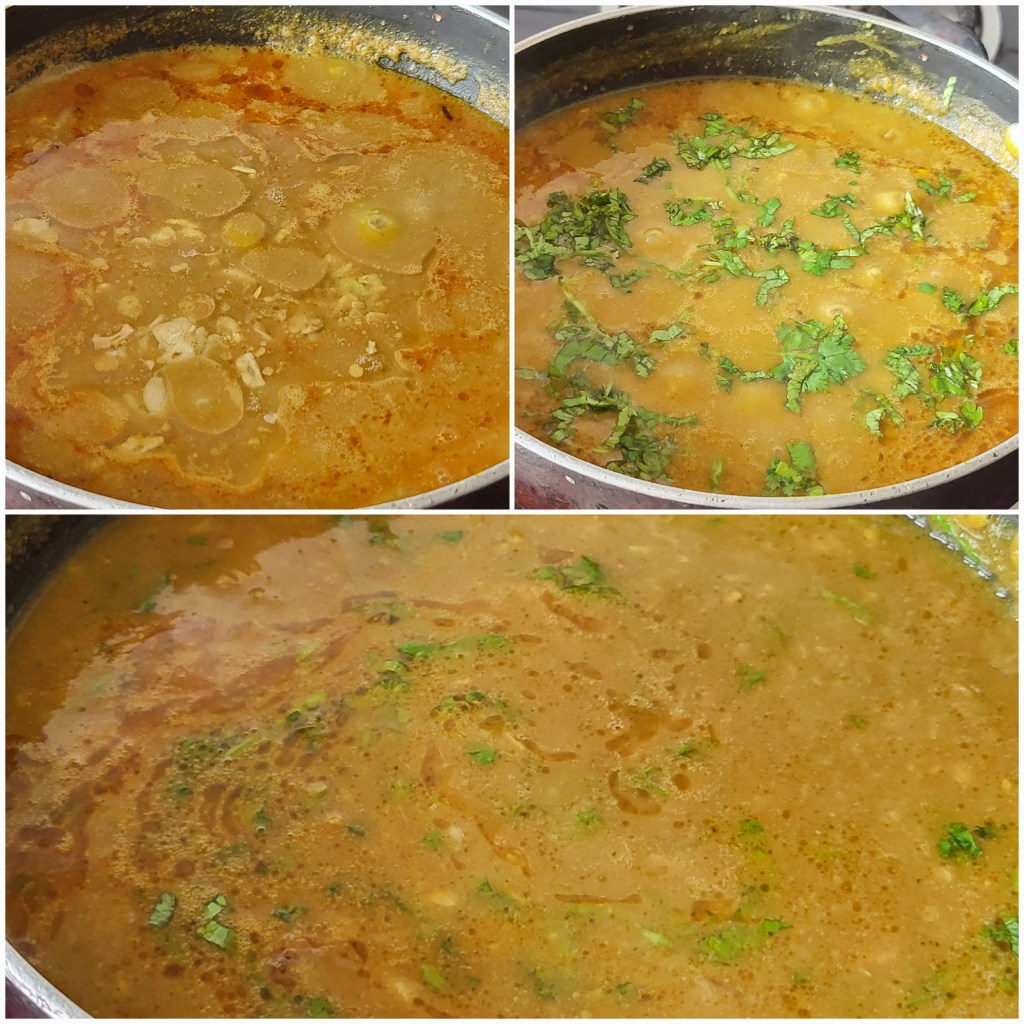
25. Pour the garlic on the dal and mix well.
26. Add 1 tablespoon of chopped coriander leaves and stir well.
27. Cover the dal for few minutes.
Your Kashmiri Lasooni dal is ready. Serve hot with steamed rice. Hmm….. it is delicious.
Happy cooking !
Coming up next ……………..Dal from Ladakh.
******
 Dal On The Table
Wow…You make dal super tasty.The colour is very nice. Thank you for sharing.
LikeLike
Thank you so much Protima. YOur comment is very inspiring ….
LikeLike
Seems yummy ..thanks for the Vir Masala recipe Indira..
LikeLike
Thank you Madhu. You are so inspiring …..
LikeLike