
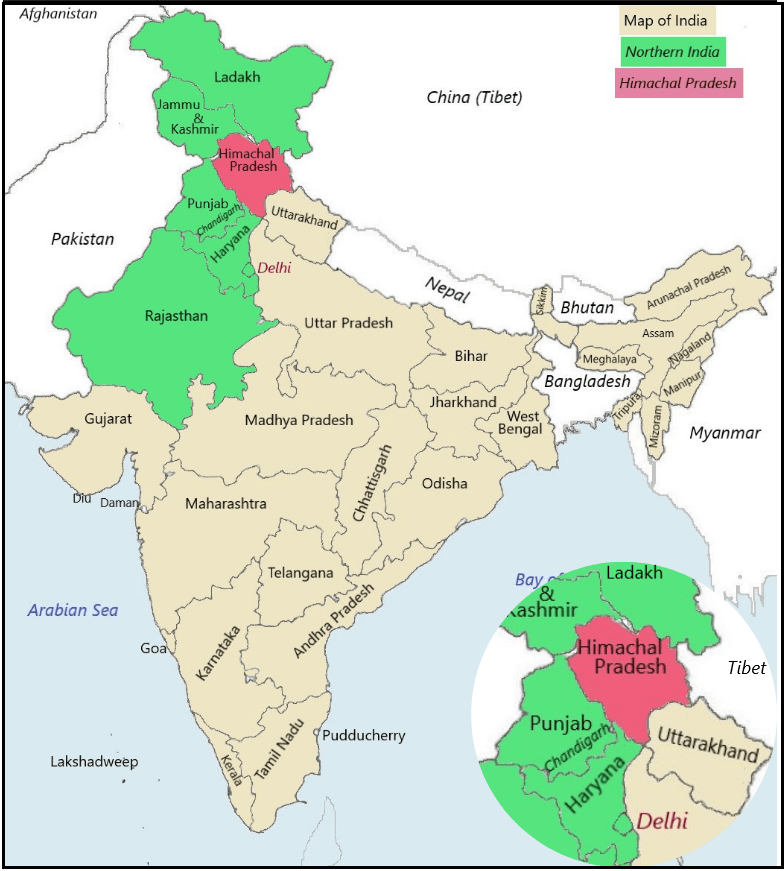
Himachal Pradesh is a beautiful hill state in northern India; part of the western Himalayas. Its capital is Shimla. It shares international border with Tibet in the east. Uttarakhand lies in the south-east, Haryana in the south-west, Punjab in the west while Jammu & Kashmir and Ladakh are on the north.
Himachal Pradesh is believed to be that place mentioned in the epic Mahabharata, where the Pandavas stayed during their exile.
The State has several unique features that sets it apart from the other states. Its natural beauty, breathtaking snow-clad mountains, lush green valleys, and picturesque villages. There are several ancient temples and monasteries, showing their rich cultural heritage. For adventure enthusiasts there are trekking, skiing, paragliding and rafting sports, making it a haven for the tourists.

Kullu Dussehra is a famous iconic festival which commences on the tenth day of Navratri, when Dussehra ends. It is a week-long festival in the month of (October-November), honoring Lord Raghunathji.
According to a legend, King Jagat Singh of Kullu, once became greedy and forced a peasant to hand over his pearls. The peasant threw himself in fire and cursed the king. The king suffered a lot. To lift away the curse, a brahmin advised him to bring an idol of Ram from Ayodha. The idol was brought and installed in Kullu temple and named it Raghunathji. The town began to prosper and Raghunathji became the symbol of hope, prosperity, and protection for his devotees. Since then, Lord Raghunathji has been Kullu’s presiding deity.
The Kullu Dussehra festival begins with a colorful procession with Raghunathji on a chariot and taken round the town. All the other local deities from various places join in the historic ground of Dhalpur. Devotees accompany their deities, display their vibrant costumes, decorative masks and traditional weapons. For seven days, the atmosphere is lively, with devotees singing hymns and chanting mantras. People from all walks of life, come together to celebrate and participate in the festival. With the blending of traditional food, culture and religion, the festival becomes unique and fascinating.
Pulse farming in Himachal Pradesh
Himachal has a rugged terrain and limited area for cultivation, so terrace farming is a necessity. Government is taking measures to sustain and enhance this practice for future generation. Farmers depend on monsoon rains for their irrigation. Despite these drawbacks, Himachal significantly contributes to India’s pulse production. The state mainly produces moong, rajma, urad and chana dal.
Himachal Pradesh is famous for its apple.
Food:
Himachal’s cuisine has the influence of both Tibetan and Punjabi cuisines. This reflects the state’s cultural diversity. Their Dham dishes, kadhri, thukpa and momos are some of the most popular dishes.
Dham means ‘feast’, where all the traditional dishes of Himachal are served. Their food habits are simple, wholesome and largely based on local ingredients. They are mostly vegetarian.
Today, we are going to cook Chana madra, a traditional Himachali Dham dish. Madra is a curd-base curry. The beans that are used in mudra are kabuli chana (chickpeas), rajma (kidney beans), and lobia (black eyed beans).
Chana madra

This traditional Dham recipe is a flavorful and aromatic dish that shows the rich culinary heritage of Himachal Pradesh. The curd gives a fine creamy texture of a creamy taste and the chana along with nuts, a nutty flavor. We enjoyed it very much. Hope you will love it too.
You need:

150 gm kabuli chana
1 bay leaf
5 black pepper corn
Small piece of cinnamon
2 cardamoms
1 clove
¼ tsp of salt

For tempering:
75 gm ghee (clarified butter)
300 gms cooked kabuli chana
300 gm curd

Spices for tempering:
½ tsp red chili powder
½ tsp cumin powder
½ tsp coriander powder
½ tsp turmeric powder
4 black pepper corns
2 cloves
4 cardamoms
A small piece of cinnamon
2 dried red chilies
2 bay leaves

2nd tempering:
2 tsp of ghee (clarified butter)
2 tbsp cashew nuts
1 tbsp raisins
Method:

- Wash and soak kabuli chana overnight.
- Wash it again and place in a pressure cooker together with bay leaves, clove, cardamon, cinnamon, black pepper corn and salt.
- Add 2 cups of water. Close the cooker and place it over the flame.
- After the first whistle, lower the flame to its minimum and cook it for 2-3 minutes.
- Switch off the flame and allow the cooker to cool down by itself.
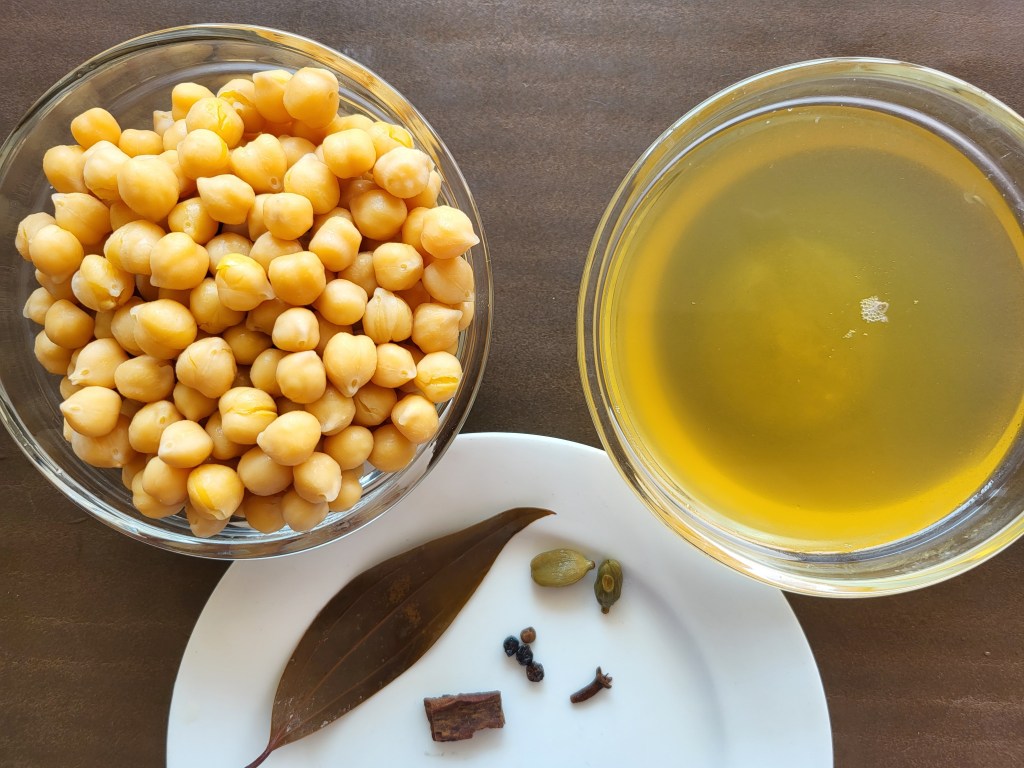
6. Check the chana if cooked. If not cook it again for another 1 minute.
7. Separate the cooked chana and the water (for later use) and the spices as shown in the picture.
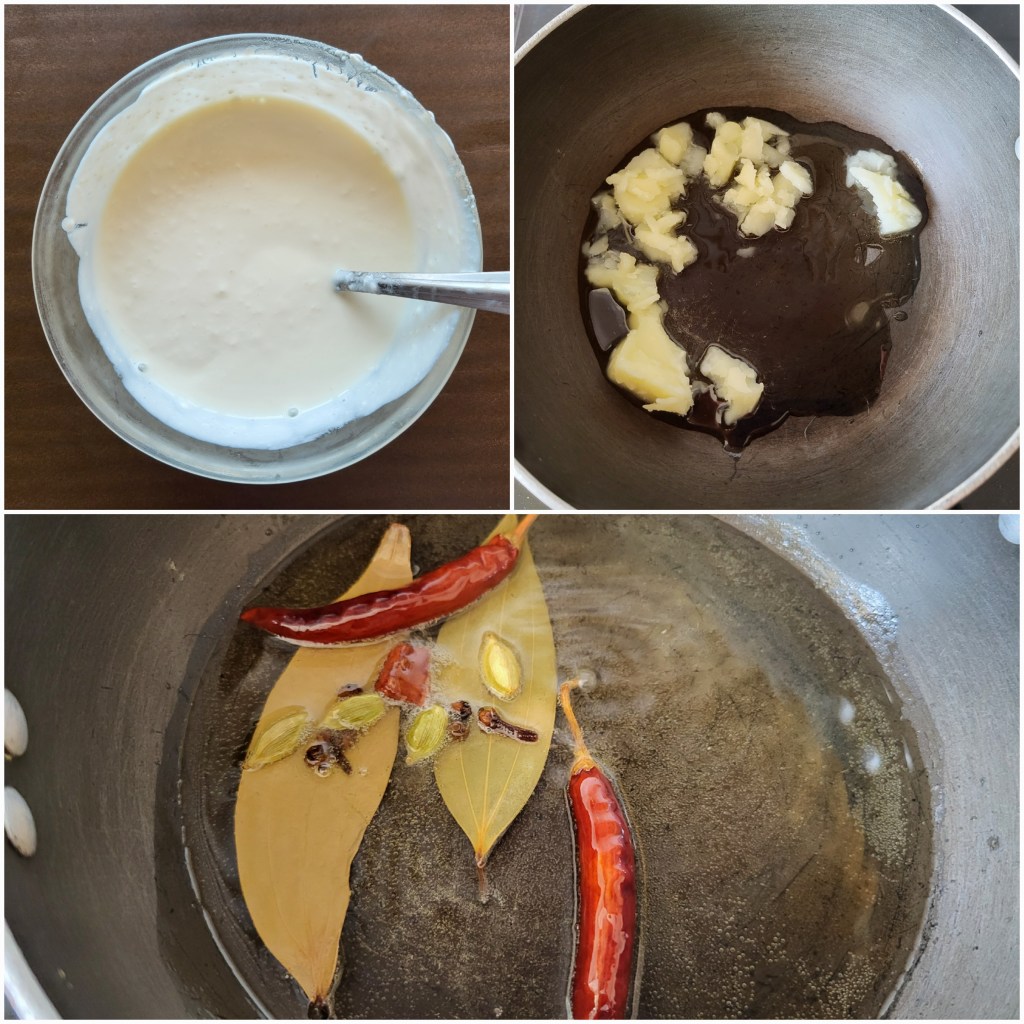
8. Beat the curd well.
9. Heat the ghee in a pan. When hot, add the solid spices one by one and fry till the aromas are released.
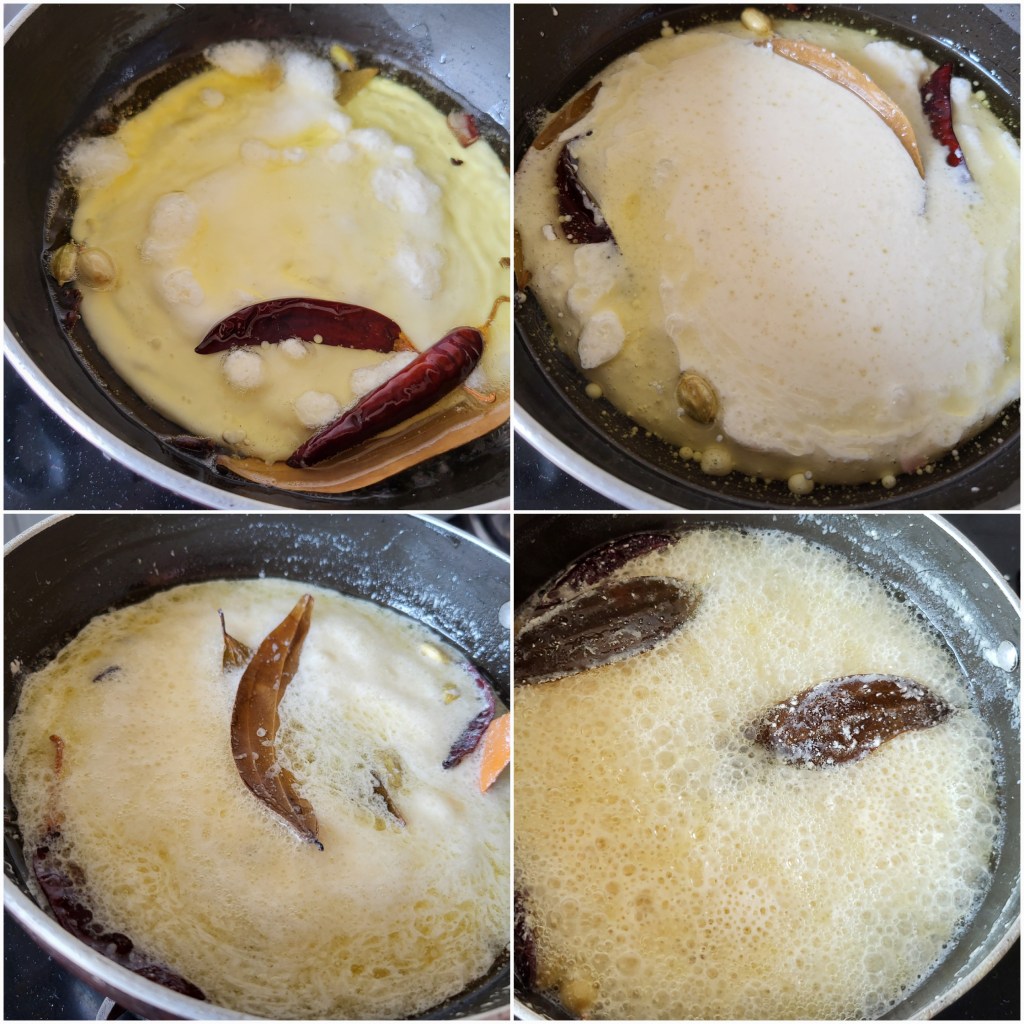
10. Lower the flame to medium heat and add the curd to the spices.
11. Stir continuously until the liquid begins to boil otherwise the curd may curdle. It took me about 10 minutes. Once it boils, you need to stir only from time to time.
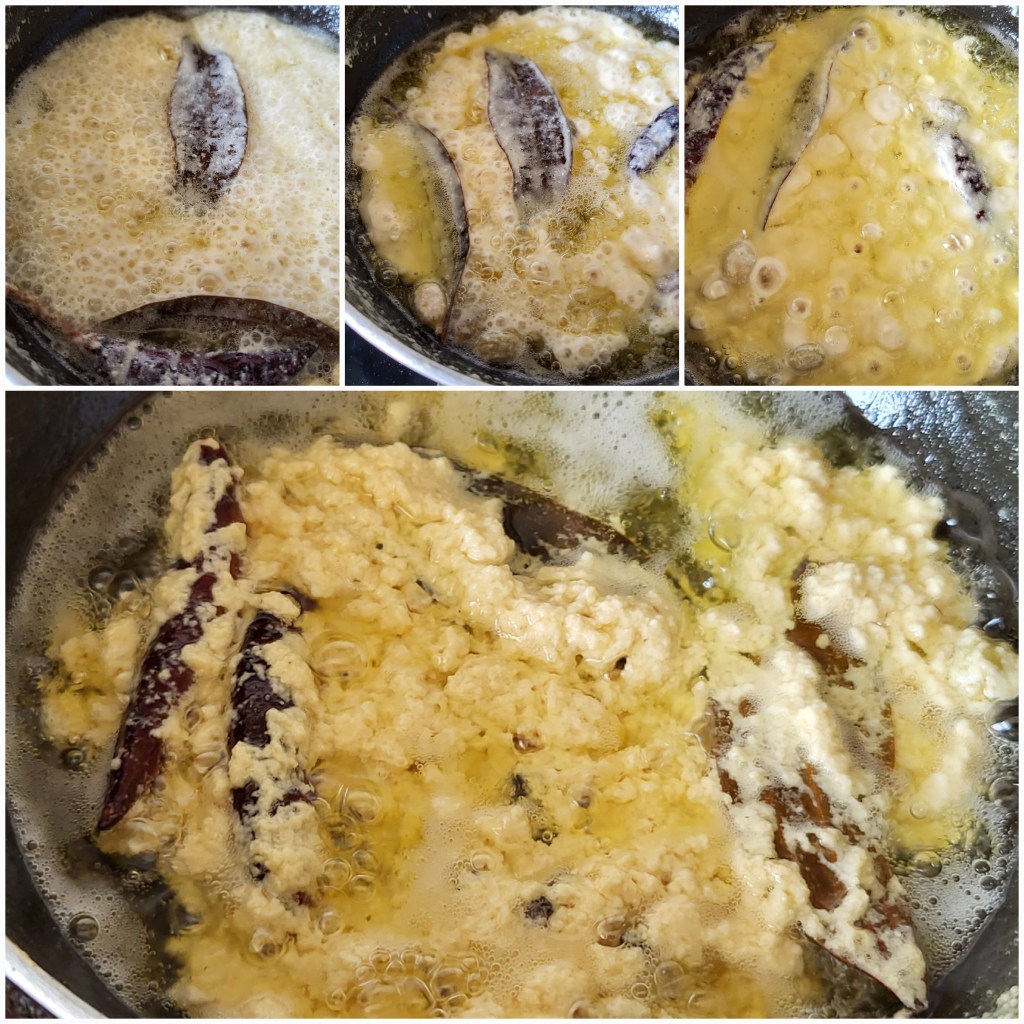
12. Keep cooking until the water content of the curd evaporates and the oil starts to ooze. And the residue begins to brown.

13. After enough oil comes out, remove the bay leaves, the chilies cinnamon.
14. Keep stirring and fry until the residue becomes brown.

15. Add turmeric, red chili, cumin and coriander powder.
16. Mix the spices well. Stir and fry for a few more seconds.
17. Add the cooked chana and mix well.

18. Add the reserved water a little at a time and bring it to boil.
19. Cover the pan and cook the chana for about 5 minutes.
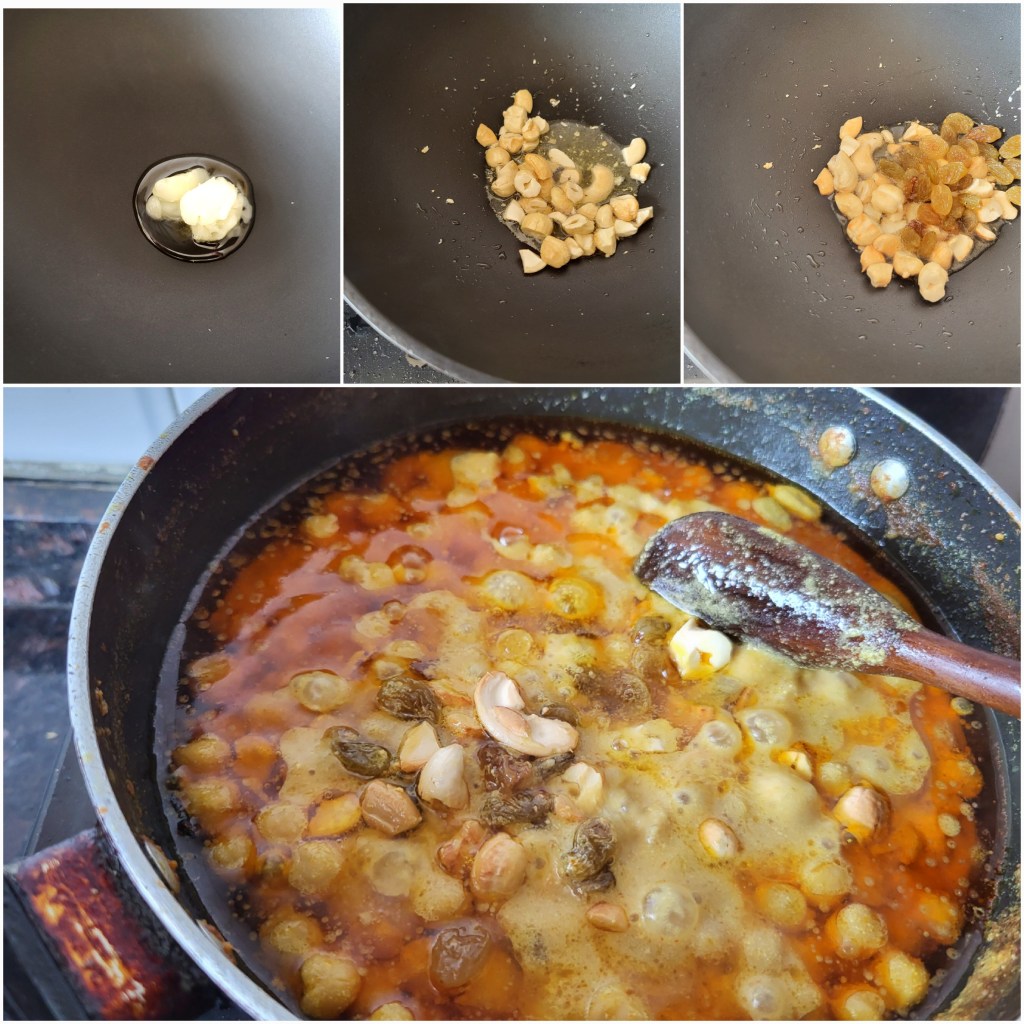
2nd tempering:
20. Heat a pan with the ghee.
21. Add the cashew nuts and fry till lightly browned.
22. Add the raisins and saute for a few seconds and pour over the cooked chana.

23. Mix the nuts and raisins well. Switch off the flame.
24. Cover and leave the chana for some time.
Your Chana Madar is ready to be served with steamed rice or roti.
Happy Cooking !
Coming up next …………..Dal from Jammu & Kashmir
******
 Dal On The Table
looks so yummy.. will definitely try
LikeLike
Thank you Protima.
LikeLike