
Hi,
This episode of Seed to Seed is about – Channa dal’s plants, leaves and flowers.
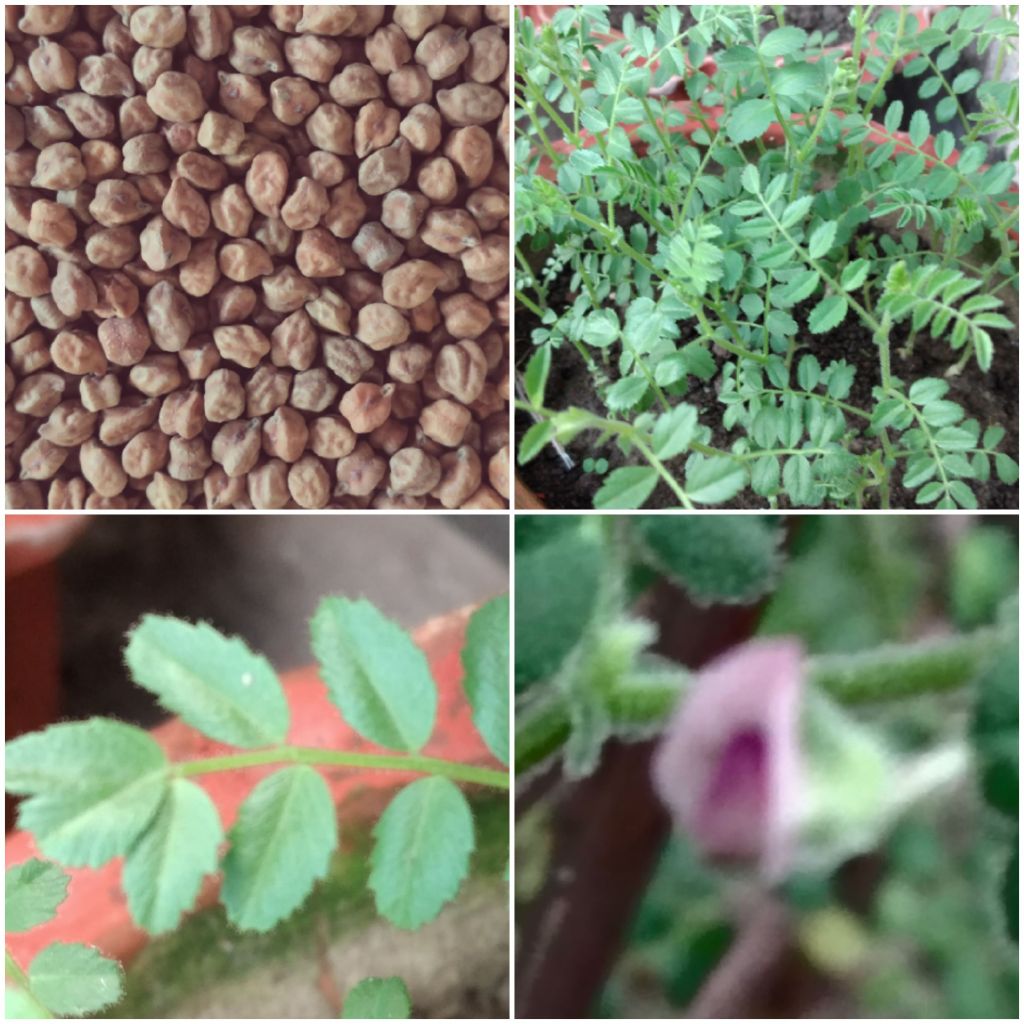
Channa dal is the product of kala/Desi chana. Desi chana is known as Bengal gram in English. Bengal gram belongs to the chickpeas family. There are varieties of chick peas in the market.
Channa dal is nutritious and has a nutty flavour. There are many sweet and savoury dishes with Channa dal. It is rich in protein and fiber.
The Botanical name of channa dal is Cicer arietinum.
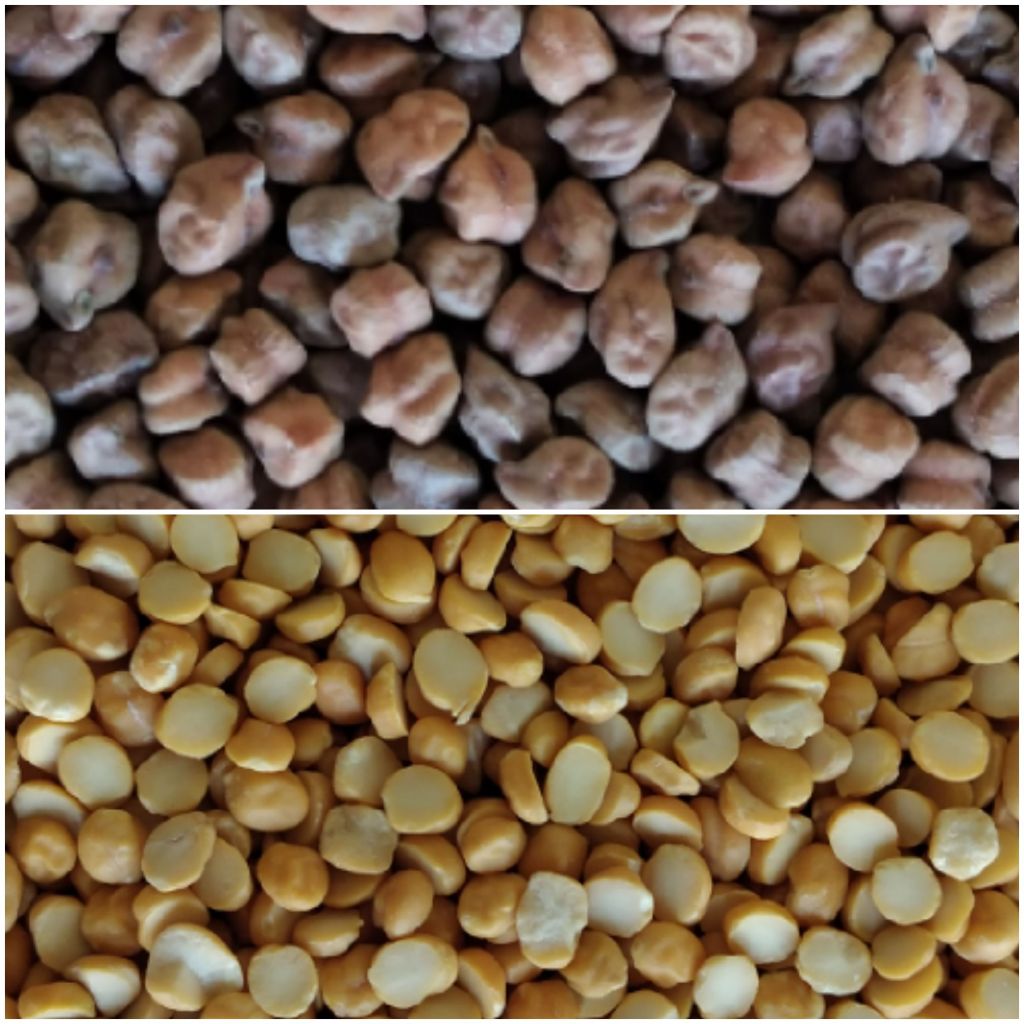
Bengal gram fulfils all the requirements of a seed. It has a rough dark brown skin which is the coat. It has 2 yellow cotyledons (channa dal) and an embryo that is the tiny plant which can not been seen with naked eyes.
When Bengal gram is split to get channa dal, the embryo gets destroyed. So you cannot get a plant out of it.
Channa dal is a winter crop. We sowed the seeds just before the monsoon. We placed the pots close to the wall of our house to protect them from the rain.

Experiment 1
Prepared a pot and soaked few Bengal grams in water for about 4 hours and then sowed the Bengal gram about 2 cm inside the soil.

For few days there were no sign of the grams. We kept watering the pot to keep the soil moist.

On the 6th day tiny whitish green sprouts were seen.
During those 5 days when nothing was visible on the surface of the soil, there were lots of changes that took place with the seeds in the ground. To find that out, we did another experiment side by side. And we call that Experiment 2.
Experiment 2.
Germination of the gram seeds inside a glass.

We filled up a glass with soil up to 2 cm below the brim and water it lightly.
Placed 3 soaked gram seeds in the soil inside the glass touching the side of the glass. Then covered them with soil to the top of the glass.

On 3rd day the germination of the seed could be seen through the glass. The root came out and moved downward.

On the 4th day, the shoot came out – slightly greenish white in colour and moved upward.

On 5th day the shoot grew taller and headed upward in search of sun light. The gram seed remained where it was placed at the beginning. From there it nourished the plant.

On 6th day, the shoot reached the top of the soil and a tiny stem with unfolding leaves were seen.
The Bengal gram seeds remained inside the soil nurturing the new plant. When the seeds remain inside the soil during germination, it is called hypogeal germination.

Now back to the Experiment 1:
On the 6th day green shoots were visible on the surface of the soil. During the past 5 days the seeds in the pot went through the same changes as you saw in the glass.
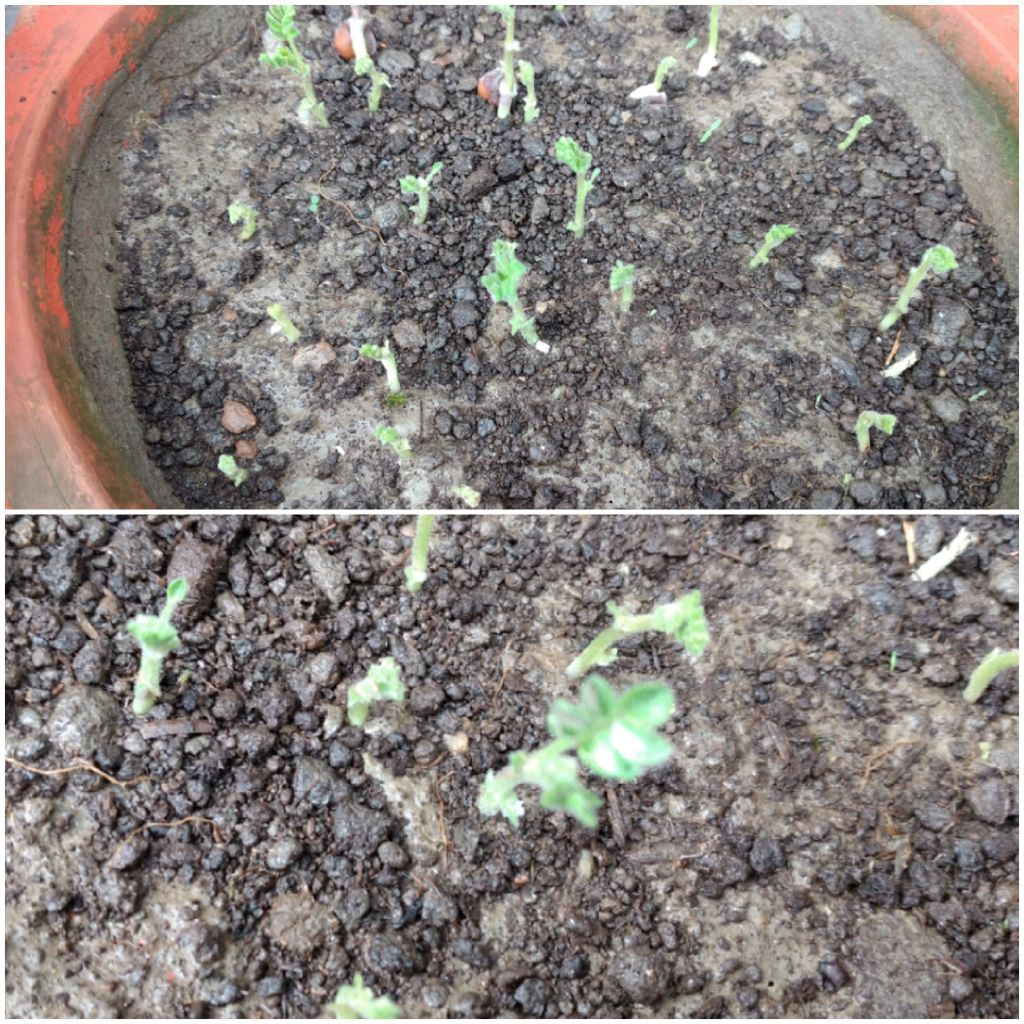
On the 7th day tiny leaves unfolded into 3 and 5 small leaflets instead of single leaves.
The lower picture is the enlarged view of the above pot. Here you can clearly see the leaf has 5 leaflets.
When a leafstalk has more than 1 leaves then the plant is said to have compound leaves.
So channa dal plants have compound leaves.
Once the green leaves are out, the plants no longer depend on their cotyledons. The roots collect food materials from the soil and the leaves with the help of sunlight prepare the food for the plants. This process is known as photosynthesis. Once photosynthesis starts the plants grow very fast.

On 10th day the count of leaflets were 7.

By 12th day – some leafstalks had 9 leaflets.
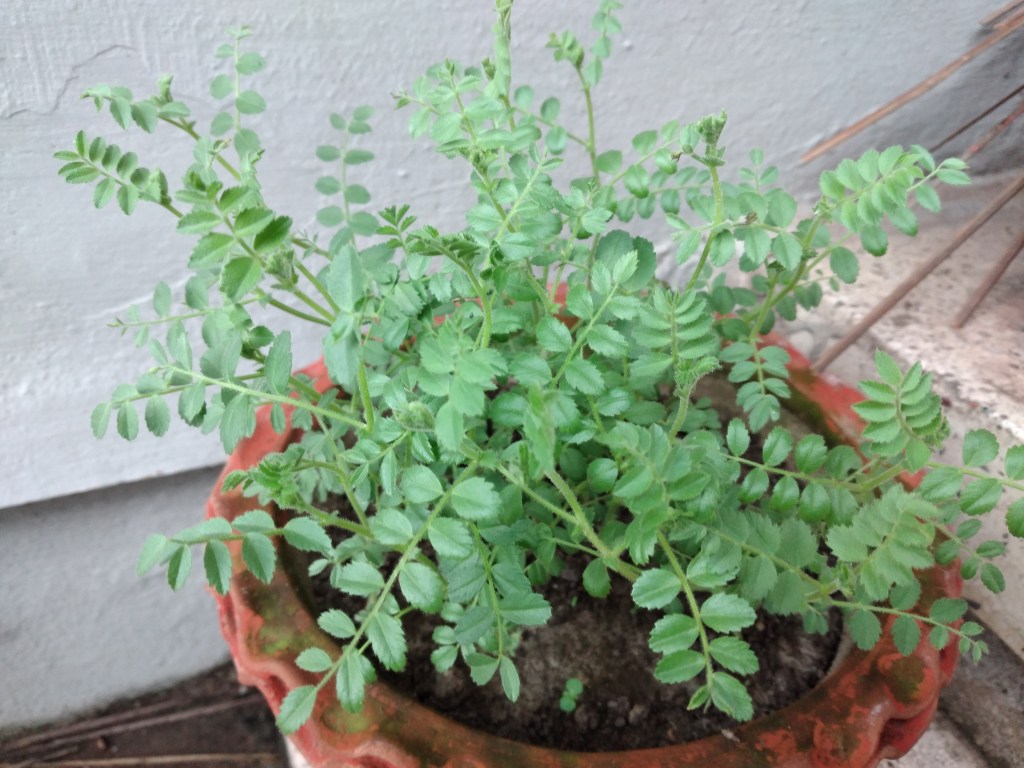
The plants grew taller and increased the count of leaflets to 11, 13 and 15.
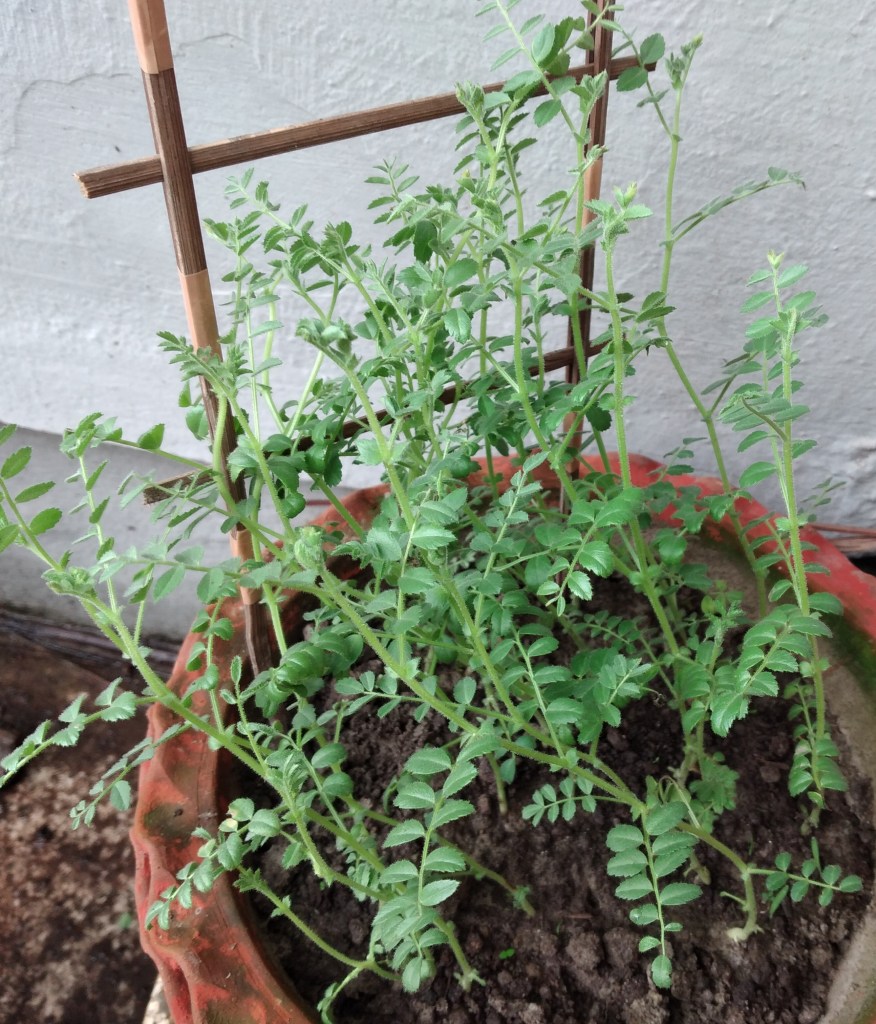
The plants had luxuriant growth. The leaflets count increased from 7 to 15. The stems were delicate and could not stand upright. We made some bamboo support for the plants.
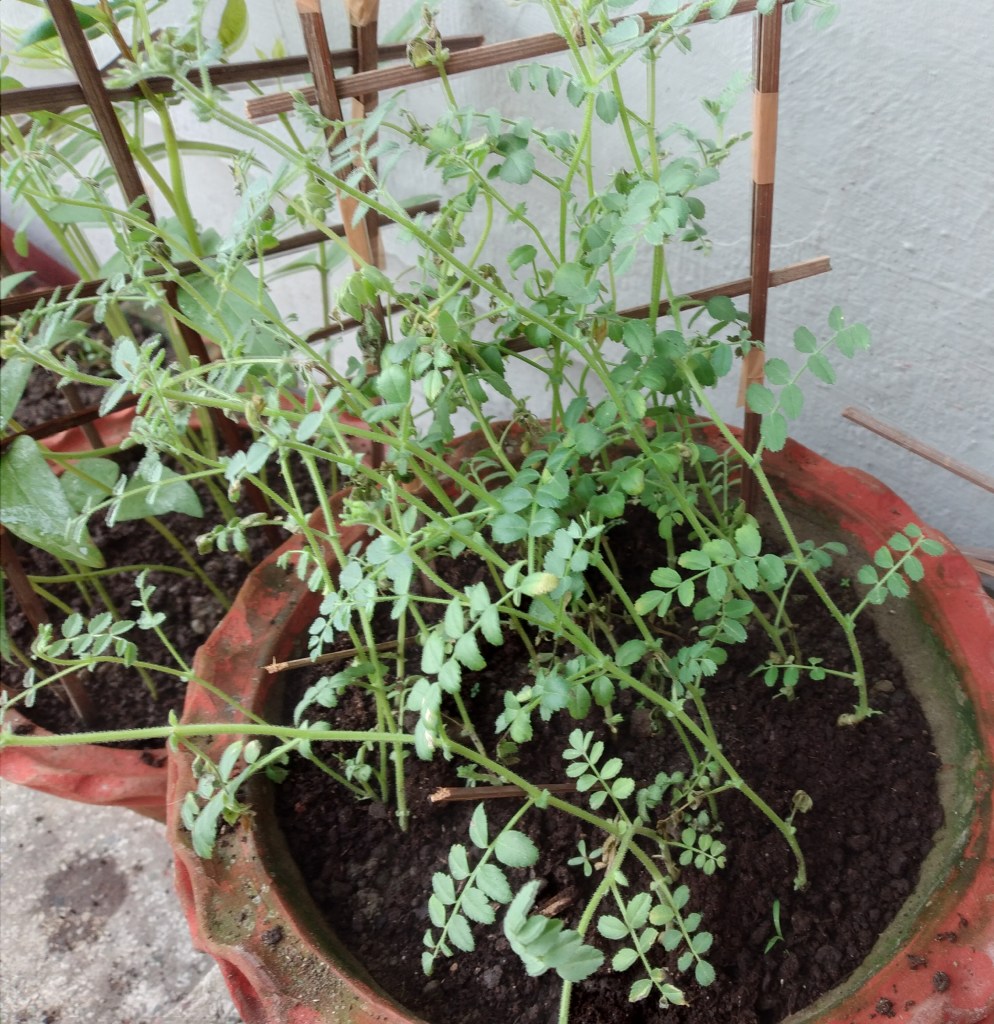
The plants completed 30 days. They grew tall.
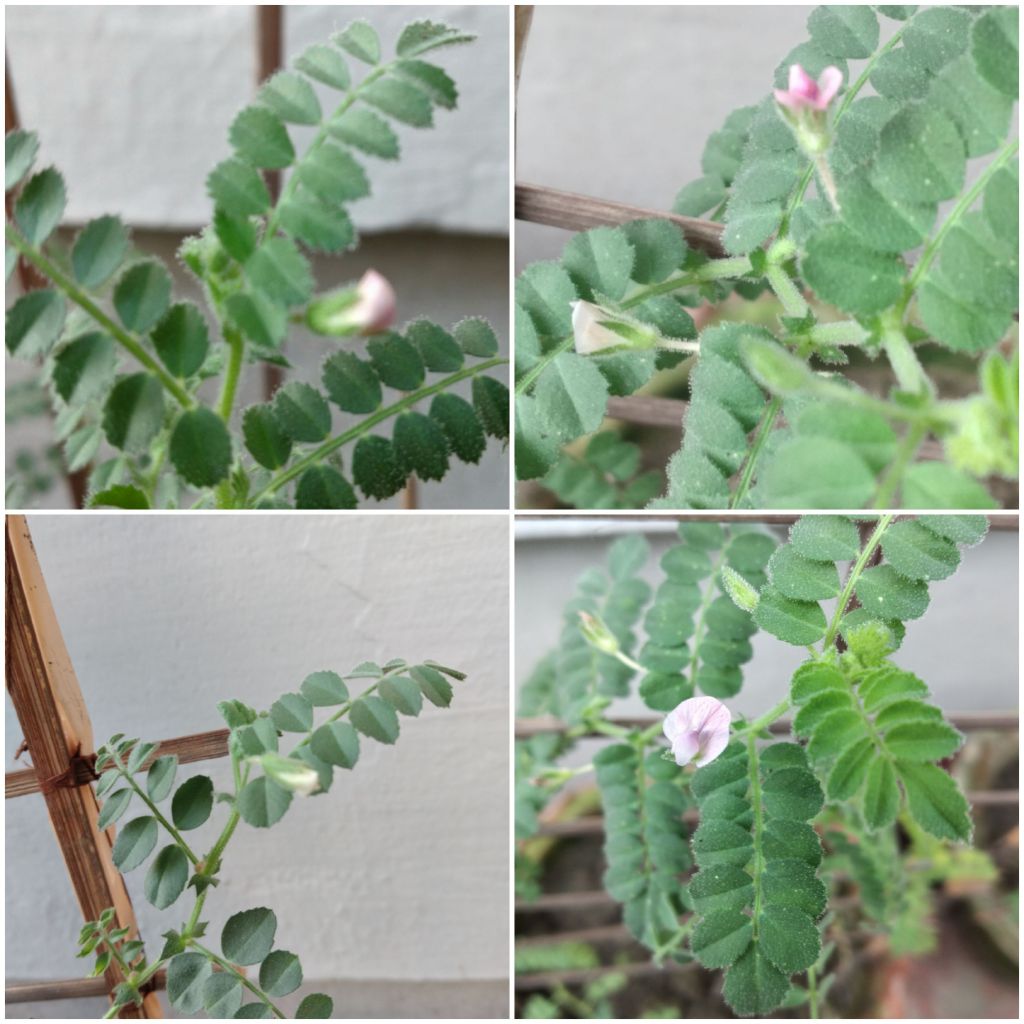
When they were about 45 days buds and flowers began to bloom.
The flowers had a rich lilac in colour.
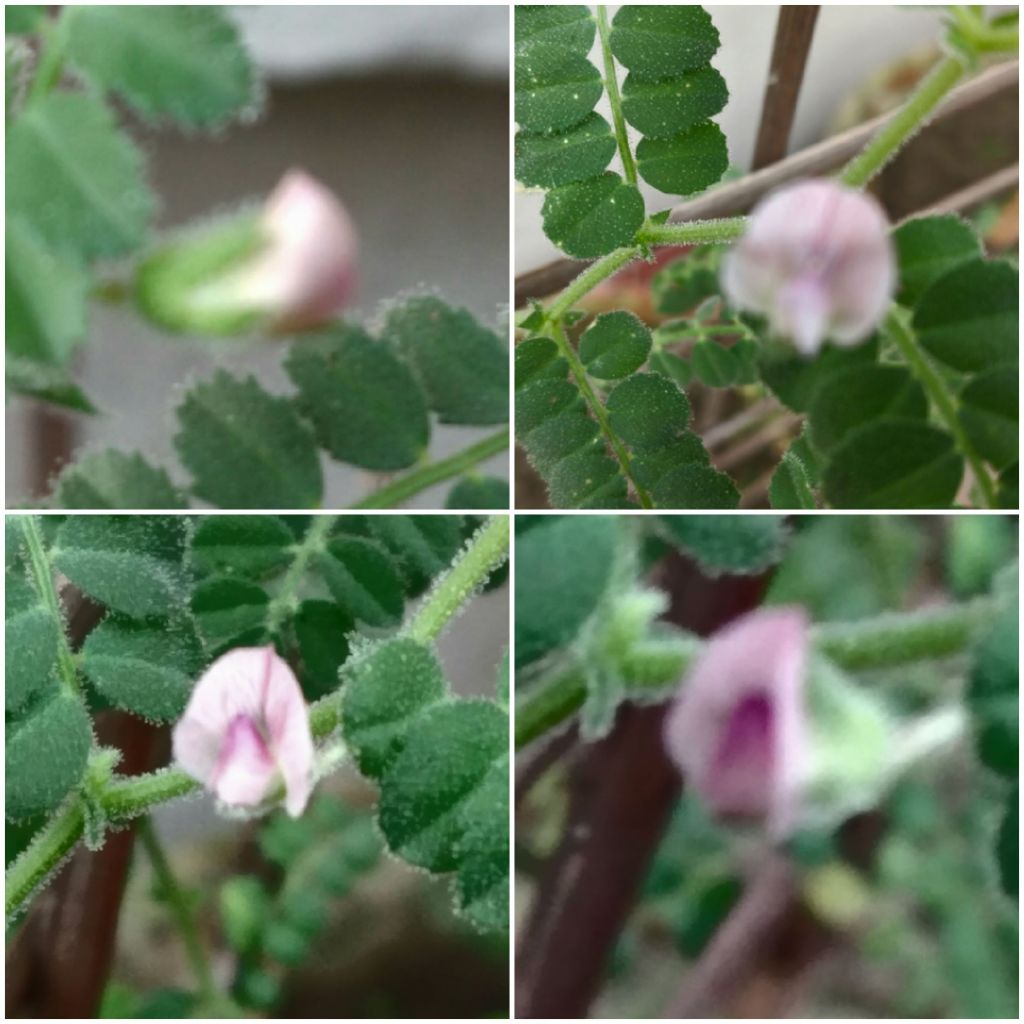
Waited for the pods to come out. But there was no pod. Soon the flowers began to wither.

A dried flower.
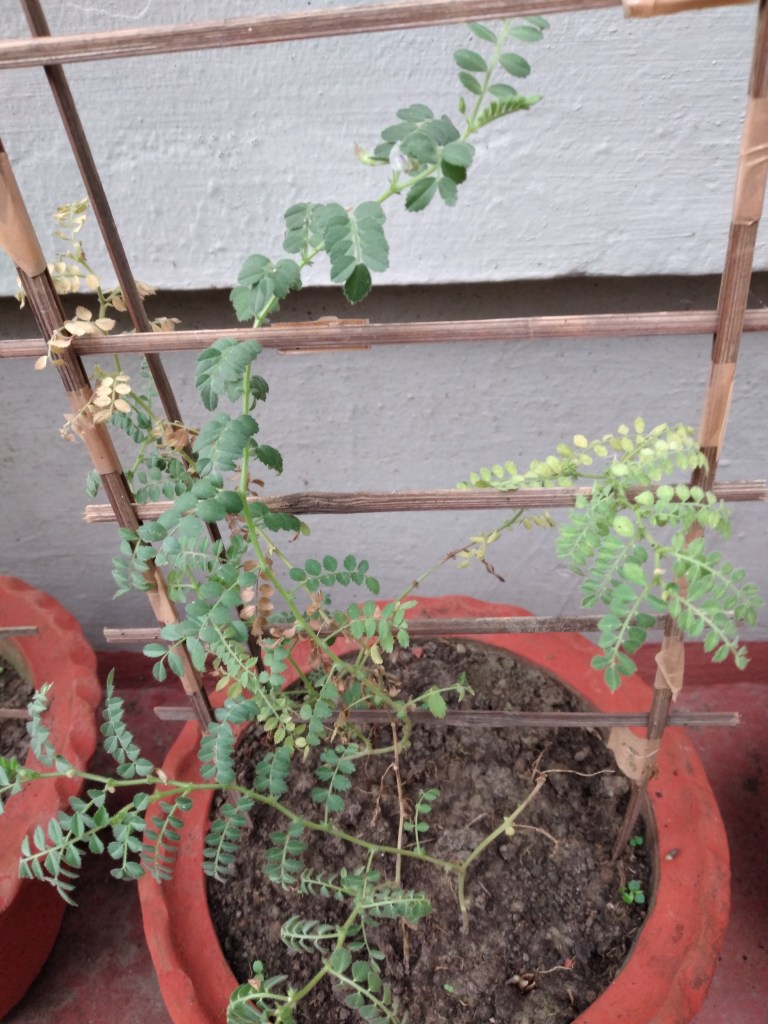
The plants dried up one by one. After 60 days only 2 plants were left in the pot. The plants were about 55 cm tall.
Channa dal is a winter crop. The experiment was done before monsoon. Happy to see the plant, leaves and the flowers. Will try again in October- November then we hope to see the pods.
Will keep you posted……
 Dal On The Table